
Research article · 2018 · Full text
International Journal of Statistics and Applied MathematicsA study of fuzzy set and its operations
Volume 3(1) · Pages 303–310
Research areasFuzzy Logic and Control SystemsMulti-Criteria Decision Making
Abstract
Author-writtenFuzzy sets allow one to work in uncertain and vague situations and solve those problems which have more than one solution. In real life sometimes we are unable to answer many questions because these answers are depending upon two valued logic which are unable to give clear-cut explanation. The present paper aims to study fuzzy set theory and its examples. Here we are also discussing some standard and non-standard operations on fuzzy sets which are generalizations of the corresponding crisp operations.
Summary
Source-checkedPlain-language reading of the full paper, prepared with AI and checked against the text. Each point links to the authors' own words.
Why it matters
- Fuzzy sets are useful for addressing problems involving uncertainty and vagueness where multiple solutions may exist. View evidence ↗
- Traditional two-valued logic often fails to provide clear explanations for many real-life questions. View evidence ↗
- Unlike classical set theory, where membership is binary (member or not), fuzzy set theory allows for partial membership. View evidence ↗
The question
- The study aims to examine fuzzy set theory, provide examples, and discuss standard and non-standard operations that generalize crisp operations. View evidence ↗
What they did
- Non-standard operations include T-norms and T-conorms, which serve as generalizations of crisp intersection and union. View evidence ↗
What they found
- The standard fuzzy union is identified as the smallest possible fuzzy union, and the standard fuzzy intersection is the largest possible fuzzy intersection. View evidence ↗
What it means
- The authors conclude that fuzzy set operations serve as effective generalizations of classical crisp operations. View evidence ↗
Visual summary
1 visualsIllustrations explain the paper; they do not show study data.

Crisp vs Fuzzy Membership
AI-generated conceptual illustration (two geometric spheres in a void). It explains the idea and does not show study data.
View source evidence ↗Figures & tables
From the original paper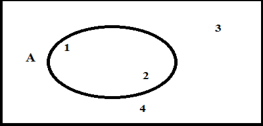 Figure 1
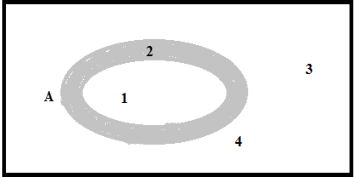 Figure 2
Introduction
Several mathematicians have introduced the concept of sets in their own ways. These ways of representing problems are more inflexible. The solutions using this concept are not significant in many real life situations. This difficulty was overcome by the Fuzzy concept which was first introduced by an eminent American Cyberneticist Prof L.A.Zadeh in 1965. Definitions, Theorems, Proofs on fuzzy set theory always hold for non-fuzzy sets. The classical set theory is built on the elementary concept of "set" in which an individual is either a member or not a member. In fuzzy set theory all those members are belongs to that set which are completely or partially belongs in that set.
Some definitions Definition 2.1 Classical sets
An element belongs to the set or it does not, then the set is Called "Classical Set". It is also called "crisp (sets)". There is no uncertainty in this set theory.
Definition 2.2 Fuzzy sets
A set in which elements have degree of membership is called "Fuzzy Set". Degree means all tones between black and white. A fuzzy set has a graphical description that expresses how the transition from one to another takes place. This graphical description is called "a membership function". Example 2.2.1 X (Universe of discourse) Where, x is a member of X and is a real number belonging to 0 ,1
Some standard operations on fuzzy sets
The notion of containment plays a vital role in the case of fuzzy sets. With these notions union, intersection, complement and difference of fuzzy sets are also defined. They are called 'standard operations on fuzzy sets'.
Definition 4.1
Let A and B be two fuzzy sets of the Universal set X. Then * AB iff ( ) (1,1), ( 2 ,1), (3,1), ( 4 ,1), (5 ,1)
3 ), ( 2 , .1), (3, 0 ), ( 4 , .9 ), (5 , 0 )
3 ), ( 2 , .1), ( 4 , .9 )
(1, .7 ), ( 2 , .9 ), (3,1), ( 4 , .9 ), (5 ,1) We observe that for any three fuzzy sets A, B and C of a universal set X, the following hold [19] 1. Commutativity
Idempotence:
Idempotence:
Absorption:
Absorption:
Absorption by
Absorption by
Identity:
Identity:
Demorgan's Law:
Demorgan's Law:
Law of contradiction:
Law of contradiction:
AA
AA
Law of excluded middle:
Law of excluded middle:
Product of two fuzzy sets:
The product of two fuzzy sets A and B of a set X is a new fuzzy set denoted by .
. ( , ( ). ( )) |
( , ( ( ) ) , ( , ( ( ) ) , ( , ( ( ) )
( , ( .4 ) ) , ( , ( .2 ) ) , ( , ( .7 ) )
x y z = ( , .1 6 ), ( , .0 4 ), ( , .4 9 ) x y z
Concentration of a fuzzy set
The concentration of a fuzzy set A of X is denoted by
the fuzzy set of good students then 2 A stands for fuzzy set of very good students.
Dilation of a fuzzy set
The dilation of a fuzzy set A of X is denoted by Dil ( A ) and is defined by A stands for fuzzy set of more or less good students.
Non Standard Operations on fuzzy Sets
In previous section we have discussed about standard operations on () P F X which are nice generalizations of the corresponding crisp operations. There are also other operations called 'T-norms' and 'T-conorms' which the generalizations or extensions are of crisp intersection and crisp union respectively. [14] A mapping :
T-norms (fuzzy intersection)
T T a b c [14] A mapping : The standard Fuzzy union is the smallest Fuzzy union while Fuzzy intersection is the largest Fuzzy intersection [19] .
T-conorms (fuzzy union)
T-conorms (fuzzy union)
Fuzzy complement
is called a complement or negation operator if the following holds, for all , , :
The Threshold type compliment is defined by ( ) 1
Here t is called 'the threshold of N'.
Yagar class of compliment
The Yagar class of compliment is defined by .......,
Algebraic sum
The algebraic Sum of two fuzzy sets A and B of X is denoted by AB and defined by
Bounded sum
The bounded sum of two fuzzy sets A and B is denoted by
Bounded difference
The bounded difference of two fuzzy sets A and B of X is denoted by
and is defined by .2 ( , 1) , ( , 1) , ( ,
.6 ( , 0 ) , ( , 0 ) , ( , 1)
.4 ( , 0 ) , ( , .4 ) , ( , .
.6 ( , 0 ) , ( , 0 ) , ( , .6 )
Some theorems
We now state the following three decomposition theorems for fuzzy sets.
First decomposition theorem
for every fuzzy set. [14] Let :
Second decomposition theorem
Second decomposition theorem
Extension principle for fuzzy sets
f X Y be a crisp function. This function f is said to be 'fuzzified' when it is extended to act on fuzzy sets defined on X and Y then f induces two fuzzified functions f and its inverse 1 f of the following forms:
(the indexed set). Then the following properties of Functions obtained by the extension principle hold:
Conclusion
It follows that operations on fuzzy sets are nice generalization of the corresponding crisp operations.
Acknowledgement
The author would like to thank department of applied mathematics SSGI Junwani Bhilai for providing necessary tools and softwares.
Figures and tables from the paper
References
18 in the original paper- Atanassov KT. Intuitionistic fuzzy sets, Fuzzy Sets and Systems, 1986; 20:87-96;
- Brown JG. A note on fuzzy sets, information and control. 1971; 18:201-204.
- Bouchon-Meunier B, Yager RR. Zadeh (Eds.) LA. Uncertainty in Intelligent and Information Systems Advances in Fuzzy, 2000.
- Chen G. (Guanrong). Introduction to fuzzy sets, fuzzy logic, and fuzzy control systems / Guanrong Chen, 2000.
- Dubois D, Prade H. Fuzzy Sets and Systems -Theory and Applications, Academic Press, New York, 1980.
- Gibbons Robert. Game Theory for Applied Economists, Princeton University Press, Princeton, NJ, 1992.
- Hajek p. Metamathematics of Fuzzy Logic, Kluwer, Dordrecht, 1998.
- James J, Buckley. Fuzzy Mathematics in Economics and Engineering, Physica-Verlag, 2002.
- Klir GJ, Yuan B. Fuzzy Sets and Fuzzy Logic: Theory and Applications. Prentice Hall PTR, 1995.
- Allis LV. A knowledge-based approach to connect-four, the game is solved: white wins, Master's Thesis, Vrije Universities Amsterdam, 1988.
- Reghis M, Roventa E. Classical and Fuzzy Concepts in Mathematical Logic and Applications, CRC-Press, 1998.
- Negoita CV. Expert Systems and Fuzzy Systems, Menlo Park, CA: Benjamin/Cummings Publishing Company, 1985.
- Nguyen HT, Walker EA. A First Course in Fuzzy Logic, Third Edition, CRC, 2005.
- Patyra MJ, Mlynek DM. (editors) Fuzzy Logic: Implementation and Applications, New York, NY, Wiley, 1996.
- Singh Anand Kumar.A study of Game Theory with its Fuzzy Mathematical approach, 2008.
- Smithson M, Verkuilen J. Fuzzy Set Theory: Applications in the Social Sciences (Quantitative Applications in the Social Sciences). SAGE Publications, 2006.
- Zadeh LA. Fuzzy sets, Information and control. 1965; 8:338-353.
- Zadeh LA. Fuzzy sets as a basis for a theory of possibility, Fuzzy Sets and Systems 1978; 1:3-28.