
Research article · 2020 · Full text
International Journal of Statistics and Applied MathematicsProblems of improving the methodology of calculating the Egyptian triangle
Volume 5(3) · Pages 95–96
Research areasAdvanced Theoretical and Applied Studies in Material Sciences and Geometry
Abstract
Author-writtenIn this paper an analysis of the results of scientific research on finding the quantitative relationships between the magnitude of the Egyptian triangle and its internal and external circular figures by optimal mathematical calculations are presented.
Summary
Source-checkedPlain-language reading of the full paper, prepared with AI and checked against the text. Each point links to the authors' own words.
Why it matters
- Improving the calculation methods for Egyptian triangle sizes is considered relevant for the training of engineers-teachers. View evidence ↗
- Traditionally, Egyptian triangles, which are a class of right-angled triangles, have been analyzed using traditional calculation methods. View evidence ↗
- The sizes of shapes drawn inside and outside the Egyptian triangle have also been studied using traditional computational methods. View evidence ↗
The question
- The paper aims to analyze quantitative relationships between the Egyptian triangle and its internal and external circular figures using optimal mathematical calculations. View evidence ↗
What they did
- The methodology utilizes a 'sequence number' (n) to represent the repeated increase or decrease in the size of the triangle. View evidence ↗
What they found
- The radius of the inscribed circles (rn) is found to be equal to the ordinal number n. View evidence ↗
- The diameter of the outer circle (Dn) is calculated as 5 multiplied by the ordinal number n. View evidence ↗
- These relations allow for solving problems regarding inner and outer circles without needing to perform complex calculations or know the radii beforehand. View evidence ↗
What it means
- The authors conclude that these constants can be applied in future science and various economic areas, including heavy and light industry research centers. View evidence ↗
Figures & tables
From the original paper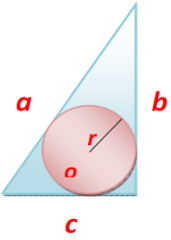 Figure 1
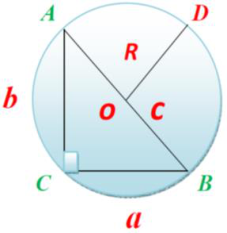 Figure 2
Introduction
The research on the Egytian triangle, improvement of the calculation methods of these triangle sizes and the issues of teaching remain relevant in the process of training engineers-teachers. To date, the sizes of Egyptian triangles belonging to the class of right-angled triangles have been analyzed by traditional calculation methods. Determining the sizes of planimetric shapes drawn internally and externally to the Egyptian triangle has also been studied by traditional computational methods.
Method
The sizes of the Egyptian triangle and the single size that connects it internally and externally are not specified. The reason was the need to draw the order of the Egyptian triangle and the corresponding table. Based on the results of our observations, we would like to emphasize that for the Egyptian triangle, the use of the so-called sequence number, which represents the increase or decrease of the size of this triangle repeatedly, is important in the training of engineers-educators. There is another important aspect that we have observed in the course of our research. It is also possible to find some of the quantities of the variant of the Egyptian triangle in any order, which can be called constant quantities. Let's get acquainted with them.
For example, the height of the Egyptian triangle lowered to the hypotenuse hcn hcn = 2,4•n , (8) The "n" in the formula is the ordinal number of the Egyptian triangle (F. A. Mamadaliev. "The Egyptian Triangle" (Book 1), page 9. Tashkent -2018. "Renaissance press.",) Here "2,4" can be called the first constant of the Egyptian triangle. We would like to mention another constant: Rn ═ 2,5 • n , (9) (F.A. Mamadaliev. "Egyptian triangle" (second book), p. 21. Tashkent -2018. "Renaissance press") Here "n" in the formula is the ordinal number of the Egyptian triangle, "Rn" is the outer drawing radius of circles; Here, "2.5" is a constant, which can also be called the second constant of the Egyptian triangle.
Results and discussion
These constants can be used in a wider range when it comes to future science. It will be possible to apply it in various areas of the economy, including research centers of heavy and light industry. There is no doubt that the forms that have taken an absolute pattern from the Egyptian triangle will come in handy in the future. Constants have always been widely used in science and industry to facilitate calculations, to increase accuracy, to prevent errors in the selection of quantities, and this is still self-justifying. We found that the radius of a circle or circle drawn inside and outside an Egyptian triangle depends on the ordinal number of that triangle by the following formulas: n ═ rn , ( 10 has not yet been considered in science. I achieved this. I am absolutely convinced that this innovation, that is, the chain of formulas, will be of great importance for the science of the future. In the center of this formula garden -the "Egyptian triangle chain" is the ordinal number of this triangle "n". All other sizes of the Egyptian triangle are on the right side of the "n", and the sizes of the geometric shapes drawn inside or outside this triangle, depending on the ordinal number, are placed on its left side. A new scientific novelty consisting of such a set of formulas makes it absolutely easy to show how to solve any problem without difficulty and confusion, since any size of the Egyptian triangle is connected by an "n". I would like to bring to your attention a part of the "Egyptian Triangle Chain", please:
Knowing that it is possible to correlate all the quantities related to the computational process by means of the sequence number (n), it is not difficult to understand that the magnitudes of the Mirs triangle and other planimetric shapes drawn inside or outside it are also interrelated. (F. A. Mamadaliev. "The Egyptian Triangle" (second book), page 26. Tashkent -2018. "Renaissance press".)
Conclusion
This article is entirely devoted to the analysis of the results of the study of the circles drawn inside and outside the Egyptian triangle and the methods of calculating their sizes in nontraditional, optimal ways. The content of the garden of formulas, which expresses a wide range of interdependence of mathematical quantities, called the "Egyptian triangle chain" was explained. The "Egyptian Triangle Chain" is a chain of formulas that explores the interrelationships between the magnitudes of planimetric shapes drawn inside and outside the triangle, and the ability to quickly, accurately, and perfectly determine the quantitative mathematical relationships between them by solving real problems.
Figures and tables from the paper
References
5 in the original paper- T. Jo'raev va boshqalar. Oliy matematika asoslari. T. «O'zbekiston», y. I qism, 1995.
- Beklemishev DV. Kurs analiticheskoy geometrii i lineynoy algebri. -M. Nauka, 1984 g.
- Ya. S, Bugrov, Nikolskiy SM. Elementi lineynoy algebri i analiticheskoy geometrii. M. «Nauka», 1990 g.
- Mamadaliyev FA, Misr uchburchagi (I, II, III kitoblar) T. «Renessans press», 2018 y.
- Mamadaliev sFA, Egyptian triangle (books I, II, III) T. «Renessans press», 2018 y.