
Research article · 2018 · Full text
International Journal of Statistics and Applied MathematicsPath and cycle related families of E-Cordial graph
Volume 3(1) · Pages 263–265
Research areasGraph Labeling and Dimension ProblemsGraph theory and applicationsAdvanced Graph Theory Research
Abstract
Author-writtenThe two copies of graph G(p, q) are joined by t paths on n-points each We represent the family by G(tPn). The paths are attached at the same fixed point on G. We discuss E-cordiality of C3(Pn), K4(Pn), S4(Pn) (shel graph S4 ) We show that under certain conditions these graphs are E-cordial.
Summary
Source-checkedPlain-language reading of the full paper, prepared with AI and checked against the text. Each point links to the authors' own words.
Why it matters
- E-cordial labeling was introduced by Yilmaz and Cahit in 1997 as a weaker version of edge graceful labeling. View evidence ↗
- A labeling is considered E-cordial if the difference between the number of vertices labeled 0 and 1 is at most 1, and the difference between the number of edges labeled 0 and 1 is also at most 1. View evidence ↗
- It has been observed that any graph with n vertices cannot be E-cordial if n is congruent to 2 modulo 4. View evidence ↗
The question
- The study aims to determine the conditions under which the graph families C3(Pn), K4(Pn), and S4(Pn) are E-cordial. View evidence ↗
What they did
- The research focuses on families G(tPn) created by joining two copies of a graph G (specifically C3, S4, and K4) using a single path (t=1) of equal length attached at a fixed point. View evidence ↗
- The labeling method assigns values from {0, 1} to the edges, and the vertex labels are derived as the sum of the labels of incident edges modulo 2. View evidence ↗
What they found
- The graph G=C3(1Pn) is E-cordial if and only if the total number of vertices n' is not congruent to 2 modulo 4. View evidence ↗
- The shel graph family S4(Pn) is E-cordial if and only if n is not congruent to 2 modulo 4. View evidence ↗
- The graph family K4(Pn) is found to be E-cordial. View evidence ↗
- For the S4(Pn) family, the graph is not E-cordial if n is divisible by 4. View evidence ↗
What it means
- The authors conclude that while they analyzed single paths between graph copies, further evaluation is needed for cases with two or more paths. View evidence ↗
- The scope of the current study was limited to the analysis of a single path connecting the two copies of the graphs. View evidence ↗
Visual summary
1 visualsIllustrations explain the paper; they do not show study data.
Graph Family Construction
AI-generated conceptual illustration (Abstract mathematical graph networks consisting of nodes and edges). It explains the idea and does not show study data.
View source evidence ↗Introduction
In 1997 Yilmaz and Cahit introduced weaker version of edge graceful labeling E-cordial labeling. Let G be a (p, q) graph. f:E{0, 1} Define f on V by f(v) =∑{𝑓(𝑣𝑢)(𝑣𝑢)Є𝐸(𝐺)}(𝑚𝑜𝑑 2). The function f is called as E-cordial labeling if |vf(0)-vf(1)|≤1 and |ef(0)-ef(1)|≤1 where vf(i) is the number of vertices labeled with i =0, 1. And ef(i) is the number of edges labeled with i= 0, 1, We follow the convention that vf(0, 1) =(a, b) for vf(0)=a and vf(1)=b further ef(0,1)=(x, y) for ef(0)=x and ef(1)=y.
A graph that admits E-cordial labeling is called as E-cordial graph. Yilmaz and Cahit prove that trees Tn are E-cordial iff for n not congruent to 2(mod 4), Kn are E-cordial iff n not congruent to 2(mod 4), Fans Fn are E-cordial iff for n not congruent to 1(mod 4). Yilmaz and Cahit observe that A graph on n vertices can not be E-cordial if n is congruent to 2 (mod 4). One should refer Dynamic survey of graph labeling by Joe Gallian [2] for more results on E-cordial graphs.
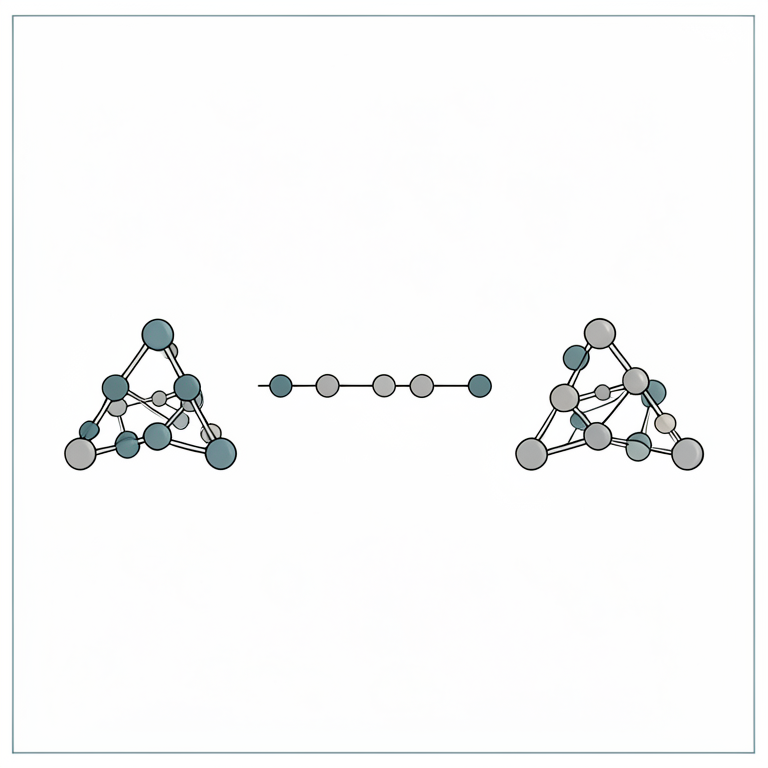
The graphs we consider are finite, undirected, simple and connected. For terminology and definitions we refer Harary [3] and Dynamic survey of graph labeling by Joe Gallian [2]. The families we discuss are obtained by taking two copies of graph G and join them by t paths of equal length. The paths are attached at the same fixed point on G. we represent these families by G(tPn).
We take t = 1 and G = C3, S4., K4. Theorems proved G=C3(1Pn) is E-cordial iff n’ is not congruent to 2 (mod 4).where n’=|V(G)| Proof: We define Gas V(G)={u1, u2, u3, u4}U{v1, v2,.vn} E(G)={ei=(vivi+1), i=1, 2, n-1, c1=(u1u2) c2=(u2v1),c3=(u1v1), c4=(vnu3), c5=(u3u4), c6=(u4vn)} |V(G)| =n+4 and |E(G)| = n+3. Maths 2018; 3(1): 263-265 Mukund V Bapat At Post Hindale, Tal Devgad, Dist. Sindhudurg, Maharashtra, India Correspondence Mukund V Bapat At Post Hindale, Tal Devgad, Dist.
Sindhudurg, Maharashtra, India 𝑛−𝑖 For n>5 define a function f:V(G){0, 1} as f(u1)=f(u2)=0 f(c4)=f(c5)=f(c6)=0,f(c1)=f(c3)=0, f(c2)=1 for i ≤2t; f(ei) =1 for I is odd number f(ei)=0 I is even number Where t =min{ 𝑛−𝑖 4 /i=0,1,2,3} Theorem S4(Pn) is E-cordial iff n is not congruent to 2 (mod 4) Proof: S4(pn)is defined as V(G) = {u1, u2, u3, u4, u5, u6}U{v1, v2, v3.vn} and the edge set is given by E(G) = {c1=(v1u1), (u1u2), c3=(u2u3), c4=(u3u4), c4=(u4v1), c5=(v1u2)} U {ei = (vivi+1), i= 1, 2,…,n-1} For n>5 define a function f:V(G){0,1} as f(u1)=f(u2)=0 f(c4)=f(c5)=f(c6)=0, f(c1)=f(c3)=0, f(c2)=1 for i ≤2t; f(ei) =1 for I is odd number f(ei)=0 I is even number Where t =min{ 4 /i=0, 1, 2, 3} 𝑛−𝑗 Define a function f : V(G){0, 1} as f(u1)=f(u2)=0 f(c4)=f(c5)=f(c6)=0, f(c1)=f(c3)=0,f(c2)=1 take t = 𝑛−1 4 /j=1, 2, 3. (n is divisible by 4 then graph is not E- cordial) For i ≤2t f(ei)=0 for i is odd number ≤2t f(ei)=1 for i is even number <2t. f(ei)=1 for i= 2t, 2t+1, 2t+k where k = p-t+1 where p = 2 for 𝑛−2 n ≡1,3 (mod 4) and p = 𝑛 𝑛 𝑛 𝑛 2 when n ≡2(mod 4). f(ei) = 0 for 2t+k<i ≤n Note that The number distribution is 1) for n≡1(mod 4) vf(0,1)=( 2+3, 2+4), ef(0,1)=( 2+4, 2+4) 𝑛 𝑛 𝑛 𝑛 2) for n≡2(mod 4) vf(0,1)=( 2+4, 2+4), ef(0,1)=( 2+5, 2+4) 𝑛 𝑛 𝑛 𝑛 3) for n≡3(mod 4) vf(0,1)=( 2+5, 2+4), ef(0,1)=( 2+5, 2+5) 𝑛 𝑛 𝑛 𝑛 Note that The number distribution is 1) for n≡1(mod 4)vf(0, 1)=( 2+3, 2+4), ef(0,1)=( 2+4, 2+4) 𝑛 𝑛 𝑛 𝑛 2) for n≡2(mod 4)vf(0, 1)=( 2+4, 2+4), ef(0,1)=( 2+5, 2+4) 𝑛 𝑛 𝑛 𝑛 3) for n≡3(mod 4)vf(0, 1)=( 2+5, 2+4), ef(0,1)=( 2+5, Theorem K4(Pn) is E-cordial. Proof: The K4(Pn) is defined as V(G)={ u1, u2, u3, u4, u5, u6}U{v1, v2,.vn}and E(G) ={c1=(v1u1), c2=(u1u2), c3=(u2u3), c4=(u3u4), c5=(v1u2), c6=(u1u3)} U{c7=(vnu4), c8=(u4u5), c9=(u5u6), c10=(u6vn), c11=(vnu5), c12=(u5u6)} U{ei=(vivi+1) / I =1, 2…, n-1} We diagramatically show below the E-cordial labeling of K4(p2), K4(p3), K4(P5). 2+5)
Conclusions
We have discussed only for single path between two copies of graphs. It is necessary to evaluate E-cordiality if there are 2 or more paths between twocopies of graphs.
References
5 in the original paper- Bapat Mukund V. Ph. D. Thesis, University of Mumbai, 2004.
- Joe Gallian. Dynamic survey of graph labeling, 2016.
- Harary, Graph Theory. Narosa publishing, New Delhi.
- Yilmaz Cahit. E-cordial graphs, Ars combina, 46:251- 256.
- Mukund Bapat V, Hindale Devgad, Sindhudurg. Maharashtra India, 416630. 𝑛−𝑗 Define a function f :E(G){0,1} as f(c1)=1, f(c2)=1, f(c4)=1, f(c7)=1, f(c8)=1, f(c10)=1. take t = 𝑛−1 4 /j=1,2,3. ( n is divisible by 4 then graph is not E-cordial) For i ≤2t f(ei)=0 for i is odd number ≤2t. f(ei)=1 for i is even number <2t. f(ei)=1 for i= 2t, 2t+1, 2t+k where k = p-t+1 where p = 2 for 𝑛−2 n ≡1,3 (mod 4) and p = 2 when n ≡2(mod 4). f(ei) = 0 for 2t+k<i ≤n