
Research article · 2020 · Full text
International Journal of Statistics and Applied MathematicsNumerical investigation for viscoelastic fluid flow past a vertical porous plate with variable suction under the impact of Soret Dufour effects, second-order chemical reaction and radiation
Volume 5(4) · Pages 01–11
Research areasNanofluid Flow and Heat TransferHeat Transfer MechanismsFluid Dynamics and Turbulent Flows
Abstract
Author-writtenThe object of this article is to monitor the change of second order chemical reaction and variable suction in MHD (magnetohydrodynamics) flow of viscoelastic fluid over a vertical porous plate immersed in a porous medium with radiation and Soret Dufour effects. The momentum, heat transfer, and mass transfer are set of nonlinear sets of partial differential equations impressed by boundary conditions, these equations are solved using finite difference method namely Crank-Nicolson. Obtained results of these physical variables are discussed by plotting graphs and numerical values of skin friction, Nusselt number and Sherwood number are studied by displaying the table.
Summary
Source-checkedPlain-language reading of the full paper, prepared with AI and checked against the text. Each point links to the authors' own words.
Why it matters
- Viscoelastic fluids are non-Newtonian fluids, such as honey, polymers, and certain biological fluids, which do not follow Newton's law of viscosity. View evidence ↗
- Research into viscoelastic fluids is currently significant because of their applications in manufacturing and engineering rheology. View evidence ↗
The question
- The study aims to investigate the effects of Soret-Dufour effects and second-order chemical reactions on the magnetohydrodynamic (MHD) flow of Walter's B viscoelastic fluid over a porous plate with radiation and variable suction velocity. View evidence ↗
What they did
- The researchers converted the nonlinear partial differential equations governing the flow into a dimensionless system and solved them using the Crank-Nicolson implicit finite difference method. View evidence ↗
- The study measured velocity, temperature, and concentration profiles, as well as the friction factor and heat and mass transfer coefficients. View evidence ↗
What they found
- Increasing the Dufour number leads to an increase in both velocity and temperature profiles. View evidence ↗
- Velocity profiles increase rapidly as the Soret number increases. View evidence ↗
- Increasing the Prandtl number (Pr) results in a decrease in velocity profiles and a rapid decrease in temperature profiles. View evidence ↗
- The momentum, thermal, and species boundary layers all increase in thickness as radiation increases. View evidence ↗
- Increasing the Schmidt number (Sc) decreases velocity profiles and rapidly increases concentration profiles, while temperature profiles first increase and then decrease. View evidence ↗
- Velocity, temperature, and concentration profiles all increase as time (t) increases. View evidence ↗
- The skin friction coefficient increases with the Dufour number, Soret number, Schmidt number, radiation, viscoelastic parameter, and time, but decreases with the chemical reaction parameter, magnetic parameter, and Prandtl number. View evidence ↗
What it means
- The authors conclude that chemical reactions decrease the momentum boundary layer thickness while increasing the species boundary layer thickness. View evidence ↗
Visual summary
2 visualsIllustrations explain the paper; charts are replotted from the paper's own table values.
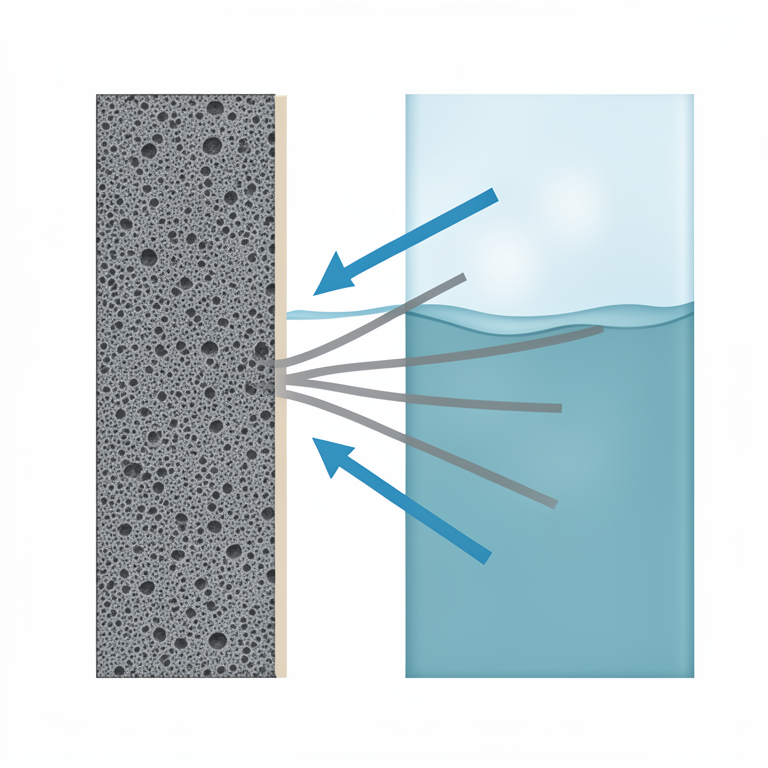
System Configuration
AI-generated conceptual illustration (viscoelastic fluid flowing past a vertical porous plate). It explains the idea and does not show study data.
View source evidence ↗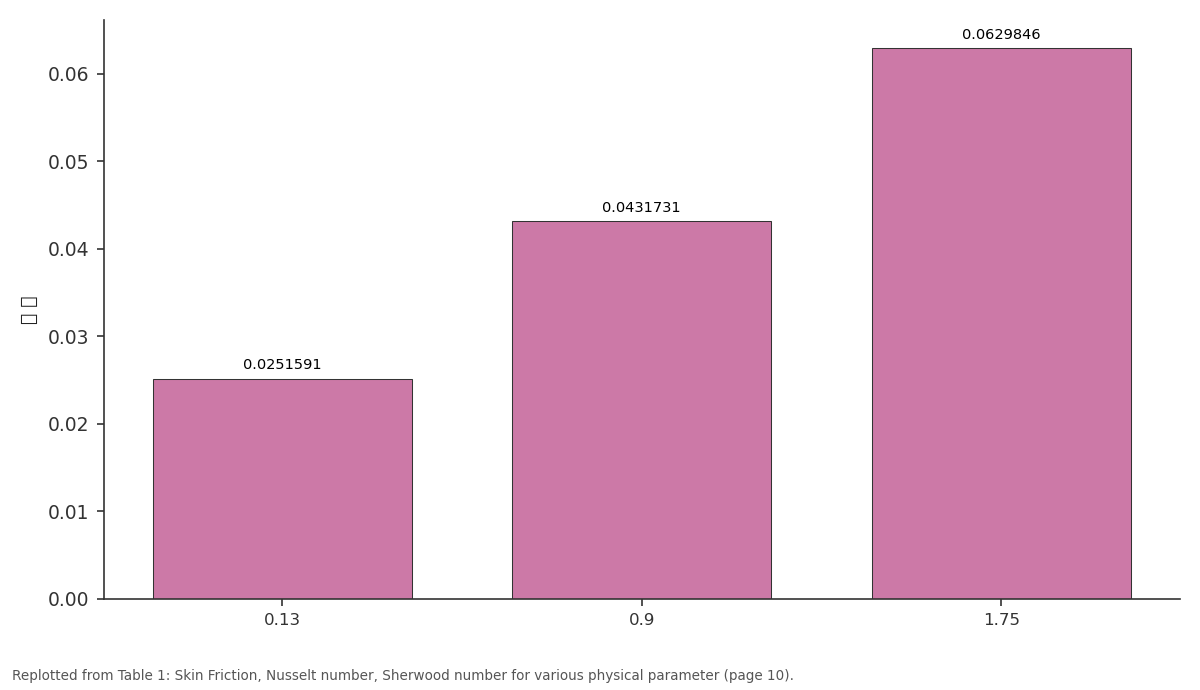
𝐶 𝑓: 0.13 vs 0.9 vs 1.75
Replotted from Table 1 (page 10) of the original paper. Every bar is the paper's own table value.
View source evidence ↗Figures & tables
From the original paper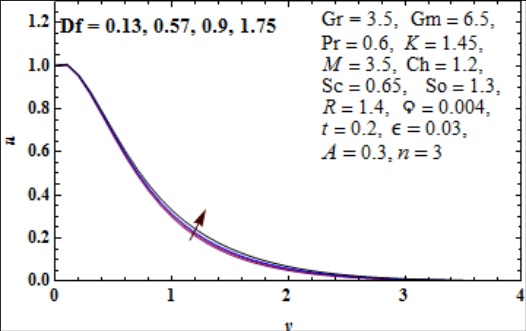 Figure 1Page 5
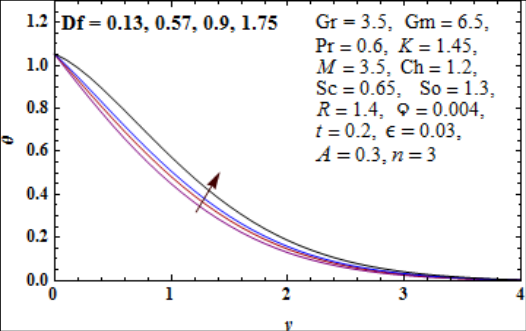 Figure 2Page 5
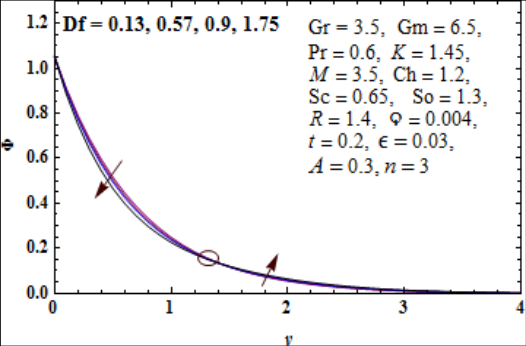 Figure 3Page 5
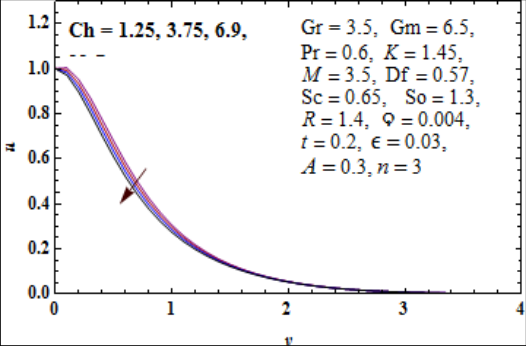 Figure 4Page 5
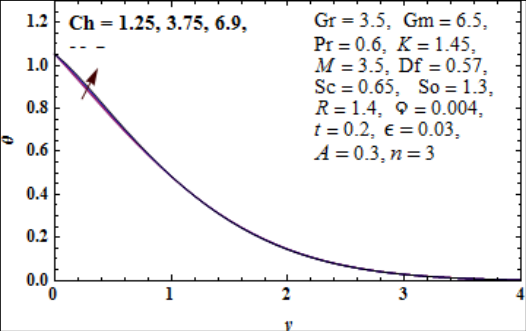 Figure 5Page 6
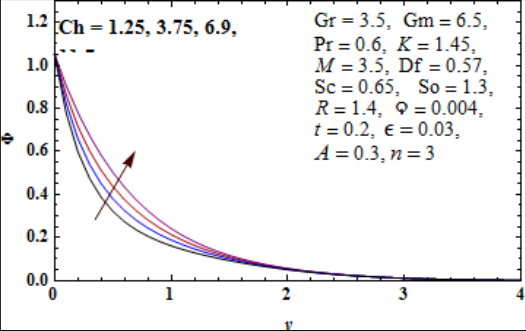 Figure 6Page 6
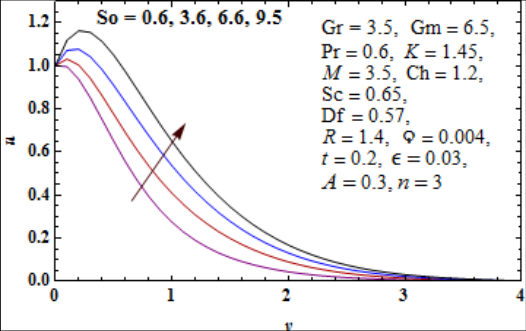 Figure 7Page 6
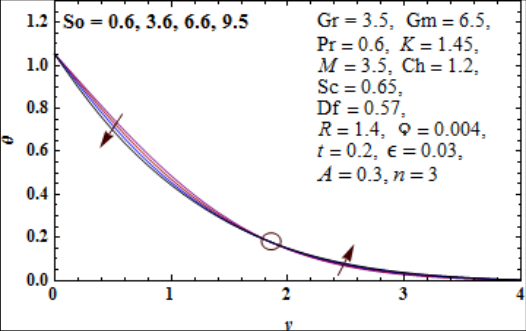 Figure 8Page 6
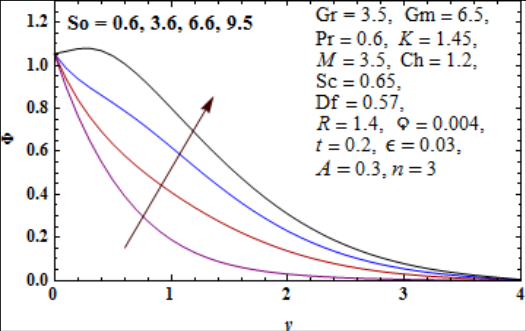 Figure 9Page 7
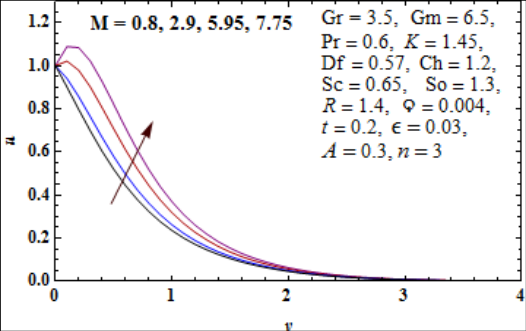 Figure 10Page 7
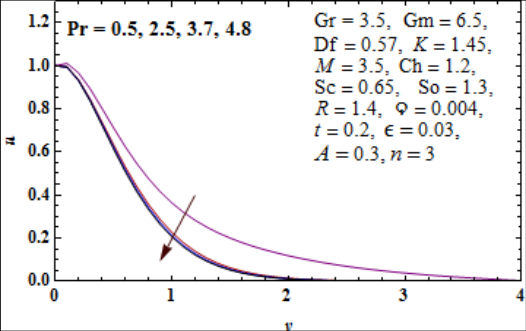 Figure 11Page 7
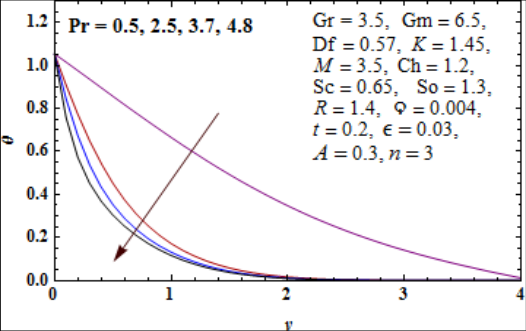 Figure 12Page 7
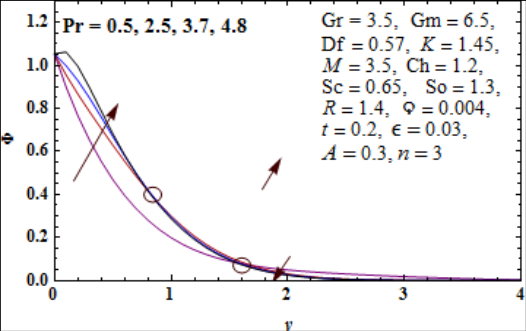 Figure 13Page 8
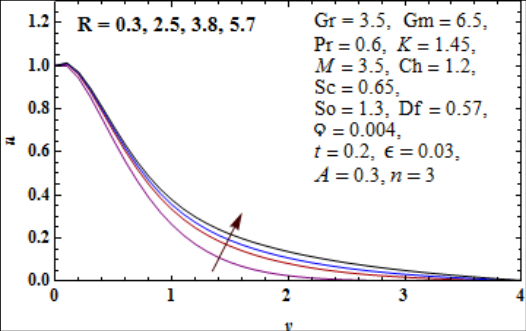 Figure 14Page 8
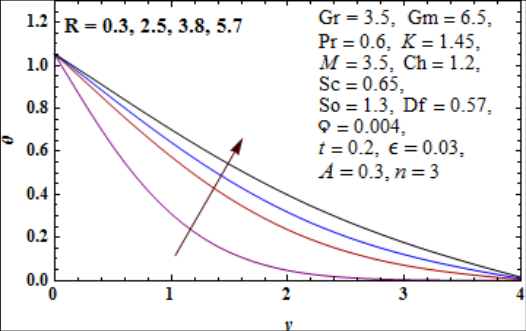 Figure 15Page 8
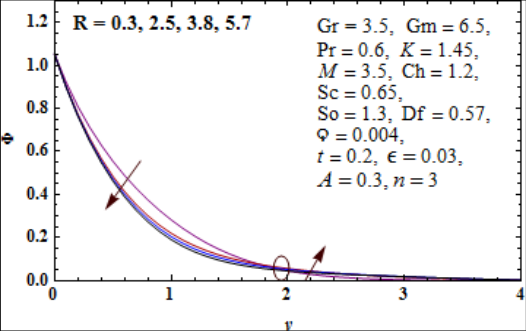 Figure 16Page 8
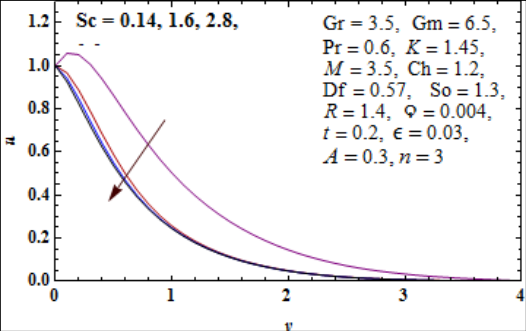 Figure 17Page 9
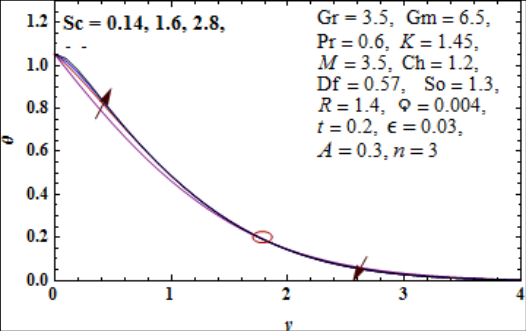 Figure 18Page 9
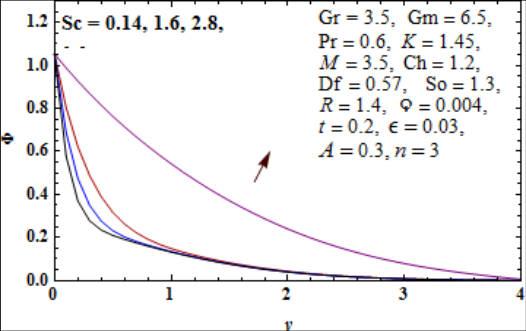 Figure 19Page 9
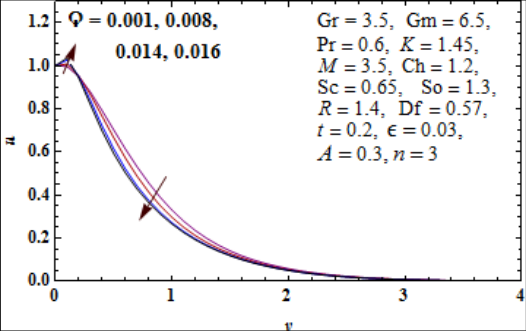 Figure 20Page 9
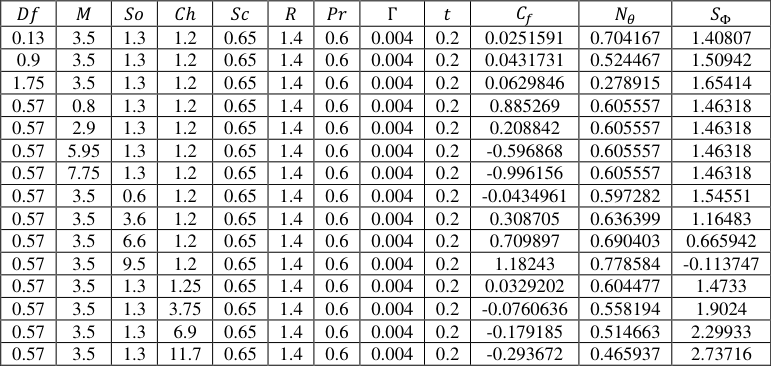 Table 1Page 10
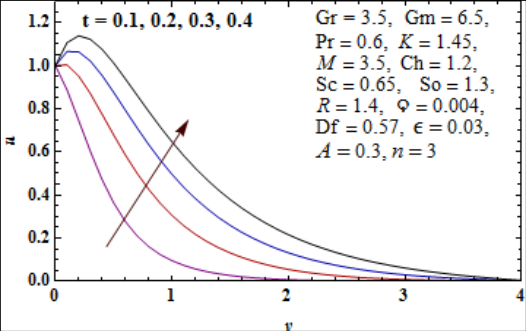 Figure 21Page 10
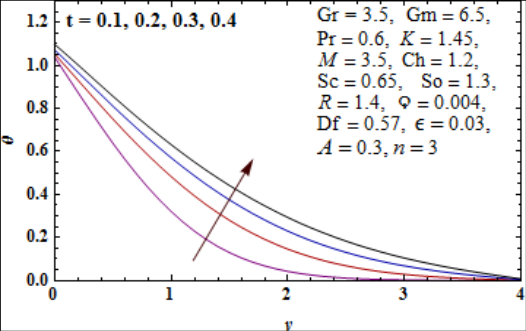 Figure 22Page 10
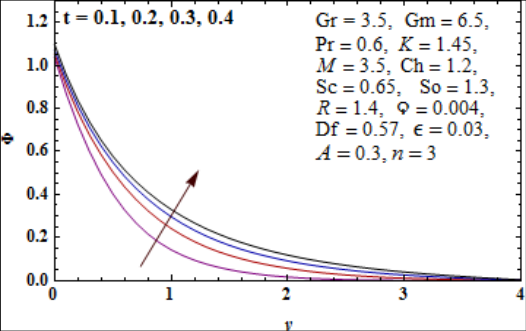 Figure 23Page 10
Introduction
The fluid which follows the Newton law of viscosity like water, turpentine, solvents are viscous fluid and which does not follow Newton law i.e non-Newtonian like honey, toothpaste, polymer, paints, DNA suspension, some biological fluids are viscoelastic fluid. Nowadays, most of the research workers in this field are attracting research on viscoelastic fluids due to rheological applications in engineering and manufacturing processes. Alsaedi et al. [1] examined MHD viscoelastic fluid flow with binary chemical reaction and Arrhenius activation energy using a numerical method. Gizachew and Shankar [2] discussed MHD flow and energy transfer in viscoelastic fluid expanded on a horizontal plate is considered. Alsulami et al. [3] inquired entropy generation in stratified Walters' B nanofluid with swimming gyrotactic microorganisms. Idowu and Falodun [4] investigated Soret-Dufour effects on MHD energy and species transfer of Walter's-B viscoelastic fluid over an infinite vertical plate. Malik and Rehman [5] explored the characteristics of second-order chemical reaction on steady MHD flow of viscous incompressible electrically conducting fluid in a porous media with heat and mass transfer. Singh et al. [6] given a survey for mixed convection hydromagnetic flow of an incompressible, electrically, and thermally conducting and chemically reacting viscoelastic fluid over a vertical porous channel immersed in a porous medium. Megahed and Reddy [7] examined numerical and theoretical of the viscous dissipation phenomenon on the viscoelastic fluid flow which is passing over a stretching sheet. Rajakumar et al. [8] analyzed the influence of Dufour and thermal radiation on unsteady MHD Walter's liquid model-B flow past an impulsively started infinite vertical plate embedded in a porous medium with chemical reaction, Hall and ion-slip current. Sandeep et al. [9] examined the effects of radiation and variable heat source/sink on the boundary-layer flow of MHD fluid across a curved surface. Ramadevi et al. [10] delivered a numerical examination of 2D magnetohydrodynamic nonlinear micropolar fluid flow with radiation and stretching surface. Induced by the above literature, this paper is focused on Soret-Dufour effects and second order chemical reaction on MHD flow of Walter's B viscoelastic fluid past over a porous plate with variable suction velocity and radiation.
The flow governing nonlinear partial differential equations is restored into a dimensionless system of PDEs with the help of appropriate boundary conditions and then solved by using Crank-Nicolson implicit finite difference method. The graphs have pictured the fields of velocity, temperature, and concentration profiles to the flow of relevant physical and chemical parameters. Further friction factor and coefficient of heat and mass transfer rates are tabled for these physical and chemical parameters.
Mathematical Model
Consider an unsteady magnetohydrodynamics flow of Walter's B viscoelastic fluid past over a porous plate imbedded in porous medium with variable heat and mass transfer under influence of Soret-Dufour effects, radiation effect and second-order chemical reaction. We considered a time dependent suction velocity normal to plate. 𝑥̅ -axis is considered along the plate and 𝑦 ̅-axis is normal to it. Further, due to the semi-infinite plate, the flow variables are functions of normal distance 𝑦 ̅ and 𝑡 ̅ only. A uniform strength magnetic field 𝐵 0 is applied in direction of normal to the plate and the magnetic Reynolds number is assumed to be small so that stimulated magnetic field is negligible. The temperature and concentration of the plate surface are 𝑇 𝑝 and 𝐶 𝑝 respectively. Also, the free stream temperature and concentration are denoted by 𝑇 ∞ and 𝐶 ∞ respectively. With the above model, the governing equations of the flow under usual Boussinesq approximation are as follows:
together with boundary conditions for this model are as follows
Integrating equation of continuity [1], we have constant or time dependent suction velocity. Since we have considered in this model already that there exists a variable suction velocity so we have time dependent suction velocity as
here 𝐵 denotes the suction parameter and 𝜖𝐵 ≪ 1. Here 𝑈 0 is average constant suction velocity and the minus sign indicated that suction is outside the plate.
Using the Roseland approximation [11], we have the radiative heat flux 𝑅 𝑑 as
We have considered that the temperature difference in the flow is very very small and 𝑇 4 can be written in a linear function of the temperature 𝑇. It is seen by expanding 𝑇 4 using a Taylor series about 𝑇 ∞ , as follows
Neglecting higher order terms of 𝑇 ∞ in expansion, we have
Equation ( 3) is written in new form using equation ( 7) and ( 9)
Introduction following non dimensional quantities
Using non dimensional quantities defined in equation (11) in equations ( 2), ( 4), (10), and (5) we have dimensionless form of governing equations and boundary conditions of flow as follows
The skin friction coefficient because of viscous drag in the vicinage of the walls is written in non dimensional form as
Non dimensional form of Nusselt number because of the energy transfer between the fluid and wall is given as
Non dimensional form of Sherwood number because of the mass transfer between the fluid and wall is given as
Mathematical Solution
In this part of article, the Crank-Nicolson implicit finite difference method is applied on non dimensional governing partial differential equations ( 12)-( 14) subject to conditions in equation (15) and we get transformed equations as follows
with subject to conditions as given in transformed form 𝑢 𝑙,0 = 0, 𝜃 𝑙,0 = 0, Φ 𝑙,0 = 0, ∀𝑙 𝑢 0,𝑚 = 1, 𝜃 0,𝑚 = 1 + 𝜖𝑒 -𝑁𝑚∆𝑡 , Φ 0,𝑚 = 1 + 𝜖𝑒 -𝑁𝑚∆𝑡 𝑢 𝑋,𝑚 = 0, 𝜃 𝑋,𝑚 → 0, Φ 𝑋,𝑚 → 0.
We divide 𝑦-axis using mess 𝑦 𝑙 , and ∆𝑦 = 𝑦 𝑙+1 -𝑦 𝑙 and 𝑡 𝑚 denotes partition of time
Results and Discussion
In order to the discussion and demonstration, we obtained numerical results of governing non linear partial differential equations using Crank-Nicolson implicit finite difference method. The physical nature of the viscoelastic fluid flow are governed by the changing values of thermal Grashof number 𝐺𝑟, Solutal grashof number 𝐺𝑚, magnetic parameter 𝑀, Dufour number 𝐷𝑓, Soret number 𝑆𝑜, chemical reaction parameter 𝐶ℎ, Schmidt number 𝑆𝑐, prandtl number 𝑃𝑟, permeability of porous medium 𝐾, viscoelastic parameter Ϙ, radiation parameter 𝑅, small reference parameter 𝜖, suction parameter 𝐵, constant 𝑁, and time 𝑡. The results for the changing of these physical parameters are given as functions of the non dimensional velocity 𝑢, the non dimensional temperature 𝜃 and non dimensional concentration Φ. Fig. 1 and Fig. 2 depict that an increase in Dufour number results an increase in velocity profiles and an increase in temperature profiles respectively. While in Fig. 3 near to plate concentration decreases after that mid of boundary layer of concentration it increase slowly as Dufour number increases. Fig. 4, Fig. 5 and Fig. 6 show the change of chemical reaction parameter 𝐶ℎ in velocity, temperature and concentration profiles respectively. It is analyzed that velocity profiles decrease and temperature profiles increase near to plate whereas concentration profiles increases very fast in compare to velocity or temperature profiles.
The effect of Soret number on velocity, temperature and concentration profiles display in Fig. 7, Fig. 8 and Fig. 9 respectively. It is analyzed when soret number increases velocity profiles increases rapidly in Fig. 7. In Fig. 8, Temperature profiles near to plate decrease, and after mid of thermal boundary layer it increases when soret number increases. Fig. 9 demonstrates that concentration profiles increases very fast as soret number changes. Fig. 10 shows the effects of change in magnetic parameter 𝑀 that velocity profiles increases rapidly as 𝑀 increases. Velocity profiles decreases in Fig. 11, temperature profiles decreases very fast in Fig. 12 when prandtl number 𝑃𝑟 increases. In Fig. 13, concentration profiles first near to plate increases after that decreases as 𝑃𝑟 increases. It is noticed that boundary layer of momentum, thermal and species all increase as radiation increase in Fig. 14 1 shows that Nusselt number 𝑁 𝜃 decreases as Dufour number, chemical reaction parameter, Schmidt number, radiation parameter, and time increase while 𝑁 𝜃 increases when prandtl number and soret number increase. Table 1 illustrates that increase of Dufour number, chemical reaction parameter, Schmidt number, and radiation parameter result as Sherwood number 𝑆 Φ increases while 𝑆 Φ increases on increment of prandtl number, soret number, and time.
| 𝐷𝑓 | 𝑀 | 𝑆𝑜 | 𝐶ℎ | 𝑆𝑐 | 𝑅 | 𝑃𝑟 | Γ | 𝑡 | 𝐶 𝑓 | 𝑁 𝜃 | 𝑆 Φ |
|---|---|---|---|---|---|---|---|---|---|---|---|
| 0.13 | 3.5 | 1.3 | 1.2 | 0.65 | 1.4 | 0.6 | 0.004 | 0.2 | 0.0251591 | 0.704167 | 1.40807 |
| 0.9 | 3.5 | 1.3 | 1.2 | 0.65 | 1.4 | 0.6 | 0.004 | 0.2 | 0.0431731 | 0.524467 | 1.50942 |
| 1.75 | 3.5 | 1.3 | 1.2 | 0.65 | 1.4 | 0.6 | 0.004 | 0.2 | 0.0629846 | 0.278915 | 1.65414 |
| 0.57 | 0.8 | 1.3 | 1.2 | 0.65 | 1.4 | 0.6 | 0.004 | 0.2 | 0.885269 | 0.605557 | 1.46318 |
| 0.57 | 2.9 | 1.3 | 1.2 | 0.65 | 1.4 | 0.6 | 0.004 | 0.2 | 0.208842 | 0.605557 | 1.46318 |
| 0.57 | 5.95 | 1.3 | 1.2 | 0.65 | 1.4 | 0.6 | 0.004 | 0.2 | -0.596868 | 0.605557 | 1.46318 |
| 0.57 | 7.75 | 1.3 | 1.2 | 0.65 | 1.4 | 0.6 | 0.004 | 0.2 | -0.996156 | 0.605557 | 1.46318 |
| 0.57 | 3.5 | 0.6 | 1.2 | 0.65 | 1.4 | 0.6 | 0.004 | 0.2 | -0.0434961 | 0.597282 | 1.54551 |
| 0.57 | 3.5 | 3.6 | 1.2 | 0.65 | 1.4 | 0.6 | 0.004 | 0.2 | 0.308705 | 0.636399 | 1.16483 |
| 0.57 | 3.5 | 6.6 | 1.2 | 0.65 | 1.4 | 0.6 | 0.004 | 0.2 | 0.709897 | 0.690403 | 0.665942 |
| 0.57 | 3.5 | 9.5 | 1.2 | 0.65 | 1.4 | 0.6 | 0.004 | 0.2 | 1.18243 | 0.778584 | -0.113747 |
| 0.57 | 3.5 | 1.3 | 1.25 | 0.65 | 1.4 | 0.6 | 0.004 | 0.2 | 0.0329202 | 0.604477 | 1.4733 |
| 0.57 | 3.5 | 1.3 | 3.75 | 0.65 | 1.4 | 0.6 | 0.004 | 0.2 | -0.0760636 | 0.558194 | 1.9024 |
| 0.57 | 3.5 | 1.3 | 6.9 | 0.65 | 1.4 | 0.6 | 0.004 | 0.2 | -0.179185 | 0.514663 | 2.29933 |
| 0.57 | 3.5 | 1.3 | 11.7 | 0.65 | 1.4 | 0.6 | 0.004 | 0.2 | -0.293672 | 0.465937 | 2.73716 |
Table text extracted from the original PDF; superscript letters are shown inline. The original table image is below.
View original table image
Conclusion
The investigation of Soret-Dufour, radiation, and second order chemical reaction effects on an unsteady MHD viscoelastic fluid flow past over a infinite vertical porous plate immersed in porous medium in presence of variable temperature, concentration, and variable suction velocity. The impact of some valuable flow governing physical parameters on these flow variables have been utterly dissertated in the previous section. The pre-dominant results are as follows 1. The effect of chemical reaction on viscoelastic fluid is to decrease boundary layer thickness of momentum and increases boundary layer thickness of species. 2. There is interesting change has been seen for viscoelastic parameter in momentum of fluid i.e. fluid velocity near to plate first increase and after that it decreases, 3. Thermal and species boundary layer thickness increase at increase of Dufour number. 4. Speices and thermal boundary layer thickness increase at increase of Soret number.
Acknowledgement
I would like to express my special thanks of gratitude to my principal Dr. Vishnu Chandra Tripathi, vice-principal Dr. Mayanand Upadhyay, and our proctor of science faculty Dr. A.K. Dwivedi who encourage us to complete this research work.
Figures and tables from the paper
References
12 in the original paper- Alsaedi A, Hayat T, Mustafa M, Mushtaq A. Numerical Study of MHD Viscoelastic Fluid Flow with Binary Chemical Reaction and Arrhenius Activation Energy. Int. J Chem. React. Eng. 2016; 15(1):1-9.
- Gizachew Adamu, Shankar Bandari. MHD Flow of Non-Newtonian Viscoelastic Fluid on Stretching Sheet with The Effect of Slip Velocity. International Journal of Engineering and Manufacturing Science. 2018; 8(1):1-14.
- Alsulami Hamed, Tariq Sana, Naz Rahila. Inquiry of entropy generation in stratified Walters' B nanofluid with swimming gyrotactic microorganisms. Alexandria Engineering Journal. 2020; 59:247-261.
- Idowu AS, Falodun BO. Soret-Dufour effects on MHD heat and mass transfer of Walter's-B viscoelastic fluid over a semiinfinite vertical plate: spectral relaxation analysis. Journal of Taibah University for Science. 2019; 13(1):49-62.
- Malik MY, Rehman Khalil-ur. Effects of Second Order Chemical Reaction on MHD Free Convection Dissipative Fluid Flow past an Inclined Porous Surface by way of Heat Generation: A Lie Group Analysis. Inf. Sci. Lett. 2016; 5(2):35-45.
- Singh JK, Seth GS, Joshi Naveen, Srinivasa CT. Mixed convection flow of a viscoelastic fluid through a vertical porous channel influenced by a moving magnetic field with Hall and ion-slip currents, rotation, heat radiation and chemical reaction. Bulgarian Chemical Communications. 2020; 52(1):147-158.
- Ahmed M, Megahed M, Gnaneswara Reddy. Numerical treatment for MHD viscoelastic fluid flow with variable fluid properties and viscous dissipation. Indian J Phys. 2020; https://doi.org/10.1007/s12648-020-01717-3.
- Rajakumar KVB, Govinda Rao T, Reddy Umasankara M, Balamurugan KS. Influence of Dufour and thermal radiation on unsteady MHD Walter's liquid model-B flow past an impulsively started infinite vertical plate embedded in a porous medium with chemical reaction, Hall and ion slip current. SN Appl. Sci. 2020; 2:742. https://doi.org/10.1007/s42452-020-2484-y.
- Sandeep N, Reddy JVR, Anantha K Kumar, Sugunamma V. Simultaneous solutions for MHD flow of Williamson fluid over a curved sheet with non-uniform heat source/sink. Heat Transf Res. 2019; 50(6):581-603.
- Ramadevi B, Anantha Kumar K, Sugunamma V, Ramana Reddy JV, Sandeep N. Magnetohydrodynamic mixed convective flow of micropolar fluid past a stretching surface using modified Fourier's heat flux model. Journal of Thermal Analysis and Calorimetry. 2019; https://doi.org/10.1007/s10973-019-08477-1.
- Siegel R, Howell JR. Thermal Radiation Heat Transfer. Taylor & Francis, London, 1992.
- Wilkes JO, Luther HA, Carnahan B. Applied Numerical Methods. Krieger Pub Co, Florida, 1990.