
Research article · 2024 · Full text
International Journal of Advanced Biochemistry ResearchEffect of flunixin co-administration on pharmacokinetics of cefquinome following intramuscular administration in goats
Volume 8(1S) · Pages 654–659 · DOI: 10.33545/26174693.2024.v8.i1si.389 ↗
Research areasAntibiotics Pharmacokinetics and EfficacyAntibiotic Resistance in BacteriaPhenothiazines and Benzothiazines Synthesis and Activities
Abstract
Author-writtenCefquinome, a fourth generation cephalosporin, having broad spectrum of activity against Gram-positive and Gram-negative bacteria and developed exclusively for veterinary use. Non-steroidal antiinflammatory drugs (NSAIDs) are commonly used with antimicrobial therapy in veterinary practice for the treatment of infectious diseases. The present study was taken to investigate the disposition kinetics of cefquinome at the dose rate of 2 mg kg-1 body weight and the effect of flunixin when co-administered intravenously at the dose rate of 2.2 mg kg-1 body weight on disposition kinetics of cefquinome in goats. Plasma concentrations were determined by microbiological assay method using MTCC equivalent (MTCC 1541) of Micrococcus luteus (ATCC 9341) as the test organism. Following intramuscular administration of cefquinome, the plasma concentration time profile was best described by one compartment open model. In the present study, following intramuscular administration of cefquinome in flunixin pretreated goats, the peak plasma concentration (Cmax) was observed 4.48±0.19 μg ml-1 which was not significantly higher and almost comparable to the Cmax 5.1±0.51 μg ml-1 observed in only cefquinome administered goats. Following co-administration of cefquinome with flunixin, no significant changes were observed in most of the pharmacokinetic parameters of cefquinome, except elimination half-life (t1/2β) and volume of distribution (Vdarea) which were significantly increased. The integration of pharmacokinetic and pharmacodynamics parameters suggested that the cefquinome at the dose rate of 2 mg kg-1 body weight intramuscularly can be administered with flunixin to treat bacterial infections with inflammatory conditions in goats.
Summary
Source-checkedPlain-language reading of the full paper, prepared with AI and checked against the text. Each point links to the authors' own words.
Why it matters
- Cefquinome is a fourth-generation cephalosporin developed specifically for veterinary use, offering a broad spectrum of activity against both Gram-positive and Gram-negative bacteria. View evidence ↗
- In veterinary medicine, non-steroidal anti-inflammatory drugs (NSAIDs) are frequently used as adjuncts to antimicrobial therapy when treating infectious diseases. View evidence ↗
- Flunixin is an NSAID used across various mammalian species for its analgesic, antipyretic, and antiphlogistic properties. View evidence ↗
The question
- The study aimed to investigate the disposition kinetics of cefquinome (2 mg/kg) in goats and determine how the co-administration of intravenous flunixin (2.2 mg/kg) affects these kinetics. View evidence ↗
What they did
- The experiment used five healthy male Marwari goats, aged 8 to 10 months and weighing between 25 and 30 kilograms. View evidence ↗
- A cross-over study design was employed, incorporating a washout period of at least 15 days between treatments. View evidence ↗
- Cefquinome was administered intramuscularly at 2 mg/kg; in the co-administration group, flunixin was given intravenously at 2.2 mg/kg simultaneously. View evidence ↗
- Plasma drug concentrations were measured using a microbiological assay with Micrococcus luteus as the test organism. View evidence ↗
- Pharmacokinetic variables were determined using both compartmental and non-compartmental analysis models. View evidence ↗
What they found
- In goats receiving cefquinome alone (2 mg/kg), the peak plasma concentration (Cmax) was 5.10±0.51 µg/ml, occurring 1 hour after administration. View evidence ↗
- Co-administration with flunixin resulted in a Cmax of 4.48±0.19 µg/ml, which was not significantly different from the Cmax observed with cefquinome alone. View evidence ↗
- The elimination half-life (t1/2β) significantly increased from 1.48±0.04 h (cefquinome alone) to 1.85±0.12 h when co-administered with flunixin. View evidence ↗
- The apparent volume of distribution (Vdarea) significantly increased from 0.29±0.02 L/kg in the cefquinome-only group to 0.42±0.042 L/kg in the flunixin co-administration group. View evidence ↗
- The area under the curve (AUC) remained similar between the two groups, with 13.67±0.57 µg/ml·h for co-administration versus 14.44±0.82 µg/ml·h for cefquinome alone. View evidence ↗
- Apparent clearance (Cl') was not significantly altered, measuring 147.41±6.44 ml/kg/h with flunixin compared to 140.33±8.09 ml/kg/h without. View evidence ↗
What it means
- The authors conclude that flunixin (2.2 mg/kg IV) can be successfully co-administered with cefquinome (2 mg/kg IM) to treat bacterial infections with inflammation in goats, as major pharmacokinetic parameters were not significantly altered. View evidence ↗
- Based on the requirement that the time above minimum inhibitory concentration (T>MIC) should be at least 50% of the dosing interval, the authors recommend a 12-hour dosing interval for cefquinome at 2 mg/kg IM. View evidence ↗
Visual summary
1 visualsIllustrations explain the paper; they do not show study data.
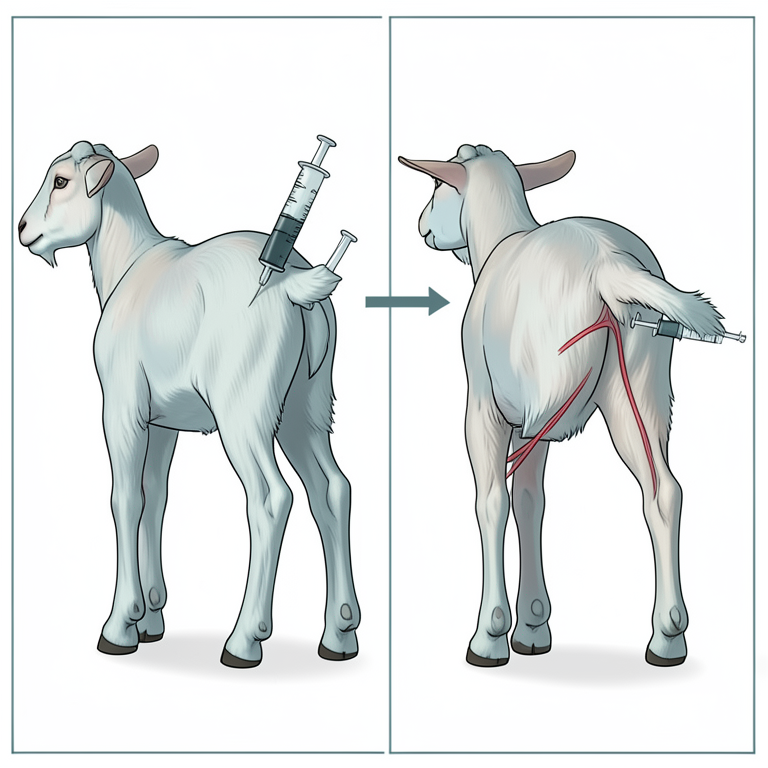
Experimental Setup
AI-generated conceptual illustration (goat kids). It explains the idea and does not show study data.
View source evidence ↗Figures & tables
From the original paper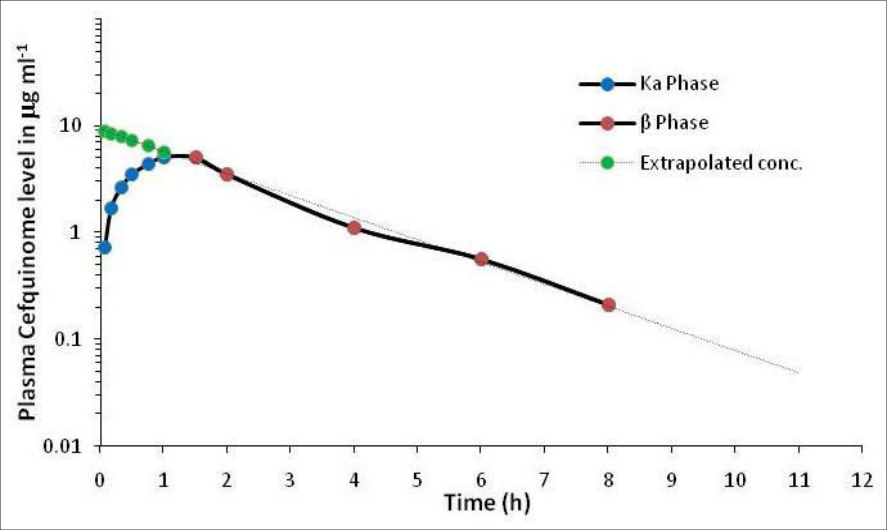 Figure 1
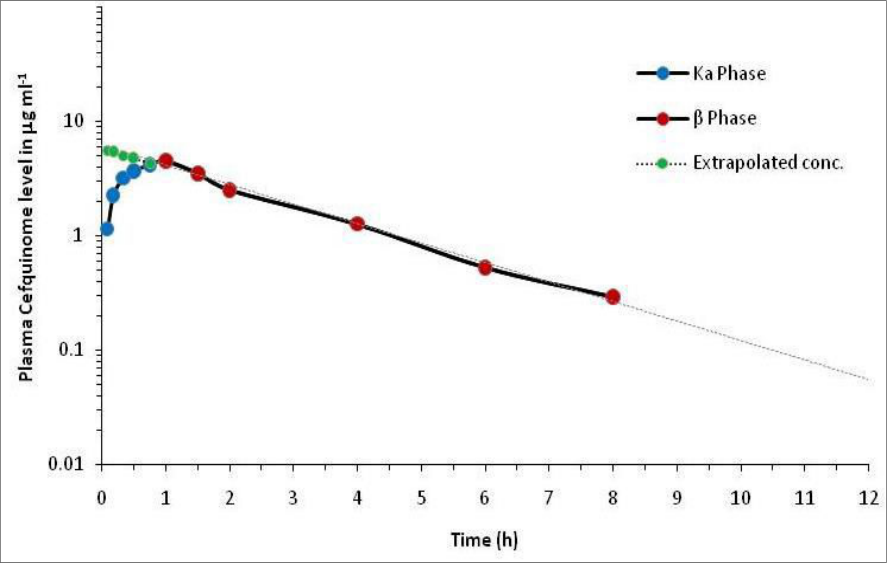 Figure 2
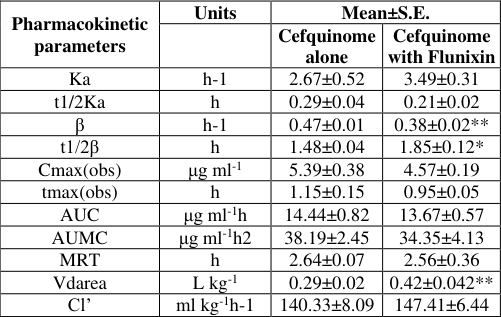 Table 1
Introduction
Non-steroidal anti-inflammatory drugs (NSAIDs) are commonly indicated as an adjunct to antimicrobial therapy in veterinary practice for the treatment of infectious diseases. Cefquinome is a fourth generation aminothiazolyl cephalosporin with broad spectrum of activity against Gram-positive and Gram-negative bacteria, developed exclusively for veterinary use including food animals (Murphy et al., 1994) [16] . It has a broad spectrum of antibacterial activity with time dependent bactericidal effect, as shown by β-lactam antibiotics (Thomas et al., 2006) [7] . In ruminants, the use of NSAIDs is associated with the treatment of pain, mastitis, pneumonia and inflammatory conditions (Pugh, 1991; Ziv, 1992; Deleforge et al., 1994) [20,32,7] . Amongst Non-steroidal anti-inflammatory drugs, Flunixin, used for analgesic, antiphlogistic and antipyretic purposes in a variety of mammalian species. Flunixin acts via analgesic and anti-inflammatory mechanisms. Analgesic actions may involve blocking pain impulse generation via a peripheral action by inhibition of the synthesis of prostaglandins and possibly inhibition of the synthesis or actions of other substances, which sensitize pain receptors to mechanical or chemical stimulation. Flunixin may act peripherally in inflammed tissue, probably by inhibiting the enzyme cyclooxygenase to decrease the formation of precursors of prostaglandins, and possibly by inhibiting other local mediators of the inflammatory response (Lees and Higgins, 1985) [14] . Various pharmacokinetic interactions between antimicrobials and NSAIDs have been described (Singh et al., 2008 [24,8,1,22,4,17,18] . There is less information available on the influence of the co-administration of flunixin on the pharmacokinetics of cefquinome in animals. So, the present study was conducted to investigate the influence of flunixin on the pharmacokinetics of cefquinome in goats.
Materials and Methods
Materials and Methods
Experimental animals
The study was conducted on five apparently healthy Marwari male goats of 8
Experimental protocol
The study was carried out in cross-over design, with a minimum of 15 days of washout period. Cefquinome sulphate injection was administered intramuscularly on gluteal muscle at the dose rate of 2 mg kg -1 body weight. The dosage level of cefquinome employed in the present study was comparable to the dose of cefquinome used by previous workers in goat (Dumka et al., 2013) [9] and sheep (Uney et al., 2011) [28] . Blood samples were collected in test tubes containing EDTA, immediately before administration of cefquinome (0 h) and at 0.08, 0.16, 0.33, 0.5, 0.75, 1.0, 1.5, 2, 4, 6, 8, 10, 12 and 24 h after administration of the drug. Following a washout period of 21 days, Cefquinome sulphate injection at the dose rate of 2 mg kg -1 body weight intramuscularly and flunixin injection at the dose rate of 2.2 mg kg -1 body weight intravenously were administered simultaneously. Blood samples were collected before administration of cefquinome and flunixin (0 h) and at same time intervals mentioned above after administration of the drugs. Blood samples were centrifuged at 3000 rpm for 15 min to separate the plasma. Plasma samples were stored at -20 °C until assayed.
Drug bioassay
Cefquinome concentrations in plasma samples were estimated by microbiological assay method using MTCC equivalent (MTCC 1541) of Micrococcus luteus (ATCC 9341) (Arret et al., 1971; El Badawy et al., 2015) [5,10] . Six equidistant identical (6.0±0.1 mm) wells were punched in the solidified media in petri plates using a punching machine. The wells were charged with the test samples/cefquinome standard in triplicates. The petri plates were incubated at 30 degree C for 24 h. In test sample plates, three alternate wells out of six were filled with reference concentration of the drug which gives a clear zone of inhibition of 16-18 mm so as to minimize the plate to plate variation in zones of inhibition. Zones of inhibition were measured using a Vernier calliper and the mean of triplicate samples was taken and compared with that of reference standard(s) to obtain the concentration of cefquinome in test samples. Minimum sensitivity of the assay method was 0.20 µg ml -1 .
Pharmacokinetic analysis
The plasma cefquinome concentration time profile of each animal following intramuscular administration of cefquinome alone and when co administered with flunixin were used to determine the pharmacokinetic variables describing the absorption, distribution and elimination characteristics of cefquinome in goats. To determine the different disposition kinetic variables, plasma drug concentration-time data were analyzed by employing the compartmental (Gibaldi and Perrier, 2007; Baggot, 2001) [12,6] and non-compartmental (Yamoka et al., 1978; Gibaldi and Perrier, 2007) [30,12] pharmacokinetic models.
Statistical analysis of data
The data generated in the present studies were subjected to statistical analysis by employing student's 't' test using MS Excel (2007).
Results and Discussion
No adverse effects or toxic manifestations were observed to cefquinome IM injection alone or co-administered with flunixin in goats. Plasma cefquinome concentrations at different time intervals following intramuscular administration of cefquinome alone and co-administered with flunixin in goats is presented as semi logarithmic plot in Figure-1 and Figure-2 respectively. Following intramuscular administration of cefquinome at the dose rate of 2 mg kg -1 body weight in goats, the plasma concentration of cefquinome was quickly raised well above minimum inhibitory concentration (MIC) against pathogens (Ahmad et al., 2015) and found 0.72±0.28 µg ml -1 was observed at 0.08 h after drug administration. The peak plasma concentration (Cmax) was observed 5.10±0.51 µg ml -1 at 1.00 h post administration of cefquinome intramuscularly in goats at 2 mg kg -1 body weight. In the present study, the higher peak plasma concentration (Cmax) was observed than in 4.36±0.10 µg ml -1 at 0.75 h in sheep (Rana et al., 2015) [21] , 4.84±0.23 µg ml -1 at 1.50 h in goat (Dumka et al., 2013) [9] , 4.01±0.57 µg ml -1 in piglets (Li et al., 2008) [15] , and 4.83 µg ml -1 at 0.43 h in dog (Zhou et al., 2015) [33] administered cefquinome intramuscularly at the same dose. However, the Higher value of the Cmax like 9.05±0.06 µg ml -1 at 0.95 h in rabbits (Shalaby et al., 2014) [23] and 9.38±1.69 µg ml -1 at 0.38 h in duck (Yuan et al., 2011) [31] . Cmax achieved earlier in sheep (Rana et al., 2015) [21] , dog (Zhou et al., 2015) [33] , rabbit (Shalaby et al., 2014) [23] and duck (Yuan et al., 2011) [31] . While later in goats (Dumka et al., 2013) [9] and camel (AlTaher, 2010) [3] . In the present study, following intramuscular administration of cefquinome in flunixin pretreated goats, the peak plasma concentration (Cmax) was observed 4.48±0.19 μg ml -1 which was not significantly higher and almost comparable to the Cmax 5.1±0.51 μg ml -1 observed in only cefquinome administered goats. Similarly, no significant alteration in Cmax of cefquinome following co-administration with meloxicam in sheep was found by Tiwari et al. (2015) [25] which supports the present study. However in contrast to present study, a significant increase in peak plasma concentration (Cmax) of cefquinome was observed in tolfenamic acid co-administrated sheep (4.73±0.05 μg ml -1 ) as compared to cefquinome alone treated sheep (4.36±0.10 μg ml -1 ) by Rana et al. (2015) [21] . Likewise EL-Hewaity (2014) [11] also reported a significant increase in Cmax in goats following cefepime coadministration with flunixin as compared to cefepime alone treated goats. Similarly, Cmax of cefepime was also found higher in ketoprofen administered sheep than Cmax observed in cefepime alone (Patel et al., 2012b) [18] . Likewise Singh et al. (2008) [24] also reported significantly higher Cmax value of ceftriaxone given with the paracetamol as compared to ceftriaxone alone treated animals. Whereas the lower value of Cmax of ceftriaxone was found when coadministered with paracetamol (19±0.32 μg ml -1 ) in comparison ceftriaxone alone treated goats (45.6±0.19 μg ml -1 ) in findings of Jimoh et al. (2011) [13] The disposition kinetics of cefquinome in goats could be described by one compartment open model considering the plasma concentration versus time semi logarithmic curve. Disposition of cefquinome has been described with one compartment open model in goats (Dumka et al., 2013) [9] , camel (Al-Taher, 2010) [3] , dog (Zhou et al., 2015) [33] but two-compartment open model in sheep (Tohamy, 2011) [27] , piglets (Li et al., 2008) [15] and duck (Yuan et al., 2011) [31] . The comparative pharmacokinetic parameters were generated following intramuscular administration of cefquinome alone and coadministered with flunixin and subjected to statistical analysis using students's ʻtʼ test using MS Excel (2007), are depicted in the table 1. Following intramuscular administration of cefquinome with flunixin in goats most of the pharmacokinetic parameters were not significantly altered in comparison to goats administered cefquinome alone except elimination half-life (t1/2β) and volume of distribution (Vdarea).
| Pharmacokinetic parameters | Units | Mean±S.E. | — |
|---|---|---|---|
| Cefquinome alone | Cefquinome with Flunixin | ||
| Ka | h-1 | 2.67±0.52 | 3.49±0.31 |
| t1/2Ka | h | 0.29±0.04 | 0.21±0.02 |
| β | h-1 | 0.47±0.01 | 0.38±0.02** |
| t1/2β | h | 1.48±0.04 | 1.85±0.12* |
| Cmax(obs) | μg ml-1 | 5.39±0.38 | 4.57±0.19 |
| tmax(obs) | h | 1.15±0.15 | 0.95±0.05 |
| AUC | μg ml-1h | 14.44±0.82 | 13.67±0.57 |
| AUMC | μg ml-1h2 | 38.19±2.45 | 34.35±4.13 |
| MRT | h | 2.64±0.07 | 2.56±0.36 |
| Vdarea | L kg-1 | 0.29±0.02 | 0.42±0.042** |
| Clʼ | ml kg-1h-1 | 140.33±8.09 | 147.41±6.44 |
Table text extracted from the original PDF; superscript letters are shown inline. The original table image is below.
View original table image
The absorption half-life (t1/2ka) of cefquinome co administration with flunixin in goats was found to be 0.21±0.02 h which is almost similar to t1/2ka 0.29±0.04 h observed in cefquinome alone, suggesting co-administration of flunixin does not alter the absorption of cefquinome in goats. Similarly, no singnificant alteration was observed in absorption half-life (t1/2ka) of cefquinome (0.15±0.01h to 0.16±0.01 h) in goats when co-administration with the meloxicam (Tiwari et al., 2015) [25] which was in support to present study. Likewise, El-hewaity (2014) [11] also reported no significant alteration in t1/2ka of cefepime (0.25±0.02 h to 0.28±0.03 h) in goats when co-administration with the flunixin. Also no significant alteration in t1/2ka of cefepime (0.27±0.05 h to 0.18±0.02 h) was observed when coadminstered with ketoprofen in goats (Patel et al., 2012a) [17] . Similar result was found regarding absorption half-life (t1/2ka) of cefepime (0.17±0.01 h to 0.18±0.01 h) in cow calves when co-administered with ketoprofen (Patil et al., 2012) [19] . Likewise, Singh et al. (2008) [24] also reported no singnificant alteration in t1/2ka value of ceftriaxone (0.23±0.03 h to 0.21±0.02 h) in cross bred calves when coadministration with paracetamol which also support the present study. In contrast to present study, Jimoh et al. (2011) [13] reported significant decrease in the t1/2ka value of ceftriaxone in goats co-administered with paracetamol (0.17±0.02 h) in comparison to given ceftriaxone (0.51±0.004h) alone. Rana et al. (2015) [21] also reported significant decrease in t1/2ka of cefquinome co-administration with flunixin (0.26±0.01) in comparison to given cefquinome (0.61±0.10 h) alone. However, the significant increase t1/2ka value of cefepime (0.16±0.01 h to 0.22±.001 h) was reported in sheep when co-administered with ketoprofen (Patel et al., 2012b) [18] . The elimination half-life (t1/2β) of cefquinome coadministration with flunixin in goats was found 1.85±0.12 h which is significantly higher to the t1/2β 1.48±0.04 h observed in cefquinome alone treated goats. Similar significant increase in the value of t1/2β of ceftizoxime was found in cross bred calves when co-administration with paracetamol (4.08±0.54 h) in comparison to given cetizoxime alone (1.44±0.12 h) by Singh et al. (2008) [24] which supports the present study. Similarly, Jimoh et al. (2011) [13] also reported the higher t1/2β in goat given ceftriaxone co-administration with paracetamol (5.34±1.85 h) in comparison to given ceftriaxone (0.58±0.02 h) alone which also supports the present study. However, no significant alteration found in t1/2β of cefquinome coadministration with tolfenamic acid (9.00±0.51 h) in comparison to given cefquinome alone (12.29±2.62 h) by Rana et al. (2015) [21] . Significant alteration in t1/2β of cefepime was also not found in calves when co-administrated with ketoprofen (5.36±0.19 h) in comparision to given cefepime (5.15±0.09 h) alone (Patil et al., 2012) [19] . No alteration in t1/2β of cefquinome in goats was found when coadministration with meloxicam (1.60±0.05 h) in comparison to given cefquinome (1.75±0.08 h) alone (Tiwari et al., 2015) [25] . Similarly, no significant alteration in t1/2β of cefepime was found in goats when co-administration with ketoprofen (5.32±0.19 h) in comparison to given cefepime (5.13±0.2 h) alone (Patel et al., 2012a) [17] . The area under the curve (AUC) of cefquinome when coadministration with flunixin in goats was 13.67±0.57 μg ml -1 h which is almost similar to the AUC observed in goats given cefquinome alone 14.44±0.82 μg ml -1 h. Similarly no significant alteration was found in the AUC of cefquinome in sheep when co-administration with tolfenamic acid (17.52±0.14 μg ml -1 h) in comparison to cefquinome given (16.65±0.57 μg ml -1 h) alone (Rana et al., 2015) [21] . Likewise, no significant alteration found in the AUC of cefquinome in goats when co-administration with meloxicam (17.16±0.14 μg ml -1 h) in comparison to cefquinome given (18.49±0.74 μg ml -1 h) alone (Tiwari et al., 2015) [25] . Similarly Patel et al. (2012a) [17] also found no significant alteration in the AUC of cefepime in goats when co-administration with the ketoprofen (149.75±13.1 μg ml -1 h) in comparison to cefepime given (139.08±10.28 μg ml -1 h) alone. Patel et al. (2012b) [18] also found no significant alteration in sheep when cefepime coadministered with ketoprofen (162.37±14.47 μg ml -1 h) in comparison to cefepime given (153.63±10.16 μg ml -1 h) alone. However in contrast to present study, Jimoh et al. (2011) [13] reported lower value of AUC in goats when ceftriaxone coadministered with paracetamol (42.14±2.11 μg ml -1 h) in comparison to ceftriaxone given alone (144.10±1.71 μg ml -1 h). While higher value of AUC in cross bred calves observed ceftizoxime co-administered with paracetamol (74.10±2.01 μg ml -1 h) in comparison to cetioxime given (39.2±2.09 μg ml -1 h) alone (Singh et al., 2008) [24] . The area under the moment curve (AUMC) of cefquinome when co-administration with flunixin in goats was (34.35±4.13 μg ml -1 h 2) which is comparably similar to the AUMC (38.19±2.45 μg ml -1 h 2) observed in cefquinome alone. Similarly, no alteration found in the AUMC of cefquinome in goats when co-administration with the meloxicam (41.44±1.27 μg ml -1 h 2) in comparison to cefquinome given (41.89±1.37 μg ml -1 h 2) alone (Tiwari et al., 2015) [25] . No significant alteration of AUMC were observed in calves when cefepime co-administered with ketoprofen (338.77±23.35 μg ml -1 h 2) in comparision to cefepime given (367.26±36 μg ml -1 h 2) alone (Patil et al., 2012) [19] . Patel et al. (2012b) [18] also reported no significant alteration in AUMC in sheep when cefepime coadministered with ketoprofen (1013.18±116.63 μg ml -1 h 2) in comparison to cefepime given alone (921.31±84.21 μg ml -1 h 2). Similar result regarding AUMC was observed in goats when cefepime co-administered with ketoprofen (999.19±92.37 μg ml -1 h 2) in comparison to cefepime given (880.54±121.27 μg ml -1 h 2) alone (Patel et al., 2012a). Whereas the AUMC significantly decrease in goats when ceftriaxone co-administered with paracetamol (313.50±6.156 μg ml -1 2) in comparison to ceftriaxone given (167.14±54.34 μg ml -1 h 2) alone (Jimoh et al., 2011) [13] . In present study, there is no significant alteration in mean residence time (MRT) of cefquinome when coadministration with flunixin in goats 2.56±0.36 h in comparison to the MRT 2.64±0.07 h observed in cefquinome alone. Similarly, no alteration found in the MRT of cefquinome in goats when coadministration with the meloxicam (2.44±0.06 to 2.25±0.05 h) in comparison to cefquinome given alone (Tiwari et al., 2015) [25] supporting present study. Likewise, no significant alteration of MRT were observed in calves when cefepime coadministered with ketoprofen in comparison to cefepime given alone (Patil et al., 2012) [19] . Patel et al. (2012b) [18] also reported no significant alteration in MRT values in sheep when cefepime coadministered with ketoprofen (6.17±0.19 h) in comparision to cefepime given (5.95±0.18) alone. Similar result regarding MRT was observed in goats when cefepime coadministered with ketoprofen (6.70±0.15 h) in comparision to cefepime given (5.97±0.53 h) alone (Patel et al., 2012a) [17] . Similarly no significant alteration of MRT were observed in sheep when cefquinome co-administered with tolfenamic acid (7.27±0.27 h) in comparision to cefquinome given (9.14±1.83 h) alone (Rana et al., 2015) [21] . The apparent volume of distribution (Vdarea) of cefquinome coadministered with flunixin in goats was 0.42±0.042 L kg -1 which is significantly higher to the volume of distribution of 0.29±0.02 L kg -1 observed in cefquinome alone. Significant alteration observed in the volume of distribution (Vdarea) of ceftizoxime following co-administration of meloxicam in sheep (Ranjan et al., 2011) [22] . However, Jimoh et al. (2011) [13] reported significant decrease in volume of distribution of ceftriaxone co-administered with paracetamol in goats. Whereas no significant alteration found in volume of distribution in goats when cefepime co-administered with ketoprofen (Patel et al., 2012a) [17] . Rana et al. (2015) [21] also found no significant changes in the volume of distribution when cefquinome co-administered with tolfenamic acid (1.48±0.08 L kg -1 ) in comparison to cefquinome given alone (2.07±0.36 L kg -1 ). The apparent clearance (Clʼ) of cefquinome co-administered with flunixin in goats was 147.41±6.44 ml kg -1 h-1 which is almost similar to 140.33±8.09 ml kg -1 h-1 observed in cefquinome alone.
Conclusion
The finding of the present study showed that no significant alteration in the major pharmacokinetic parameters of cefquinome were observed following its concomitant administration with flunixin in goats so flunixin at the dose rate of 2.2 mg kg -1 body weight intravenously can be successfully co-administered with cefquinome at the dose rate of 2 mg kg -1 intramuscular for combating bacterial infections with an inflammatory condition in goats. Flunixin coadministered with cefquinome in goats, cause no alteration in most of the pharmacokinetics parameters of cefquinome, requiring no revision of dosage regimen. As per general recommendation that T>MIC should be atleast 50% of the dosage interval for optimum bactericidal effect, a 12 h dosing interval at the rate of dose rate 2 mg kg -1 by intramuscular is recommended.
Acknowledgement
AcknowledgementWe thank Incharge, Livestock Research Station, Kodamdesar, Rajasthan University of Veterinary and Animal science, Bikaner and Prinncipal Investigator, AIRCP on genetic improvement of marwari goats in farmers' flocks, CVAS, Bikaner for their support during the research work by providing physical facility and animals to carry out this work.
Figures and tables from the paper
References
26 in the original paper- Abo-EL-Sooud K, AL-Anati L. Pharmacokinetic study of flunixin and its interaction with enrofloxacin after intramuscular administration in calves. Vet. World. 2011;4(10):449-454.
- Ahmad I, Hao H, Huang L, Sanders P, Wang X, Chen D et al. Integration of PK/PD for dose optimization of cefquinome against Staphylococcus aureus causing septicaemia in cattle. Front. Microbiol. 2015;6:588.
- Al-Taher AY. Pharmacokinetics of cefquinome in camels. J Anim. Vet. Adv. 2010;9:848-852.
- Ali T, Mohiuddin OA. In vitro interaction study of cefixime with diclofenac sodium, flurbiprofen, mefenamic acid and tiaprofenic acid. J Chem. Pharm. Res. 2012;4(6):2911-2918.
- Arret B, Johnoson DP, Kirshaum A. Outline of details of microbiological assay of antibiotics: second revision. J Pharm. Sci. 1971;60:1489-1694.
- Deleforge J, Thomas E, Davot JL, Boisrame B. A field evaluation of the efficacy of tolfenamic acid and oxytetracycline in the treatment of bovine respiratory disease. J Vet. Pharmacol. Ther. 1994;17:43-47.
- Dumka VK, Sandhu HS, Rajput N. Plasma levels, pharmacokinetics and dosage regimen of intravenously administered galtifloxacin in buffalo calves (Bubalus bubalis) on coadministration with meloxicam. Brazilian J Vet. Res. Anim. Sci. 2010;47:461-467.
- Dumka VK, Dinakaran V, Ranjan B, Rampal S. Comparative pharmacokinetics of cefquinome following intravenous and intramuscular administration in goats. Small Rumin. Res. 2013;113(1):273-277.
- El-Badawy SA, Amer AM, Kamel GM, Eldeib KM, Constable PD. Comparative pharmacokinetics using a microbiological assay and high-performance liquid chromatography following intravenous administration of cefquinome in lactating goats with and without experimentally induced Staphylococcus aureus mastitis. Small Rumin. Res. 2015;133:67-76.
- Jimoh OA, Bello SO, Etuk EU, Adeleye SA, Igbokwe VU. Comparative pharmacokinetics of intramuscular ceftriaxone co-administered with acetaminophen in healthy and infected Sokoto red goats. Int. J Pharmacol. 2011;7(5):623-628.
- Lees P, Higgins AJ. Clinical pharmacology and therapeutic uses of nonsteroidal anti-inflammatory drugs in the horse. Equine Vet. J. 1985;17:83-96.
- Li XB, Wu WX, Su D, Wang ZJ, Jiang HY, Shen JZ. Pharmacokinetics and bioavailability of cefquinome in healthy piglets. J Vet. Pharmacol. Ther. 2008;31(6):523-527.
- Murphy SP, Erwin ME, Jones RN. Cefquinome (HR 111V). In vitro evaluation of a broad-spectrum cephalosporin indicated for infections in animals. Diagn. Microbiol. Infect. Dis. 1994;20:49-55.
- Patil AJ, Bhavsar SK, Patel HB, Patel NN, Patel SD, Dewda S, et al. Effect of Ketoprofen co-administration on Pharmacokinetics of Cefepime in Cow Calves. Intern. J Vet. Science. 2012;1(2):72-75.
- Rana MP, Sadariya KA, Thaker AM. Effect of tolfenamic acid co-administration on pharmacokinetics of cefquinome following intramuscular administration in sheep. Veterinarskiarhiv. 2015;85(3):283-292.
- Ranjan A, Roy BK, Prasad R, Ranjan R. Meloxicam cotreatment alters pharmacokinetics of ceftizoxime in febrile sheep. Indian J Anim. Sci. 2011;81(2):152-154.
- Shalaby MA, Goudah A, Gihan MK, Hassan AS. Disposition kinetics of cefquinome in healthy rabbits following intramuscular and oral administration. World J Pharm. Pharm. Sci. 2014;4(1):263-274.
- Singh R, Chaudhary RK, Dumka VK. Influence of paracetamol on the pharmacokinetics and dosage regimen of ceftizoxime in cross bred calves. Israel J Vet. Med. 2008;63(3):72-76.
- Tiwari S, Bhavsar S, Patel R, Patel LJ, Varia R, Modi FD et al. Effect of meloxicam co-administration and febrile state on pharmacokinetic of cefquinome in goats. J Vet. Pharmacol. Toxicol. 2015;14(2, 8):11.
- Thomas E, Thomas V, Wilhelm C. Antibacterial activity of cefquinome against equine bacterial pathogens. J Vet. Microb. 2006;115:140-147.
- Tohamy MA. Age-related intramuscular pharmacokinetics of cefquinome in sheep. Small Rumin. Res. 2011;99(1):72-76.
- Uney K, Altan F, Elmas M. Development and validation of a high-performance liquid chromatography method for determination of cefquinome concentrations in sheep plasma and its application to pharmacokinetic studies. Antimicrob. Agents Chemother. 2011;55(2):854-859.
- Winther L, Baptiste KE, Friis C. Antimicrobial disposition in pulmonary epithelial lining fluid of horses, part iii. Cefquinome. J Vet. Pharmacol. Therap. 2011;34(5):482-486.
- Yamoka K, Nakaqawa T, Uno T. Statistical moments in pharmacokinetics. J Pharmacokinet. Biopharm. 1978;6(6):547-58.
- Yuan L, Sun J, Wang R, Sun L, Zhu L, Luo Xand Liu Y. Pharmacokinetics and bioavailability of cefquinome in healthy ducks. Am. J Vet. Res. 2011;72(1):122-126.
- Zhou YF, Zhao DH, Yu Y, Yang X, Shi W, Peng YB, et al. Pharmacokinetics, bioavailability and PK/PD relationship of cefquinome for Escherichia coli in Beagle dogs. J Vet. Pharmacol Therap. 2015;38:543548.
Cited by 3
From OpenAlex, OpenCitations and reference lists read by Scinovex
- Effect of ketoprofen co‐administration on pharmacokinetics of cefquinome following repeated administration in goats ↗
İbrahim Ozan Tekeli, Erdinç Türk, Duygu Durna Çorum, Orhan Çorum, Fatma Ceren Kirgiz, Fatih Sakın et al. · Journal of Veterinary Pharmacology and Therapeutics · 2020
The pharmacokinetics of cefquinome (2 mg/kg every 24 hr for 5 days) was determined following intramuscular administration alone and co‐administration with ketoprofen (3 mg/kg every 24 hr for 5 days) in goats. Six goats were used for the study. In the study, the crossover pharmacokinetics design with 20‐day washout period was performed in two periods. Plasma concentrations of cefquinome were…
❝ 9 - Effect of ketoprofen and tolfenamic acid on intravenous pharmacokinetics of ceftriaxone in sheep ↗
Gül Çetin, Duygu Durna Çorum, Orhan Çorum, Orkun Atık, Devran Coşkun, Kamil Üney · Journal of Veterinary Pharmacology and Therapeutics · 2021
Abstract In this study, the pharmacokinetics of ceftriaxone (40 mg/kg) was determined following a single intravenous (IV) administration of ceftriaxone alone and co‐administration with ketoprofen (3 mg/kg) or tolfenamic acid (2 mg/kg) in sheep. Eight healthy Akkaraman sheep (2.4 ± 0.3 years and 44 ± 4 kg of body weight) were used. The study was carried out according to the…
❝ 8 - A pilot study on the pharmacokinetics of a single intramuscular injection of cefquinome in Arabian camel calves ↗
Abdullah Altayban, Mahmoud K Kandeel, Yukio Kitade, Mohammed H. Al-Nazawi · Acta Veterinaria Hungarica · 2020
This study was conducted to evaluate the pharmacokinetics of cefquinome in camel calves after a single intramuscular injection in a dose of 2 mg/kg body weight (kg b. w.). Cefquinome concentrations were measured by ultra-high performance liquid chromatography-mass spectrometry (UPLC-MS/MS). A non-compartmental pharmacokinetic model was used to fit the time-concentration curve and estimate the pharmacokinetic parameters. The peak serum concentration…
❝ 2PDF