
Research article · 2020 · Full text
International Journal of Advanced Biochemistry ResearchRecent trends in the study of Roseoloviruses causing diseases, complications and cancer in human
Volume 4(2) · Pages 08–10 · DOI: 10.33545/26174693.2020.v4.i2a.48 ↗
Research areasVirus-based gene therapy researchViral gastroenteritis research and epidemiologyAnimal Virus Infections Studies
Abstract
Author-writtenRoseoloviruses are ubiquitous worldwide. Its infection in children is very common causing a disease named as Roseola infantum. It appears that most of the children are still being suffered by the same disease without any proper treatment all over the world. And, the situation becomes worst when these latent viruses reactivated in future to develop disease complications and cancer in human. The Present review is an attempt to describe Roseoloviruses causing diseases including cancer in human in the light of recent researches done so far in the past.
Summary
Source-checkedPlain-language reading of the full paper, prepared with AI and checked against the text. Each point links to the authors' own words.
Why it matters
- Roseoloviruses are found globally and frequently infect children, leading to a condition known as Roseola infantum. View evidence ↗
- The clinical situation worsens when these viruses, which remain latent after the initial infection, reactivate to cause complications or cancer. View evidence ↗
- Roseoloviruses are linear, double-stranded DNA viruses from the Betaherpesvirinae subfamily, consisting of two main types: HHV-6 and HHV-7. View evidence ↗
The question
- The aim of this review is to describe how Roseoloviruses cause various diseases, including cancer, based on recent research. View evidence ↗
What they did
- The study is a review that discusses the relationship between Roseoloviruses and the development of diseases, complications, and cancer in humans. View evidence ↗
What they found
- Roseola infantum is characterized by a rash-developing cycle that typically completes within 3 to 6 days. View evidence ↗
- Roseola infantum is generally a mild infection that most commonly affects children between 6 months and 3 years of age. View evidence ↗
- Approximately 1% of the general population has Roseoloviruses covalently integrated into the subtelomeric region of their human chromosomes. View evidence ↗
- The chromosomal integration of the virus can be passed to the next generation, which is associated with a three-fold increase in the risk of developing angina. View evidence ↗
- HHV-6 can contribute to cancer by producing U14 and ORF-1 proteins that bind to and inactivate the tumor suppressor protein p53. View evidence ↗
- HHV-6 is associated with multiple sclerosis, a neuroinflammatory disease that causes demyelination in the brain. View evidence ↗
- HHV-6 has been linked to neurological conditions including temporal lobe epilepsy and Alzheimer's disease. View evidence ↗
- While primary infections usually require no treatment, complications from viral reactivation are treated using the antiviral drug ganciclovir. View evidence ↗
What it means
- The authors conclude that there is an urgent need for an effective vaccine to prevent Roseolovirus infections and treat Roseola infantum. View evidence ↗
- The authors state that further studies are necessary to establish the various causalities of these viral infections to better explore treatment and prevention options. View evidence ↗
Visual summary
1 visualsIllustrations explain the paper; they do not show study data.
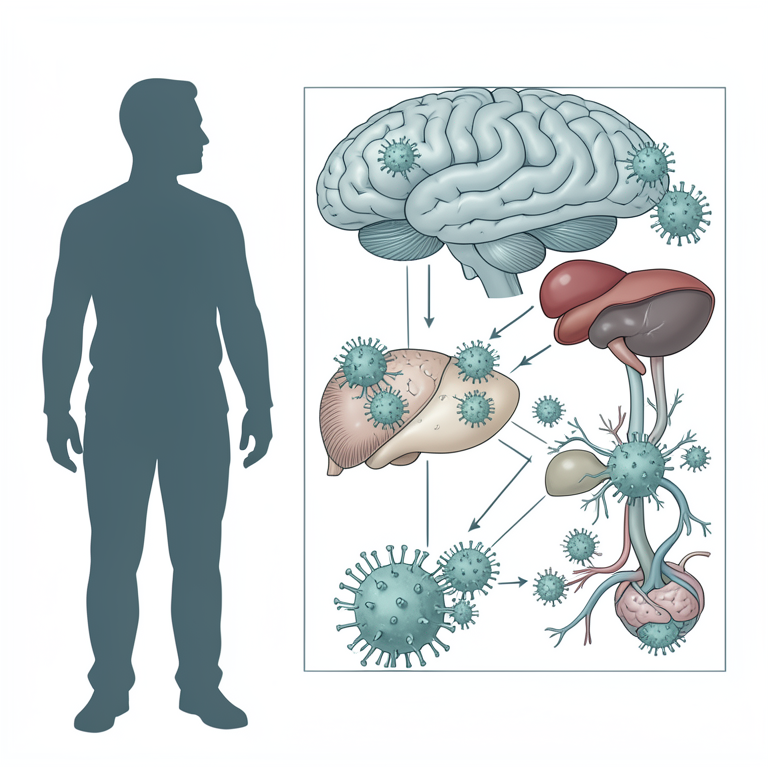
Study overview
AI-generated conceptual illustration (Human organs and Roseoloviruses). It explains the idea and does not show study data.
View source evidence ↗Introduction
Roseoloviruses is a linear, double stranded DNA virus belonging to the order Herpesvirales, family Herpesviridae and the subfamily Betaherpesvirinae. These are of two types named HHV-6 & HHV-7. HHV-6 has further been categorized as HHV-6A & HHV-6B. These viruses were first isolated either from patients suffering from lymphoproliferative diseases and AIDS (HHV-6) or from CD4+ T cells taken from peripheral blood lymphocytes (HHV-7) [Salahuddin et al. 1986 and Frenkel et al. 1990] [29,10] . Roseoloviruses cause a rash developing disease in human known as Roseola infantum whose entire disease cycle is completed within 3 to 6 days. Once after an infection, the Roseoloviruses remain latent for lifelong. Virus may cause cancer (Masroor et al., 2020) [23] and tumor suppressor genes may be reactivated (Saha et al., 2020) [28] . Studies have shown that some of these hidden viruses if reactivated in future develop severe complications in human [Anni et al. 2015, Henri et al. 2015 and Vanessa and Louis 2017] [4,11,33] . The present study discusses the Roseoloviruses causing diseases, complications and cancer in human.
Clinical presentation
Roseola infantum is a mild viral infection of children most commonly involving 6 months to 3 years. Almost all children have been infected with the virus during their childhood. The disease is also known as the Exanthema subitum or "sixth disease" because this is sixth in series of rash developing disease which also lasted in about six days [Taspinar et al. 2013] [32] . The disease is characterized by a sudden onset of rise in temperature followed by the rose coloured rashes that dissipitates after a few days. Usually, these rose coloured rashes are formed on neck, trunk and thighs first and then spread on legs and face. The infections are contagious during the fever phase especially by saliva but not spread via rashes. The salivary glands are the natural reservoir of these Roseoloviruses [Agut 2011 and Jessica et al. 2020] [3, 14] . No treatment is generally required except to keep the fever down and drink plenty of fluids. Although, rare, febrile seizures may occur due to high fever. Similar, symptoms are associated with HHV-7 virus too. If these viruses reactivated later in life due to some unavoidable circumstances such as immunocompromisation or with the use of immunosuppressants they may cause several ailments, diseases and even cancer in future [Stone et al. 2014 and Henri et al. 2015] [31,11] .
Oncology of the virus
Roseoloviruses have got their own distinguishing ability to be integrated in human chromosomes. They are covalently integrated into subtelomeric region of human chromosomes in about 1% of the general population [Henri et al. 2015] [11] . Further, the process of gametogenesis and the fusion of gametes transfer the same integration to the next generation increasing the risk of developing three times angina in humans [Anni et al. 2015 and Vanessa and Louis 2017] [4,33] . Some of other ailments and diseases including cancer caused by these viruses are briefly summarized as under: 1. HHV-6 has been found to be associated with the patients suffering from multiple sclerosis, a neuroinflammatory disease, causing demyelination in brain [Ablashi et [11] . 4. In addition, HHV-6 develops fibromyalgia in AIDS patient [Pietilainen and Virtanen 2014] [25] .
Researchers have shown that T-cells are highly
infectable by HHV-6 virus. [Lusso et al. 1995 and Laurie and Philip 2014] [20,19] . 6. Further, Roseoloviruses has been found to be associated with the pathogenesis of a common neurological disorder as epilepsy. HHV-6 has some connection with temporal lobe epilepsy [Fotheringham et al. 2007] [9] . Further, it has also been reported that the virus enters the brain via olefactory pathways. But, it still requires more researches to prove the link [Santa et al. 2020] [30] . These viruses have also been found to be linked with Alzheimers [Readhead et al. 2018 and Denner et al. 2019] [26,8] . 7. Roseoloviruses can also cause encephalitis and brain dysfunction in both immunocompetent and immunocompromised individuals [Joseph et al. 2017] [15] . 8. HHV-6 has also been found as an important factor for female infertility [Roberto et al. 2016] [27] . 9. Hoshimoto thyroiditis disease has been found to be linked with HHV-6. This is a kind of thyroid ailment where increased lymphocytes are found [Caselli et al. 2012] [6] . 10. Finally, there are reports that Roseoloviruses have frequently been reactivated in transplant recipients [Joshua and Danielle 2014 and Denner et al. 2019] [8] .
Prevention of infections
To date, no any specific prevention measure is available for Roseoloviruses. We can only hope a good hygiene can only keep us away from the virus. The disease and the disease complications are still being treated symptomatically. Similarly, there is no vaccine available for the prevention of infection. Further studies are still required to establish various casualties of same viral infections to explore the prevention and treatment options [Joshua and Danielle 2014].
Treatment of the disease
Roseola infantum is a common paediatric disease caused by the Roseoloviruses. Though, the primary infections of the Roseoloviruses do not require any treatment, other complications arising after reactivation of the viruses are being treated with the help of an antiviral ganciclovir [Imataki and Uemura 2015] [13] . It can also reduce the risk of reactivation in high risk transplant patients [Joshua and Danielle 2014]. Currently, an effective vaccine is utmost needed for the prevention and treatment of Roseoloviruses and Roseola infantum respectively.
Conclusion
Roseoloviruses cause a disease in children known as Roseola infantum. Almost, all children of the world have been infected with the same virus at least once in their lifetime with lifelong latencies in the same individuals. Further, the extra quality being acquired by this virus to be integrated with the human chromosomes enlarges the risk of reactivation causing complications developing several diseases including cancer in future course of time. Unfortunately, no vaccines have so far been discovered for the prevention and treatment of Roseoloviruses. However, some antivirals have been tried to control the disease complications. Last but not the least, as cancer often takes years, even decades to develop after a person gets an infection, there is nothing more to worry about it except to be alert. Similarly, since there is no way to know which people who have cancer causing pathogens will develop cancer, it arises from his bad luck. [Masroor et al. 2018, 2019 and 2020] [21,22,23] .
Acknowledgement
AcknowledgementsThis piece of research work is dedicated to the memory of my friend marhoom Haji Mohammad Yusuf urf "Raju Haji Ji". The authors are also deeply appreciating the institutions concerned for providing us necessary facilities during the course of research work.
References
34 in the original paper- Ablashi DV, Eastman HB, Owen CB, Whitman JE. Frequent HHV-6 reactivation in M.S. and C.F.S. patients. J Clin. Virol. 2000; 16(3):179-191.
- Adams MJ, Carstens EB. Ratification vote on taxonomic proposals to the International Committee on Viruses. Arch. Virol. 2012; 157:1411-1422.
- Agut H. Deciphering the clinical impact of acute human herpesviruses 6 infections. J Clin. Virol. 2011; 52:164171.
- Annie G, Isabelle D, Guillaume M, Ruth HS, Keith RJ, Louis F. Inherited chromosomally integrated human herpesvirus 6 as a predisposing risk factor for the development of angina pectoris. Proceedings of the National Academy of Sciences. 2015, 02-741. DOI: 10.1073/pnas.1502741112.
- Buchwald D, Cheney PR, Peterson DL, Salahuddin SZ. A chronic illness characterized by fatigue, neurologic and immunologic disorders, and active HHV-6 infection. Ann. Intern. Med. 1992; 116(2):103-113.
- Caselli E, Zatelli MC, Rizzo R, Ettore C. Virologic and immunologic evidence supporting an association between HHV-6 and Hashimoto's thyroiditis. PLoS Pathogens. 2012; 8(10):e100-2951. Doi: 10.1371. Journal. ppat. 1002951.
- Delbue S, Carluccio S, Ferrante P. The long and evolving relationship between viruses and multiple sclerosis. Future Virology. 2012; 7(9):871-883.
- Denner J, Tarin MB, Tuan LP, Zimmermann C, Zhou X, Benedikt BK. Comparative analysis of Roseoloviruses in human, pigs, mice and other species Viruses. 2019; 11(1108):1-27.
- Fotheringham J, Donati D, Akhyani N, Weinstein S. Association of HHV-6B with mesial temporal lobe epilepsy PLoS Medicine. 2007; 4(5):e180. doi: 10.1371/ Journal. pmed. 0040180.
- Frenkel N, Schirmer EC, Wyatt LS, Katsafanas G, Roffman E, Danovich RM et al. Isolation of a new herpesvirus from human CD4+T cells. Proceedings of the National Academy of Sciences, U.S.A. 1990; 87(2):748-752.
- Henri A, Pascale B, Agnes GD. Laboratory and clinical aspects of human herpesviruses 6 infections. Clinical Microbiology Reviews. 2015; 28(2):313-335.
- Hernan MA, Zhang SM, Lipworth L, Olek MJ, Ascherio A. Multiple sclerosis and age at infection with common viruses. Epidemiology. 2001; 12(3):301-306.
- Imataki O, Uemura M. Ganciclovir-resistant HHV-6 encephalitis that progressed rapidly after bone marrow transplantation. J Clin. Virol. 2015; 69:176-178.
- Jessica VR, Dmitry SS, Amanda OL, Marina G, Tania RT. Longitudinal study on oral shedding of human betaherpesviruses 6 and 7 in renal transplant recipients reveals active replication. Journal of Oral Microbiology, 2020, 12(1): DOI: 10.1080/20002297, 2020.1785801.
- Joseph O, Ablashi DV, Masao O. Roseolovirus associated encephalitis in immunocompetent and immunocompromised individuals. Journal of Neurovirology. 2017; 23:1-7.
- Joshua AH, Danielle MZ. Roseoloviruses in transplant recipient: clinical consequences and prospects of treatment and prevention trials. Curr. Opin. Virol. 2015; 9:53-60.
- Kofman A, Marcinkiewicz L, Dupart E, Brown J. The roles of viruses in brain tumor initiation and oncomodulation. J Neuro. Oncology. 2011; 105(3):451466.
- Komaroff AL. Is HHV-6 a trigger for chronic fatigue syndrome? J Clin. Virol. 2006; 37:39-46.
- Laurie TK, Philip EP. Roseolovirus molecular biology: Recent advances. Curr. Opin. Virol. 2014; 9:170-177.
- Lusso P, Garzino-Demo A, Crowley RW, Malnati MS. Infection of gamma/delta T lymphocytes by human herpesvirus 6: transcriptional induction of CD4 and susceptibility to HIV infection. J Exp. Med. 1995; 181(4):1303-1310.
- Masroor MS, Salim M, Parween S. Salmonella typhi causing gallbladder cancer in human. Nat. J Life Science. 2018; 15(2):143-144.
- Masroor MS, Parween S, Salim M. Recent trends in the study of Helicobacter pylori developing stomach cancer in human. Int. J Medical and Health Research. 2019; 5(7):76-80.
- Masroor MS, Parween S, Salim M, Prajapati IP. A note on hepatitis viruses causing cancer in human. Int. J. Biol. Innovations. 2020; 2(2):126-28. https://doi.org/10.46505/IJBI.2020.2207
- Nicolson GL, Gan R, Haier J. Multiple coinfections (Mycoplasma, Chlamydia & HHV-6) in blood of C.F.S. patients. Association with signs and symptoms. APMIS. 2003; 111(5):557-66.
- Pietilainen-Nicklen J, Virtanen J. HHV-6-positive in diseases with demyelination. J Clin. Virol. 2014; 61(2):216-19.
- Readhead B, Haure-Mirande JV, Funk CC, Richards MA, Sano M, Price ND. Multiscale analysis of independent Alzheimer's Cohorts finds disruption of molecular genetics and clinical networks by human herpesviruses. Neuron. 2018; 99:64-82.
- Roberto M, Valentina G, Daria B, Giuseppe LM, Roberta R. Presence of HHV-6A in endometrial epithelial cells from women with primary unexplained infertility. PLoS ONE. 2016; 11(7):e015-8304. doi.10.1371/Journal. Pone. 0158304.
- Saha D, Vaishnav N, Ahsan Z, Rani N, Mathur R, Jha AK. Reversal of hypermethylation and reactivation of Tumor Suppressor Genes due to natural compounds in Breast Cancer Cells. International Journal of Biological Innovations. 2020; 2(1):63-75. https://doi.org/10.46505/IJBI.2020.2109
- Salahuddin SZ, Ablashi DV, Markham PD, Josephs SF, Sturzenegger S, Kaplan M et al. Isolation of a new virus, HBLV, in patients lymphoproliferative disorders. Science. 1986; 234:596-601.
- Santa RD, Sabine G, Svetlana C, Elena K. Persistent Roseoloviruses infection in adult patients with epilepsy. Brain Science. 2020; 10(5):287-303.
- Stone RC, Micali GA, Schwartz RA. Roseola infantum and its causal human herpesviruses. Int. J Dermatol. 2014; 53(4):397-403.
- Taspinar M, Cetin N, Gerceker D, Sahin F. HHV-6 is ubiquitously found using western blot in tonsils and adenoid tissues of healthy people. New Microbiol. 2013; 36(3):251-256.
- Vanessa C, Louis F. HHV-6A/B integration and the pathogenesis associated with the reactivation of chromosomally integrated HHV-6A/B. Viruses. 2017; 9(7):160-173.
- Wagner M, Krueger G, Ablashi D, Whitman J. Chronic fatigue syndrome (CFS): a critical evaluation of testing for active HHV-6 infection Journal of chronic Fatigue syndrome. 1966; 2(4):3-16.
Cited by 5
From OpenAlex, OpenCitations and reference lists read by Scinovex
- Comparative study of significance of serum human epididymis protein 4 (HE4) and carbohydrate antigen 125 (CA125) as an early tumour marker in female patients with ovarian cancer ↗
Geeta Bilonia, Rati Mathur, Suresh Singh · International Journal of Clinical and Diagnostic Pathology · 2022
Aim: To determine the usefulness of serum human epididymis protein4 (HE4) along with Carbohydrate Antigen 125 (CA125) as an early tumour marker in female patients with ovarian cancer.Method: The ovarian cancer patients were recruited from OPD/IPD of Surgery and Oncology department of SMS Hospital, and evaluated serum HE4 and CA125. Total 262 subjects were included in this study.131 ovarian cancer…
❝ 1PDF - A comparative study to assess the knowledge regarding prevention of cervical cancer among women of reproductive age in selected rural and urban areas of Maharashtra state ↗
Irshad Ali MK, Rukumani J · International Journal of Advance Research in Nursing · 2023
Cervical cancer is second most common cancer in the world and leading cause of death from cancer among women in developing countries. The objectives of the study were to compare knowledge regarding cervical cancer among women of reproductive age in selected rural and urban areas of Maharashtra state. A comparative study was conducted using descriptive, cross sectional survey among conveniently…
❝ 0PDF - Risk factors of pediatric acute lymphoblastic leukemia: A review ↗
Sushma Devi, Amrit Sudershan, Mohd Younis, Ankush Bala, Kanak Mahajan, Rakesh K Panjayalia et al. · International Journal of Clinical Biology and Biochemistry · 2022
Background: Pediatric cancers are one of the most common diseases growing worldwide and are categorized into acute lymphocytic leukemia, acute myelogenous leukemia, chronic lymphocytic leukemia, and chronic myelogenous leukemia, and the most common form of childhood leukemia is ALL. Aim: In this review, we tried to grasp different risk elements of ALL and the complexity of ALL. Method: Concerning the
❝ 0Found by Scinovex - Awareness program on knowledge of oral cancer ↗
Neha Tiwari, Minu SR · International Journal of Advance Research in Community Health Nursing · 2022
Oral cancer among the workers is of prime importance in this era. The Global Burden of Disease Study 2017 estimated that oral diseases affect 3.5 billion people worldwide. Cancers of the lip and oral cavity are among the top 15 most common cancers worldwide, with nearly 180 000 deaths each year.In India, 20 per 100000 population are affected by oral
- Bioinformatics approaches for cross-species liver cancer analysis based on single-cell RNA sequencing data in rats mice and human insights causative genes and pathways ↗
Sudheer Menon · International Journal of Molecular Biology and Biochemistry · 2021
In this research, we first recognized 2322 differentially expressed genes via way of means of evaluating gene expression profiles for 2 control, adenoma, and carcinoma samples by the use of an F-test. These genes have been sooner or later mapped to the rat chromosomes through the use of a unique visualization tool, the Chromosome Plot. Using the equal plot, we