
Research article · 2019 · Full text
International Journal of Agriculture and Food ScienceCharacteristics of farmers participating in USAID markets II Soybean production project in benue State, Nigeria
Volume 1(1) · Pages 20–26 · DOI: 10.33545/2664844x.2019.v1.i1a.4 ↗
Research areasAgricultural Innovations and Practices
Abstract
Author-writtenThe study examined the characteristics of farmers participating in USAID MARKETS II soybean production project in Benue State, Nigeria. The population for the study included all project participant soybean farmers of USAID MARKETS II project. A total sample of 150 respondents were purposively selected from all the eight soybean producing local government areas participating in the project in the State. While interview schedule was used for data collection. Percentage and mean score were used to present and analyse the data. The results of the study revealed that USAID MARKETS II soybean farmers in Benue State were mainly male, middle aged, with long years of farming experience, large household size and attained formal education. Majority of them acquired land mainly through inheritance and borrowing. They also purchased farm inputs from open market at high price. Greater proportion of the farmers likewise sold their farm produce at open markets at giveaway prices. All the participants grew improved varieties of soybeans but had inadequate extension services. Consequently, the farmers had low farm output, yield and income. The study therefore recommends closer examination and consideration of various attributes of the soybean farmers in designing and implementing future phases of the project to enhance its success in the study area in order to improve the welfare of the local farmers participating in the project.
Summary
Source-checkedPlain-language reading of the full paper, prepared with AI and checked against the text. Each point links to the authors' own words.
Why it matters
- Soybeans are critical for food security among Nigeria's poor as they provide a vital plant-based protein substitute for animal proteins, which are often scarce. View evidence ↗
- Despite their importance, soybean availability in Nigeria is insufficient to meet consumer demand because local farmers achieve poor yields per hectare. View evidence ↗
- To increase production, USAID launched the MARKETS II project in 2012 in Benue State, which is the primary soybean producing region in Nigeria. View evidence ↗
The question
- The study aimed to examine the personal, socio-economic, and agricultural characteristics of farmers participating in the USAID MARKETS II soybean project in Benue State. View evidence ↗
What they did
- The researchers purposively selected a sample of 150 respondents from eight soybean-producing local government areas in Benue State. View evidence ↗
- Data was collected using an interview schedule and analyzed using mean scores and percentages. View evidence ↗
What they found
- The majority of the participating farmers were male, accounting for 63.3% of the sample. View evidence ↗
- Participating farmers were generally middle-aged, with a mean age of 46.50 years and 49.3% falling between 42 and 52 years old. View evidence ↗
- Most farmers had some formal education, with a mean of 8.81 years; 44.0% had attempted secondary education. View evidence ↗
- Contrary to project goals, 84.7% of farmers purchased agricultural inputs from the open market rather than through linked dealers. View evidence ↗
- Land acquisition was primarily through inheritance, which was the case for 68.0% of the respondents. View evidence ↗
- Farmers experienced low productivity, with a mean farm output of 966.1kg and a mean yield of 0.52 tons per hectare. View evidence ↗
- The average annual income generated specifically from soybean production was ₦126,850. View evidence ↗
- The project successfully encouraged the use of improved soybean varieties, which were adopted by 100% of the participants. View evidence ↗
- While 74.7% of farmers had access to extension services in 2016, the frequency of contact was low, averaging 2.17 times. View evidence ↗
- The project's buy-back arrangement was largely ineffective, as 76.7% of farmers sold their produce in the open market. View evidence ↗
What it means
- The authors recommend that future project phases and similar agricultural initiatives carefully consider farmer attributes during design and implementation to improve success and farmer welfare. View evidence ↗
Visual summary
3 visualsIllustrations explain the paper; charts are replotted from the paper's own table values.
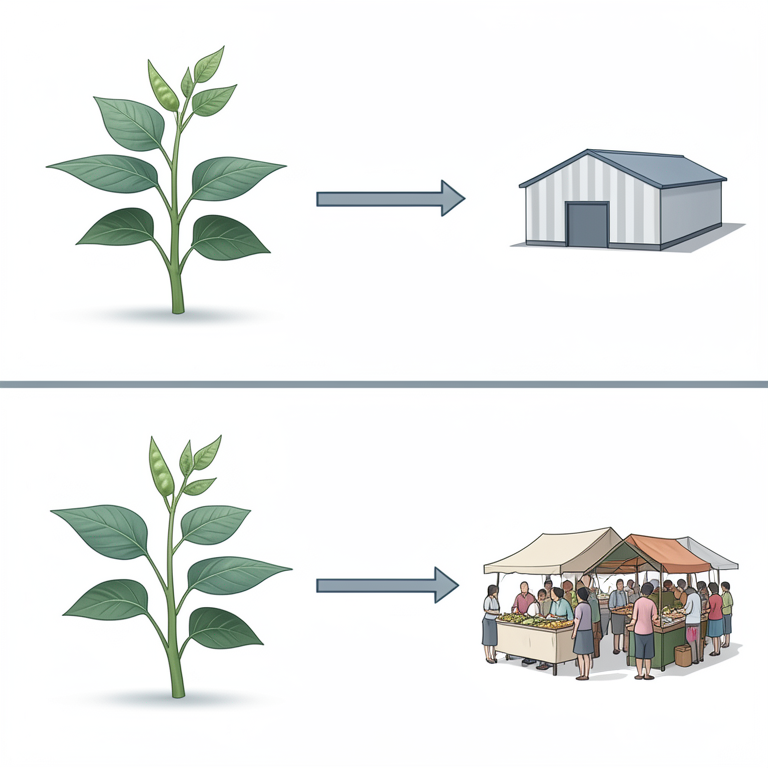
Project Goal vs. Reality
AI-generated conceptual illustration (soybean plants and farmers in Benue State, Nigeria). It explains the idea and does not show study data.
View source evidence ↗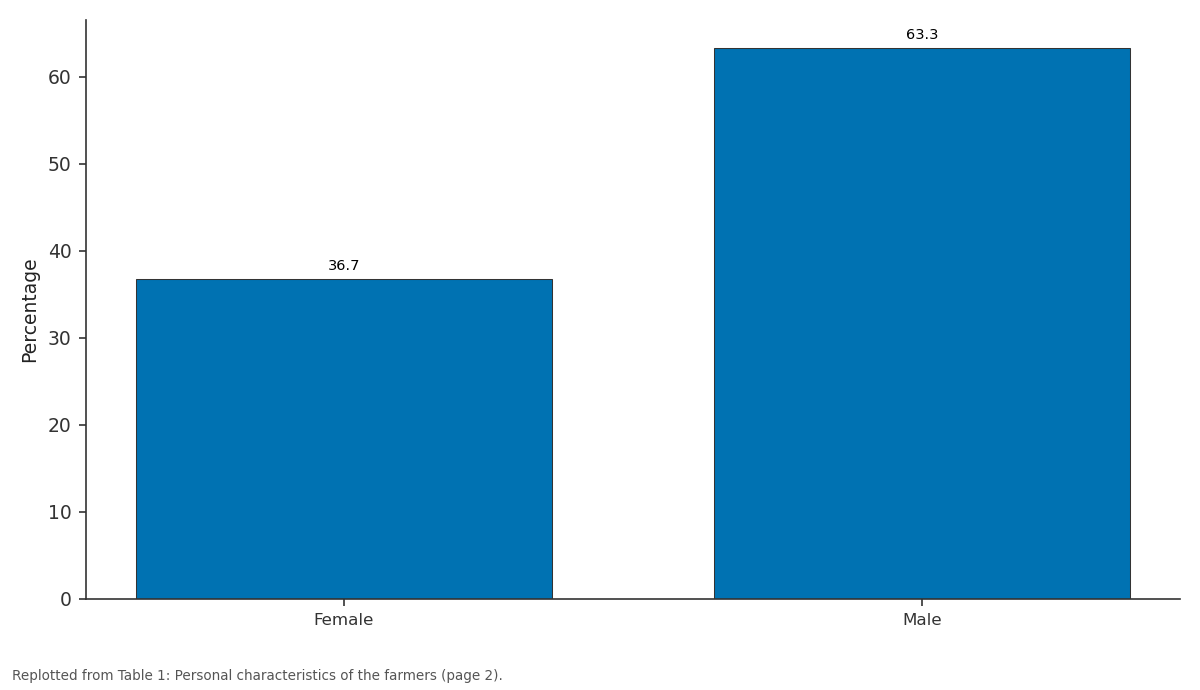
Percentage: Female vs Male
Replotted from Table 1 (page 2) of the original paper. Every bar is the paper's own table value.
View source evidence ↗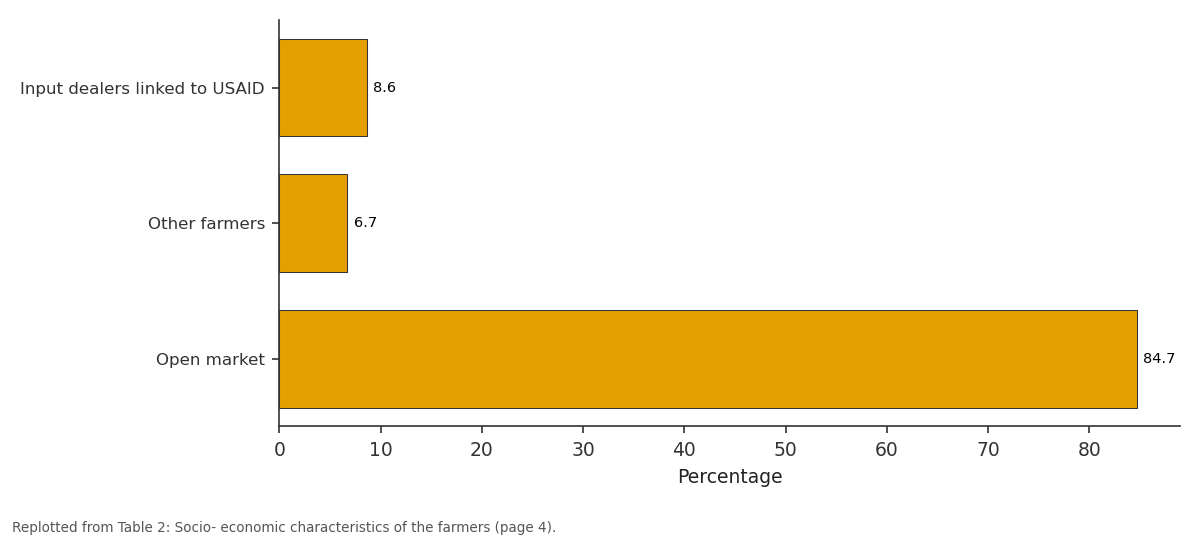
Percentage: Input dealers linked to... vs Other farmers vs Open market
Replotted from Table 2 (page 4) of the original paper. Every bar is the paper's own table value.
View source evidence ↗Figures & tables
From the original paper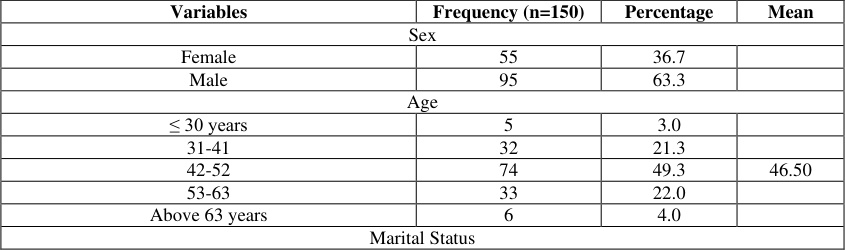 Table 1
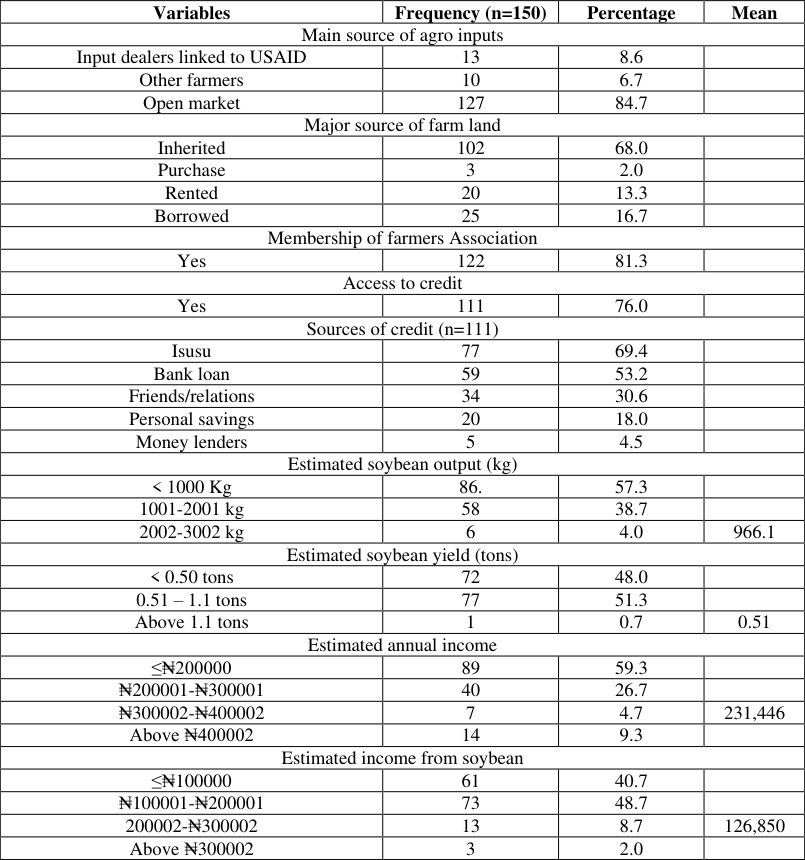 Table 2
 Table 3
Introduction
The soybean (Glycine max) is a specie of legume native to Eastern Asia (Onasanya, 2002) [12] and introduced into Nigeria in 1908 (AMREC, 2007) [3] . With improvement in breeding and processing research, soybean cultivation, domestic market, processing and utilization have grown considerably in Nigeria. The importance of soybean in food security especially for the poor in Nigeria cannot be overemphasized. It is the best source of plant protein, substituting the animal-protein sources, which are usually inadequate in supply for poor households. However, the availability of the commodity seems to be insufficient to meet the demand of consumers due to poor yields per hectare by the local farmers (Agada, 2015) [2] . In order to boost production of the commodity, The United State Agency for International Development (USAID) in 2012, introduced a project known as MARKETS II (i.e. Maximising Agricultural Revenue and key Enterprise in Targeted Sites) in Benue State since the state is the major producer of soybean in Nigeria (USAID, 2015 and Nyiakura, 1982) [18,11] . MARKETS II in Benue State is packaged with modern soybean production technologies aimed at teaching the relevant agronomic practices and empowering Benue State farmers to increase production of soybean. Key objectives of the project were to help smallholder farmers access better inputs (such as improved seeds and optimal use of fertilizer), adequate finance, better water management, appropriate technology, extension services, and improve nutritional uses of grown or purchased basic foods (USAID, 2015) [18] . It also provided technical assistance to build productive, commercially sustainable agricultural commodity value chains by linking farmers to large and medium sized processors. The project centres on smallholder soybean farmers, which are in groups of 20 -35 persons who varied in personal, socioeconomic and agronomic characteristics. The study therefore examined the characteristics of these farmers who were trained by the project to adopt the new farming techniques since the attributes of a farmer influences his ability to obtain, process and use information relevant to adoption of a new technology. The study will enable the project planners to become more conversant with the attributes and needs of soybean farmers participating in the project in order to bring additional innovations that are more compatible and suitable to the people in the study area whether in soybean production or other related future farm projects.
Methodology
The study was carried out in Benue State, Nigeria. The population for the study comprised all registered Markets II soybean farmers in the entire eight soybean producing local government areas (LGAs) in Benue State. These LGAs were Tarkaa, Gboko, Gwer and Buruku from Benue North West Senatorial District (Zone B) and Konshisha, Ushongu, Kwande, and Vandeikya LGAs from Benue North East Senatorial District (Zone A). Multistage, purposive and proportionate random sampling techniques were employed in selecting the respondents for the study. In the first stage, all the eight LGAs participating in the International Journal of Agriculture and Food Science project were used for the study. In stage two, two soybean farmers associations (S.F.A.) that participated in the project were randomly selected from each LGA giving a total of sixteen ( 16) soybean farmers associations. In stage three, proportionate sampling was used in selecting the respondents from each soybean farmers' association (30% of the members of each soybean farmers association was selected) to obtain a total of 150 respondents that were used for the study. Interview schedule which dealt on specific objectives of the study was used to collect primary data for the study while simple percentage, mean and frequency were used for data analysis.
Results and Discussion
Results and Discussion
Personal characteristics of the farmers Sex
The results in Table 1 reveal that greater percent (63.3%) of the participating farmers in USAID MARKET II project were male. This may be as a result of the fact that soybean was traditionally a male crop in Benue State (Agada, 2015) [2] . In addition, many men have economic advantage over women in Benue communities since they control family resources like farm land and income thereby limiting women participation in the project.
| Variables | Frequency (n=150) | Percentage | Mean |
|---|---|---|---|
| Sex | |||
| Female | 55 | 36.7 | |
| Male | 95 | 63.3 | |
| Age | |||
| ≤ 30 years | 5 | 3.0 | |
| 31-41 | 32 | 21.3 | |
| 42-52 | 74 | 49.3 | 46.50 |
| 53-63 | 33 | 22.0 | |
| Above 63 years | 6 | 4.0 | |
| Marital Status |
Table text extracted from the original PDF; superscript letters are shown inline. The original table image is below.
View original table image
Age
The results in Table 1 also show that greater proportion of the respondents (49.3%) were within the age of 42-52 years followed by those within the age of 53-63 years (22.0%) and 31-41 years (21.3%). The respondents that were above 63 years constituted 4%, while those within 30 years and below accounted for 3.3%. The mean age was 46.50 years. This implies that participating farmers in the project were adult at their active, middle and productive ages and physically disposed to farming activities and may have the willingness to adopt innovations in soybean production in the study area. This finding is in line with that of Umaru (2015) [16] who stated that majority of soybean farmers were still within their middle, active and productive ages and hence can engage efficiently in soybean production and accept new technologies.
Marital status
The results in Table 1 show that the majority (94.7%) of the respondents were married, while 5.3% were single. The larger number of the married people participating in the project may be attributed to the fact that they have many family responsibilities and are willing to engage in one economic activity or the other in order to cope with family needs and challenges unlike the singles who has less responsibilities. This result is in line with the view of Daudu (2013) [4] who reported that married people accounts for majority of soybean farmer's population in Benue State.
Household size
Entries in Table1 further reveal that greater proportion (42.2%) of the soybean farmers participating in USAIDMARKET II project had household size of between 11-15 persons, while 38.7% of them had a household size of between 6-10 persons. The remaining 10.5% and 8.7% of the respondents had a household size of 1-5 and above 15 persons respectively. The mean household size was 11 persons. The large household size could serve as source of family labour who may engage in farm activities like land clearing, planting, weeding, harvesting, and winnowing of soybean to increase income of the farmers. Agada (2015) [2] affirmed that large household size is an advantage for labour provision in soybean production in Benue State. Similarly, Swai, Mbwambo and Magayane (2012) [13] reported that large household sizes are important assets in working together to reduce poverty among farming families.
Educational qualification
The results in Table 1 further show that greater proportion (44.0%) of the soybean farmers participating in MARKETS 11 project had attempted secondary education. This was followed by respondents who had completed secondary education (26.0%). Those who acquired OND/NCE constituted (12.0%), those who attempted only primary school education were (11.3%), primary school completed (6.70%), while those who had no access to formal education were 5.3%. The result also showed that 1.3% and 0.7% of the respondents represented those who had acquired degree and higher degrees respectively. The mean number of years spent acquiring formal education was 8.81 years. This implies that majority of the farmers participating in the project had acquired formal education. The larger number of educated farmers in the project may be worthwhile to the fact that formal education acquired create a favourable mental attitude for the acceptance of new practices in soybean production. Adesoji and Adebayo (2008) [1] observed that the more educated a farmer is, the more the chances that the farmer will adopt innovations than the uneducated ones. In the same vain, Mignouna et al. (2011) [8] and Lavison (2013) [7] reported that education level of a farmer increases his ability to obtain; process and use information relevant to adoption of a new technology. This is because formal education provides them with the ability to read and write, handle and interpret messages relating to their farm operations in the instruction manuals on input and machinery uses, and also enable them to appreciate extension services.
Socio-economic characteristics of the respondents Sources of agro inputs
Table 2 also shows that the majority (84.7%) of the farmers participating in USAID MARKET 11 project purchased agro inputs in open market against the initial plan of the project to link farmers with appropriate input dealers. The result further shows that 8.7% of the participants got farm input from input dealers linked to USAID, while 6.7% of the respondents obtained inputs from other farmers. Since most of the farmers got input from other sources rather than through USAID assistance, it therefore implies that the project objective of linking farmers with appropriate input dealers to access quality input at affordable rate have not been achieved. The failure to link project participants with appropriate input dealers might be as a result of lack of proper interaction among all the stake holders, inadequate monitoring and evaluation of the project as well as bureaucracy that characterized it. Regular monitoring of every stage of the project will not only enable the project management to assess project performance and needs of the farmers but will also help to close the gap that might exist between the stakeholders.
| Variables | Frequency (n=150) | Percentage | Mean |
|---|---|---|---|
| Main source of agro inputs | |||
| Input dealers linked to USAID | 13 | 8.6 | |
| Other farmers | 10 | 6.7 | |
| Open market | 127 | 84.7 | |
| Major source of farm land | |||
| Inherited | 102 | 68.0 | |
| Purchase | 3 | 2.0 | |
| Rented | 20 | 13.3 | |
| Borrowed | 25 | 16.7 | |
| Membership of farmers Association | |||
| Yes | 122 | 81.3 | |
| Access to credit | |||
| Yes | 111 | 76.0 | |
| Sources of credit (n=111) | |||
| Isusu | 77 | 69.4 | |
| Bank loan | 59 | 53.2 | |
| Friends/relations | 34 | 30.6 | |
| Personal savings | 20 | 18.0 | |
| Money lenders | 5 | 4.5 | |
| Estimated soybean output (kg) | |||
| < 1000 Kg | 86. | 57.3 | |
| 1001-2001 kg | 58 | 38.7 | |
| 2002-3002 kg | 6 | 4.0 | 966.1 |
| Estimated soybean yield (tons) | |||
| < 0.50 tons | 72 | 48.0 | |
| 0.51 – 1.1 tons | 77 | 51.3 | |
| Above 1.1 tons | 1 | 0.7 | 0.51 |
| Estimated annual income | |||
| ≤₦200000 | 89 | 59.3 | |
| ₦200001-₦300001 | 40 | 26.7 | |
| ₦300002-₦400002 | 7 | 4.7 | 231,446 |
| Above ₦400002 | 14 | 9.3 | |
| Estimated income from soybean | |||
| ≤₦100000 | 61 | 40.7 | |
| ₦100001-₦200001 | 73 | 48.7 | |
| 200002-₦300002 | 13 | 8.7 | 126,850 |
| Above ₦300002 | 3 | 2.0 |
Table text extracted from the original PDF; superscript letters are shown inline. The original table image is below.
View original table image
Sources of farm land
The results in Table 2 show that the majority (68.0%) of the respondents inherited land from their ancestors, 16.7% borrowed from other farmers, respondents that rented land for cultivating soybean constituted 13.3% while only 2.0% of the respondents purchased land for growing soybeans. It can be inferred from the findings that land is readily available to the larger proportion of the participants of the project since the majority have their own land through inheritance and those who do not have could easily borrow or rent for farming.
Membership of farmers' cooperative
Entries in Table 2 further reveal that the majority (81.3%) of the respondents were members of farmers' cooperative. The larger membership suggest that farmer's cooperatives groups are beneficial to members by providing a medium through which extension information can easily reach to members there by enhancing adoption of innovation. Mignouna et al. (2011) [8] and Katungi and Akankwasa (2010) [6] reported that belonging to a social group enhances social trust, idea, and information exchange that engages members in social learning about the technology hence raising their likelihood to adopt the technology.
Access and source of credit
Entries in table 2 reveal that the majority (76.0%) of the respondents had access to credit, only 24% of the respondents had no access to credit facilities. Further analysis revealed that among these that had access to credit, Isusu was the main (69.4%) source of credit for the project participants, followed by bank loan (53.2%) obtained through USAID MARKET II assistance. The remaining respondents sourced credit from friends/relations (30.6%), personal savings (18.0%) and money lending (4.5%). The high source of credit from Isusu may be due to the fact that most of the farmers are members of local financial associations where they can easily access micro credit without collateral to invest in their soybean farms to boost production. This result agrees with findings of Nasiru (2010) [10] who stated that access to micro-credit could have prospects in improving the productivity of farmers and contribute to uplifting the livelihoods of disadvantaged rural farming communities. It also agrees with Ekong (2003) [5] asserts that credit is a very strong factor that is needed to acquire or develop any enterprise; its availability could determine the extent of production capacity.
Estimated soybean output and yield
The result presented in Table2 show that the majority (57.3%) of the farmers had farm output of less than 1000 Kg. The result also show that 38.7% them produced between 1001-2001 kg, only 4.0% of the respondents had soybean output of between 2002-3002 kg. The mean farm output of farmers was 966.1kg. Further entries in table 2 reveal that the majority (51.3%) of the soybean farmers had yield of between 0.51 -1.1 tons per hectare. This was followed by 48.0% of the respondents who had less than 0.51 tons per hectare. The result also show that only 0.7% of the respondents had farm yield of more than 1.1 tons per hectare. The mean farm yield of project farmers was 0.52 tons/ hectare. This results indicate that participating farmers had low yield per hectare when compared with the expected standard soybean yield of 1,700kg /hectare in Nigeria (AMREC, 2007) [3] . The low yield might be attributed to many factors including untimely availability and high cost of critical farm inputs like fertilizers and incessant attacks on farmers from herdsmen which prevented many of them from properly carrying out important farming activities like timely weeding and harvest that adversely affected their yield.
Estimated annual income
Table 2 shows that the majority (59.3%) of the respondents had estimated annual income of less than or equal to ₦200,000 annually, followed by 26.7%, 9.37% and 4.7% of the respondents who realized between ₦200,001 -₦300,001, above ₦400,002 and between ₦300,002 -₦400,002 per annum. The average annual income was ₦231,446. This implies that the majority of the farmers had low annual income which may be inadequate to meet basic family needs like school fees and hospital needs of children and may not be willing to take risk of adopting the new technologies particularly when they are cost ineffective. According to Diiro (2013), farm income is expected to provide farmers with liquid capital for purchasing productivity enhancing inputs such as improved seeds and fertilizers.
Estimated annual income from soybean
Entries in Table2 show that greater percentage (48.7%) of the respondents had income of between ₦100,001 -₦200,001 from soybean production. This was followed by those with annual soybean income of less than or equal to ₦100,000 (40.7%), those with income of ₦200,002-₦300,002 accounted for 8.7%, while 2.0% of the respondents got annual income of more than ₦300,002 from soybean production. The mean annual income from soybean production was ₦126,850. This finding contradicts Agada (2015) [2] who reported an annual mean soybean farm income of ₦ 61, 78 in Benue State.
Agricultural Characteristics of the farmers Years of farming experience
Table 3 reveals that greater proportion (38.0%) of farmers participating in USAID MARKETS II had 22 -32 years of farming experience, followed by those with 11 -21 years (31.37%). The entries in table 4 also show that farmers who had farming experience of more than 32 years accounted for 29.3%, while those with farming experience of 10years or less represented 1.3%. The average years of farming experience was 26.33 years. The result is in line with the findings of Nwalieji, Madukwe, Agwu, and Umerah (2014) [9] who reported a mean rice farming experience of 22.2 years for farmers participating in USAID MARKETS project in Ebonyi and Anambra State. The long years of farming experience is an advantage for increased investment, productivity and technological capability. The results in Table 3 show that the majority (53.3%) of the respondents had 11-21 years of soybean farming experience while 30.0% and 16.7 % of them had soybean farming experience of 10 years or less and 22 -32 years respectively. The mean soybean farming experience was 13.76 years. This implies that soybean farmers participating in the project had long years of soybean farming experience which may offer them an advantage of gaining more understanding and also facilitate their adoption of new technologies. However, Umaru (2015) [16] observes that younger farmers with few years of experience are more flexible to new ideas and risk; hence they are expected to adopt innovations more readily than farmers with many years of experience nevertheless, this opinion is not popular among soybean farmers in the study area. It was rather observed that soybean farmers with many years of experience were more willing to adopt the new farming techniques to enhance their productivity than the younger farmers with less years of experience.
| Variables | Frequency (n=150) | Percentage | Mean |
|---|---|---|---|
| Years of farming experience | |||
| ≤10 years. | 2 | 1.3 | |
| 11-21 | 47 | 31.3 | |
| 22- 32 | 57 | 38.0 |
Table text extracted from the original PDF; superscript letters are shown inline. The original table image is below.
View original table image
Total farm size
The results from Table 3 show that the majority (57.3%) of the farmers participating in the project had total farm size of 2 -4 hectares while 28.0% and 14.7% represented those who had above 4 hectares and below 2 hectares of farm land respectively. The mean total farm size was 3.21 hectares. This indicates that the respondents are smallholder farmers. However, the result contradicts the findings of Agada (2015) [2] who reported a mean farm size of 2.1 hectares in Benue State.
Soybean farm size
Further results in Table 3 show that the majority (81.3%) of the respondents cultivated less than 1 hectare of land, followed by 16.7% and 2.0 % who cultivated between 1-3 hectares and above 3 hectares of soybean respectively. The mean farm size for soybean production was 1.86 hectares. This implies that participants of the project grew soybean in small scale and hence may not be willing to take risk adopting an innovation. Lavison (2013) [7] and Uaiene et al. (2009) [15] stated that farmers with large farm size are likely to adopt a new technology as they can afford to devote part of their farm resources to try new technology unlike those with less farm size and financial resources.
Sale of soybean
The results in Table 3 also indicate that the majority (76.7%) of the respondents sold their soybean in open market, 21.3% sold to Hule Nig. Limited, while 2.0% of them sold to other processors. The fact that most of these farmers sold soybean produced in open market signify that the contractual agreement signed between USAID and Hule Nig. Limited to purchase all soybeans directly from the farmers under-price setting and buy-back arrangements have not been effectively implemented. This could also be that most middle men buy the commodity from open markets and resale to Hule Nig. to make profit; thereby depriving farmers from selling directly to the company. This might be as a result of inadequate information supplied to the farmers and lack of proper monitoring and evaluation of the project. Moreover, it was observed that most project participants were not aware of the existence of price setting and buy back arrangement between USAID and Hule Nig. limited. There were also situations where participating farmers sold their farm produce to open markets after waiting so long for the contracted company representatives.
Thus it requires improvement of information generation and adequate monitoring and evaluation of the project if successful adoption of soybean technologies is desired.
Use of improved varieties
The results in Table 3 further reveal that all (100%) of the participants interviewed used improved varieties of soybean. It can be deduced from this result that the new soybean varieties offered by the project were accepted by the farmers probably because they were readily available to them, beneficial and consistent with their needs. Wandji et al. (2012) [19] reports that perception of farmers towards a new technology affects its uptake.
Access to extension agent
The results presented in Table 3 further show that majority (74.7%) of the respondents had access to extension services in 2016 cropping season. Details of the result indicates that among the respondents who had access to extension services, the majority (57.1%) of them had contact with extension agents for less than 2 times, this was followed by 22.3% of the farmers who accessed extension services more than 3 times, while those respondents who had contact with extension agents between 2-3 times in 2016 cropping season accounted for 20.6 %. The mean extension contact was 2.17 times. The few number of extension contact implies that farmers participating in the project had less access to necessary information needed to enhance the adoption of the new farming practices. According to Umar, Ndanitsa, and Olaleye (2009) [17] , higher extension contacts would increase adoption of improved farm production technologies and that the frequency of extension contact is very essential as it guides the farmers from awareness to the adoption stage. On the other hand, Tiwari (2010) [14] , identified poor extension contact as one of the major constraints inhibiting innovation adoption.
Conclusion
USAID MARKETS II soybean farmers in Benue State were mainly male who were middle aged with long years of farming experience, large household size and attained formal education. Majority of them acquired land mainly through inheritance and borrowing. They also purchased farm inputs from open market at high price against the initial objectives of the project of linking farmers with input dealers who would supply farm inputs to them at affordable price. Greater proportion of the farmers likewise sold their farm produce at open markets contrary to the ''price setting and buy back arrangement'' between USAID MARKETS II and Hule Nig LTD (the contractual company that supposed to buy the farm produce from the farmers to add value). All the participants grew improved varieties of soybeans but had inadequate extension services. Consequently, the farmers had low farm output, yield and income. The study therefore recommends a closer examination and consideration of farmers attributes in designing and implementing future phases of the project to enhance its success and other related agricultural projects in the study area in order to improve the welfare of the local farmers participating in such projects.
References
19 in the original paper- Adesoji SA, Adebayo IA. Comparative assessment of profit margin of catfish reared in concrete tank and earthen pond. African Journal of Agricultural Reasearch. 2008; 3:677-680.
- Agada M. Constraints to increase soybean production in Benue State, Nigeria. Asian Journal of Agricultural Extension, Economics & Sociology. 2015; 4(4):277-284.
- AMREC. Agricultural Media Resources and Extension Centre (AMREC) University of Agriculture, PMB 2240, Abeokuta, Nigeria, Report of a survey commissioned by Promoting Pro-Poor Opportunities in the Commodity and Service Market 40, Mississippi Str., Maitama, Abuja, Nigeria, March, 2007, 9-10.
- Daudu S1, Madukwe MC. Innovations in the soybean innovation system in Benue State, Nigeria. African Journal of Agricultural Research. 2013; 8(28):3702-3709.
- Ekong O. Rural Sociology. Dove Educational Publishers, Uyo, Nigeria, 2003.
- Katungi E, Akankwasa K. Community-Based Organizations and Their Effect on the Adoption of Agricultural Technologies in Uganda: a Study of Banana (Musa spp.) Pest Management Technology, 2010.
- Lavison R. Factors influencing the adoption of organic fertilizers in vegetable production in Accra, Msc thesis, Accra Ghana, 2013.
- Mignouna B, Manyong M, Rusike J, Mutabazi S, Senkondo M. Determinants of adopting imazapyr-resistant maize technology and its impact on household income in western Kenya: Agbioforum. 2011; 14(3):158-163.
- Nwalieji HU1, Madukwe MC, Agwu AE, Umerah MI. Adoption of rice technologies introduced by the United States Agency for International Development in Anambra and Ebonyi States, Nigeria, Journal of Agricultural Extension. 2014; 18(1):10 -15.
- Nasiru MO. Microcredit and agricultural productivity in Ogun state, Nigeria. World Journal of Agricultural Sciences. 2010; 6(3):290-296.
- Nyiakura O. Soybeans production in Nigeria, problems and prospects: Proceedings of second meeting Of Nigerian soybeans held at institute for agricultural research Amadu Bello University Zaria, 1982, pp12-18.
- Onasanya AS. Crop Farmers' use of Environmentally Sustainable Agricultural Practices in Ogun State. Journal of Environmental Extension. 2002; 6:75-78.
- Swai OW, Mbwambo JS, Magayane FT. Gender and perception on climate change in Bahi and Kondoa Districts, Dodoma Region, Tanzania. Journal of African Studies and Development. 2012; 4(9):218-231.
- Tiwari N. Economic and technological constraints facing farm women, International Journal of Rural Studies. 2010; 17(1):1-5.
- Uaiene R, Arndt C, Masters W. Determinants of agricultural technology adoption in Mozambique. Discussion papers no, 2009, 67E.
- Umaru I. Analysis of the adoption of recommended soybean production practices in Zaria local government area of Kaduna State, Nigeria, a dissertation submitted to the school of postgraduate studies, Ahmadu Bello University, Zaria, in partial fulfilment of the requirements for the award of Master of Science degree in agricultural extension and rural sociology, 2015.
- Umar SI, Ndanitsa MA, Olaleye SR. Adoption of improved rice production technologies among youth farmers in Gbako Local Government Area, Niger State, Journal of Agricultural Extension. 2009; 13:1.
- USAID/Nigeria. Cost-benefit analysis of USAID MARKET II programme, Nigerian mission, United State Agency for International Development, Murganatu house No 1, Zambzi crescent Maitama, Abuja, 2015.
- Wandji N, Pouomogne JN, Binam N, Nouaga RY. Farmer's perception and adoption of new aquaculture technologies in the western highlands of Cameroon, Tropicultur. 2012; 30(3):180-184.