
Research article · 2019 · Full text
International Journal of Agriculture and Food ScienceInfluence of season of birth and parity order of lactating Desert goat during dry period
Volume 1(1) · Pages 32–38 · DOI: 10.33545/2664844x.2019.v1.i1a.10 ↗
Research areasAnimal Diversity and Health StudiesLivestock Management and Performance Improvement
Abstract
Author-writtenThe effect of season of birth and parity order on growth, body weight change, litter size and milk yield and composition of Sudanese desert goats has been studied. The experiment was conducted with Desert goats in EL Obied locality, Northern Kordofan state. Twenty eight (28) adult doe's of Desert goats were used in experiment. The does were divided into two groups, G1 and G2, with 15 and 13 dams, respectively according to parity number for 2nd and 3rd parities respectively. All does in all groups were subjected to natural grazing. The results indicated that the effect of season of birth on body weight before kidding, at kidding, weaning and body weight change were not significant, where high weight secured by does kidded during rainy season as compared with does kidded in dry season. High lost in weight seen in does kidding during dry season as 7.90%. Also the results revealed that parity order significantly (P
Summary
Source-checkedPlain-language reading of the full paper, prepared with AI and checked against the text. Each point links to the authors' own words.
Why it matters
- Goats are essential for food production in developing countries, providing both meat and milk. View evidence ↗
- In Sudan, desert goats are primarily raised for meat, while also providing milk for family use and income for smallholder farmers. View evidence ↗
- Seasonal fluctuations in nutrient availability from grazing land can lead to body weight loss, which may negatively impact the productivity of goats. View evidence ↗
The question
- The study aimed to evaluate how non-genetic factors, specifically the season of birth and the parity order (number of previous kiddings), affect the growth, litter size, and milk production of Sudanese desert goats. View evidence ↗
What they did
- The experiment used 28 adult desert goat does, divided into two groups based on parity: 15 does in their 2nd parity and 13 does in their 3rd parity. View evidence ↗
- Goats were allowed to graze freely from 8:00 am to 6:00 pm, with weekly weight recordings before and 12 weeks after kidding, and milk monitoring for three months. View evidence ↗
- Data for reproductive traits were analyzed using T-tests within the SPSS 2005 software package. View evidence ↗
What they found
- Parity order significantly affected body weight at kidding, with 3rd parity does weighing more (25.31 kg) than 2nd parity does (23.98 kg). View evidence ↗
- Season of birth significantly influenced litter size, with does kidding in the rainy season having a larger average litter (1.5) compared to those in the dry season (1.00). View evidence ↗
- Parity order also significantly affected litter size, where 3rd parity does had larger litters (1.58) than 2nd parity does (1.13). View evidence ↗
- The study found that parity order had no significant effect on either milk production or the chemical composition of the milk. View evidence ↗
- The season of kidding did not significantly affect milk composition, although dry season kidders had a slightly higher fat content (3.43) than rainy season kidders (3.42). View evidence ↗
- Does kidding during the dry season experienced a higher percentage of body weight loss (7.90%) compared to those in the rainy season. View evidence ↗
What it means
- The authors concluded that non-genetic factors significantly influence reproductive performance, with the season of birth being the most critical source of variation. View evidence ↗
- The authors recommend implementing management adjustments to improve the growth rate of desert goats in range environments. View evidence ↗
- The authors suggest that future comparisons of different traits under similar conditions should use a comparable number of observations. View evidence ↗
Visual summary
3 visualsIllustrations explain the paper; charts are replotted from the paper's own table values.
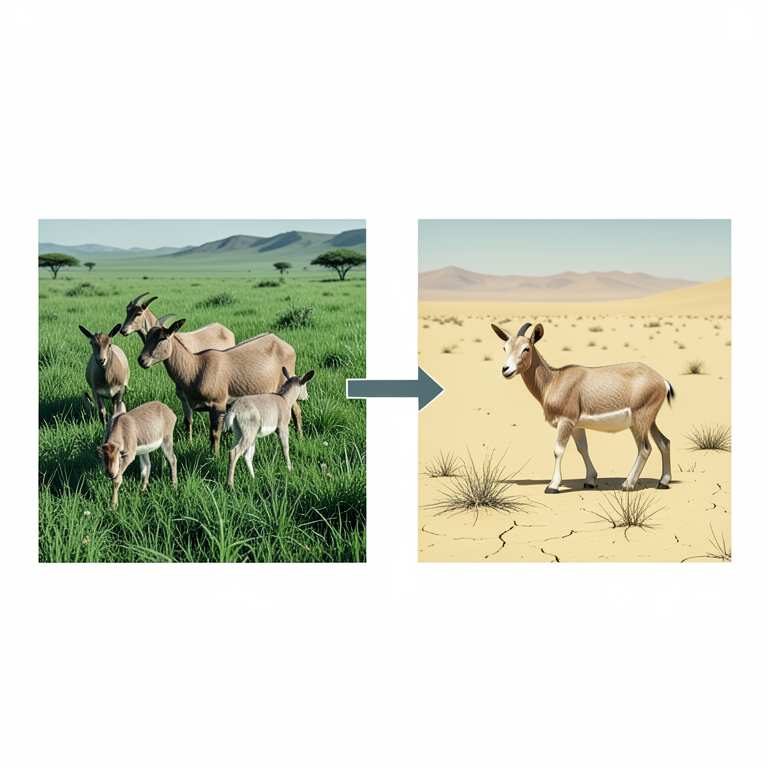
Seasonal Impact on Productivity
AI-generated conceptual illustration (Desert goats). It explains the idea and does not show study data.
View source evidence ↗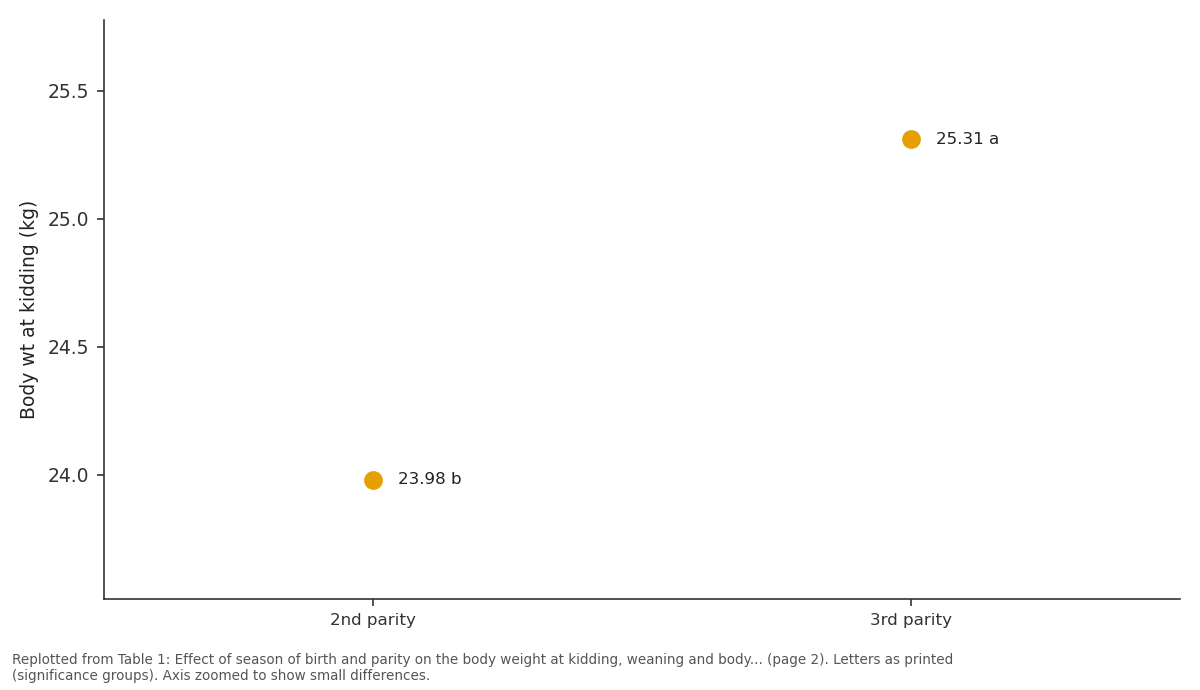
Body wt at kidding: 2nd parity vs 3rd parity
Replotted from Table 1 (page 2) of the original paper. Every bar is the paper's own table value.
View source evidence ↗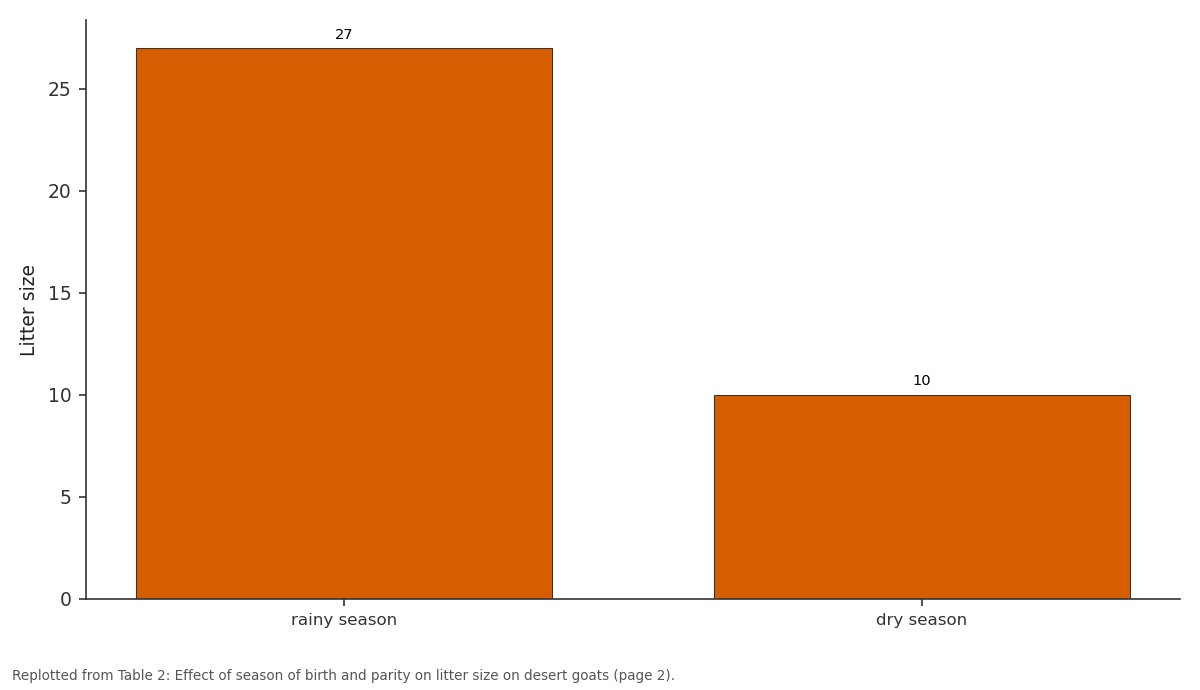
No. of kids: rainy season vs dry season
Replotted from Table 2 (page 2) of the original paper. Every bar is the paper's own table value.
View source evidence ↗Figures & tables
From the original paper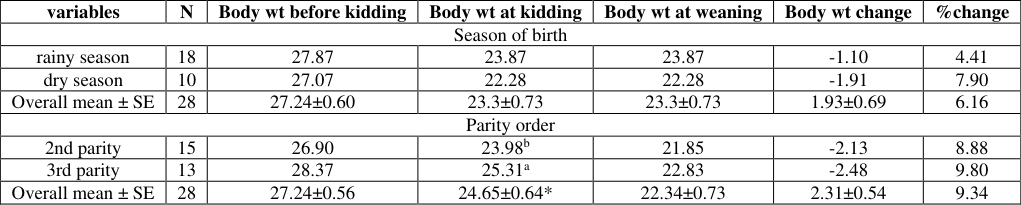 Table 1
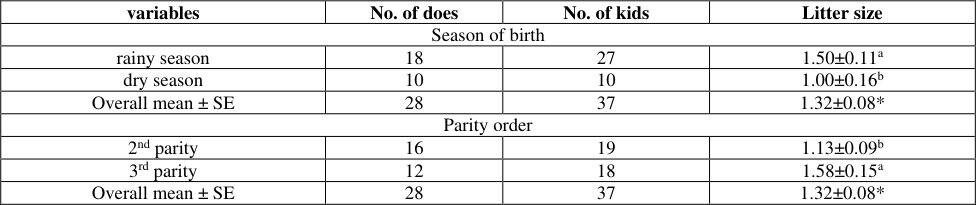 Table 2
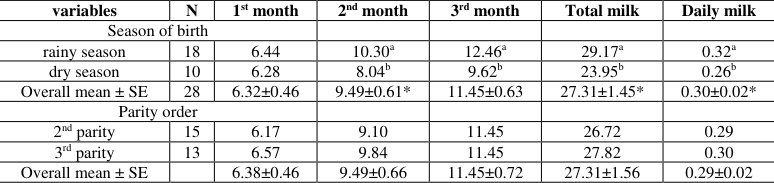 Table 3
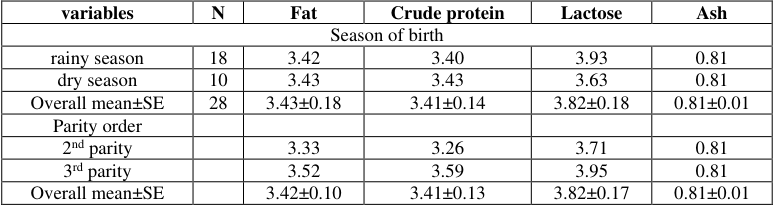 Table 4
Introduction
Goat ruminants play a crucial role in food production and provide meat and milk and its products and contribute in developing countries (Simela & Merkel, 2008) [60] . Mean, while Sudan has one of the largest population of goat estimated to be about 44 million head, and about 4 million are found in north Kordofan (MARF, 2012) [39] . Sudanese desert goats are kept and raised for meat production especially in rural areas and they also provide some milk for family needs and household cash income for smallholder farmers (Galal, 2005; Toplu and Altinel, 2008) [26,66] . Low genetic potential, non-genetic factors and lack of adequate management are among the factors that threaten the productivity of desert goats. Thus, non-genetic factors that affecting the economic viability which are associated with growth, body weight are the most economically important and easily measurable trait that require particular attention in any breeding program aiming at improving the productivity of goats, especially meat type (Moaeen-ud-Din et al., 2008) [48] . The reproductive activities during the pre-and post-partum period are good indicators of the overall reproductive and productive performance of an animal (Delgadillo, 2007 and Hossain et al., 2003) [22,30] . This should have an impact on productivity trait of goats, as body weight pre and post kidding, birth weight and weaning rate (Mahgoub and Lu, 2004) [37] . Under tropical environmental conditions, the main factor influencing the productivity of goat's flocks is climatic seasonality. Since raising goats under extensive conditions implies that environmental factors and their interactions are of central importance and they determine the levels of performance and productivity (Bushara et al., 2013 and Nassif and El Amiri, 2011) [14,50] . The supply of nutrients from the veld fluctuates between years and seasons, so when basic requirements are not fulfilled goats start to use body weight loss, this might be reflected on goat's productivity performance (Ramirez-Perez et al., 2000) [56] . Also better reproductive performance and milk production increased significantly with increasing age and parity of the dam which has great effect on birth weight and all growth traits (Mellado et al., 2006) [43] . Therefore, any breeding scheme aiming to improve the overall productivity of Sudanese desert goats must first identify the influences of non-genetic factors that hinder the growth rate before applying the strategy, because environmental factors can overshadow the potential of genetic factors. Therefore, the present study was to assess the effects of non-genetic factors like season of parturition and parity order on pre and post growth, weaning weight, litter size and milk production of Sudanese desert goats in North Kordofan, Sudan.
Materials and Methods
Materials and Methods
Experimental animals
Twenty eight (28) adult doe's Desert goats were employed for this experiment. The goats are purchased from local market around International Journal of Agriculture and Food Science that area. The does were of different in age with a range of >1 year to three years of age, with average body weight of 21.4 kg. On arrival they were divided into two groups G1 and G2, with 15 and 13 dams, respectively according to parity number for 2 nd and 3rd parities respectively. All the groups were eared tagged and treated against endo-and ecto-parasites, vaccinated against diseases endemic to the area such as anthrax and Hemorrhagic septicemia and drenched with broad spectrum anthelmintic (Ivomic). The Two groups were housed in partially shaded pens, constructed from local materials of woods. Each pen was equipped with clean water troughs. The animals were allotted to free grazing (from 8:00 am to 6:00 pm). Live weight was weekly recorded before kidding and post kidding (12 weeks). Milk yield, milk compositions were also monitored up to three months. The analysis for milk composition was done according to methods of AOAC (1990) [4] , in the laboratory of Animal Production of ELObied agricultural Research Station, North Kordofan state. Ttest was used to analysis of data from reproductive traits from the experiment. All techniques of the statistical analysis were conducted using Statistical Package for the Social Sciences, software package (SPSS, 2005) [61] .
Results
Results
Effect of season of birth and parity on the body weight at kidding, at weaning and body weight changes
The data in Table (1) indicated the effect of season of birth and parity order on body weight of the does at kidding, at weaning time and body weight change. The results indicated that season of birth did not affect body weight of does before and after kidding. Does that have been born during rainy season had better body weight before kidding, at kidding and weaning compared with does been born during dry season. The does that had 3 rd parity secured higher body weight at one week before kidding and weaning compared with does that kidded twice. The results showed that the body weight at kidding was significantly (P<0.05) affected by parity order, where higher body weight were obtained by 3rd parity groups (25.31 kg) compared with 2nd parity group (23.98kg). The results showed that the dams experienced variable body weight losses imposed by season of birth and parity order.
Effect of season of birth and parity on litter size of desert does
The data highlighting the effect of season of birth on litter size is displayed in Table (2). The results suggested that the does gave significantly (P<0.05) a bigger litter size (1. 5) during rainy season kidding as compared to does kidding during dry season (1.00). Out of the all kids born, 72.9% kids were born during the rainy season and the remaining 27.1% kids were born in the dry season. Parity order significantly (P<0.05) affected litter size, with beigest litter secured with 3 rd parity (1.58) compared with litter size in 2 nd parity (1.13).
Effect of season of birth and parity on milk yield
Table (3) showed the effect of season of birth and parity number on total milk yield. Season of birth was secured significantly (P<0.05) affected milk production. Does that kidder during rainy season give higher milk yield in 2 nd and 3 rd month of lactation period. Highest daily milk production recorded by does kidding during rainy season as 0.32 kg compared with that kidded in dry season 0.26 kg. Parity number exerted non-significant (P<0.05) effect on both total and daily milk yield. Does that have kidded 3 rd parities, however produced more milk compared to 2 nd parities kidder, the total milk yielding of 2 nd and 3 rd parities kidders were 26.72 and 27.82 kg respectively. The daily yielding of the 3 rd and 2 nd parities amounted were 0.29 and 0.30 kg respectively.
Effect of season of birth and parity on milk composition
The effect of season of birth and parity order on milk chemical composition of experimental goats is illustrated in Table (4). The season of kidding exerted non significant effect, on milk composition, whereby, does that kidded during the dry season had the highest fat content 3.43 compared with rainy season kidders 3.42. Same results in the lactose content which was highest in does kidding in rainy season (3.93) compared to dry season kidders (3.63). The milk components including crude protein and ash content are not also affected by season of kidding. The parity order also exerted non significant effect, on milk composition, whereby; that protein and lactose content was highest for does kidded three time 3.59 and 3.95 respectively compared with 2 nd parity kidders 3.26 and 3.71 respectively. Same results in the fat and ash content were not affected by parity number.
Discussion
Discussion
Effect of season and parity on kidding weight, weaning weight and weight changes
The effect of season on growth rate and reproductive performance of the goats has been reviewed by many authors Madibela et al. (2002) [36] , Dadi et al. (2008) [19] and Bushara and Abu Nikhiala (2012) [12] they indicated that seasonal effects on body weight change results from seasonal availability of quality grazing. In the present experiment the season did not affected body weight growth, although the high body weight of does was obtained during rainy season, any way the season effect on body weight change this could be due to the changing nutritional status of the animals with the seasonal availability of green grasses. Same results were obtained by Bushara et al. (2013) [14] or maybe probably had enough feeds from grasses, trees weeds and shrubs, and this reflected that natural grazing supplied enough nutrients to meet the requirements, these results in agreement with Bushara et al. (2013) [14] . It has been reported that during late pregnancy there is preferential nutrient utilization for foetal growth at the cost of mobilization of maternal body tissues (Rojo-Rubio et al., 2016) [57] and results in weight loss of doe if the dietary supply of nutrients is inadequate (Al-Totanji and Lubbadeh, 2000) [1] . Observation of low body weight of does kidding during the dry season, may be due to unavailability of feed in dry season or due to low nutrients value of grasses as they get mature, however the doe may conceived in late rainy season and faced the long pregnancy period with decline of the nutritive value in grazing pasture during dry season. This results in match with Mshelizah et al. (2015) [49] and Mbahi et al. (2006) [42] who stated that raised animal on natural pastures which decline rapidly in quantity and quality during the dry season and such seasonal variation in nutritional status result in irregular growth and weight gain in animal. Does kidding during the dry season lost big mass of body weight and this may be due to decline nutritive value of the grasses which affect body condition score that faced the lactation period, same studies reported by Malau-Aduli et al., (2003) [38] . The parity order affected body weight at 8 weeks before kidding, but days after that showed no significant influence on body weight growth. In spite of the effects, does with third parity were heavier during all period of gestation than does with second parity, this-results agreed with Thiruvenkadan et al. (2011) [65] , however these-result is in contrast with Bagnicka et al. (2007) [6] and Annor et al. (2012) [3] who reported that parity of dam significantly affects all the production performances. Parity order did not affect weight at kidding, where does that had 3 rd parities were heavier than does of 2 nd parities, same trend was reported by Hossain et al. (2003) [30] who reported that postpartum weight increased with increasing parity number, but weaning weight was affected significantly by parity number, where does with 3 rd parities had higher weight compared with 2 nd parities, because there was a tendency to increase weight with the advance of parity and age, due to increase of digestive system which mean more feeds, this results on line with Paul et al. (2014) [54] . More lost in weight in 3 rd parities does, this results contrasted by Bushara et al. (2011) [11] .
Effect of season of birth and parity on litter size of desert does
The average litter size for Desert goat in this study was 1.32±0.09; this result is lower than that obtained by Bushara et al. (2017c) [13] for same breed (1.50) and for Taggara goat (1.42), Sumartono et al. (2016) [62] 1.75, Pan et al. (2015) [53] and higher than that obtained by Mengistie et al. (2013) [44] for Central Highland goats (1.16±0.04) and Rojero et al. (2005) [58] for Celtibernan (1.1). The season of birth significantly affected litter size, does that kidding during the rainy season maintained higher litter size compared with dry season kidders, This result complies with several authors, Madibela et al. (2002) [36] and Dadi et al. (2008) [19] . Contrast to Mengistie et al. (2013) [44] who reported large litter size during hot dry season. The large litter size during the rainy season could be due to the availability of green folder grasses and forages during conception which resulted in higher body condition score and body weight at mating which in turn increases the number of ova shed and fertilized. This result complies with several authors (Bushara et al., 2013; Dadi et al., 2008; Mellado et al., 2006) [14,43,19] , and the low litter size during dry season may be due to high temperature occurring during dry season which delay feed intake, these results agreed with Marai et al. (2008) [40] who reported that the heat-induced loss of appetite. Parity of doe had showed significant difference in litter size that higher parity does gave higher litter than lower parity ones. This agrees with the research findings of Pan et al. (2015) [53] , Hasan et al. (2014) [29] and Mengistie et al. (2013) [44] whom stated that the largest litter sizes achieved at about sixth parity. Hossain et al. (2004) [31] has also reported an increase litter size for 2 nd parity was 1.76 and for 3 rd was 1.96, and he suggested that the increase litter size from 1 st parity up to 3 rd parity. The highest litter size may be due to that advancement in age of does improve weight results in improved ovulation rate, uterine capacity and other maternal traits affecting the reproductive efficiency which in turn increases fecundity. Generally the reduction in litter size observed in the present study in does was possible due to a reduced ovulation rate in this group of does. Some authors have provided evidence of a retarded fetal folliculogenesis by maternal malnutrition, or may be due to low body weight during ovulation (Rae et al., 2001) [55] .
Effect of season of birth and parity on milk yield
Milk production and composition are more depending on composition of the diet fed to animal, the energy balance and energy reserved of the animal. The average total milk production for Desert goats in this study was 27.30±1.97 kg, this is equivalent to 0.30 kg per day in a lactation period of 90 days, this level of production was comparable to that reported by Bushara et al. (2011, 2010) [11,15] for Taggar goats, and lower than that reported by Berhane and Eik (2006) [8] for Feral goats, and higher than that reported by El-Abid and Abu Nikhaila (2010) [23] and Degen (2007) [21] . The effect of season of kidding on total milk yield and daily yield revealed variations in average total milk yield in 90 days between different seasons of years, goats kidded in rainy season produced higher milk yield compared with the milk yield of goats kidded in dry season, this was in agreement with the findings of Hamed et al. (2009) [28] , Kondyli et al. (2012) [35] , Salari et al. (2016) [59] and Bushara et al. (2011) [11] whom reported that does kidding in wet rainy season had higher lactation milk yields and longer lactation length compared with does kidded in dry season. The high milk production during the rainy season may be due to the availability of forages in the wet season; this is on line with Bhatta et al. (2015) [9] , El-Abid et al. (2009) [24] and Caricella et al. (2008). The low milk yield during the dry season may be due to unavailability of pasture and increased ambient temperature reduced the dry matter intake that condensed both quantity and quality of milk, which agree with the finding of Bhatta et al. (2015) [9] and El-Abid and Abu Nikhaila (2010) [23] . Parity of doe at kidding influences milk yield (Norris et al., 2011). Milk production analysis of variance shows that there were no significant differences between total milk yields and daily milk yield of different parities, these results agreed with El-Abid and Abu Nikhaila (2010) [23] and Olechnowicz and Sobek (2008) [52] , however, these results were contradicting the findings of Assan (2014) [5] , Goetsch et al. (2011) [27] and Kaskous et al. (2015) [33] reported that the daily milk yield increased with parity as 0.58, 0.93 and 1.13 kg for 1st, 2nd and 3rd parity for Maltese goat in Italy. According to Klir et al. (2015) [34] and Carnicella et al. (2008) [17] , amount of milk significantly increases with the parity. The increase in milk yield with age and parity in producing goat's because as the age of the animal increases, the hormonal status of the animal body, metabolic activity, improvement in the udder and secretory cells and nutrient intake which are used in milk synthesis increase too and increase in its size during the trimester of pregnancy due to increase in hormonal activities (placenta lactogen) with the increase in the size of the placenta in advanced parity producing goat compared with the small parity producing ones or might be due to variation of lactation lengths of different parities and variation of prevailing climatologically conditions for each parity (Capuco et al., 2001) [16] , which agreed with Kaskous et al. (2015) [33] and Carnicela et al., (2008). Generally Tropical breeds have low milk yield due to their low genetic potential and prevailing environmental conditions like stress caused by harsh weather and diseases.
Effect of season of birth and parity on milk composition
Differences in the milk composition of goats have been attributed to factors such as age and availability of nutrition. The season of birth showed non-significant effect on milk composition. Milk fat is most susceptible to dietary variations and can vary over a range of nearly three percent (%). According to some previous workers dietary variations result in milk protein concentration varying at about 0.60 percent (Millogo et al., 2009) [46] , however, these results were contradicting the findings of Alawa and Oji (2008) [2] and Bushara et al. (2013) [14] who found significant high fat and lactose in rainy season compared with cool dry season. The mean value of fat was lower in the dry season and higher in the wet season; this might be due to nutritional status of the animals during wet season, where feeds are available and richer in minerals and vitamins, which confirmed by Marín et al. (2011) [41] who reported that the reduction in fat and protein concentration in goat milk has been a result of hot or warm ambient temperature. On the other hand, Szymanowska et al. (2002) [63] and Czarniawska-Zajac et al. (2006) [18] found that milk produced over the winter months contained significantly more fat and protein, and significantly less lactose. According to Prasad et al. (2005) seasonal effects in milk composition may arise from the feed that may vary with the fodder consumed by the goats, which is mainly dependent on the climatic conditions of the area. The parity number exerted non-significant effect on milk composition. Results of protein and lactose and fat was highest for does kidded three times compared with does kidded twice, same results reported by, Mioč et al. (2008), Olechnowicz and Sobek (2008) [52] and Kaskous et al. (2015) [33] who stated that the components of the milk were not affected by parity. Results showed that the fat content tend to increase as parity increase this might be due to increase in age, similar reported showed by Bhatta et al. (2015) [9] , Klir et al. (2015) [34] , Bagnicka et al. (2015) [7] and Zahraddeen et al. (2008) [67] they found highest milk fat and protein yields were attained in the 3rd and 4th lactations from goats. Generally in dairy goats, because of their seasonal lactation, it is usual contents of lactose, protein and fat are high in early lactation, decrease as lactation peaks and increase when milk volume decreases towards late lactation (Mestawet et al., 2012 and Fekadu et al., 2005) [45,25] . Regarding the milk composition, Bhosale et al. (2009) [10] observed gradually increase of protein, and fat percentage as lactation advanced, except lactose percentage in goat milk, from 1st to 4th parity. In this study may be the differences in composition due to lactation curve which agreed with Idamokoro et al. (2017) [32] who reported that, milk fat, protein, and solid non-fat were negatively correlated to increase in milk yield with advance lactation period.
Conclusions
It will be concluded that most of the traits considered were influenced by the non-genetic factors that affect reproductive performance of goats. Season of birth was the most important source of variation in this study. does differ in parity order kidding during rainy season, they showed less lost in body weight during lactation period and minimizing the negative effects of fat mobilization during early lactation, produced higher milk yield. Litter size and milk production increase positively with advance in parity number. The present result on live weight and growth rate of desert goats indicated that most of the environmental factors had positive effect. Certain management adjustment should be taken to increase the growth rate in the range for desert goats. To compare the significance of different traits under similar environmental condition, the number of observation should be comparable.
Figures and tables from the paper
| variables | N | Body wt before kidding | Body wt at kidding | Body wt at weaning | Body wt change | %change |
|---|---|---|---|---|---|---|
| Season of birth | ||||||
| rainy season | 18 | 27.87 | 23.87 | 23.87 | -1.10 | 4.41 |
| dry season | 10 | 27.07 | 22.28 | 22.28 | -1.91 | 7.90 |
| Overall mean ± SE | 28 | 27.24±0.60 | 23.3±0.73 | 23.3±0.73 | 1.93±0.69 | 6.16 |
| Parity order | ||||||
| 2nd parity | 15 | 26.90 | 23.98b | 21.85 | -2.13 | 8.88 |
| 3rd parity | 13 | 28.37 | 25.31a | 22.83 | -2.48 | 9.80 |
| Overall mean ± SE | 28 | 27.24±0.56 | 24.65±0.64* | 22.34±0.73 | 2.31±0.54 | 9.34 |
Table text extracted from the original PDF; superscript letters are shown inline. The original table image is below.
View original table image
| variables | No. of does | No. of kids | Litter size |
|---|---|---|---|
| Season of birth | |||
| rainy season | 18 | 27 | 1.50±0.11a |
| dry season | 10 | 10 | 1.00±0.16b |
| Overall mean ± SE | 28 | 37 | 1.32±0.08* |
| Parity order | |||
| 2nd parity | 16 | 19 | 1.13±0.09b |
| 3rd parity | 12 | 18 | 1.58±0.15a |
| Overall mean ± SE | 28 | 37 | 1.32±0.08* |
Table text extracted from the original PDF; superscript letters are shown inline. The original table image is below.
View original table image
| variables | N | 1st month | 2nd month | 3rd month | Total milk | Daily milk |
|---|---|---|---|---|---|---|
| Season of birth | ||||||
| rainy season | 18 | 6.44 | 10.30a | 12.46a | 29.17a | 0.32a |
| dry season | 10 | 6.28 | 8.04b | 9.62b | 23.95b | 0.26b |
| Overall mean ± SE | 28 | 6.32±0.46 | 9.49±0.61* | 11.45±0.63 | 27.31±1.45* | 0.30±0.02* |
| Parity order | ||||||
| 2nd parity | 15 | 6.17 | 9.10 | 11.45 | 26.72 | 0.29 |
| 3rd parity | 13 | 6.57 | 9.84 | 11.45 | 27.82 | 0.30 |
| Overall mean ± SE | 6.38±0.46 | 9.49±0.66 | 11.45±0.72 | 27.31±1.56 | 0.29±0.02 |
Table text extracted from the original PDF; superscript letters are shown inline. The original table image is below.
View original table image
| variables | N | Fat | Crude protein | Lactose | Ash |
|---|---|---|---|---|---|
| Season of birth | |||||
| rainy season | 18 | 3.42 | 3.40 | 3.93 | 0.81 |
| dry season | 10 | 3.43 | 3.43 | 3.63 | 0.81 |
| Overall mean±SE | 28 | 3.43±0.18 | 3.41±0.14 | 3.82±0.18 | 0.81±0.01 |
| Parity order | |||||
| 2nd parity | 3.33 | 3.26 | 3.71 | 0.81 | |
| 3rd parity | 3.52 | 3.59 | 3.95 | 0.81 | |
| Overall mean±SE | 3.42±0.10 | 3.41±0.13 | 3.82±0.17 | 0.81±0.01 |
Table text extracted from the original PDF; superscript letters are shown inline. The original table image is below.
View original table image
References
66 in the original paper- Al-Totanji W, Lubbadeh W. Effect of feeding different levels of energy and protein during the last two months of gestation on shami goats' performance in Jordan valley. Dirstat. Agri. Sci. 2000; 27:165-175.
- Alawa JP, Oji UI. Effect of pendulous udder enlargement on yield and proximate composition of milk from red sokoto goats. J. Anim. Vet. Adv. 2008; 7:870-872.
- Annor SY, Ahunu BK, Aboagye GS, Boa-Amponsem K, Cassady JP. Non-Genetic factors affecting grass cutter production Traits. 1. growth Traits. World Applied Sciences Journal. 2012; 18(10):1412-1424.
- AOAC. Official Methods of Analysis 12 th Ed. Association on Official Analytical Chemists Washington DC, 1990.
- Assan Never. Significance of litter size, duration of dry period and stage of pregnancy on milk yield and composition in dairy animals. Scientific Journal of Review, 2014, 3(12).
- Bagnicka E, Wallin E, Lukaszewicz M, Adnoy T. Heritability for reproduction traits in Polish and Norwegian populations of dairy goat. Small Ruminant Research. 2007; 68(3):256-262.
- Bagnicka Emilia, Henning Hamann, Ottmar Distl. Structure and the non-genetic and genetic effects on milk traits in Polish dairy goat population. Animal Science Papers and Reports. 2015; 33(1):59-69.
- Berhane G, Eik LO. Effect of Vetch (Vicia Sativa) hay supplementation on performance of Begait and Abergelle goats in northern Ethiopia: 1. Milk yield and composition. Small Rumin. Res. 2006; 64(3):225-232.
- Bhatta M, Das D, Ghosh PR. Influence of seasonal variation in the general composition of Black Bengal goat (Capra aegagrus hircus) milk. J Dairy Vet Anim Res, 2015, 2(4).
- Bhosale SS, Kahate PA, Kamble K, Thakare VM, Gubbawar SG. Effect of lactation on physico-chemical properties of local goat milk. Veterinary World. 2009; 2(1):17-19.
- Bushara I, Elemam MB, Abdelhadi OMA, Idris AO, Abu Nikhiala AM. Effect of parity on the productivity of Taggar goats. American-Eurasian J. Agric &Environ. Sci. 2011; 10(4):515-518.
- Bushara I, Abu Nikhaila MMAA. Productivity Performance of Taggar Female Kids under Grazing Condition. J. Anim. Prod. Adv. 2012; 2(1):74-79.
- Bushara I, AO Idris, DM Mekki, Muna MM Ahmed, AM Abu Nikhiala. Climate effect of season of birth and litter size on Taggar goat's production in western Sudan. Basic Research Journal of Agricultural Science and Review. 2013; 2(4):96-101.
- Bushara I, Abu Nikhaila, Abdel Moneim, Dafalla M Mekki. Productive and reproductive traits of Taggar goats as affected by type of ration under dry land farming system in western Sudan. Egyptian J. of sheep & goat. Sci. 2010; 5(1):209-220.
- Capuco AV, Wood DL, Baldwin R, Mcleod K, Paape MJ. Mammary Cell Number, Proliferation and Apoptosis during a Bovine Lactation: Relation to Milk Production and Effect of BST. J Dairy Sci. 2001; 84:2177-2187.
- Carnicella D, Dario M, Ayres MCC, Laudadio V, Dario C. The effect of diet, parity, year and number of kids on milk yield and milk composition in Maltese goat. Small Ruminant Res. 2008; 77:71-74.
- Czarniawska-Zajac, Stanislawa, Brzostowski Henrk, Zielazny Maciej. Effect of the feeding period on the chemical composition and fatty acid profile of milk from French alpine dairy goats. Polish journal of food and nutrition sciences. 2006; 15/56(1):51-55.
- Dadi H, Duguma G, Shelima B, Fayera T, Tadesse M, Woldu T, Tucho TA. Non-genetic factors influencing post-weaning growth and reproductive performances of Arsi-Bale goats. Livestock Research for Rural Development, 2008, 20(7).
- Debele G, Duguma M, Hundessa F. Effect of different factors on mortality rate of Arsi-Bale kids in mid rift valley of Ethiopia. Global Veterinaria. 2011; 6:56-60.
- Degen A. Sheep and goat milk in pastoral societies. Small Rumin. Res. 2007; 68:7-9.
- Delgadillo JA, De Santiago-Miramontes MA, Carrillo E. Season of birth modifies puberty in female and male goats raised under subtropical conditions. Animal. 2007; 1(6): 858-864.
- El-Abid Kamal, El-Hassan, Abu Nikhaila AMA. A Study on Some Non-genetic Factors and Their Impact on Milk Yield and Lactation Length of Sudanese Nubian Goats. Australian Journal of Basic and Applied Sciences. 2010; 4(5):735-739.
- El-Abid EK, Abu Nikhaila AMA. A study on some nongenetic factors and their impact on some reproductive traits of Sudanese Nubian goats. Int. J. Dairy Sci. 2009; 4:152-158.
- Fekadu B, Soryal K, Zeng S, Hekken DV, Bah B, Villaquiran M. Changes in goat milk composition during lactation and their effect on yield and quality of hard and semi-hard cheeses. Small Ruminant Research. 2005; 59:55-63.
- Galal S. Biodiversity in goats. Small Rum. Res. 2005; 60:7581.
- Goetsch AL, Zeng SS, Gipson TA. Factors Affecting Goat Milk Production and Quality. Small Rumin Res. 2011; 101:55-63.
- Hamed A, Mabrouk MM, Shaat I, Bata S. Estimation of geneticparameters and some nongenetic factors for litter size at birth and weaning and milk yield traits in Zaraibi goats. Egyptian Journal of Sheep Goat Sciences. 2009; 4:55-64.
- Hasan Jahid, Jalal Uddin, Ahmed Mahmudul Alam. Reproductive performances of Black Bengal goat under semiintensive and extensive conditions at rural areas in Bangladesh. J. Adv. Vet. Anim. Res. 2014; 1(4):196-200.
- Hossain ME, Shahjala M, Khan MJ, Hasanat MS. Effect of dietary energy supplementation on feed intake,growth and reproductive performance of goats under grazing condition. Pakistan J. Nutr. 2003; 2(3):159-163.
- Hossain SMJ, Alam MR, Sultana N, Amin MR, Rashid MM. Milk Production from Indigenous Black Bengal Goat in Bangladesh. J. Biol. Sci. 2004; 4:262-265.
- Idamokoro Emrobowansan M, Voster Muchenje, Patrick J Masika. Yield and milk composition at different stages of lactation from a small herd of Nguni, Boer, and non-descript goats raised in an extensive production system. Journal of Sustainability. 2017; 9(1000):1-13.
- Kaskous S, Jawad S, Fadlelmoula A. Factors affecting daily milk yield and composition during suckling in mountain goats. Livestock Research for Rural Development, 2015, 27(6).
- Klir Ž, Potocnik K, Antunovic Z, Novoselec J, barac Z, Mulc D, Kompan D. Milk production traits from Alpine breed of goats in Croatia and Slovenia. Bulgarian Journal of Agricultural Science. 2015; 21(5):1064-1068.
- Kondyli E, Svarnas C, Samelis J, Katsiari MC. Chemical composition and microbiological quality of ewe and goat milk of native Greek breeds. Small Rumin Res. 2012; 103:194-199.
- Madibela OR, Mosimanyana BM, Boitumelo WS, Pelaelo TD. Effect of supplementation on reproduction of wetseason kidding Tswana goats. South African Journal of Animal. 2002; 32(1):14-22.
- Mahgoub O, Lu CD. (2004). Influence of various levels of metabolisable energy on chemical composition of whole carcass and non-carcass portion of goats and sheep. South African Journal of Animal Science. 2004; 34(1):81-84.
- Malau-Aduli BS, Eduvie L, Lakpini C, Malau-Aduli AEO. Chemical compositions, feed intakes and digestibilities of crop residues-based rations in nonlactating Red Sokoto goats in the Sub humid zone of Nigeria. Animal Science Journal. 2003; 74(2):89-94.
- MARF. Ministry of Animal Resource and Fisheries, Government of Sudan. Annual report Salient situation of livestock and fisheries of Sudan, 2012, 45.
- Marai IFM, El-Darawany AA, Fadiel A, Abdel-Hafez MAM. Reproductive performance traits as affected by heat stress and its alleviation in sheep. Tropical and Subtropical Agro ecosystems. 2008; 8:209-234.
- Marín AM, Gómez-Cortés P, Castro AG, Juárez M, Alba LP. Animal performance and milk fatty acid profile of dairy goats fed diets with different unsaturated plant oils. J Dairy Sci. 2011; 94(11):5359-5368.
- Mbahi TF, Kibon A, Yahaya MS, Gworgwor ZA. Effects of lablab hay and groundnut haulms supplementation on intake and degradability of Sorghum Stover by Sheep. Nigerian Journal of Tropical Agriculture. 2006; 8:136-140.
- Mellado M, Vald´ez R, Garc´ıa JE, Lopez R, Rodrıguez A. Factors affecting the reproductive performance of goats under intensive conditions in a hot arid environment. Small Ruminant Research. 2006; 63:110-118.
- Mengistie Taye, Deribe Belay, Melekot Mussie H. Reproductive Performance of Central Highland Goats under Traditional Management in Sekota District, Ethiopia. Asian Journal of Biological Sciences. 2013; 6:271-276.
- Mestawet TA, Girma A, Ådnqy T, Devold TG, Narvhus JA, Vegarud GE. Milk production, composition and variation at different lactation stages of four goat breeds in Etiopia. Small Ruminant Research. 2012; 105:176-181.
- Millogo V, Ouedraogo GA, Agenas S, Svennersten-Sjaunja K. Day-to-day ariation in yield, composition and somatic cell count of saleable milk in hand-milked zebu dairy cattle. African J Agric Res. 2009; 4(3):151-155.
- Mioc B, Prpic Z, Vnucec I, Barac Z, Samarzija D, Pavic V. Factors affecting goat milk yield and composition. Mljekarstvo. 2008; 58:(4)305-313.
- Moaeen-ud-Din M, Yang LG, Chen SL, Zhang ZR, Xiao JZ, Wen QY, Da M. Reproductive performance of Matou goat under sub-tropical monsoonal climate of Central China. Trop Anim Health Prod. 2008; 40:17-23.
- Mshelizah MS, Malgwi IH, Mohammed ID. Dry Seasons Feeding Regimes for Ruminants and Their Rumen Degradation Characteristics in a Semi-Arid Environment of Nigeria, Global Journal of Animal Scientific Research. 2015; 3(2):497-502.
- Nassif F, Amiri Bel. Promoting multidisciplinary research to improve goat production systems in Morocco. Economic, social and environmental sustainability in sheep and goat production systems, Options Méditerranéennes, A no. 2011; 100:299-303.
- Norris D, Ngambi JW, Benyi K, Mbajiorgu CA. Milk production of three exotic dairy goat genotypes in Limpopo Province, South Africa. Asian J Anim Vet Adv. 2011; 6:274281.
- Olechnowicz J, Sobek Z. Factors of variation influencing production level, SCC and basic milk composition in dairy goats. Journal of Animal and Feed Sciences. 2008; 17:4149.
- Pan Subhransu, Chanchal Kanti, Biswas Debasis, Majumdar Dipyaman Sengupta, Aditi Patra Saurabh, Ghosh Avijit Haldar. Influence of age, body weight, parity and morphometric traits on litter size in prolific Black Bengal goats. Journal of Applied Animal Research, 2015, 43(1).
- Paul RC, Rahman Anmi, Debnath S, Khandoker Mamy. Evaluation of productive and reproductive performance of Black Bengal goat. Bang. J. Anim. Sci. 2014; 43(2):104-111.
- Rae MT, Palacio S, Kyle CE, Brooks AN, Lea RG, Miller DW, Rindh SM. Effect of maternal under nutrition during pregnancy on early ovarian development and subsequent follicular development in sheep fetuses. Reproduction. 2001; 122:915-922.
- Ramirez-Perez AH, Buntinx SE, Tapia-Rodriguez C, Rosiles R. Effect of breed and age on the voluntary intake and the micromineral status of non pregnant sheep. 1. Estimation of voluntary intake. Small Ruminant Research. 2000; 36:49-55.
- Rojo-Rubio R, Kholif AE, Salem AZM, Mendoza GD, Elghandour MMMY, Vazquez-Armijo JF, Lee-Rangel H. Journal of Applied Animal Research. 2016; 44(1):331-337.
- Rojero RDM, Lagunas AAM, Santamaria LR, Mendez JV. Reproductive performance in three goat breeds under dry tropics conditions in Guerrero, Mexico, Vet. Mex. 2005; 36(2):147-155.
- Salari Federica, Iolanda Altomonte, Neila Lidiany, Ribeiro Maria, Norma Ribeiro, Riccardo Bozzi, Mina Martini. Effects of season on the quality of Garfagnina goat milk. Italian Journal of animal science. 2016; 15(4):568-575.
- Simela L, Merkel R. The contribution of chevon from Africa to global meatproduction. Meat Sci. 80, 101-109. (2001).reproductive performance and milk production of Damascus goats fed acacia shrubs or berseem clover hay inNorth Sinai, Egypt. Tropical Animal Health and Production. 2008; 33(1):67-79.
- SPSS. Statistical Package for Social Sciences, windows evaluation program version 15, Michigan Avenue, Chicago, IL, 2005, 19-182. http://www.spss.com
- Sumartono Hartutik, Nuryadi Suyadi. Productivity Index of Etawah Crossbred Goats at Different Altitude in Lumajang District, East Java Province, Indonesia. Journal of Agriculture and Veterinary Science. 2016; 9(4):24-30.
- Szymanowska A, Gruszeczki T, Lipecka Cz. Effect of breed, feed and lactation period on the chemical composition and content of fatty acids in goat milk. Pr. Mater. Zoot. Zesz. Spec. 2002; 31(14):181-187. (in Polish).
- Technoserve. Credit component baseline survey. Technoserve Inc. agricultural bank of Sudan and US Agency for Agricultural development, EL obied, Sudan, 1987, 204.
- Thiruvenkadan AK, Karunanithi K, Muralidharan J, Narendra Babu R. Genetic Analysis of Pre-weaning and Post-weaning Growth Traits of Mecheri Sheep under Dry Land Farming Conditions. Asian-Aust. J. Anim. Sci. 2011; 24(8):1041-1047.
- Toplu HDO, Altinel A. Some production traits of indigenous Hair goats bred under extensive conditions in Turkey.2nd c communication: Viability and growth performances of kids. Arch Tierz. 2008; 51:507-514.
- Zahraddeen D, Butswat ISR, Mbap ST. Evaluation of some factors influencing growth performance of local goats in nigeria. African Journal of food Agricultural Nutrition and Development. 2008; 8(4):464-479.