
Research article · 2020 · Full text
International Journal of Veterinary Sciences and Animal HusbandryVaccination: A key way to prevent Newcastle disease in poultry of Nepal
Volume 5(1) · Pages 104–107 · DOI: 10.22271/veterinary.2020.v5.i1b.237 ↗
Research areasVirology and Viral DiseasesLivestock and Poultry ManagementViral Infections and Vectors
Abstract
Author-writtenNepal is a country with variation in topography and diverse climatic zones. Agriculture is a major occupation for majority of Nepalese engaging 66% of total population in farming and Poultry farming is integral part of the agriculture in Nepal. Nepal has long history of traditional poultry keeping. Poultry are the important source of valuable dietary proteins and rural cash income. In recent data, about 72 million chickens and 400 thousand ducks are present which include commercial, small holder and backyard type of farm. Poultry sector is an emerging industry engaging and employing 70,000 people directly contributing about 4% in National GDP. In present days, the traditional poultry farming is replaced by commercial farming. But the challenge and constraints on poultry sector are increasing day by day. Outbreak and spread of emerging infectious disease is headache in poultry farming. Various disease like Avian influenza, Newcastle disease, IBD, IB, ILT, coccidiosis, Avian Mycoplasmosis, Fowl typhoid, Fowl pox etc. cause serious economic loss in poultry industry. Newcastle disease is common and spread throughout the country having higher incidence in the summer which is caused by avian paramyxovirus type-1 of paramyxoviridae. Vaccines are important tool for prophylactic measures. In many countries, vaccination against ND is routinely practiced for prevention and control of disease and types of vaccines and vaccination schedule vary according to potential threat and virulence property of the field challenge virus. There is big challenge for vaccine researchers, manufacturers and scientists for development of effective vaccine against Newcastle disease. In this paper, we will discuss about present status of Newcastle disease and Vaccine produced in Nepal and Vaccination protocol to prevent spread of Newcastle Disease in Nepal.
Summary
Source-checkedPlain-language reading of the full paper, prepared with AI and checked against the text. Each point links to the authors' own words.
Why it matters
- Agriculture is a primary occupation in Nepal, with 66% of the population involved in farming, and poultry farming is a key component of this sector. View evidence ↗
- The poultry industry in Nepal employs approximately 70,000 people and contributes about 4% to the National GDP. View evidence ↗
- The poultry industry faces significant economic losses due to various infectious diseases, including Newcastle disease and Avian influenza. View evidence ↗
The question
- The authors aim to discuss the current status of Newcastle disease in Nepal, the vaccines produced locally, and the protocols used to prevent its spread. View evidence ↗
What they did
- Information regarding available vaccines and schedules was obtained from the National Vaccine Production Lab (NVPL) and Hester Biosciences. View evidence ↗
What they found
- Local vaccine production evolved from the F and R2B strains in 1968 to the La Sota strain in 1998 and the heat-stable ND I2 vaccine in 2008. View evidence ↗
- Different vaccines provide varying immunity durations: the Lentogenic RD F-1 strain provides 4 weeks of immunity, while the Mesogenic Ranikhet R2B strain provides 1 year. View evidence ↗
- The recommended vaccination schedule for broilers includes the F strain at 5-7 days and either La Sota or F strain at 10-18 days. View evidence ↗
- For layers, the R2B strain is administered via intramuscular injection between 8 and 10 weeks of age. View evidence ↗
- Vaccination effectiveness is influenced by several factors, including the virulence of the field virus and vaccine, bird age, genetics, concurrent infections, and maternal antibody levels. View evidence ↗
What it means
- The authors conclude that Newcastle disease can be effectively prevented and controlled through vaccination. View evidence ↗
- Proper administration, avoiding cold chain breakage, incorrect sites, or improper dilution, is critical to prevent vaccination failure. View evidence ↗
- The authors state a need for the development of an 'Ideal ND Vaccine' that is heat-stable, cheap, easy to apply, and capable of preventing both disease and virus shedding. View evidence ↗
Visual summary
1 visualsIllustrations explain the paper; they do not show study data.
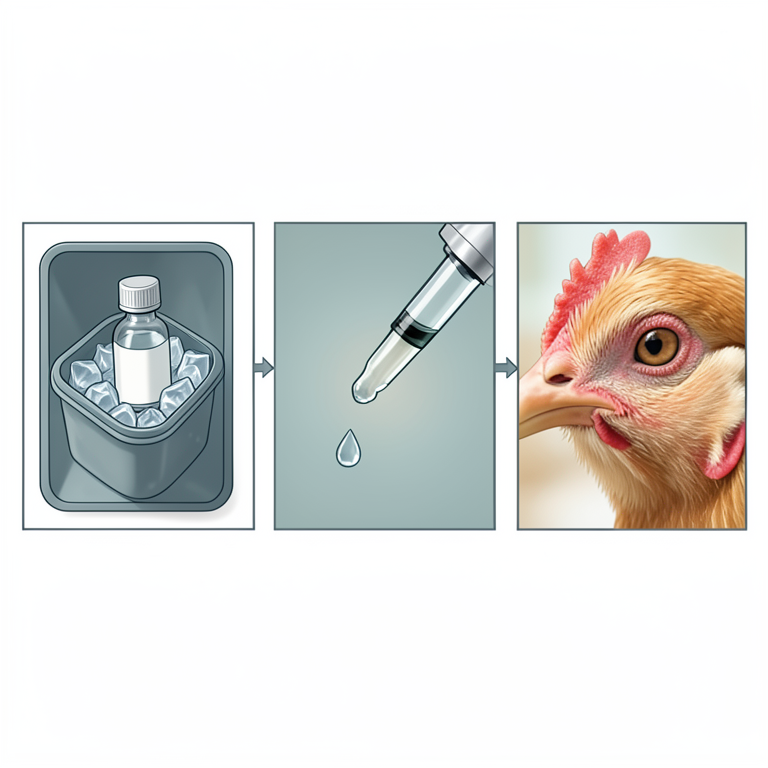
Factors in Vaccination Success
AI-generated conceptual illustration (domestic chickens). It explains the idea and does not show study data.
View source evidence ↗Figures & tables
From the original paper Table 1
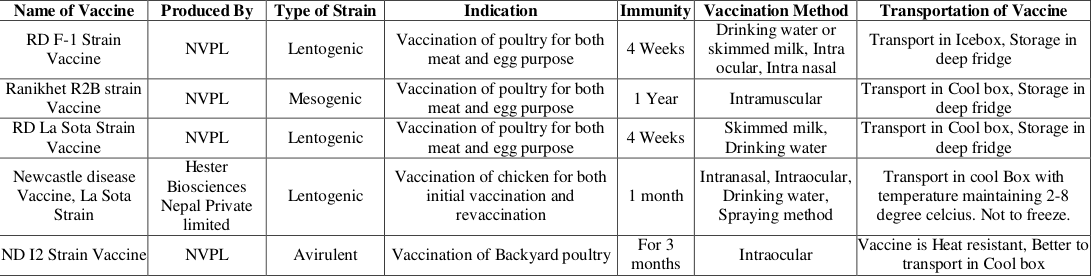 Table 2
 Table 3
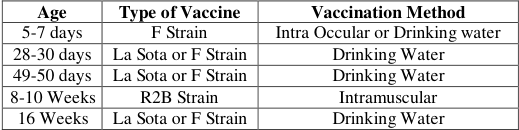 Table 4
Introduction
Nepal is an agriculture country with full of natural beauty with traces of artifacts lies between two giant country of the world, India in the East, South and West and China in the North where more than 66% population are directly engaged in farming [1] . Poultry farming is important sector contributing about 4% of National GDP in Nepal. Because of easy rearing, low investment cost and less manpower requirement, majority of population are attracted towards poultry industry. In past Bhramin society did not accept rearing of poultry, consumption of poultry meat and eggs were restricted and considered as taboo in Bhramin society of Nepal. In present days Poultry is widely accepted and useful addition to food menu. According to Poultry statistics 2071/2072, Commercial poultry farming was practiced in 64 districts out of 75 total districts and there were 21,956 farms present in these 64 districts of which 20,483 (93.29%) was broiler farm which has highest number, layers farm comes in second which was 1337 about 6.09%, hatchery was 128 which was about 0.58% and 8 (0.04%) Giriraj/ Koiler farm. The total bird population was 6,08,26,880 in which 5,26,66,029 were broilers, 69,08,595 layers and 12,52,255 other breed [2] . The number of chicken in 2072/2073 was increased by 12.8% with number of 6,86,30,638, which was further increased by 2% in 2073/74 and further increased by 3.1% in 2074/2075 with total of 7,22,45,732. The total duck population in 2072/2073 was 3,72,255 which was increased by 0.6% in 2073/2074 and further increased by 2.5% with total number of 4,04,670 duck population in 2074/2075 .The total meat production was 3,46,179 metric ton in which 18% of total consumed meat was contributed by poultry sector where chicken contribute 17.36% and Duck contribute 0.08%. The total egg production in 2074/2075 was 1,51,22,65,000 in which 99.05% was contributed by chicken eggs and 0.941% was contributed by Duck eggs [3] . In an average a Nepali used to eat 4.1kg per chicken and 44 eggs annually which is very below the global average, showing greater scope of poultry farming in Nepal [4] . Poultry sector is emerging as a strong industry in Nepal which directly employing and engaging about 70,000 people. But, the poultry sector is challenged by many constraints in which spread and outbreak of disease in periodic interval is major one. There are various economic disease that are spread in the poultry of Nepal. Viz: Avian Influenza, Infectious Bursal Disease, Newcastle Disease, Infectious Bronchitis, Fowl pox, Avian Colibacillosis, Egg Drop Syndrome, Coccidiosis. Newcastle Disease is one of the important poultry disease in Nepal and is a worldwide problem which presents primarily as an acute respiratory disease, but depression, nervous manifestations, or diarrhea may be the predominant clinical form [5] .Vaccination is best way to control and prevent Newcastle disease in Poultry [6] . Vaccination is excellent way to lessen clinical signs of infection caused by virulent ND virus in poultry [13] .
Newcastle disease and ND virus
Newcastle Disease is a highly contagious, rapidly spreading viral infection that directly affects various species of both domesticated and wild birds to varying degrees. The most susceptible species are domestic fowl, turkeys, pigeons and parrots while the mild form of the disease affects various birds like ducks, geese, pheasants, quail and guinea fowl. The clinical sign of the disease result in various system including digestive, respiratory and nervous system, which range from a mild, almost inapparent respiratory disease to very severe depression, drop in egg production, increased respiration, profuse diarrhoea finally collapse, or long-term nervous signs will be seen in those birds which are survived. The disease is highly fatal in the severe form [7] . The etiology of Newcastle disease is Virulent strain of avian paramyxo virus type1 (APMV-1) of genus Avulavirus belonging to subfamily Paramyxovirinae and family Paramyxoviridae [8] . By serological testing and phylogenetic analysis, there are 10 serotypes of Avian paramyxovirus APMV-1 to APMV-10 [9] . ND virus designated to APMV-1. ND virus is able to infect more than 200 species of birds but its severity vary with host and strain of the virus. On the basis of clinical signs the strain of ND virus is classified into five pathotype [10] .
Status of Newcastle disease in Nepal
Various serological, Clinical and Pathological studies proved that Newcastle disease is prevalent in Nepal from many years ago. Prevalence of Newcastle disease is high in rural area due to poor supply of vaccines, not proper biosecurity in farm and reoccurrence of disease is frequently encountered. Recent data of 2018 revels 90 outbreak of Newcastle Disease in which Province number 1,2 and 5 have maximum outbreak of 27,15 and 25 respectively. Around nine hundred thousand birds were susceptible in which 74,986 birds were found affected and 7,363 were died from Newcastle disease same year and around 4,19,052 birds were vaccinated and 67,623 birds were treated [11] .
Source: Annual Epidemiological Bulletin January-December 2018 [11 Source: Annual Epidemiological Bulletin January-December 2018 [11] Source: Annual Epidemiological Bulletin January-December 2018 [11] Source: Annual Epidemiological Bulletin January-December 2018 [11] History of newcastle disease vaccine production in Nepal In 1968, Poultry vaccine against Newcastle disease were produced by Central Biological Production Laboratory to protect poultry population. That time ND F-strain and ND R2B strain vaccine were introduced. The another strain of Newcastle disease La Sota strain vaccine was produced in 1998 to protect from Velogenic strain of ND virus, Vaccine was popular for its easy administration as it does not require vaccinator and can be given in drinking water. Earlier poultry vaccines were produced from fertile eggs available in the local hatchery but from 1997 the production of poultry vaccines were started by using Specific pathogen free eggs. Focusing for backyard poultry and village chickens, the production of heat stable vaccine against ND i.e. ND I2 was started from 2008 [12] .
Prophylactic measure
Newcastle disease is major worldwide problem in the poultry industry. Many country routinely practiced ND vaccination to control the disease and the type of vaccines and vaccination schedule for ND vary depending on potential threat and virulence of the field virus. So, Various research has recommended that combination of live and inactivated ND vaccines administered simultaneously provide better protection and vaccine has been used successfully in control programmes in the area where there is intense poultry production [13] . Thermostable vaccine against Newcastle disease has been found successful in the Nigeria for controlling the disease [14] . Various vaccines are developed to prevent and control the disease. Mainly live vaccine are used for the Newcastle disease and there are four types of ND vaccine that are produced in the Nepal [15] . Vaccination when done correctly on the healthy birds prevents death and disease [16] . Mainly Heister and National Vaccine Production Lab produce vaccine in Nepal and many brand vaccine are also imported by large commercial farm from foreign country. Few vaccines and their vaccination protocol to prevent and control Newcastle disease are given below. Source: National Vaccine Production Lab [15] Table 3: Vaccination schedule for broilers against newcastle disease Age Type of Vaccine Vaccination method 5-7 days F strain Drinking water or Intra ocular 10-18 days La Sota / F strain Drinking water Source: National Vaccine Production Lab [15]
| Age | Type of Vaccine | Vaccination method |
|---|---|---|
| 5-7 days | F strain | Drinking water or Intra ocular |
| 10-18 days | La Sota / F strain | Drinking water |
Table text extracted from the original PDF; superscript letters are shown inline. The original table image is below.
View original table image
Status of ND vaccine production in Nepal
The vaccine against ND is produced in according to demand in the country. NVPL provide safe, potent and effective vaccine to the farmer which has passed all the quality standards according to OIE guidelines. The figure 5 describes the progress and target of ND vaccine production of different strains by NVPL in different years. The production of Ranikhet F1 is highest followed by Ranikhet R2B and Lasota and lowest production of I2 but NVPL is able to produce the required quantity of vaccine according to target and progress in production every year.
Source: NVPL annual report 2075/76 [19] Various factors influencing vaccination programs for control of Newcastle disease Newcastle disease vaccination Programs have main goal of protecting birds from viral infection and clinical disease without causing any serious adverse vaccine reaction. There is no any thumb rule that all ND vaccination program will protect birds from infection. Various factors that directly influence vaccination programs and these factors must be considered during development of vaccination program to ensure maximum protection from disease. These factors may include virulence property of field challenge virus, potential exposure to virulent and pathogenic NDV, Virulence property of virus in vaccine to vaccinate the birds, age factor of the birds during the time of vaccination, genetic factors like genetic difference in birds, concurrent infection with various other avian pathogens that weakens the immune response, maternal antibody level in newly hatched chicks which can interfere with the vaccination [13] . The immunized birds can be clinically normal and still be infected and shed infecting ND virus. In California during 1971-1974, the outbreak of virulent ND occurs where vaccinated birds with ND vaccine became infected and shed virus for extended period of time [17] . The virulent ND virus was isolated from the embryonated eggs from clinically normal breeder hen which has high antibody titer to ND and clinically sick chick hatched from egg [18] . So, it is important to define goal for effectiveness of vaccination programs.
Future of Newcastle disease vaccine
Vaccine researcher and manufacturer should be focused on development of Ideal ND Vaccine. There is high demand for production of Ideal ND Vaccine. An Ideal ND vaccine should be heat stable, provide longer immunity, safe, cheap, easy to apply and should be able to prevent virus shedding and disease. Future research and study should be focus on development of potent vaccine against Newcastle Disease and prevent spread of disease and massive economic loss in Poultry industry.
Conclusion
In conclusion, Newcastle Disease is viral disease in the poultry which can be easily prevented and controlled by vaccination. A vaccination should be done according to proper vaccination schedule and proper route along with proper dose. Breakage of cold chain, improper site of vaccination, improper dilution may be the cause of vaccination failure. So, vaccination in proper way is a key factor for the prevention and control of the Newcastle Disease.
Acknowledgement
AcknowledgementWe are thankful to Dr. Saroj Chaudhary, Dr. Sonsy Dangol, Dr. Season Sainju and Dr. Shristi Shrestha for their special help and support.
Figures and tables from the paper
| Strain of virus | Clinical signs |
|---|---|
| Viscerotropic Velogenic Strain | Causes high mortality, highly pathogenic form causing hemorrhagic intestinal lesion |
| Neurotropic Velogenic Strain | Causes high mortality, high virulence, following respiratory and nervous sign |
| Mesogenic Strain | Moderate virulence, Mortality up to 50%, usually respiratory sign, occasionally nervous signs |
| Lentogenic Strain | Cause low mortality, low virulence, Mild or subclinical respiratory infection seen |
Table text extracted from the original PDF; superscript letters are shown inline. The original table image is below.
View original table image
| Age | Type of Vaccine | Vaccination Method |
|---|---|---|
| 5-7 days | F Strain | Intra Occular or Drinking water |
| 28-30 days | La Sota or F Strain | Drinking Water |
| 49-50 days | La Sota or F Strain | Drinking Water |
| 8-10 Weeks | R2B Strain | Intramuscular |
| 16 Weeks | La Sota or F Strain | Drinking Water |
Table text extracted from the original PDF; superscript letters are shown inline. The original table image is below.
View original table image
References
17 in the original paper- FAO in Nepal. Retrieved from "http://www.fao.org/nepal/fao-in-nepal/nepal-at-a-, 2019. glance/en/"
- Nepal Agritech. Retrieved From, 2018. "http://nepalpoultryandlivestock.com/testimonials/ 3. Livestock Statistics of Nepal. Retrieved From https://www.moald.gov.np/publication/Agriculture%20Statis tics, 2075.
- Nepal commercial Poultry survey (2014/2015). Retrieved From "https: // kathmandupost.com/ money/ 2016/07/10/nepals-poultry-industry-worth-rs3372-billion"
- Van Boven M, Bouma A, Fabri TH, Katsma E, Hartog L, Koch G. Herd immunity to Newcastle disease virus in poultry by vaccination. Avian pathology. 2008; 37(1):1-5. DOI:"https://doi.org/10.1080/03079450701772391
- Poultry Hub. Retrieved From, 2019. "http://www.poultryhub.org/health/disease/typesofdisease/newcastle-disease/"
- Afonso CL, Miller PJ, Grund C, Koch G, Peeters B, Selleck PW, Srinivas GB. Newcastle disease (infection with Newcastle disease virus). Manual of diagnostic tests and vaccines for terrestrial animals, 7th ed. OIE, 2012, 555-574.
- Miller PJ, Afonso CL, Spackman E, Scott MA, Pedersen, JC, Senne DA, Brown IH. Evidence for a new avian paramyxovirus serotype 10 detected in rockhopper penguins from the Falkland Islands. Journal of virology. 2010; 84(21):11496-11504. DOI: 10.1128/JVI.00822-10
- Alexander DJ, Senne DA. Newcastle Disease and Other Avian Paramyxovirus. In: A Laboratory Manual for the Isolation, Identification and Characterization of Avian Pathogens, Dufour-Zavala L. (Editor in Chief) Swayne DE, Glisson JR, Jackwood MW, Pearson JE, Reed WM Woolcock PR. 4th ed., American Association of Avian Pathologists, Athens, GA, 2008, 135-141.
- Veterinary Epidemiological Center, Annual Epidemiological Bulletin January-December 2018, Department of Livestock Service, Hariharbhawan, Lalitpur, 2018.
- Gautam SP, Ghimire NP, Shrstha S, Gautam S. History of Vaccine Production and Vaccination in Nepal. Golden Jubilee Souvenir, Nepal Veterinary Association, 2018, 136143.
- Senne DA, King DJ, Kapczynski DR. Control of Newcastle Disease by Vaccination. Dev Biol (Basel). 2004; 119:165170.
- Nwanta JA, Abdu PA, Ezema WS. Epidemiology, challenges and prospects for control of Newcastle disease in village poultry in Nigeria. World's poultry science journal. 2008; 64(1):119-127. DOI: https://doi.org/10.1017/S0043933907001766
- Hand book of Livestock and poultry vaccination. Vaccine and vaccination schedule of poultry, National vaccine production lab, 2018, 21-24.
- Miller PJ, Afonso CL, El Attrache J, Dorsey KM, Courtney SC et al. Effects of Newcastle disease virus vaccine antibodies on the shedding and transmission of challenge viruses. Developmental & Comparative Immunology. 2013; 41(4):505-513.
- Utterback WW, Schwartz JH. Epizootiology of velogenic viscerotropic Newcastle disease in southern California, 1971-1973. Journal of the American Veterinary Medical Association. 1973; 163(9):1080.
- Capua I, Scacchia M, Toscani T, Caporale V. Unexpected isolation of virulent Newcastle disease virus from commercial embryonated fowls' eggs. Journal of Veterinary Medicine, Series B. 1993; 40(1-10):609-612.
- Annual Report (2075/76) Retrieved from : http://nvpl.gov.np/downloadfile/Annual%20Report%200757 6_1567339179.pdf
Cited by 2
From OpenAlex, OpenCitations and reference lists read by Scinovex
- Newcastle disease burden in Nepal and efficacy of Tablet I2 vaccine in commercial and backyard poultry production ↗
Rajindra Napit, Ajit Poudel, Saman Man Pradhan, Prajwol Manandhar, Sajani Ghaju, Ajay N. Sharma et al. · PLoS ONE · 2023
ABSTRACT Poultry ( Gallus domesticus ) farming plays an important role as an income generating enterprise in a developing country like Nepal, contributing more than 4% to the national GDP. It is also one of the major sources of protein for growing population. Newcastle Disease (ND) is a major poultry disease affecting both commercial and backyard poultry production worldwide. There…
❝ 16PDF - Safety and Immunogenicity of ND Vaccines Used in Nepal ↗
S Marahatta, Nabin Upadhyaya, Sada Hussain Shah, Shashidhar Sedhai, Pooja Sharma, Santosh Dhakal · Nepalese Veterinary Journal · 2023
Viral infections, including Newcastle disease (ND), constitute a major health problem in the rapidly growing poultry industry of Nepal. Despite regular vaccination in the commercial farms, ND virus (NDV) outbreaks are frequently reported raising concern over the safety and immunogenicity of live-attenuated vaccines being used. This study was performed to compare the safety and immunogenicity of four commercially available ND…
❝ 1PDF