
Research article · 2019 · Full text
International Journal of Veterinary Sciences and Animal HusbandryBreed Effect on pre and post-slaughter traits in sheep breeds of Karnataka
Volume 4(6) · Pages 05–09
Research areasLivestock Management and Performance ImprovementAgricultural Systems and PracticesAgricultural Economics and Practices
Abstract
Author-writtenOvine genetic resources in India are a major source of livelihood for pastoralists and marginal farmers. India has 65.06 million sheep, while Karnataka rank 2nd in the country with 9.58 million sheep (Livestock census, 2012). As the human population increasing with modernization and necessary nutritive requirement of individuals, leads to increase in the demand of animal products in the last few years which is full of protein source, and mutton is the easiest source of animal protein and do not have any social taboos for consumption. Hence the demand of mutton increased. Although, Karnataka has recognized meat breeds Kenguri and Bannur, and also have some non-descript sheep breeds like Yalaga. The present study showed higher body weight (25.23±0.54, 24.40±0.61 and 19.90±0.58kg), body length (65.89±0.79, 65.84±0.44 and 63.13±0.56cm), body height (70.22±0.78, 68.51±0.47 and 60.40±0.61cm) and chest girth (70.44±0.67, 66.76±0.60 and 69.61±0.60cm) in Yalaga than Kenguri and Bannur breeds of sheep, respectively. Likewise, Yalaga and Kenguri showed similar results and found higher than Bannur sheep for all slaughter traits like head weight (1.91±0.04, 1.86±0.03 and 1.63±0.04kg), skin weight (2.07±0.05, 2.06±0.03 and 1.97±0.05kg), visceral organs weight (3.67±0.09, 3.51±0.07 and 2.93±0.09kg) and dressed weight (12.97±0.40, 12.20±0.45 and 9.44±0.34kg), respectively. Four carcass cuts also showed similar results in Yalaga and Kenguri and found higher than Bannur sheep, except in cut 1 where Kenguri had non-significantly higher values than Yalaga.
Summary
Source-checkedPlain-language reading of the full paper, prepared with AI and checked against the text. Each point links to the authors' own words.
Why it matters
- Sheep genetic resources are a critical source of income and livelihood for marginal farmers and pastoralists in India. View evidence ↗
- The demand for mutton has increased due to population growth and modernization, as it is an accessible protein source without social taboos. View evidence ↗
- Approximately 75% of India's sheep are non-descript types; in Karnataka, breeds like Yalaga remain unrecognized despite their presence. View evidence ↗
The question
- The study aimed to determine the best mutton breed among Yalaga, Kenguri, and Bannur sheep by analyzing pre- and post-slaughter traits. View evidence ↗
What they did
- The researchers collected data from 60 male sheep of each breed (Yalaga, Kenguri, and Bannur) aged between 6 and 9 months. View evidence ↗
- The study measured pre-slaughter traits (body weight, height, length, and chest girth) and carcass traits (dressed weight, head, skin, and visceral organ weights). View evidence ↗
What they found
- Yalaga sheep had the highest average body weight (25.23±0.54 kg), followed by Kenguri (24.40±0.61 kg), both of which were significantly higher than Bannur (19.90±0.58 kg). View evidence ↗
- Yalaga sheep were the tallest (70.22±0.78 cm), with Kenguri (68.51±0.47 cm) also being significantly taller than Bannur (60.40±0.61 cm). View evidence ↗
- The dressed weight was highest in Yalaga (12.97±0.40 kg) and Kenguri (12.20±0.45 kg), both significantly exceeding Bannur (9.44±0.34 kg). View evidence ↗
- Visceral organ weights were significantly higher in Yalaga (3.67±0.09 kg) and Kenguri (3.51±0.07 kg) compared to Bannur (2.93±0.09 kg). View evidence ↗
- When expressed as a percentage of body weight, dressed weight was significantly higher in Yalaga (50.89±0.62%) and Kenguri (49.06±0.28%) than in Bannur (46.93±0.50%). View evidence ↗
- Bannur sheep had a significantly higher skin weight percentage (10.07±0.16%) compared to Kenguri (8.97±0.06%) and Yalaga (8.29±0.17%). View evidence ↗
- The weight of carcass cut 4 was highest in Yalaga (5.19±0.16 kg) and Kenguri (4.76±0.17 kg), both significantly higher than Bannur (4.06±0.15 kg). View evidence ↗
What it means
- The authors conclude that Yalaga is a superior mutton breed with a higher capacity for meat production than both Kenguri and Bannur sheep. View evidence ↗
- The authors note that the carcass cuts used were non-scientific practices of local butchers, making comparisons with other studies difficult. View evidence ↗
Visual summary
3 visualsIllustrations explain the paper; charts are replotted from the paper's own table values.
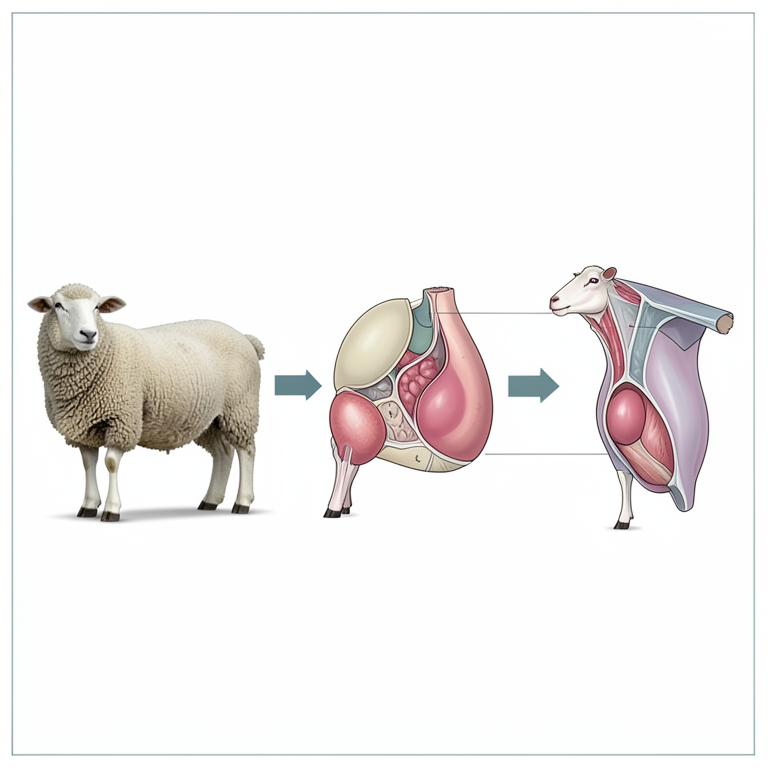
Comparison Framework
AI-generated conceptual illustration (Yalaga, Kenguri, and Bannur sheep breeds). It explains the idea and does not show study data.
View source evidence ↗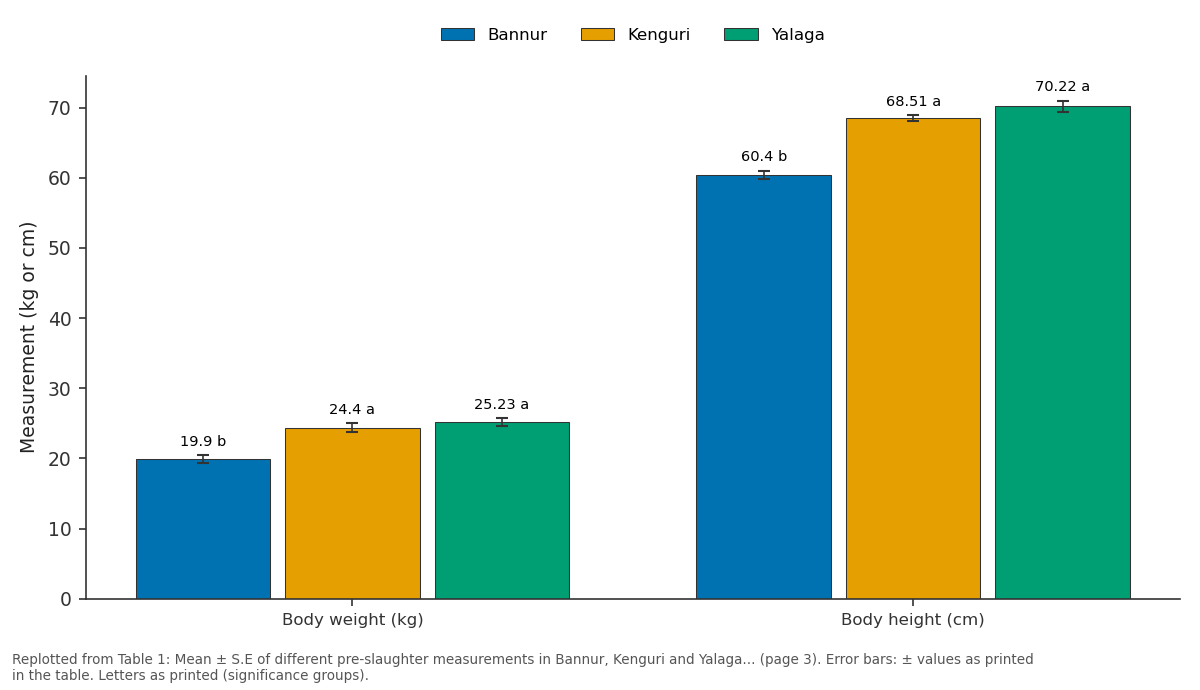
Bannur and Kenguri and more: Body weight (kg) vs Body height (cm)
Replotted from Table 1 (page 3) of the original paper. Every bar is the paper's own table value.
View source evidence ↗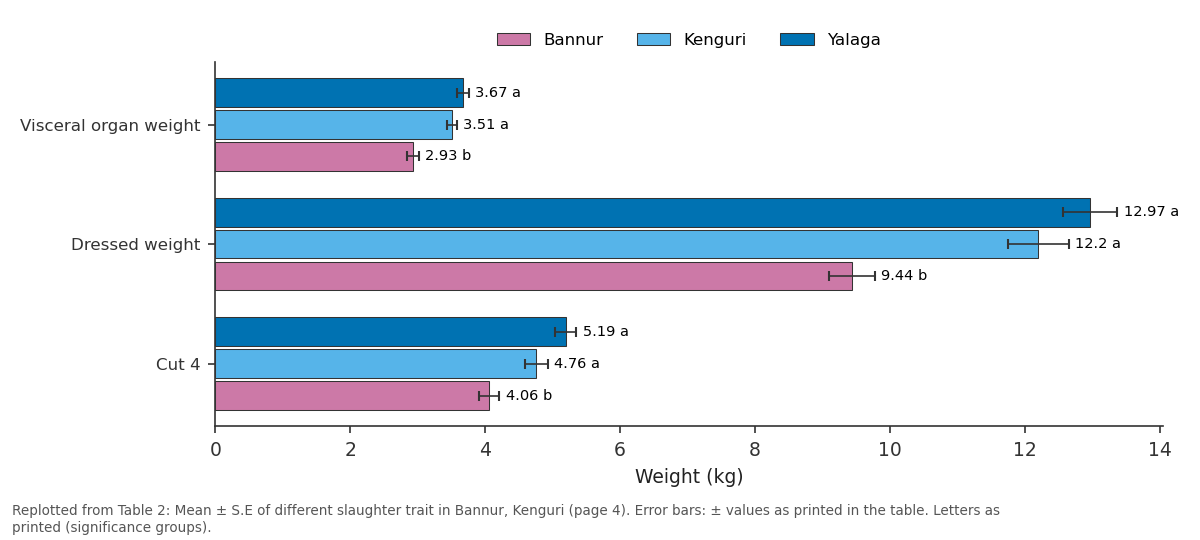
Bannur and Kenguri and more: Visceral organ weight vs Dressed weight vs Cut 4
Replotted from Table 2 (page 4) of the original paper. Every bar is the paper's own table value.
View source evidence ↗Figures & tables
From the original paper Table 1
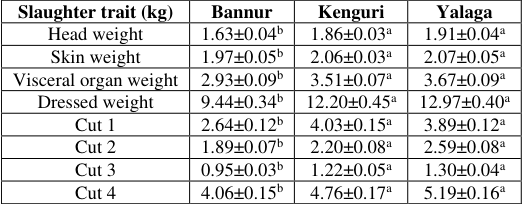 Table 2
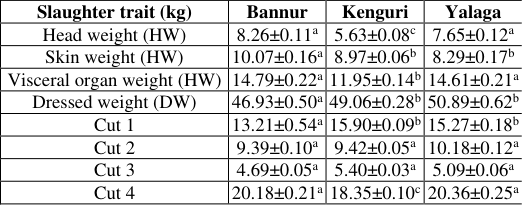 Table 3
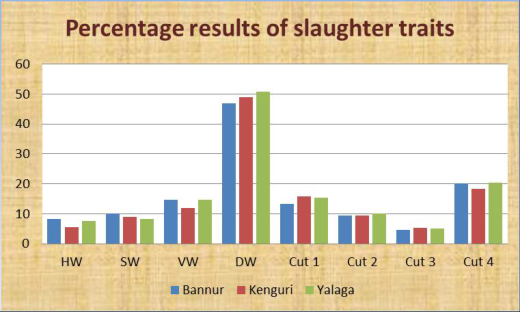 Figure 1
Introduction
Increased human population, modernization and necessary nutritive requirements leads to increase in demand of high quality and quantity mutton, which is the easiest source of animal protein and do not have any social taboo. Increased production is one of the primary goals in sheep production, and growth is also a major concern to livestock farmers (Akpa et al., 2006) [2] . Hence, it is need of time to produce the sheep breeds of high mutton potential and capacity to convert low quality food to valuable products. In Indian subcontinent the sheep population is estimated to be about 65.06 million and India rank fifth in the world (Livestock census, 2012) [22] . Sheep are raised profitably with low investment (Bhatia et al., 2005, Singh et al., 2006, Suresh 2011, Kumar et al., 2013) [4,19,3] , play an important role in the livelihood of large population of landless labourers, small and marginal farmers and make a valuable contribution to the livelihood of shepherds through sale of wool, meat and animal. It is movable assets of high liquidity and source of household nutrition and income generation (Kumar et al., 2013) [3] being reared on minimum or no input especially under harsh agro-climatic conditions (Arora et al., 2011) [4] . At the national level indigenous sheep accounts for 230 million kg of mutton, 45.2 million kg of wool (7 th largest producer of raw wool) (BAHS, 2006) [6] and 52.3 million kg of skins (FAO, 2002) [11] are produced annually in the country. The diversified germplasm of sheep represented by 40 breeds known at national level is distributed across four agro-ecological regions of the country (Acharya, 1982) [1] . These breeds thriving under zero/low input system have adapted to the local adverse conditions over the years. In India, Karnataka with a sheep population of 9.58 million rank 3 rd (Livestock census, 2012) [22] . Karnataka has a number of recognised sheep breeds, distributed throughout the state viz. Kenguri, Ballari, Hassani and Bannur / Mandya.
The distribution, characteristics and management of these four breeds were described by Jain et al., (2005, 2005a, 2006 and 2006a) [15][16][17] . Majority of the sheep in Karnataka are produced and maintained by poor and landless farmers, under extensive type of rearing with a poor quality feed and management facilities. Around 75% of the country's sheep population is of local non-descript type and do not belong to any of the defined breeds. Non-descript sheep breeds like Yalaga (Dayanand, 2013) [9] and Mouli (Shashikant, 2014) [26] are present in the state which is yet to be recognised. Such populations reported only to some extent are passing through a period of identity crisis. It is, therefore, emphasized at several floras to characterize the non-descript populations both at phenotypic and genotypic levels so that they can be marked as descript breeds before they are lost forever. Dayanand (2013) [9] identified Yalaga as a tall sheep breed with good morphological characters; adult body weight (54.78±0.96kg), adult body height (86.29±0.49cm), adult body length (83.44±0.68cm) and adult chest girth (92.32±0.77cm), indicative of good mutton production. The native tract of Yalaga is Bagalkote district with a good population size in state. Kenguri, a tall breed of Northern Karnataka, famous for its meat potential and found in districts of Raichur, Koppal and Yadgir. Good morphological characters at adult age; body weight (52.6±0.86kg), body height (81.5±0.43cm), body length (74.7±0.45cm) and chest girth (89.4±0.54cm; Jain et al., 2013), population of 4.3 lakh in the country (Livestock census, 2012) [22] . Bannur / Mandya is an established and well known mutton breed of Karnataka, located in Mandya and Mysuru, Tumkur, Chamrajnagar and Bengaluru rural districts. It is a short, stocky in body built and relatively small in body size with compact and square type shape with well sprung ribs attached with thick muscles with body weight as 37.21±0.85kg, body length as 60.17±0.49cm, body height as 53.8±0.56cm and chest girth as 68.1±0.63 at adult age group (Jain et al., 2014). Present study involves three breeds of sheep namely Yalaga, Kenguri and Bannur. Statistical analysis used to conclude the best mutton breed among them based on the higher pre and post-slaughter traits value.
Materials and Methods
Materials and Methods
Location and Animals
Present study was conducted at Karnataka Meat and Poultry Marketing Corporation (KAMPCO), Bruhath Bengaluru Mahanagar Palike, Bengaluru and various mutton shops found at Bengaluru, where the farmers brought their animals Bannur, Kenguri and Yalaga for slaughter.
Data collection and Statistical analysis
Data for the present study was collected from 60 male animals each of Yalaga, Kenguri and Bannur, with the age group of 6-9 month. For our investigation, pre-slaughter traits such as body weight (BW), body height (BH), body length (BL) and chest girth (CG) and carcass traits like dressed weight (DW), head weight (HW), skin weight (SW) and visceral organs weight (VW) were recorded. The age of the animal was estimated from its dentition pattern and varied from 6 to 8 milk teeth (FAO, 2012). The BW (The fasted live weight, in kilograms) was recorded using a weighing scale and remaining three traits like BH (The height from the bottom of the front foot to the highest point of the shoulder between the withers, in centimetres), BL (The horizontal distance from the point of shoulder to the pin bone, in centimetres) and CG (The circumference of the body immediately behind the shoulder blades in a vertical plane, perpendicular to the long axis of the body, in centimetres) were recorded with a measuring tape after making the animal to stand squarely on an even ground. Slaughter traits were measured after the sacrifice of animals. The jugular vein was severed with a sharp knife for sheep sacrifice; head was removed at occipito atlantal joint after complete discharge of blood. De-skinning was done and visceral organs (heart, kidney, lungs, trachea, liver and gut) were separated from the carcass. The remaining muscle and bone portion of the carcass was dressed weight. The dressed weight was further divided in to four cuts such as cut 1, cut 2, cut 3 and cut 4 (kg) by cutting at particular site. The weight was recorded in kilograms using digital weighing machine. The effect of breed was tested using one-way analysis of variance using SAS.9.3 (2013), generalized linear model procedure. The three breeds differ in their morphometric traits, so it is difficult to conclude the best mutton producer with a higher values of pre-slaughter and slaughter traits. So the percentage data will be transformed to Arcsine value before subjecting for analysis of variance. The Arcsine transformation was done to percentage values before ANOVA.
X = ASINH (Sqrt(Y))
Where, X= Arcsine transformed value, Y= is a proportion value of the original data.
Results and Discussion
Statistical analysis to study the breed effect on different preslaughter and slaughter traits has revealed the following results.
Pre-slaughter traits
The study revealed that Yalaga sheep was showing significantly (p< 0.01) higher body weight, body height, body length compared to Bannur sheep and it was non-significant with Kenguri sheep for the same traits. With respect to chest girth, although Yalaga sheep is having highest measurements it was non-significantly differing from Bannur but significantly differ (p<0.01) from Kenguri. Means ±S.E for different pre-slaughter traits in three sheep breeds are presented in Table 1. The average body weight of Yalaga (25.23±0.54kg) at 6-9 months of age was heavier than other South Indian sheep breeds like Deccani with 19.65±0.70 kg (Kulkarni and Deshpande, 1986a) [21] , Coimbatore with 18.58±0.23 kg (Kandasamy et al., 2006) [19] , Madras Red with 18.61±0.02 kg (Devendran et al., 2008) [10] , Mecheri with 17.90±0.25 kg (Jagatheesan et al., 2003) [13] and Vembur with 18.66±0.26 kg (Chandran, 1998) [7] . However, Munjal sheep with 27.64±0.57 kg (Poonia, 2004) [24] and Madgyal sheep with 25.72±0.25 kg (Waghmode et al. 2008) [29] were heavier than Yalaga sheep. The body height of Yalaga, Kenguri and Bannur sheep at 6 to 9 months age was 70.22±0.78cm, 68.51±0.47cm and 60.40±0.61cm, respectively. In the present study, Yalaga sheep was taller compared to earlier reports in Bannur sheep (53.64±0.20 cm, Nagaraja et al., 1996) [23] , Coimbatore (57.69±0.37cm, Kandasamy et al., 2006) [19] and Mecheri (61.54±0.29 cm, Jagatheesan et al., 2003) [13] . However, Yalaga was smaller than Muzaffarnagari (75.97±0.86cm, Das and Hariprasad, 2007) [8] . In the present study, Yalaga sheep was showing similar length as that of Kenguri and longer body length compared to Bannur. However, Yalaga (65.89±0.79 cm) sheep when compared to earlier reports in Muzaffarnagari sheep (83.07 ± 1.35cm, Das and Hariprasad, 2007) [8] was smaller in length. However, Yalaga sheep was longer than Coimbatore (58.5±0.39cm, Kandasamy, 2006) [19] , Mecheri (52.46±0.19 cm, Jagatheesan et al., 2003) [13] and Bannur sheep (59.20±3.94cm, Nagaraja et al., 1996) [23] . Compared to earlier reports, Yalaga (70.44±0.67cm) showed the wider chest girth at 6 to 9 months of age than Bannur (66.09±4.02cm, Nagaraja et al., 1996) [23] , Coimbatore (64.39±0.51cm, Kandasamy, 2006) [19] and Mecheri sheep (64.5±0.37cm, Jagatheesan et al., 2003) [13] . However, Muzaffarnagari sheep (79.67±0.02cm, Das and Hariprasad, 2007) [8] found to have higher chest girth than Yalaga.
| Pre-slaughter trait | Bannur | Kenguri | Yalaga |
|---|---|---|---|
| Body weight (kg) | 19.90±0.58b | 24.40±0.61a | 25.23±0.54a |
| Body length (cm) | 63.13±0.56b | 65.84±0.44a | 65.89±0.79a |
| Body height (cm) | 60.40±0.61b | 68.51±0.47a | 70.22±0.78a |
| Chest girth (cm) | 69.61±0.60a | 66.76±0.60b | 70.44±0.67a |
Table text extracted from the original PDF; superscript letters are shown inline. The original table image is below.
View original table image
Slaughter traits
One-way analysis of variance among breeds was observed the non-significant difference between Yalaga and Kenguri for all the slaughter traits under study. However, both Yalaga and Kenguri have showed significantly (p< 0.01) higher weight in all slaughter traits compared to Bannur, except skin weight in which Bannur was non-significantly lower. The Mean ±S.E values of slaughter traits have been given in Table 2. The weight of different slaughter traits expressed in percentage. The percentage data was transferred to Arcsine value before subjecting to analysis of variance. One-way analysis of variance among breeds has showed the nonsignificant difference between Yalaga and Kenguri for SW, DW, Cut 1, Cut 2 and Cut 3 and showed significant (p< 0.01) difference for HW, VW and Cut 4 traits under study. Similarly, Yalaga and Bannur sheep showed non-significant difference for HW, VW, Cut 2, Cut 3 and Cut 4 traits. However, showed significant (p< 0.01) difference for SW, DW and Cut 1 traits. Comparatively, Yalaga showed higher percentage of DW, Cut 2 and Cut 4 than Kenguri and Bannur sheep breeds. Many researchers studied head weight in terms of percentage and found the higher percentage in Garole (12.00±0.20) and Malpura (9.39±0.14, Sen and Karim, 2009) [25,28] than Yalaga (7.65±0.12). However, lower head percentage in Chokla (7.20±0.15, Sureshkumar and Karim, 2009) [25,28] compared to Yalaga (7.65±0.12) sheep. The Yalaga sheep (2.07±0.05 kg) has shown lower skin weight compared to Malpura with 2.08±0.20kg, (Shinde et al., 2008) [27] . Skin weight as a percentage of body weight was studied and it was found to be higher in Bannur (10.07±0.16) than Kenguri (8.97±0.06) and Yalaga sheep (8.29±0.17). Similar to the present study, many researchers studied skin weight in terms of percentage and was found the higher results than Yalaga (8.29±0.17) sheep in Chokla (9.45±0.55), Malpura (9.69±0.43, Sureshkumar and Karim, 2009) [25,28] and Muzaffarnagari sheep (9.43±0.78%, Arun et al., 2007) [5] under intensive management. Yalaga (3.67±0.09kg) was showing significantly (p< 0.01) higher visceral organs weight compared to Kenguri (3.51±0.07kg) and Bannur sheep (2.93±0.09kg). Effect of breed as a percentage of visceral organs weight on slaughter body weight was studied and it was higher in Bannur (14.79±0.22) than Yalaga (14.61±0.21) and Kenguri (11.95±0.14) breeds of sheep. Statistical analysis showed the effect of breed as percentage of dressed weight on slaughter body weight was studied and it showed non-significant difference in Yalaga (50.89±0.62) and Kenguri (49.06±0.28). However, Yalaga had significantly (p< 0.01) higher DW compared to Bannur (46.93±0.50) sheep. Similar to the present study, different researchers had found lower DW in Kenguri (9.30±0.39 kg, Appannavar et al., 2010) [3] , Garole (3.61±0.43kg), Malpura (8.09±0.26kg, Sen and Karim, 2009) [25,28] and Chokla (11.0±0.42kg, Sureshkumar and Karim, 2009) [25,28] , and found the higher DW in Malpura (14.6±0.71kg, Karim et al., 2002) [25,28] and Muzaffarnagari sheep (15.78±0.49 kg and 19.33±1.38 kg, Arun et al., 2007) [5] at 6 and 9 months age respectively, than the Yalaga sheep. The weight of cut 1 in present study was higher in Yalaga (3.89±0.12kg) than the Kenguri (4.03±0.15kg) and Bannur (2.64±0.12kg) breeds of sheep at 6-9 months age. Statistical analysis for percentage of cut 1 on slaughter body weight revealed significantly (p≤ 0.01) higher values in Kenguri (15.90±0.09) than Yalaga (15.27±0.18) and Bannur (13.21±0.54). The weight of cut 2 in the present study was higher in Yalaga (2.59±0.08kg) than the Kenguri (2.20±0.08 kg) and Bannur (1.89±0.07 kg) breeds of sheep at 6-9 months age. Statistical analysis for percentage of cut 2 on slaughter body weight revealed non-significant difference in Bannur (9.39±0.10), Kenguri (9.42±0.05) and Yalaga (10.18±0.12) sheep. However, Yalaga showed higher values than Kenguri and Bannur breeds of sheep. The weight of cut 3 in the present study was higher in Yalaga (1.30±0.04 kg) than Kenguri (1.22±0.05) and Bannur (0.95±0.03kg) breeds of sheep at 6-9 months age. Statistical analysis for percentage of cut 3 on body weight studied and it has revealed significantly (p< 0.01) similar values in Yalaga (5.09±0.06) and Kenguri (5.40±0.03), and non-significant in Bannur (4.69±0.05) sheep. However, Kenguri was showing higher values than Yalaga and Bannur sheep. The weight of cut 4 in the present study was higher in Yalaga (5.19±0.16kg) The effect of breed on different cuts could not be compared as the cuts differed for different studies. These cuts are nonscientific and practised in and around the Bengaluru by the butchers of mutton shops and slaughter house.
| Slaughter trait (kg) | Bannur | Kenguri | Yalaga |
|---|---|---|---|
| Head weight | 1.63±0.04b | 1.86±0.03a | 1.91±0.04a |
| Skin weight | 1.97±0.05b | 2.06±0.03a | 2.07±0.05a |
| Visceral organ weight | 2.93±0.09b | 3.51±0.07a | 3.67±0.09a |
| Dressed weight | 9.44±0.34b | 12.20±0.45a | 12.97±0.40a |
| Cut 1 | 2.64±0.12b | 4.03±0.15a | 3.89±0.12a |
| Cut 2 | 1.89±0.07b | 2.20±0.08a | 2.59±0.08a |
| Cut 3 | 0.95±0.03b | 1.22±0.05a | 1.30±0.04a |
| Cut 4 | 4.06±0.15b | 4.76±0.17a | 5.19±0.16a |
Table text extracted from the original PDF; superscript letters are shown inline. The original table image is below.
View original table image
Conclusion
The study concludes that, compared to both mutton breeds of Karnataka viz. Kenguri and Bannur, Yalaga sheep had higher values among all pre-slaughter traits. However, slaughter traits were also having similar values in Yalaga and Kenguri, and more than Bannur sheep. Interestingly, percentage wise also Yalaga showed superior results than the rest two breeds of sheep. Hence, Yalaga said to be a mutton breed and having capacity to produce to more meat than Kenguri and Bannur breeds of sheep.
Acknowledgement
AcknowledgementWe are grateful to the Dean of Veterinary College, Bidar, Karnataka, for providing necessary facilities and we are also thankful to the Dr Kanthraj, Assistant Director, KEMPCO, BBMP, Bengaluru for permitting me to make a note of various parameters for our study.
Figures and tables from the paper
| Slaughter trait (kg) | Bannur | Kenguri | Yalaga |
|---|---|---|---|
| Head weight (HW) | 8.26±0.11a | 5.63±0.08c | 7.65±0.12a |
| Skin weight (HW) | 10.07±0.16a | 8.97±0.06b | 8.29±0.17b |
| Visceral organ weight (HW) | 14.79±0.22a | 11.95±0.14b | 14.61±0.21a |
| Dressed weight (DW) | 46.93±0.50a | 49.06±0.28b | 50.89±0.62b |
| Cut 1 | 13.21±0.54a | 15.90±0.09b | 15.27±0.18b |
| Cut 2 | 9.39±0.10a | 9.42±0.05a | 10.18±0.12a |
| Cut 3 | 4.69±0.05a | 5.40±0.03a | 5.09±0.06a |
| Cut 4 | 20.18±0.21a | 18.35±0.10c | 20.36±0.25a |
Table text extracted from the original PDF; superscript letters are shown inline. The original table image is below.
View original table image
References
28 in the original paper- Acharya RM. Sheep and Goat Breeds of India. FAO Animal Production and Health; Paper, 30, FAO of United Nations, Rome, Italy, 1982, 1-190.
- Akpa GN, Alphonsus C, Duru S. The relationship between body growth parameters and testicular and horn development in Yankasa rams. Small Rumin. Res. 2006; 2(2):56-61.
- Appannavar MM, Pawar A, Ramachandra B. Tandle MK, Kumar NGS. Study on study on meat Characterization of Kenguri breed of sheep. Indian Vet. J. 2010; 85:72-73.
- Arora JR, Bhatia S, Mishra BP, Jain A, Prakash B. Diversity analysis of sheep breeds from Southern peninsular and Eastern regions of India. Trop. Anim. Health Prod. 2011; 43:401-408.
- Arun DK, Dass G, Singh NP. Growth, carcass characteristics and meat quality of Muzaffarnagari Lambs at various stages under intensive and semi-intensive management. Indian J Anim. Sci. 2007; 78(5):541-546
- Bahs-Basic Animal Husbandry Statistics (AH series-10). Government of India, Ministry of Agriculture, Department of Animal Husbandry, dairying & Fisheries, Krishi Bhavan, New Delhi, 2006, 1-162.
- Chandran PC. Characteristics and performance of Vembur sheep in the Habitat. M.V.Sc. thesis, Tamil Nadu Veterinary and Animal Sciences University, Chennai, India, 1998.
- Dass G, Hariprasad. Morphological characteristics, live weights and management practices of Muzaffarnagari sheep in the home tract. The Indian J Small Rumin. 2007; 13(1):27-30.
- Dayanand KC. Morphological characterization of Yalaga sheep. M.V.Sc thesis, Karnataka Veterinary Animal and Fisheries Sciences University, Bidar, Karnataka, India, 2013.
- Devendran P, Cauveri D, Gajendran K. Growth performance of Madras Red sheep in farmer's flocks. Compedium: Abstract presented in IX Annual Conference of Indian Society of Animal Genetics and Breeding and National Symposium on Livestock Geomics in Productivity Enhancement for Food Security, New Delhi, India, 2008.
- Fao, Production Year Book, Rome, Italy, 2002.
- Food and Agriculture Organization, Rome Italy. Phenotypic characterization of Animal Genetic Resources. Edn. 11 th , 2012, 95-106
- Ganesakale D, Rathnasabapathy V. Sheep breeds of Tamil Nadu. Cheiron. 1973; 2:146-155.
- Jagatheesan PNR, Arunachalam S, Sivakumar T, Selvaraju M. Performances of Mecheri sheep in its breeding tract. Indian J Anim. Sci. 2003; 73:909-912.
- Jain A, Kulkarni VS, Govindaiah MG, Sadana DK, Aswathnarayan T, Pandey AK et al. Sheep Genetic Resources of India: Bellary Monograph-2005. National Bureau of Animal Genetic Resources, Karnal, India, 2005a, 83.
- Jain A, Kulkarni VS, Govindaiah MG, Sadana DK, Aswathnarayan T, Pandey AK et al. Sheep Genetic Resources of India. Kenguri Monograph-33, 2005. National Bureau of Animal Genetic Resources, Karnal, India, 2005.
- Jain A, Sadana DK, Govindaiah MG, Kulkarni VS, Aswathnarayan T, Pandey et al. Sheep Genetic Resources of India. Mandya Monograph-2005. National Bureau of Animal Genetic Resources, Karnal, India, 2006a.
- Jain A, Govindaiah MG, Sadana DK, Kulkarni VS, Aswathnarayan T, Pandey AK et al. Sheep genetic resources of India, Hassan breed. National Bureau of Animal Genetic Resources, Karnal, India, 2006.
- Kandaswamy N, Devendran P, Panneersevelvam S, Thiruvenkadan AK, Singh G, Singh PK et al. Coimbatore sheep, Monograph. National bureau of Animal Genetics Resources, Karnal and Tamil Nadu Veterinary and Animal Sciences University, Chennai, India, 2006.
- Karim SA, Snatra A, Verma DL. Growth, Feed conversion Efficiency and carcass characteristics of Malpura and Malpura x Awassi crossed Lambs in a Hot Semi-Arid Environment. Asian-Australian J Anim. Sci. 2002; 3:377-381.
- Livestock census, 19 th Animal census report, Department of Animal Husbandry, Dairying and Fisheries. GOI, 2012.
- Nagaraja CS, Govindaiah MG, Jayashankar MR, Krishnappa SB. Prediction of body weights from body measurements in Bannur sheep. Curr. Res. 1996; 25:211212.
- Poonia JS. Growth performance of Munjal lambs. The Indian J Small Rumin. 2004; 10(2):137-139.
- Sen AR, Karim SA. Carcass and meat quality characteristics of designated indigenous sheep breeds of India. Indian J Anim. Sci. 2009; 80(4):362-365.
- Shashikant S. Morphological characterization of Mouli sheep. M.V.Sc thesis, Karnataka Veterinary Animal and Fisheries Sciences University, Bidar, Karnataka, India, 2014.
- Shinde AK, Bhatt RS, Nasimuddin M, Karim SA. Carcass characteristics of Malpura male lambs maintained under different feeding regimes. The Indian J. Small Rumin. 2008; 14(1):71-76.
- Sureshkumar S, Karim SA. Carcass characteristics of Chokla and Avikalin yearling males maintained under grazing with supplementation. The Indian J Small Rumin. 2009; 15(1):81-84.
- Waghmode PS, Sawane MP, Pawar VD, Ingawale MV. Effect of non-genetic factors on growth performance of Madgyal sheep. The Indian J Small Rumin. 2008; 14:127-130.
Cited by 1
From OpenAlex, OpenCitations and reference lists read by Scinovex
- Collective Study on Housing Management Practices of Kenguri Sheep Farmers under Intensive and Extensive Rearing Systems in Yadgir District of Karnataka, India ↗
M. G. Kanakaraja, Sagar M., Chitra Juniwal, Syeda Nelofer Afnan, E. N. Reddy, Kartik Kartik · Journal of Scientific Research and Reports · 2024
The main domains of housing management practices followed by Kenguri sheep farmers were analyzed during the research. Twenty sheep farms in intensive and extensive were pointed out based on the accessibility in the respective study location Yadgir (Northern Eastern dry agro-climatic zone) district of Karnataka, India. The examination was carried out during the months of January to February in the…
❝ 1PDF