
Research article · 2018 · Full text
International Journal of Veterinary Sciences and Animal HusbandryIncidence of foetal wastage in cattle slaughtered and its economic implications at the Bamenda city slaughter house, Cameroon
Volume 3(6) · Pages 14–18
Research areasAgriculture and Rural Development Research
Abstract
Author-writtenThe aim of this study was to determine the rate of foetal losses at the Bamenda city slaughter house, Cameroon. Data was collected for a period of 3 months (July to September 2017) for cattle slaughtered at slaughter house. The results showed that more males (1340) were slaughtered than (460) female cattle representing 73.3% and 26.4% for males and females respectively. A total of 157 cows were pregnant giving a foetal incidence rate of 34.3%. The percentages of foetuses wasted for the three trimesters (3 months or 3 trimester) were 24.83%, 50.83% and 24.37% for first, second and third trimester respectively. The mean age of the pregnant females slaughtered was 7 years and the percentages of slaughtered pregnant cows were 30.8%, 45.5% and 23.7% for cows aged 3-5 years, 6-8 years and ≥9 years respectively. Results also showed that, more male foetuses were wasted compared to the female foetuses representing 51.6% and 48.4% for males and females respectively accounting for economic losses of $86,600 (43 300 000 francs CFA) for the period of the study. The high incidence of calf wastage and slaughter of under aged animals at Bamenda city Abattoir within the study period inflicted high economic losses. This is due to the fact that, laws prohibiting the slaughter of pregnant and under age cows are not existing. Livestock farmers, traders and butchers should be enlightened on the consequences of slaughtering pregnant and under age animals.
Summary
Source-checkedPlain-language reading of the full paper, prepared with AI and checked against the text. Each point links to the authors' own words.
Why it matters
- Animal production is critical for food security and economic development; in Cameroon, cattle make up about 6 million head and provide 35% of annual meat production. View evidence ↗
- Slaughtering pregnant cows is a common practice in sub-Saharan Africa, often driven by poor herd management, lack of pregnancy diagnosis, and high prices for pregnant animals. View evidence ↗
- The slaughter of pregnant animals is considered an unethical practice that results in the loss of valuable animal protein. View evidence ↗
The question
- The study aimed to determine the rate of foetal losses occurring at the Bamenda city slaughter house in Cameroon. View evidence ↗
- The researchers sought to evaluate foetal wastage and its economic consequences at the Bamenda city slaughter house, updating data from over 20 years prior. View evidence ↗
What they did
- Data was collected over a three-month period from July to September 2017 at the Bamenda city slaughter house in the North West region of Cameroon. View evidence ↗
- Researchers recorded the number of slaughtered cows, determined age via dentition and horn rings, and detected foetuses through visual inspection and uterine palpation. View evidence ↗
- Foetal age was determined by measuring the crown-anus length (occipital articulation to the base of the tail) using a formula from Richardson et al. View evidence ↗
- Foetuses were categorized into three trimesters: first (≤ 3 months), second (3–6 months), and third (≥ 6 months). View evidence ↗
What they found
- Out of 1,800 cattle slaughtered, 1,340 (73.7%) were bulls and 460 (26.4%) were cows. View evidence ↗
- The prevalence rate of foetal wastage was 34.3%, with 157 pregnant cows slaughtered. View evidence ↗
- The highest percentage of wasted foetuses occurred in the second trimester (50.83%), followed by the first (24.83%) and third (24.37%) trimesters. View evidence ↗
- The mean age of slaughtered pregnant cows was 7 years, with 45.5% aged 6–8 years, 30.8% aged 3–5 years, and 23.7% aged 9 years or older. View evidence ↗
- More male foetuses (51.6%) were wasted than female foetuses (48.4%). View evidence ↗
What it means
- The authors conclude that losses are caused by inadequate services and poor enforcement of laws that prohibit the slaughter of pregnant and under-age cows. View evidence ↗
- The authors recommend educating farmers, traders, and butchers on pregnancy diagnosis and urging the government to reinforce legislation through better slaughterhouse surveillance. View evidence ↗
Visual summary
2 visualsIllustrations explain the paper; charts are replotted from the paper's own table values.
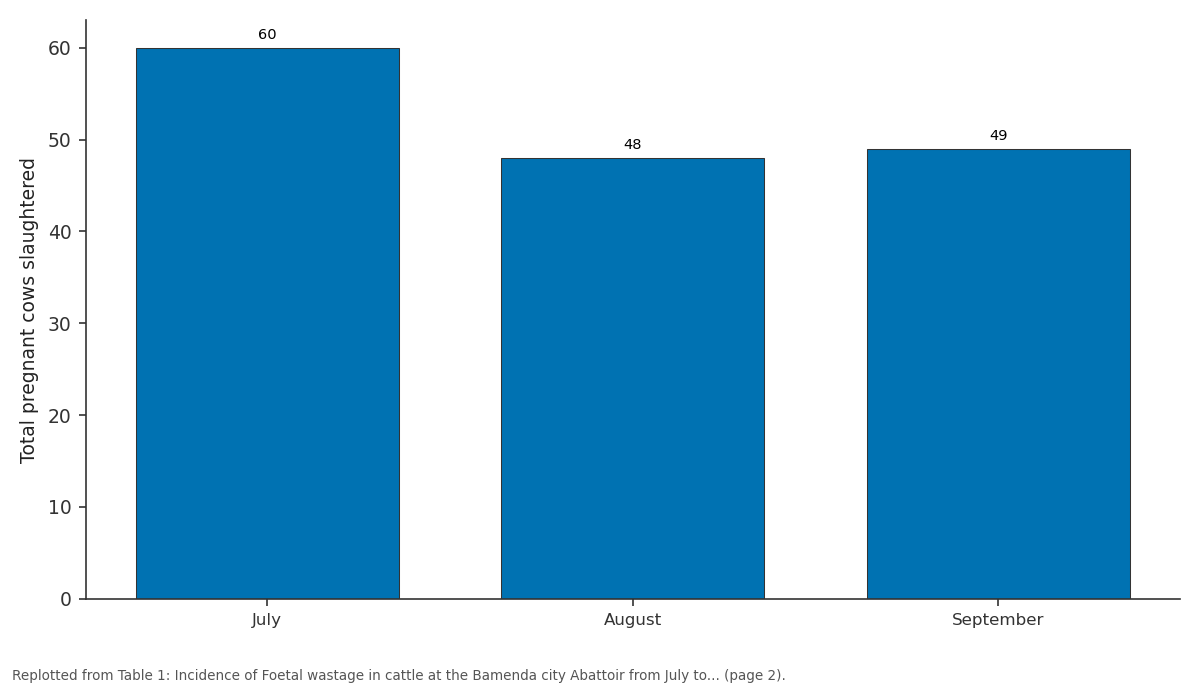
Total pregnant cows slaughtered: July vs August vs September
Replotted from Table 1 (page 2) of the original paper. Every bar is the paper's own table value.
View source evidence ↗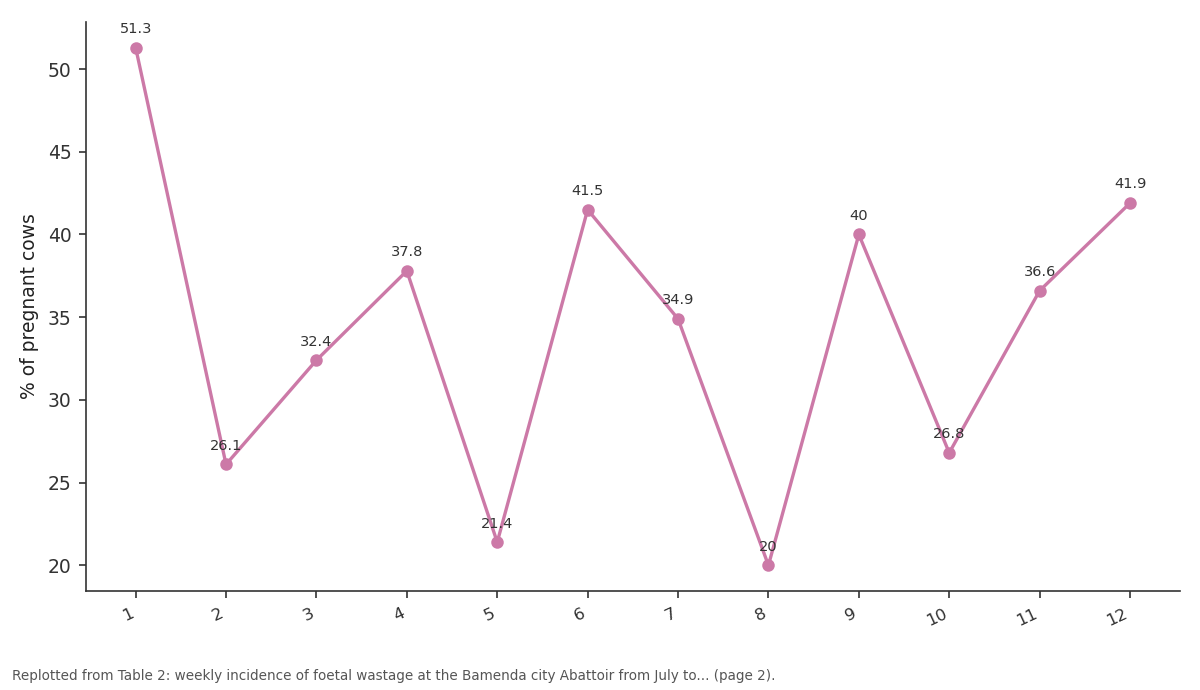
% of pregnant cows: 1 vs 2 vs 3 vs 4 vs 5
Replotted from Table 2 (page 2) of the original paper. Every bar is the paper's own table value.
View source evidence ↗Figures & tables
From the original paper Table 1
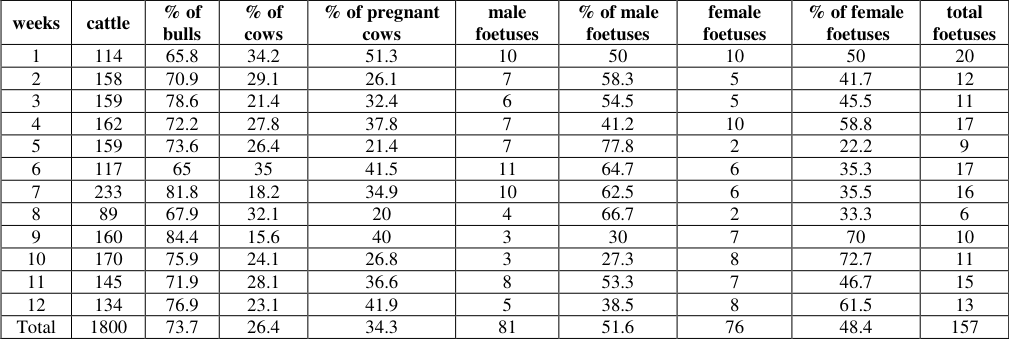 Table 2
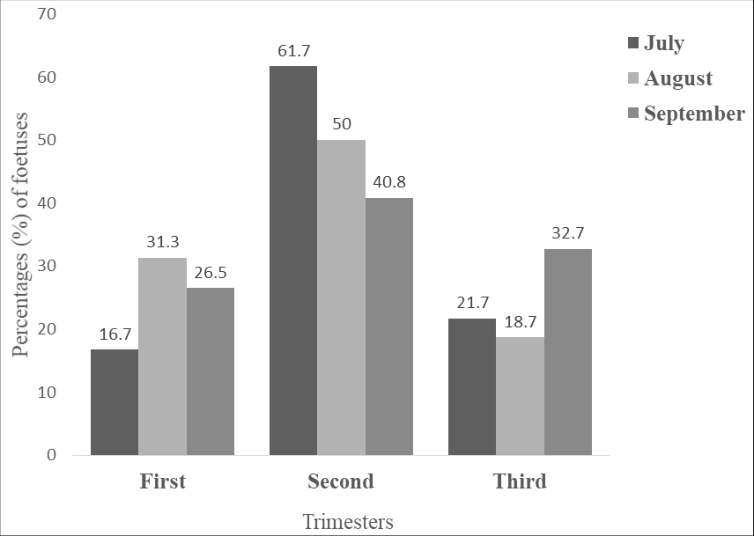 Figure 2
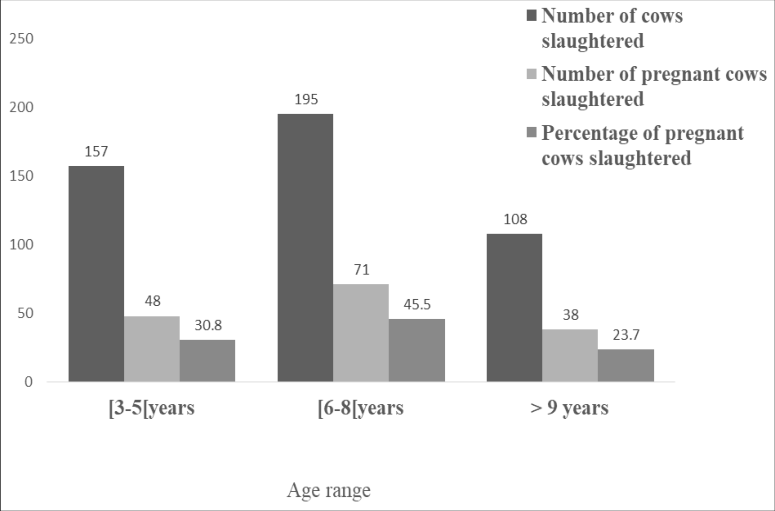 Figure 1
Introduction
Animal production is very paramount to food security and an essential component to the economic development of any nation [1] . In Cameroon, cattle herd is about 6 million head of animals [2] . Cattle supply about 35% of the overall annual tons of meat production [3] . The major cattle breeds are characterized by low productivity, delayed age at first calving of average 54 month compared to exotic breeds (24 to 28 month for Jersey, 48 month for Holstein) and long calving interval of 536 days compared to 240 days for Holstein [4] . Livestock plays a recognised role in the lives of Cameroonians especially as a source of protein which is recommended in a specific amount for physical and mental development of every individual [3] . It also serves as a source of raw materials, employment, income and foreign exchange earnings. According to FAO/WHO [5] , the average protein intake of Cameroonians per caput per day has been estimated at 13.2g with meat alone of 6.8g; meanwhile FAO [6] recommended a minimum protein intake of 56g per person per day with about 28g (50 %), coming from animal sources. Engagement in farm animal production activities especially cattle provides employment and livelihood to large number of Cameroonians as herdsmen, livestock specialist, feed and drug manufacturers and other inputs [7] . Therefore, in order to increase beef production, it is expedient to measure factors militating against beef production. These factors may be naturally or artificially caused by factors involved in livestock production and processing contributing to low productivity of livestock especially cattle. One of these factors is the common and unhealthy practice of slaughtering pregnant cows in the slaughter houses resulting in severe economic losses [8] . The indiscriminate slaughter of pregnant cows and heifers is a common practice in many developing countries particularly sub Saharan Africa [1] . According to MINEPIA [9] , the addition of herd consists of 23% from birth and 4% from purchase while deletion from herd is estimated at 13.3 % from mortality 11.3 % from off take. Mortality and off take exceed herd replacement from birth indicating the future demand for meat may not be sustainable. According to Ndi et al., [8] , the empirical relationship between off take and birth rate is not well established. This is particularly evident from the incident of calve wastage during the herd removal. Poor herd management, absence of diagnoses of pregnancy before slaughter and attractive price on pregnant cows are some major reasons for the slaughter of pregnant animals [8,10,11] . The negative trend of slaughtering pregnant and under age cows have long term effects on the productivity of cattle in Cameroon. Thus, the need to evaluate the feotus wastage at the Bamenda city slaughter house and the economic consequences more than 20 years after the last study.
Materials and Methods
Materials and Methods
Study Area
The Bamenda city slaughter house is found in the North West region of the Western Highland of Cameroon between latitudes 5°20' and 7° North and longitude 9°40' and 11°10' East of the Equator. The surface area of the North West region is 17,910 km 2 . Altitudes range from 300 to 3000 m above sea level. The climate is marked by a dry season from November to mid-March and a rainy season from mid-March to October. Rainfall ranges between 1300-3000 mm with a mean of 2000 mm. Minimum and maximum temperatures have means of 15.50 °C and 24.5 °C, respectively although temperatures can go above 30 °C [7] . Data collection was done through daily visit to the slaughter house during which the total number of slaughtered cows was recorded while age determination was done using dentition and number of rings on the horns. Foetus detection was done through visual inspection and palpation of the uterus.
Determination of age and sex of foetuses
Sex differentiation of foetuses was done through observation while those that could not be identified by means were counted and randomised as males and females. The age of the foetuses was determined by measuring the distance occipital articulation to the base of the tail of the foetus. The duration of the gestation and ages of the foetuses were determined using a formula described by Richardson et al., [12] , for calculating the age of the foetus from its crownanus length.
The ages of all the foetuses recovered were classified according to stage of pregnancy as follows 1. First trimester ≤ 3 months 2. Second trimester 3 -6 months 3. Third trimester ≥ 6 months.
Data analysis
The data obtained was subjected to simple statistical Analysis using simple descriptive and quantitative analysis comprising of percentages and tables to determine the incidence of foetal losses. The Software SPSS 16.0 was used for descriptive data analysis and Microsoft Excel was used to plot graphs and chart.
Results
Table 1 and table 2 revealed that a total of 1800 were slaughtered at the Bamenda city abattoir within the period of the study. On the 1800 cattle slaughtered, 1340 were bulls and 460 were cows representing respectively 73.7% of males 26.4 % and of females with a prevalence rate of foetal wastage of 34.3% which is equivalent to the percentage of pregnant cows slaughtered. The percentage of wasted foetuses for July, August and September is 10.6%, 8.5%, and 8.2% respectively, with an average percentage lost in cattle population of 9.1%. This means that of every ten (10) cows slaughtered three (3) are likely to be pregnant. Figure 2 shown that the highest recorded percentage of wasted foetuses was 61.7% (July). Of the recovered foetuses, 24.83% were recovered in the first, 50.83% in the second and 24.37% in the third trimester with the highest percentage of wasted foetuses recovered at the second trimester of pregnancy.
| weeks | cattle | % of bulls | % of cows | % of pregnant cows | male foetuses | % of male foetuses | female foetuses | % of female foetuses | total foetuses |
|---|---|---|---|---|---|---|---|---|---|
| 1 | 114 | 65.8 | 34.2 | 51.3 | 10 | 50 | 10 | 50 | 20 |
| 2 | 158 | 70.9 | 29.1 | 26.1 | 7 | 58.3 | 5 | 41.7 | 12 |
| 3 | 159 | 78.6 | 21.4 | 32.4 | 6 | 54.5 | 5 | 45.5 | 11 |
| 4 | 162 | 72.2 | 27.8 | 37.8 | 7 | 41.2 | 10 | 58.8 | 17 |
| 5 | 159 | 73.6 | 26.4 | 21.4 | 7 | 77.8 | 2 | 22.2 | 9 |
| 6 | 117 | 65 | 35 | 41.5 | 11 | 64.7 | 6 | 35.3 | 17 |
| 7 | 233 | 81.8 | 18.2 | 34.9 | 10 | 62.5 | 6 | 35.5 | 16 |
| 8 | 89 | 67.9 | 32.1 | 20 | 4 | 66.7 | 2 | 33.3 | 6 |
| 9 | 160 | 84.4 | 15.6 | 40 | 3 | 30 | 7 | 70 | 10 |
| 10 | 170 | 75.9 | 24.1 | 26.8 | 3 | 27.3 | 8 | 72.7 | 11 |
| 11 | 145 | 71.9 | 28.1 | 36.6 | 8 | 53.3 | 7 | 46.7 | 15 |
| 12 | 134 | 76.9 | 23.1 | 41.9 | 5 | 38.5 | 8 | 61.5 | 13 |
| Total | 1800 | 73.7 | 26.4 | 34.3 | 81 | 51.6 | 76 | 48.4 | 157 |
Table text extracted from the original PDF; superscript letters are shown inline. The original table image is below.
View original table image
| Months | Total cattle slaughtered | Total bulls slaughtered | Total cows slaughtered | % of cows slaughtered | Total pregnant cows slaughtered | % of fetuses wasted |
|---|---|---|---|---|---|---|
| July | 593 | 429 | 164 | 27.7 | 60 | 10.6 |
| August | 598 | 440 | 158 | 26.4 | 48 | 8.5 |
| September | 609 | 471 | 138 | 22.6 | 49 | 8.2 |
| Total | 1800 | 1340 | 460 | 26.4 | 157 | Average=9.1 |
Table text extracted from the original PDF; superscript letters are shown inline. The original table image is below.
View original table image
Discussion
This study revealed that more males (73.7%) were slaughtered compared to females (26.4 %). This is different from the report of Tolumn [13] which reveals that in Cameroon most of the cattle slaughtered were females in Bamenda municipal abattoir. The prevalence rate of foetal wastage is 34.3% with the percentage loss in cattle population of 9.1%. This result indicate high incidence rate compared to results (22.1%) obtained by Ndi et al., [8] in Bamenda abattoir and the 16.61% obtained by Tchoumboue [14] in Yaoundé. However, the result are closer to those obtained by Swai et al., [15] who revealed that 29.1% of cows slaughtered over the period of April to June 2014 were pregnant in Tanga abattoir, Tanzania. This could be explained by the fact that, pasture problems during the dry season, financial difficulties, injury and aged animals and lack of staff and herdsmen competency in
International Journal of Veterinary Sciences and Animal Husbandry pregnancy diagnosis are possible reasons pushing farmers to sell out their animals including pregnant animals as confirmed by Sanusi et al., [16] and Muhammad et al, [17] . Also, Tchoumboue [11] and Ndi et al., [8] reported that, poor herd management, absence of diagnosis of pregnancy before slaughter and attractive prices on pregnant cows were the reasons advanced for culling and slaughtering pregnant cows.
Results indicated that 30.8% of the cows slaughtered were between 3-5 years, 45.5% between 6-8 years and 23.7% were 9 and above. This result agrees with those of Ladds et al., [18] who examined to define the extent of wastage due to slaughter of pregnant cows. This result indicates that most of the cows slaughtered were at their reproductive age (3 to 8 years). This is age when herd productivity could be measured, which is measured from breeding efficiency through calving ability, age at first calving and calving interval. The result poses great danger to the reproductive efficiency of the cattle population as reported by Ayodele et al., [19] . The average age of all the cows slaughtered was 7 years and should be noted that, the slaughter of cows below nine years of age is prohibited at all abattoirs in Cameroon because it is a major cause in the decline of cattle population and therefore, constitutes a real threat to the country's food security. This practice retards livestock industry, is against animal welfare and end up giving poor quality meat to the consumers [20] . The percentages of foetuses wasted for the three trimesters were 24.83%, 50.83% and 24.37 % for first, second and third trimesters respectively. These results are slightly similar to those of Ardo et al., [21] at the Yola modern abattoir, Adamawa state, Nigeria that revealed that about 18.7% of pregnant cows have foetuses less than three month old, 56.6% had foetuses between 4 and six month and 24.7% had foetuses more than 6 month. The percentage in the first trimester could be due to the fact that pregnancy may not be detected since farmers mostly depend on visual inspection for pregnancy detection. The high percentage (61.7%) during second trimester is most likely due to the fact that, phenotypically, pregnant cows have a better body condition score than nonpregnant cows, which may be the reason for theft preferences and slaughter of these animals [15] . There is a drop in the third trimester possibly because at this stage, the pregnancy is too big closer to calving and most farmers who will want to increase their herds will not sell their animals prior to calving. Foetuses obtained after slaughter of pregnant cows were either sold to potential foetus buyers for consumption or used to feed animals (fish, dogs and pigs). This practice should be discouraged as it can spread diseases like brucellosis or leptospirosis to both animals and man.
The financial losses at the Bamenda city slaughter house for the period of the study for the 157 wasted foetuses is estimated at $86,600 (43 300 000francs CFA). The average financial values of healthy mature (about 2 ½ to 3 Years) bull and cow are respectively $600 and $500. Out of the 157 foetuses obtained during the study, 81 were bulls with financial value of $48,600 and 76 were cows with financial value $38,000 giving a total financial value for all the foetuses to be $86,600. These financial losses at the Bamenda city slaughter house causing substantial threat to the food security and economy of the Cameroon nation. If all the foetuses were to reach their reproductive age, they could have been used for reproduction to generate offspring which will help to propagate and increase the cattle population and reduce food insecurity.
Conclusion
The results of this study have shown that, there is high incidence of calve wastage and slaughtered of under aged cows at the Bamenda city slaughter house within the period of the study inflicting high economic losses in the cattle sector of Bamenda. Cattle pregnancy wastage appears mainly attributable to lack of effective early pregnancy screening system. Slaughter of pregnant animal is an unethical practice that leads to loss of precious animal protein. The losses are due to low enforcement of the laws prohibiting the slaughter of pregnant animals and inadequate services to prevent slaughter of pregnant and under age cows. It will therefore be safe to anticipate foetal wastage at the slaughter houses and considerable associated economic losses at the national level. Farmers, traders and butchers should be enlightened on the importance and the different methods for pregnancy diagnoses in cattle as well as the implication of slaughtering pregnant cows. The government should reinforce legislations to prevent the slaughter of pregnant animals by ensuring effective surveillance at the slaughter houses.
Figures and tables from the paper
References
20 in the original paper- Nana Aisha B. Foetal wastage and detection of leptospira species in wasted foetuses from cows in old Kano abattoir. Thesis of Master of Science in veterinary epidemiology. Department of veterinary public health and preventive medicine, Ahmadu Bello University, Zaria, Nigeria, Kano state. 2013, 1-5.
- INS. Institut National de la Statisyique, Annuaire Statistique du Cameroun, Edition, 2015, 261.
- MINEPIA. Ministère de l'Elevage, des Pêche et des Industries Animales. MINEPIA Policy Document, 2013, 29.
- Messine O. Certain aspects of the reproductive performance of zebu cattle in Cameroon. PhD Thesis, University of the Free State, Bloemfontein, South Africa. 2003, 200.
- FAO. Food and Agricultural Organization of United Nations. Bulletin statistics. 2006; 2(2):138-139.
- FAO. Food and Agricultural Organization of United Nations. Annuaire de productivité, 1985.
- Ndi C, Tambi NE, Agharih NW. Reducing calf wastage from the slaughtering of pregnant cows in Cameroon. World Animal Review. 1993; 77:4-10.
- Minepia. Ministère de l'Elevage, des Pêches et des Industries Animales. Annuaire des statistiques du soussecteur Elevage, Pêche et Industrie Animales, 2013.
- Tchoumboue J. Note sur l'abattage de brebis gestantes et les pertes d'agneaux au Cameroun. Revue d'Elevage et de Médecine Vétérinaire des Pays Tropicaux. 1988; 41(4):461-462.
- Tchoumboue J. Pertes de porcelets par abattage des truies gestantes au Cameroun. Revue d'Elevage et de Médecine Vétérinaire des Pays Tropicaux. 1989; 42(4):589-590.
- Richardson C, Jones PC, Barnard V, Hebert CN, Terlecki S, Wijeratne WVS. Estimation of the development age of the bovine fetus and newborn calf. Vet. Rec. 1990; 126:279-284.
- Tolumn A. 'Calves lost through pregnant cows slaughtering: "A particular case in Yaoundé Abattoir (Cameroon)" Tropical Veterinarian. 2004; 37:62-75.
- Tchoumboue J. Calves lost through pregnant cows slaughtering. A particular case in Yaoundé abattoir. Rev. Elev. Méd. Vét. Pays Trop. 1984; 37(1):70-72.
- Swai ES, Hayghaimo AA, Hassan AA, Mhina BS. The slaughter of increased numbers of pregnant cows in Tanga abattoir, Tanzania: A cause for concern? Onderstepoort Journal of Veterinary Research. 2015; 82(1):1-5.
- Sanusi M, Abubakar A, Luka B. Incidence of fetal wastage in ruminant Animal slaughtered in Bauchi and Jos abattoirs. Procedings of the 31 st Annual National Conference of the Society for Animal Productio, Kano. 2006, 102-106.
- Muhammad BF, Haruna IY, Abdulsamad AM, Bichi JM. 'Foetal wastage in Northern Nigeria: The case of Gombe abattoir, Gombe State', Proceedings of the 13 th Annual Conference of Animal Science of Nigeria, Abu Zaria, 2008; 124-127.
- Ladds PW, Summers PM, Humphrey JD. Pregnancy in slaughtered cows in North-Eastern Australia: Incidence and Relationship to pregnancy diagnosis, season, age and carcass weight. Australian Vet J. 2008; 51(10):472-477.
- Ayodele AO, Fadiyimu AA, Folorunsho OR, Olowu OPA. Foetal wastages through the slaughtering of pregnant cows in Akure abattoir. Proceedings of 28 Th conference of Nigeria Society of Animal Production. 2003; 2:45-51.
- Nonga HE, Paulo N. Prevalence and intensity of gastrointestinal parasites in slaughter pigs at Sanawari slaughter slab in Arusha, Tanzania. Livestock Research for Rural Development. 2015; 27(1):8-11.
- Ardo MB, Lawal H, Aliyara YH. Economic implication of bovine foetal wastage in yola modern abattoir, Adamawa State, Nigeria. International Journal for Agro Veterinary and Medical Sciences. 2013; 7(2):57-64.
Cited by 3
From OpenAlex, OpenCitations and reference lists read by Scinovex
- Prevalence and economic losses associated with foetal wastage in abattoir ↗
Stella Nabasirye, Sylvia Angubua Baluka, Asuman Sengooba · Veterinary Medicine and Science · 2024
BACKGROUND: Both male and female food animals are slaughtered for meat. Some cows, ewes and does slaughtered are found with viable foetuses resulting in foetal wastage and loss of future replacement stock. Foetal wastage accounts for about 20%-25% of the decline in livestock numbers in sub-Saharan Africa. Slaughter of pregnant cows, ewes and does results in economic losses and threatens…
❝ 5PDF - Associated Causes of Low Productivity of Indigenous Beef Cattle Farming under the Pastoral Systems of the North West Region of Cameroon ↗
Prudentia Yensi Lawan, G.A. Musongong, Harriet Mbunwen Ndofor-Foleng, M. H. N. Atanga · Journal of Agriculture & Life Sciences · 2020
Management practices play a big role in animal productivity reflected either in financial returns or food sufficiency.A cross sectional study was undertaken to determine the factors associated with low productivity of indigenous beef cattle farming under the pastoral systems in seven administrative divisions of the North West Region of Cameroon.A total of 150 questionnaires were administered to pastoralists, butchers and…
❝ 1PDF - Fetal Wastage in Cattle Slaughtered at Gambella Municipality Abattoir, Ethiopia ↗
Ketema Tilahun Gelaye, Tesfay Weldegebrial · International Journal of Data Science and Analysis · 2024
The slaughter of pregnant animals for meat has been reported in different parts of the world. This practice is becoming a very serious constraint to future livestock populations. Information on the level of fetal wastage in slaughtered cattle in Ethiopia is limited. The study was aimed at evaluation of the incidence of fetal wastage of pregnant cows slaughtered at Gambella…
❝ 0PDF