
Research article · 2019 · Full text
International Journal of Advanced Biochemistry ResearchPrevalence and distribution of subclinical hypothyroidism in middle aged women attending tertiary care hospital
Volume 3(1) · Pages 37–40 · DOI: 10.33545/26174693.2019.v3.i1a.31 ↗
Research areasThyroid Disorders and Treatments
Abstract
Author-writtenBackground: Thyroid diseases are common worldwide mostly in middle-aged women. India is not an exception with a significant burden of thyroid diseases. Subclinical hypothyroidism is mainly diagnosed by laboratory results. In India, there are only a few studies done in prevalence and patterns of age distributions of subclinical hypothyroidism. Aim & Objective: The present study is aimed to estimate the prevalence and distribution of subclinical hypothyroidism in young and middle-aged women attending the outpatient department of a tertiary care hospital. Materials & Methods: This study is a hospital-based cross-sectional study done at Katuri Medical College Hospital and Research Centre, a tertiary care center, Andhra Pradesh, India. More than 12 years of age group including adolescents, pregnant, older age groups are selected and investigated for subclinical hypothyroid by doing T3, T4, and TSH concentrations. Thyroid function tests were done in the Clinical biochemistry Department on Maglumi 800 fully automated hormone analyzer by Chemiluminescence immunoassay method. Patients with any evidence of medical and surgical disorders were excluded from the study. Approval from the scientific and institutional ethics committee was obtained and patients who gave informed consent were included in the study. Results: Out of 932 patients only 841 samples that met the inclusion were included in the study. Among 841 cases, TSH levels above 6 were 71. Out of 71 TSH cases, 43 had T3 less than 0.86 and the remaining 28 had normal T3 and T4 values. Total subclinical Hypothyroidism cases were 28 (3.32%) out of 841 cases tested for TSH. In the present study, the Average age of subclinical hypothyroidism (SCHT) cases was 28.14 years. In the present, study most of the SCHT cases were seen in the age group of 25-30 years 13 (46.42%) followed by 30-35 years 9(32.14%) and 20-25 years 6 (21.42%). In the present study, the minimum & maximum values of Thyroid hormones were (T3- 0.86 & 1.6; T4- 4.7& 10.6; TSH-6.2 &169). The mean values of thyroid hormones in SCHT were (T3- 0.84±0.22, T4-6.85±1.27 and TSH- 15.80±22.62). Conclusion: The present studies conclude that the prevalence of subclinical hyperthyroidism more in females than the males and distribution of SCHT increase as the age advance.
Summary
Source-checkedPlain-language reading of the full paper, prepared with AI and checked against the text. Each point links to the authors' own words.
Why it matters
- Thyroid diseases are globally common, particularly among middle-aged women, and represent a significant health burden in India. View evidence ↗
- Subclinical hypothyroidism is primarily identified through lab tests, but there is limited research in India regarding its prevalence and age distribution. View evidence ↗
- Subclinical hypothyroidism is linked to various comorbidities, including myocardial dysfunction, hyperlipidemia, and neuropsychiatric symptoms, and can lead to a decreased quality of life if it progresses to overt hypothyroidism. View evidence ↗
The question
- The study aimed to determine the prevalence and age distribution of subclinical hypothyroidism among young and middle-aged women at a tertiary care hospital's outpatient department. View evidence ↗
What they did
- The research was a cross-sectional observational study conducted at Katuri Medical College in Guntur between September 2018 and February 2019. View evidence ↗
- The study initially selected 932 patients, all of whom were female. View evidence ↗
- Patients were excluded if they had a history of thyroid disease, diabetes, pregnancy, asthma, or various cardiovascular, neurological, and renal impairments. View evidence ↗
- Thyroid function tests for Total T3, Total T4, and TSH were performed using a Maglumi 800 fully automated analyzer via the chemiluminescence immunoassay method. View evidence ↗
What they found
- Of the 932 patients selected, 841 met the inclusion criteria and were included in the final analysis. View evidence ↗
- The prevalence of subclinical hypothyroidism in the study population was 3.32%, with 28 cases identified out of 841 tested. View evidence ↗
- The highest frequency of subclinical hypothyroidism occurred in the 25-30 age group (46.42%), followed by the 30-35 group (32.14%) and the 20-25 group (21.42%). View evidence ↗
- In subclinical hypothyroidism cases, the mean hormone levels were T3 (0.84±0.22), T4 (6.85±1.27), and TSH (15.80±22.62). View evidence ↗
What it means
- The authors recommend screening for subclinical hypothyroidism in peri-menopausal women, given the high prevalence of raised TSH and thyroid autoimmunity observed after age 35. View evidence ↗
- The authors suggest that any serum TSH value exceeding 4.6 microIU/mL should be considered abnormal for the diagnosis of subclinical hypothyroidism. View evidence ↗
Visual summary
2 visualsIllustrations explain the paper; charts are replotted from the paper's own table values.
Age Distribution of SCHT
AI-generated conceptual illustration (middle-aged women's thyroid glands). It explains the idea and does not show study data.
View source evidence ↗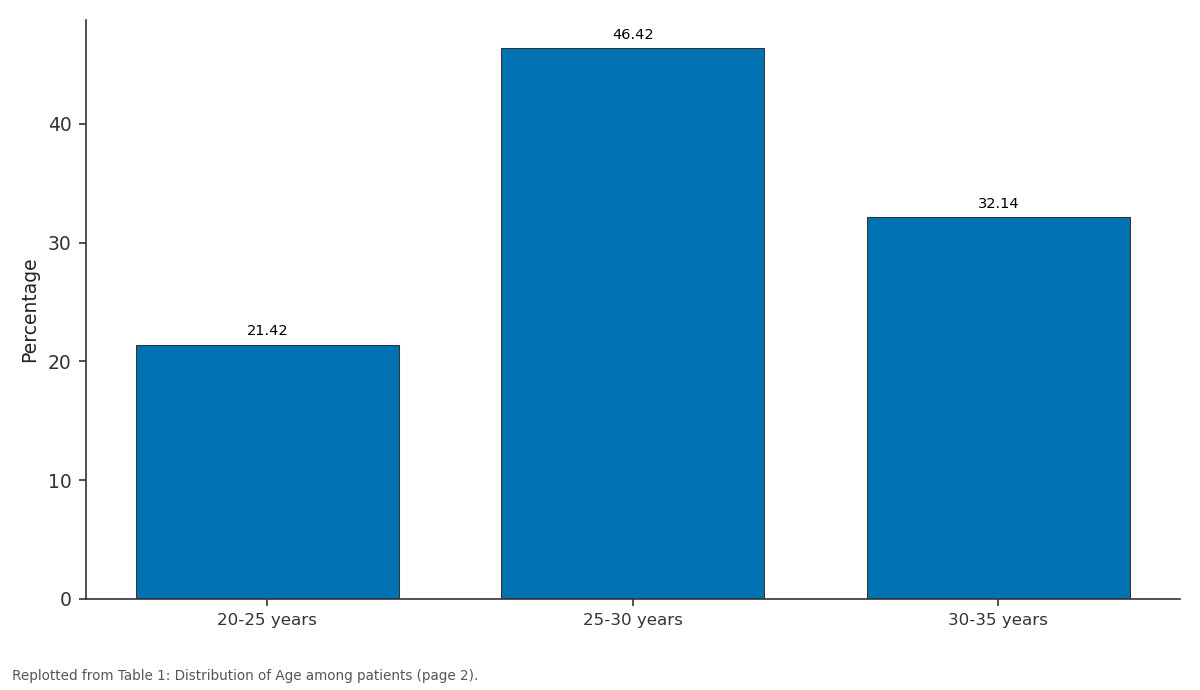
Percentage: 20-25 years vs 25-30 years vs 30-35 years
Replotted from Table 1 (page 2) of the original paper. Every bar is the paper's own table value.
View source evidence ↗Figures & tables
From the original paper Table 1
 Table 2
 Table 3
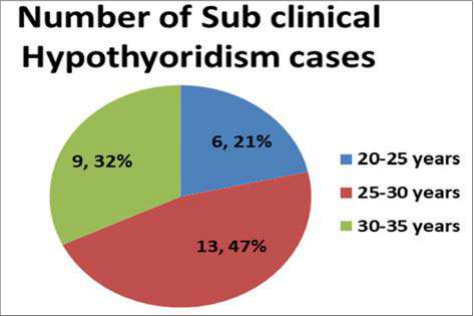 Figure 1
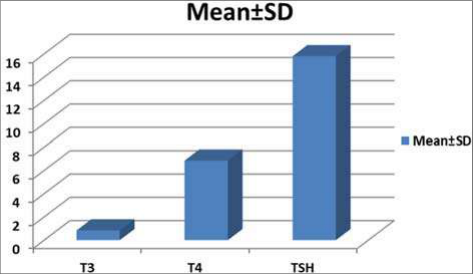 Figure 2
Introduction
Thyroid diseases are, arguably, among the commonest endocrine disorders worldwide. India too is no exception. According to a projection from various studies on thyroid disease, it has been estimated that about 42 million people in India suffer from thyroid diseases [1] . Thyroid diseases are different from other diseases in terms of their ease of diagnosis, accessibility of medical treatment, and the relative visibility that even a small swelling of the thyroid offers to the treating physician. Early diagnosis and treatment remain the cornerstone of management. The prevalence and pattern of thyroid disorders depend on sex, age, ethnic and geographical factors and especially on iodine intake [2] . Subclinical hypothyroidism (SCH) defined as the clinical status of elevated serum TSH levels(>4.3to 10 mUI/l)) with normal levels of serum thyroxin (T4) and tri iodothyronine (T3) and is a more common disorder than primary hypothyroidism with a prevalence of1.4-7.8% in older populations, prevalence being an even greater among women [3,5] . In relation to the prevalence of SCH, the data of the published series ranges considerably between 3.4 and 10.8% of the general population [6,9] .
International Journal of Advanced Biochemistry Research 2019; 3(1): 37-40
Various studies have shown that SCHT is associated with different comorbidities such as hyperlipidemia, neuromuscular and neuropsychiatric symptoms, myocardial dysfunction and a decrease in quality of life with progression to overt hypothyroidism [10,11,12] . In the present scenario, there are no standard diagnostic criteria for screening, management and follow up for subclinical hypothyroidism. The estimation of prevalence and age distribution shall elucidate to plan strategies for setting up cut-off age for screening for subclinical hypothyroidism in women. This study attempts to find out the prevalence and gender distribution in subclinical hypothyroidism in women attending Katuri Medical College, Guntur, Andhra Pradesh, India.
Materials and Methods
Materials and Methods
Study type
It is a cross-sectional observational study. The study was conducted at the Department of Biochemistry, Katuri Medical College, and Guntur from September 2018 to February 2019. All patients referred to the Outpatient Department (OPD) of Katuri Medical College, Guntur. All patients were examined by an endocrinologist. A total of 932 patients were selected for the study.
Exclusion criteria
Patients with ischemic heart disease, cerebrovascular and neurological diseases, diabetes mellitus, chronic renal impairment, known psychological illnesses, previous history of thyroid disease or previous thyroxine therapy, asthma and pregnancy were excluded.
Sample collection
About 3-5 ml of the venous blood sample was collected from median cubital vein in sitting posture with aseptic precautions and centrifuged at 4000 rpm for 4 minutes to separate serum from the cells as soon as the clot was formed.
Measurement of thyroid hormone profile
Serum aliquots were stored at 4 o C to be run in batches. The samples were allowed to thaw prior to assay, mixed thoroughly. Hemolyzed and lipemic samples were rejected. Two levels i.e. high and low control was run with each batch. Thyroid function test (TFT) comprising of Total T3, Total T4, and TSH levels were carried out by the chemiluminescence immunoassay method using a fully automatic analyzer Maglumi 800 (Snibe-Avantor). Patients with thyroid hormone evaluation picture of elevated serum TSH levels(>4.3 to ≥ 10 mIU/ml) with normal levels of serum thyroxin (T4) and tri iodothyronine(T3) were categorized as subclinical hypothyroidism (SCH) if similar levels were observed in repeated thyroid profile after a lapse of three months.
Statistical Analysis
Statistical Analysis
Results and Discussion
The total study, population was (932). Out of 932, we considered only 841. Among 841 tests, TSH levels above 6 were 71. Out 71 TSH cases, 43 had T3 less than 0.86 and the remaining 28 had normal T3 and T4 values. Total subclinical Hypothyroidism cases were 28 (3.32%) out of 841 cases tested for TSH. In the present study, the Average age of subclinical hypothyroidism (SCHT) cases was 28. In the present study, all the patients were females. The above table 3 & figure 2 depicts the mean values of T3, T4 and TSH hormones in subclinical hypothyroidism cases. These results indicate that there was a significant low levels of both T3 & T4, whereas TSH levels could be higher than the normal values.
| Hormome | Mean±SD | Minimum | Maximum |
|---|---|---|---|
| T3 | 0.84±0.22 | 0.58 | 1.6 |
| T4 | 6.85±1.27 | 4.4 | 10.6 |
| TSH | 15.80±22.62 | 6.1 | 169 |
Table text extracted from the original PDF; superscript letters are shown inline. The original table image is below.
View original table image
Screening studies to assess thyroid disorder prevalence have provided valuable insights in understanding the epidemiology of all thyroid disorders in the population worldwide. There is a rise in the prevalence of all the thyroid disorders including ScHt in India post iodization era However, screening studies have been a rarity in India and there is scanty literature on prevalence of these disorders in all regions of India.
In the present study, it was observed that 3.32% patients suffer from subclinical hypothyroidism. We found that all patients were females. Our study was in corroborate with the previous studies in coastal Andhra Pradesh, Mumbai and Kashmir which showed more prevalence of subclinical hypothyroidism in females as compared to males [13,15] . As reported by Kim et al, in the previous studies, it was observed that subclinical hypothyroidism showed a higher prevalence in women (6% to 10%) than in men (2% to 4%) [16] . One possible explanation for this is might be the higher prevalence of autoimmune thyroid diseases in women. In the Whickham survey, women elderly than 45 years showed more prevalence of subclinical hypothyroidism [17] . In another study conducted by Pedersen et al., [18] . Our findings have shown that ScHT was the most prevalent thyroid disorder in the study population followed by overt hypothyroidism and hyperthyroidism. The prevalence of SCHT differed in all above studies because the criteria for age and S.TSH cut off ranges were variable. 74%subjects with SCHT belonged to the age group 30-35 years and prevalence showed rising trend with age. This age-wise increase in prevalence is probably due to thyroid autoimmunity, which is known to increase with age as reported in the Wickham survey. [19] Besides, prevalence was more in females and increased with age, which is similar to that observed by Parle et al. [20]
Conclusion
Normative data of thyroid functions needs to be established separately for each individual population. Any S.TSH value above 4.6 microIU/mL needs to be considered as abnormal in reference to the diagnosis of ScHt. Screening for ScHt needs to be considered in peri-menopausal females in view of high prevalence of raised S.TSH and thyroid autoimmunity as seen in our study population after the age of 35 years. Our study provides valuable inputs to help define normative data of thyroid function in Indian population and epidemiology of subclinical hypothyroidism in India and improving our understanding of the same. Hence the understanding of the prevalence and risk factors of subclinical thyroid disorders could be helpful in the identification/ screening, management and follow up of these patients.
Acknowledgement
AcknowledgementThe author would like thank Management of Katuri Medical College and Hospital for providing all the facilities to carry out this work.
Figures and tables from the paper
| Age in year | Number of Sub clinical Hypothyoridism cases | Percentage |
|---|---|---|
| 20-25 years | 6 | 21.42% |
| 25-30 years | 13 | 46.42% |
| 30-35 years | 9 | 32.14% |
Table text extracted from the original PDF; superscript letters are shown inline. The original table image is below.
View original table image
References
19 in the original paper- Vanderpump MP, Turnbridge WM. Epidemiology and prevention of clinical and subclinical hypothyroidism. Thyroid. 2002; 12:839 47.
- Cooper DS. Subclinical thyroid disease: A clinician's perspective. Ann Intern Med. 1998; 129:135 8.
- Brabant G, Beck Peccoz P, Jarzab B, Laurberg P, Orgiazzi J, Szabolcs I, et al. Is there a need to redefine the upper normal limit of TSH?. 2006; 154:633 7.
- Gibbons V, Lillis S, Conaglen JV, Lawrenson R. Do general practitioners use thyroid stimulating hormone assay for opportunistic screening? N Z Med J. 2009; 12:25 30.
- Chu JW, Crapo LM. The treatment of subclinical hypothyroidism is seldom necessary. J Clin Endocrinol Metab. 2001; 86:4591 9.
- Cooper DS. Subclinical hypothyroidism. N Engl J Med. 2001; 345:260 5.
- Kochupillai N. Clinical Endocrinology in India. Curr Sci. 2000; 79:1061 7.
- Delang F. The Disorders induced by iodine deficiency. Thyroid. 1994; 4:107 28.
- Geul KW, van Sluisveld IL, Grobbee DE, Docter R, de Bruyn AM, Hooykaas H, et al. The importance of thyroid microsomal antibodies in development of elevated serum TSH in middle age women; Association with serum lipids. Clin Endocrinol (Oxf). 1993; 39:27580.
- Kung AW, Janus ED. Thyroid dysfunction in ambulatory elderly Chinese subjects in an area of borderline iodine intake. Thyroid. 1996; 6:111-4.
- Misiunas A, Niepomniszcze H, Ravera B, Faraj G, Faure E. Peripheral neuropathy in Subclinical Hypothyroidism. Thyroid. 1995; 5:283-8.
- Shekhar R, Chowdary NVS, Das MC, Desai V, Prabodh S. India-prevalence of subclinical hypothyroidism in coastal Andhra Pradesh. Biomedical Research. 2011; 22(4):471-474.
- Deshmukh V, Behl A, Iyer V, Joshi H, Dholye JP, Varthakavi PK. et al. Prevalence, clinical and biochemical profile of subclinical hypothyroidism in normal population in Mumbai. Indian J Endocrinol Metab. 2013; 17(3):454-459.
- Bashir H, Farooq R, Bhat MH, Majid S. Increased prevalence of subclinical hypothyroidism in females in mountainous valley of Kashmir. Indian J Endocrinol Metab. 2013; 17(2):276-280.
- Kim YA, Park YJ. Prevalence and risk factors of subclinical thyroid diseases. Endocrinol Metab. 2014; 29:20-29.
- Tunbridge WM, Evered DC, Hall R, Appleton D, Brewis M, Clark F. et al. Evans JG, Young E, Bird T, Smith PA. The spectrum of thyroid disease in a community: the Whickham survey. Clin Endocrinol (Oxf). 1977; 7:481-93.
- Pedersen IB, Knudsen N, Jorgensen T, Perrild H, Ovesen L, Laurberg P. et al. Thyroid peroxidase and thyroglobulin autoantibodies in a large survey of populations with mild and moderate iodine deficiency. Clin Endocrinol (Oxf). 2003; 58:36-42.
- Tunbridge WM, Evered DC, Hall R, Appleton D, Brewis M, Clark F. et al. The spectrum of thyroid disease in a community. The Wickhamsurvey. Clin Endocrinol (Oxf). 1977; 7:481-93.
- Bell GM, Todd WT, Forfar GC, Martyn C, Wathen CG, Gow S. et al. End organ responses to thyroxine therapy in Subclinical Hypothyroidism. Clin Endocrinol (Oxf). 1985; 22:83-9.