
Research article · 2019 · Full text
International Journal of Veterinary Sciences and Animal HusbandryInfluence of photoperiod and circulating-IgY on some behavioural patterns of chicks during the first week of life
Volume 4(2) · Pages 18–25
Research areasAnimal Nutrition and PhysiologyAnimal health and immunologyCardiovascular Conditions and Treatments
Abstract
Author-writtenImmunoglobulin Y (IgY) is beneficial to form the passive immunization and to improve the brooding behaviours of chicks in the first week of life. However, little information is available in this topic. Sixty 1-d old fayoumi chicks were reared in order to detect the behaviours and the levels of circulating IgY using ELISA technique. The resting behaviour of the chicks was the highest (time, frequency) in the 1-d. The activity reached its peak at the 7-d. Moreover, the chicks reared on a supplementary-light were more active than those reared on a normal-day light. The circulating-IgY was decreased (P ≤ 0.001) in the 7-d. Therefore, there was a positive correlation between the withdrawal of circulating-IgY from the chicks’ body and the behavioural activity of chicks. Our finding confirmed the importance of circulating-IgY and photoperiodism in the activation of early immunity of chicks and in the welfare implications on poultry farms.
Summary
Source-checkedPlain-language reading of the full paper, prepared with AI and checked against the text. Each point links to the authors' own words.
Why it matters
- Newly hatched chicks cannot properly maintain their body temperature because their thermoregulatory mechanisms are not fully developed until they are at least two weeks old. View evidence ↗
- Immunoglobulin Y (IgY) is the most abundant antibody in egg yolk, providing passive immunization to the embryo and newly hatched chick. View evidence ↗
- The lighting regimen is considered a critical factor influencing the overall performance and well-being of birds. View evidence ↗
The question
- The researchers aimed to quantify plasma IgY levels and assess the daily activity and resting behaviors of chicks with a broody hen under different photoperiods during their first week of life. View evidence ↗
What they did
- The study used sixty 1-day-old Fayoumi chicks randomly distributed into four groups across six chambers, each with a broody hen. View evidence ↗
- The photoperiod treatments consisted of a normal day light group (14 hours) and a supplementary light group (14 hours day light plus 10 hours of lamp light). View evidence ↗
- Plasma IgY levels were measured using ELISA kits from blood samples collected via the jugular vein on days 2, 4, and 7. View evidence ↗
- Behavioral data were collected via video recording, observing each chick for 10 minutes per hour over a 10-hour daily window (06:00 AM to 04:00 PM). View evidence ↗
What they found
- The frequency of active behavior increased significantly with age, reaching 24.3 bouts/hr on day 7 compared to 5.7 bouts/hr on day 1. View evidence ↗
- Resting duration under the broody hen was highest on day 1 (1650 sec/hr) and gradually decreased through day 6. View evidence ↗
- The frequency of resting beside the broody hen increased significantly from 4.2 bouts/hr on day 1 to 13.2 bouts/hr on day 7. View evidence ↗
- Chicks under a supplementary photoperiod exhibited higher activity (time and bouts) than those under normal light, while resting behavior was more prevalent in the normal light group. View evidence ↗
- Plasma IgY levels decreased significantly with age, from a peak of 1.31 ± 0.67 mg/mL on day 2 to 1.01 ± 0.05 mg/mL on day 4, and a low of 0.83 ± 0.05 mg/mL on day 7. View evidence ↗
- A positive correlation was found between the decrease of circulating IgY in the body and the increase in behavioral activity of the chicks. View evidence ↗
What it means
- The authors conclude that age during the first week of life is the primary driver of locomotor activity and influences comfort behaviors with broody hens across different photoperiods. View evidence ↗
- The authors recommend regulating activity during the first week of life to prevent leg disorders and improve welfare indicators. View evidence ↗
- The study was limited by the fact that it did not record the activity of the broody hen at specific moments. View evidence ↗
Visual summary
1 visualsIllustrations explain the paper; they do not show study data.
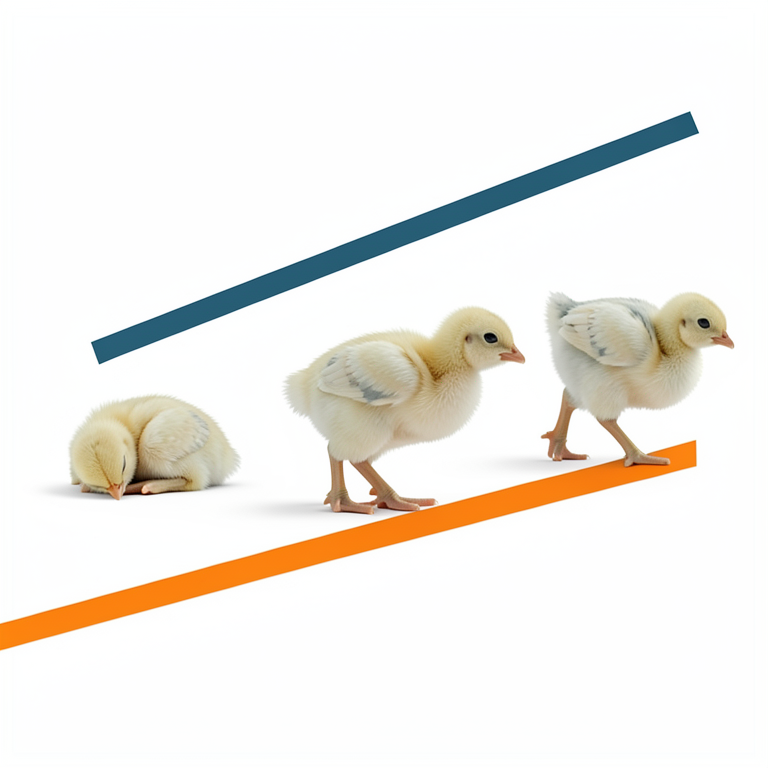
Inverse Relationship of IgY and Activity
AI-generated conceptual illustration (broiler chicks). It explains the idea and does not show study data.
View source evidence ↗Figures & tables
From the original paper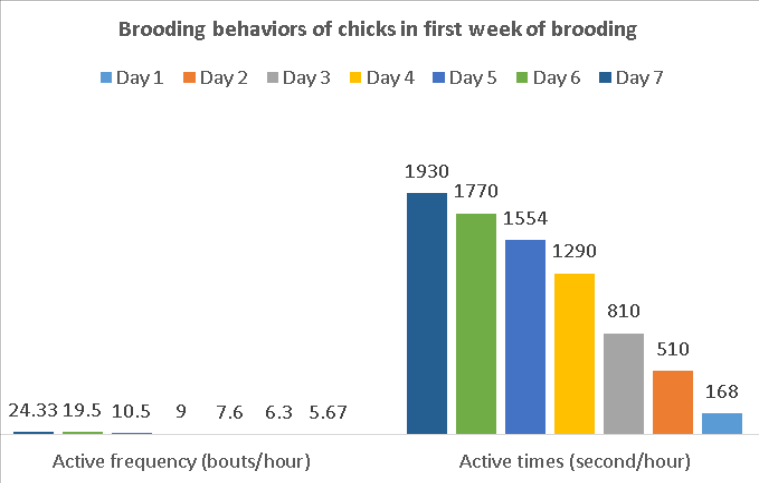 Figure 1
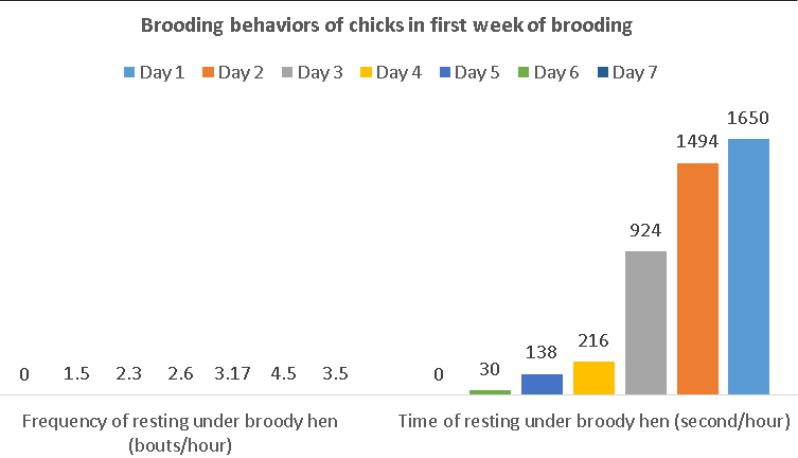 Figure 2
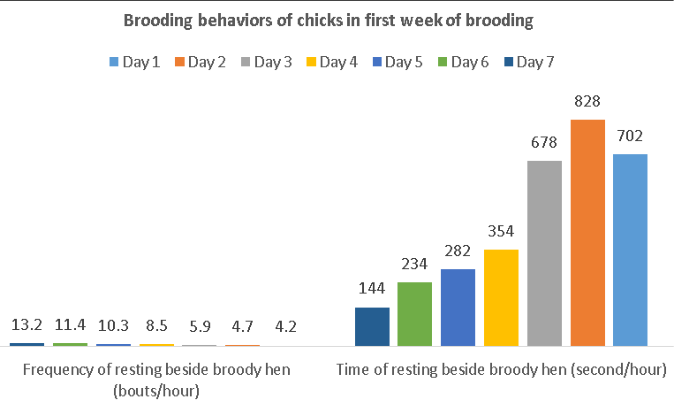 Figure 3
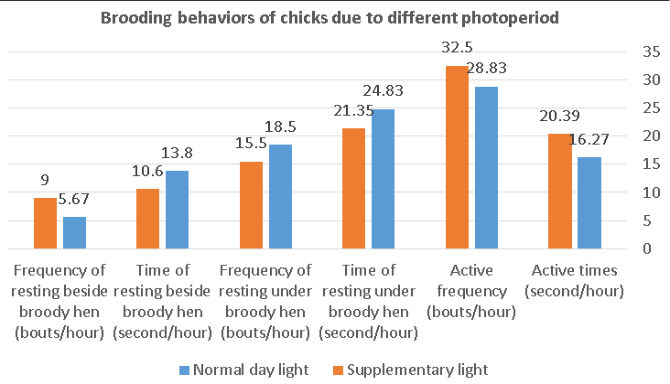 Figure 4
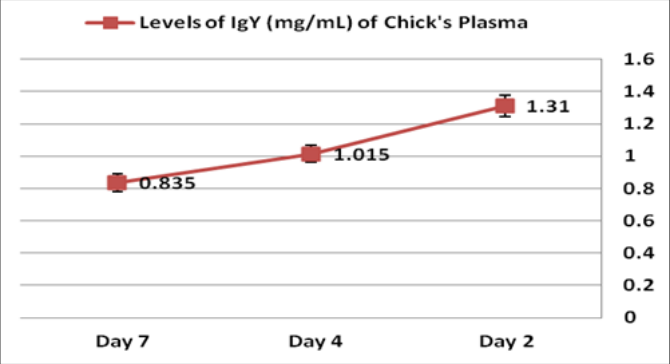 Figure 5
Introduction
A newly hatched chick does not have a fully developed thermoregulatory mechanism until after at least two weeks of age, thus it is not able to maintain their body temperature properly. It well-known that chicks are artificially hatched in a large-scale production system without needing of a mother hen. However, brooding is commonly taken as an index of the maternal behaviour (Ramsay et al., 1953) [38] . Maternal contact may be extended for 2-5 wks (MaBride et al., 1969) [22] , where the providing of maternal care positively effects the behavioural progress of chicks (Edgar et al., 2016) [9] . The chicks in nature, spent more than the half of their time resting under broody hens on the 1-d of age (Tsuyoshi et al., 2010) [51] to keep the temperature of the body and to improve the thermoregulatory system (O 'Conner, 1984). Sherry (1981) found that the physical contact between chicks and its broody hen decreased gradually with the advancement of age. While, Tsuyoshi et al., (2010) [51] mentioned that this contact decreased sharply until reach 10% of their time at 13-d of age. Vocal communication is also important in the hen-chick relationship and maternal care, has positive effects on behavioural development in its chicks (Rodenburg et al., 2008(Rodenburg et al., , 2009) ) [41, 42] , and minimizing the fear condition (Edgar et al., 2016) [9] . Chicks have the capabilityto recognize their mother hen by numerous ways of stimulus, but auditory stimuli appears to be a significant one. It was noticed that broilers originating from young parent breeders usually have a small yolk sac, which shortens the time they can stay alive without feeding (Ankney, 1980;Tur et al., 1986) [3, 53] . Therefore, nutritional antibodies are transferred from hen to the-their emberyo chicks through the egg (Grindstaff et al., 2003) [13] . There are three types of antibodies/immunoglobulin (Ig) in chicken egg such as IgY, IgA and IgM (Leslie and Clem, 1969) [21] . It well-known that IgA and IgM are existed in egg white due to the secretion of mucosa in the oviduct (Rose et al., 1974). However, egg yolk contains up to 20 mg of IgY per 1 mL, which is the most abundant Ig in the egg (Yegani et al., 2010) [55] . The transferred amount of IgY to the egg yolk had been positively related to the concentration of maternal IgY as a way of passive immunization (Al-Natour et al., 2004) [2] .
(Al-Natour et al., 2004) [2] . IgY-secreated B-cells might be detected in chicks' plasma/serum in the 1 st week posthatching and then gradullay decreased to initiate their active immunity (Hamal et al., 2006) [14] . Consequently, determination of the humoral immune protection in the chick depends heavily upon the concentration of circulating-IgY in post-hatch. However, little information is available to report the relation of behavioural activies of newly hatched chicks with their circulating-IgY level concentration in the 1 st week of life, particularly of the domestic boiler strains in tropical areas. Fayoumi chicken, for instance, are originated from Egypt and therefore resistant to tropical-as well as subtropical-conditions (Hossary and Galal, 1994) [18] . It tolerates harsh environmental conditions. In addition it is more economic of their nutritional requirements compared to those of the world breeds (Ghamry et al., 2011) [11] . Lighting regimen is the most essential aspect influences performance and well-being of animals as well as birds. The information on impact of duration of light on chick's behaviour is well-documented for chicken (Er et al., 2007). Photoperiodism is defined as the ability of animals to detect environmental-day length (photoperiod) and to inspire the socalled biological calendar (Nelson et al., 2010) [23] . The positive impacts of photoperiodism on broiler's productivity and welfare were previously reported (Classen et al., 2004; Mohammed 2016) [8] . Hence the behaviour of the chicks can detect their comfort level; the behavioural data have evidenced the evaluation of welfare levels and contributed to improve the broilers productivity and health and to raise the net-profits of producers. (Mohammed et al., 2016). The study aimed to assess the daily behaviours (activity, rest) of chicks with a broody hen in different photoperiods and also to quantify the levels of IgY in chick's plasma during the 1 st week posthatch. The merit of the study is to demonstrate the importance of maternal care of domestic chickens in early life and the welfare implications on commercial farms to improve the chick rearing practice.
Materials and methods
Materials and methods
Location and duration of the experiment
The study was done in the period between March-2017 to October-2018 at the experimental pens in the poultry farm, Faculty of Veterinary Medicine, South Valley University, Qena, Egypt. Experimental schedules were achieved based on the guidelines and approval of the Animal Ethics Committee at the South Valley University.
Experimental animals and management
Sixty 1-d-old chicks (Fayoumi breed) were purchased from a market hatchery and intendedly distributed randomly into four groups in six chambers (2 m length * 1.5 m width) under the same environmental conditions with their broody hen. All experimental chicks were of similar weights, day of hatching and management practices. The broody hens were of a similar breed (fayoumi) and weights as well. Importantly, chicks were not immunized or medicated throughout the study (from hatching to 7-d of age), to avoid additional unnecessary stress. Each chamber was contained one drinker and a 1-m-long feeder with 10 cm of wood shaving, as bedding material. Food and water were available ad libitum throughout the study. The basal diet was calculated to meet the nutrient requirements (crude protein "CP" 22% and metabolized energy "ME" 3000 kcal/kg diet) of broilers, as according to National Research Council (1994). In order to avoid the economic losses of the ration, the food was well-covered with a wire mesh. Lighting regimen depended on day light (14 hr) and supplementary light from candescent lamp (10 hr) in four chambers, while the in other 2 chambers, the photoperiod was 14 hr from day light source. All chicks tested (n= 5/group) on the 1-d were marked with different colours on their heads. However, the other chicks (n= 10/group) served to be used for blood sampling (n= 5) and the rest of birds in the same group kept as spares. No holding was necessary to prevent the risk factor and minimize the errors.
Collection of blood samples
Blood samples were collected from chicks through their jugular vien precisely at 2-, 4-, and 7-d, not daily to avoid restraint stress. Half mL of heparinized insulin syringe plus a 28.5 gauge needle (Becton, Dickinson and Co.) have been used. Plasma had been collected, and then kept at -20 º C for the day of analysis.
Behavioural recording
Before placement of broilers, a video camera was placed above each pen facing directly downwards. Video cameras were filming around the clock the first 7-d after placement. One observer subsequently collected data from the video recordings by the use of focal sample technique (Tsuyoshi et al. 2007) [52] . Each group was observed with 10 min for each chick/hr for 10 hr daily during the periods 06:00 AM to 04:00 PM. Time and frequency of the activity and the position of each chick to a broody hen were recorded by use of S-VIDIA Client and Behaviour OverLay.exe software. The chicks were either categorized as inactive or active. Inactive behaviour was defined as resting under and beside the broody hen, while active behaviour (locomotion) was included walking, running and standing without moving inside the pen (Abourachid, 1993). The mean values of time (second) and frequency (bout) of each behaviour were calculated per one hr for further statistical analysis.
Determination of plasma-IgY levels in chicks
Total IgY levels in the chick's plasma at 2-, 4-and 7-d were quantified using quantitative ELISA kits (Bethyl Laboratories), following the original guidelines with little modifications. The analysis of samples was performed in a triplicate manner. Each plate had its own concentration of standards, started from 3.12 up to 200 ng/mL. Detecting the working dilutions of the samples were done in advance (1:75,000) by carrying a preliminary ELISA, using standards. Meanwhile, reagents and buffers were also prepared. The working dilution of detection antibody used was 1:20,000. Incubation of samples with tetramethylbenzidine for 30 min was essential and further 2 M H2SO4 was used to stop the reaction. The primary wavelength was adjusted at 450 nm via an ELX 800 universal-micro plate reader (Bio-Tek Instruments Ltd, Winooski, VT) in addition KC-junior Software (Bio-Tek Instruments Ltd). Then, the blankdefaulted data were transeferred into an Excel file (Microsoft Corp., Redmond, WA). The standard curve for each plate describes the relation between the standards concentrations and their absorbance values, was identified. Moreover, the detected concentration of the antibodies for each sample was expressed as µg/mL or mg/mL. Then, we performed other mathematical calculations to estimate the levels of antibodies in the egg yolk extracts in order to detect the concentration and the amount of these antibodies per 1 mL egg yolk.
Statistical analysis SAS statistical system has been used to perform the statistics (SAS, 2009). Data were analyzed using one-way ANOVA, general linear models (GLM) test. Duncan's multiple-range test has been used in order to detect the comparison of means. The differences between means due to different photoperiods were tested using students t-test. Our data were presented as (mean ± SEM), by which the differences (P ≤ 0.05) were considered significant.
Influence of age on the active time and frequency of the newly hatched chicks
Chicks were clearly more active after the 1-d of life to be gradually independent to their dam. As shown in Fig. 1, the chicks tended to have the highest activity duration (1930 sec/hr) at the 7-d. In comparison to the rest of days (1-d to 6d), there was a variance but did not reach the statistical significance. However, the active frequency (bout/hr) at the 7d (24.3 bouts/hr) was relatively five times in comparison to the 1-d (5.7 bouts/hr), with a significant difference P ≤ 0.05.
Fig 1: Time and frequency of activity of chicks in relation to broody hens
Fig 1: Time and frequency of activity of chicks in relation to broody hens
Influence of age on the resting behaviour (time and frequency) of the newly hatched chicks under the broody hen
The highest resting duration of chicks under the broody hens on the 1-d (1650 sec/hr), gradually decreased up to the 6-d (30 bouts/hr) and then we could not time or frequency of this behaviour all over the 7-d. (Fig. 2). There was a significant change (P ≤ 0.03) of frequency of resting under the broody hen due to changes in chick's age in the 1 st week of brooding.
Influence of age on the resting behaviour (time and frequency) of the newly hatched chicks beside the broody hen
As a result shown in Fig. 3, the resting duration (sec/hr) of the chicks beside the broody hens did not significantly differ from 1-d to 7-d of the early life. However, the 2-d seems to be the highest (828 sec/hr) and to be gradually decreased on the 7-d (144 bouts/hr). Whereas, the resting frequency (bout/hr) beside the broody hen at the 7-d (13.2 bouts/hr) was nearly three times in comparison to the 1-d (4.2 bouts/hr), with a significant difference P ≤ 0.01.
Influence of age and photoperiods on the activity and resting of the chicks under/beside the broody hen
As shown in Fig. 4, there was a difference among the most of brooding behaviours due to photoperiods, where the activity of chicks (time and bouts) was higher on a supplementaryphotoperiod in compare to a normal-light. Nevertheless, resting behaviour was the highest in normal-day light.
Fig 4: Effect of different photoperiod on times and frequencies of brooding behaviours of chicks
Fig 4: Effect of different photoperiod on times and frequencies of brooding behaviours of chicks
Influence of age on the levels of IgY in the chick's plasma
The levels of plasma-IgY in the chick were analysed at 3 consequent times (2-, 4-, and 7-d), (see Fig. 5). The plasma level of IgY was decreased gradually with age. For instance, the highest level of IgY (1.31 ± 0.67, with a significant difference P ≤ 0.001) in chicks on the 2-d, decreased (1.01 ± 0.05) by the 4-d, and were the lowest (0.83 ± 0.05) on the 7-d.
Fig 5: Total IgY levels in the chick's plasma
Fig 5: Total IgY levels in the chick's plasma
Discussion
The first days of chick's life with their hen is important for imprinting and the mutual-relationship as the chicks are in a fearfulness-condition (Ramsay et al., 1953) [38] . The birds supposed to be under a new environment or any fear-eliciting factors, like stranger's visits or loudly noises which might get a negative impact on th bird's temper. In our study, we found a strong decline in brooding on chicks aged (Tsuyoshi et al., 2010) [51] , with an increase of the activity time and frequency (Fig. 1), and a major drop in brooding (resting under-and beside the broody hen) from the 1-d until the 7-d post-hatch (Fig. 2, Fig. 3), a stage at which chick develops their locomotor system and are probably better able to thermoregulate themselves (Edgar et al., 2016) [9] . Improvement of thermoregulation in broilers is beneficial and of great economic values, particularly in the scope of impact on in the genetics of breeds for getting the maximum bird productiviy (Ha venstein et al., 2003). Our results agreed with the authors reported that tonic immobility was improved at the 7-d which getting the evidence of the activity of chicks and less-fearful behaviour, indicating the early screening for ideal selection of low-fear chicks (Heiblum et al., 1998). Likewise, the chick's behaviour changes commonly due to the improvements of motor abilities during the 1 st week posthatch (Broom, 1968). The locomotor system gradually improved by chick ageing, so that running, pecking at the 1-d of hatching, and even copulatory movements were efficiently performed by the 4-d (Edgar et al., 2016) [9] . While Sisken, Roberts, and Baxter (1960) reported that increasing of chick's behavioural activity was positively related to the increasing in glutamic acid decarboxylase activity until the 12-d post-hatch in different parts of chick's brain. Meanwhile, the chick is subjected to an environmental-change of some sort (Edgar et al., 2016) [9] . This change is often interfered with the presence of the examiner during experiment. Therefore, it is a challenge to make a comparison between the results of these experiments with the real changes of the experimental animals. Broiler chicks spent more than the half of their time in setting-position (Murphy and Preston, 1988). This reduction of activity levels might be due to several husbandry factors for instance diet, the housing condition or even less-maternity. It well-known that a good balanced ration (proper % of energy, protein, etc) will lead to low-level of activities of birds (Rovee-Collier et al., 1993). Unfortunately, the exploratory behaviours were usually limited in the housing system of broilers (Newberry, 1999). In this regard, it was reported that feather cleanliness score of birds is positively correlated with their housing conditions and confirmed that those birds of good cleanliness score are not spending excessive periods in resting state (Mohammed and Rehan, 2018). In addition, artificial rearing was the main cause of generating a less-active bird (Edgar et al., 2016) [9] . The lowlevel of activity might relate to the high-growth rate and consequently the high-efficient feed conversion ratio. This artificial/commercial selection might have a favor of those birds which could reduce the subordinate energy expenditure such as walking, running, etc. Therefore, economics and the productivity sometimes encounter with the behavioural patterns of broilers (Muir and Craig, 1998). This study of the 1 st seven days of newly hatched of chicks was supportive to realize how locomotor behaviour improves. Significant negative correlations have been detected between resting behaviour (time and frequency) of chicks under-and beside the broody hen with the advancement of age (Tsuyoshi et al., 1953). This result was in agreement with our findings (see Fig. 2, Fig. 3). By which, locomotor activities of chicks on 2-d were positively correlated with those activities at 21-d of age (Gordon and Tucker 1993). Thus, the same author stated that the active birds at a starter-phase were also more active at a grower-and a finisher-phase. The increased activity at the 1 st week of life would limit the deterioration of feed conversion due to a limited weight gain. Moreover, the earlier activity of chicks would be extremely gainful since it is an important step for the anabolic process of animals' bone and skeleton (Rose et al., 1996). However, few reports discussed the behavioural and immunological assessments during the 1 st week post-hatch, especially in tropical breeds. The early development of the chicks' bones, in the 1 st week of life, is an anabolic step of birds to improve their performance and to modulate their physiological processes such as maturation of the thermoregulatory and immunological systems. Photoperiod guidance seems to be the most important aspect of a light regimen in poultry farms (Mohammed, 2016). Light is the most critical one as which controls many physiological and behavioural functions (Olanrewaju et al., 2006). The results as shown in Fig. 4 revealed that activity of the chicks reared under a supplementary-light were more active than other chicks reared under a normal-day light. While the times spent of resting behaviour (under and beside the broody hen) were higher in the chicks reared under a normal-day light in compare to the chicks under a supplementary-light. Nevertheless, the bouts of resting beside the broody hen were the lowest in a normal-day light. The results in Fig. 4 showed that the photoperiod as extrinsic factor played an important role in changing the chick's behaviour (Lardner et al., 2012). Manser (1996) mentioned that constant lighting programs may cause less-active and physiological stress in birds. It was mentioned that protein/IgY level and calories of energy in the yolk sac of the chick appeared to give sufficient amounts to keep their healthy-life in 1-d to 3-d post-hatch (Tur et al., 1986;Sell et al., 1991;Reis et al., 1998;Uni et al., 1998) [53] . Moreover, in the same period mentioned above, there was a kind of classical reduction in weight of chick's yolk sac of regardless the brooding condition. Moafi and Atikinson (1990) revealed that the withdrawal of yolk sac contents was not related to the fasting period of broiler chicks. However, Nitsan et al., (1991) reported that the withdrawal of the contents of the yolk sac contributed 50% and 40% of total calories of energy and the protein consumed in the 1-d but 2% and 6%, respectively on the 4-d post-hatch. Baião (1994) also reported that broiler chicks fed at 1-,2-and 3-d post-hatch indicated an analogous decrease in their yolk sac weight. Therefore, the above reports indicated that the withdrawal of the contents of the yolk sac is likely to be related neither to the brooding temperature nor the fasting period. It was detected that IgG in mammals or IgY in birds is the antibody which transferred from the dam to her offspring (Bram-bell, 1970). Hence, IgY is the chief Ig-isotype transmitted into the egg and into the newly hatched chick, IgY remains in the chick's plasma until the beginning of the 2 nd week of life (Smith et al., 2008). Therefore, the adaptive immune system develops during the 2 nd week post-hatch, and the early humoral protection in the chick depends mainly upon this maternal transfer. We hypothesized this concept, suggesting a relationship of the behaviours (activity and the rest) of chicks with the circulating-IgY levels in the 1 st week of life. In previous study, Halmal et al., (2006) agrees with our results (see Fig. 5), as these authors stated that the heavily concentration levels of IgY in the egg yolk are mainly related to the maternity. This hypothesis was previously confirmed through the analysis of antigen-specific IgY delivered by the hen to form anti-Newcastle disease virus and anti-Infectious Bronchitis antibodies. The peak of antigen-specific IgY was at the 2-d-followed by the value at 3-d . It therefore decreased substantially on the 7-d post-hatch. Our results are in agreement with the findings of Rahman et al., (2002) who found that these antibodies have been sourced from the hen/mother in origin due to the hens had been vaccinated for Newcastle or Infectious Bronchitis. However, the broiler chicks were neither vaccinated nor suffered from those viruses. Hence, a slight deviation of rearing program of chickens may change their immune system responses and impair their physiological as well as health parameters (Mohammed and Rehan, 2018), herein we intended to minimize the chick's stressors in order to investigate precisely the behavioural and hematological analysis. As a result shown in Fig. 5, the average IgY levels (1.31 mg/mL) in the chick's plasma on the 2-d was typically agreed with the levels (1~2 mg/mL) which has been mentioned by Kowalczyk et al., 1985. The amount of IgY present in the chick's plasma might be decided by the levels in the dam's plasma and transmitted through the egg yolk (Al-Natour et al., 2004) [2] . The master decease in the levels of plasma-IgY in the 4-d (1.01 mg/mL) and the significant decrease on the 7-d (0.83 mg/mL) might happen because of the transmission of maternal IgY to the chicks. It depends up on the occurrence of a half-life of IgY in the chick's plasma at the 1-d, while it was stated at the 2-d up to 3-d of life (Patterson et al., 1962). Therefore, it was given by the fact that there was a strong positive correlation between the withdrawal of circulating-IgY from the chick's body and the level of their activities in the 1 st week of life, suggesting the vital role of IgY in activation of the chick's early immunity. Under the conditions of this experiment the most marked changes in behaviours (e.g., activity, resting) occurred in the 7-d post-hatch. Therefore, the levels of activity which increased with age (1-d to 7-d of life) can strengthen bones and reduce leg abnormalities (Reiter andBessei, 1998 andBizeray et al., 2000), whereas limited activities can maximize the risks of leg abnormalities and minimize the welfare condition in broilers (Haye and Simons, 1978). The better understanding of walking abilities is extremely required in broiler to correlate this trend and its dramatic consequences with leg condition as well as with the level of welfare. This requires a deep focusing on how the behaviours improve; the motivations involve, and which factors can develop these patterns. However, this study has a limitation of recording the activity of the broody hen at a given moment. In conclusion, the age, particularly the 1 st week of life influences the comfort behaviour of newly hatched chicks with their broody hens in different photoperiods. The chick age was the key to promote the locomotor activity with the strongest influence on maternal brooding. There is a positive correlation between the withdrawal of circulating-IgY from the chick's body and the level of activity, suggesting an activation of the early immune system. Therefore, regulation of activity during the 1 st week of chick's life was essential to prevent leg disorders and to provide welfare indicators of birds at slaughtering houses. Further experiments are needed to confirm the relationship between early-and late-activity of broilers and its impact on their meat quality.
Ethical note
We tried to minimize disturbance of the chicks and broody hen as much as possible all over the study period. We did not rear the birds during rain, hot or cold weather. It was restricted that people are not allowed to visit the birds except during the time of offering their food. The experiment was approved, and birds were caught and marked under licence from Animal Ethics Committee at the South Valley University, Egypt.
Graphical abstract
Graphical abstract
References
55 in the original paper- Abourachid A. Mechanics of standing in birds: functional explanation of lameness problems in giant turkeys. British Poultry Science. 1993; 34:887-898.
- Al-Natour MQ, Ward LA, Saif YM, Stewart B, Keck LD. Effect of different levels of maternally derived antibodies on protection against infectious bursal disease virus. Avian Diseases. 2004; 48:177-182.
- Ankney CD. Egg weight, survival and growth of lesser snow goose goslings Journal of Wildlife Management. 1980; 44:174-182.
- Baião NC. Efeito do jejum entre o nascimento e o alojamento de Pintos sobre o desempenho do frango e digestibilidade da ração. Belo Horizonte, Escola de Veterinaria da UFMG, Doctor Thesis, Belo Horizonte, MG, 1994, 123.
- Bizeray D, Leterrier C, Constantin P, Picard M, Faure JM. Early locomotor behaviour in genetic stocks of chickens with different growth rates. Applied Animal Behaviour Science. 2000; 68(3):231-242.
- Brambell FWR. Transmission of immunity in birds Pages 20-41 in Transmission of Passive Immunity from Mother to Young. Neuberger and E. L. Tatum, ed. Elsevier, New York, 1970, 18.
- Broom DM. Behavior of undisturbed 1-to 10-day-old chicks in different rearing conditions. Developmental Psychobiology: The Journal of the International Society for Developmental Psychobiology. 1968; 1(4):287-295.
- Classen HL, Annet CB, Schwean-lardner KV, Gonda R, Derow D. The effects of lighting programmes with twelve hours of darkness per day provided in one, six or twelve hour intervals on the productivity and health of broiler chickens. British Poultry Science. 2004; 45:S31S32.
- Edgar J, Held S, Jones C, Troisi C. Influences of maternal care on chicken welfare. Animals. 2016; 16(2):1-12
- Er D, Wang Z, CAO J, Chen Y. Effect of monochromatic light on the egg quality of laying hens. Journal of Applied Poultry Research. 2007; 16:605-612.
- Ghamry AE, Allaway E, Hewida M, Yassein SA, Mallah GM. Evaluation of Dietary calcium Requirements in Fayoumi laying hens. Iranian Journal of Applied Animal Science. 2011; 1:81-86.
- Gordon SH, Tucker SA. Broiler walking behaviour. In: Savory CJ, Hugues, B.O. Eds. 4 th European Symposium on Poultry Welfare, Universities Federation for Animal Welfare, 1993, 291.
- Grind staff JL, Brodie LLL ED, Ellen DK. Immune function across generations: Integrating mechanism and evoluationay process in maternal antibody transmission. Proceeding of the Royal Society B: Biological Sciences. 2003; 270:2309-2319.
- Hamal KR, Burgess SC, Pevzner IY, Erf GF. Maternal antobody transfer from dams to their egg yolks, egg whites, and chicks in meat lines of chickens. Poultry Science. 2006; 85(8):1364-1372.
- Havenstein GB, Ferket PR, Qureshi MA. Carcass composition and yield of 1957 versus 2001 broilers when fed representative 1957 and 2001 broiler diets. Poultry Science. 2003; 82:1509-1518.
- Haye U, Simons PCM. Twisted legs in broilers. British Poultry Science. 1987; 9:549-557.
- Heiblum R, Aizenstein O, Gvaryahu G, Voet H, Robinzon B, Snapir N. Tonic immobility and open field responses in domestic fowl chicks during the first week of life. Applied Animal Behaviour Science. 1998; 60(4):347-357.
- Hossary MA, Galal ES. Improvement and Adaptation of the Fayoumi chickens. Animal Genetics Resources Information. 1994; 14:33-39.
- Kowalczyk K., Daiss J, Halpern J, Roth TF. Quantitation of maternal-fetal IgG transport in the chicken. Immunology. 1985;
- Lardner K, Fancherb B, Classena H. Impact of day length on behavioural out-put in commercial broiler. Applied Animal Behaviour Science. 2012; 137:43-52.
- Leslie GA, and Clem WL. Phylogeny of immunoglobulin structure and function. 3. Immunoglobulins of the chicken. Journal of Experimental Medicine. 1969; 130:1337-1352.
- MaBride G, Parer IP, Foenander F. The social organization and behaviour of the feral domestic fowl. Animal Behaviour Monographs. 1969; 2:125-181.
- Manser CE. Effects of lighting on welfare of domestic poultry: a review. Animal Welfare. 1996; 5:341-360.
- Moafi M, Atikinson JL. The effect of availability on spare yolk utilization by broiler chicks. Poultry Science. 1990; 69:95.
- Mohammed HH. Effect of different photoperiods on some maintenance behavior, external and internal egg quality traits of layers. Japanese Journal of veterinary science. 2016; 64(2):S139-142.
- Mohammed HH, Ibrahim F. Rehan. The titer of immunity and signs of welfare due to changes in group size in two strains of Lohmann Classic layers. SVU-IJVS. 2018; 1(1):82-89.
- Muir WM, Craig, JV. Improving animal well-being through genetic selection. Poultry. Science. 1998; 77:1781-1788.
- Murphy LB, Preston AP. Time-budgeting in meat chickens grown commercially. British Poultry Science. 1988; 29:571-580.
- National Research Council. Nutritional requirements of poultry. Ninth revised edition, National Academy Press, Washington DC, 1994.
- Nelson RJ, Denlinger DL. Somers, Photoperiodism: The Biological Calendar, Oxford University Press, Oxford; New York, 2010.
- Newberry RC. Exploratory behaviour of young domestic fowl. Applied Animal Behaviour Science. 1999; 63:311321.
- Nitsan Z, Bem-Avrahan G, Zoref Z, Nir I. Growth and development of the digestive organs and some enzymes in broiler chicks after hatching. British Poultry Science. 1991; 32:515-523.
- North MO, Bell DD. Commercial chicken production manual. 4 th Edn, Chapman & Hall, New York, 1990, 416.
- O'Conner RJ. The growth and development of birds. John Wiley and Sons, Chicken, UK, 1984.
- Olanrewaju HA, Thaxton JP, Dozier WA, Purswell J, Roush WB, Branton SL. A Review of Lighting Programs for Broiler Production. International Journal of Poultry Science. 2006; 5:301-308.
- Patterson R, Younger JS, Weigle WO, Dixon FJ. The metabolism of serum proteins in the hen and chick and secreation of serum proteins by the oveary of the hen. Journal of General Physiology. 1962; 45:501-513.
- Rahman MM, Bari ASM, Giasuddin M, Islam MR, Alam J, Sil GC, Rahman MM. Evaluation of maternal and humoral immunity against Newcastle disease virus in chicken. International Journal of Poultry Science. 2002; 1:161-163.
- Ramsay AO. Variation in the development of broodiness in fowl. Behaviour. 1953; 5:51-57.
- Reis LH, Gama LT, Chaveiro Soares M. Effects of short storage conditions and broiler breeder age on hatchability, hatching time, and chick weights. Poultry Science. 1998; 76:1459-1466.
- Reiter K, Bessei W. Einfluß des Laufaktivit¨at auf die Knochenentwicklung und Beinsch¨ aden bei Broilern. Arch. Geflu¨ gelk. 1998; 62:247-253.
- Rodenburg TB, Komen H, Ellen ED, Uitdehaag KA, Van Arendonk JA. Selection method and early-life history affect behavioural development, feather pecking and cannibalism in laying: a review. Applied Animal Behaviour Science. 2008; 110:217-228.
- Rodenburg TB, Uitdehaag KA, Ellen ED, Komen H. The effect of selection on low mortality and brooding by a mother hen on open-field response, feather pecking and cannibalism in laying hens. Animal Welfare. 2009; 18:427-432.
- Rose N, Constantin P, Leterrier C. Sex differences in bone growth of broiler chickens. Growth, Development, and Aging. 1996; 60:49-59.
- Rose ME, Orlans E, Buttress N. Immunoglobulin classes in the hen's egg: Their segregation in yolk and white. European Journal of Immunology. 1974; 4:521-523.
- Rovee-Collier C, Collier G, Egert K, Jackson D. Developmental consequences of diet and activity. Physiology & Behavior. 1993; 53:353-359.
- SAS. SAS statistical system Package-Jmp 8 User's Guide.2nd Cary, NC, SAS Institute Inc. USA, 2009; ISBN 978-1-60764-301-2.
- Sell JL, Angel CR, Piquer FJ, Mallarino EG, Al-Batshan HA. Developmental patterns of selected characteristics of the gastrointestinal tract of young turkeys. Poultry Science. 1991; 70:1200-1205.
- Sherry DF. Parental care and the development of thermoregulation in red jungle fowl. Behaviour. 1981; 76: 250-279.
- Sisken B, Roberts B, Baxter F. Gamniaaminobutyric acid and glutamic decarboxylase activity in the brain of the chick. In E. Roberts (Ed.), inhibition in the Nervous System and GABA. New York: Pergamon, 1960.
- Smih AL, Beal R. The avian enteric immune system in health and disease. In: Davison F, Kasper B, Schat KA, eds. Avian immunology. Oxford, UK: Elsevier Ltd. 2008; 243:271.
- Tsuyoshi S, Eriko K, Azuma T, Norio K, Katsuji U, Toshio T. Effect of broody hens on behavior of chicks. Applied Animal Behaviour Science. 2010; 126:125-133.
- Tsuyoshi S, Hirahara S, Eguchi Y, Uetake K, Tanaka T. Behaviour and Physiology, performance and physical condition of layers in conventional and large furnished cages in a hot environment. Animal Science. 2007; 78:314-322.
- Tur JA, Rial R. V, Esteban S, Rayo JM. Ontogeny of the gastrointestinal motility in young broilers. Comparative Biochemistry and Physiology. A, Comparative Physiology. 1986; 83A:61-65.
- Uni Z, Ganot S, Sklan D. Posthatch development of mucosal function in the broiler small intestine. Poultry Science. 1998; 77:75-82.
- Yegani M, Korver DR. Application of egg yolk antibodies as replacement for antibiotics in poultry. World's Poultry Science Journal. 2010; 66(1):27-38.
Cited by 5
From OpenAlex, OpenCitations and reference lists read by Scinovex
- Knowledge, attitude and practices of food safety among food handlers in Ismailia city hospitals, Egypt ↗
Noura M Elsherbiny, Sobhy A Sobhy, Lamiaa Fiala, Mostafa Abbas · International Journal of Advanced Community Medicine · 2019
Background: Foodborne diseases and threats to food safety constitute a growing public health problem. WHO estimates that foodborne and waterborne diarrheal diseases taken together kill about 2.2 million people annually, 1.9 million of them children and about 70% from developing countries. Aim of this study: Was to improve quality of life of hospitalized patients. Methods: This cross sectional study was
- Uses of Immunoglobulins as an Antimicrobials Alternative in Veterinary Medicine ↗
Wafaa A. Abd El‐Ghany · World s Veterinary Journal · 2021
As a result of increasing the resistance to antimicrobials in the field of veterinary medicine that reflects on human health, there is a great demand to use some drug alternatives. The application of avian immunoglobulins (IgY) is regarded as an important alternative strategy. The IgYs have been produced by several techniques and applied for animals using different methods. In addition,…
❝ 4PDF - Chicken Egg Yolk-IgY: Passive Immunization Promising Targeted Therapy of COVID-19 Pandemic ↗
Ibrahim F. Rehan, Asmaa Elnagar · Journal of Applied Veterinary Sciences/Journal of Applied Veterinary Sciences · 2021
The world is threatened by the lethal effects of Coronaviruses (CoVs) that associated with major respiratory disorders. The CoVs are large, enveloped, positive-stranded RNA and therefore, it is considered a complicated virus structure. The spike (S) is the major protein that exists in CoV’s structure regulates the viral access to the host using angiotensin-converting enzyme 2 (ACE2) receptor for both…
❝ 3PDF - A comparative study on variation in bloodstain patterns due to change in surface-using blood from four common animal species ↗
Mayank Dubey, Ruchi Sharma, Krishna Kumar Patel · International Journal of Clinical and Diagnostic Pathology · 2019
Bloodstain pattern analysis is the collection, categorisation and interpretation of the shape and distribution of bloodstains associated with heinous crimes involving bloodshed such as homicide and suicide. The interpretation of the information is aimed at supporting inferences relating to actions that took place during an event involving blood and corroborating witness’s statements, and identifying the participants. Bloodstain pattern analysis involves
❝ 3Found by Scinovex - Study of angiogenesis in cervical intraepithelial lesion and carcinoma using chick chorioallantoic membrane (CAM) assay ↗
Princy Dudhwala, Rakesh Kumar Sharma · International Journal of Clinical Obstetrics and Gynaecology · 2021
Background: Carcinoma cervix is the most common cancer among women in developing countries and most common cause of female mortality. Agiogenesis plays an essential role in tumor growth and invasion. CAM assay has been widely explored to study tumour angiogenesis and effect of anti-angiogenic drug. Itraconazole, an anti-fungal drug has high anti-angiogenic activity. Aim of the study: To study of…
❝ 0PDF