
Research article · 2019 · Full text
International Journal of Veterinary Sciences and Animal HusbandryWater as a critical nutrient in maintenance of poultry health and its role in production performance
Volume 4(4) · Pages 12–15
Research areasAnimal Nutrition and Physiology
Abstract
Author-writtenThe use of drinking water with adequate physical, chemical and microbiological quality in the poultry industry is of fundamental importance. Since many birds have access to the same water source, any quality problems will affect large number of birds. The drinking water plays an important role in the transmission of some bacterial, viral and protozoan diseases that are among the most common poultry diseases. Water is a major component of blood and plays an important role in transporting nutrients to the cells and carrying waste away. Chicken body consists of 70% water; a loss of only 10 percent of that water will result in the bird’s death. It plays a pivotal role in body temperature regulation, digestion of food and elimination of waste materials. Numerous factors, like, genetics, feeding, healthcare, management practices, house environment, and housing type play a role in broiler performance, but water quality may be one of the most critical and often ignored. To keep the poultry flocks healthy adequate quality and quantity of potable water should be provided throughout the rearing period.
Summary
Source-checkedPlain-language reading of the full paper, prepared with AI and checked against the text. Each point links to the authors' own words.
Why it matters
- Water is considered the most essential nutrient for poultry production, although it is frequently neglected in management. View evidence ↗
- A chicken's body is composed of approximately 65-70% water, and a loss of just 10% of this water can be fatal. View evidence ↗
- Water is vital for several physiological processes, including regulating body temperature, lubricating joints, and transporting nutrients. View evidence ↗
The question
- The paper aims to outline the necessary quality and quantity of potable water required to maintain healthy poultry flocks throughout their rearing period. View evidence ↗
What they did
- The author provides a set of drinking water quality guidelines for poultry, drawing from established sources such as Carter and Sneed. View evidence ↗
- Standard water intake for chickens is typically 1.5 to 2 times their feed intake under normal environmental temperatures. View evidence ↗
What they found
- Water with a pH below 6.0 is undesirable and can negatively impact chicken performance, with degradation potentially starting at levels below 6.3. View evidence ↗
- Nitrate and nitrite levels between 3 and 20 mg/l are noted to affect poultry performance. View evidence ↗
- Sodium levels exceeding 50 mg/L can adversely affect flock performance when combined with high levels of chloride or sulfate. View evidence ↗
- Flock performance is adversely affected when magnesium levels reach 50 mg/L in combination with sulfate levels above 50 mg/L. View evidence ↗
- Residual chlorine concentrations between 2 and 5 ppm are suggested for broilers and laying hens as they do not impair performance. View evidence ↗
What it means
- The authors conclude that for optimum performance and health, birds must have round-the-clock access to potable water free from pollutants and harmful bacteria, particularly coliforms. View evidence ↗
Visual summary
1 visualsIllustrations explain the paper; they do not show study data.
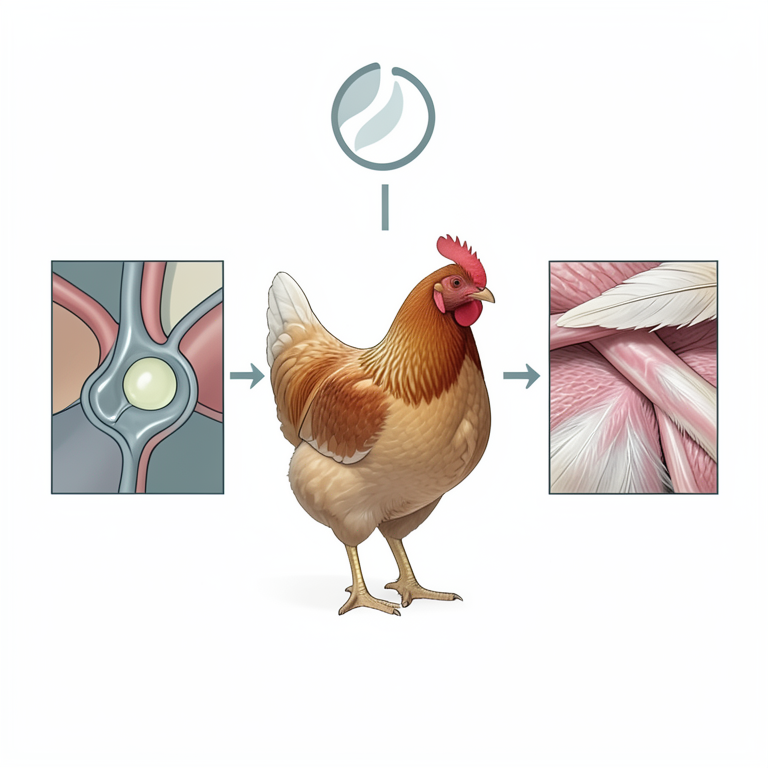
Physiological Roles of Water in Poultry
AI-generated conceptual illustration (broiler chickens). It explains the idea and does not show study data.
View source evidence ↗Figures & tables
From the original paper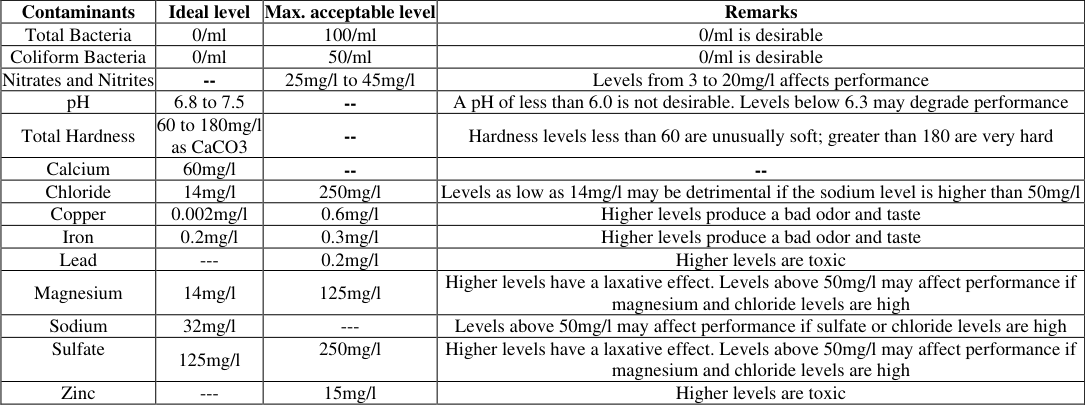 Table 1
Introduction
Water is the most critical nutrient in poultry production, but often overlooked. The total content of water in a bird averages from 65-70% of its lean body mass [1] and water consumed by birds is generally utilized for nutrient transportation, body temperature regulation, joint lubrication and various intra and extracellular biochemical reactions. Water is needed in every aspect of animal metabolism. Water is also a primary constituent in two of the most essential processes of life in chickens digestion and respiration, which is key to thermoregulation. Chickens normally consume twice as much water as feed during normal environmental temperature, which increases linearly as the temperature increases above normal. To keep the poultry flocks healthy adequate quality and quantity of potable water should be provided throughout the rearing period. Numerous factors, like, genetics, feeding, healthcare, management practices, house environment, and housing type play a role in broiler performance, but water quality may be one of the most critical and often ignored. There are many factors that influence water quality, including the colour, taste, and odour of water, as well as the presence of bacteria and other microbes. The levels of different minerals and some other chemical and physical factors are also responsible for determination of water quality.
Water intake
Generally, water intake of chicken should be about 1.5 to 2 times feed intake when environmental temperature is normal. In poultry water consumption is dependent on several factors including: Feed consumption: Reduced feed intake may lead to reduced water intake and vice versa. Too hot water: Less consumption Contaminated water: Less consumption Ambient temperature: Water consumption increases with increase in temperature and vice versa Type of drinkers used Drinker height Water pressure.
Drinkers should be checked regularly to ensure they are in working condition. Drinker systems should also be cleaned and flushed regularly to remove any microbial or mineral build up in the lines. Water is presumed safe if it has a zero microbial population, provided that mineral content is at safe levels and undesired contaminants are not present. However, presence of microbes in water is not always correlated with a disease in flocks unless it increases above a certain infectious level. The acceptable levels of bacteria in colony forming units (cfu) per milliliter (ml) in drinking water for poultry operation are given in Table 1. [2] There are many factors that influence water quality, including the color, taste, and odour of water, as well as the presence of bacteria and other microbes. The levels of different minerals and some other chemical and physical factors are also responsible for determination of water quality.
| Contaminants | Ideal level | Max. acceptable level | Remarks |
|---|---|---|---|
| Total Bacteria | 0/ml | 100/ml | 0/ml is desirable |
| Coliform Bacteria | 0/ml | 50/ml | 0/ml is desirable |
| Nitrates and Nitrites | -- | 25mg/l to 45mg/l | Levels from 3 to 20mg/l affects performance |
| pH | 6.8 to 7.5 | -- | A pH of less than 6.0 is not desirable. Levels below 6.3 may degrade performance |
| Total Hardness | 60 to 180mg/l as CaCO3 | -- | Hardness levels less than 60 are unusually soft; greater than 180 are very hard |
| Calcium | 60mg/l | -- | -- |
| Chloride | 14mg/l | 250mg/l | Levels as low as 14mg/l may be detrimental if the sodium level is higher than 50mg/l |
| Copper | 0.002mg/l | 0.6mg/l | Higher levels produce a bad odor and taste |
| Iron | 0.2mg/l | 0.3mg/l | Higher levels produce a bad odor and taste |
| Lead | --- | 0.2mg/l | Higher levels are toxic |
| Magnesium | 14mg/l | 125mg/l | Higher levels have a laxative effect. Levels above 50mg/l may affect performance if magnesium and chloride levels are high |
| Sodium | 32mg/l | --- | Levels above 50mg/l may affect performance if sulfate or chloride levels are high |
| Sulfate | 125mg/l | 250mg/l | Higher levels have a laxative effect. Levels above 50mg/l may affect performance if magnesium and chloride levels are high |
| Zinc | --- | 15mg/l | Higher levels are toxic |
Table text extracted from the original PDF; superscript letters are shown inline. The original table image is below.
View original table image
Color, Taste and Odour
It is utmost important that drinking water be clear, tasteless, odourless and colourless. Contaminated water exhibits different characteristics depending on the quantity and type of contaminants. 1. The water will appear to be cloudy in the presence of particles such as mud, clay, silt, or organic material. Such water can interfere with the proper operation of watering equipment/system and can indirectly lead to adverse effects on flock performance. 2. Water which is reddish-brown in colour might contain excess iron.
A blue hue to water can be an indication of excess copper. 4. A rotten egg smell is an indication of presence of
hydrogen sulfide in water. Hydrogen sulfide sometimes combine with iron to form black water (iron sulfide), which can also indicate the presence of sulfate-reducing bacteria. 5. The taste of water can be affected by the presence of different salts. Presence of ferrous and manganese sulfates will exhibit a bitter taste.
Bacteria
Presence of bacteria in the water can be an indication of contamination by organic material. Water is normally tested for total bacteria level as well as coliform bacteria level. The presence of coliform bacteria in drinking water is a clear indication of fecal contamination as coliform bacteria are organisms normally found in the digestive tracts of livestock, humans, and birds. If water has a high bacterial count then it is not advisable to use disinfectants to maintain safe bacterial levels. Disinfectant is likely to fail at some time and expose the birds to high levels of bacteria. The best option is to eliminate the source of the contamination or to locate an alternative water source. Bacteria, molds, fungi, minerals, and water additives interact in the water source and within the pipe line and drinkers to make difficult management practices necessary to guarantee the best quality water for optimum performance [3] . Even though 1,000 bacteria per milliliter is the acceptable standard for poultry drinking water, up to 1 million bacteria per milliliter have been found in contaminated water [4] . Ideally, bacteria should not be present in drinking water; their presence often indicates contamination by organic materials. Presence of coliform bacteria in drinking water is typically related to fecal contamination resulting from runoff to surface or ground water supplies [5] . Reddy et al. [6] considered that the number of microorganisms in the drinking water of birds should be 100 CFU/mL for total bacteria and 50 CFU/mL for coliforms. The mean levels of Escherichia coli in the water of a broiler farm that used belltype drinkers were 104 microorganisms/mL in the first week of life [7] , a concerning finding since this is a high fecal contamination associated to young age of the birds. Meza [8] states that there should be a better bacteriological control of the water provided to the birds during the initial phase, since there is a fast bacterial growth and the health risk is increased for the for birds from 1 to 21 days of age.
Water quality can change with the seasons, depending on location and water source. In addition, the warm environment inside a broiler house can lead to a rapid replication of microorganisms within the water system. This can result in formation of a biofilm slime in water lines and regulators. Biofilms are composed of many types of bacteria and other organisms that live together in a sticky film inside water lines, regulators, and nipple drinkers [9] .
Physical and Chemical Characteristics
The acidity or alkalinity of water is an indication of pH level.
A scale from 0 to 14 is used to measure pH. Neutral water, which is neither acidic nor alkaline, has a pH of 7. Water with pH below 7 is acidic, and water with pH higher than 7 is alkaline. When the pH of drinking water is acidic then it can affect digestion, corrode watering equipment/system, and impair the use of water-soluble vaccines and medications. Poultry prefer water with a pH of 6.0 to 6.8 but can tolerate a pH range of 4 to 8. However, water with a pH less than 6 has been shown to negatively affect chicken performance. When provided water with a pH above 8, chickens might reduce their water consumption. This in turn will affect feed consumption and bird performance.
Hardness
It refers to the amount of dissolved minerals, like calcium and magnesium in water. Hard water has high levels of these minerals and can cause the buildup of sludge in water lines.
Hardness reduces the effectiveness of soaps and disinfectants used in cleaning and disinfection of poultry sheds and also interferes with the administration of some medications, Hard water has not been shown to have either a positive or negative direct effect on poultry performance. However, it can cause stains and adversely affect watering equipment/systems.
Minerals
Several minerals occur naturally in drinking water of poultry. They are usually present in small amounts that do not interfere with the metabolism or digestive functions of poultry. When the levels of certain minerals are out of balance or exceed its threshold limit, then performance of poultry can be adversely affected.
Nitrates and Nitrites
Nitrogen contamination of water generally occurs in the form of nitrates and nitrites. Nitrate (NO 3 ) is produced during process of decomposition of organic matter. Nitrite (NO 2 ) is produced during intermediate stages of decomposition of organic compounds. The presence of nitrates and/or nitrites in water indicates that the water is contaminated by runoff containing fertilizer or animal wastes. Nitrates are soluble and may move with surface runoff or leach into the groundwater by percolation through the soil. Nitrate itself is nontoxic, but after ingestion, microorganisms present in the digestive tract convert nitrate to nitrite which is more toxic. Once nitrite is absorbed into the bloodstream, it binds strongly with haemoglobin and reduces the oxygen carrying capacity of the blood. Long-term nitrate and/or nitrite toxicity results in poor growth, decreased feed consumption, and poor coordination and ultimately reduces the performances.
Sulfate (SO4)
Presence of high levels of magnesium or sodium sulphates have a laxative effect. Levels as low as 50 mg/L can have a negative effect on flock performance if either the sodium or magnesium level is also 50 mg/L. High levels of sulfate may also interfere with intestinal absorption of other minerals such as copper.
Phosphate (PO4)
High levels of phosphate may indicate water contamination from sewage.
Sodium (Na)
Presence of excessive levels of sodium have a diuretic effect. High levels of sodium also increase water consumption resulting wet litter prblem. This can have an adverse effect on air quality in the poultry house. The normal sodium level in water is about 32 mg/L. Levels above 50 mg/L, together with high levels of sulfate or chloride, have been shown to adversely affect flock performance.
Chloride (Cl)
Excessive levels of chloride have been shown to adversely affect metabolism. A normal chloride level is 14 mg/L. Levels of about 14 mg/L, combined with a level of 50 mg/L of sodium, are detrimental to flock performance. Poultry can tolerate chloride levels as high as 25 mg/L as long as the sodium level is in the normal range. High levels of chloride increase water consumption and results in wet litter problem. According to Jefrey [10] , adequate chlorine dosage in drinking water for birds is 3 ppm, although birds may tolerate residual chlorine concentrations of more than 10 ppm. Concentrations of 5 ppm are indicated to control biofilm formation. The presence of organic material rapidly inactivates chlorine, therefore, drinkers should be cleaned daily to avoid accumulation of organic material. Water pH should be lower than 8.5, and optimal pH values are from 6.0 to 8.0. Chlorination should be suspended two days before any vaccination with live bacteria and virus via drinking water. Supply of chlorinated water may be resumed 4 hours after vaccination is completed. Residual chlorine concentrations between 2 and 5 ppm has resulted in no performance impairment and has been suggested as the levels to be added in the water supplied to broilers and laying hens [11] . The microbiological quality of water given to broilers improved at 2 ppm of residual chlorine [12] .
Water containing high levels of magnesium may have loose droppings. Magnesium may interact with sulfate, and it is in the presence of high sulfate levels that magnesium levels are a concern. The normal level of magnesium in water is about 14 mg/L. Levels as high as 68 mg/L have not been shown to adversely affect production when sulfate levels are normal. A level of 50 mg/L of magnesium in combination with a sulfate level of more than 50 mg/L will adversely affect flock performance.
Manganese (Mn)
Excessive levels of manganese can result in an off flavour in drinking water and reducing water consumption.
Copper (Cu)
In combination with phosphorus, copper plays a role in bone development. Too much copper can give the water a bitter taste and might cause liver damage. Problems with copper can occur when dietary molybdenum is either excessive or deficient.
Calcium (Ca)
Calcium does not appear to have a negative effect, even at levels as high as 400 mg/L.
Iron (Fe)
High levels of iron, up to 25 mg/L does not have any adverse effect on poultry, but they will stain watering system. High iron levels in drinking water may encourage the growth of bacteria that can lead to diarrhoea. When iron in the ferrous form is exposed to air, it is converted to ferric hydroxide giving water the typical rusty colour.
Sanitization of drinking water
Water can be purified by filtration, sedimentation, chemical treatment, ultraviolet treatment and ozonization, chlorination of water is the cheapest method. Five gram of stabilized bleaching powder, with an available of chlorine level of35% should be added to 1000 litres of drinking water and allowed to have a minimum contact time of 60 minutes before offering to the birds. Normally the bleaching powder is added at night to the wter and allowed to have a longer contact time of overnight. At the collection point the residual chlorine level should be 0.2ppm. a cheaper alternative is 50% hydrogen peroxide solution, used at 1ml/50 litres of water. If water storage facilities are not available the liquid chlorine preparations like Clodox, Vaz etc. may be used at1ml/10 litres of water. To assure that the water consumed by birds will not pose risk to the flock health, it should be disinfected. The most recommended disinfecting agent is chlorine, due to its efficiency, cost, practical use and inocuity to birds when adequately applied [13] .
Conclusion
Water is the most critical nutrient and is physiologically required by all animals including poultry. The quantity and quality of water should be supplied on a daily basis as per the bird age and breed to keep all physiological functions intact. Potable water should be made available to the birds round the clock for optimum performances. To keep the birds healthy the water should be free from all types of harmful bacteria especially coliform bacteria and other pollutants.
References
13 in the original paper- Ellis HI, JR Jehl Jr. Total Body Water and Body Composition in Phalaropes and Other Birds. Physiological Zoology, 1991, 973-984.
- Carter TA, Sneed RE. Drinking water guidelines for poultry: Poultry Science and Technology, Guide No. 42, North Canada State University, 1998, 205-211.
- Oviedo EO. Important factors in water quality to improve broiler performance. North Carolina Poultry Industry Joint Area Newsletter. Summer. North Carolina Cooperative Extension Service. 2006; 4(1):7-8.
- Watkins S. The campaign for quality drinking water continues. Avian Advice University of Arkansas Cooperative Extension Service, Fayetteville. 2002; 4(3):7-9.
- Brake JP, Hess JB. Evaluating water quality for poultry. Publ. ARN-1201. Alabama Cooperative Extension System. Auburn University, 2001, 4.
- Reddy MR, Raju MVLN, Chawak MM, Rama Rao SV. Importance of water in poultry health. Poultry Adviser. 1995; 28(6):31-37.
- Barros LSS, Amaral LA, Rossi Junior OD. de Ciência Avícola. 2001; 3(2):193-198.
- Meza H. Controle de qualidade na produção de frangos de corte. Avicultura & Suinocultura Industrial. 1989; 80:38-44.
- Hancock A, Hughes J, Watkins S. In search of the ideal water line cleaner. Avian Advice University of Arkansas Cooperative Extension Service, Fayetteville. 2007; 9(1):1-3.
- Jefrey JS. Sanitation-Disinfection. Basics for Poultry Flocks. Davis: University of California, Veterinary Medicine Extension. [Acessed dec. 14, 2004], 2000 Available at: http:// www.vetmed.ucdavis.edu/vetex/Hom e.html.
- Damron BL, Flunker K. Broiler chick and laying hen tolerance to sodium hypoclorite in drinking water. Poultry Science. 1993; 72:1650-1655.
- Valias APGS, Silva EN. Estudo comparativo de sistemas de bebedouros na qualidade microbiológica da água consumida por frangos de corte. Revista Brasileira de Ciência Avícola. 2001; 3(1):83-89.
- Amaral, LA do. Drinking water as a risk factor to poultry health. Brazilian Journal of Poultry Science. 2004, 6(4):191-199.
Cited by 4
From OpenAlex, OpenCitations and reference lists read by Scinovex
- Drinking Water Quality Management for Broiler Performance and Carcass Characteristics ↗
Nura Ebrahimi, Ali Nobakht, Hakan İNCİ, Valiollah Palangı, Marian Šuplata, Maximilian K. Lackner · World · 2024
Objective: This study aimed to assess the impact of water quality as determined by its physical, chemical, and biological composition collected from five distinct points in Maragheh, Iran, on the performance and carcass traits of Ross-308 commercial broilers (mix of male and female) during the grower (11–24 days) and finisher (25–42 days) periods. Materials and methods: A total of 240…
❝ 23PDF - Negative influence of suboptimal quality of drinking water on avian coronavirus pathogenesis and immune response: A Controlled Study ↗
Muhammad Farooq, Awais Ghaffar, Ahmed Ali, Ryan Rahimi, Muhammad Azhar, Ishara M. Isham et al. · Veterinary Immunology and Immunopathology · 2025
This study investigated the impact of poor drinking water quality on infectious bronchitis virus (IBV) pathogenesis. Drinking water samples from Alberta layer farms were assessed based on physical, chemical, and microbiological properties. The highest-scoring field water (FW), which is suboptimal with higher pH, hardness and bicarbonate concentration was selected, transported in clean containers, and used in this control experiment. Forty-eight…
❝ 1PDF - تأثير المصادر المختلفة من مياه الشرب على اداء فروج اللحم ↗
Nasser Ahmed Mohamed Jamba, Mazen Nasser Ali · Electronic Journal of University of Aden for Basic and Applied Sciences · 2022
نفذت التجربة في حظيرة كلية ناصر للعلوم الزراعية، جامعة لحج، 2022/1/27 الى 2022/3/2 لدراسة تأثير مصادر مياه الشرب على أداء دجاج اللحم، استخدم في التجربة 135 كتكوت غير مجنس سلالة ROSS، قسمت إلى ثلاث معاملات، بحسب مصادر المياه، كل معاملة قسمت إلى ثلاث مكررات، بواقع 15 كتكوت لكل مكرر. أظهرت نتائج البحث تأثير مصادر المياه معنوياً (P<0.05) حيث تفوقت المعاملة…
❝ 1PDF - Analyzing physicochemical quality and coliform contamination risks in poultry drinking water of Indore (India)
Akash Sengar, Vipin Kumar, RS Tayde, NK Nayak, SPS Parihar, Shiv Prakash Yadav · International Journal of Advanced Biochemistry Research · 2026
There is great role of clean and safe drinking water in maintaining optimal poultry health and farm efficiency. The present study was conducted to evaluate physicochemical attributes and potential risk factors associated with coliform contamination in poultry water, across four blocks (Indore, Mhow, Depalpur, and Sanwer) of Indore district, Madhya Pradesh. A total of 120 water samples were collected randomly and analyzed for key parameters including temperature, pH, turbidity, total dissolved solids (TDS), colour, odour, taste, residual chlorine, total hardness, chloride, nitrate, fluoride, an