
Research article · 2018 · Full text
International Journal of Veterinary Sciences and Animal HusbandryPrevalence of ovine haemonchosis and associated risk factors in Jimma municipal abattoir
Volume 3(6) · Pages 27–31
Research areasHelminth infection and controlCoccidia and coccidiosis researchAnimal Nutrition and Physiology
Abstract
Author-writtenHaemonchus contortus is a blood sucking nematode parasite of sheep all over the tropics and subtropics which causes retarded growth, lower productivity and even mortality in young animals. A cross sectional study was conducted from April, 2018 to May, 2018 in sheep slaughtered at Jimma municipal abattoir in Jimma town conducted using purposive. Purposively, sheep were selected during ante-mortem examination and the necessary information was recorded in data collection format. In the present study, a total of 384 sheep (217 males and 167 females) were slaughtered at the Jimma municipal abattoir and inspected for the presence or absence of the parasite. Accordingly, the findings of this study revealed that an overall prevalence of 33.1% was recorded. High prevalence of disease occur in poor body condition score 117/245(47.8) and low prevalence occur in good body condition score 10/139 (7.2%) and there was statistically significant differences (P= 0.000) between body condition scores. Among the male and female slaughtered sheep, 70 (32.3%) and 57 (34.2%) were found to be positive for H. contortus, respectively; and shows no statistical significant difference (P>0.05) between sex. Based on age group, prevalence of haemonchosis was 57 (30.5%) and 70 (35.5%), in young and adult, respectively. The result from the present study indicated that there was no statistical significance (P> 0.05) among age groups. There is no statistical significance difference (P> 0.05) between urban and rural origin of sheep. In the present study, moderate prevalence of H. contortus was observed in sheep during the study period. Therefore, strategic prevention and control measures should be implemented to decrease the burden of the parasitic infection so as to enhance productivity of sheep in the study area.
Summary
Source-checkedPlain-language reading of the full paper, prepared with AI and checked against the text. Each point links to the authors' own words.
Why it matters
- Haemonchus contortus is a blood-sucking nematode parasite common in tropical and subtropical regions that can cause stunted growth, reduced productivity, and death in young sheep. View evidence ↗
- Sheep are a critical livestock species in Ethiopia, ranking second in importance after cattle. View evidence ↗
- Despite the economic impact of the parasite and the large sheep population, there was previously no documented data on haemonchosis prevalence in the Jimma area. View evidence ↗
The question
- The study aimed to determine the current prevalence of Haemonchus contortus in sheep slaughtered at the Jimma municipal abattoir and identify associated risk factors. View evidence ↗
What they did
- A cross-sectional study was conducted using purposive sampling of sheep slaughtered at the Jimma municipal abattoir between April and May 2018. View evidence ↗
- The study inspected a total of 384 slaughtered sheep, consisting of 217 males and 167 females. View evidence ↗
- Researchers recorded sex, age, origin, and body condition (scored by rib observation) during ante-mortem exams, followed by post-mortem examination of the abomasum. View evidence ↗
- Data were analyzed using SPSS version 20, employing univariable logistic regression to assess the association between risk factors and the presence of the parasite. View evidence ↗
What they found
- The overall prevalence of haemonchosis among the inspected sheep in the study area was 33.1%. View evidence ↗
- Body condition was a significant risk factor (P=0.000), with a high prevalence of 47.8% (117/245) in sheep with poor body condition compared to 7.2% (10/139) in those with good body condition. View evidence ↗
- There was no statistically significant difference in prevalence between sexes (P>0.05), with 32.3% (70) of males and 34.2% (57) of females testing positive. View evidence ↗
- Age group did not show a statistically significant difference (P>0.05), with prevalence rates of 30.5% (57) in young sheep and 35.5% (70) in adults. View evidence ↗
- The origin of the sheep (urban vs rural) did not result in a statistically significant difference in the prevalence of the parasite (P>0.05). View evidence ↗
What it means
- The authors conclude that strategic prevention and control measures are necessary to reduce the parasitic burden and improve sheep productivity in the region. View evidence ↗
- The authors recommend maintaining a high plane of nutrition, particularly for sheep in poor body condition, to help them develop resistance to haemonchosis. View evidence ↗
- Strategic deworming is recommended at the start of the grazing period to prevent pasture contamination and reduce the parasite load during the dry season. View evidence ↗
Visual summary
3 visualsIllustrations explain the paper; charts are replotted from the paper's own table values.
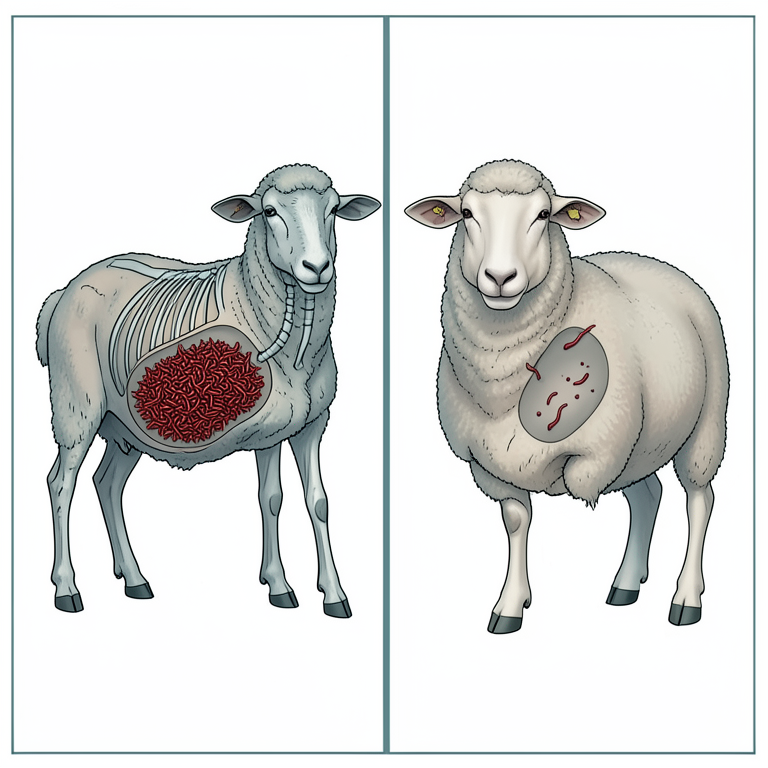
Body Condition and Parasite Prevalence
AI-generated conceptual illustration (sheep (Ovis aries)). It explains the idea and does not show study data.
View source evidence ↗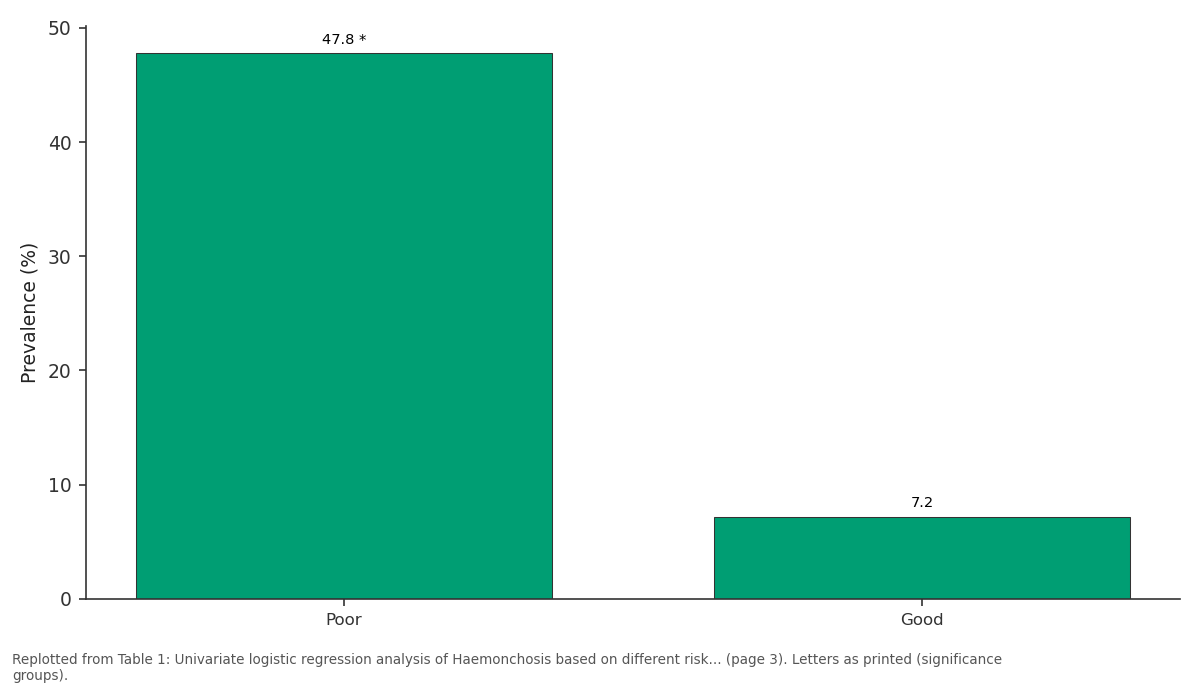
Prevalence (%): Poor vs Good
Replotted from Table 1 (page 3) of the original paper. Every bar is the paper's own table value.
View source evidence ↗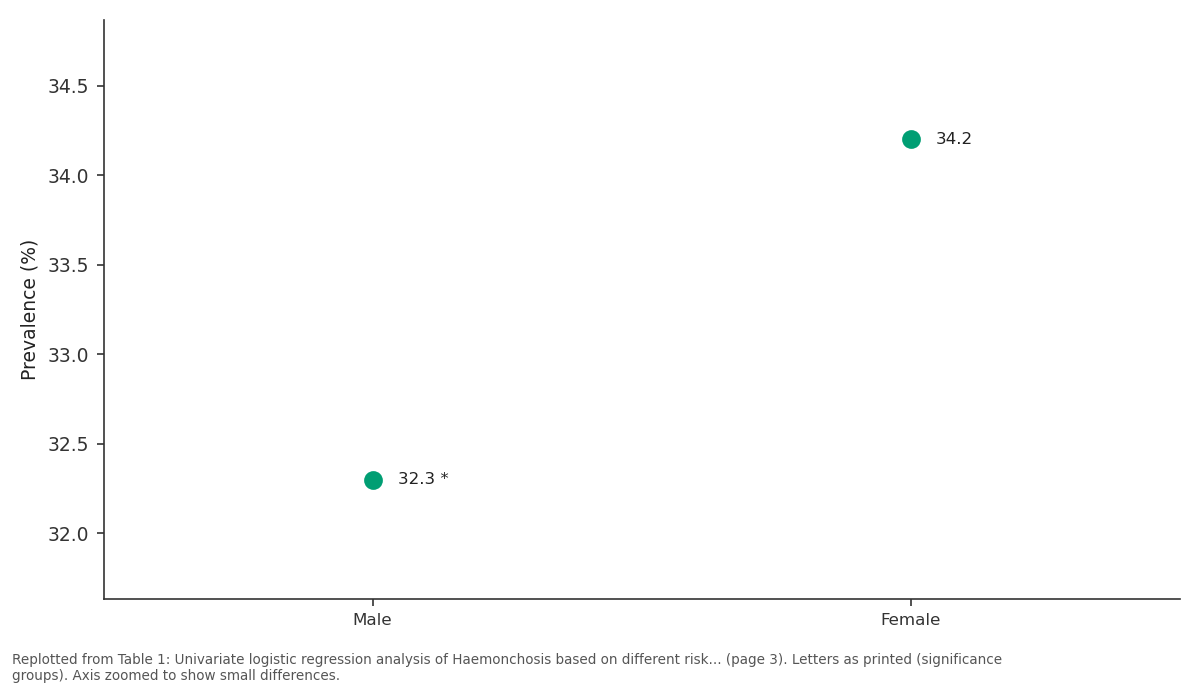
Prevalence (%): Male vs Female
Replotted from Table 1 (page 3) of the original paper. Every bar is the paper's own table value.
View source evidence ↗Figures & tables
From the original paper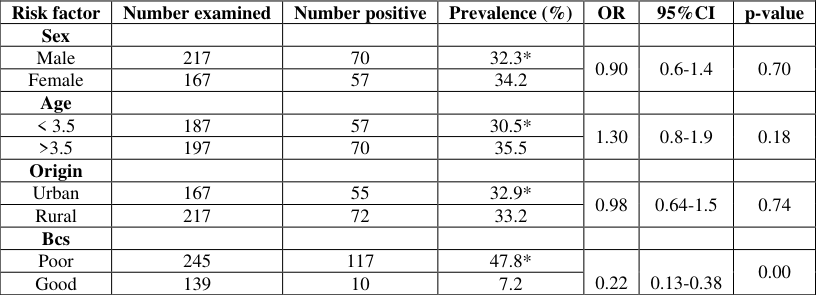 Table 1
Introduction
Sheep population has become adapted to a range of environments from the cool alpine climate of the mountains to the hot and arid pastoral areas of the lowlands and easy to manage in small area because of sheep having docile nature (Mirkana, 2010) [36] . In Ethiopia, sheep are the second most important livestock species next to cattle and ranks second in Africa and sixth in the world (Gizaw et al., 2007) [22] . Sheep play an important economic role and make a significant contribution to both domestic and export markets through provision of food and non-food (skin and wool) products. They also play a major role in the food security and social well-being of rural populations living under conditions of extreme poverty (Duguma et al., 2010) [16] . Even though these sectors have major impact on the development of economy of the country, the sector receives little support and is hampered by various constraints including feeding and health problem. Among the diseases that constrain the survival and productivity of sheep, Haemonchus contortus infection ranks highest on a global index (Moges et al., 2017) [37] . Haemonchus contortus is a blood sucking nematode parasite, primarily occurring in the abomasum of small ruminants, notably sheep and goats. It has been ranked as the most important parasite of small ruminants in all regions across the tropics or subtropics (Domke et al., 2012) [15] . Haemonchosis is the disease caused by this nematode and is responsible for considerable economic losses. The parasite is important small ruminant production systems in tropical and subtropical regions of the world. Its reputation derives from a combination of high fecundity and a short generational interval that provides an enviable developmental plasticity for adaptation or resistance to control measures (Bowie and Emily, 2014) [7] . H. contortus is active mainly in warm, humid climates in the summer months. Adult worms colonize the abdominal mucosa of the sheep and feed on their blood.
The eggs they produce are secreted in the feces, hatch, and are ingested by the sheep through the consumption of grasses especially those that are short and covered in dew (Machen et al., 1998; Burke, 2005) [33,11] . H. contortus, as the highest egg producer of all sheep worms, is one of the more devastating internal parasites (Besier, 2009) [4] . Haemonchosis, if untreated can lead to protein deficiency, anemia, bottle jaw, the swelling of the lower jaw as a result of anemia, general digestive disturbances and death (Williams, 2010) [58] . Haemonchus contortus infections are major constraint to the sheep industry and cause production losses, increased costs of management and treatment and even mortality in severe cases (Bowman et al., 2003) [9] . These parasites negatively affect the livestock industry. On global basis H. contortus probably causes more losses than any other species of nematodes in ruminants. Economic losses are primarily due to mortality, although losses in production can also be high. H. contortus causes retarded growth, low productivity, hematological and biochemical alterations, loss of appetite, loss of body weight, decrease in protein, impaired digestive efficiency and poor reproductive performance which can lead to loss of meat and wool among sheep (Zahida et al., 2010) [59] . Essentially the pathogenesis of haemonchosis is that of an acute hemorrhagic anemia due to the adult Haemonchus and fourth stage larvae puncture small blood vessels of the abomasal wall, feeding on the blood. Haemonchus is thought to inject an anticoagulant into the wound so that the host actually loses more blood (Zelalem et al., 2014) [60] . Each worm removes about 0.05 ml of blood per day by ingestion and seepage from the lesion. The pathogenesis of H. contortus results from inability of the host to compensate for blood loss to death (Taylor et al., 2007) [49] . The disease caused by this parasite is prevalent wherever sheep are raised, but it exerts the greatest economic losses in temperate and tropical regions (Chaudhary et al., 2007) [12] . The disease has also found in the colder climates and recently been found as far north as the Arctic Circle (Tariq et al., 2008) [47] . Despite the economic importance of this parasite and high population of ovine, yet there was no any previously documented data regard to the prevalence of haemonchosis in sheep in and around Jimma. Most previous studies in Ethiopia were based on coprological examinations which are less sensitive in identifying the nematode species. Therefore, detailed information is crucial to develop control and prevention strategies against the parasite. Therefore, the objectives of this study were:
Study Design and Sampling Strategy
A cross-sectional study was conducted in Jimma municipal abattoir using a purposive non random sampling technique to select the study sheep.
Study Animals
The study animals were all apparently healthy sheep of both sexes slaughtered in Jimma Municipal abattoir and came from different Peasant Associations (PAs) of Jimma town and surrounding district. All of them were kept under extensive management systems.
Sample size Determination
The sample size was determined using the formula described by Thrusfield (2005) [51] by considering an expected prevalence of 50% and an absolute precision of 5% with 95% confidence level, since there was no any study conducted in the area before.
Where, N = Sample size required for this study D = Absolute desired precision p = expected prevalence in the study area.
Therefore, the required sample size was 384.
Study Methodology
Active abattoir survey was performed. Sheep were selected purposively during ante-mortem inspection and tagged with temporal tag and followed during postmortem examination.
During ante-mortem examination, detail records about breeds, sex, age, origins and body conditions of the animals was recorded in data collection sheet (Annex 1). Body condition was scored based on ribs observation (Craing, 2007) (Annex 2). During post-mortem inspection, each abomasum was properly examined and the findings were recorded on the data recording sheet coded during the ante-mortem inspection. Parallel to this, adult parasites were collected from abomasums of positive animals in universal bottle, labeled and shipped to the laboratory for further identification. Identification was done based on Urquhart (1996) [54] .
Data Management and Analysis
Data obtained from both ante-mortem and post-mortem inspection was entered and stored in Microsoft (MS) Excel spreadsheet program and analyzed using SPSS software programs version 20. Univariable logistic regression was used to analyze the association of exposure variables with Haemonchus contortus. Univariable associations were analyzed between the binary outcome variable and all independent variables. In all cases, 95% of confidence intervals and P<0.05 were set statistically significant.
Results
A total of 384 sheep were inspected for the presence or absence of adult H. contortus. The overall prevalence of haemonchosis in sheep was found to be 33.1% in the study area. In the present study, higher prevalence of haemonchosis was observed in female sheep (34.2%) as compared to male (32.3%). However, there was no statistical significant difference (P>0.05) between male and female sheep.
In current study, prevalence of haemonchosis was relatively higher in adult sheep (>3.5) than in young (<3.5) which was reported to be 35.5% and 30.5%, respectively. The difference was not statistically significant (p>0.05) (Table 1). In this study, occurrence of Haemonchus parasite was highest in animals coming from rural areas of the Jimma zone (33.2%) as compared to animals from urban (32.9%). Thus, there was no statistically significant difference among origin of sheep (P> 0.05). This study reveals that higher prevalence of haemonchosis infection was observed in sheep with poor body condition score (47.8%) as compared to good body condition score (7.2%). The difference was statistically significant (P = 0.00).
| Risk factor | Number examined | Number positive | Prevalence (%) | OR | 95%CI | p-value |
|---|---|---|---|---|---|---|
| Sex | ||||||
| Male | 217 | 70 | 32.3* | 0.90 | 0.6-1.4 | 0.70 |
| Female | 167 | 57 | 34.2 | |||
| Age | ||||||
| < 3.5 | 187 | 57 | 30.5* | 1.30 | 0.8-1.9 | 0.18 |
| >3.5 | 197 | 70 | 35.5 | |||
| Origin | ||||||
| Urban | 167 | 55 | 32.9* | 0.98 | 0.64-1.5 | 0.74 |
| Rural | 217 | 72 | 33.2 | |||
| Bcs | ||||||
| Poor | 245 | 117 | 47.8* | 0.22 | 0.13-0.38 | 0.00 |
| Good | 139 | 10 | 7.2 |
Table text extracted from the original PDF; superscript letters are shown inline. The original table image is below.
View original table image
Discussion
Based on the prevalence results of this study, Haemonchus contortus was one of major sheep health problem in study area. In this study, a total of 384 sheep were tested for the presence of parasite and the overall prevalence of H. contortus was 33.1%. This result was in line with the finding of Gadahi et al. (2009) [20] who reported a prevalence of 28.88% from Pakistan.
In the previous studies, various workers reported different prevalence rate of haemonchosis in different geographical areas. This prevalence may vary from country to country and even within the country. The overall prevalence of haemonchosis (33.1%) in the present study was higher than the previous studies reported by different researchers including Khaled et al. (2010) [31] from Egypt and Mesele et al. (2014) [35] from Mekelle Abergelle export abattoir who reported a prevalence of 7.9% and 26.8%, respectively. These variations in prevalence of haemonchosis in sheep in different parts of Ethiopia and different country may be due to the difference factors such as environmental factors, sample size, host factor, the standard of management and habits of anthelmintic usage which influences the development, distribution and survival of the parasite. Prevalence of haemonchosis (33.1%) in the present study area was lower than previous studies. For example, a prevalence of 96.5% was reported from the arid and semi-arid zone of eastern Ethiopia by Abebe and Esayas (2001) [1] , 91.2% in slaughtered sheep from Ogaden region at Debre-Zeit ELFORA abattoir reported by Kumsa and Wossene (2006) [32] , 81.1% prevalence in small ruminants in Hawassa reported by Thomas et al. (2007) [50] , 81.35% prevalence was reported from Komobolcha town by Ketama et al. (2011) [30] , 1.03% prevalence from Finoteselam reported by Zelalem et al.
(2014) [60] , 56.25% of prevalence from Bahir Dar Municipal Abattoir reported by Moges et al. (2017) [37] , 63.8% of prevalence from Arsi Negelle Municipal Abattoir reported by Tibeso and Mekonnen (2015) [52] and outside of Ethiopia different result was reported by Wang et al. (2006) [57] who reported 78% of prevalence in small ruminants from Heilongjiang, by Sabbas et al. (2012) [44] who reported a prevalence of 55.56% from Benin and by Asif et al. (2008) [2] who reported a prevalence of 80.64% in small ruminants from Pakistan. These variations are due to difference in climatic feature such as rainfall, humidity and temperature of each country. The presence of sufficient rainfall and moisture during the study period was favored the survival of infective larvae in pasture and higher probability of uptake of the infective larvae leading to higher prevalence. Other reason of high prevalence of haemonchosis in different study area may be due to the fact that free grazing with the high stocking density, where large numbers of animals graze together throughout the year in communal grazing land and inadequate nutritional status make prevalence of disease high.
In the present study, there was statistical significant variation in prevalence of H. contortus among different body condition scores. The highest prevalence was seen in poor body conditioned animals (47.8%) while the lowest was observed in good body conditioned animal (7.2%). Similar results were reported by Moges et al. (2017) [37] from Bahir Dar Municipal Abattoir, by Mesele et al., (2014) [35] from Mekele Abergele Export Abattoir and by Gonfa et al. (2013) [23] from Hemex-Export Abattoir Debre Ziet.
Conclusion and Recommendations
Haemonchus are the most damaging gastrointestinal worms for livestock in tropical and subtropical regions, particularly for sheep. The result of the present study indicated that H. contortus is an important disease in the study area with an observed prevalence of 33.1%. The prevalence of haemonchosis in this study area was statistically significant among animals with different body condition. Therefore based on the above conclusion the following recommendations are forwarded:
• Animals should be kept in high plane of nutrition especially sheep in poor body condition in order to develop resistance against haemonchosis. • Strategic deworming of the parasite should be focus on sheep at the beginning of the grazing period to prevent the contamination of the pasture, so prevent load of parasite in dry season. • An appropriate control and prevention methods of haemonchosis should be designed.
References
60 in the original paper- Abebe W, Esayas G. Survey of Ovine and Caprine gastro helminthosis in Eastern part of Ethiopia during the dry season of the year. Medical Veterinary. 2001; 152:379384.
- Asif M, Azeem S, Asif S, Nazir S. Prevalence of gastrointestinal parasites sheep and goats in and around Rawalpindi and Islamabad, American-Eurasian Journal of Scientific Research. 2008; 2:5-12.
- Barger I. The role of epidemiological knowledge and grazing management for helminthes control in small ruminants. International Journal for Parasitology. 1999; 29:41-47.
- Besier B. Sheep worms (barbers pole worm). Department of Agriculture and Food, Government of Western Australia, Note. 2009; 476:1-4.
- Besier RB, Khan LP, Sargsion ND, Van JA. Pathophysiology, Ecology and Epidemiology of Haemonchus contortus infection in small ruminants. In: Gasser R., G.V. Samson-Hemmilstjerna (Eds), Haemonchus contortus and Haemonchosis past, present and future Trends. 2016; 93:95-114.
- Bhat SA, Mir MR, Allaie SQ, Khan HM, Husain I, Ali A. Comparative resistance of sheep breeds to Haemonchus contortus in pasture infection in Jammu and Kashmir. Global Veterinaria. 2011; 8:222-228.
- Bowie J, Emily A. Alternative treatments for Haemonchus contortus in sheep: testing of a natural dewormer and literature review of management methods. Dickinson College Honors Theses, 2014.
- Bowman D. Georgis parasitology for veterinarian 10 th edition, Elsevier saunder, St Louis Missouri, 2014.
- Bowman DD, Lynn RC, Eberhard ML. Georgis parasitology for veterinarians. 8 th ed. W. B. Saunders, 2003, 66-69.
- Brown B, Khan LP, Sargison ND, Aucamp AV. Diagnosis, treatment and management of Haemonchus contortus in small ruminants, 2016.
- Burke J. Management of barber pole worm in sheep and goats in the Southern U.S. Booneville, Dale Bumpers Small Farms Research Update, 2005.
- Chaudhary R, Khan F, Qayyum M. Prevalence of Haemonchus contortus in naturally infected small ruminants grazing in the Potohar areas of Pakistan. Veterinary Journal. 2007; 2:73-79.
- Craing M. Body condition scoring for livestock. Department of animal science. College of Agriculture Cooperatives, Extension service, University of Kentucky, 2007.
- CSA. Federal Democratic Republic of Ethiopia, Central Statistical Agency. Agricultural Sample Survey. Report on Livestock and Livestock Characteristics (Private Peasant Holdings), 2015.
- Domke AM, Chartier C, Gjerde B, Leine N, Vatn S, Stuen S. Prevalence of gastrointestinal helminthes, lungworms and liver fluke in sheep and goats in Norway. Veterinary Parasitology. 2012; 194:40-48.
- Duguma G, Mirkena T, Haile A, Iñiguez L, Okeyo A, Tibbo M, et al. Designing and implementation of community based breeding programs for adapted local sheep breeds in Ethiopia. 5 th all Africa conference on animal agriculture. In: all Africa society for animal production, commercialization of livestock agriculture in Africa, challenges and opportunities, 2010.
- Emily A. Alternative Treatments for Haemonchus Contortus in Sheep. Testing of a Natural Dewormer and Literature Review of Management Methods. Dickinson College, 2014.
- Falzon LC, Menzies PJ, Shakya KP, Jones A, Vanleeuwen J, Avula A, et al. Anthelmintic resistance in sheep flocks in Ontario, Canada. Veterinary Parasitology. 2013; 193:150-162.
- Fayza O, Bushra A, Osman HO, Majid A. The seasonal prevalence of adult and arrested L4 Larvae of Haemonchus contortus in naturally infected Sudanese desert sheep. The Sudan Journal of Veterinary Research. 2003; 18:89-92.
- Gadahi J, Arshed M, Ali Q, Javaid B, Shah I. Prevalence of Gastrointestinal Parasites of Sheep and Goat in and around Rawalpindi and Islamabad, Pakistan. Veterinary World. 2009; 2(2):51-53.
- Githigia SM, Thamsborg SM, Munyua WK, Maingi N. Impact of gastro-intestinal helminthes on production in goats in Kenya. Small Ruminant Research. 2001; 42:2129.
- Gizaw S, Arendonk J, Komen H, Windig J, Hanott O. Population structure, genetic variation and morphological diversity in indigenous sheep of Ethiopia. Journal of Animal Genetics. 2007; 38:621-628.
- Gonfa S, Basaznew B, Achenef M. An Abattoir Survey on Gastrointestinal nematodes in Sheep and Goats in Hemex-Export Abattoir Debrezeit, Central Ethiopia. Journal of Advanced Veterinary Research. 2013; 3:60-63.
- Gwyneth J. Epidemiology of the Barberpole worm (Haemonchus contortus) in sheep in Nova Scotia, 2013.
- Hart SP, Dawson LJ. Using FAMACHA and alternative dewormers to manage gastrointestinal nematodes in a dairy goat herd. Journal of Animal Science. 2010; 88(2):580.
- Hepworth K, Neary M, Hutchens T. Managing Internal Parasitism in Sheep and Goats. West Lafayette, IN: Purdue University Cooperative Extension Service, 2006.
- Jorgen H, Brian P. The epidemiology, diagnosis and control of helminthes parasites of ruminants. International Laboratory for Research on Animal Diseases Nairobi, Kenya, 1994.
- JTLFRDO. Jimma town Livestock Resource and Development office. Animal population, Annual Report, 2017.
- Kaplan RM, Burke JM, Terrill TH, Miller JE, Getz WR, Mobini S, et al. Validation of the FAMACHA eye color chart for detecting clinical anemia in sheep and goats on farms in the southern United States. Veterinary parasitology. 2004; 123:105-20.
- Ketama E, Fentahun T, Chanie M. Small Ruminant Haemonchosis is a serious nematode parasite in Slaughtered at Kombolcha Slaughter Houses, 2011.
- Khaled S, Desoukey Y, Elsiefy A, Elbahy M. An Abattoir Study on the Prevalence of Some Gastrointestinal Helminths of Sheep in Gharbia Governorate, Egypt. Global Veterinaria. 2010; 5(2):8487.
- Kumsa B, Wossene A. Abomasal Nematodes of Small Ruminant of Ogaden Region, Eastern Ethiopia: Prevalence, Worm Burden and Species Composition. Revue Médical Veterinary Journals. 2006; 157:27-32.
- Machen R, Craddock F, Craig T, Fuchs T. Haemonchus contortus management plan for sheep and goats in Texas. Texas A and M System, 1998.
- Malan, FS, Van Wyk JA, Wessels CD. Clinical evaluation of anemia in sheep. Early trials. Onderstepoort. Journal of Veterinary Research. 2001; 68:165-174.
- Mesele K, Yisehak T, Nesibu A. Prevalence of haemonchosis in sheep slaughtered at Abergele export abattoir. Mekelle, Ethiopia. Acta Parasitological Globalis. 2014; 5(2):115-119.
- Mirkana T. Identifying breeding objectives of smallholders/pastoralists and optimizing community based breeding programs for adapted sheep breeds in Ethiopia. A PhD thesis, University of natural resources and life sciences, Vienna, 2010, 234-245.
- Moges S, Hebtom K, Gashaw B, Melkamu T, Sefefe T. Prevalence of Haemonchus contortus of Sheep Slaughtered at Bahir Dar Municipal Abattoir, Bahir City, Ethiopia. Global Veterinaria. 2017; 18(4):269-276.
- Mohammed I, Boukhari A, Abdelhamid M, Fayza A, Yassir A. Prevalence and Risk Factors of Haemonchus contortus in Sheep in Khartoum State, the Sudan. 2016; 9(2):77-83.
- Morgan J. A Friendly and Encouraging Challenge to the Agricultural Extension Community: A low cost tool that can greatly influence management of internal parasites in small ruminants. Sheep and Farm Life. 2005; 50:34-35.
- Mortensen LL, Williamson LH, Terrill TH, Kircher R, Larsen M, Kaplan RM. Evaluation of prevalence and clinical implications of Anthelmintic resistance in gastrointestinal nematodes of goats. JAVMA, 2003; 23:495-500.
- NADIS. National Animal Disease Investigation and Surveillance, 2018.
- Pugh DG, Baird N. Sheep and Goat Medicine, Elsevier Health Sciences, 2012.
- Qamar MF, Maqbool A, Ahmad N. Economic losses due to Haemonchosis in sheep and goats. Sci. Int. (Lahore). 2011; 23(4):321-324.
- Sabbas A, Sahidou S, Cyprien F, Oubri B, Mama A, Louis J Epidemiology of haemonchosis in sheep and goats in Benin. Journal of Parasitology and Vector Biology. 2012; 4(2):20-24.
- Saeed E, Ibrahim A, Rashid M, Min H, Li H, Xun S. Haemonchus contortus and Ovine Host: A retrospective review. International Journal of Advance Research. 2017; 5(3):972-999.
- Stear MJ, Doligalska M, Donskow-Schmelter K. Alternatives to anthelmintics for the control of nematodes in livestock. Veterinary Parasitology. 2007; 134:139-151.
- Tariq KA, Chishti MZ, Ahmad F, Shawl AS. Epidemiology of gastro-intestinal nematodes of sheep managed under traditional husbandry system in Kashmir valley. Veterinary Parasitology. 2008; 158:138-143.
- Taylor MA. Emerging parasitic diseases of sheep. Veterinary Parasitology. 2012; 189:2-7.
- Taylor M, Coop R, Wall R. Veterinary Epidemiology 3 rd Ed. Black well, Asia, 2007, 159-161.
- Thomas N, Teshale S, Kumsa B. Abomasal Nematodes of sheep and goats slaughtered in Hawassa, Ethiopia. Medical Veterinary Journal. 2007; 2:70-75.
- Thrusfield M. Veterinary Epidemiology. 2 nd ed., Blackwell Science Ltd. Edinburgh, UK, 2005, 178-197.
- Tibeso B, Mekonnen A. Small ruminant's haemonchosis: prevalence and associated risk factors in Arsi Negelle municipal abattoir. School of Veterinary Medicine, College of Agriculture and Veterinary Medicine, Jimma University, Ethiopia. Global Veterinaria. 2015; 15(3):315-320.
- Urquhart GM, Armour J, Dunca JL, Dunn AM, Jennings FW. Veterinary Parasitology, 2 nd ed. Blackwell Science Ltd. London, 2000.
- Urquhart GM, Armour J, Duncan JL, Dunn AM, Jennings FW. Veterinary Parasitology, 2 nd ed., Blackwell Science Ltd. London, 1996, 19-21.
- Van Wyk JA, Bath GF. The FAMACHA system for managing haemonchosis in sheep and goats by clinically identifying individual animals for treatment. Veterinary research. 2002; 33:509-29.
- Waller PJ, Rudley M, Ljungstrom BL, Rydzyka A. The epidemiology of abomasum nematodes of sheep in Sweden, with particular reference to overwinter survival strategies. Veterinary Parasitology. 2006; 122:207-220.
- Wang C, Qiu J, Zhu X, Han X, Ni Zhao H, Zhou Q, et al. Survey of Helminths in Adult Sheep in Heilongjiang province, People's Republic of China. Veterinary Parasitology. 2006; 140:378-382.
- Williams AR. Immune-mediated pathology of nematode infection in sheep. Is immunity beneficial to the Animals. Veterinary Parasitology. 2010; 138(5):547-556.
- Zahida T, Sajjad A, Mushtaq HL, Chaudhary SH. Prevalence of Haemonchus contortus in sheep at research centre for conservation of Sahiwal cattle (RCCSC) Jehangirabad District Khanewal, Punjab, Pakistan. 2010; 42(6):735-739.
- Zelalem M, Nigus A, Getachew G, Niraj K. Assessment of small ruminant haemonchosis and its associated risk factors in and around Finoteselam, Ethiopia. 2014; 7(12):36-41.