
Research article · 2019 · Full text
International Journal of Advanced Biochemistry ResearchEvaluation of perception of first year medical students about their learning environment in a South Indian medical college
Volume 3(1) · Pages 01–03 · DOI: 10.33545/26174693.2019.v3.i1a.24 ↗
Research areasEducational Environments and Student OutcomesEvaluation of Teaching PracticesInnovations in Medical Education
Abstract
Author-writtenBackground: Medical students’ learning environment is crucial for effective learning and plays an important role in their academic success. Understanding the perception of medical students’ learning environment, especially in first year may help in planning for interventions that will facilitate learning. Aims and objectives: Aim of the study was to assess the perceptions of first year medical students about their learning environment in a south Indian Medical college using Dundee Ready Education Environment Measure (DREEM) scaleMaterials and methods: The Dundee Ready Educational Environment Measure (DREEM) questionnaire was distributed to all 145 first-year medical students of a South Indian medical college during their induction programme. The questionnaire contained 50 items scored on a 0–4 Likert scale. There were five domains in the questionnaire, including students' perceptions about learning, teachers, atmosphere, academic self-perceptions, and social self-perceptions.Results: 143 first year medical students participated in the study. The overall mean scores for student perception about learning, perception of teachers, academic self-perception, perception of atmosphere and social self-perceptions was 39.20/48, 28.24/44, 26.75/32, 32.74/48 and 18.47/28 respectively.Conclusion: The overall student perception about their learning environment was positive. The analysis of the results also helped in identifying the areas that needed to improvement.
Summary
Source-checkedPlain-language reading of the full paper, prepared with AI and checked against the text. Each point links to the authors' own words.
Why it matters
- The learning environment for medical students is essential for their academic success and effective learning. View evidence ↗
- Analyzing how first-year medical students perceive their environment can help educators plan interventions to improve learning. View evidence ↗
- The Dundee Ready Education Environment Measure (DREEM) is a validated, generic tool used globally to analyze undergraduate medical education environments. View evidence ↗
The question
- The study aimed to evaluate how first-year medical students at a South Indian medical college perceive their learning environment using the DREEM scale. View evidence ↗
What they did
- The DREEM questionnaire was administered to all 145 first-year medical students during their induction program at a South Indian medical college. View evidence ↗
- The tool consisted of 50 items on a 0–4 Likert scale, covering five domains: learning, teachers, atmosphere, academic self-perception, and social self-perception. View evidence ↗
What they found
- The study had a 98.6% response rate (143 students), with a mean age of 18.3 years and a gender distribution of 54.5% female and 45.5% male. View evidence ↗
- With a global score of approximately 145/200, first-year students generally held a positive attitude toward their learning environment. View evidence ↗
- Domain scores were: learning (39.20/48), teachers (28.24/44), academic self-perception (26.75/32), atmosphere (32.74/48), and social self-perception (18.47/28). View evidence ↗
- The highest relative score was for academic self-perception (83.5%), while the lowest was for the perception of teachers (64.18%). View evidence ↗
- Eight items scored below a mean of 2, most of which were related to the perception of teachers. View evidence ↗
- No significant difference was found between the perceptions of male and female students. View evidence ↗
What it means
- The authors concluded that first-year students perceive the environment positively, though some 'grey areas' were identified that may need remedial action to maintain quality. View evidence ↗
- The results cannot be generalized to the entire medical faculty because only first-year students were surveyed. View evidence ↗
- The authors plan future research to compare the students' initial expected perceptions with their actual perceptions after exposure to the environment. View evidence ↗
Visual summary
1 visualsIllustrations explain the paper; they do not show study data.
DREEM Scale Structure
AI-generated conceptual illustration (First-year medical students in a South Indian medical college classroom). It explains the idea and does not show study data.
View source evidence ↗Figures & tables
From the original paper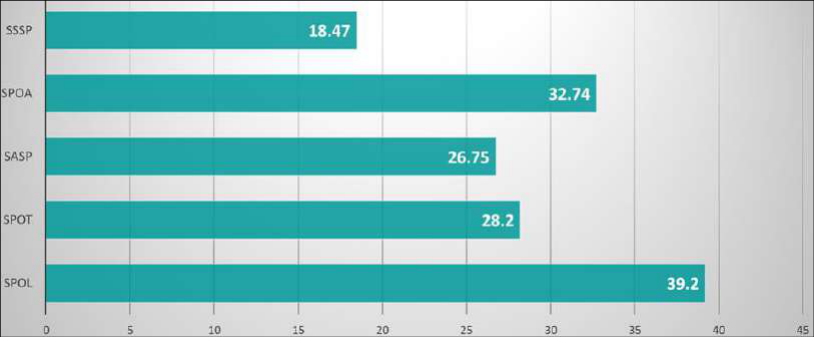 Figure 1
Introduction
In the recent years, there is a raising interest and concern regarding the role of learning environment in undergraduate medical education [1] . According to world federation for medical education the key stone to evaluate medical education programme is learning environment [2] . The learning environment quality plays a key role for effective learning [3] . Studies conducted across the world have shown that success, motivation, happiness and students achievements are all affected by educational environment [4] . Without compromising the standards and quality of learning, the medical educators across the world are trying to reform the education environment [5] . The Dundee ready education environment measure (DREEM) is a culturally non-specific, internationally validated, generic instrument designed to analyse undergraduate medical education environment [6] . With the data generated using DREEM scale, the institutions can identify the shortcomings and formulate changes in the learning environment [7] . This study aimed to assess the expectation of new medical students regarding their education environment at a single medical college using DREEM scale. The data generated from the study would lay a foundation for modifying and improving quality of medical education.
Materials and Methods
The DREEM is an internationally validated, non-culturally specific, closed questionnaire designed to measure the learning environment of medical educational establishments [6] They were asked to read each item and to respond using a five point Likert scale. Items were scored four for strongly agree and zero for strongly disagree. Negative statements were scored in reversed. This cross sectional questionnaire based study was conducted at our institute after taking the approval of institutional ethical committee and informed consent from the study population. The DREEM questionnaire were distributed to the entire fresher's. Few difficult terms in the questionnaire was explained in English as well as in the local language. It was distributed on the first day of the induction week; thirty minutes time was given to fill the questionnaire
Statistical analysis
The data collected was entered in the excel sheet. Analysis of DREEM was done by calculating the mean score across all participants for the each of the 50 items. The item in each of the 5 subscale were summed and mean is taken to give subscale summary scores and the overall DREEM score.
Results
The overall response rate was 98.6% (143 out of 145 students). Among 143 students 78 (54.5%) were female and 65 (45.5%) were male. Mean age of the participants was 18.3. dreem score was interpreted using Mc Aleer and Roff descriptors was used for the analysis of DREEM score [6] .The global score indicated that, the overall the fresher's had positive attitude towards their learning environment. The score for student perception about learning was 39.20/48, i.e., a more positive approach of the students; perception of teachers was 28.24/44, i.e., moving in right direction; academic self-perception was 26.75/32, i.e., they were confident about their study environment; perception of atmosphere was 32.74/48, i.e., a more positive atmosphere and social self-perceptions was 18.47/28, i.e., not too bad. The highest score was found in student's academic selfperception.
Discussion
This study originated from a desire to learn how students perceive the educational environment at our institution. The DREEM questionnaire provided an overview of expected perception of first year medical students about the learning environment of our institution and also highlighted the areas of concern. With a global score of around 145/200, the students rated the overall environment in this institution as more positive than negative perception about their learning environment. There are several studies available regarding the perception of students at different phases. The studies conducted across the world show fairly common result. The study done in Malaysia at international Islamic university had a response of 117.9 /200 for the first year students after they have entered the course [8] . Similar study at UK medical reported mean of 139/200 [9] . In the present study there was no actual difference among the male and female perceptions which is in contrast with the study done on Nigerian student where the total score was higher in males compared to that of females [10] . Few studies pointed he higher scores in female which was attributed to their learning styles and their perception of learning environment compared to males [11] . The domain scores for the whole group were compared on the percentage basis. The highest percentage was observed for students' academic self-perception (83.5%) and the lowest score found for student's perception of teacher (64.18%). There were 8 items which had mean score of less than 2. The majority of the items were from the 2 nd domain i.e. student's perception of teachers which can be attributed to more comprehension of the students towards the new teachers and their mode of teaching. The more positive mean score was found for 3 rd domain i.e. students' academic self-perception which indicates that the student was confident of themselves when they joined the course. To conclude First year medical students at our institute perceived their learning environment positively. Some grey areas were identified that might require remedial measures to ensure and maintain a high-quality learning environment for the students because the students are not exposed to their actual environment, its only perception which can be changed once they get exposed. In future the authors have plan to take the actual perception of students about their learning environment and to correlate the actual versus expected perception.
Limitations
The results of the present study could not be generalised for the whole institute medical faculty because, in this study, the DREEM questionnaires were distributed to first-year medical students only without the involvement of medical students from other academic years.
Figures and tables from the paper
References
10 in the original paper- Bassaw B, Roff S, McAleer S, Roopnarinesing S, Lisle JD, Teelucksing S et al. Students' perspectives on the educational environment, Faculty of Medical Sciences, Trinidad. Med Teach. 2003; 25:522-6.
- Karle H. Global standards and accreditation in medical education: a view from the WFME. Acad Med. 2006; 81(12):43-48.
- Genn J, Europe. AfMEi Curriculum, environment, climate, quality and change in medical education: a unifying perspective. AMEE, 2001.
- Demiroren M, Palaoglu O, Kemahli S, Ozyurda F, Ayhan IH. Perceptions of students in different phases of medical education of educational environment: Ankara University Faculty of Medicine. Med Educ Online. 2008; 13:8. http://dx.doi.org/10.3885/ meo.2008.Res 00267.
- Roff S, McAleer S, Harden RM et al. Development and validation of the Dundee Ready Education Environment Measure (DREEM). Med Teach. 1997; 19:295-299.
- Zawawi AH, Elzubeir M. Using DREEM to compare graduating students' perceptions of learning environments at medical schools adopting contrasting educational strategies. Med Teach. 2012; 34(1):25-31. http://dx.doi.org/ 10.3109/0142159X. 2012.656747
- Said NM, Rogayah J, Hafizah A. A study of learning environments in the Kulliyyah (Faculty) of Nursing, International Islamic University Malaysia. Malays J Med Sci MJMS. 2009; 16(4):15.
- Dunne F, McAleer S, Roff S. Assessment of the undergraduate medical environment in a large UK medical school. Health Educ J. 2006; 65(2):149-158.
- Roff S, McAleer S, Ifere OS, Bhattacharya S. A global diagnostic tool for measuring educational environment: comparing Nigeria and Nepal. Med Teach. 2001; 23(4):378-382.
- Philbin M, Meier E, Huffman S, Boverie P. A survey of gender and learning styles. Sex Roles 1995; 32(7, 8):485-494.