
Research article · 2019 · Full text
International Journal of Veterinary Sciences and Animal HusbandryLocal wisdom as a main trigger in improving beef cattle quality: An exploratory study of rural farmer in Madura
Volume 4(3) · Pages 25–30
Research areasLivestock Farming and Management
Abstract
Author-writtenA phenomenological sense as part of a life system cannot be isolated from cattle husbandry. A new perspective in the study of local wisdom in rural farmer in Madura, Indonesia offers guidance that are used to produce large harvests that positively affect the cattle husbandry condition. It turns out that through the creative hands of the cattle owners in Madura. Cows which are usually only a plow puller in the fields or just as a meat reserve, can turn into "elite" cows and classy whose selling value can reach hundreds of millions. That is one proof that creativity can change the ordinary into something extraordinary. And sonok cattle are the result of the creativity of livestock farmers in Madura, an island full of charm and exoticism. This study in undertaking a piece of research, adopts a middle stance on philosophical assumptions that provides an underpinning of the adoption of mixed methods research. This research strategy is a useful umbrella for producing a better understanding of social phenomena and for a range of issues concerned with practice. In this study, it is well identified that factors such as veterinary treatment, quality of cattle cage, feed efficiency, education, animal health, and farmers’ incomes empirically documented are good predictors of cow fattening. Then this might be good for cattle husbandry to carefully consider those aspects.
Summary
Source-checkedPlain-language reading of the full paper, prepared with AI and checked against the text. Each point links to the authors' own words.
Why it matters
- The quality of beef products from Madura is critical for consumer demand, trade, and the region's competitiveness against other protein sources and beef exporters. View evidence ↗
- Despite their importance, the traditional wisdom of farmers and genetic factors that influence beef quality in Madura have been largely overlooked by stakeholders. View evidence ↗
- Sonok cattle are a specialized result of the creativity of livestock farmers in Madura. View evidence ↗
The question
- The study aimed to document the unique characteristics of the Madura cattle fattening system and analyze the feasibility and performance of the associated agribusiness. View evidence ↗
What they did
- The researcher used a mixed-methods research strategy, combining quantitative and qualitative methodologies. View evidence ↗
- The study participants were experienced sonok cattle breeders, consisting of 150 questionnaire respondents and 7 individuals for in-depth interviews. View evidence ↗
- The study used multiple regression analysis to evaluate how veterinary treatment, cage quality, feed efficiency, education, animal health, and farmer income predicted cow fattening. View evidence ↗
What they found
- The combined independent variables (veterinary treatment, cage quality, feed efficiency, education, animal health, and farmer income) explained 82% of the variation in cow fattening. View evidence ↗
- All six predictors, veterinary treatment, cage quality, feed efficiency, education, animal health, and farmer income, showed a positive and statistically significant relationship with cow fattening. View evidence ↗
- The research model demonstrated reliability, with Cronbach's alpha values exceeding 0.75 for all variables. View evidence ↗
- Normality tests confirmed the sample population was normally distributed, with Kolmogorov-Smirnov (0.912) and Asymp.Sig. (0.377) values both above 0.05. View evidence ↗
- As part of the special treatment for sonok cattle, cows are routinely given herbs mixed with approximately 15 eggs every week. View evidence ↗
- Owners of sonok cattle frequently employ veterinarians to perform health checks every 3 months. View evidence ↗
What it means
- The authors conclude that veterinary treatment, cage quality, feed efficiency, education, animal health, and farmer income are empirically documented good predictors of cow fattening. View evidence ↗
- The authors state that preserving traditional Madurese culture is directly related to producing high-value livestock products and that traditional treatments are effective alternatives for cattle fattening. View evidence ↗
Visual summary
3 visualsIllustrations explain the paper; charts are replotted from the paper's own table values.
Predictors of Cow Fattening
AI-generated conceptual illustration (Madura beef cattle). It explains the idea and does not show study data.
View source evidence ↗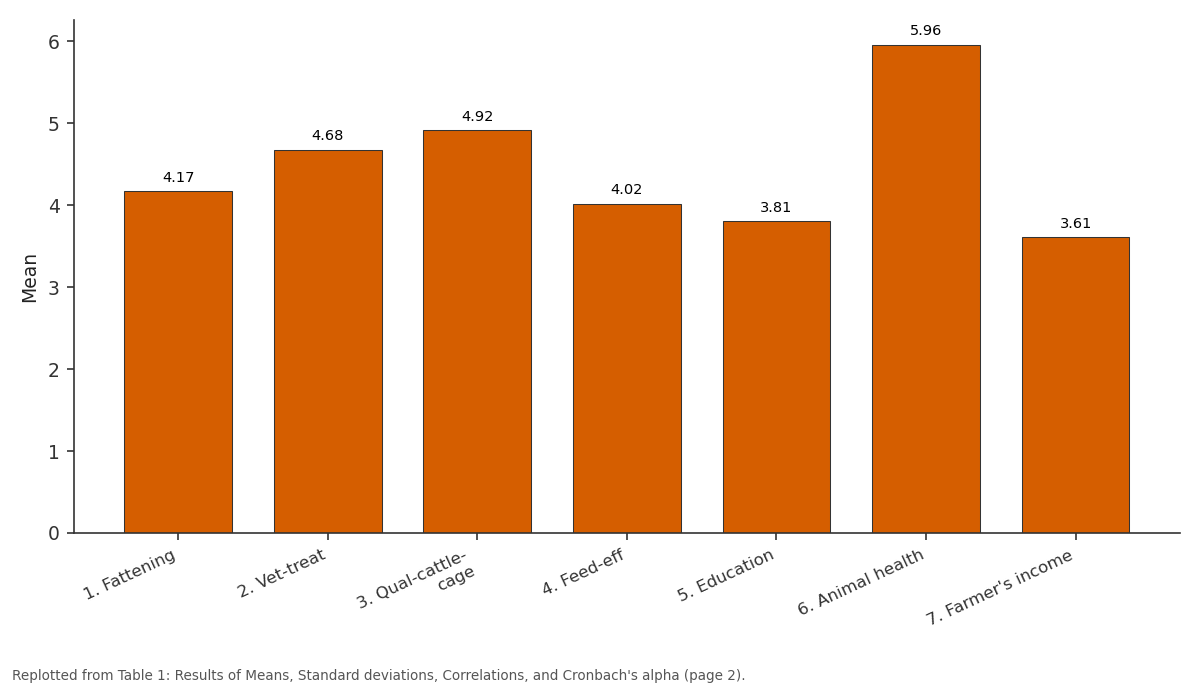
Mean: 1. Fattening vs 2. Vet-treat vs 3. Qual-cattle-cage vs 4. Feed-eff vs 5. Education
Replotted from Table 1 (page 2) of the original paper. Every bar is the paper's own table value.
View source evidence ↗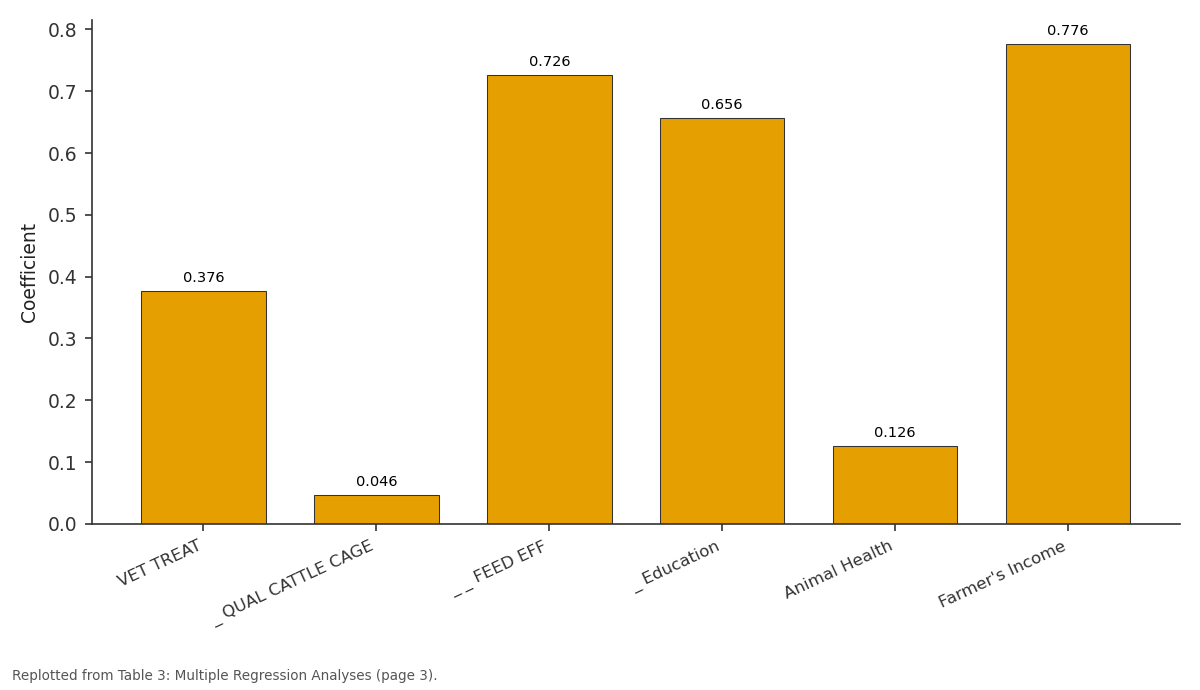
Coefficient: VET TREAT vs _ QUAL CATTLE CAGE vs _ _ FEED EFF vs _ Education vs Animal Health
Replotted from Table 3 (page 3) of the original paper. Every bar is the paper's own table value.
View source evidence ↗Figures & tables
From the original paper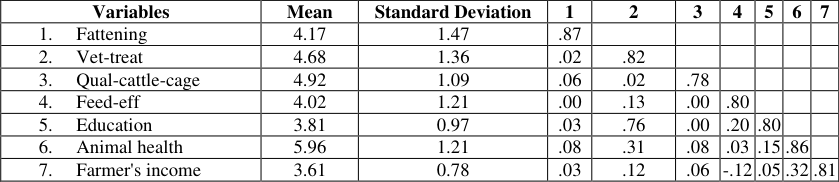 Table 1
 Table 2
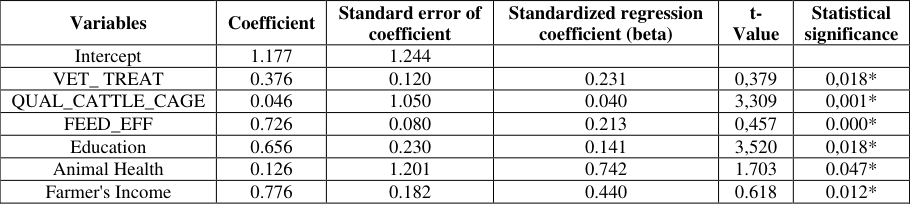 Table 3
Introduction
Consumer perspectives on meat quality are complex (Grunert, 2006; Grunert, et al., 2004; Pethick, et al. 2011; Verbeke, et al. 2010) [6,7,14,18] . A useful framework to understand this concept draws on the economics of information approach to user-oriented quality; this has been applied to meat by many authors (Grunert et al., 2004; Henchion, et al., 2014; Realini et al., 2013) [7,8,15] . Yet quality is subjective and is influenced by historical, social, and cultural contexts. Meat products, especially beef, have been a focus of much of this work (Acebrón and Dopico, 2000, Banovic et al., 2009, Bernués et al., 2003, Grunert et al., 2004) [1,3,5,7] . Historically, meat consumers relied on extrinsic cues (e.g., price, labels) as well as intrinsic cues (e.g., color, marbling) to infer quality. However, some consumers have shifted their reliance to cues from which they can infer credence attributes (Grunert, 2006, Henchion et al., 2014) [6,8] . The quality of Madurese beef products form the basis of consumer demand and trade and contribute significantly to competitiveness with other beef exporters and other protein sources in the livestock markets. Traditionally Madurese has successfully produced a youthful, lean, commodity beef product based on a primarily grain-based feedlot production system. One of the objectives of beef producers is to offer a product that fulfils the requirement of high quality by consumers. The traditional practice of caring and raising cattle on sufficient source of grazing may be the only way to achieve high marbling, a desirable characteristic of quality beef. And genetic variation in quality attributes, among and within breeds, affecting the final quality of beef has been well documented (Marshall, 1999) [12] . Unfortunately, the skill, wisdom of farmers and genetic factors contributing to differences in beef quality have received little attention and support from the stakeholders in Madura. As broadly well-known that the indigenous cattle breeds of Madura constitute an important asset for the present as well as future economic and social development of the country.
Thus, the policy makers and practitioners view that their farm practises need to be upgraded with superior indigenous cattle. Even though it is by and large a seasonal undertaking, traditional backyard cattle fattening is a deep-rooted and widely practiced cattle phenomenon in Madura. Such types of cattle fattening practices which are synchronized with seasonal feed availability are reported in literature (Thomas and Addy, 1977; Thomas-Peterhans, 1982; Beeson, and Perry, 1958) [16,17,4] . Therefore, much needs to be learnt to promote the expansion, improvement, adoption of this type of feeding strategy for a much wider use across the country. This is because longer fattening periods tie up capital, which in turn significantly reduces profit realized from cattle finishing. In response to this concern, study was conducted to document peculiar characteristics of Madura cattle fattening system and to analyse agribusiness performance and feasibility of Madura cattle. The advantages of this research are to give information of Madura cattle agribusiness performance which could use as added value of rural cattle agribusiness development.
Research method
Methodology of research obviously associates with the general mechanism to the research process, which is begun with the theoretical reinforcement for the gathering, exploration and analysis of data. The decision of research methodology is mainly affected by both philosophical assumptions such as, ontology, human nature and epistemology (Johnson & Wichern, 2007) [10] , and the proposed study objectives. In undertaking a piece of research, however, the researcher adopts a middle stance on his philosophical assumptions, and this provides an underpinning of the adoption of mixed methods research. This research strategy is a useful umbrella for producing a better understanding of social phenomena and for a range of issues concerned with practice (Onwuegbuzie, 2002) [9] . The definition of mixed methods, as suggested by Johnson et al., (2007) [10] , is "a kind of study in which a scholar or team of scholars blends quantitative and qualitative methodologies to manufacture the most informative and useful research findings". In this point, it is very important to reemphasize that the adoption of mixed methods strategy is not only driven by the researcher's philosophical assumptions and the gaps in the existing researches and literatures as deliberated before, but also influenced by the practical problems in the field of occupational fraud happening in Indonesia local governments. The technique employed by researcher to collect the needed data from potential respondents is questionnaires. Johnson et al. (2007) [10] , point out that a researcher or team of researchers to obtain a large number of people with lots of data is encouraged to distribute questionnaires. The researcher knows that questionnaires technique are typically not particularly appropriate for exploratory or other studies which demand outsized number of open-ended questions, thus, he conducts in-depth interview. The main purpose of employing questionnaires in this study is to assess and explain the relationships between the proposed variables, in specific cause-and-effect interactions. One of the most important and dominant features in this questionnaires is the usage of the Likert-style rating. Likert scale, according to Johnson et al., (2007) [10] , is "a measure of attitudes designed to allow respondents to rate how strongly they agree or disagree with carefully constructed statements, ranging from very positive to very negative attitudes toward some object". The options are Strongly Disagree (1), Disagree (2), Neutral (3), Agree (4), and Strongly Agree (5). After those questionnaires were returned, we conducted indepth interview as the primary approach to gather the needed data, with semi-structured questions, as it more suitable for ensuring "cross-case comparability" that unstructured one. Then we adopts triangulation approach as validity checking. The strategy involved in this kind of triangulation is quite nearly dragged by its objective-examining the validity of descriptive inferences and by the means for conducting this matching data sources carrying distinctive intimidations to validity. The returned questionnaire data will be used to check information gained on the basis of semi-structured interview in order for the researcher to assess the data produced by different participants in terms of how well they represent what went on. Indeed, obtaining further information about the research issues, through drawing on multiple sources of data, could lead the researcher to alter the category into that he originally placed it, and it could serve a validation and provide the most desirable kinds of complementary information in this study. Therefore, on this interpretation, triangulation approach comes to be treated as a feature of research design that can be encompassed in checklists considered to appraise the quality of this study. The respondents of this study is people who have fully experienced in caring for and raising sonok cattles. We distributed 150 questionnaires and we had 7 people who wanted to be interviewed for this study. They provided guide for raising cattle that is going to be very helpful for cattle business operation. As we know, it requires a lot of care and management for getting maximum results, at lease, keeping cattle healthy and making more profit from it. In the context of coding and interpreting, this study refers to content analysis. It is because valuable. The researcher reads and conducts line-by-line analysis, on the basis topic, to identify themes as of particular interest. We seek not merely to interpret them but to discover the meanings of the structures and convention of social discourse. In developing the themes we do more than name different conditions; more fundamentally, we carry out distinctions and interconnections between related phenomena.
Research results
Research results
Descriptive statistics and correlations
The primary aim of descriptive statistics is merely to convey and describe large sets of quantitative characteristics. It is used to demonstrate how to variables are related. [10] that "in normal distribution, significant value must be higher than 0.05 (Sig.>0.05)". The result of normality test can be strengthened by descriptive statistics above (Table 1) that show those variables no multicollinearity, by meaning the sample distribution is normally shaped and distributed.
| Variables | Mean | Standard Deviation | 1 | 2 | 3 | 4 | 5 | 6 | 7 |
|---|---|---|---|---|---|---|---|---|---|
| 1. Fattening | 4.17 | 1.47 | .87 | ||||||
| 2. Vet-treat | 4.68 | 1.36 | .02 | .82 | |||||
| 3. Qual-cattle-cage | 4.92 | 1.09 | .06 | .02 | .78 | ||||
| 4. Feed-eff | 4.02 | 1.21 | .00 | .13 | .00 | .80 | |||
| 5. Education | 3.81 | 0.97 | .03 | .76 | .00 | .20 | .80 | ||
| 6. Animal health | 5.96 | 1.21 | .08 | .31 | .08 | .03 | .15 | .86 | |
| 7. Farmer's income | 3.61 | 0.78 | .03 | .12 | .06 | -.12 | .05 | .32 | .81 |
Table text extracted from the original PDF; superscript letters are shown inline. The original table image is below.
View original table image
Multiple Regression Analyses
The results shown in Table 2, reveal an overall adjusted R2 of 0.82, showing that the independent variables employed in this study, veterinary treatment, Quality of Cattle cage, feed efficiency, Education, Animal Health, Farmers' incomes, account for 82% of the variation in the dependent variable, cow fattening. This relatively high-effect size shows that the constructs hypothesized in the model are good predictors of cow fattening. Based on the analysis, the beta coefficients for those predictors were significant at conventional levels.
| — | Unstandardized Residual | Keterangan |
|---|---|---|
| Kolmogorov-Smimov Z | 0,912 | |
| Asymp. Sig. (2-tailed) | 0,377 | Distributed Normally |
Table text extracted from the original PDF; superscript letters are shown inline. The original table image is below.
View original table image
As shown in Table 2, veterinary treatment is positively and significantly related to the cow fattening (coefficient = 0.231, p = 0,018). Quality of Cattle cage is positively and significantly related to the cow fattening (coefficient = 0.040, p = 0,001). Feed efficiency is positively and significantly related to the cow fattening (coefficient = 0.213, p = 0,000). Education efficiency is positively and significantly related to the cow fattening (coefficient = 0.141, p = 0,018). Animal Health is positively and significantly related to the cow fattening (coefficient = 0.742, p = 0.047). Then farmers' incomes is positively and significantly related to the cow fattening (coefficient = 0.440, p = 0.012). Thus, this analysis revealed that, of the six predictors of the cow fattening have strong influence on animals for being fattened. It appears most reasonable to consider the proposed aspects here that certainly have straight and incidental positive properties on the cow fattening, including improved health and performance of the animals and lower environmental impact of the farm. According to the statistical results, in the following discussion this study tends to discuss those variables with a combination of qualitative data.
Local Wisdom of Madura Societies and Cattle Fattening
Madura is not only known as 'Salt Island', but also dubbed the 'Cow Island'. This is because almost all farming communities in rural areas can be sure to raise cattle. The passion of the Madurese people raising cattle is not only due to an economic benefit, but the hobby of the Madurese people is also able to create entrenched traditions and culture. Culture of cattle, for example, sonok cattle (cattle designed for a display with song and dance) and taccek cattle (cattle displays) is a portrait of people's love for cattle. Such actions, according to the East Java Central Bureau of Statistics, contribute to the cattle population in four districts on Madura Island that continues to grow every year. Importantly, they could produce good quality of cattle. In this paper, we will focus on sonok cattle. It is because one of the traditional forms of Madura Island art that emphasises on the beauty, harmony and skills of female madura cattle. The purpose of this art is to preserve folk art and obtain Madura cow seeds that excel in terms of extreme forms and skills to follow the trainer's orders in showing off the beauty of body shape. It is a parent cow that is maintained with special management with the aim of being contested with exterior appearance, temperament and behaviour during the competition. It is a mirror of one's success in raising cows. Sonok cattle can be used as a means to elevate social status. Maintenance of sonok cattle can be used as an effort to improve the genetic quality of Madura. In addition, sonok cattle as well as culture for the Madurese community is also one of the pillars supporting the love of the local community for their cows. Having sonok cattle can raise a high social dignity. As a result, someone is not reluctant to mobilise and sacrifice his material and energy to get good quality of sonok cattle. Culture of sonok cattle has the value of alienating the community / breeders from the elements of persecution of animals, as well as nurturing from extinction and becoming an inspiration to respect animals in Madura and can give birth to a wealth of cultural traditions. In the sonok cattle contest, the overall body shape, beauty of the pair of cows, beauty of dress, beauty of feather and skin color, beauty and agility of walking cattle accompanied by gamelan and training of the cow to stop with the front foot stepping on the finish within minutes gate are the main priority of being the winner. However, before being able to perform at the sonok cattle contest, the cows have been trained since the age of 3 years with the best special treatment and nutritional food. Every week the cows are routinely given herbs that have been mixed with around 15 eggs. It can be imagined that besides being beautiful, dazzling a pair of sonok cattle is also strong. In addition there are other special treatments that the cows getthey are bathed with shampoo and soap. No half-heartedly the cow owners also often bring veterinarians every 3 months to check the health of their cows. The price of cows participating in the sonok cattle contest and successfully showing beauty and harmony will be more expensive than ordinary cows because many people are looking for female cows that can later give birth to the best and superior cows. Since this contest aims to select cows with superior quality, the implementation time is more flexible, it can be once every two months or three months. But at least, the sonok cattle contest is held twice a year. From healthy, superior, and of course "beautiful" cows, the best cows will be born. Most of the cows included in the cattle tournaments "Karapan Sapi" were born from cattle that were included in the sonok cattle contest. So the event for the sonok cattle contest was not only just a place for gathering among cattle bosses or a place to choose superior cow-breeders, but the implementation of the sonok cattle contest more broadly was also a place to raise the awareness of Madurese people, especially cattle bosses, to preserve Madurese endemic cattle with superior quality, so the existence of Madura cattle is known for its sustainable quality.
Factors must be carefully paid attention for beef cattle quality
In this section, we have to clarify in early that the sonok cattle contest does not directly related to the beef cattle quality, as marked in the public. But we would like to analyse how cow breeders, especially cows designed in the sonok cattle contest, look after them until having good body. In this section, we will discuss it from several perspective as follow.
Home management for cattle
Cages are a vital tool for breeders for the survival of cows, so that with cages, cows can avoid the dangers of other animals, avoid extreme weather or from irresponsible humans, besides that with cages we can more easily control the cow like provide feed, remove waste and finally we can monitor whether the cow is healthy or in a state of illness. In other words, the function of the cage for cattle is the same as the function of a home for humans, namely as a place to live and rest, shelter from hot weather and rain. The more ideal a cage is, the more comfortable the cows live in it. In addition, the ideal cage also makes our cows healthy and protected from various diseases. As a result, the quality of meat will be good. The location of the enclosure must be close to a water source, not to endanger livestock and not close to residential areas. The location of the livestock business is not an area that is included in the expansion area of the city and is also a comfortable and feasible area for cattle farming. Areassunny areas with full sun, high roof enclosures should be between 3.6 -4.2 m. This height is enough to limit the diffusion of solar radiation received by cows in the cage. Making ventilation for the tropics is as good as using openwall ventilation by placing the cage on a high plateau so that the vent gets a gust of wind which will reduce the heat of the cow's body temperature. Air circulation must be smooth so that the air condition can always be clean, so ventilation of a good enclosure for dairy cows in the tropics is quite natural ventilation, which is very close to open or semi-open wall equipment. Perfect ventilation is meant to facilitate the change of air in a dirty cage with clean air from the outside, so if ventilation is perfect, the enclosure will not be stuffy, dirty, dusty, smelly, and hot. So planning the construction of a cage also needs to pay attention to local location and climate factors, building materials and cage construction. The area of the building and arrangement of supporting facilities in the enclosure area, such as offices, isolation rooms and warehouses must be carefully calculated. The construction of the enclosure must be strong, easy to clean, have good air circulation, not humid and have a reservoir of dirt and drainage channels. Construction of cages must be able to withstand impact loads and a strong push from livestock. Importantly it should safeguard livestock security from theft. Arranging cages with their equipment should be able to provide comfort to livestock and facilitate work for officers in providing feed and drink, sewage disposal and handling health of livestock. In designing beef cattle cage construction must be based on local area agroecosystems, maintenance goals, and physiological status of livestock. Ventilation arrangements are very important to observe. The wall of the cage can be opened and closed; it should be opened during the day and closed at night. Cages in the lowlands are built higher than cages in the highlands or mountains. Cage building that is made high will have an effect on the smooth circulation of air in it. In highland areas, cage buildings are made more closed, so that the temperature inside the cage is more stable and warm. The type and shape of the cage are differentiated based on physiological status and distinguished maintenance patterns, namely breeding cages, fattening, child cages / breastfeeding and male cages.
Disease Control
Disease is a threat that farmers need to watch out for, although indirect disease attacks kill livestock, but can cause prolonged health problems, inhibit growth and reduce income. Preventive measures to maintain the health of cattle include: maintaining the cleanliness of cages and equipment, including bathing cows. Diseased cows are separated from healthy cows and immediate treatment. Try to keep the cage floor dry, so there is not much dirt that accumulates in the cage. To maintain cow health, vaccinations are regularly carried out. Giving immunity with vaccines is the best form of protection for livestock. The appearance of symptoms of the disease should be immediately reported to government officials in the Livestock sector to find out the type of disease, whether it is contagious or not. Fast action is very important so that the type of disease can be immediately identified and eradicate the disease. Animal health is an absolute requirement for optimum productivity. In cattle farming without good livestock health status, maximum productivity will not be achieved. Poor health status will result in minimum daily weight gain and susceptibility to disease, livestock and calf deaths, impaired reproductive status, low reproducibility and productivity of these livestock. Reproductive health is absolutely necessary for the successful life of reproductive livestock. Reproductive health management includes management of specific and nonspecific reproductive disease prevention and control, as well as reproductive function disorders. The survival of healthy beef with good growth can be maintained with good care. The success of the previous maintenance phase is the next base of maintenance so that the maintenance business in general is always adjusted to the life phase of the cow concerned, starting from calves, young cattle, and finishing cows. Intensive livestock maintenance here is a system of raising cattle with a continuous method of feeding with a cut and carry feeding system. This system is carried out because land for extensive maintenance has begun to decrease. The advantage of this system is that the use of follow-up feed ingredients from several industries is more intensive than the extensive system. Animal health management can be interpreted as a process of planning, organizing, leadership and controlling production factors through optimizing its resources so that livestock productivity can be maximized, livestock health can be optimized and the health of livestock products have health quality in accordance with the desired standards. Animal health management must go through a process that is a systematic way to carry out a job. For certain activities the activities processes must be based on the principles of production efficiency and economics as well as the effective use of all facilities and infrastructure with the norms commonly applicable in animal health and welfare. To achieve the desired goals, the interactive nature of the management process is needed. Animal disease control is an effort to reduce the interaction between the hospes agent (the cause of the disease) to the level where only a few animals are infected, because the number of disease agents has been reduced or turned off. One way to control disease is to make an effort to prevent diseases including vaccination. The purpose of vaccination is to provide immunity (antibodies) in livestock so that they can fight antigens or microorganisms that cause disease. Vaccination is the administration of antigens to stimulate the immune system to produce special antibodies to diseases caused by viruses, bacteria and protozoa.
Breeding
From the social aspect, sonok cattle brought the social relations of the Madurese closer together, while from the cultural aspect making sonok cattle as a result of the creation of a community that became pride and as one of the tourism assets. Judging from the technical aspects, a technology was born to breed quality cows and maintain the preservation and purity of Madurese cattle or species. Such the ranching tradition in Madura is long standing, enduring across many generations. Livestock ownership and ranch life are powerful factors that bind families and societies, continuing a heritage that began with dutch colonization. Maintenance of sonok cows has many uniqueness. Cows are bathed three times a day; morning and evening with raw water and in the evening use warm water. Drinking water is only given once a day around 3-4 liters per head. Feeding is limited so as not to overdo it, this condition is balanced with various supplements. Various natural ingredients that are usually given include: a mixture of garlic, ginger and vinegar in order to reduce excessive levels of fat in the body of the cow. Galangal to reduce the speed of blood flow that flows due to injury when absorbed. Besides that, other ingredients were also provided such as: old coconut, brown sugar, ginger and coffee. Giving the above ingredients every 3 days mixed with chicken eggs. During summer, they are moved throughout the allotment and at home, there is cutting, baling, and bringing in the hay. What they did is assumed that it could enhance the quality of beef quality. Once the reviews to the beef were identified and separated, the full texts were analysed in order to determine its relevance and quality. Quality was assessed according the key sources used, the clarity and comprehensive exposition of their argument and the novelty. From a marketing perspective extrinsic quality cues are very interesting because they can be manipulated without the need to modify the physical product. However, it does not mean that establishing a basis for these cues is easier than physical product development. Brand name is known as a very important quality cue, which has been demonstrated in multiple labelling experiments (e.g. Allison & Uhl, 1964) [2] . But where the experimental manipulation of branding can be as simple as providing the brand name or not, building the brand image, which causes possible shifts in quality perception, may be a lengthy and costly process of many years. In this point, however, beef color and marbling mostly define the preferences of beef buyers. Meat colour, including fat colour, is usually associated with freshness and quality, but it has also been associated with tenderness (Wulf, et al., 1997) [19] . Furthermore, colour could be the main single factor used by consumers to determine whether they will purchase a meat cut (Kropf, 1980) [11] .
Conclusion
Cattle fattening is important topic that attract academics, practitioners and governments. New cattle fattening techniques are much discussion over whether it was International Journal of Veterinary Sciences and Animal Husbandry preferable to apply for dairy breeds. At this stage in the expectation that the study will offer a basis for stimulating subsequent private participation in cattle production, this study is a pioneering phase of the introduction of traditional cattle husbandry that plays a major role in sustainable food systems. This study is unique and looks a pillar of the global cattle husbandry system from different angles. With controlled environmentally sustainable cattle husbandry techniques, farmer are capable of providing high-value added products for domestic and foreign markets with more reliable quality livestock products. Daily work on livestock farming can largely be controlled by traditional understanding that enables the ongoing control of production, animal health, and welfare. Factors such as veterinary treatment, quality of cattle cage, feed efficiency, education, animal health, and farmers' incomes empirically documented are good predictors of cow fattening. Those factors are is well extracted manually from traditional treatments conducted by traditional farmers who have considerable experienced to breed high quality of cattle fattening in Madura Island. This study also identifies that preserves of traditional culture in Madura provides direct relationship to the high-value added products for livestock. Even though the treatment is traditional but it is effective alternatives for cattle fattening. It is hoped that some of the results of this study may be applicable to other cattle husbandry.
Acknowledgement
AcknowledgementsThe paper has benefited from the comments and suggestions of Ach Maulidi from The University of Edinburgh, United Kingdom. This study is developed from Author's doctoral thesis in the University of Brawijaya, Indonesia.
Figures and tables from the paper
References
18 in the original paper- Acebron LB, Dopico DC. The importance of intrinsic and extrinsic cues to expected and experienced quality: An empirical application for beef. Food Quality and Preference. 2000; 11:229-238.
- Allison RI, Uhl KP. Influence of beer brand identification on taste perception. Journal of Marketing Research. 1964; 1:36-39.
- Banovic M, Grunert KG, Barreira MM, Fontes MA. Beef quality perception at the point of purchase: A study from Portugal. Food Quality and Preference. 2009; 20: 335342.
- Beeson WM, Perry TW. The Comparative Feeding Value of High Moisture Corn and Low Moisture Corn with Different Feed Additives for Fattening Beef Cattle, Journal of Animal Science. 1958; 17(2):368-373.
- Bernués A, Olaizola A, Corcoran K. Extrinsic attributes of red meat as indicators of quality in Europe: An application for market segmentation. Food Quality and Preference. 2003; 14(4):265-276.
- Grunert KG. Future trends and consumer lifestyles with regard to meat consumption. Meat Science. 2006; 74(1):149:160.
- Grunert KG, Bredahl L, Brunso K. Consumer perception of meat quality and implications for product development in the meat sector-A review. Meat Science. 2004; 66(2):259-272.
- Henchion M, McCarthy M, Resconi V, Troy D. Meat consumption: Trends and quality matters. Meat Science. 2014; 98(2014):561-568.
- Johnson B, Onwuegbuzie A, Turner L. Toward a definition of mixed methods research. Journal of Mixed Methods Research. 2007; 1(2):112-133.
- Johnson R, Wichern D. Applied multivariate statistical analysis, New Jersey: Pearson prentice hall: Upper Saddle River, 2007.
- Kropf DH. Effects of retail display conditions on meat color. In Proceedings, American Meat Science Association Reciprocal Meat Conference, Champaign, 1980, 15-32.
- Marshall DM. Genetics of meat quality. In R. Fries, & A. Ruvinsky (Eds.), The genetics of cattle Oxon: CABI Publishing, 1999, 605-636.
- Onwuegbuzie A. Why can't we all get along? Towards a framework for unifying research paradigms. Education. 2002; 122(3):518-530.
- Pethick DW, Ball AJ, Banks RG, Hocquette JF. Current and future issues facing red meat quality in a competitive market and how to manage continuous improvement. Animal Production Science. 2011; 51(1):13-18.
- Realini CE, Font i Furnols M, Sanudo C, Montossi F, Oliver MA, Guerrero L et al. Spanish, French and British consumers' acceptability of Uruguayan beef, and consumers' beef choice associated with country of origin, finishing diet and meat price. Meat Science. 2013; 95(2013):14-21.
- Thomas B, Addy D. Intensive fattening of beef cattle by stall feeding on the Lilongwe plain, Malawi, Tropical Animal Health and Production. 1977; 9(4):197-202.
- Thomas-Peterhans R. The Stratification of Livestock Production and Marketing in the Zinder Department of Niger. Center for Research on Economic Development (CRED), University of Michigan, 1982.
- Wulf DM, O'Connor SF, Tatum JD, Smith GC. Using objective measures of muscle color to predict beef Longissimus tenderness. Journal of Animal Science. 1997; 75:684-692.
Cited by 3
From OpenAlex, OpenCitations and reference lists read by Scinovex
- Faktor Mempengaruhi Peningkatan Populasi Sapi Madura di Sentra Sapi Sonok Kabupaten Pamekasan ↗
Selvia Nurlaila, Moh Zali · Jurnal Ilmu dan Teknologi Peternakan Tropis · 2020
ABSTRAKPenelitian bertujuan untuk mengetahui hubungan karakteristik peternak dan potensi alam terhadap peningkatan populasi sapi madura di sentra sapi sonok. Metode yang digunakan adalah metode survei dengan jumlah sampel 100 peternak di sentra sapi sonok. Analisis data menggunakan analisa regresi linear berganda. Hasil penelitian menunjukkan hubungan faktor karakteristik peternak yakni variabel umur peternak, tingkat pendidikan, jumlah tanggungan keluarga, lama beternak, tujuan…
❝ 14PDF - Analysis of Sonok Cattle Breeders and Livestock Business Activities ↗
Moh Zali, Nur Ihsan, Bambang Ali NUGROHO, Kuswati Kuswati, Umi Wisaptiningsih Suwandi, Riszqina Riszqina et al. · Advances in Animal and Veterinary Sciences · 2022
This study is to examine the effect of the demography of cattle breeders on livestock business activities.The demographic constructs discussed include age, education, long-time breeding experience, family dependents, and the number of livestock.Our data were drawn from local breeders in Pamekasan, Indonesia, known as a centre of Sonok cattle breeders.To examine the interaction effects, we used an IBM SPSS Statistics…
❝ 0PDF - Characteristics and Preferences of Pure Milk and UHT Milk Consumers in Pamekasan District, Indonesia ↗
Joko Purdiyanto, Riszqina ., Selvia Nurlaila · The International Journal of Science & Technoledge · 2020
The results showed that in terms of the characteristics of consumer interest which consisted of analysis of consumer interest, pure cow's milk and UHT milk, the average age was 17-25 years (60%), and had a bachelor degree (40%) and work as a civil servant. The preference of pure milk and UHT milk consumers in consuming milk and not consuming it…
❝ 0PDF