
Research article · 2019 · Full text
International Journal of Veterinary Sciences and Animal HusbandryA complete review on propylene glycol for dairy cows
Volume 4(3) · Pages 09–16
Research areasRuminant Nutrition and Digestive Physiology
Abstract
Author-writtenThe use of propylene glycol in ration becoming a trend in recent years. This review unfolds the idea of metabolism in the rumen, intestine and liver. It is converted in to the propionic acid which is most glucogenic volatile fatty acid. Then it decreases the ketone bodies in the body by the influence of increased insulin level in the blood. The ketone bodies are the commonly found in increased concentration than normal, when occurrence of ketosis takes place. It can be used in the incidences of ketosis. In general, propylene glycol does not affect feed intake but due to its less palatability some precautions must be followed. It helps in milk production due to glucose enhancing effect, Also the propylene glycol have role in productive and reproductive traits of the cow if supplemented in the ration. Propylene glycol can be toxic when fed in higher dose than the recommendation.
Summary
Source-checkedPlain-language reading of the full paper, prepared with AI and checked against the text. Each point links to the authors' own words.
Why it matters
- Dairy cows face a massive increase in energy requirements for milk production during the first two months of lactation. View evidence ↗
- Excessive mobilization of body fat to meet energy needs can disrupt metabolism and lead to ketosis. View evidence ↗
- Clinical ketosis is economically damaging due to higher treatment costs, lower milk yields, and reduced reproductive efficiency. View evidence ↗
The question
- The review aims to evaluate how propylene glycol is metabolized and whether it can reduce the risk of ketosis by preventing excessive fat mobilization. View evidence ↗
What they did
- Studies on rumen metabolism used infused doses of propylene glycol ranging from 100 to 910 g. View evidence ↗
- Research on blood metabolites in heifers utilized daily doses of propylene glycol ranging from 0 to 919 g. View evidence ↗
What they found
- Propylene glycol supplementation increases the proportion of propionate in rumen volatile fatty acids, indicating it is metabolized within the rumen. View evidence ↗
- Dosages of 307 to 1036 g of propylene glycol can increase insulin concentrations by 200–400% within 30 minutes. View evidence ↗
- Daily administration of 1036 g of propylene glycol starting 10 days before calving reduced liver triacylglycerol content by 66% on day 1 and 58% on day 21 postpartum. View evidence ↗
- Doses of 178–495 g of propylene glycol per day were found to lower the concentration of acetic acid in the blood plasma of early lactating cows. View evidence ↗
- Feeding 495 g of propylene glycol per day significantly increased milk lactose content by 0.2 percentage units, whereas doses of 178–360 g had no effect. View evidence ↗
- Cows fed propylene glycol showed improved ovarian function, with first ovulation occurring at 32.3 days compared to 44.5 days in controls, and a longer first luteal phase (13.1 vs 7.3 days). View evidence ↗
- The median toxic dose (TD50) for cows is 2.6 g/kg body weight, which equals 1.5 kg for a 600 kg cow. View evidence ↗
What it means
- The authors conclude that propylene glycol is strongly indicated as a helpful tool for lowering the incidence of ketosis in cattle. View evidence ↗
- The authors state that further studies with larger animal populations are required to confirm the effects of propylene glycol on reproduction. View evidence ↗
Visual summary
1 visualsIllustrations explain the paper; they do not show study data.
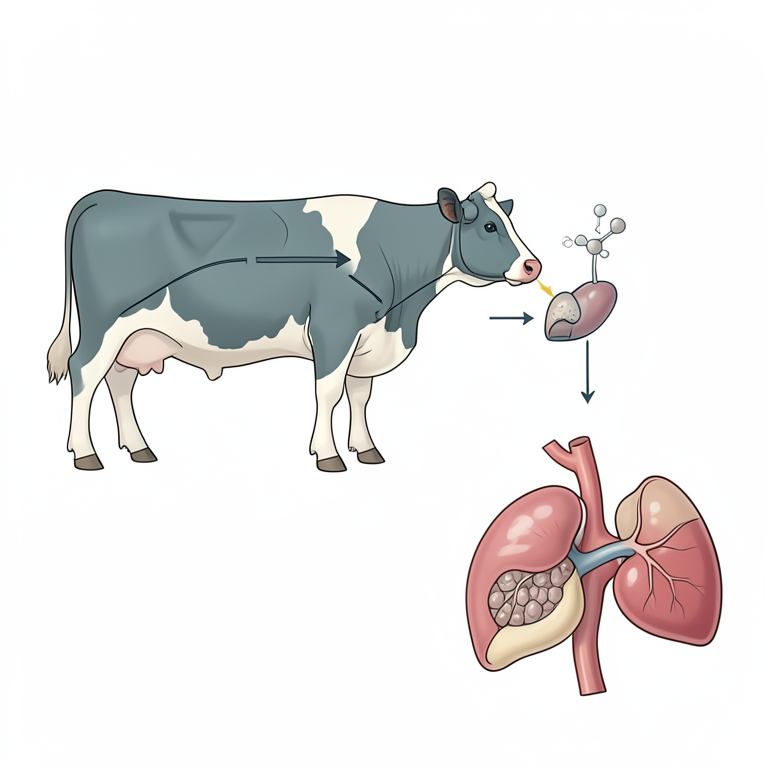
Metabolic Pathway of Propylene Glycol
AI-generated conceptual illustration (dairy cows). It explains the idea and does not show study data.
View source evidence ↗Figures & tables
From the original paper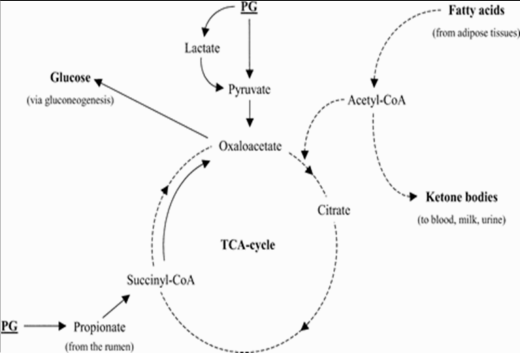 Figure 1
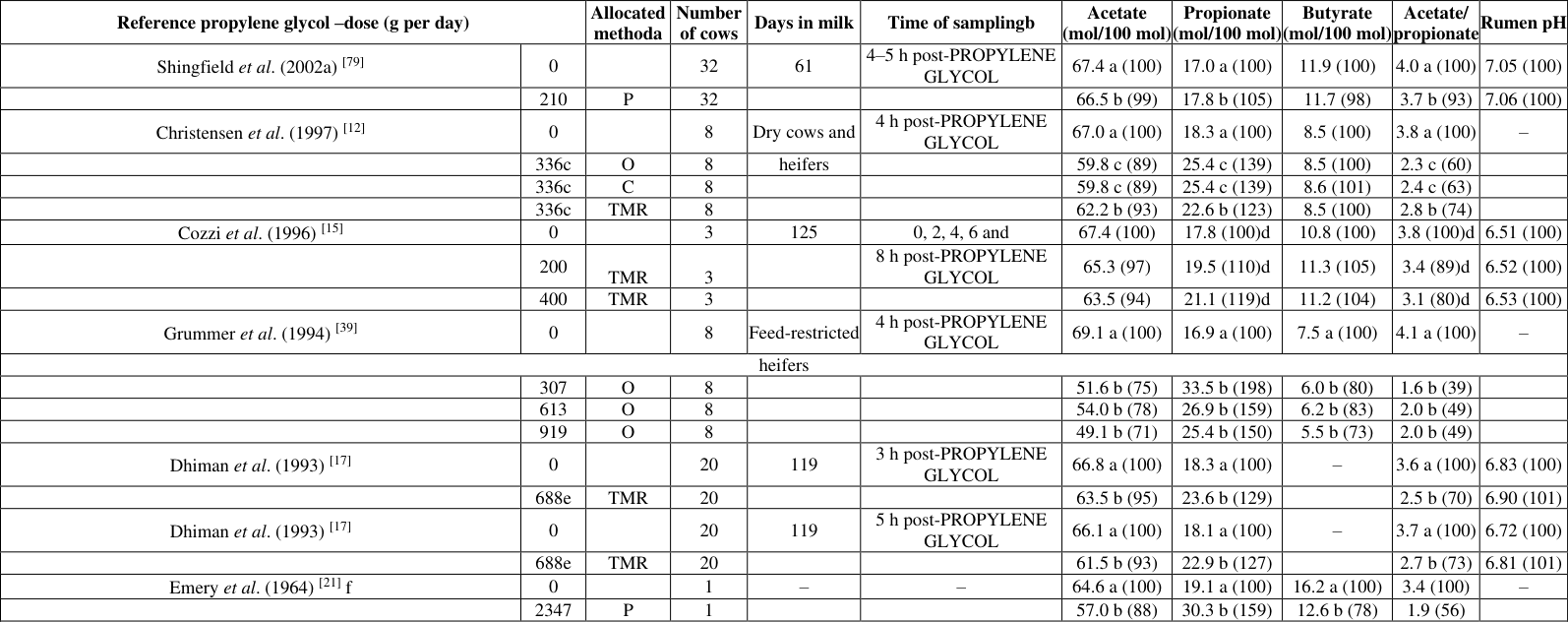 Table 1
Introduction
In recent years, the interest in using propylene glycol as a feed additive has grown among dairy livestock business. This is due to an increased supply of products from feed companies, which by virtue of their propylene glycol content, claim to increase milk production, prevent ketosis and improve reproduction. This review describes how propylene glycolis metabolised in the rumen and liver. It also gives idea about blood metabolites and hormones, liver composition, feed intake and milk production, in order to evaluate whether propylene glycol is likely to prevent excessive fat mobilisation and imbalances in carbohydrate and fat metabolism, and reduce the risk of ketosis. From transition onward upto two months of lactation, the dairy cow must accommodate a tremendous increase in energy demand by the mammary gland for milk production. This is done partly by increasing feed intake and partly by mobilisation of fat from adipose tissue. However, excessive fat mobilisation can induce an imbalance in bodily carbohydrate and fat metabolism, which may result in ketosis (Herdt and Emery, 1992; Goff and Horst, 1997) et al [44,35] . Ketosis is a metabolic condition that primarily occurs 2-7 weeks after calving (Halse, 1978; Gillund et al., 2001) [41,42,33] with diagnosis occurring at a median of 24-28 days postpartum (Østergaard and Gröhn, 1999; Fleischer et al., 2001) [66,27] . As a proportion, the lactational incidence rate of clinical ketosis has been reported to be between 0.011 and 0.092 (Erb and Gröhn, 1988; Rasmussen et al., 1999; Østergaard and Gröhn, 2000) [24, 73 67] while the prevalence of subclinical ketosis, defined by a threshold level of ketone bodies in blood or milk, or determined by semi-quantitative tests, varies between 0.12 and 0.34 (Kauppinen, 1983; Dohoo and Martin, 1984; Francos et al., 1997; Geishauser et al., 2000) [54,18,31,32] . Clinical ketosis causes economic losses to the dairy farmer due to treatment costs, decreased milk production, impaired reproduction efficiency and increased involuntary culling (Gustafsson and Emanuelson, 1996; Fourichon et al., 1999; Rajala-Schultz and Gröhn, 1999; Østergaard and Gröhn, 1999; Reist et al., 2000) [40,66,30,74] . It is difficult to estimate the economic loss of subclinical ketosis because it depends on the threshold values used to define subclinical ketosis (Gustafsson and Emanuelson, 1996) [40] . Clinical and subclinical ketosis are both characterized by elevated concentrations of ketone bodies in blood, milk and urine. Both clinical and subclinical ketosis are also associated with increased concentrations of nonesterified fatty acids (NEFA) and decreased levels of glucose in blood (Filar, 1979; Horber et al., 1980; Itoh et al., 1998) [25,47,51] . The ketone bodies, acetoacetate (AcAc), beta-hydroxybutyrate (BHB) and acetone (Ac), where AcAc is the parent ketone body, can be reduced to BHB in an enzymatic reaction or decarboxylated to Ac in a spontaneous non-enzymatic reaction (Bergman, 1971). Clinical and subclinical ketosis have also been associated with elevated fat infiltration in the liver (Gröhn et al., 1983) [37] . Propylene glycol has been used in the treatment of ketosis since the 1950s (Johnson, 1954; Maplesden, 1954) [52, 60] and is still used today (Bahaa et al., 1997; McClanahan et al., 1998) [52,60] . Henceforth the use of propylene glycol is very important in animals.
The metabolism in the rumen
Experiments regarding the metabolism of propylene glycol were done showed that half of the infused propylene glycol (range 100-910 g) disappears from the rumen within 1-2 hours. The portion excluded within 3 hours (Emery et al., 1964, 1967; Clapperton and Czerkawski, 1972) [21,23,14] . Thus, propylene glycol was having its metabolism by absorption, fermentation or direct passage to the intestine and rumen and then in liver. It seems that propylene glycol is completely digestible as very low traces were detected in the faces (Emery et al., 1964, 1967) [21,23] . Thus, the most important ways in which propylene glycol can be cleared is by absorption and fermentation.
Effect on volatile fatty acid
Normally the volatile fatty acids are in a particular ratio in the rumen like 7:3:1 and they become a change in their concentration when the diet gets changed. Propylene glycol has a significant effect on rumen fermentation pattern. It is very difficult to relate rumen VFA responses to dietary components used in the different studies, like propylene glycol as suggested by Czerkawski and Breckenridge (1973) [16] but when the in vitro, analysis did the direct conversion of the propylene glycol is in lactate was observed while when it ferment it was metabolized to propionate in liver Emery et al., (1967) [23] . Propylene glycol was predominantly absorbed from the rumen without alteration. An in vitro trial with rumen fluid from sheep suggests that feeds with a high forage/concentrate ratio result in less conversion of propylene glycol to propionate compared with feeds with a low forage/concentrate ratio (Czerkawski and Breckenridge, 1972, 1973) [16] . Kristensen et al. (2002) [57] suggested that under normal rumen conditions propylene glycol is predominantly metabolised in the rumen and not in the liver. both cows and heifers receiving propylene glycol are known to have a significantly higher proportion of propionate in rumen volatile fatty acids (VFA) that is indicative of substantial intraruminal metabolisation of propylene glycol. Like molassed sugar beet pulp, in particular, induced the conversion of propylene glycol to propionate, probably because the highly digestible fibre in this feed stimulated the growth of certain microbes with the ability to rapidly ferment propylene glycol to propionate (Czerkawski and Breckenridge, 1973) [16] . Christensen et al. (1997) [12] reported that propylene glycol administered as an oral drench or mixed with the concentrate gave a more pronounced effect on the acetate/propionate ratio than feeding propylene glycol as part of a total mixed ration.
Rumen pH
Propylene glycol was seemed to increase in propionate as seen in the previous discussion, the consequence may be decreased in pH but it was observed that there is no change in significant pH scale of the rumen liquor when fed with 200 to 688 g per day. (Dhiman et al., 1993; Cozzi et al., 1996; Shingfield et al., 2002) [17,15,79] .
The metabolism in the liver
As we have discussed priorly that the direct conversion of the propylene glycol in the rumen is lactate which is the direct substrate in the gluconeogenesis which enters in Krebs cycle and converted into oxaloacetate which directly has a role in propionic acid synthesis in ruminants. While propionic acid is the VFA having a role in energy production and milk yield synthesis in the cow. (Nielsen, 2004) [65] . an experiment with radioactive labelled C14 has indicated that propylene glycol is metabolised to glucose via carboxylation of pyruvate to oxalacetate in dairy cows (Emery et al., 1967) [23] . As already mentioned, Kristensen et al. (2002) [57] reported that a proportion of 0.1 of absorbed propylene glycol was converted to lactate in cows which were infused with 463 g propylene glycol. Huff (1961) [48] has shown that propylene glycol can be converted into lactaldehyde in the liver of rabbits, which can be converted into lactate. Lactate is a common substrate in gluconeogenesis in ruminants and enters via pyruvate, which is converted to oxaloacetate (Fig. 1). Different experiments with other animal species have also shown that propylene glycol is primarily oxidized to lactate and pyruvate (Ruddick, 1972) [76] . Further, propylene glycol that is metabolised to propionate in the rumen can also be converted to glucose via gluconeogenesis in the liver (Fig. 1)
The effect on physiological parameters in relation to ketosis
The effects of propylene glycol on physiological parameters in the blood where propylene glycol has been used prophylactically and as a single component propylene glycol increases glucose and insulin, while NEFA and BHB are decreased, i.e. not in the treatment of ketotic cows and not in a mixture including their feed additives. (Miyoshi et al., 2001) [62]
Effect on Blood
Blood samples were taken and checked for glucose and insulin after supplementation of propylene glycol. It was observed that glucose and insulin were peaked by averagely 30 min post supplementation of propylene glycol Grummer et al. (1994) [39] . Oral administration of propylene glycol indicates that propylene glycol is readily available for the cow and that most of the propylene glycol is relatively quickly absorbed from the rumen and utilised in the liver for gluconeogenesis Studer et al. (1993) [82] Grummer et al.
(1994) [39] Christensen et al. (1997) [12] . The peak, was seen at different dose and at different times especially those for insulin where the concentration increased by 200-400% within 30 min using dosages ranging from 307 to 1036 g (Studer et al., 1993; Grummer et al., 1994; Christensen et al., 1997) [82,12,39] the time of blood sampling in relation to the time of propylene glycol allocation is of great importance with respect to measured glucose and insulin responses. In Some experiments the peak was observed (Grummer et al., 1994; Christensen et al., 1997; Miyoshi et al., 2001) [12,62,39] within the first 3 h after administering propylene glycol, while others (Cozzi et al., 1996; Shingfield et al., 2002a) [15,79] later than the expected time. Consequently, the long interval between blood sampling relative to administration of propylene glycol may explain the minor effects of propylene glycol on insulin observed in these studies (Cozzi et al., 1996; Shingfield et al., 2002) [15,79] showed that the glucose response is rather limited compared with insulin, even in experiments where blood samples were collected shortly after propylene glycol allocation (Christensen et al., 1997; Miyoshi et al., 2001) [62,12] . An explanation for the limited effect of propylene glycol on glucose, although significant in some trials, is probably the large increase in insulin that maintains plasma glucose concentrations (Brockman and Laarveld, 1986) [10] . This is also in accordance with the concentration of insulin peaking before that of glucose (Studer et al., 1993; Grummer et al., 1994) [39,82] . Ruminal conversion of propylene glycol to propionate may also explain the earlier peak in insulin since propionate stimulates pancreatic insulin secretion (Brockman, 1982) [10] . Further, propylene glycol itself or intermediates of propylene glycol metabolism, e.g. lactate and pyruvate, may also stimulate insulin secretion.
Physiological state of the animal
The trials were conducted in early lactation (Sauer et [62,26,29,28,69] , mid and late lactation (Cozzi et al., 1996; Shingfield et al., 2002) [15,79] , heifers (Christensen et al., 1997) [12] in the lactating cow. If the plasma concentration of NEFA is high, so is the possibility of hepatic production of ketone bodies (Heitmann et al., 1987) [43] . Normally NEFA and BHBA get increased after early lactation and if balance feeds not given the concentration gets increased to peak level which can lead to mobilization of body reserve lead to ketosis. Feeding 60-150% more energy than required during the last 8 weeks before calving resulted in fatter cows at calving and higher levels of plasma NEFA in early lactation compared to cows fed to requirements (Nachtomi et al., 1986; Rukkwamsuk et al., 1998; Kruip et al., 1999) [63,77,58] . It is therefore likely that the glucogenic effect of propylene glycol will reduce plasma NEFA, especially in cows that are fat at calving. It was observed that the concentration of NEFA and BHBA becomes decreased with supplementation of propylene glycol. Also, it was seen that insulin and glucose concentration was seemed to be elevated Grummer et al. (1994) [39] Cozzi et al. (1996) [15] and Shingfield et al. (2002) [79] .
Dose
On the basis of Physiological state and the articles regarding comparison of the dose of propylene glycol can be studied Grummer et al. (1994) [39] stated the direct effect of the propylene glycol dose (ranging from 0 to 919 g per heifer per day) on the glucose on plasma glucose, insulin, NEFA and BHB levels. Sauer et al. (1973) [26] determined the effect of propylene glycol -dose in the range of 0-495 g per day on NEFA and BHB. This could be explained by due to differences in the physiological state of the animals between trials and possibly Cozzi et al. (1996) [15] did not find any significant effect of propylene glycol -dose in the range of 0-400 g per day on glucose, insulin and NEFA also less dose range used by Cozzi et al. (1996) [15] compared to Sauer et al.
(1973) [26] and Grummer et al. (1994) [39] . Most significant studies are given above in a tabular form.
The effect on liver
It was showed that supplementation of the propylene glycol decreases the triacylglycerol (TG) content by the Administration of 1036 g propylene glycol daily from approximately 10 days before calving by 66 and 58% on days 1 and 21 postpartum, respectively (Studer et al., 1993) [82] . The similar results were seen by (Pickett et al. (2003) [69] he gave 518 propylene glycol per day orally for the first 3 days after calving and found a decrease in TG-content by 44% on day 7 postpartum compared to control cows. While some of the results were contrasted to this fact, propylene glycol supplementation of dry cows, fed to requirements, had no effect on liver TG (Bremmer et al., 2000) that might be with some other results. The reducing effect of propylene glycol on liver TG is in accordance with propylene glycol decreasing plasma NEFA around calving, which subsequently causes lower fat accumulation in the liver (Grummer, 1993; Drackley et al., 2001) [38] . The effect of propylene glycol on the risk of ketosis In Table 1, only plasma BHB was used to evaluate the effect of propylene glycol on ketone bodies. However, quite a few investigations have used other ketone bodies, i.e. Ac and AcAc, to evaluate the effect of propylene glycol. Sauer et al.
| Reference propylene glycol –dose (g per day) | — | Allocated methoda | Number of cows | Days in milk | Time of samplingb | Acetate (mol/100 mol) | Propionate (mol/100 mol) | Butyrate (mol/100 mol) | Acetate/ propionate | Rumen pH |
|---|---|---|---|---|---|---|---|---|---|---|
| Shingfield et al. (2002a) [79] | 0 | 32 | 61 | 4–5 h post-PROPYLENE GLYCOL | 67.4 a (100) | 17.0 a (100) | 11.9 (100) | 4.0 a (100) | 7.05 (100) | |
| 210 | P | 32 | 66.5 b (99) | 17.8 b (105) | 11.7 (98) | 3.7 b (93) | 7.06 (100) | |||
| Christensen et al. (1997) [12] | 0 | 8 | Dry cows and | 4 h post-PROPYLENE GLYCOL | 67.0 a (100) | 18.3 a (100) | 8.5 (100) | 3.8 a (100) | – | |
| 336c | O | 8 | heifers | 59.8 c (89) | 25.4 c (139) | 8.5 (100) | 2.3 c (60) | |||
| 336c | C | 8 | 59.8 c (89) | 25.4 c (139) | 8.6 (101) | 2.4 c (63) | ||||
| 336c | TMR | 8 | 62.2 b (93) | 22.6 b (123) | 8.5 (100) | 2.8 b (74) | ||||
| Cozzi et al. (1996) [15] | 0 | 3 | 125 | 0, 2, 4, 6 and | 67.4 (100) | 17.8 (100)d | 10.8 (100) | 3.8 (100)d | 6.51 (100) | |
| 200 | TMR | 3 | 8 h post-PROPYLENE GLYCOL | 65.3 (97) | 19.5 (110)d | 11.3 (105) | 3.4 (89)d | 6.52 (100) | ||
| 400 | TMR | 3 | 63.5 (94) | 21.1 (119)d | 11.2 (104) | 3.1 (80)d | 6.53 (100) | |||
| Grummer et al. (1994) [39] | 0 | 8 | Feed-restricted | 4 h post-PROPYLENE GLYCOL | 69.1 a (100) | 16.9 a (100) | 7.5 a (100) | 4.1 a (100) | – | |
| heifers | ||||||||||
| 307 | O | 8 | 51.6 b (75) | 33.5 b (198) | 6.0 b (80) | 1.6 b (39) | ||||
| 613 | O | 8 | 54.0 b (78) | 26.9 b (159) | 6.2 b (83) | 2.0 b (49) | ||||
| 919 | O | 8 | 49.1 b (71) | 25.4 b (150) | 5.5 b (73) | 2.0 b (49) | ||||
| Dhiman et al. (1993) [17] | 0 | 20 | 119 | 3 h post-PROPYLENE GLYCOL | 66.8 a (100) | 18.3 a (100) | – | 3.6 a (100) | 6.83 (100) | |
| 688e | TMR | 20 | 63.5 b (95) | 23.6 b (129) | 2.5 b (70) | 6.90 (101) | ||||
| Dhiman et al. (1993) [17] | 0 | 20 | 119 | 5 h post-PROPYLENE GLYCOL | 66.1 a (100) | 18.1 a (100) | – | 3.7 a (100) | 6.72 (100) | |
| 688e | TMR | 20 | 61.5 b (93) | 22.9 b (127) | 2.7 b (73) | 6.81 (101) | ||||
| Emery et al. (1964) [21] f | 0 | 1 | – | – | 64.6 a (100) | 19.1 a (100) | 16.2 a (100) | 3.4 (100) | – | |
| 2347 | P | 1 | 57.0 b (88) | 30.3 b (159) | 12.6 b (78) | 1.9 (56) |
Table text extracted from the original PDF; superscript letters are shown inline. The original table image is below.
View original table image
(1973) [26] and Halse and Møller (1978) [41,42] in both these studies it was concluded that Acetic Acid concentration in blood plasma from early lactating cows, was lowered down when propylene glycol -doses were 178-495 g per day. It has also been showed that 350-500 g propylene glycol per day significantly decreases the Acetate content in milk when to cows with a milk concentration (Piatkowski et [21] a,b,c) within column and reference differ significantly (P < 0.05). a P: propylene glycol poured on feed; C: propylene glycol mixed with concentrates; O: propylene glycol administered orally; TMR: propylene glycol mixed with TMR. b Time of rumen sample collection compared to time of propylene glycol -allocation. c Mean dose of all animals, but dose was 2.5 ml/kg of body weight0.75. d Linear effect of propylene glycol (P < 0.10). e Mean dose of all animals, but dose was 5% of individual forage intake. f The same cow served as treatment and control cow, i.e. rumen samples were collected during and after allocation of propylene glycol in this cow.
7. The effect on milk production, feed intake, energy balance, and reproduction Milk yield and milk composition Generally, we consider the milk is composed of fat and solid not fat wherein solid not fat has many more components which is also very much important like protein carbohydrate mainly lactose, minerals and vitamins (FAO,2001). The main component which gets change due to propylene glycol supplementation is lactose. An increase in milk yield could be expected when increasing the energy concentration of the feed ration (Dhiman et al., 1993; Andersen et al., 2002) [17,1] . Which is directly proportional to the lactose content of milk. Propylene glycol is an additive with a high energy content of 23.7 MJ gross energy/kg DM (Miyoshi et al., 2001) [62] . When early lactation cows were fed 495 g of propylene glycol per day. Milk lactose content increased significantly by 0.2 percentage units but the dosage of 178-360 g per day had no effect on milk lactose percentage (Fisher et al., 1973) [26] . In mid-lactating cows, no effect was observed on milk lactose percentage when adding 200-400 g of propylene glycol to the diet (Cozzi et al., 1996; Shingfield et al., 2002b) [15,80] . The decrease in milk fat % has been seen in milk with lactation of cow supplemented with propylene glycol. The reason for the tendency to a lower milk fat content could be that propylene glycol leads to a lower proportion of acetate in the rumen. This might reduce the amount of acetate available for de novo fatty acid synthesis in the mammary gland. The tendency towards reduced milk fat content could be due to the decrease in plasma NEFA. Since lowered NEFA concentrations lead to decreased NEFA-uptake by the mammary gland (Emery and Herdt, 1991; Nielsen and Riis, 1993) [23] . Early lactating cows had a tendency to decreased milk fat content and in fact, Fisher et al. (1973) [26] observed a significant reduction in the fat percentage when allocating 360 g of propylene glycol per day (Table 1). While other component like protein, one could expect an increased milk protein percentage when supplying propylene glycol, under the assumption that propylene glycol decreases amino acid requirements for gluconeogenesis, and that the spared amino acids would be limiting for increased protein synthesis in the mammary gland (Griinari et al., 1997; Knowlton et al., 1998) [36,55] . Also, an increase in the energy content of the feed may stimulate an increase in milk protein percentage (Sutton, 1989) [75] . However, propylene glycol does not affect milk protein in early lactating cows, probably because the relatively small doses of propylene glycol have not been able to increase the energy content of the diet sufficiently and there has not been a shortage of the spared amino acids for the milk protein synthesis. Thus, it has been argued that reductions in the catabolism of glutamine, glutamate and aspartate will not directly increase the supply of limiting amino acids (Reynolds et al., 1997) [82] 7.1 Feed intake Propylene glycol is an unpalatable feed additive which is having a taste not acceptable to the animal (Johnson, 1954; Girschewski et al., 1977) [52] . This certainly decreases the dry matter intake of the cow. So it is very much important to mix the propylene glycol into the concentrate or drench directly to the animal Miyoshi et al. (2001) [62] . No direct effect of propylene glycol was seen in the cow in early lactation regarding palatability. An explanation for this is most likely that the dosages used do not increase the energy density of the feed sufficiently to induce an increase in feed intake. Furthermore, feed intake in early lactation is also influenced by metabolic factors and the increase in insulin triggered by propylene glycol (Fisher et al., 1973; Miyoshi et al., 2001; Pickett et al., 2003) [62,69,26] . While when it was seen for a mid-lactating cow the significant reduction in DMI was observed Dhiman et al. (1993) [17] .
Energy balance and reproduction
It is normally seen that with an increase in milk production the milk yield decreases. The same phenomenon can be seen after the time of supplementation of propylene glycol. Milk fat gets decrease after supplementation of propylene glycol Miyoshi et al. (2001) [62] found with 518 g propylene glycol daily from 7 to 42 days postpartum compared to control cows had a decrease in milk fat %. It was observed that. Excessive negative energy balance and high levels of ketone bodies have been associated with decreased reproduction efficiency in dairy cows (Reist et [74,85,84,53] . Therefore, the ability of propylene glycol to reduce fat mobilisation and hepatic ketogenesis, especially in cows with high levels of NEFA might have beneficial effects on reproduction. Lucci et al. (1998) [28] used "days to first oestrus" to assess the effect of propylene glycol on reproduction, but found no significant difference between the propylene glycol -group (40.2 days) and the control group (45.2 days). Daily drenching of 518 g propylene glycol per cow from 7 to 42 days after calving did not affect days to the first service, days open, and services per conception (classical reproduction traits) compared to control cows (Miyoshi et al., 2001) [62] . However, first ovulation occurred significantly earlier (32.3 days versus 44.5 days) and the first luteal phase was significantly longer (13.1 days versus 7.3 days) indicating a better quality of the follicles and improved ovarian function in propylene glycol -fed than control cows. The lack of significant differences in the classical reproduction traits could be explained by the lack of difference in energy balance between propylene glycol -cows and control cows. In the study of Miyoshi et al. (2001) [62] , cows were inseminated at first oestrus and observed 45 days postpartum, which might have been a disadvantage for propylene glycol -cows in relation to days to first service and days open, since they already had their first ovulation 32.3 days postpartum, while control cows did not have theirs until 44.5 days postpartum. More studies with more animals are needed to confirm the effects of propylene glycol on reproduction.
Toxicity and side effects of propylene glycol
Farmers and veterinarians in Denmark have experienced that some cows expressed rapid shallow breathing, ataxia, salivation, somnolence and depression when adding propylene glycol to the feed ration of horses. (Dorman and Haschek, 1991; McClanahan et al., 1998) [19,61] . The most extreme cases are for horses and cows that died after accidental allocation of 3-4 kg propylene glycol (Dorman and Haschek, 1991) [19] . Hyperventilation could be explained by propylene glycol -induced destruction of red blood cells (RBC) and thereby a shortage of oxygen for the cow. In sheep, it has been shown that injection of an aqueous solution containing 39 ml of propylene glycol, induced haemolysis (Potter, 1958). The median toxic dose (TD50) of propylene glycol to cows has been reported to be 2.6 g/kg body weight (Pintchuk et al., 1993) [70] . This corresponds to a TD50-dose of 1.5 kg propylene glycol for cows weighing 600 kg. Clinical signs used to determine the TD 50 of propylene glycol were: ataxia depression and involuntary recumbency (Pintchuk et al., 1993) [70] . LD50-values have not been reported for cattle, but using an LD50-value of 18 g/kg body weight 0.75 (assuming a body weight of 0.3 kg for rats and an LD50-value of 25 ml/kg body weight) leads to an LD50-dose of 2.2 kg propylene glycol for a cow weighing 600 kg. The above mentioned indicates that propylene glycol may have some side effects, especially at dosages above 500 g per day. However, it is noteworthy that some cows have shown symptoms even at doses lower than 150 g per day (Hindhede, 1976) [45] when using propylene glycol, whether it is mixed with the concentrates, the TMR or drenched, it is important to pay attention to the symptoms described above, especially during the first days after administering propylene glycol.
Conclusions
From the discussion, it can be concluded that propylene glycol is the glucogenic chemical substance, which was used extensively in the livestock despite its less palatability. Feeding resulted in reduced serum NEFA and BUN levels, implying reduced catabolism of body tissue, increased plasma glucose concentration, BCS and milk yield, and did not affect dry matter intake. It was strongly indicated that it was helpful in lowering the incidences of ketosis in cattle. Propylene glycol tends to increase milk yield and reduce milk fat percentage.
References
84 in the original paper- Andersen JB, Larsen T, Nielsen MO, Ingvartsen KL. Effect of energy density in the diet and milking frequency on hepatic long-chain fatty acid oxidation in early lactating dairy cows. J Vet. Med. 2002; 49:177-183.
- Bahaa AO, Murphy MR, Morin DE, Spahr SL, Drackley JK, ElNeweehy TK et al. Induction of ketosis by feed restriction and treatment of ketosis with glucose or propylene glycol. J Dairy Sci. 1997; 80(1):166.
- Baird GD, Hibbitt KG, Hunter GD, Lund P, Stubbs M, Krebs HA. Biochemical aspects of bovine ketosis. Biochem. J. 1968: 107:683-689.
- Baird GD, Heitzman RJ, Hibbitt KG. Effects of starvation on intermediary metabolism in the lactating cow. Biochem. J. 1972: 128:1311-1318.
- Bauer MC, Weiss DJ, Perman V. Hematologic alterations in adult cats fed 6-percent or 12-percent propylene glycol. Am. J Vet. Res. 1991; 53:69-72.
- Bauer MC, Weiss DJ, Perman V. Hematological alterations in kittens induced by 6-percent and 12-percent dietary propylene glycol. Vet. Hum. Toxicol. 1992; 34:127-130.
- Bergman EN. Hyperketonemia-ketogenesis and ketone body metabolism. J Dairy Sci. 1971: 54:936-948.
- Bremmer DR, Trower SL, Bertics SJ, Besong SA, Bernabucci U, Grummer RR. Etiology offatty liver in dairy cattle: effects of nutritional and hormonal status on hepatic microsomal triglyceride transfer protein. J Dairy Sci. 2000; 83:2239-2251.
- Brockman RP. Insulin and glucagon responses in plasma to intraportal infusions of propionate and butyrate in sheep. Comp. Biochem. Phys. 1982; 73A:237-238.
- Brockman RP, Laarveld B. Hormonal regulation of metabolism in ruminants: a review. Livest. Prod. Sci. 1986: 14:313-334.
- Canfield RW, Butler WR. Energy balance, first ovulation and the effects of naloxone on LH secretion in early postpartum dairy cows. J Anim. Sci. 1991: 69:740-746.
- Christensen JO, Grummer RR, Rasmussen FE, Bertics SJ. Effect of method of delivery of propylene glycol on plasma metabolites of feed-restricted cattle. J Dairy Sci. 1997; 80:563-568.
- Christopher MM, Eckfeldt JH, Eaton JW. Propylene glycol ingestion causes d-lactic acidosis. Lab. Invest. 1990; 62:114-118.
- Clapperton JL, Czerkawski JW. Metabolism of propane1:2-diol infused into the rumen of sheep. Br. J Nutr. 1972: 27:553-560.
- Cozzi G, Berzaghi P, Gottordo F, Gabai G, Andrighetto I. Effects of feeding propylene glycol to mid-lactating dairy cows. Anim. Feed Sci. Technol. 1996; 64:43-51.
- Czerkawski JW, Breckenridge G. Dissimilation of 1,2propanediol by rumen microorganisms. Br. J Nutr. 1973; 29:317-330.
- Dhiman TR, Cadorniga C, Satter LD. Protein and energy supplementation of high alfalfa silage diets during early lactation. J Dairy Sci. 1993; 76:1945-1959.
- Dohoo IR, Martin SW. Subclinical ketosis: prevalence and associations with production and disease. Can. J Comp. Med. 1984; 48:1-5.
- Dorman DC, Haschek WM. Fatal propylene glycol toxicosis in a horse. J Am. Vet. Med. Assoc. 1991; 198:1643-1644.
- Drackley JK, Overton TR, Douglas GN. Adaptations of glucose and long chain fatty acid metabolism in liver of dairy cows during the periparturient period. J Dairy Sci. 2001; 84:100-112.
- Emery RS, Burg N, Brown LD, Blank GN. Detection, occurrence and prophylactic treatment of borderline ketosis with propylene glycol feeding. J Dairy Sci. 1964; 47:1074-1079.
- Emery RS, Brown RE, Black AL. Metabolism of dl-1,2propanediol-2-14C in a lactating cow. J Nutr. 1967; 92:348-356.
- Emery RS, Herdt TH. Lipid nutrition. Vet. Clin. North Am. Food Anim. Pract. 1991; 7:341-352.
- Erb HN, Gröhn YT. Epidemiology of metabolic disorders in the periparturient dairy cow. J Dairy Sci. 1988; 71:2557-2571.
- Filar JV. Über den gehalt an -hydroxybutyrat, azetazetat und azeton im blut von gesunden und an ketose erkrankten kühen. Wien. Tierärztl. Mschr. 1979; 66:377380.
- Fisher LJ, Erfle JD, Lodge GA, Sauer FD. Effects of propylene glycol or glycerol supplementation of the diet of dairy cows on feed intake, milk yield and composition, and incidence of ketosis. Can. J Anim. Sci. 1973; 53:289296.
- Fleischer P, Metzner M, Beyerbach M, Hoedemaker M, Klee W. The relationship between milk yield and the incidence of some diseases in dairy cows. J Dairy Sci. 2001; 84:2025-2035.
- Fonseca LF, Lucci CS, Rodrigues PHM, Santos MV, Lima AP. Supplementation of propyleneglycol to dairy cows in periparturient period: effects on plasma concentration of BHBA. J Dairy Sci. 1998; 76(1):320.
- Formigoni A, Cornil M, Prandi A, Mordenti A, Rossi A, Portetelle D et al. Effect of propylene glycol supplementation around parturition on milk yield, reproduction performance and some hormonal and metabolic characteristics in dairy cows. J Dairy Res. 1996; 63:11-24.
- Fourichon C, Seegers H, Bareille N, Beaudeau F. Effects of disease on milk production in the dairy cow: a review. Prev. Vet. Med. 1999; 41:1-35.
- Francos G, Insler G, Dirksen G. Routine testing for milk beta-hydroxybutyrate for the detection of subclinical ketosis in dairy cows. Bov. Pract. 1997; 2:61-64.
- Geishauser T, Leslie K, Tenhag J, Bashiri A. Evaluation of eight cow-side ketone tests in milk for detection of subclinical ketosis in dairy cows. J Dairy Sci. 2000; 83:296-299.
- Gillund P, Reksen O, Gröhn YT, Karlberg K. Body condition related to ketosis and reproductive performance in Norwegian dairy cows. J Dairy Sci. 2001; 84:13901396.
- Girschewski VH, Voigt J, Piatkowski B. Untersuchungen über vorkommen, erfassung und behandlung der subklinischen ketose bei hochleistungskühen. Monatsh. Vet. Med. 1977; 32:201-203.
- Goff JP, Horst RL. Physiological changes at parturition and their relationship to metabolic disorders. J Dairy Sci. 1997; 80:1260-1268.
- Griinari JM, McGuire MA, Dwyer DA, Bauman DE, Barbano DM, House WA. The role of insulin in the regulation of milk protein synthesis in dairy cows. J Dairy Sci. 1997; 80:2361-2371.
- Gröhn Y, Lindberg LA, Bruss ML, Farver TB. Fatty infiltration of liver in spontaneously ketotic dairy cows. J Dairy Sci. 1983; 66:2320-2328.
- Grummer RR. Etiology of lipid-related metabolic disorders in periparturient dairy cows. J Dairy Sci. 1993; 76:3882-3896.
- Grummer RR, Winkler JC, Bertics SJ, Studer VA. Effect of propylene glycol dosage during feed restriction on metabolites in blood of prepartum Holstein heifers. J Dairy Sci. 1994; 77:3618-3623.
- Gustafsson AH, Emanuelson U. Milk acetone concentration as an indicator of hyperketonaemia in dairy cows: the critical value revised. Anim. Sci. 1996; 63:183188.
- Halse K. Indledning. Biokjemiske synspunkter. Norsk Vet. Tidsskr. 1978; 90:821-825.
- Halse K, Møller OM. Propylenglykol til kyr. Forebygning af klinisk ketose. Norsk Vet. Tidsskr. 1978; 90:145-156.
- Heitmann RN, Dawes DJ, Sensenig SC. Hepatic ketogenesis and peripheral ketone body utilization in the ruminant. J Nutr. 1987; 117:1174-1180.
- Herdt TH, Emery RS. Therapy of diseases of ruminant intermediary metabolism. Vet. Clin. North Am. Food Anim. Pract. 1992; 8:91-106.
- Husdyrbrugsforsøg, 1976, 4.
- Holtenius P, Holtenius K. New aspects of ketone bodies in energy metabolism of dairy cows: a review. J Vet. Med. A. 1996; 43:579-587.
- Horber H, Mäder F, Jucker H. Ketonkörperkonzentration in blut, milch und urin bei gesunden und an primärer ketose erkrankten milchkühen. Schweiz. Arch. Tierheilk. 1980; 122:553-564.
- Huff E. The metabolism of 1, 2-propanediol. Biochim. Biophys. Acta. 1961; 48:506-517.
- Hünniger F, Staufenbiel R. Einsatz von propylenglykol in der milchviehfütterung. Praktischer Tierarzt. 1999; 80:694-697.
- Ingvartsen KL, Andersen JB. Integration of metabolism and intake regulation: a review focusing on periparturient animals. J Dairy Sci. 2000; 83:1573-1597.
- Itoh N, Koiwa M, Hatsugaya A, Yokota H, Taniyama H, Okada H et al. Comparative analysis of blood chemical values in primary ketosis and abomasal displacement in cows. J Vet. Med. A. 1998; 45:293-298.
- Johnson RB. The treatment of ketosis with glycerol and propylene glycol. Cornell Vet. 1954; 44:6-21.
- Jorritsma R, Groot MW, Vos PLAM, Kruip TAM, Wensing T, Noordhuizen JPTM. Acute fasting in heifers as a model for assessing the relationship between plasma and follicular fluid NEFA concentrations. Theriogenology. 2003; 60:151-161.
- Kauppinen K. Prevalence of bovine ketosis in relation to number and stage of lactation. Acta Vet. Scand. 1983; 24:349-361.
- Knowlton KF, Dawson TE, Glenn BP, Huntington GB, Erdman RA. Glucose metabolism and milk yield of cows infused abomasally or ruminally with starch. J Dairy Sci. 1998; 81:3248-3258.
- Krebs HA. Bovine ketosis. Vet. Rec. 1966; 78:187-192.
- Kristensen NB, Danfaer A, Røjen BA, Raun BML, Weisbjerg MR, Hvelplund T. Metabolism of propionate and 1,2-propanediol absorbed from the washed reticulorumen of lactating cows. J Anim. Sci. 2002; 80:2168-2175.
- Kruip TAM, Meijer GAL, Rukkwamsuk T, Wensing T, Wensing T. Investigation into the mechanisms of reduction in fertility of high yielding cows. In: Agger, J.F., Toft, N. (Eds.), Production Diseasesin Farm Animals: 10th International Conference, 1998, 183-190.
- Lucci CS, Fonseca LF, Rodrigues PHM, Santos MV, Lima AP. Supplementation of propylene glycol to dairy cows in periparturient period: effects on body condition score, milk yield and first estrus postpartum. J Dairy Sci. 1998; 81(1):321.
- Maplesden DC. Propylene glycol in the treatment of ketosis. Can. J Comp. Med. Vet. Sci. 1954; 18:287-293.
- McClanahan S, Hunter J, Murphy M, Valberg S. Propylene glycol toxicosis in a mare. Vet. Hum. Toxicol. 1998; 40:294-296.
- Miyoshi S, Pate JL, Palmquist DL. Effects of propylene glycol drenching on energy balance, plasma glucose, plasma insulin, ovarian function and conception in dairy cows. Anim. Reprod. Sci. 2001; 68:29-43.
- Nachtomi E, Eger S, Amir S, Schindler H. Postpartum nonesterified fatty acids concentration in blood plasma of dairy cows fed different energy levels prepartum. Nutr. Rep. Int. 1986; 34:521-527.
- Nielsen MO, Riis PM. Somatotropin. Acta Vet. Scand. 1993; 89:47-54.
- Nielsen N, Ingvartsen K. Propylene glycol for dairy cows. Animal Feed Science and Technology. 2004; 115(3-4):191-213. doi:10.1016/j.anifeedsci.2004.03.008
- Østergaard S, Gröhn YT. Effects of diseases on test day milk yield and body weight of dairy cows from Danish research herds. J Dairy Sci. 1999; 82:1188-1201.
- Østergaard S, Gröhn YT. Concentrate feeding, dry matter intake and metabolic disorders in Danish dairy cows. Livest. Prod. Sci. 2000; 65:107-118.
- Piatkowski B, Voigt J, Girschewski H, Steger H. Zur feststellung und behandlung der subklinischen ketose bei milchkühen. Monatsh. Vet. Med. 1974; 29:532-534.
- Pickett MM, Piepenbrink MS, Overton TR. Effects of propylene glycol or fat drench on plasma metabolites, liver composition and production of dairy cows during the periparturient period. J Dairy Sci. 2003; 86:21132121.
- Pintchuk PA, Galey FD, George LW. Propylene glycol toxicity in adult dairy cows. J Vet. Int. Med. 1993; 7:150.
- Potter BJ. Haemoglobinuria caused by propylene glycol in sheep. Br. J Pharm. 1958; 13:385-389.
- Rajala-Schultz PJ, Gröhn YT. Culling of dairy cows. Part 1. Effects of diseases on culling in Finnish Ayrshire cows. Prev. Vet. Med. 1999; 41:195-208.
- Rasmussen LK, Nielsen BL, Pryce JE, Mottram TT, Veerkamp RF. Risk factors associated with the incidence of ketosis in dairy cows. Anim. Sci. 1999; 68:379-386.
- Reist M, Koller A, Busato A, Kupfer U, Blum JW. First ovulation and ketone body status in the early postpartum period of dairy cows. Theriogenology. 2000; 54:685-701.
- Reynolds CK, Sutton JD, Beever DE. Effects of feeding starch to dairy cattle on nutrient availability and production. In: Garnsworthy, P.C, Wiseman, J (Eds.), Recent Advances in Animal Nutrition. Nottingham University Press, 1997, 104-134.
- Ruddick JA. Toxicology, metabolism and biochemistry of 1, 2-propanediol. Toxicol. Appl. Pharmacol. 1972; 21:102-111.
- Rukkwamsuk T, Wensing T, Geelen MJH. Effect of overfeeding during the dry period on regulation of adipose tissue metabolism in dairy cows during the periparturient period. J Dairy Sci. 1998; 81:2904-2911.
- Sauer FD, Erfle JD, Fisher LJ. Propylene glycol and glycerol as a feed additive for lactating dairy cows: an evaluation of blood metabolite parameters. Can. J Anim. Sci. 1973; 53:265-271.
- Shingfield KJ, Jaakkola S, Huhtanen P. Effect of forage conservation method, concentrate level and propylene glycol on diet digestibility, rumen fermentation, blood metabolite concentrations and nutrient utilisation of dairy cows. Anim. Feed Sci. Technol. 2002; 97:1-21.
- Sjaunja LO, Baevre L, Junkkarinen L, Pedersen J, Setälä J. A Nordic proposal for an energy corrected milk (ECM) formula. In: Proceedings of the 27th Session of International Committee of Recording and Productivity of Milk Animal, July 2-6, Paris, France, 1990, 156-157.
- Studer VA, Grummer RR, Bertics SJ, Reynolds CK. Effect of prepartum propylene glycol administration on periparturient fatty liver in dairy cows. J Dairy Sci. 1993; 76:2931-2939.
- Sutton JD. Altering milk composition by feeding. J Dairy Sci. 1989; 72:2801-2814.
- Taylor VJ, Beever DE, Bryant MJ, Wathes DC. Metabolic profiles and progesterone cycles in first lactation dairy cows. Theriogenology. 2003; 59:16611677.
- Vries MJ, Veerkamp RF. Energy balance of dairy cattle in relation to milk production variables and fertility. J Dairy Sci. 2000; 83:62-69.
Cited by 1
From OpenAlex, OpenCitations and reference lists read by Scinovex
- Utilización de propanodiol para incrementar la producción de cabras lecheras ↗
Abel Manuel Trujillo García, Mariana Hernández Castañeda, Andrés Ducoing Watty, Adriana Alarcon Aburto, Benito Joaquín Claudio Ceballos Escalante · Spei Domus · 2025
Introduction: An energy supplement (propanediol) was tested in a batch of multiparous dairy goats with 100 days of lactation and in one of the first-calving goats, compared with a batch of control goats in the same lactation period and number of parturitions under conditions of total stabling on a commercial farm in the Mexican Altiplano.Result: No significant statistical differences were…
❝ 0PDF