
Research article · 2018 · Full text
International Journal of Veterinary Sciences and Animal HusbandryEffect of the liquid solution of Nigella sativa seed on prolactin levels in rabbits females after parturition
Volume 3(4) · Pages 16–21
Research areasNigella sativa pharmacological applicationsPancreatitis Pathology and Treatment
Abstract
Author-writtenThe study include 30 rabbit females in latest period of pregnancy with measurement of prolactin hormone level after parturition directly, and then divided the rabbits into three groups: the first group (10 rabbits) given liquid solution of Nigella sativa seed, in dose (2.5 ml liquid solution of 0.25 gm of Nigella sativa seed) daily for one month. Second group (10 rabbits) given liquid solution of Bromocriptine in dose (0.1 mg) daily for one month. Third group (10 rabbits) as control. Prolactin hormone measured in these three groups at 7,14,21,28 days from parturition and within administration period. The results revealed obvious decrease in prolactin hormone level (less than 0.5 nanogm) in newly parturition rabbits after third week from administration in first group which administrated with Melissa in a nearly result to second group which treated with Bromocriptine which decrease prolactin hormone level after second week from treated compared with control group which persist prolactin hormone in high level for first month from parturition.
Summary
Source-checkedPlain-language reading of the full paper, prepared with AI and checked against the text. Each point links to the authors' own words.
Why it matters
- Nigella sativa seeds and oil have a long history of use in various ancient medicinal systems, including Arabic, Chinese, Ayurveda, and Unani. View evidence ↗
- Prolactin is the primary hormone responsible for milk production in most animals, particularly following parturition. View evidence ↗
The question
- The study aimed to evaluate how a liquid solution of Nigella sativa seeds affects prolactin levels in female rabbits after giving birth. View evidence ↗
What they did
- The experiment used 30 female rabbits that were in the final stage of pregnancy. View evidence ↗
- Rabbits were split into three groups of 10: one receiving a daily dose of 0.25g Nigella sativa in 2.5ml solution, one receiving 0.1mg Bromocriptine daily, and a control group. View evidence ↗
What they found
- Unlike Bromocriptine, Nigella sativa did not significantly decrease prolactin levels during the first and second weeks after parturition. View evidence ↗
What it means
- The authors conclude that Nigella sativa seeds may be useful for treating infertility and estrus cycle disturbances caused by abnormal prolactin secretion. View evidence ↗
- The authors suggest that Nigella sativa may cause fewer side effects than chemical drugs because it reduces prolactin levels more slowly. View evidence ↗
Visual summary
1 visualsIllustrations explain the paper; they do not show study data.
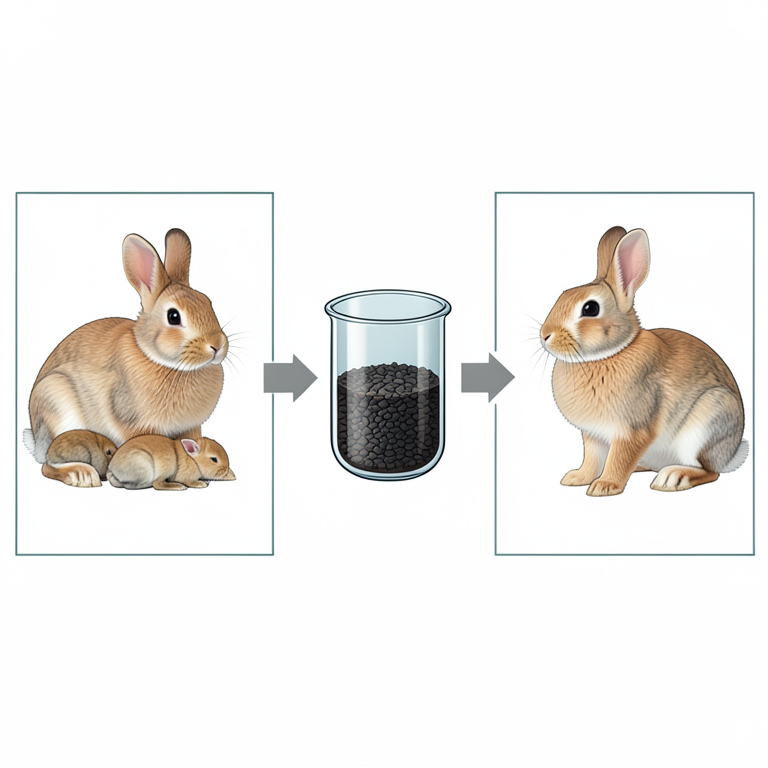
Study overview
AI-generated conceptual illustration (female rabbits). It explains the idea and does not show study data.
View source evidence ↗Introduction
Nigella sativa (N. sativa) belongs to the botanical family of Ranunculaceae and commonly grows in the Eastern Europe, Middle East, and Western Asia. The scientific classification of Nigella sativa is: 2. Antimicrobial effects 2.1. Antibacterial Topozada et al. (1965) [89] were first to report the antibacterial effect of the phenolic fraction of N. sativa oil. El-Fatatry (1975) [54] isolated thymohydroquinone from the volatile oil of N. sativa, which was found to have high activity against gram-positive microorganisms, including Staphylococcus aureus. Diethyl-ether extract of N. sativa was reported to possess concentration dependent inhibitory effect on gram-positive bacteria (represented by S. aureus) and gram-negative bacteria (represented by Pseudomonas aeruginosa and Escherichia coli) (Hanafi and Hatem, 1991) [59] . It also showed synergistic effect with streptomycin and gentamycin and additive effect with spectinomycin, erythromycin, tobramycin, doxycycline, chloramphenicol, nalidixic acid, ampicillin, lincomycin and co-trimoxazole and successfully eradicated a non-fatal subcutaneous staphylococcal infection induced experimentally in mice when injected at the site of infection (Hanafi and Hatem, 1991) [59] . N. sativa extract showed almost similar results to topical mupirocin in the treatment of neonates with staphylococcal pustular skin infections with no side effects (Rafati et al., 2014) [73] . Microbial resistance to drugs is a common and important issue. Studies of the effects of N. sativa extracts In vitro against resistant microorganisms, including resistant S. aureus and P. aeruginosa, showed promising and good results against many multi-drug-resistant gram positive and gram negative bacteria (Morsi, 2000; Mashhadian and Rakhshandeh, 2005; Salman et al., 2005) [72,70,83] . 2.2. Antiviral N. sativa was found to enhance helper T cell (T4) and suppressor T cell (T8) ratio and increased natural killer (NK) cell activity in healthy volunteers (El-Kadi and Kandil, 1986) [55] . Besides improvement in immunity, N. sativa extract had some inhibitory effect on the human immune deficiency virus protease but the active principle(s) responsible for this activity was not identified (Ma et al., 1994) [65] . Moreover, N. sativa oil when given intraperitoneally to mice infected with murine cytomegalovirus for 10 days, the virus was undetectable in the liver and spleen, while it was still detectable in the control mice. This action was S.H.M. Aljabre et al. Journal of Dermatology & Dermatologic Surgery 19 (2015) 92-98 93 considered to be related to increase in the number and function of M-phi and CD4 +ve T cells and increased production of INF-gamma (Salem and Hossain, 2000) [81,82] . 2.3. Antifungal Hanafi and Hatem (1991) [59] were the first to demonstrate the inhibitory effect of the diethyl-ether extract of N. sativa extract against Candida albicans. The ether extract of N. sativa was reported to inhibit the growth of Candida yeasts in several organs in experimental animal infections (Khan et al., 2003) [63] . Thymoquinone was also shown to inhibit In vitro Aspergillus niger and Fusarium solani and the activity was comparable to amphotericin-B (Al-Jabre et al., 2003; Alqorashi et al., 2007; Randhawa et al., 2005) [7,8,4] . It was reported to be more effective than amphotericin-B and griseofulvin against Scopulariopsis brevicaulis growth In vitro. There was 100% inhibition of the growth of S. brevicaulis with thymoquinone 1 mg/ml, while amphotericin-B 1 mg/ml inhibited only 70% growth. However, clotrimazole was much more effective than the above mentioned drugs, with an MIC of 0.03 mg/ml (Aljabre, 2005) [4] . The ether extract of N. sativa was found to inhibit dermatophytes isolated from sheep skin infection (Kader et al., 1995). Thymoquinone was shown to possess moderate activity against clinical isolates of the three main groups of dermatophytes:
Trichophyton, Epidermophyton and Microsporum and the ether extract of N. sativa were also found to be effective but in relatively higher concentrations (Aljabre et al., 2005) [4] . The MIC of thymoquinone against various dermatophytes ranged from 0.125 to 0.25 mg/ml, while the ether extract inhibited 80-100% of the growth of most dermatophytes at 40 mg/ml. Proportionately, greater effect of thymoquinone than N. sativa extract points out to that, the antifungal activity of N. sativa is primarily due to thymoquinone (Aljabre et al., 2005) [4] . In another study also thymoquinone, thymohydroquinone and thymol demonstrated antifungal effect against many clinical isolates, including dermatophytes, molds and yeasts at a concentration of 1 mg/ml (Taha et al., 2010) [87,88] . Using broth microdilution assay, extract of N. sativa inhibited the growth of Madurella mycetomatis, an important causative fungus of mycetoma, at a concentration as low as 1 lg/ml (Elfadil et al., 2015) [53] . 2.4. Antiparasitic An ointment prepared from the alcoholic extract of N. sativa seeds was applied daily for 15 weeks to cutaneous leishmaniasis produced experimentally in mice by a subcutaneous inoculation of Leishmania major at the dorsal base of the tail. The morphology of the lesion and the body weight of mice were monitored daily. There was no significant difference between the average weight of mice receiving N. sativa extract ointment and controls but the lesion diameter and symptoms of inflammation were significantly lesser in the test group as compared to the controls (Bafghi et al., 2011) [12] . N. sativa seed was tested against miracidia, cercariae and adult worms of Schistosoma mansoni and showed strong biocidal activity against all stages of the parasite, as well as an inhibitory effect on egg-laying of adult female worms, indicating an antischistosomal potential of the N. sativa (Mohamed et al., 2005) [70] . In S. mansoni experimentally infected mice, the antischistosomal activity of N. sativa oil was found to be comparable to praziquantel and when given in combination with praziquantel there was potentiation of its effect (Mahmoud et al., 2002) [67] .
Materials and Methods 1-Prepare liquid solution of Melissa
Nigella sativa seeds were obtained from commercial sources (from Baghdad) and the vouchers specimen of the plant were deposited to be identified and authenticated at the National Herbarium of Iraq Botany Directorate in Abu-Ghraib, under scientific name Nigella sativa belongs to the family Ranunculaceae. After cleaning and milling, crushed seed were kept in dark glass bottles and taking 5 gm from brayed Nigella sativa seeds and boiled with (50 ml) of distilled water and after cooling drench every animal with (2.5 ml) from liquid solution which equalizes (0.25 gm) from Nigella sativa seeds.
Prepare liquid solution of Bromocriptine
We taking Bromocriptine drug at pills form in concentration (5mg) and soluble in (50 ml) of distilled water and then drench every animal with (1 ml) of liquid solution which equalizes (0.1 mg) from Bromocriptine.
Experimental animals
Thirty rabbit females in the last period of pregnancy were used in this investigation. Animals in all stages of the experiment housed in plastic cages in conditioned room (22-25 °C) in the animal house of Department of animals Production, at College of agriculture-Universityof Sumer for the period from December 2017 to March 2018 with providing daily light of twelve hours (7.00 to 19.00) and twelve hours night cycle. They were left for ten days for adaptation with the experimental conditions. Animals had free access to water and standard pellet diet along the experiment. The animal divided into three groups each group contain 10 rabbits and after parturition directly we measured prolactin hormone level and then drench the first group with liquid solution of Nigella sativa seeds in dose (2.5 ml) liquid solution of (0.25 gm) from Nigella sativa seeds daily for month. While the second group drench liquid solution of Bromocriptine in dose (0.1 mg) daily for month. The third group considered as control. During the experiment prolactin hormone measured in three groups of animals in day 7,14,21,28 from drench after taking (3-5 ml) blood, was drawn by cardiac puncture technique from anesthetized rabbits {intramuscular injection of Ketamine (60mg/Kg B.W.) and xylazine (40mg/kg B.W.) administering 1 mL/kg of body weight by intramuscular injection.}. and after separated the serum, measured the prolactin hormone level.
Measuring prolactin hormone level
After blood collection directly from the heart, the serum separated from blood by centrifugation, then serum taking for measure prolactin hormone level by Minividus System through used necessary kit for prolactin hormone which produced from French Immunotech Company. After obtaining the results of prolactin hormone level of all groups its compared with results of first group and second compared with control group.
Results and Discussion
The results revealed no decrease in prolactin hormone level in the first group which drench liquid solution of Nigella sativa seed in first and second week from drench after parturition compared with second group which drench with liquid solution of Bromocriptine drug which appear obvious decrease in second week from drench compared with control group which persist prolactin hormone in high level (table 1 and plane 1). Whereas results showed that occurrence extremely obvious decrease in prolactin hormone level in first group after third week from drench which persist in decrease for fourth week compared with control group which appear high level of prolactin hormone for fourth week in experiment (table 1). The results showed as results of (clanton, 2005) [13] which refer to Nigella sativa seeds have the ability to regulate sexual hormones after long period of treatment, most common herbs treatment take time to give the positive results which come conformity with most researchers in medical herb treatments that late in occurrence of positive results compared with chemical drugs and results as coming to results of (Grosignani et al.,1982 ) which refer to Bromocriptine drug competency in decrease prolactin hormone level in short period from beginning treatment. Persistence of high prolactin hormone level in control group come conformity with all studies, as prolactin hormone is responsible hormone for milk production in most animals specially after parturition (Hafez et al. 2000) [18] .
Conclusions
1. Efficiency of Nigella sativa seeds in decrease prolactin hormone level in rabbit females after parturition. 2. Nigella sativa seeds can be used in cases of infertility and esterus cycle disturbances which result from abnormal secretion of prolactin hormone during and after lactation period.
3. Despite of positive effect of Nigella sativa seed herb in decrease prolactin hormone level but its need long period to give its positive effect. 4. It decreases the side effects on animal compared with drugs due to slowly effect in decrease level of prolactin. 5. It is used in regulation and synchronization estrous cycles in some lactating animals (in lactation period). 6. Plantation of Nigella sativa seeds herb periodically play a good role in regulation of estrous cycles, in addition to multiple advantages (antiviral, antibacterial, antifungal, antiprotozoal, etc.).
References
83 in the original paper- Al-Ali A, Alkhawajah MA, Randhawa NA. Shaikh Oral and intraperitoneal LD 50 of thymoquinone, an active principle of Nigella sativa, in mice and rats J Ayub Med. Coll. Abbottabad. 2008; 20(2):25-27.
- Ali G. Blunden Pharmacological and toxicological properties of Nigella sativa, 2003.
- Ali KV. Meitei Nigella sativa seed extract and its bioactive compound thymoquinone: The new melanogens causing hyperpigmentation in the wall lizard melanophores J Pharm. Pharmacol. 2011; 63(5):741-746.
- Aljabre MA, Randhawa A, Akhtar OM, Alakloby AM, A lqurashi A. Aldossary Antidermatophyte activity of ether extract of Nigella sativa and its active principle, thymoquinone J. Ethnopharmacol. 2005; 101:116-119.
- Al-Jabre OM, Al-Akloby AR, Al-Quraishi N, Akhtar A. An active principle of Nigella sativa, inhibited Aspergillus Niger Pak. J Med. Res. 2003; 42:102-104.
- AljabreIn SHM. Vitro antifungal activity of thymoqyuinone against Scopulariopsis brevicaulis Arab J Pharm. Sci. 2005; 3:27-33.
- Al-Jishi SAA. A Study of Nigella sativa on Blood Hemostatic Functions (M.Sc thesis). King Faisal University, Dammam, Saudi Arabia, 2000.
- Alqorashi N, Akhtar S, Aljabr A. The effect of thymoquinone and B on the growth of Aspergillus niger Sci. J King Faisal Univ. 2007; 8(1):137-145.
- Auf'mkolk M, Kohrle J, Gumbinger H, Winterhoff H, Hesch RD. Antihormonal effects of plant extracts: iodothyronine deiodinase of rat liver is inhibited by extracts and secondary metabolites of plants. Horm Metab Res. 1984; 16(4):188-192.
- Badary OA, Al-Shabana MN, Nagi AM, Al Bekairi MMA. Elmazar Acute and subchronic toxicity of thymoquinone in mice Drug Dev. Res. 1998; 44:56-61.
- Bafghi AR, Vahidi MH, Anvari K, Barzegar M, Ghafour zadeh A. The in vivo antileishmanial activity of alcoholic extract from Nigella sativa seeds Afr. J Microbiol. Res. 2011; 5(12):1504-1510.
- Clanton MA. Menopause understanding and managing the transition using essential oils vs. traditional Allopathic Medicine. Australasian College of Health Sciences. 2005, 76.
- Crosignani P, Ferrari A, Benco R. Treatment of hyperprolactinemic states with different drugs: a study with bromocriptine, metergoline and lisuride. Fertility and sterility. 1982; 37(1):61-67.
- Felklova M, Natherova L, Duskova K. [Tannin compounds in leaves of Melissa officinalis L., invaded by Septoria melissae Desm]. Cesk Farm. 1969; 18(9):457460.
- Forster HB, Niklas H, Lutz S. Antispasmodic effects of some medicinal plants. Planta Med 1980; 40(4):309-319.
- Gazola R, Machado D, Ruggiero C, Singi G, Macedo Alexandre M. Lippia alba, Melissa officinalis and Cymbopogon citratus: effects of the aqueous extracts on the isolated hearts of rats. Pharmacol Res. 2004; 50(5):477-480.
- Hafez ESE, Jainudeen MR, Rosnina Y. Hormones, growth factor and reproduction. In: Reproduction in farm animals. Hafez B and Hafez E.S.E (eds.).7th Ed. Lippincolt William and Wilikins, Awolter K luwer co. Philadelphia, 2000.
- Hohmann J, Zupko I, Redei D, Csanyi M, Falkay G, Mathe I. et al. Protective effects of the aerial parts of Salvia officinalis, Melissa officinalis and Lavandula angustifolia and their constituents against enzymedependent and enzyme-independent lipid peroxidation. Planta Med. 1999; 65(6):576-578.
- Ivanova D, Gerova D, Chervenkov T, Yankova T. Polyphenols and antioxidant capacity of Bulgarian medicinal plants. J Ethnopharmacol. 2005; 96(1-2):145150.
- Kennedy DO, Scholey AB, Tildesley NT, Perry EK, Wesnes KA. Modulation of mood and cognitive performance following acute administration of Melissa officinalis (Lemon balm). Pharmacol Biochem Behav. 2002; 72(4):953-964.
- Khayyal MT, el Ghazaly MA, Kenawy SA, Seif-el-Nas, M, Mahran LG, Kafafi YA et al. Antiulcerogenic effect of some gastrointestinally acting plant extracts and their combination. Arzneimittelforschung. 2001; 51(7):545553.
- Kucera LS, Herrmann EC Jr. Antiviral substances in plants of the mint family (labiatae). I. Tannin of Melissa officinalis. Proc. Soc. Exp. Biol. Med. 1967; 124(3):865869.
- Kucera LS, Cohen RA, Herrmann EC Jr. Antiviral activities of extracts of the lemon balm plant. Ann NY Acad Sci. 1965; 130(1):474-482.
- Morgans D. Bromocriptine and postpartum lactation suppression. British J of obs. Gynecology. 1995; 102(3):851-863.
- Mrlianova M, Tekel'ova D, Felklova M, Reinohl V, Toth J. The influence of the harvest cut height on the quality of the herbal drugs Melissae folium and Melissae herba. Planta Med. 2002; 68(2):178-180.
- Mulkens A, Kapetanidis I. Eugenylglucoside, a new natural Phenylpropanoid Heteroside from Melissa officinalis. J Nat Prod. 1988; 51:496-498.
- Mulkens A, Stephanou E, Kapetanidis I. Heterosides a genines volatiles dans les feuilles de Melissa officinalis L. (Lamiaceae). Pharma Acta Helv. 1985; 60:276-278.
- Patora J, Klimek B. Flavonoids from lemon balm (Melissa officinalis L, Lamiaceae). Acta Pol Pharm. 2002; 59(2):139-143.
- Patora J, Majda T, Gora J, Klimek B. Variability in the content and composition of essential oil from lemon balm (Melissa officinalis L.) cultivated in Poland. Acta Pol Phar 48. Peake, P. W., Pussell, B. A., Martyn, P., Timmermans, V., and Charlesworth, J. A. The inhibitory 15113145 of rosmarinic acid on complement involves the C5 convertase. Int J Immunopharmacol. 2003; 13(7):853857.
- Sarer E, Kökdil G. Constituents of the Essential Oil from Melissa officinalis. Planta Med. 1991; 57:89-90.
- Sourgens H, Winterhoff H, Gumbinger HG, Kemper FH. Antihormonal effects of plant extracts. TSH-and prolactin-suppressing properties of Lithospermum officinale and other plants. Planta Med. 1982; 45(2):7886.
- Soulimani R, Fleurentin J, Mortier F, Misslin R, Derrieu G, Pelt JM. Neurotropic action of the hydroalcoholic extract of Melissa officinalis in the mouse. Planta Med. 1991; 57(2):105-109.
- Soulimani R, Younos C, Fleurentin J, Mortiert F, Misslin R, Derrieux G. Melissa officinalis in vivo Doudenum Rat In vitro. Plant Med Phytother. 1993; 26:77-85.
- Tagashira M, Ohtake Y. New antioxidative 1,3benzodioxole from M. officinalis. Planta Med. 1988; 64(6):555-558.
- Thieme H, Kitze C. [Occurrence of flavonoids in Melissa officinalis L]. Pharmazie. 1973; 28(1):69-70.
- Tittel G, Wagner H, Bos R. [Chemical composition of the essential oil from Melissa]. Planta Medica. 1982; 46:9198.
- Triantaphyllou K, Blekas G, Boskou D. Antioxidative properties of water extracts obtained from herbs of the species Lamiaceae. Int J Food Sci Nutr. 2001; 52(4):313317.
- Yamasaki K, Nakano M, Kawahata T, Mori H, Otake T, Ueba N, et al. Anti-HIV-1 activity of herbs in Labiatae. Biol Pharm Bull. 1998; 21(8):829-833.
- Ziakova A, Brandsteterova E, Blahova E. Matrix solidphase dispersion for the liquid chromatographic determination of phenolic acids in Melissa officinalis. J Chromatogr A. 2003; 983(1-2):271-275.
- Amin S, Kohli K, Khar RK, SR Mir KK. Pillai Mechanism of In vitro percutaneous absorption enhancement of carvedilol by penetration enhancers 44. Pharm. Dev. Technol. 2003; 13(6):533-539.
- Amin S, Mir SR, Kohli K, Ali B, Ali M. A study of the chemical composition of black cumin oil and its effect on penetration enhancement from transdermal formulations Nat. Prod. Res. 2010; 24(12):1151-1157.
- Cross Ref View Record in Scopus Amin et al. 2010.
- Amin S, Mir SR, Kohli K, Ali B, Ali M. A study of the chemical composition of black cumin oil and its effect on penetration enhancement from transdermal formulations Nat. Prod. Res. 2010; 24(12):1151-1157.
- Chakravorty N. Inhibition of histamine release from mastcells by nigellone Ann. Allergy. 1993; 70:237-242.
- Dwarampudi LP, Palaniswamy D, Nithyanantham M, Raghu PS. Antipsoriatic activity and cytotoxicity of ethanolic extract of Nigella sativa seeds Pharmacogn. Mag. 2012; 8(32):268-272
- El Gazzar MA R, Mezayen El, Marecki JC, Nicolls MR, Canastar A. Dreskin Anti-inflammatory effect of thymoquinone in a mouse model of allergic lung inflammation Int. Immunopharmacol. 2006; 6:11351142.
- El-Dakhakhany M. Some pharmacological properties of some constituents of Nigella sativa L. seeds: the carbonyl fraction of essential oil. In: Proceeding of the 2nd International Conference on Islamic Medicine, Kuwait, 12th April, 1982, 426-431.
- Elfadil H, Fahal A, Kloezen W, Ahmed EM, Van de Sande W. The In vitro antifungal activity of sudanese medicinal plants against Madurella mycetomatis, the mycetoma major causative agent PLoS Negl. Trop. Dis, 2015, 9(3).
- HM El-Fatatry Isolation. Structure assignment of an antimicrobial principle from the volatile oil of Nigella sativa L. seeds Pharmazie. 1975; 30(2):109-111.
- El-Kadi A, Kandil O. Effect of Nigella sativa (the black seed) on immunity. In: Proceedings of the Fourth International Conference on Islamic Medicine, 4 November, Kuwait, 1986, 344-348.
- Gali-Muhtasib HU, Abou Kheir WG, Kheir LA, Darwiche N, Crooks PA. Molecular pathway for thymoquinone-induced cell-cycle arrest and apoptosis in neoplastic keratinocytes Anticancer Drugs. 2004; 15(4):389-399
- Gelot P, Bara-Passot C, Gimenez-Amanu E et al. Bullous drug eruption with Nigella sativa oil Ann. Dermatol. Venereol. 2012; 139(4):287-291.
- Ghorbanibirgani A, Khalili D, Rokhafrooz Comparing. Nigella sativa oil and fish oil in treatment of vitiligo Iran. Red Crescent Med. J. 2014; 16(6):4515.
- MS Hanafi, ME Hatem. Studies on the anti-microbial activity of the Nigella sativa seed (Black Cumin) J Ethnopharmacol. 1991; 34(2-3):275-278.
- Houghton PJ, Zarka R, B de las Heras, Hoult JR. Fixed oil of Nigella sativa and derived thymoquinone inhibit eicosanoid generation in leukocytes and membrane lipid peroxidation Planta Med. 1995; 61(1):33-36.
- Ivankovic S, Stojkovic R, Jukic M, Milos M, Jurin M. The antitumor activity of thymoquinone and thymohydroquinone In vitro and in vivo Exp. Oncol, 2006, 28.
- HAA Kader, SR Seddek, AA El-Shanawany. In vitro study of the effect of some medicinal plants on the growth of some dermatophytes Assiut Vet. Med. J. 1995; 34(6-7):36-42.
- MA Khan, MK Ashfaq, HS Zuberi, AH Zuberi. The in vivo antifungal activity of the aqueous extract from Nigella sativa seed Phytother. Res. 2003; 17:183186.
- Kundu JK, Liu L, Shin JW, Surh YJ. Thymoquinone inhibits phorbol ester-induced activation of NF-κB and expression of COX-2, and induces expression of cytoprotective enzymes in mouse skin in vivo Biochem. Biophys. Res. Commun. 2013; 438(4):721-727.
- Ma CM, Miyashiro H, Hattori M, Shimotohno K. Screening of traditional medicines for their inhibitory effects on human immunodeficiency virus protease J Tradit. Med. 1994; 11(4):416-417.
- Mabrouk GM, Moselhy SS, Zohny SF, Ali EM, Hela TE, Amin AA et al. of methylnitrosourea (MNU) induced oxidative stress and carcinogenesis by orally administered bee honey and Nigella grains in Sprague Dawely rats J Exp. Clin. Cancer Res. 2004; 21(3):341346.
- Mahmoud MR, El-Abhar HS, Saleh S. The effect of Nigella sativa oil against the liver damage induced by Schistosoma mansoni infection in mice J Ethnopharmacol. 2002; 79(1):1-11.
- Mansour MA, Ginwai OT, Hadiya T El, ElKhatib AS, Al-Shabanah OA, Al-Sawaf HA. Effects of volatile oil constituents of Nigella sativa on carbon tetrachlorideinduced hepatotoxicity in mice: evidence for antioxidant effects of thymoquinone Res. Commun. Mol. Pathol. Pharmacol. 2001; 110:239-251.
- Mashhadian NV, Rakhshandeh H. Antibacterial and antifungal effects of Nigella sativa extracts against S. aureus, P. aeruginosa and C. albicans Pak. J. Med. Sci. 2005; 21(1):47-52.
- Mohamed AM, Metwally NM, Mahmoud SS. Nigella sativa seeds against Schistosoma mansoni different stages Mem. Inst. Oswaldo Cruz. 2005; 100(2):205-211.
- Morsi NM. Antimicrobial effect of crude extracts of Nigella sativa on multiple antibiotic resistant bacteria Acta Microbiol. Pol. 2000; 49(1):63-74.
- Padhye S, Banerjee S, Ahmad A, Mohammad R, Sarkar FH. From here to eternity -the secret of Pharaohs: therapeutic potential of black cumin seeds and beyond Cancer Ther. 2008; 6:495-510.
- Rafati S, Niakan M, Naseri M. Anti-microbial effect of Nigella sativa seed extract against staphylococcal skin infection Med. J Islam. Repub. Iran. 2014; 8(28):42.
- MA Randhawa. An update on antimicrobial effects of Nigella sativa and experience at King Faisal University, Dammam, Saudi Arabi a JSSDDS. 2008; 12(1):36-43.
- Randhawa MA, Alghamdi MS. A review of the pharmaco-therapeutic effects of Nigella sativa Pak. J Med. Res. 2002; 41(2):77-83.
- Randhawa MA, Alghamdi MS. Anticancer activity of Nigella sativa (Black Seed)-a review Am. J Chin. Med. 2011; 39(6):1075-1091.
- Randhawa MA, Alaklobi OM, Aljabre SHM, Alqorashi AM, Akhtar N. Thymoquinone, an active principle of Nigella sativa, inhibited Fusarium solani Pak. J. Med. Res. 2005; 4:41-3.
- Salem ML. Immunomodulatory, therapeutic properties of Nigella sativa L. seed Int. Immunopharmacol. 2005; 5:1749-1770.
- Salem, Hossain, 2000.
- Salem ML, Hossain MS. Protective effect of black seed oil from Nigella sativa against murine cytomegalovirus Int. J Immunopharmacol. 2000; 22(9):729-740.
- Salman et al. 2005.
- Salman MT, Khan RA, Shukla I. Antimicrobial activity of Nigella sativa oil against Staphylococcus aureus obtained from clinical specimens. In: 38th Annual Conference of Indian Pharmacological Society, Chennai, India, 28-30 Dec, 2005.
- Salomi et al, 1991.
- Salomi MJ, Nair SC, Panikkar KR. Inhibitory effects of Nigella sativa and saffron (Crocus sativus) on chemical carcinogenesis in mice Nutr. Cancer. 1991; 16:67-72.
- Taha M, Azeiz A, Saudi W. Antifungal effect of thymol, thymoquinone and thymohydroquinone against yeasts, dermatophytes and non-dermatophyte molds isolated from skin and nails fungal infections Egypt. J Biochem. Mol. Biol. 2010; 28(2):109-126.
- Topozada HH, Masloum H, El-Dakhakhany M. The antibacterial properties of Nigella sativa seeds: active principle with some clinical application J. Egypt. Med. Assoc. 1965; 48:187-202.
- Yousefi M, Barikbin B, Kamalinejad M, Abolhasani E, Ebadi A, Younespour S. Comparison of therapeutic effect of topical Nigella with Betamethasone and Eucerin in hand eczema J Eur. Acad. Dermatol. Venereol. 2013; 27:1498-1504.
- Zedlitz S, Kaufmann R, Boehncke WH. Allergic contact dermatitis from black cumin (Nigella sativa) oilcontaining ointment Contact Dermatitis. 2002; 46:188.