
Research article · 2019 · Full text
International Journal of Veterinary Sciences and Animal HusbandryManagement of animal waste: A progressive eco-friendly approach
Volume 4(3) · Pages 31–33
Research areasHumic Substances and Bio-Organic Studies
Abstract
Author-writtenLivestock is a demand driven commodity which has a good nexus as an unavoidable asset for the whole animal world. Sometimes it seems to become a liability when not managed properly. One of the best cited prospect for the above reason is liberation of waste from livestock and their proper utilization so as to prevent the dissemination of especially Green House gases more particularly CH4. There may many ways for the disposal and utilization of manure be adopted in both rural and urban areas. Composting is an aerobic degradation of organic compounds. Vermi –composting may be adopted as it includes inclusion of earthworm for the above same purpose. Panchgavya, a medicinal usable product is also explored as an alternate feasible item from the cow.
Summary
Source-checkedPlain-language reading of the full paper, prepared with AI and checked against the text. Each point links to the authors' own words.
Why it matters
- Properly managing and utilizing livestock waste is critical to prevent the release of greenhouse gases, specifically methane (CH4). View evidence ↗
- Livestock is a major contributor to methane emissions in India, accounting for 59% of the total production. View evidence ↗
- Waste management aims to stop the buildup of waste products that lead to environmental pollution. View evidence ↗
The question
- The paper explores various methods for the disposal and utilization of animal manure in both urban and rural settings. View evidence ↗
What they did
- Composting is described as an aerobic biological process that decomposes organic matter into nutrient-rich humus. View evidence ↗
- Vermi-composting is a stabilization process that differs from natural composting by utilizing earthworms. View evidence ↗
What they found
- The estimated daily release of methane from chief sources like cattle, buffalo, and goats is between 0.28 and 1.95g/day. View evidence ↗
- In terms of fuel value, 2kg of dung cake is estimated to be equivalent to 1kg of wood or 0.5kg of coal. View evidence ↗
- Vermi-composting increases the nitrogen (N), phosphorus (P), and potassium (K) content by 3 to 4 times compared to ordinary compost. View evidence ↗
- The duration of composting can be shortened by adding earthworms at a rate of 1kg per 10q of dung using the trench method. View evidence ↗
- Biogas is produced through the anaerobic fermentation of biodegradable organic matter, including animal waste. View evidence ↗
- Panchgavya is a mixture of five cow products: dung, urine, milk, curd, and ghee. View evidence ↗
- While Panchgavya is used as a pesticide and fertilizer in agriculture, the authors note there is no scientific evidence to support these claims. View evidence ↗
What it means
- The authors conclude that proper livestock waste management is essential for making farms economically viable, eco-friendly, and socially acceptable. View evidence ↗
- Because of the human dependence on animal products, waste cannot be eliminated entirely but can be minimized through proper management. View evidence ↗
Visual summary
1 visualsIllustrations explain the paper; they do not show study data.
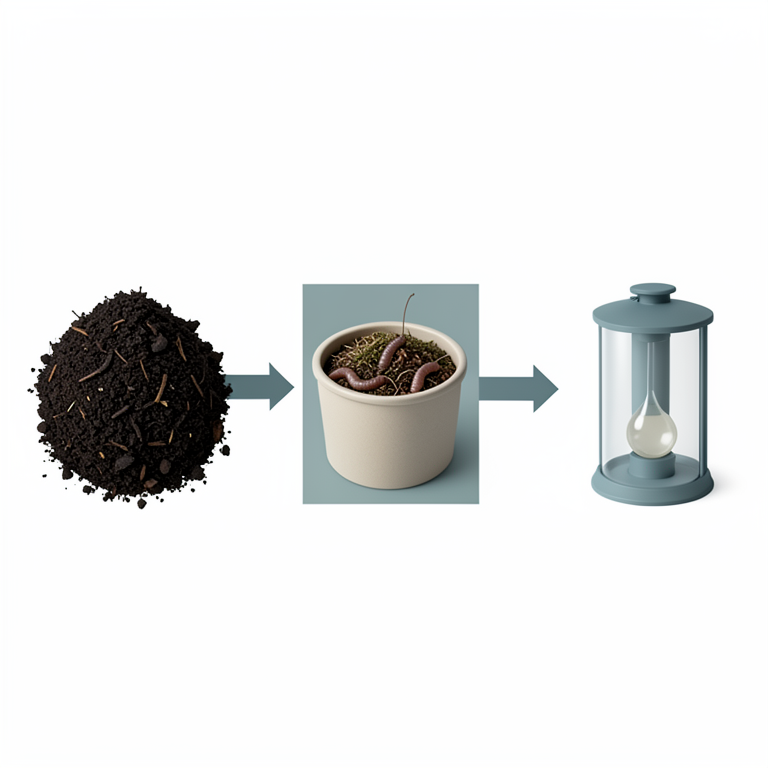
Animal Waste Management Pathways
AI-generated conceptual illustration (Animal waste (manure) and processing systems). It explains the idea and does not show study data.
View source evidence ↗Introduction
Objective of waste management 1. To prevent the accumulation of waste products that can cause environmental pollution. 2. To protect the bio-diversity from the menace of Green-house gases specially CH4 and CO2 which are exclusively liberated from the livestock manure. In India, out of total CH4 production, 59% is produced by livestock only.
(ICAR Handbook on Animal Husbandry)
So it is evident that cattle, buffalo and goats are the chief sources for methane gas emission. The daily methane amount released as a rough estimate is 0.28 to 1.95g/day. 3. As a traditional method of manure disposal to directly apply on the agricultural field as a consequence of which it may facilitates the propagation of termites in the crop.
In rural areas, use of cow dung in the shape of dung cake or patties for the purpose of fuel is also one of the ways to recycle the waste which is vogue right now.
Quantity of dung produced by the animals a. Horse-13.5kg b. Cattle-24.0kg c. Buffaloes-32.5kg d. Sheep and Goats-1.25kg e. Pigs-4.0kg f. Poultry (100 birds)-3kg Treatment of the manure can be done in the following manner
Composting
Composting is a method widely used around the world as an alternative to dumping different types of waste. Compost is organic matter that has been decomposed and recycled as a fertilizer and soil amendment. Composting is a natural biological decomposition process that takes place in the presence of oxygen which breakdown into humus rich in plant nutrient and microorganisms. This method entails the degradation of organic matter in a controlled and aerated environment by regularly turning the mixture. Further breakdown of the materials are accomplished by worm and fungi. Aerobic bacteria manage the chemical process by converting into heat.
Composting of cow dung
Composting of cow dung
Traditional uses of dung and urine
Dung has been in use since the times of ancient for various purposes. Dung patties are mainly used by poor people as a fuel for cooking. The fuel value of 2kg dung cake has been estimated as 1kg wood or 0.5kg coal. In rural areas, mixing of dung, mud and water is used for floor and wall coating due to antiseptic properties. Dung is used to purify many medicines such as bhasmas and herbal medicines as it acts as good detoxifier. Dung acts as a source of natural fertilizer for cropland. Dung also provides a number of micronutrients which are responsible to maintain the fertility, texture and water-holding capacity of the soil. Dung ashes are used as excellent components of tooth powder. Dry dung ash is used to absorb oil and fat present on utensils and used as general cleaner. Dung mixed with margose or neem leaves smeared on skin will help in healing of boils and heat rash.
Urine is natural, easily available, harmless, beneficial compound, which offers protection against a number of diseases. Cow Urine is used for purposes of therapy in traditional Indian medicine and is called Gomutra. The use of cow urine for therapeutic purposes has a long history in Indian culture. In India, cow is considered to be a sign of spirituality. Soaking the feet in urine by athletes helps in rectification of minor ailments. Application of fresh urine seems to have some helpful effect on teenage pimple eruptions. Urine helps in reducing the pain due to insect sting bite. Use of cow urine as insecticide is well documented. Ten litres of indigenous cow urine and 1kg of neem leaves in copper vessel and kept airtight for 15days. Further, 15g garlic is added and boiled to make it half. One litre of this extract diluted in 100 litres water is used as insecticide. Cow urine can be also used for treatment of stones, liver problems, arthritis, renal disorders, gas, obesity, cardiac problems and so on (Mohanty et al. 2014) [4] . It may also serve as support of anti-cancer treatment because of its ability to bind free radicals.
Special uses of animal waste
The key for production of this is utilization of farm wastes. Biogas is typically produced by the degradation of organic matter during anaerobic on fermentation of biodegradable mass including animal waste. In India, biogas is produced from the digestion of manure on small-scale closed digestion system called popularly as gobar gas.
Methane and carbon dioxide are the major gases formed. Methane being green-house gas is responsible for environment pollution. Its production in the biogas plant-not only renders its unavailable for pollution but also renders the residual solid material (slurry) harmless as an environmental pollution. Biogas can be used mainly for cooking, production of electricity and also for running small-scale village industries; etc (Ministry of New and Renewable energy).
Biogas plant
Vermi-compost: Vermi-composting is a bio-oxidation and stabilization process of organic material that in contrast to natural composting involves the joint action of earthworms (Muralikrishna and Manickam, 2017) [5] . Natural composting takes longer times but length of composting can be reduced by addition of earthworms @ 1kg/10q of dung in trench method. In vermicompost the content of N, P, K increases to 3-4 times the ordinary compost. With the addition of nitrogen fixing bacteria may increase manurial value of vermin compost.
Panchgavya: Panchgavya is a cow's products prepared by mixing five products of cow and used in traditional Indian rituals. The three direct constituents are cow dung, urine, and milk; the two derived products are curd and ghee (http://agritech.tnau.ac.in). These are mixed in proper ratio and then allowed to ferment. All five products possess medicinal properties against many disorders and are used for medicinal purpose. This kind of treatment is called cowpathy or panchgavya therapy. Panchgavya is also used as fertilizers and pesticides in agricultural operations, but has no scientific evidence to back its claims.
Panchgavya
Panchgavya
Conclusion
Proper handling of livestock waste in a farm is always essential for the farm to make economically viable, ecofriendly and socially acceptance. As we are dependent on the animal products for food, the livestock waste can never be end but it can be surely minimized with proper management.
References
3 in the original paper- ICAR Handbook of Animal Husbandry, 4 th revised and enlarged edition, ICAR, New Delhi, 2013.
- Mohanty I, Senapati MR, Jena D, Palai S. Diversified uses of cow urine. Int J Pharm Pharm Sci. 2014; 6(3):2022.
- Muralikrishna IV, Manickam V. Solid Waste Management. Environmental Management, 2017.