
Research article · 2018 · Full text
International Journal of Veterinary Sciences and Animal HusbandryReview on process, advantages and disadvantage of artificial insemination in cattle
Volume 3(6) · Pages 08–13
Research areasReproductive Physiology in LivestockSperm and Testicular FunctionGenetic and phenotypic traits in livestock
Abstract
Author-writtenThe objective of this paper mainly aimed to review the AI and its advantage over natural breeding. Artificial insemination (AI) with semen collected from genetically superior sires is the most efficient and economical method for the genetic improvement of economically important traits in the beef industry. Semen used for artificial insemination is collected by using artificial vagina, electro-ejaculation, or massaging ampullae of the ductus difference through rectal wall. The objective of this paper is to review bull fertility assessment, semen collection, evaluation, processing, and insemination techniques in cow, and oestrus detection of cow and to review the advantages and disadvantages of AI as compared to Natural breeding. Once the semen is collected the semen is evaluated for its appearance, volume, motility, concentration, morphology, by macroscopic and microscopic tests. Semen is diluted to increase its volume and its lifespan of spermatozoa under cooling, freezing and ambient temperature preservation with potential for its use in distance future. The success of artificial insemination depends on placing of sufficient numbers of viable spermatozoa in the proper site at the optimum time relative to ovulation and sterile technique. Many infectious agents can be transmitted through semen. As AI is economically important, reproductive technology, it must be applied widely to increase reproduction efficiency.
Summary
Source-checkedPlain-language reading of the full paper, prepared with AI and checked against the text. Each point links to the authors' own words.
Why it matters
- Artificial insemination (AI) using semen from genetically superior bulls is considered the most economical and efficient way to improve important economic traits in the beef industry. View evidence ↗
- In Ethiopia, the livestock sector is a cornerstone of the economy, employing 80-85% of the population and contributing 40% of the total GDP, with a cattle population of approximately 41 million heads. View evidence ↗
- AI is used in the dairy industry to improve herd performance by utilizing superior sires and reducing the occurrence of sexually transmitted diseases. View evidence ↗
The question
- The paper aims to review the entire AI process, including bull fertility assessment, semen collection, evaluation, processing, and insemination techniques, and compare the advantages and disadvantages of AI versus natural breeding. View evidence ↗
What they did
- Bull fertility is assessed using the Breeding Soundness Examination (BSE), a standardized procedure formalized by the Society for Theriogenology (SFT). View evidence ↗
- Semen collection from bulls is typically performed using three methods: an artificial vagina (AV), electro-ejaculation, or transrectal massage. View evidence ↗
- Semen evaluation includes macroscopic tests to record volume, color, consistency, density, odor, and the presence of contaminants. View evidence ↗
- Microscopic analysis using a bright field microscope is used to determine sperm concentration, morphology, and both mass and individual motility. View evidence ↗
- The recto-vaginal method is described as the safest and best insemination technique, involving the use of a sterile catheter guided through the cervix via rectal manipulation. View evidence ↗
What they found
- The average volume of a single bull ejaculate ranges from 2 to 10 ml. View evidence ↗
- Semen motility is categorized from 'very poor' (10-20% motile cells) to 'very good' (80-100% motile cells). View evidence ↗
- Heating homogenized or pasteurized skim milk to 95°C allows sperm to maintain motility for approximately 16 days, a result comparable to dilution with egg yolk-citrate. View evidence ↗
- The accuracy of oestrus detection increases with the frequency of visual observation: twice daily identifies 75-80% of cows, three times daily identifies 85%, and four times daily identifies over 90%. View evidence ↗
- Artificial insemination is safer for both animals and farmers compared to natural mating, which has a higher risk of accidents and injuries. View evidence ↗
- A disadvantage of AI is that it is more laborious than natural mating because the farmer must manually detect oestrus, whereas bulls do so instinctively. View evidence ↗
What it means
- The authors recommend the wide application of AI in Ethiopia to improve genetics and prevent disease transmission, noting it is less costly than other assisted reproductive technologies. View evidence ↗
- The authors conclude that reproductive efficiency can be increased through a successful heat detection program and precise timing of insemination. View evidence ↗
Visual summary
2 visualsIllustrations explain the paper; they do not show study data.
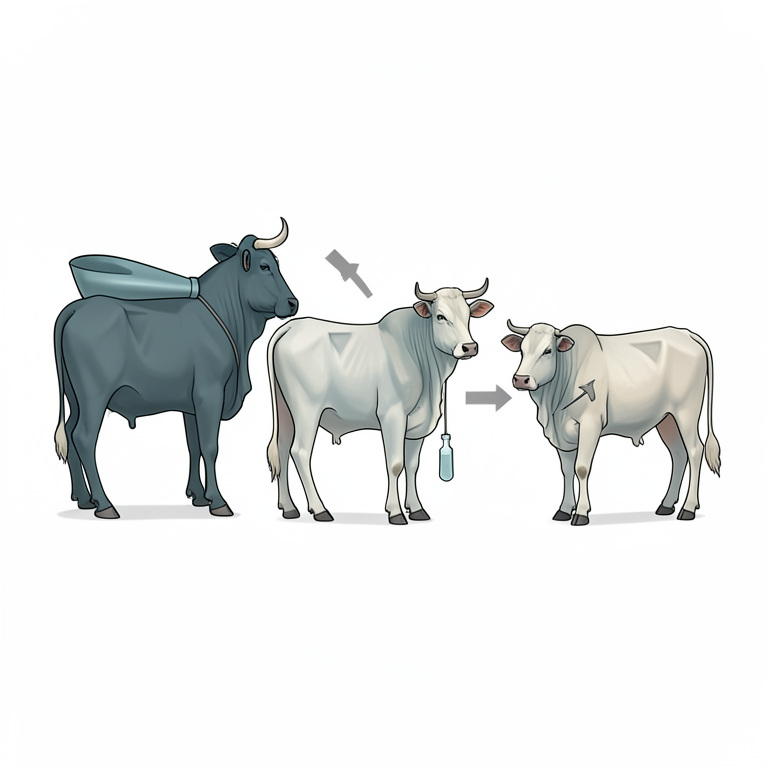
Semen Collection Methods
AI-generated conceptual illustration (bulls). It explains the idea and does not show study data.
View source evidence ↗
Oestrus Detection Efficiency
AI-generated conceptual illustration (Holstein cows in a pasture). It explains the idea and does not show study data.
View source evidence ↗Introduction
Ethiopia has the largest cattle population in Africa with estimated number of 41 million heads [10] over 99% of the cattle population are indigenous breeds the agricultural sector including livestock in the country is a corner stone of economic in the routine social life. The sector employs 80-85% of the population and contributes 40% of the total GDP [25] . Artificial insemination (AI) is the process of collecting sperm cells from a male animal and manually depositing them into the reproductive tract of a female. Use of AI in animals is a human invention and more recent. Accordingly, AI, which is the first generation of reproductive biotechnology, has been widely used in Ethiopia in dairy production at national level. It started in early 1930 during the Italian occupation [14] . Reproductive efficiency of the dairy herd is important to the economic success of the diary operation one of the most important reproductive technologies implemented by the dairy industry is artificial insemination (AI).It reduces the incidence of sexually transmitted disease among cattle as well as increases the use of genetically superior sires to improve performance of the herd [30] . Artificial insemination is not merely a novel method of bringing about impregnation in females, instead, it is a powerful tool mostly employed for livestock improvement. In artificial insemination the germplasm of the bulls of superior quality can be effectively utilized with the least regard for their location in faraway places. Originally AI was introduced as a means of preventing spread of venereal diseases. By adoption of artificial insemination, there would be considerable reduction in both genital and non-genital diseases in the farm stock. High reproductive performance is a key factor for optimal economic success in cattle production [16] . All bull semen used for AI is cryopreserved; allowing long storage times and easy distribution, and inseminations are generally done by trained inseminators. To allow trained professionals to assess the potential for the reproductive success of a bull, a systematic approach to bull evaluation has been developed. This evaluation involves an assessment, performed in as objective a manner as possible, providing for the prediction of bull fertility. This procedure is termed the Breeding Soundness Examination (BSE) and has been formalized by the Society for Theriogenology (the study of reproduction in domestic animals) (SFT), whose members have standardized the bull evaluation. AI is the oldest and currently most common assisted reproductive technology and an important tool in animal production. Today AI represents a much more cost-effective means of disseminating superior genes. AI has been most widely used for breeding dairy cattle; 253 million frozen AI doses and 11.7 million liquid doses are produced worldwide every year [29] . Successful AI program must include efficient and accurate heat detection and timely AI relative to ovulation. Standing oestrus or heat is indication that a cow is going to ovulate and release an ovum or egg. Oestrus behaviour is used to determine when a cow should be inseminated [11] . Artificial insemination can reduce many of the risks involved with breeding. Natural mating is a stressful process that has much higher tendency to result in injuries or accidents of both the animals and producers. Particularly in cattle, males tend to be very large and sometimes aggressive. Furthermore, artificial insemination is the risk of transmitting diseases. The entire artificial insemination procedure is hygienic than natural mating. All the tools and equipment are sterilized both before and after. The entire procedure is altogether a much cleaner and sanitary process [27] . Conception per insemination is the outcome resulting from a multitude of factors that interact in an intricate fashion. Female fertility, male fertility, environmental factors, and techniques used in AI are the four general categories that determine the ultimate outcome of conception per insemination. Female fertility refers to any factors directly related to the heifer/cow that may alter her probability of becoming pregnant, including condition of the reproductive tract, nutritional status, changes in body condition from calving to insemination, age, and breed. Conception rates can vary based on semen quality, temperatures and other environmental conditions. The health and productivity status of females also plays a role in conception rates [20] . Therefore the objective of this paper is: To review the process of artificial insemination (AI), its advantages and disadvantage in cattle.
Artificial Insemination
Artificial insemination involves the collection of semen from a male, usually of superior genetic merit, followed by the transfer of that semen in to asexually receptive female at a time of ovulation in order to result in fertilization (Davies, 1999). It has become one of the most important techniques ever devised for the genetic improvement of farm animals [8] .
Bull fertility assessment
A careful selection of bulls ensures high quality specimens both from the reproductive and physical point of view. This includes requirements concerning physical fitness, condition of genital organs, semen and sexual behaviour. The physical examination will begin with evaluating the overall appearance of the bull. Body condition should be moderate. A bull should have sound feet and legs. The eyes should be clear and injury free. A rectal examination will help to detect any abnormalities in the seminal vesicles, ampullae and internal inguinal rings. All of these organs contribute to the semen portion of the ejaculate. An external examination will include palpation of the testes and epididymis. The major organ of concern is the testis (or testicle). The testes should be free within the scrotum. A slight twist can be acceptable and not negatively affect reproduction. A major twist of the testes may indicate reduced fertility. Scrotal circumference is important because it is directly related to the sperm producing capacity of the bull. Bulls with larger scrotal circumferences also reach puberty earlier [34] .
Semen Collection
Semen is usually collected from bulls by using an artificial vagina (AV), electro-ejaculation and transrectal massage. The cow or dummy is secured in service create. The artificial vagina assembled is held at 45º angle from the direction of the penis, and the trust is that angle. The artificial vagina is held with the left hand by right handed person, and when the bull mounts the cow, the sheath of the bull will be grasped by the operator, directing the glans penis into the artificial vagina, and then the bull gives a thrust to ejaculate [7] .
Artificial Vagina Method
Semen is collected into a prewarmed insulated or jacketed tube through a funnel or Cone. All surfaces coming into contact with semen should be clean, warm, dry and free of Spermatoxic agents. The ideal method of semen collection is use of artificial vagina which is safe for sire and the collector also [2] . The collection of semen is performed in a specially prepared place called the "manege". The room must meet appropriate sanitary and health conditions because it is considered a laboratory room. The floor has to be flexible and anti-slip. In the first stage of the preparation the bull makes a few rounds in the "manege" and is allowed to sniff around and to jump other bulls and to perform empty jumps on a dummy cow. False mounting is an effective way to sexually stimulate the bull.The artificial vaginal uses thermal and mechanical stimulation to stimulate ejaculation. The liner of the AV is filled with water at 42-48 ºCelsius. Final preparations are made to the AV between the second and third false mounts the collection tube protrudes to avoid subjecting the semen to temperature shock. The temperature of the artificial vagina is to be checked, at each collection, and it should simulate natural vagina at mounting time [7] .
Electro ejaculator
Electro ejaculators are designed to stimulate the pelvic sympathetic and parasympathetic nerves with pulses of low voltage and amperage to induce penile erection and ejaculation. An electro ejaculator set has the following components: carrying case, rectal probe, control unit, battery charger, power cord, probe cord, semen collection handle, collection cone and a collection vial [2] . Semen collected by EE is often more dilute and may appear to be less motile than that collected by AV, although total sperm per ejaculate and sperm viability should be essentially similar (assuming the EE collection has been successful and complete) [6] .
Semen Collection by Transrectal Massage
This technique requires two people, one to do the massage and one to collect the semen. The bull is held in a chute. After removal of faces from the rectum, a longitudinal back and forth massage is applied mainly over the ampullae, drawing semen toward the pelvic urethra. When the urethral muscle begins to pulsate the massaging action should be in synchrony with the pulsations. The semen collector must collect the cloudy fluid into a warm receptacle as it dribbles from the penis or prepuce. The extended penis may be held by the semen collector during rectal massage to facilitate collection of a clean semen sample [2] .
Semen Evaluation
Semen is suspension of spermatozoa in seminal fluid. Semen evaluation has great diagnostic value in determining the cause, severity, and degree of testicular and accessory gland pathology or infertility as well as being of value in estimating the fertility of the male [1] .
Macroscopic\physical test
Visual evaluation for volume, colour, consistency density, odour and observation for presence of foreign material (blood, pus cells, dung, hair etc.) is made and recorded [3] .
Appearance
Colour also is an indication of semen quality. The gross appearance of a normal ejaculate of bull semen is creamy white in color. The layer along the glass tube may have a granular appearance due to the sperm movement [5 ]. Semen should have a relatively uniform, opaque appearance indicative of high sperm cell concentration. The semen should be free of contaminates such as blood, urine, dirt or pus [17] . Pathological colours are the following: -Pink or red -suggest the presence of blood (which appears as the result of penis abrasion, fistulas of cavernous Bodies, urinary stones), Green suggesting the presence of pus, Yellowsuggesting the presence of urine, watery whitesuggesting lower quantity of spermatozoa or water that got to the semen when collected from the artificial vagina [15] .
Volume
Volume is important, but it varies with season of the year, the age, size and breed of the animal, and with the collection methods. In the volume evaluation, attention must be paid to the age of the male because the quantity of the collected Semen in growing bulls increases with age. The average per ejaculate from bull is 2-10ml [21] .
Microscopic tests
The second part of the fresh semen analysis is a microscopic examination Microscopic examination is done under a bright field microscope to analyse the mass and individual motility of the spermatozoa, the morphology and concentration [23] .
Sperm motility
Sperm motility is a percentage estimation of the number of active spermatozoa in semen. It can be estimated by observing the mass movement of a concentrated sample of semen. Motility is determined by placing a drop of semen on a slide, and then observing it under a bright field microscope with little magnification. Semen evaluation is described as very good (80-100% motile sperm cells), good (60-80% motile sperm cells) fair (40-60% motile sperm cells), poor (20-40% motile sperm cells), very poor (10-20% motile sperm cells). Semen should have a minimum of 30 percent vigorous, motile sperm when diluted and viewed through the microscope. Temperature, shock and other factors can greatly interfere with motility scores [23] .
Sperm concentration
Sperm concentration is expressed as a number of cells per ml and must be known for each ejaculation. concentration is measured using a Haemocytometer; spectrophotometer and electronic particle counter [5] .
Sperm cell morphology
Sperm morphology refers to the physical shape of the spermatozoa as observed under the microscope. The normal spermatozoa is composed of a head and tail and divided in to mid piece, main piece and end piece. In practice, routine morphological assessment of spermatozoa (differential counts of normal and abnormal cells) is usually conducted with phase microscopy. The society for theriogenology (SFT) recommends the nigrosin-eosin stain for its combination of ease and utility [35] . Abnormal sperm can be classified under abnormal head (assemetrical, tapering, pyriform, micro and heads),abnormal tail(includes enlarged, broken bent,filiform, truncated and double pieces), and cytoplasmic droplets from the neck of spermatozoa during spermiogenesis [21] .
Semen Processing
From this time through insemination, it is important to work as rapidly and effectively possible to extend the life of the sperm. Sperm concentration and initial motility is determined on a small subsample of the ejaculate. This measurement is important because it ultimately determines the number of sperm in each straw or breeding unit [2] .
Semen diluters
Diluters must be isotonic with semen and must protect the sperm from cold shock injury. Milk and egg yolk, are basic ingredients of most extending media. Laboratory and field experiments were conducted to study the use of milk as a diluter for bovine spermatozoa. The heating of homogenized milk and Pasteurized skim milk to 95°c brought about chemical and/or physical Changes so that spermatozoa diluted with the milk were capable of maintaining motility approximately equal to their motility when diluted with egg yolk-citrate during a storage period of 16 days. Motility Survival was very poor in unboiled milks, seldom exceeding two days, even though the milks had been pasteurized. In general, optimum spermatozoa liveability was obtained when the milk was heated to 95 °C. for 1 to 10 minutes [5] .
Preservation of Spermatozoa
The life span of spermatozoa of most species can be prolonged more conveniently by: cooling to a temperature well below ambient, freezing (cryopreservation), and suspending the metabolic activity of sperm while maintaining it at ambient temperature [21] .
Cooling
In order to extend the fertile life of the sperm, temperature is reduced to reduce the metabolic rate. A rule of thumb is that metabolic rate doubles for every 10 degrees, so cooling semen from body temperature of about 39 ºC to refrigerator temperature of 4 ºC reduces the metabolic rate to about 1/10 of that at body-temperature. Unfortunately, bull sperm are sensitive to cooling to refrigerator temperature, and especially sensitive to rapid cooling. Egg yolk and milk permit a faster cooling rate with reduced damage [30] .
Cryoprotective agent -Glycerol.
Longer term storage of semen is achieved through cryopreservation. Once semen is partially extended and cooled to 4 ºC, a final extension with medium containing glycerol is required. Glycerol is required to protect the sperm during the freezing Process. Cryopreservation maintains the fertile life of semen virtually indefinetly. storage in liquid nitrogen at-196 ºC. has subsequently become established as the standard medium for long term preservation of semen [18] .
Ambient temperature preservation
For sperm to be stored at ambient temperature alternatives to cooling have to be found to slow down their metabolic rate. The daily functions countered in storage temperature can present serious problem in maintaining fertile spermatozoa [4] .
Insemination Techniques
The success of AI depends on placing sufficient numbers of viable spermatozoa in the proper site at the optimum time relative to ovulation [13] .
Timing of insemination
When a heifer becomes sexually mature the ovaries begin to function in a cycle of activity. This cycle involves a sequence of events in preparation for mating, conception and pregnancy. The cycle repeats in preparation for a new mating cycle if pregnancy does not occur. The cycle has an average length of 21 days. Any period between 18 and 24 days is Considered normal. Cow ovulates at about 12hrs after end of oestrus. the ideal time of ovulation is 6-24 hrs [30] . Success in insemination timing is dependent upon a good heat detection program. Proper oestrus detection is critical to the success of AI. Approximately 75 to 80% of cows in oestrus will be identified when the herd is visually observed twice daily (30 minutes each time). When oestrus detection is increased to three times daily, 85% of cows in oestrus may be detected, while four daily observations identify more than 90% of cows in oestrus. Several aides have been developed to help producers detect oestrus, including pedometers, Kamar patches, tail paint, chin-ball markers, and radio telemetric systems. A combination of visual observation and one or more of the detection aides increases the efficiency of oestrus detection compared to visual observation or detection aides alone [32] .
Preparation
Check the identity of the animal obtain the cows previous history; inseminations, calving, fertility, and disease. Once the semen dose has left the container it should be thawed. Straw should be thawed in a 30 ºC to 37 ºC water bath for 10-60 seconds is commonly recommended. Try to dry the straw and maintain the temperature at 37 ºC while the insemination gun in cold weather to lift the straw from the water and wipe it dry with a paper towel [17] . Put a straw in the insemination gun sealed end first. Cover the gun with a plastic sock to prevent contamination of the instrument. Push the plunger of the insemination gun slowly until the semen is visible at the open end of straw [5] .
Techniques
The technique of inseminating a cow is a skill requiring adequate knowledge, experience and patience. Improper AI techniques can negate all other efforts to obtain conception. Semen must be deposited within the tract of the cow at the best location and at the best time to obtain acceptable conception rates [26] . Early method of AI involved deposition of the semen in the vagina, as would occur in natural mating. Those methods are not satisfactory. Fertility is low and greater numbers of sperm are required [4] . Another method which gained popularity was the "speculum" method. This method is easily learned, but proper cleaning and sterilizing of the equipment is necessary, making it more impractical to inseminate than with the rectovaginal. The safe and best method of insemination is "Recto vaginal method of insemination". In the recto-vaginal technique a sterile, disposable catheter containing the thawed semen is inserted into the vagina and then guided into the cervix by means of a gloved hand in the rectum. The inseminating catheter is passed through the spiral folds of the cow's cervix into the uterus. Part of the semen is deposited just inside the uterus and the remainder in the cervix as the catheter is withdrawn. Expulsion of the semen should be accomplished slowly and deliberately to avoid excessive sperm losses in the catheter. The body of the uterus is short; therefore, care should be taken not to penetrate too deeply which might cause physical injury. In animals previously inseminated, the catheter should not be forced through the cervix since pregnancy is a possibility [19] .
Disease Transmission in Semen and Its Control
Many infectious agents can be transmitted through semen. However, transmission through semen will depend on the donor´s sanitary state. Disease listed by the world organization for animal health as requiring control of spread via semen includes: FMD, vesicular stomatitis, rinderpest, par tuberculosis, leptospirosis, tuberculosis, bovine brucellosis, bovine venereal Campylobacteriosis, Trichomoniasis, Vibriosis [9] . Control of this disease rests up on three major strategies; disease that can detected by serology, such as brucellosis is controlled by exclusion of sero positive bulls, likewise, tuberculosis controlled by exclusion of bull that reacts to tuberculin testing. Leptospira species may be killed by freezing and thawing. The antibiotics that are added to semen diluents are intended to kill both pathogenic bacteria (C. fetus) and contaminant bacteria [31] . The final and the most potent means of control of disease is quarantine of semen after collection [22] .
Advantages and Disadvantages of Ai 9.1 Advantages of AI
AI is used as:-means of genetic improvement, ensuring routine semen evaluation and monitor, removal of geographical restriction, permitting the storage for posterity, reduction in risk of injury, reinforcement of natural service, encouragement of routine examination of female reproductive tract, improvement in the reproductive potential of sub-fertile male, permitting the use of fixed time AI, allows for control of venereal disease with in a herd, frozen semen can be stored and used long after the donor or sire is dead [28] .
Increased efficiency of bull usage
During natural breeding, a male will deposit much more semen than is theoretically needed to produce a pregnancy. In addition, natural breeding is physically stressful. Both of these factors limit the number of natural mating a male can make. However, collected semen can be diluted and extended to create hundreds of doses from a single ejaculate. Also, semen can be easily transported; allowing multiple females in different geographical locations to be inseminated simultaneously, and semen can be stored for long periods of time, meaning that males can produce offspring long after their natural reproductive lives end [28] .
Increased potential for genetic selection
Because artificial insemination allows males to produce more offspring, fewer males are needed. Therefore, one can choose only the few best males for use as parents, increasing the selection intensity. Furthermore, because males can have more offspring, their offspring can be used in a progeny test program to more accurately evaluate the genetic value of the male. Finally, individual farmers can use artificial insemination to increase the genetic pool with which his or her animals can be mated, potentially decreasing effects of inbreeding [21] 9.1.3 Decreased costs Male animals often grow to be larger than females and can consume relatively larger amounts of feed. Also, male animals are often more strong, powerful, and potentially illmannered and thus require special housing and handling equipment [3] .
Increased safety for animals and farmers
Male animals can become large and aggressive. These factors mean that maintaining a bull on a farm may be dangerous. Also, because of the relatively larger size of adult males than females, natural mating is more likely to result accidents and injury to either the cow or the bull than is artificial insemination [24] .
Reduced disease transmission
Natural mating allows for the transfer of venereal diseases between males and females. Some pathogens can be transmitted in semen through artificial insemination, but the collection process allows for the screening of disease agents. Collected semen is also routinely checked for quality, which can help avoid problems associated with male infertility [34] .
Permitting the use of fixed-time insemination
AI should ideally allow the use of fixed time insemination; such system aims to manipulate the female oestrus ovulation and insemination [12] .
Disadvantages of A.I
Artificial insemination has some potential drawbacks, however, that must be considered. First, it can be more laborious. Male animals instinctively detect the females that are in the correct status for conception. With artificial insemination the detection work falls on the responsibility of the farmer. Poor detection results in decreased rates of fertility. Also, increasing the number of offspring per male has selective advantages only if the best males can be accurately determined. Otherwise this process only decreases the genetic variability in a population. Increasing the number of offspring per male always reduces the gene pool. AI requires well-trained operations and special equipment, requires more time than natural services, necessitates the knowledge of the structure and function of reproduction on the part of operator, improper cleaning of instruments and in sanitary conditions may lead to lower fertility, If the bull is not properly tested, the spreading of genital diseases will be increased Some males shed virus in semen without clinical signs of disease and management skills are necessary to effectively implement on AI program [28] .
Conclusion and Recommendations
Artificial insemination is the first assisted reproductive technology for genetic improvement, control of disease that transmit through semen, routine semen evaluation, avoidance of direct contact between male and female, to overcome problems that preclude asire from natural service, storage of semen from posterity, and others even it have some disadvantages over natural breeding. The activity of AI includes; collection of semen after preparation of the bull, examination of semen (by macroscopic and microscopic), processing, preservation, and deposit of semen by vaginal, cervical or recto-vaginal insemination techiniques. many infectious agents transmitted through semen. These diseases are controlled by: exclusion of sero positive bulls, antibiotic treatment of the semen, and quarantine of semen after its collection.
Therefore, having the above conclusion in mind, the following points are forwarded as recommendation. AI must be applied widely in Ethiopia to increase their genetic improvement and prevention of disease transmitted through semen as compared to the other assisted reproductive technology because it is less costly. A successful heat detection program and subsequent proper timing of insemination will increase reproductive efficiency. This widely use AI must be with recording the identity of sire to avoid in breeding, long insemination dates and some form of positive pregnancy diagnosis. After selection the bull must be prepared and trained starting from at 9 month of age until 18 month of age to minimize risk of for handler during semen collection. Preparation of the bull by washing genitals, scrotum, and the inner aspect of the hind legs with soaps or disinfectants because it may have spermicidal or bactericidal effect.
References
34 in the original paper- Banerjee GC. A text book of animal husbandry. 8th ed. New Delhi: IBA Publishing, 1998, 286-335.
- Baracaldo MT, Barth AD, Bertrand H. steps for freezing bovine semen. IVIS. 2007.
- Barszcz K, Wiesetek D, Wasowicz M, Kupczynska M. bull semen collection and analysis for AI: J Agricultural Science, 2012, 4(3).
- Barth AD. Bull Breeding Soundness Evaluation, 3 rd . Printing. Saskatoon, SK: The Western Canadian association of bovine Practitioners, 1997, 24-26.
- Bearden HJ, Fuquay JW. Applied animal reproduction. 5 th ed.USAMississippi statue Niversity, 2000, 115-218.
- Bertol MA, Weiss R, Soccol V, Green. Viability of bull spermatozoa collected from epididymis stored at 18-20ºc, branch of achieve of biology and technology. 2013; l56(5):777-783.
- Chenoweth PJ. Semen Evaluation. College of veterinary medicine. 2004, 253-261.
- Chupin D, Schuh HH. Survey of present status of the use of artificial insemination in developed countries. Animal production health division, FAO, Rome, Itally, 1992.
- Colomb. Infectious agents affecting fertility of bulls, and transmission risk through semen. Rev Colomb ciencpecu. 2011; 24:634-646.
- CSA. Ethiopian livestock estimates. Central Stastics authority (CSA), Addis Ababa, Ethiopia, 2004.
- Dalton JC. Strategies for Success in Heat Detection and Artificial Insemination. WCDS Advances in Dairy Technology. 2011; 23:215-229
- Davies MG. Equine artificial insemination. 1 st ed.east Bourne: CABI Publishing, 1999, 1-231.
- Foote RH. The history of artificial insemination: selected notes and notables Am Soc. Anim. Sci. 2002, 1-10.
- Foote RH. The history of artificial insemination: selected notes and notables. J Anim. Sci, 2001.
- Foote RH. The history of artificial insemination: selected notes and notables. J Anim. Sci, 2000.
- Gröhn YT, Rajala-Schultz PJ. Epidemiology of reproductive performance in dairy cows. Anim. Reprod. Sci. 2000; 60-61:605-614.
- Hafez B. reproduction in farm animals.7 th ed. USA: Awolters Klawer company publishers. 376-387: Epidemiology of reproductive performance in dairy cows. Anim. Reprod. Sci. 2000; 60-61:605-614.
- Hernández M, Roca J, Gil MA, Vázquez JM, Martín EA. Adjustments on the cryopreservation condition reduce the incidence of bull ejaculates with poor Sperm freezability. Theriogenol. 2007; 67:1436-1445.
- Morrell JM. Artificial Insemination: Current and Future Trends, Artificial Insemination in Farm Animals, Dr. Milad Manafi (Ed.), ISBN, 2011, 307-312.
- Nebel RL. Your AI what should conception rate be? Extension Dairy Scientist, Reproductive Management. 2002; 540:231-432.
- Noakes DE, Parkinson TJ, England GCW. Veterinary reproduction and Obstetrics. 9 th ed. New York, Sounders Elsevier publisher's. 2009, 765-801.
- Overbay TD. Venereal disease in the bull. J Bullish on quality beef, 1999, 72-76.
- Robert GH, Armando JG, When Should Dairy Cows Be Inseminated? J. College of Agricultural, Consumer and Environmental Sciences, 2013, 1-8.
- Sharan A. Collection and preservation of semen. J. College of veterinary and animal science, 2015, 1-21.
- Sileshi ZA, Tsegahun, Tegene. Status of livestock research and development in highlands of Ethiopia In: wheat and weeds: food and feed. Proceedings of two Stakeholders workshops Addis Ababa (Ethiopia), 2001, 227-250.
- Sorensen AM. How to inseminate cattle-techniques. 4th Edition. American Press, 1979, 151-168.
- State Parish JA, Riley JM. Economic comparisons of artificial insemination vs. natural mating for beef cattle herds. Mississippi University Extension Service, 2011.
- Valergakis GE, Arsenos G, Banos G. 'Comparison of artificial insemination and natural service cost effectiveness in dairy cattle'. Animal. 2007; 1(2):293-300.
- Vishwanah R. Artificial insemination. J the state of the art. Theriogeno. 2003; 59:571-584.
- Vishwanath R, Shannon P. Storage of bovine semen in liquid and frozen state. Anim. Reprod Sci. 2000; 62(13):23-53.
- Wentink GH, Frankena K, Bosch JC, Vandeheok JE, Berg T. Prevention of disease of the 18thTech. Conf. on Artificial Insem. And Reprod. Milwaukee, WI. Transmission by semen in cattle J Livestock Production Science. 2000; 62:207-220.
- Witbank MC, Pursley JR, Vasconcelos JLM. What is the optimal time for AI? PP 83 in Proc, 2000.
- Wolfe DF. Semen Collection from Bulls. In: Proceedings of the SFT/ACT Ann Conf Canine Symp Vancouver, 2001, 65-67.
- William OR. Duckes physiology of domestic animal.12 th ed. London. Cornell University press, 2004, 458-461.
Cited by 10
From OpenAlex, OpenCitations and reference lists read by Scinovex
- Culling and mortality of dairy cows: why it happens and how it can be mitigated ↗
Yanga Simamkele Diniso, Ishmael Festus Jaja · F1000Research · 2021
The United Nations estimates that the global population will total 9.7 billion in 2050. Rapid population growth pose a significant obstacle to achieving the Sustainable Development Goals, particularly eradicating hunger and poverty. In view of the expanding population growth, food production ideally should triple to prevent massive food shortages. Sustainable food and nutrition security is the focal point of the…
❝ 21PDF - Freezing Stallion Semen—What Do We Need to Focus on for the Future? ↗
Ziyad Al‐Kass, Jane Margaret Morrell · Veterinary Sciences · 2024
Artificial insemination (AI) is used frequently in the breeding of sport horses, apart from Thoroughbreds. Most AIs are carried out with cooled semen rather than frozen semen because of the difficulties in identifying a protocol that is suitable for freezing most ejaculates and the necessity to inseminate close to ovulation because of the short life of the thawed spermatozoa. More…
❝ 18PDF - Factors Affecting Adoption of Beef Cattle Artificial Insemination (AI) in Smallholder Farmer in Bengkulu Province, Indonesia ↗
Tatik Suteky, Dwatmadji · Advances in biological sciences research/Advances in Biological Sciences Research · 2021
This research aimed to determine factors affecting beef cattle adoption of Artificial Insemination (AI) in smallholder farmers in Bengkulu Province, Indonesia.The sample was chosen through random sampling, from 4 districts in Bengkulu Province.The total sample was 80 beef cattle smallholder farmers.Data were collected based on structured questionnaires as primary data and literature review and relevant sources were used as secondary…
❝ 5PDF - Group-training of rams at puberty for artificial vagina-mediated semen collection and its influence on semen quality and sexual behavior ↗
Majdi A. Bahadi, Mohammed A. A. Al-Badwi, Emad Mohammed Samara, Khalid A. Abdoun, Ibrahim Abdullah Alhidary, Ahmed Abrahim Al-Haidary · Animal Reproduction · 2023
There is a paucity of information with respect to group-training for artificial vagina and its influence on semen characteristics and sexual behavior of young untrained rams. A total of 18 healthy Najdi rams (with an initial body weight of 40-45 Kg and 7-8 month-old) were consequently used herein to test the usefulness of group-training for artificial vagina-mediated semen collection during…
❝ 3PDF - The Effect of Sugarcane Water Subtitution as a Candidate Substitute for Fructose in CEP Diluent on Spermatozoa Quality of Friesian Holstein Bull during Frozen Storage ↗
Johana Dian Rahayu, Nur Ducha · JURNAL ILMIAH PETERNAKAN TERPADU · 2022
Sugarcane water contains sucrose which function as an energy source to increase ATP and motility of sprematozoa. The purpose of this study was to determine the effect of sugarcane water substitution as a candidate for fructose substitute in CEP diluent on the sperm quality of Friesian Holstein (FH) bull in frozen storage. The type of research used was experimental research…
❝ 3PDF - Prevalence and Drug Susceptibility of Mycotic Endometritis in Sahiwal Cattle in District Faisalabad, Pakistan ↗
Hamza Hassan Khan · Pakistan Veterinary Journal · 2020
Mycotic infections of reproductive tract did not receive much attention in the past. Fungi cause reproductive problems by invading or colonizing the reproductive tract, which adversely affects the reproductive efficiency in cattle. Current study was designed to find out the prevalence of fungal pathogens from uterine samples of Sahiwal cattle and to perform antifungal susceptibility testing on the isolated fungal…
❝ 3PDF - A Review and Current Research on Biomaterials Supporting Artificial Insemination Technology Advancement ↗
Enike Dwi Kusumawati, I Wayan Karyasa · Advances in biological sciences research/Advances in Biological Sciences Research · 2022
The development of artificial insemination (AI) technology today plays an important role in the animal husbandry industry.The technology involves the enhancement of AI processes as well as improvement related to supporting biomaterials.A brief systematic literature review was aimed at proposed research problems in order to make the current development of artificial insemination becomes more effective and efficient as well as…
❝ 2PDF - A low-cost AI-driven microscope for bull sperm analysis ↗
Chalinee Phiphattanaphiphop, Komgrit Leksakul, Rungrueang Phatthanakun · Sensors and Actuators A Physical · 2025
❝ 0 - Evaluating the Impact of Clinical Mastitis on Ovarian Morphometry and the Effectiveness of the Synchronisation Protocol in Dairy Cows ↗
Gabija Lembovičiūtė, Greta Šertvytytė, Ramūnas Antanaitis, Vytuolis Žilaitis, Walter Baumgartner, Arūnas Rutkauskas · Animals · 2025
Inflammatory processes within the body have been hypothesised to be causative agents of various health complications, including reproductive issues. This study investigates the effects of mastitis on ovarian morphometry and fertility outcomes while also comparing the effectiveness of different synchronisation protocols in affected cows. Healthy multiparous Holstein dairy cows, in their second to fifth lactations and with an average milk…
❝ 0PDF - ANALISIS FAKTOR YANG MEMPENGARUHI KEBERHASILAN INSEMINASI BUATAN PADA PROGRAM SAPI KERBAU KOMODITAS ANDALAN NEGERI (SIKOMANDAN) DI KABUPATEN LIMA PULUH KOTA ↗
Afrengki Gustian, Hendri Hendri, Zaituni Udin · Wahana Peternakan · 2023
Tujuan dari penelitian ini adalah untuk mengidentifikasi faktor yang mempengaruhi keberhasilan Inseminasi Buatan di Kabupaten Lima Puluh Kota berdasarkan krakateristik peternak dan inseminator. Penelitian dilakukan pada bulan April-Mei 2023 di Kabupaten Lima Puluh Kota, Sumatera Barat. Penelitian ini menggunakan analisis deskriptif untuk data peternak dan untuk data inseminator dilakukan Uji independan T Test. Hasil penelitian ini menunjukkan bahwa nilai rata-rata…
❝ 0PDF