
Research article · 2018 · Full text
International Journal of Veterinary Sciences and Animal HusbandryBeef production and marketing in Nigeria: Entrepreneurship in animal agriculture
Volume 3(2) · Pages 26–40
Research areasAnimal Diversity and Health Studies
Abstract
Author-writtenThe objective of the study is to survey the current beef production systems and marketing in Nigeria as a means of encouraging entrepreneurship in animal agriculture. One hundred (100) beef producers and marketers were randomly selected for interviews and discussion on beef production and marketing dynamics. Data generated were subjected to descriptive statistics to explain the trend of beef production and marketing in the study area. Beef are produced in the area majorly by pastoralism (75%), home fattening (15%) and government institutions (10%). Market prices of beef cattle in Mubi are determined by visual evaluation which incorporates element of indicators such as breed, age, sex, colour, body condition score, temperament, anus stain and the purpose of buying the animals. Inadequate market information, manipulative ways of market intermediaries, high cost of transportation, lack of infrastructure and credit facilities, fluctuation in demand and supply, cattle rustling and buying of stolen animals, inadequate security within the market place and on the roads and payment of heavy taxes and clearing of checkpoints on the roads formed constraints faced by the producers and marketers. Therefore, beef cattle production and marketing in the study area and Nigeria, in general, are predominantly controlled by intermediaries who benefit more, while primary producers and the end consumers do not get the desired value for their efforts. It is recommended that, since beef cattle production and marketing is not isolated from national and international political and socio-economic policies, the interactions between the producers, marketers and broader sectors should be taken into account in order to generate holistic and reliable data that would inform effective interventions.
Summary
Source-checkedPlain-language reading of the full paper, prepared with AI and checked against the text. Each point links to the authors' own words.
Why it matters
- Cattle production is a significant economic driver in Nigeria, contributing approximately 12.7% of the agricultural GDP. View evidence ↗
- Unlike in the Americas or Australia, beef production in Africa and Nigeria lacks industry stratification, with most cattle serving dual purposes. View evidence ↗
- Beef marketing in Nigeria is hindered by high handling and transportation costs due to the large distance between production areas in the North and consumption areas in the South. View evidence ↗
The question
- The study aims to survey current beef production and marketing systems in Nigeria to encourage entrepreneurship in animal agriculture. View evidence ↗
What they did
- The researchers randomly selected 100 beef producers and marketers for interviews, discussions, and physical observations. View evidence ↗
- The study was conducted over 22 months from January 2016 to November 2017, with data collected from government institutions, fattening sites, and the Mubi international livestock market. View evidence ↗
- The study used descriptive statistics, including means, percentages, and frequency distributions, to analyze the trends in beef production and marketing. View evidence ↗
What they found
- Pastoralism is the dominant production system in the study area (75%), followed by home fattening (15%) and government institutions (10%). View evidence ↗
- The beef business is primarily driven by youth, with 75% of producers and marketers aged between 20 and 50 years. View evidence ↗
- The industry is heavily male-dominated, with men making up 95% of the producers and marketers. View evidence ↗
- Formal Western education is rare among participants, with 90% having Nomadic/Arabic education and only 10% having Western education. View evidence ↗
- Price determination in the Mubi market relies on visual evaluation of traits including breed, age, sex, color, body condition, temperament, and anus stain. View evidence ↗
- Producers and marketers face numerous constraints, including inadequate market information, manipulative intermediaries, high transport costs, lack of credit, and insecurity. View evidence ↗
What it means
- The authors conclude that beef production and marketing in Mubi is profitable, provided that existing bottlenecks in production and marketing are addressed. View evidence ↗
- The authors recommend that the government provide modern breeding facilities, such as AI stations, and credit incentives through banks to support the industry. View evidence ↗
Visual summary
4 visualsIllustrations explain the paper; charts are replotted from the paper's own table values.
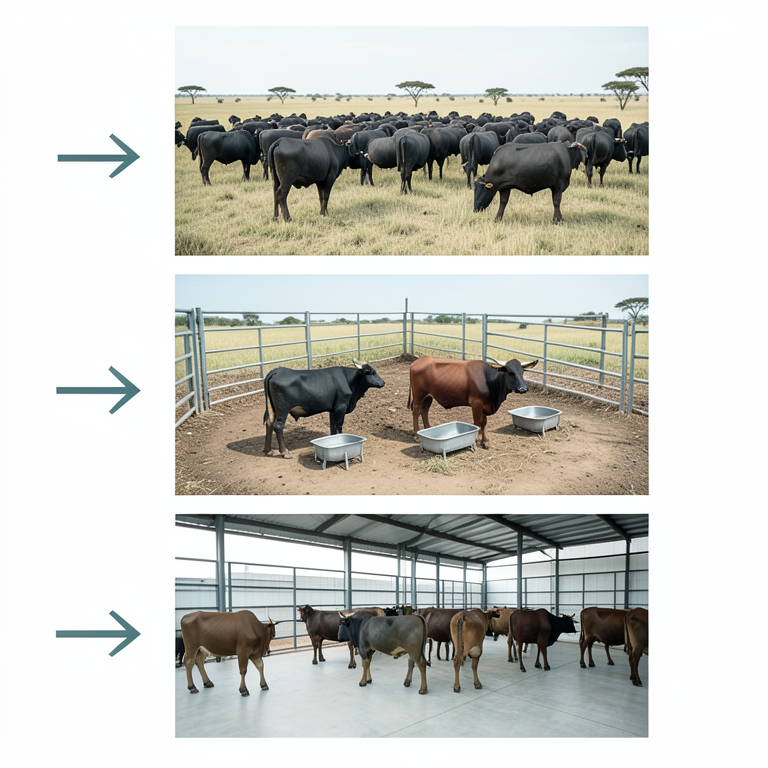
Beef Production Systems in Mubi
AI-generated conceptual illustration (African cattle (Bos indicus) in Nigeria). It explains the idea and does not show study data.
View source evidence ↗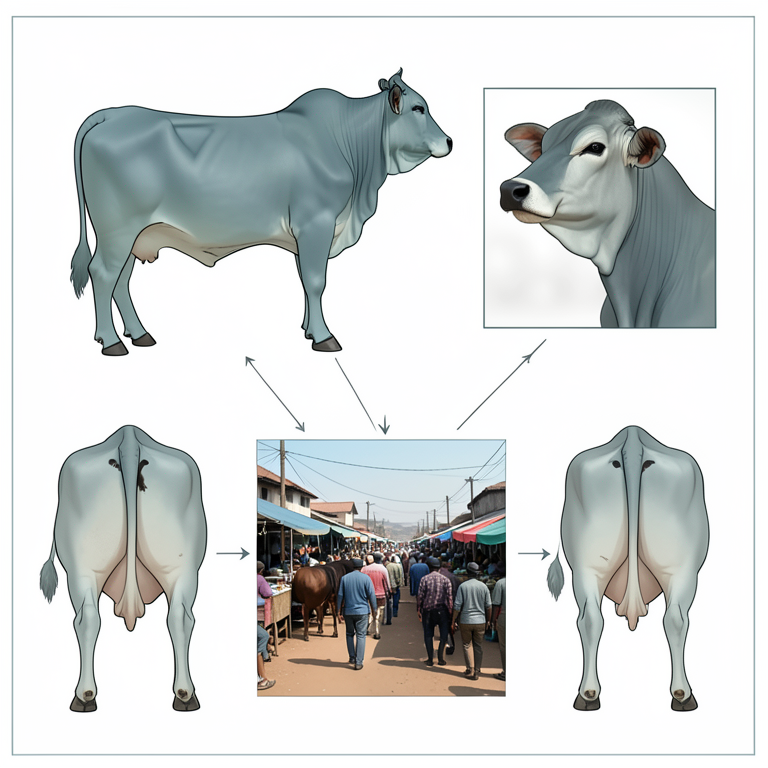
Price Determination Factors
AI-generated conceptual illustration (West African Zebu cattle). It explains the idea and does not show study data.
View source evidence ↗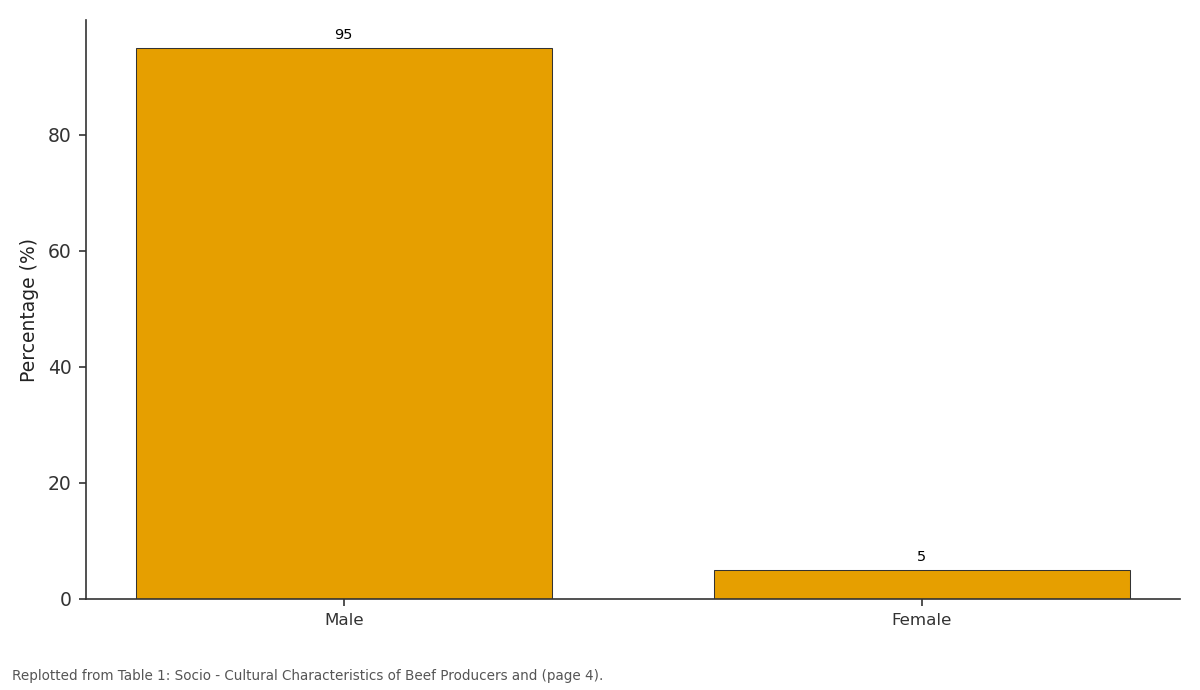
Percentage (%): Male vs Female
Replotted from Table 1 (page 4) of the original paper. Every bar is the paper's own table value.
View source evidence ↗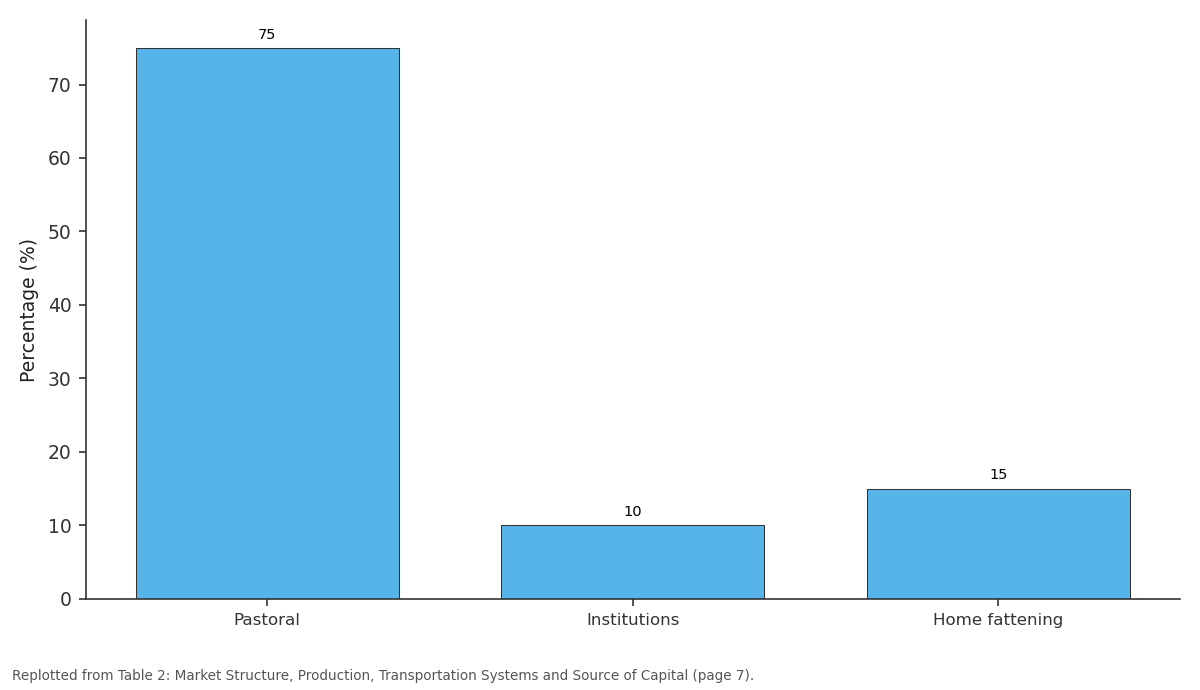
Percentage (%): Pastoral vs Institutions vs Home fattening
Replotted from Table 2 (page 7) of the original paper. Every bar is the paper's own table value.
View source evidence ↗Figures & tables
From the original paper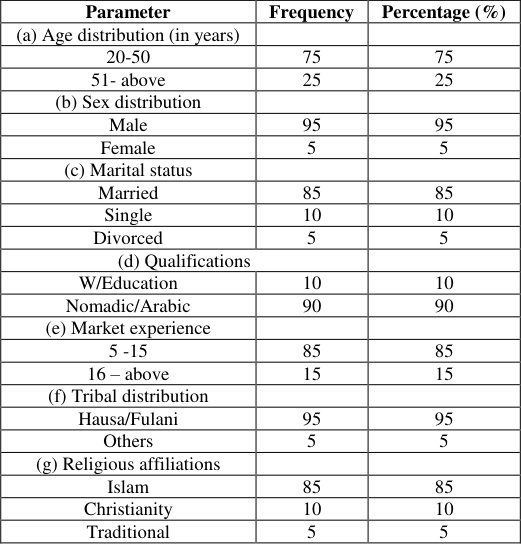 Table 1
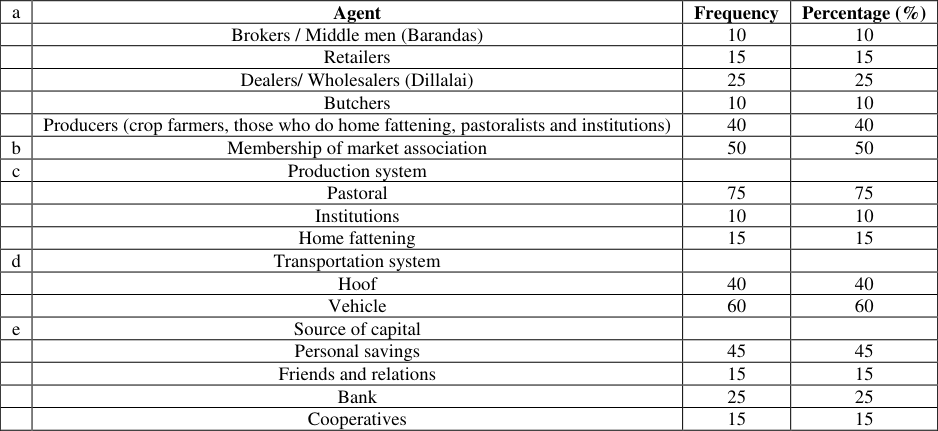 Table 2
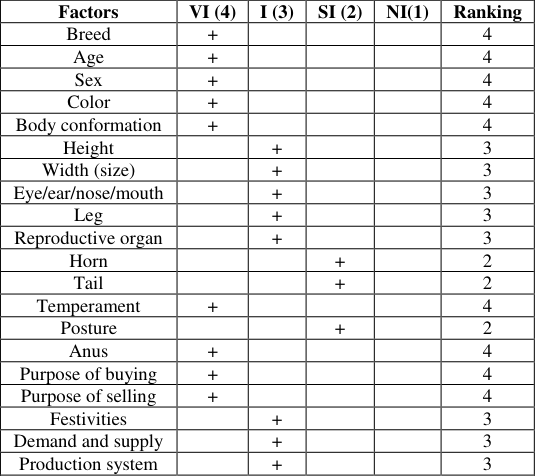 Table 3
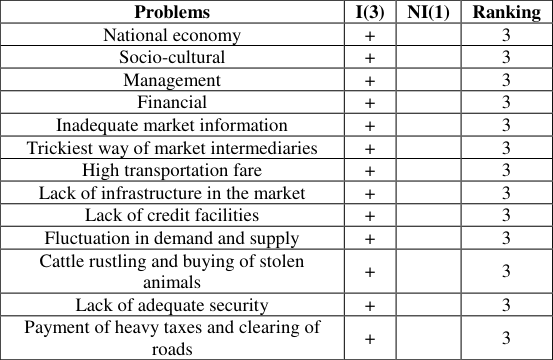 Table 4
Introduction
According to FAO (2015) [20] , the world has 1.468 billion head of cattle, many of which are used for dairy or draft with beef production being only by-the-way. All dairy and draft cattle end up as beef but not all beef cattle end up as dairy and draft cattle. There is no specific type of cattle produced for beef in Africa particularly Nigeria unlike the veal and baby beef produced in countries like North and South America, Australia and New Zealand. Most of the cattle produced in Africa are dual-purpose with no stratification and specialty in the industry. All the cattle produced in Africa attain maturity age of two and above years before they are slaughtered and considered good beef for human consumption. Consumption of veal or baby beef is not common and some times, considered abnormal in the African society. Most of the carcasses of calves recovered from the abattoirs or as a result of mortality after few months of calving are either thrown away or processed for feeding pet animals. Africans especially, Nigerians prefer meat of the matured cattle with good fats cover that is tough enough for chewing than soft and juicy beef from veal or calves. Nigeria is one of the leading countries in cattle production in sub-Saharan Africa (Ikpi, 1990) [23] . In 2008, the country had over 14.73 million cattle consisting of 1.47 million milking cows and 13.26 million beef cattle. Less than 1% of this population is managed commercially while the remaining ones are managed traditionally (Tibi and Aphunu, 2010) [51] . Under this system, there is the use of indigenous methods in all aspects of cattle production including marketing and health management (Abubakar and Garba, 2004; Mafimisebi, Oguntade, Fajeminsin, & Ayelari, 2012) [1,35] . This tilt towards the traditional management will have grave implications on cattle production, commercialization of cattle products and price determination.
International Journal of Veterinary Sciences and Animal Husbandry Cattle singly contribute about 12.7% of the agricultural gross domestic product (GDP) in Nigeria (CBN, 1999) [15] . The cattle industry provides a means of livelihood for a significant proportion of the livestock rearing (pastoral) households and participants in the cattle value chain in the sub-humid and semi-arid ecological zones of Nigeria (Adegeye, 1995; Okunmadewa, 1999; FAO, 2006) [6,44] . Although, there are many sources of animal protein in Nigeria, recent studies have shown that, cattle products are the predominant and the most commonly consumed animal protein sources. Thus, cattle are a highly valued livestock in Nigeria (Ikpi, 1990; Tewe, 1997; Tibi, & Aphunu, 2010) [23,50,51] where they are kept for beef, hide, milk or for traction (Ikpi, 1990; Tukur, & Maigandi, 1999) [23,52] . To some producers, cattle serve as a status symbol (Tibi, & Aphunu, 2010) [51] . From the foregoing, it is obvious why cattle production and marketing are notable employment and income-generating livelihood activities for many Nigerians (Mafimisebi and Okunmadewa, 2006) [33] . Cattle and beef trade provides the largest market in Nigeria with millions of Nigerians making their livelihood from various beef-related enterprises (Umar, Alamu, & Adeniyi, 2008) [54] . Consequently, the outcome of enhanced production and marketing of cattle and its products carry the potentials to better the income and nutritional status of households and positively impinge on their living standards. Efficient marketing plays an important requirement in the attempt to achieve wider accessibility and affordability of any product to consumers (Mafimisebi, 2011) [31] . This is obvious from the long established adage that, production and marketing constitute a band. Thus, lack of development in one will necessarily obstruct development in the other (Olayemi, 1973; Olayemi, 1994; Seperich, Woolverton, & Beirlein, 2002) [48,45] Marketing encompasses all business activities associated with the transfer of a product from the producers to the consumers (Kohls and Uhls, 2002) [29] . In the case of cattle, it is concerned with the movement of cattle from the pastoralists in the production locations in Northern Nigeria to the final consumers who are usually resident in Southern Nigeria (Omoruyi, Orhue, Akerobo, & Aghimien, 2000) [47] . The cattle marketing process makes possible the delivery of cattle to the buyers in the form, place and time needed. This process of bringing the cattle from where they are surplus or produced to where there are shortages or are consumed, a process known as arbitraging, needs to be fully understood to enhance the efficient working of cattle markets, which is vitally important in achieving sustainable and profitable agricultural commercialization in the livestock sub-sector in Nigeria (Mafimisebi, 2011, Mafimisebi, 2012) [35] . Marketing is an economic activity which stimulates further production and if efficiently done, both the producer and consumer get satisfied in the sense that, the former gets a sufficiently remunerative price for the product to continue to produce while the latter gets it at an affordable price that stimulates continued consumption (Umar, 2005; Mafimisebi, 2012) [35] . According to the National Livestock Project Division (NLPD, 1992) [42] , the supply of cattle and its products has witnessed a decline while the demand has been increasing with the result being a shortfall in the supply. The high cost of marketing cattle is often the commonly cited culprit for this situation. Owing to the considerable spatial separation of production area from consumption area and other ancillary factors, there is high handling cost especially in relation to cattle transportation (Filani, 2006) [22] . The objective of the study therefore, is to survey the current beef production systems and marketing in Nigeria as a means of encouraging entrepreneurship in animal agriculture.
Materials and Method
The Study Area Adamawa State is located at the area where the River Benue enters Nigeria from Cameroon Republic and is one of the six states in the North-East geopolitical zone of Nigeria. It lies between latitudes 7 0 and 11 0 North of the Equator and between longitudes 11 0 and 14 0 East of the Greenwich Meridian (Mohammed, 1999) [39] . It shares an international boundary with the Republic of Cameroon to the East and interstate boundaries with Borno to the North, Gombe to the North-West and Taraba to the South-West (Adebayo, 1999; ASMLS, 2010a) [39] , as shown in Figures Ia. According to Adebayo and Tukur (1997) [39] , Adamawa State covers an area land mass of about 38,741km². The state is divided into three Senatorial Zones (Northern, Central and Southern) which translated to agricultural zones as defined by INEC (1996) [24] , which are further sub-divided into21 Local Government Areas (LGAs) for administrative convenience. The State has a population of 2,102,053 persons (NPC, 1990) [43] . The main ethnic groups in the state are the Kilba, Higgi, Quadoquado, Lala, Yungur, Bwatiye, Chamba, Mbula, Margi, Ga'anda, Longuda, Kanakuru, Bille, Bura, Yandang, Fali, Gude, Verre, Fulani and Libo (Adebayo, & Tukur, 1997; Adebayo, 1999; ASMLS, 2010b) [39] . The dominant religions are Christianity and Islam, although some of its inhabitants still practice traditional African religions. The major occupation of Adamawa people is farming. The soil type is ferruginous tropical soils of Nigeria based on genetic classification of soils by the Food and Agricultural Organization of the United Nations (FAO, 1996).
Fig Ia: The Map of Nigeria Showing Adamawa State
The soils are a function of the underlying rocks, the seasonality of rainfall and the nature of the wood-land vegetation of the zone. The soils are derived from the basement complex, granite and gnesis that form the ranges of mountains. The mineral resources found in the state include iron, lead, zinc and limestone (Adebayo, & Tukur, 1997) [5] . The common relief features in the state are the Rivers Benue, Gongola, Yadzaram and Kiri Dam, Adamawa and Mandara mountains and Koma hills. The state has minimum and maximum rainfalls of 750 and 1050 mm per annum and average minimum and maximum temperatures of 15 0 C and 32 0 C, respectively. The relative humidity ranges between 20 and 30% with four distinct seasons that include early dry season (EDS, October -December); late dry season (LDS, January -March); early rainy season, (ERS, April -June) and late rainy season (LRS, July -September), according to Adebayo (1999) [39] . The vegetation type is best referred to as guinea savannah (Areola, 1983; Adebayo, & Tukur, 1997) [11,5] . The vegetation is made up of mainly grasses, aquatic weeds along river valleys and dry land weeds inter-sparse by shrubs and woody plants. Plant heights ranges from few centimeters (Short grasses) to about one meter tall (tall grasses), which form the bulk of animal feeds. Cash crops grown in the state include cotton and groundnuts, sugarcane, cowpea, benniseed, bambara nuts, tiger nuts, while food crops include maize, yam, cassava, sweet potatoes, guinea corn, millet and rice. The communities living on the banks of rivers engage in fishing, while the Fulani and other tribes who are not resident close to rivers are pastoralists who rear livestock such as cattle, sheep, goats, donkeys, few camels, horses and poultry for subsistence (Adebayo, & Tukur, 1997; Adebayo, 1999) [39] .
The Study Site
Mubi is located at the Northern part of old Sardauna Province, which now forms Adamawa North Senatorial district as defined by INEC (1996) [24] as shown in figure Ib. The region lies between latitude 9 0 30´´ and 11 0 North of the Equator and longitude 13 0 and 13 0 45´´ East of Green witch Meridian. It has an altitude of 696 meters above sea level with an annual mean rainfall of 1,220mm and a mean temperature of 15.2 0 C during Hamattan periods from November to February and 39.7 0 C in April (ADADP, 1986) [2] . The town essentially has a mountainous landscape transversed by River Yedzaram and many tributaries. Mandara and Adamawa Mountains form part of this undulating Landscape (Mansir, 2006) [36] . The Gude, Fali, Fulani and other tribes dominate the area which has a lot of pasture land. Mubi region is bordered in the North by Borno State, in the West by Hong and Song LGAs and in the South and East by the Republic of Cameroon. It has a land area of about 4,728.77 km² and human population of about 759,045, going by NPC, (1991) [43] census projected figure (Adebayo, & Tukur, 1991) [4] . It has an international cattle market linking neighboring and other countries such as Cameroon, Chad, Central Africa, Niger, Mali and Senegal to Southern Nigeria where cattle are consumed.
Selection of Respondents and Sampling Design
The research covered a period of 22 months (January, 2016 to November, 2017), during the survey, visits were paid to beef fattening sites, government institutions and Mubi international livestock market where respondents were identified. The objective of the study was explained to them and their permission obtained to participate in the study. Actual participation in the study was based on the willingness of respondents.
Data Collection
One hundred (100) beef producers and marketers were randomly selected for oral interviews, discussion and physical observations on beef production and marketing. Structured questionnaire were developed in English language and used to collect information on beef production systems, cattle market structure, socio-cultural characteristics of intermediaries and all the stakeholders, price determination dynamics, transportation methods and stakeholders satisfaction. Where a farmer did not understand English, vernacular languages were used.
Data Analysis
Data generated from the survey were subjected to descriptive statistics such as frequency distribution, percentages and means to explain the trend of beef production systems and marketing in the study area.
Results and Discussion
Socio-Cultural characteristics of beef producers and marketers in Mubi Table 1 highlights the socio-cultural characteristics of cattle marketers in Mubi, Adamawa State, Nigeria.
| Parameter | Frequency | Percentage (%) |
|---|---|---|
| (a) Age distribution (in years) | ||
| 20-50 | 75 | 75 |
| 51- above | 25 | 25 |
| (b) Sex distribution | ||
| Male | 95 | 95 |
| Female | 5 | 5 |
| (c) Marital status | ||
| Married | 85 | 85 |
| Single | 10 | 10 |
| Divorced | 5 | 5 |
| (d) Qualifications | ||
| W/Education | 10 | 10 |
| Nomadic/Arabic | 90 | 90 |
| (e) Market experience | ||
| 5 -15 | 85 | 85 |
| 16 – above | 15 | 15 |
| (f) Tribal distribution | ||
| Hausa/Fulani | 95 | 95 |
| Others | 5 | 5 |
| (g) Religious affiliations | ||
| Islam | 85 | 85 |
| Christianity | 10 | 10 |
| Traditional | 5 | 5 |
Table text extracted from the original PDF; superscript letters are shown inline. The original table image is below.
View original table image
(a) Age Distribution of Beef Producers and Marketers
Table 1a presents the results of beef producers and marketers based on age group which indicates that, seventy five percent (75%) are between the ages of 20 and 50 years, while twenty five percent (25%) fall within the age group of 51 years and above. This implies that, youths are more engaged in the business beef production and marketing in the study area. This is, also, possible because of the hectic and tasking nature of the business which requires enough strength characterized by a lot of brain work from the production, price negotiation to chasing, restraining, loading, off-loading and even transportation of the animals via hoof or vehicle to the end consumers. However, the aged (51 years old and above) can also, successfully participate in beef production and marketing business to earn a legitimate living with a little assistance from the young people. The results of this study agree with the report of FAO (1990) [18] which stated that, younger people are more actively involved in the cattle business in Africa. The results, also, corroborated that of Mafimisebi et al. (2013), who reported similar findings of 41 to 50 years old as major ages of cattle producers and marketers in Akure, Ondo State, Nigeria. This means that, majority of the beef cattle producers and marketers in Nigeria are still young and are within the active working class. This is, however, expected to influence their productivity and efficiency in the rigorous and energy sapping cattle production and marketing business.
(b) Sex Distribution of Beef Producers and Marketers
Table 1b revealed that, about ninety five percent (95%) of beef cattle producers and marketers in the study area are male, while only five percent (5%) are female. This was, also, possible because beef cattle production and marketing business in Africa and Nigeria in particular involves physical activities like struggling and wrestling to control the cattle using sticks and robes. The business is full of risk and hazards as some animals are wild and dangerous. The animals can fight their way to escape being sold and taken away. In addition, the Northern Muslims, which form the largest population of the beef cattle producers and marketers, do not allow their wives to go out for such hard business, as reported by Fenn (1977) [21] and Auwal (2005). It was additionally observed that, all beef cattle producers and marketers had to watch their backs in case of attack as they walk and meander amongst the animals tethered to begs, with others roaming about freely. It was also gathered that, people have been killed in the past by some sharp-pointed horned wild and temperamental animals. Apart from the risk of been hurt by the animals, there is also fear of armed robbers striking the production sites and market at any time since no security agents are physically seen around to scare armed robbers away. Some producers and marketers use charms to enable them maneuver their ways easily within the production sites and market without any challenge from the animals. Others use charms to make animals docile and easy to handle, to make sellers to sell at a giveaway price or buyers buy with good price and for protection against theft and intimidation from rivals. To ensure that the cattle business thrives and grow in capacity, beef cattle production and marketing business is usually ritualized. Producers and Marketers also confirmed that, during the dry season the market used to be over-crowded with a lot of people coming to buy cattle for either festivities or for shipment to the south. The entire market would be dusty, noisy and smoky. During the rainy seasons, the market is also dirty with waters mixed with cattle feces and left over feeds forcing producers and marketers to use rain boots and coats. Generally, men have the highest percentage of cattle business holdings because they are the bread winners, having reservoir of wealth and taking the responsibility of managing herds to sustain the family's livelihood. However, women and children, although relegated to the background, also control portions of the livestock holdings to support the family. Iro (1994) [25] reported that, cattle belong to individual family members and are usually managed and sold together with male family members assuming automatic rights to all cattle, making it difficult to determine cattle ownership by female family members. Swinton (1987) [49] however, reported that, women own most of the small ruminants and almost all of the poultry flocks.
(c) Marital Status of Beef Producers and Marketers
Table 1c shows that, eighty five percent (85%) of the beef cattle producers and marketers in the study area are married, ten percent (10%) single, while five percent (5%) divorced. This shows that, majority of the beef cattle producers and marketers are responsible Nigerians doing their lawful business to earn a living and support families. It also implies that, beef cattle production and marketing business is a profitable venture and if regulated well by the agencies concerned in the study area and Nigeria as a whole, it could keep on sustaining enumerable individuals and families. The results are in agreement with similar findings obtained by Kohls and Uhls (1985) [28] .
(d) Educational Qualifications of Beef Producers and Marketers
Table 1d presents the educational qualifications of beef cattle producers and marketers in the study area. The results indicate that, ninety percent (90%) had Nomadic/Arabic education, while only ten percent 10%) had Western education. This implies that, majority of the producers and marketers lack formal education because of their tribal and religion affiliations which do not encourage Western education.
Again, this low level of Western education recorded amongst the beef cattle producers and marketers in this study may be connected to their family backgrounds who were born and brought up in the rural areas and have herded before coming to settle in the city. This lack of Western education is a great set back to them and will have negative impact in the business of beef cattle production and marketing in the study area. The results coincide with that of Mubi et al. (2012) [41] who reported similar findings in Mubi South L.G.A., Adamawa State Nigeria. However, the results are in contrast with Wakili (1996) [55] , who reported more cattle marketers with Western education than those with Qur'anic education in Gombe State, Nigeria.
(e) Experience of Beef Producers and Marketers
Table 1c shows that, all the producers and marketers had enough experiences in the business with eighty five percent (85%) having 5 -15 years, while fifteen percent (15%) had 16 years and above. This also implies that, many of the producers and marketers have been in the business for a long period of time and it is a true reflection of their ages as majorities are youths. It was observed that, Mubi cattle market is fast expanding with high number of cattle trooping in and more people joining the business. The results corroborated that of Mubi et al. (2012) [41] , who reported similar findings in Mubi South L.G.A., Adamawa State Nigeria.
(f) Tribal Distribution of Beef Producers and Marketers
The results show that, ninety five percent (95%) of beef cattle producers and marketers in the study area are from Hausa/Fulani tribes, while only five percent (5%) formed the other tribes, as shown in Table 1f. This is because in the time past, people from other tribes considered beef cattle production and marketing as a lazy man's business and that it is only relevant to those who herd and produce cattle. It was also observed that, Hausa-Fulani men always try to block other tribes from knowing the secret and joining the business. Any person who is not from Hausa-Fulani tribe, even with some certain percentage of cattle holdings, will have to come to the market through Hausa-Fulani middleman to sell his animals on commission. That is how Hausa-Fulani men earn their living year-in-year out at the expense of other tribes without investing anything. They hate to see the business saturated with other tribes since that will affect their income. They come to the market with empty pockets and get home with about ten (N10,000) to twenty (N20,000) thousand naira per market day, even after doing some shopping.
The few beef cattle producers and marketers recorded by other tribes in this study are those categories of people who don't have alternative business; otherwise they would have opted for other businesses. Most of them serve under their masters as apprentices with little or no capital of their own. Those masters are usually from the Hausa-Fulani tribe. The apprentices are recruited perhaps just to strike a balance in the market ethnicity ratio and not to grow and become dealers or retailers like the Hausa-Fulanis. Other reason for recruiting such apprentices is to help in case other tribes come to sell their animals, the non-Hausa-Fulani apprentices will flow better in such transactions.
The results as shown in Table 1g depict that, eighty five percent (85%) of the beef cattle producers and marketers are Muslims, while ten (10%) and five percent (5%) are Christians and traditionalist, respectively. This is quite possible because of their tribal status which indicated that, most of them are Hausa-Fulani by tribe and are well known for Islamic religion. This is evident that, when it is time for the normal 5-time prayers, the entire market remains quiet and stands still. The few non-Muslims would be sighted in groups here and there, waiting. They are the people always acting at the background unable to take decisions of their own for fear of intimidation and if they do not dance to the tune of their Hausa-Fulani masters, they would be frustrated out of the business in no time.
Beef Production and Marketing Dynamics (a) Beef Production and Marketing agents
The results in Table 2 show that, the marketing dynamics among other things in Mubi include fourty percent (40%) Producers (pastoralists, fatteners and institutions), ten percent (10%) Brokers/Middle men (Barandas), fifteen percent (15%) Retailers, twenty five percent (25%) Dealers/ Wholesalers (Dillalai) and ten percent (10%) Butchers as shown in figure III.
| a | Agent | Frequency | Percentage (%) |
|---|---|---|---|
| Brokers / Middle men (Barandas) | 10 | 10 | |
| Retailers | 15 | 15 | |
| Dealers/ Wholesalers (Dillalai) | 25 | 25 | |
| Butchers | 10 | 10 | |
| Producers (crop farmers, those who do home fattening, pastoralists and institutions) | 40 | 40 | |
| b | Membership of market association | 50 | 50 |
| c | Production system | ||
| Pastoral | 75 | 75 | |
| Institutions | 10 | 10 | |
| Home fattening | 15 | 15 | |
| d | Transportation system | ||
| Hoof | 40 | 40 | |
| Vehicle | 60 | 60 | |
| e | Source of capital | ||
| Personal savings | 45 | 45 | |
| Friends and relations | 15 | 15 | |
| Bank | 25 | 25 | |
| Cooperatives | 15 | 15 |
Table text extracted from the original PDF; superscript letters are shown inline. The original table image is below.
View original table image
The Brokers or Middle men, commonly known as Barandas, are like market thugs who hang around the sheds in various markets in Nigeria purportedly waiting to provide help or assistance to new buyers or sellers usually regarded as amateurs in the cattle business. The new buyers are majorly final consumers (group of individuals, householders, restaurant operators, cooperative members etc) or subretailers who come to buy cattle from dealers or retailers in small numbers for re-sale to prospective buyers or farmers who come to sell and buy replacement stocks or those who fatten cattle at homes. It is, usually, more costly to buy through the brokers, because they charge high commissions. Thus, experienced cattle buyers avoid doing business with them. This accounts for the reason brokers concentrate their attention on new buyers or sellers who are novices or beginners in the cattle business. These results agree with Ajiya (1998) [7] and Butchers are persons who buy animals, slaughter, dress, sell the meat or do any combination of these three tasks. They come to the market purposely to scout for old culled cheap animals (gambaye) for slaughter at the abattoir and distribute to various meat selling points within the city or transport it to nearby markets. They also, go for sick animals which cannot be bought by farmers for grazing no purchased by cattle dealers who ship animals to the Southern Nigeria. The butchers negotiate prices very well and make sure the cost of buying the animals favors them at the expense of the producers. These Butchers normally don't have enough money for the business. Most times, they buy on credit or pay in installments or try to beat down cost by all means. They hardly go for healthy or well fattened animals and normally buy only few animals, like 2 -3, at a time.
Other category of marketing agents include: Crop farmers and pastoralists who perhaps come to the market to sell old culled or fattened animals or grains to get young animals as a replacement stock. Sometimes, they sell the animals to get money for salt lick, potash, drugs, bride price, settling court case, etc. Many at times they are cheated by selling their animals at a give-away price depending on the magnitude of the problem or reason for selling. These agents buy heifers, bullocks and young cows with one or two parity. They pay any amount suitable to them as measured by the desirable characteristics or traits possessed by the animals. They usually go for 2 -4 animals at a time and are chased home in hoof or transported in pick-up vehicles.
There are other groups also, who do home fattening or fatten at the market square using concentrates such as brands, hay, cowpea husks, groundnut hum and cotton seed cake meals.
The types of animals brought by them look healthy, sound with good body conformation scores. The animals attract higher prices, especially when there are many dealers with few animals to buy. These people buy their fattening stock during the dry season when the animals have lost a lot of weight because of lack of enough pasture and poor nutrient content of the forages. They fatten the animals for three to four months and bring them out for sale.
The last category of market agents are the institutions, who cull their animals in mass and are brought to the market to source for replacement stock, buy drugs, feeds, salt lick and for administrative purposes. This group hardly sells in singles, mostly if their animals are not slaughtered within the institution for staff to carry the meat and pay at the end of the month or deducted from their salaries; they are brought en masse to the market for dealers to buy. The animals are priced collectively across the board which are usually sold at cheaper prices compared to that of other agents since these are government-owned farms which is believed to be no body's property. Another important reason for this association is to establish and promote thrift cooperatives which are the major source of credit/loans for the marketers. The most important reasons for marketers joining the market association are: access to soft loan/credit, social interactions, ethnic affiliations, business experience/information sharing (in that order). It is noteworthy that, the market association provides a rallying point for members during social occasions. The results also buttressed the earlier reports of Akinrinola and Mafimisebi (2010) [8] ; Mafimisebi et al. (2013) in Southern Nigeria.
(b) Membership of market association
(b) Membership of market association
(c) Production systems
The commonly practiced systems of beef production in Nigeria include: pastoralism, grass and concentrate fattening at homes and government owned institutions. Cattle ranching are usually practiced by government owned institutions and big time politicians who consider keeping cattle as a hobby and sign of economic status in the society. Most of the ranches in Nigeria are for dairy production and to some extend increasing the number of stock in the herds. Animals are culled or slaughtered for beef under ranching when they are only too old or sick to manage.
i. Pastoralism
The results in table 2c show that, seventy five percent (75%) of the animals sold or bought in Mubi international cattle market are produced by pastoralists in a traditional way. This implies that, pastoralists constitute a major socio-economic group in the country (Moutari, 2008) [40] . These nomads own more than 93% of the country's estimated 15.3 million cattle population (Tibi & Aphunu, 2010) [51] . Pastoralist livestock industry is therefore, the country's reservoir of animals for slaughter, milk, manure production as well as draft power (Kubkomawa et al., 2011) [30] . The animals are brought to the market mostly by hooves from all over the northern states of Nigeria, neighboring and other countries like Chad, Cameroon, Central Africa, Niger, Mali and Senegal.
ii. Home Fattening (Grass and Concentrate Fattening) However, fifteen percent (15%) of the animals parading the market are produced through grass and concentrate fattening at homes. In grass fattening beef production programme, farmers in northern Nigeria usually buy adult cattle (bulls and cows) that have good characteristics of gaining weights within three to four months of grazing. The animals are usually bought during the early raining season between April and June. At this period, the animals are cheaper because of the lost weights and body conformation due to the critical period of forage and water scarcity during the dry season. The animals are bought with the aim of grass fattening them during the late raining season (July to September) where forage and water resources are abundant. They are dewormed; administered multivitamins to boost their appetite and utilize forages better to gain weights between three to four months as can be seen in figure IV.
Fig IV: Grass fattening of Zebu Cattle in Mubi, Adamawa State, Nigeria
This operation is usually done to target the festive periods of the year (Christmas and New Year) celebrations. Animals that are bought for example fifty thousand (N50, 000) naira each after just three to four months of grass fattening, are taken to the northern livestock markets and sold at about one hundred and twenty thousand (N120, 000) naira each. The animals are fed basically forages with few cases of supplementary feeding. The animals are then collated and assembled for shipment by cattle dealers to southern livestock markets where they are sold between one hundred and fifty (N150, 000) and two hundred thousand (N200, 000) naira each. Another category of people who involve in grass fattening are cattle dealers themselves. They buy starved, emaciated and physically weak cattle from the north and ship them to the south in hundreds. Before the animals are sold, the dealers engage the services of some herdsmen who graze and fatten the animals for three to four months in the southern ever green pasture. They may be given mineral supplement like salt, potash and probably antibiotics to take care of some health conditions. Cattle dealers spend little on the animals with huge turn over at the end of the fattening programme. This system of beef production is encouraged especially for small scale farmers that combine animal agriculture with other businesses to improve their standard of living. The system is not for breeding purposes to increase the number of stock but for short period of beef production. Most of the animals used for this type of operations are young bulls and some few cows that might have exhausted their productive lives and are ready to be culled. Concentrate fattening of beef cattle is basically done by the big time cattle marketers and producers in the northern Nigeria. The producers buy mostly adult young bulls of 2 to 4 years that have good characteristics of gaining weights within three to four months of feedlot operation. The animals are confined or tethered under the sun and fed concentrates such as cotton seed cake meal, groundnut cake meal, pam kennel meal, cowpea husk, groundnut straws, corn chaffs, corn brans and other crop residues, molasses, by-products and mineral resources. They are also given antihelminthes, multivitamins and plenty of water. They are kept for three to four months under good management and are sold especially to cattle dealers who ship them down to the southern markets. This type of production is worthwhile consideration the input and the return at the end of the operation. It is a business worth trying with less space requirements and risk as shown in figure V.
iii. Government Institutions
The results show that, ten percent (10%) of the beef cattle that come to market are from institutions of higher learning who keep animals for research and teaching purposes. The animals from this group are usually eye catching and attract higher prices because of their shining looks and good body condition scores as shown in figure VI. The results, also, corroborated that of Mubi et al. (2012) [41] , who reported similar findings in Mubi South LGA, Adamawa State, Nigeria. Fenn (1977) [21] also indicated that, marketing of cattle involves variety of transportation methods such as road, rail, ship and air. This depends to a large extend on the road network and reliability of the roads that link producers to the market towns. Akinwumi (1986) [9] also observed that, the distance covered, type of vehicles used, the number of animals carried and security checkpoints all together affect transportation cost. 2e shows that, fourty five percent (45%) of the marketers get capital from their personal savings, fifteen percent (15%) from friends and relations, twenty five percent (25%) from Banks, while fifteen percent (15%) from cooperatives. The results also agree with Mafimisebi et al.
(2013) [34] , who reported similar findings in Southern Nigeria. The amount and source of capital to start the cattle marketing business with, is an important issue to consider. This is because, how much an individual marketer has and the source of his capital determines state of his business. This also, influences his relationship with others and the financial institutions in Nigeria. People tend to show more loyalty and trust to well established marketers who invest huge amounts of money into the business. The general public, government and financial institutions have more confidence in those marketers that have their investments running into millions of naira. This category of individuals can single-handedly charter one or more trucks to convey the animals to the southern markets. They can afford the money to clear the road, pay tax and still sustain the business even when they encounter tragedy such as armed robbery and accident resulting to loss of animals and lives. They are the marketers that have access to bank loans because of their influence, connections and their ability to fulfill the loan requirements.
On the other hand, the small scale (low capital) agents operate under the support of the Buzau's who have gained ground and have sound footings. This class of marketers find it difficult to access bank loans because of the stringent conditions of Nigerian banks such as provision of guarantors, collaterals and exorbitant interest rates. In the Nigerian business environment, the rich continue to get richer while the poor continue to get poorer, because the Nigerian banking policies do not favor the small and medium scale entrepreneurs.
Factors considered in beef cattle price formation
The results show that, there are twenty three (23) phenotypic traits buyers put into consideration before arriving at an agreed price of animals in the study area, as shown in Table 3. Market prices of cattle in Mubi are determined by visual evaluation which incorporates elements of all these factors. But, the price indicators viewed as necessary and very important include breed, age, sex, colour, body condition score, temperament, anus stain, and all these depend to some extent on the purpose of buying. Breeds are ranked or valued high according to their popularity and utility. White Fulani (Bunaji), for instance, are generally accepted to be superior to all other breeds of Zebu because of its ability to resist diseases and thrive under a variety of conditions (Meghen et al., 1999) [38] . The White Fulani cattle are also, important for their genetic predisposition of hardiness, heat tolerance and adaptation to local conditions. The breed is a triple-purpose animal, it may be fattened for beef, kept for milk production, or used as draught animal, especially the bull. They provide much of the beef consumed throughout Nigeria (Alphonsus et al., 2012) [10] . Ages and sexes of animals are viewed very important in cattle marketing depending on the purpose of purchase. Marketers buying animals as replacement stock go for younger bulls and heifers. The marketers buying for slaughter or shipment down South go for adult well fed animals which attract higher prices. Older cattle have less fat cover on their backs, while bulls have higher BCS compared to old cows (Joe, 2010) [26] . A cow's reproductive performance is closely associated with her age and body energy reserves. Similarly, cows with low body condition scores have reduced fertility rates, milk yield, late post-partum estrus and low weaning weights (Clay, Jason, & Ron, 2002) [16] . Higher body condition scores precede higher dressing out percentage with good quality meat which, also, attracts greater market values.
| Factors | VI (4) | I (3) | SI (2) | NI(1) | Ranking |
|---|---|---|---|---|---|
| Breed | + | 4 | |||
| Age | + | 4 | |||
| Sex | + | 4 | |||
| Color | + | 4 | |||
| Body conformation | + | 4 | |||
| Height | + | 3 | |||
| Width (size) | + | 3 | |||
| Eye/ear/nose/mouth | + | 3 | |||
| Leg | + | 3 | |||
| Reproductive organ | + | 3 | |||
| Horn | + | 2 | |||
| Tail | + | 2 | |||
| Temperament | + | 4 | |||
| Posture | + | 2 | |||
| Anus | + | 4 | |||
| Purpose of buying | + | 4 | |||
| Purpose of selling | + | 4 | |||
| Festivities | + | 3 | |||
| Demand and supply | + | 3 | |||
| Production system | + | 3 |
Table text extracted from the original PDF; superscript letters are shown inline. The original table image is below.
View original table image
Color influences price determination because of belief and the effect of albeddo in relation to animal's physiological status. It was gathered that, coat color contributes to physiological adaptation in cattle and mediates response to thermal stress. Cattle with light colored silk coats absorb less heat from the environment than dark colored woolly-coated. Coat color is a qualitative trait and an indicator of genetic superiority or productive adaptability of animals to heat tolerance. The results support McManus et al. (2011) [37] ; Fadare, Peters, Adeleke, and Ozoje (2012) [17] , who reported similar findings in Southern Nigeria. Temperament is the posture (docileness or aggressiveness) of an animal, especially, in the market place where danger is sensed. Some animals appear hostile and wild making them difficult to control and handle especially in a strange over crowded environment, while others look cool and docile, which can be easily controlled and handled by even strangers and children. This trait also, affects price of the animal, depending on the purpose of buying. For those buying for slaughter, temperament will not pose much threat. But for farmers buying to replace the old stock, it's a serious concern to have such an aggressive animal. Anus stain reflects a sign of diarrhea or ill-health. An experienced producer would not worry much about that because he/she knows what to give to the animals immediately the animal is taken home. Butchers, also, would not bother as the sign of diarrhea will not stop him from slaughtering the animal. Other factors like reproductive organ, eye, nose, ear, mouth, tail, horn, height, width though important have no much effect on the final dressing out percentage as shown in figures X, XI, XII, XIII and XIV. It is only those buying for grazing as breeding stock that would consider all these factors. Breeding stocks need well developed reproductive organs including mammary glands to be able to produce enough milk for the young ones. They also need sound footings to carry their unborn fetuses while grazing. Festivities demand and supply and production system, also, influence prices of these animals. Pastoralists don't go for animals fattened at home as replacement stock because those home fattened animals are not used to grazing and most of them have over-grown hooves that will not allow them free movement in the bush. It is observed that, an animal is valued for its quality and utility attributes which buyers evaluate when making a purchase decision. Hence, the observed market price for an animal is the sum of the implicit prices paid for each quality attributes. However, in most empirical studies, the observed prices may reflect not only consumer preferences but also attributes of buyers and sellers. The market price of different types of animals is the final price buyers are willing to pay for each quality attribute that enhances utility, the socioeconomic attributes of sellers and buyers and the political organization of the market setting. The results concur with the earlier studies of Seperich et al. (2002) [48] ; Mafimisebi (2011) [31] ; Mubi et al. (2012) [41] , who reported similar findings in Nigeria.
Constraints faced by beef producers and marketers
Table 4 shows some of the constraints identified to affect beef cattle producers and marketers in the study area. All the problems are viewed as crucial and constitute bottlenecks in beef cattle production and marketing business. There has never been any accurate means of estimating the level of production and beef consumption in the country. There are no records of private slaughtering. The records on government farms are disjointed or not properly kept. As such, lack of reliable statistics hampers our assessment of achievement or otherwise in beef industry. The production is short of the ever increasing national demand. The problems are extremely diversebreeding, nutrition, production system, socio-economic and financial constraints. This is true even within Nigeria because of various climatic and ecological differences, ranging from hot savannah zone where livestock production is based on pastoral system to humid zones with high rainfall in the south where utilization of the abundant pasture resources and water is highly limited by tsetse flies and social land pressures. In beef production and marketing, the usual constraints faced by producers are: Beef production is a traditional occupation of the Fulanis and Shuwas in Nigeria. They are characterized by the love of animals, the dependence on daily milk economy, and annual transhumant system of production possibly forced on them by the agro-climatic constraints, and hence a constant base shifting to meet the nutritional requirements of their animals. As migrating people, their requirements are limited and because of remote living to satisfy their livestock nutritional demand they are not much concerned with education as an agent of change. Despite all efforts to settle the livestock rearers by different governments, the level of achievement is still negligible. Overstocking often leads to overgrazing, degradation of environment and a shift to new area thereby further encouraging strict adherence to pastoral way of life rather than integration of animals and crop production as required of a settled farmer. The land tenure systems, which is a necessary pre-requisite for livestock development does not favour the present day livestock/beef cattle rearers in Nigeria. Many of the rearers would have to graze their animals on lands other than their own. With this and other factors such as finance, education, etc. it becomes very difficult if not impossible to impart new knowledge and technical innovations to the livestock rearers to boost their productive capability. The unfavorable land tenure systems coupled with the grazing laws resulting to difficulty in beef production in Nigeria. Management problems of beef cattle include nutrition, breed and breeding, housing, disease control, health care delivery, environmental factors. To get more beef, there is need to improve the environmental factors directly affecting production. Emphasis was placed in the past on developing a high genetic potential for production by introduction of exotic blood. The nation can do better in beef industry development based on the existing highly adapted breeds. Biological efficiency however, without regard for environment which was to support it is undesirable and often leads to failure. Nutrition is the most important single factor, apart from endemic diseases control, as a constraint to livestock production in Nigeria. Wide seasonal variations have an important influence on food production. Irregular precipitation coupled with high rates of evaporation brings about two seasons. When there is high variability in feed supplies, marked fluctuations arise in the weight gain of grazing animals causing poor quality meat. Improvement in pasture is very expensive and land gradient in some cases does not lend itself to mechanization. Thus, there is need for concentrate supplementation. Lack of improvement in crop yields and the competition between human and animals as well as brewing industries for the available grains makes nutritional requirement at reasonable cost more difficult to achieve. The beef industry is also faced with insidious economic disease which leads to breeding inefficiency, reduced weight gain, decreased feed efficiency, poor condition scores and even death. Beef industry in Nigeria; suffer untold hardship despite government effort on lending policies to assist livestock farmers through injection of money from financial the institutions. However, the socio-cultural attitudes of beef cattle raisers, the slow rate of production, returns and recovery of loans, lack of technical know-how on processing loans and lack of security guarantee are parts of the problems leading to low financing of beef industry up to the present time.
| Problems | I(3) | NI(1) | Ranking |
|---|---|---|---|
| National economy | + | 3 | |
| Socio-cultural | + | 3 | |
| Management | + | 3 | |
| Financial | + | 3 | |
| Inadequate market information | + | 3 | |
| Trickiest way of market intermediaries | + | 3 | |
| High transportation fare | + | 3 | |
| Lack of infrastructure in the market | + | 3 | |
| Lack of credit facilities | + | 3 | |
| Fluctuation in demand and supply | + | 3 | |
| Cattle rustling and buying of stolen animals | + | 3 | |
| Lack of adequate security | + | 3 | |
| Payment of heavy taxes and clearing of roads | + | 3 |
Table text extracted from the original PDF; superscript letters are shown inline. The original table image is below.
View original table image
There is lack of adequate means of disseminating marketing information to both the producers, sellers and buyers because majority of actors reside and are based in remote areas, where telecommunication services are seriously lacking. They come to cities or market towns only during market days to do their transactions and retire back to the villages. Only few of the marketers who stay in towns and cities have access to telecommunication and regularly get in touch with those in the Southern markets and have enough information on the current state of things in the Nigerian markets. The primary producers are left in the dark and are convinced to take any price given to them, usually lower than what is expected, because the producers do not have relevant information on the market. Though recently, with the advent of GSM, marketers are able to pass vital marketing information across to one another. The market integration, government's livestock marketing strategies are also yielding the desired result. The numerous cattle markets (Ticke) located all over Nigeria are bringing the Fulanis closer to the community. For example, the Fulanis are now exchanging livestock with horticultural produce and hardware. The markets are an important avenue where the Fulanis and farmers are sharing information about pastoral and agricultural innovations. Markets have, also, become the place for learning about governmental policies. The Fulanis are using markets for social interaction such as conducting meetings, marriage arrangements and settlement of disputes. The intermediaries, who are usually seen as greedy people, suffocate the market by over-charging the consumers and under-paying the producers and also influence the price of beef. In the study area, the value of an animal is determined by visual and tactile examination. Scales are seldom used. The sellers and the buyers prefer appraising the animal by their physical appearance. Combining their business acumen and extortion, these cattle traders have become wealthier and more influential than the primary producers. These mediators, most of them non-Fulanis, maintain a large network of representatives. They have chains of markets within and beyond Nigeria. The middlemen, who receive three to five percent sales commission (la'ada), perform the important task of transporting the animals to the market, protecting the herds from bandits, and ensuring that contractual obligations between the sellers and the buyers are fulfilled. At the village level, the cattle producers take the herds to the brokers. Sometimes, however, the brokers themselves go to the encampments to buy the animals directly from the producers. An animal may change hands up to three times before reaching the slaughter slab. Through trading, good relationships based on trust have developed between the producers and the cattle brokers, despite the exploitation of the former by the latter. Transportation of cattle to the Nigerian markets are faced with so many issues, especially the movement of cattle on hooves results in frequent thefts, straying, accidents and transit mortalities. During the journey, the Fulani men whip, traumatize and subject the animals to walking up to twenty to thirty kilometers a day with little time to graze or drink water. The usually animals arrive markets in a very bad or poor state with many of them too weak to stand and have to be slaughtered immediately. Cattle lose up to forty to fifty percent of their weight in such a long journey of 288 kilometers from Northern Nigeria to Southern Nigeria. The results are in agreement with Kefyalew and Addis (2015) [27] , who reported similar findings on beef cattle marketing and illegal trading in North-Western Amhara, Ethiopia.
But by vehicle, it takes just one to two days to drive animals from the North to the Southern markets with minimal loss of weights. The speed of road haulage has resulted in an oversupply of cattle in the Southern markets, leading to a beef glut and a fall in cattle prices. The Fulanis or producers, who do not own the vehicles, rely on the middle-men to haul the herds. Important in distinguishing merchantable stock are transporters who may be more important than the primary producers in cattle marketing. Though the services offered by these freighters are inexpensive considering the huge cost of fuel, vehicles and spare parts in Nigeria, especially the North. Animals transported by vehicle face a number of difficulties throughout the journey. Animals are kept standing, without food or water and most rural roads are seasonal and inoperable during the greater part of the year. Trucks are few and are operated for extended hours which are prone to accidents because they are overloaded and travel on laterite.
In the absence of functional insurance schemes in Nigeria, some Fulanis or producers are reluctant to use road haulage for lack of safety. The government policies of providing infrastructure and credit facilities such as the extension of roads that will link rural producers with urban consumers, provision of fences, scales, grains, freight facilities, feed lots, meat markets, retail sheds, fattening centers, grazing spaces, veterinary inspection at the livestock evacuation centers and cooperative societies are weak and non-functional.
The seasonal availability of herds, the prevailing environmental conditions, the demand for cash, and the price of stock affect the quantity of animals the Fulanis or producers take to the markets. Animals reach their highest prices during the rainy to early dry seasons when they are fattest. Livestock sales peak during droughts, epidemics, or dry-seasons when selling becomes as much a way of getting rid of sick stock as it is of balancing herd size with water and pasture availability. Livestock dealers report the influx of sick and impoverished animals during famines or epidemics, resulting in beef glut. The Fulanis sell animals to buy salt, cloth, food, and animal feed. They, also, sell to buy luxury goods such as radios, bicycles, motorcycles and furniture. In some cases, the motive is to trade a bull to buy two or more calves, to marry, or to go to Mecca for pilgrimage. An urgent demand for cash may compel the marketing of an animal. The Fulani cattle-owners use sales proceeds to pay school fees and fines for crop damage, and pay taxes, as it were in the past. The purchase of household needs and the meeting of important social and religious commitments are strong reasons for a Fulani man to take his animals to the market. There are, also, many cases of cattle rustling and marketers buying stolen cattle, landing them into Police net. Cattle are snatched at gun point on transit and armed robbers storming the cattle markets, carting away millions of naira belonging to marketers. The recurring insecurity in many parts of the country involving cattle movement has resulted in the frequent ethnic clashes where the Fulani and crop farmers continue to kill themselves without mercy. Recently, newspapers have reported disruption of cattle movement to the East as a result of the crisis in the middle belt. It is also, obvious that, the escalation of animosity against the Fulani by southern tribes have forced a reduction in commercial activities in the cattle markets. At one time, for instance, the Fulani and the cattle brokers threatened to close the cattle market in Enugu and move it northward to Makurdi, if attacks on the Fulani and their cattle continue in the South-East which also affects the marketers and consumers as well.
The heavy taxes leveled against the cattle marketers and incessant exploitation by security agents on our high ways call for serious worry. These security outfits know all the market days and even are familiar with feeder roads linking each village to the main market town. They collect an average of two to five hundred naira per vehicle loaded with cattle to Mubi international cattle market. Marketers spend two to three hundred thousand naira just for road clearance from the North to the South. All these impediments have gross negative impact on the producer and the final consumer, who are always left unfulfilled.
Conclusion
Beef production and marketing in Mubi, Adamawa State is predominated by experienced, married, male Hausa-Fulani Muslims aged, mostly, 20 -50 years. The producers and marketers have limited western education, indicating limited change in the socio-cultural status of actors in the face of a rapidly changing marketing environment, exemplified by the shrinking facilities and capital resources. Beef cattle production and marketing dynamics involves pastoralism, home fattening, buying, selling, brokering, retailing, dealing, transporting and butchering. It is, therefore, concluded that, beef cattle production and marketing in the study area is a profitable venture if special consideration is given to tackle the bottlenecks militating against the smooth production, transactions and efficient marketing processes.
Recommendations
The following recommendations were made to aid in improving the beef cattle production and marketing dynamics in Mubi, Adamawa State, Nigeria. Government should intensify efforts to encourage cattle production by providing modern breeding facilities such as AI stations, loan or credit incentives through commercial banks. Security outfits should be established in the market to prevent the problem of theft, marketers should form strong organization to see that, any strange or suspected person that brought cattle to the market is strictly scrutinized before selling. Local Government Council should assist in formation of a body charged with the responsibilities of passing information to producers and marketers on the supply, demand and price of cattle in the market. Government should encourage the herdsmen to settle in one place by establishing grazing reserves, range land or pasture lands. There is need for the provision of modern cattle marketing facilities like standard weighing scales, loading spaces, and grades in the markets to help in transforming the market from the current traditional system. Government should provide more veterinary facilities to minimize incidence of diseases and parasites. Cattle should be properly checked before buying and selling. Quarantine stations should be located in strategic places to prevent diseased animals getting into the market. Beef quality control should be adhered to for example; drug withdrawal period should be considered before slaughtering of cattle for public consumption. Hygienic beef processing and handling procedures should be adhered to.
References
54 in the original paper- Abubakar IA, Garba HS. A Study of Traditional Methods for Control of Ticks in Sokoto State, Nigeria. Proceedings of the 29th Annual Conference of the Nigerian Society for Animal Production, 2004; 29:87-88.
- Adadp. Adamawa Agricultural Development Programme. Method of Vegetable Gardening, 1986, 3-4.
- Adebayo AA. Climate, Sunshine, Temperature, Relative humidity and Rainfall. Journal of Applied Sciences and Management. 1999; 1:69-72.
- Adebayo AA, Tukur AL. Adamawa State In maps. Paraclete Publishing company Yola, Adamawa State, Nigria, 1991, 35-40.
- Adebayo AA, Tukur AL. Adamawa state in maps. Paraclete Publishing company Yola, Adamawa State, Nigria, 1997, 8-45.
- Adegeye AJ. Statistical Analysis of Demand for Beef in the Western State of Nigeria. Bulletin of Rural Economics and Development, 1995; 6(1):70-75.
- Ajiya K. Student Final Year Project. Department of Agricultural Economics and Extension. Federal University of Technology Yola. Unpublished. 1998.
- Akinrinola OO, Mafimisebi TE. Contributions of Informal Savings and Credit Institutions to Rural Development: Evidence from Nigeria. Journal of Rural Co-operation. 2010; 38(2):187-202.
- Akinwumi JA. The Nigerian Livestock Industry (Problems and Prospects). A Proceeding of Workshop on the Proposed Sub-Livestock Sector Review Held in Jos, 1986.
- Alphonsus C, Akpa GN, Barje PP, Finangwai HI, Adamu BD. Comparative evaluation of linear udder and body conformation traits of bunaji and friesian x bunaji cows. World Journal of Life Science and Medical Research, 2012; 2(4):134-140.
- Areola OO. Soil and vegetational resources: In J. S. Ogunn, OO. Areola and M. Filani (Ed). Geography of Nigerian development. Heinemann Ibadan, 1983, 342.
- Asmls. Map of Nigeria showing all States. Adamawa State Ministry of Land and Survey, Yola, Nigeria. 2010.
- Auwal A. Political Decisions in Nigerian Agricultural Industry. Journal of Applied Sciences and Management, 2005; 2:186.
- CBN Annual. Report of Central Bank of Nigeria, 1999, 10-41.
- Clay PM, Jason ES, Ron K. Managing and feeding beef cows using body condition scores. New Mexico State University and the U.S. Department of Agriculture Cooperation, Washington.2002.
- Fadare AO, Peters SO, Adeleke MA, Ozoje MO. Physiological and haematological indices suggest superior heat tolerance of white-coloured West African Dwarf sheep in the hot humid tropics. Trop Anim Health Prod., Springer Science and Business Media B.V. 2012, 1-9.
- FAO. Production Year Book. Rome, Italy, 1990, 46-153.
- FAO. Trypanotolerant Cattle and Livestock Development in West and Central Africa. Animal Production Health Paper, 2006; 2:213-230.
- FAO. World Cattle Inventory: Ranking of countries, Rome, Italy. 2015
- Fenn MG. Marketing Livestock and Meat, FAO. Animal Production and Health Series No.1. 2nd Edition. FAO: Rome, Italy. 1997.
- Filani MO. Transport Market Study-The Bodija Cattle Market in Ibadan. Department of Geography University of Ibadan, Nigeria. 2006.
- Ikpi AE. Livestock Marketing and Consumption in Nigeria from 1970-1989. An Unpublished Research in the Department of Agricultural Economics, University of Ibadan, Nigeria, 1990, 36-39.
- Inec Independent National Electoral Commission. Nigerian Electoral Body Responsible for Organization and Conducting General Elections. 1996.
- Iro IS. The Fulani herding system. African Development Foundation, Washington. 1994.
- Joe CP. Using body condition scores in beef cattle. TSCRA School for Successful Ranching. Livestock Specialist Texas Agrilife Extension. 2010.
- Kefyalew A, Addis G. Beef cattle marketing and illegal trading in North Western Amhara, Ethiopia. dynamic journal of animal science and technology, 2015; 1(2):4348.
- Kohls RL, Uhl JN. Marketing of Agricultural Products. Sixth Edition, McMillan Publishers Company, New York, 1985, 5-8.
- Kohls RL, Uhl JN. Marketing of agricultural products, 9th Ed, Prentice-Hall McMillan Publishers Company, New York. 2002.
- Kubkomawa HI, Helen UO, Timon F, Kabir AM, Neils S J The use of camels, donkeys and oxen for post emergence weeding of farm lands in North-Eastern Nigeria. Journal of Agriculture and Social Sciences, 2011; 7(4):136-138.
- Mafimisebi TE. Spatial Price Equilibrium and Fish Market Integration in Nigeria: Pricing Contacts of Spatially Separated Markets. LAP Lambert Publishing Company, Germany. 2011, 157.
- Mafimisebi TE. Spatial Equilibrium, Market Integration and Price Exogeneity in Dry Fish Marketing in Nigeria: A Vector Auto-regressive (VAR) Approach. Journal of Economics, Finance and Administrative Sciences. 2012; 17(33):31-37.
- Mafimisebi TE, Okunmadewa FY. Are Middlemen Really Exploitative? Empirical Evidence from the Sundried Fish Market in Southwest, Nigeria. In: Re-building Fisheries in an Uncertain Environment, CD-ROM of the 13th Biennial Conference of the International Institute of Fisheries Economics and Trade, 2006, I2.
- Mafimisebi TE, Bobola OM, Mafimisebi OE. Fundamentals of Cattle Marketing in Southwest, Nigeria: Analyzing Market Intermediaries, Price Formation and Yield Performance. Paper presented at the 4th International Conference of the African Association of Agricultural Economists, held in Hammamet, Tunisia from September 2013.
- Mafimisebi TE, Oguntaden AE, Fajeminsin NA, Ayelari PO. Local Knowledge and Socio Economic Determinants of Traditional Medicines' Utilization in Livestock Health Managements in South West Nigeria. Journal of Ethnobiology and Ethno medicine, 2012
- Mansir M. Livestock Marketing and Transportation in Nigeria.2006.
- McManus C, Prescott E, Paludo GR, Bianchini E, Louvandini H, Mariante AS. Heat tolerance in naturalized Brazilian cattle breeds. Livestock Science. 2009; 120:256-264.
- Meghen C, MacHugh DE, Sauveroche B, Kana G, Bradley DG. Characterization of the Kuri Cattle of Lake Chad using Molecular Genetic Techniques. In R. M. Blench and K.C. MacDonald (Ed.) The origin and development of African livestock. University College Press, London, 1999, 28-86.
- Mohammed K. Historical background. In AA. Adebayo and A. L. Tukur (Ed) Adamawa state in maps. Paraclete Publishers, Yola. 1999.
- Moutari M. Securing pastoralism in East and West Africa: Protecting and promoting livestock mobility. Niger/Nigeria Desk Review. IRAM: Institut de researches et d' applications des methodes de development. 2008.
- Mubi AA, Michika SA, Midau A. Cattle marketing in Mubi Area of Adamawa State, Nigeria. Agric. Biol. Journal of North America. 2012; 4(3):199-204.
- Nlpd Nigerian National Livestock Project Division. Survey in Kaduna, Nigeria, 1992; 58:175-177.
- NPC National Population Commission. Nigerian Agency Responsible for Conducting Census. 1991.
- Okunmadewa FY. Livestock Industry as a Tool for Poverty Alleviation. Tropical Journal of Animal Science, 1999; 2(2):21-30.
- Olayemi JK. Rice Marketing and Prices: A case Study of Kwara State, Nigeria. Bulletin of Rural Economics and Sociology. 1973; 8(2):211-242.
- Olayemi JK. Scope for the Development of the Food Marketing System in Ibadan, Nigeria. FAO Report, 1974, 1-29.
- Omoruyi SA, Orhue U, Akerobo AA, Aghimien CI. Prescribed Agricultural Science for Secondary Schools; Benin City, Idodo Umeh Publishers Ltd. 2000, 443-445.
- Seperich GJ, Woolverton MW, Beirlein JG. Introduction to Agribusiness Marketing, Prentice Hall, Pearson Education Company, Upper River. 2002.
- Swinton S. Drought survival tactics of subsistence farmers in Niger. Human Ecology. 1987; 1(2):108-122.
- Tewe OO. Sustainability and Development: Paradigms from Nigeria's Livestock Industry. Inaugural lecture series, University of Ibadan Press, Ibadan. 1997.
- Tibi KN, Aphunu A. Analysis of Cattle Market in Delta State: The Supply Determinants. African Journal of General Agriculture. 2010; 6(4):199-203.
- Tukur HM, Maigandi SA. Studies on Animal Traction in Northeastern Nigeria: Characterization and Management of Animals used For Draught. Tropical Journal of Animal Science, 1999; 1(1):10-27.
- Umar AS. Financial Analysis of Small-scale Beef Fattening Enterprise in Bama Local Government Area of Borno State, Nigeria. M.Sc. Thesis, Department of Agricultural Economics and Rural Sociology, Ahmadu Bello University, Zaria, 2005, 78.
- Umar AS, Alamu JF, Adeniyi OB. Economic Analysis of Small-scale Cow Fattening Enterprise in Bama Local Government of Borno State, Nigeria. 2008.
- Wakili BA. Connection and Profit Margin of Cattle marketing in Maiduguri. Student Final Year Project. Department of Agricultural Economics and Extension. University of Maiduguri, unpublished. 1986.
Cited by 8
From OpenAlex, OpenCitations and reference lists read by Scinovex
- Mediation of Marketing Intermediaries and AI Adoption Between Livestock Products Marketing and Economic Status of Pastoralist in Ethiopia ↗
Duba Malich Guyo, Shashi Kant, Chalchissa Ametie Kero · International Conference on Communication, Security and Artificial Intelligence (ICCSAI) · 2023
Motive of present multivariate analysis is to access the moderation of marketing intermediaries and Artificial Intelligence (AI) adoption as mediator in between livestock products marketing and economic status pastoralist. Meta Analysis was employed by the researchers for literature systematic review and Forest plot and funnel plot were used for Meta-Analysis. The theoretical review identified three theories namely Marketing Expansion theory,…
❝ 48 - Behind the Volatility of Beef Price in Indonesia ↗
Made Ermawan Yoga Antara, Made Sri Sumarniasih · Economy · 2019
The majority of Indonesian people fond of beef, so beef into meat favourit among other meats. Local beef cattle population which became a source of national beef production is likely to increase average 2.72% per year over a period of 16 years (2000 to 2016). The volatility of beef in Indonesia who had reached Rp 150,000 per kg before near…
❝ 7PDF - Effect of Tris-extender supplemented with a combination of turmeric and ethylene glycol on buffalo bull semen freezability and in vivo fertility ↗
Reda Ibrahim El-Sheshtawy · Tropical Animal Health and Production · 2021
❝ 3 - Awareness of animal welfare among primary stakeholders during transport and in livestock markets in Nigeria ↗
Farhan Rhidor Akorede, Cecilie Kobek‐Kjeldager, Abdurrahman Hassan Jibril, Abdulrauf Adekunle Usman · Animal Welfare · 2025
Animal welfare awareness (AWA) during transportation and in markets is a critical concern in livestock production, influencing the health of animals and other outcomes for stakeholders. Nevertheless, it remains understudied in many developing regions. This study investigates the level of awareness and practices regarding animal welfare during and after transportation among primary stakeholders - sellers, drivers, and buyers - in…
❝ 1PDF - Evaluation and Prioritization of Food Safety Risks in the Nigerian Red Meat Industry: A Cross-Sectional Study on Public Health Implications and Industry-Wide Practices ↗
Ismail Ayoade Odetokun, Damilola Christiana Olawoye, Akeem Adebola Bakare, Tajudeen Opeyemi Isola, Nma Bida Alhaji, Oluwadamilola Olawumi Abiodun-Adewusi et al. · Research Square · 2024
❝ 0PDF - Tsetse and trypanosomosis associated socio-economics and environmental variables limiting livestock and dairy development in northern parts of Edo State, Nigeria ↗
H.O. Osue, Mariam Ibrahim, Mohammad I Suru, Mohammed K Haruna, Moses Omaga, Aisha Oshionei et al. · International Journal of Natural Sciences Research · 2023
Edo North is in a low-lying plain with hilly terrain rising up to 672 meters above sea level in some area. It has good vegetation cover, forest reserves, network of perennial rivers and streams and favourable eco-climatic conditions ideal for tsetse breeding. Both primary and secondary socioeconomics, environmental and ecological-health derived data were subjected to descriptive and percentage statistical analyses.…
❝ 0PDF - Impact of loan acquisition among beef sellers in abattoir market, FCT-Abuja, Nigeria ↗
Yillaa Gongu Sati, Samson Olayemi Sennuga, Joseph Bamidele, Funso Omolayo Alabuja, Osho-Lagunju Bankole · International Journal of Research in Finance and Management · 2023
The study investigated the effects of loan acquisition among beef vendors in Abuja's abbattoir market. In the Abuja Municipal Area Council, FCT-Abuja, the study was carried out in Kubwa, Bwari Area Council, Gwarinpa, and Wuse. The study was directed by four goals: describing the respondents' socioeconomic traits; identifying their financial sources; identifying the problems faced by the beef dealers; and…
❝ 0PDF - POVERTY REDUCING EFFECTS OF PROCESSED BEEF MARKETERS: EVIDENCE FROM KADUNA, KANO AND KATSINA STATES OF NIGERIA ↗
Grace Zibah Rekwot, Y. Oseni, Anosike F. C. · FUDMA Journal of Agriculture and Agricultural Technology · 2022
The objective of this study was to provide empirical information on the poverty reducing effects of processed marketers in Kaduna, Kano and Kastina States of Nigeria. The study made use of primary data, which were obtained through the use of a computer-aided personal interview (CAPI) software on tablets. Analysis of the data was done using Foster-Greer-Thorbecke's (FGT) Weighted poverty index…
❝ 0PDF