
Research article · 2017 · Full text
International Journal of Statistics and Applied MathematicsReliability analysis of a model with regard to undertaking the failed unit by ordinary or expert repairman with the concept of instruction time
Volume 2(6) · Pages 307–311
Research areasTechnical Engine Diagnostics and MonitoringTransportation Systems and SafetyMechanical Engineering Research and Applications
Abstract
Author-writtenThe present paper deals with two-unit cold standby system with instruction and two of the three types of repair policy. The two types of repair policy used are: resume repair policy and policy adopted at the more degraded stage due to damage made by the ordinary repairman during try for repair. The purpose of taking the idea of instruction in the paper is to avoid the possibility of incorrect process of repair done by the ordinary repairman. In this model it is assumed that every failed unit first goes under the repair of ordinary repairman who starts repair after getting the instructions from the expert. Various measures of system effectiveness have been obtained by making use of semi-Markov processes and regenerative point technique. Graphical study for a particular case is also made.
Summary
Source-checkedPlain-language reading of the full paper, prepared with AI and checked against the text. Each point links to the authors' own words.
Why it matters
- Reliability models for two-unit standby systems are widely studied in industrial and organizational contexts. View evidence ↗
- Using an expert repairman is expensive, but costs can be lowered if the expert provides instructions to an ordinary repairman instead of performing the full repair. View evidence ↗
- Ordinary repairmen may use incorrect processes during complex repairs, necessitating a system to ensure correct procedures are followed. View evidence ↗
The question
- The study aims to address a gap in reliability research regarding systems where an expert must take over a repair from a more degraded state caused by an ordinary repairman's mishandling. View evidence ↗
What they did
- The researchers analyzed a two-unit cold standby system incorporating instruction time and two specific repair policies. View evidence ↗
- System effectiveness was measured using semi-Markov processes and the regenerative point technique. View evidence ↗
- The model assumes a failed unit is first instructed by an expert and then repaired by an ordinary repairman; if the ordinary repairman damages the unit, a type-II repeat repair policy is used. View evidence ↗
What they found
- In a specific test case, the Mean Time to System Failure (MTSF) was calculated as 335.9117. View evidence ↗
- The system availability (A0) for the particular case was found to be 0.9322464. View evidence ↗
- MTSF and Availability decrease as the failure rate increases, but both improve when the repair rate (alpha) is higher. View evidence ↗
- System profit decreases as the failure rate (lambda) increases and increases as the repair rate (alpha) increases. View evidence ↗
- For a repair rate of alpha = 1, the system ceases to be profitable when the failure rate (lambda) reaches or exceeds 0.101. View evidence ↗
- Profit increases with higher revenue (C0) and decreases as the cost of expert repair (C2) increases. View evidence ↗
- Profit decreases as the cost of expert visits (C5) increases, but improves with a higher instruction rate (gamma). View evidence ↗
- Profit increases as the probability of the ordinary repairman completing the repair (p) increases and as the probability of not damaging the unit (a) increases. View evidence ↗
What it means
- The authors conclude that introducing instruction time and the proposed repair policy helps eliminate incorrect repair processes and reduces the time an expert must spend on-site. View evidence ↗
Visual summary
1 visualsIllustrations explain the paper; they do not show study data.
Repair Workflow
AI-generated conceptual illustration (industrial electronic circuit board and repair tools). It explains the idea and does not show study data.
View source evidence ↗Figures & tables
From the original paper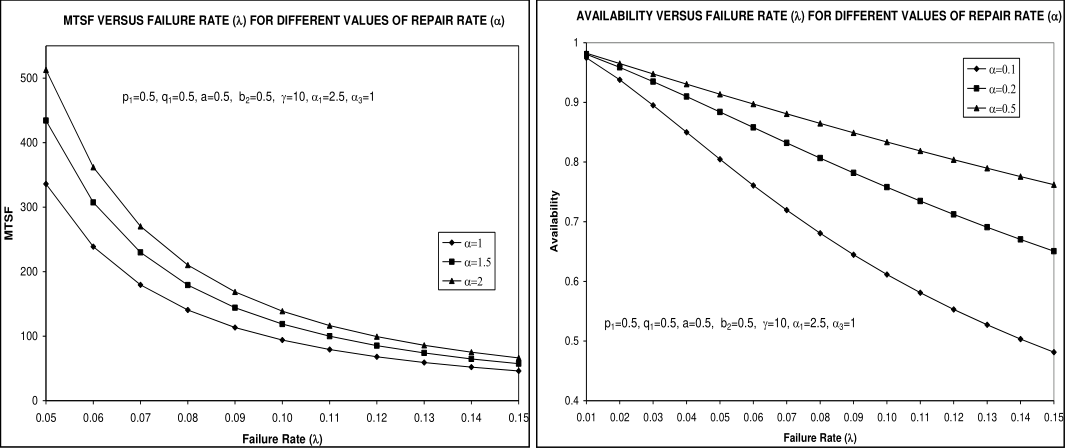 Figure 1
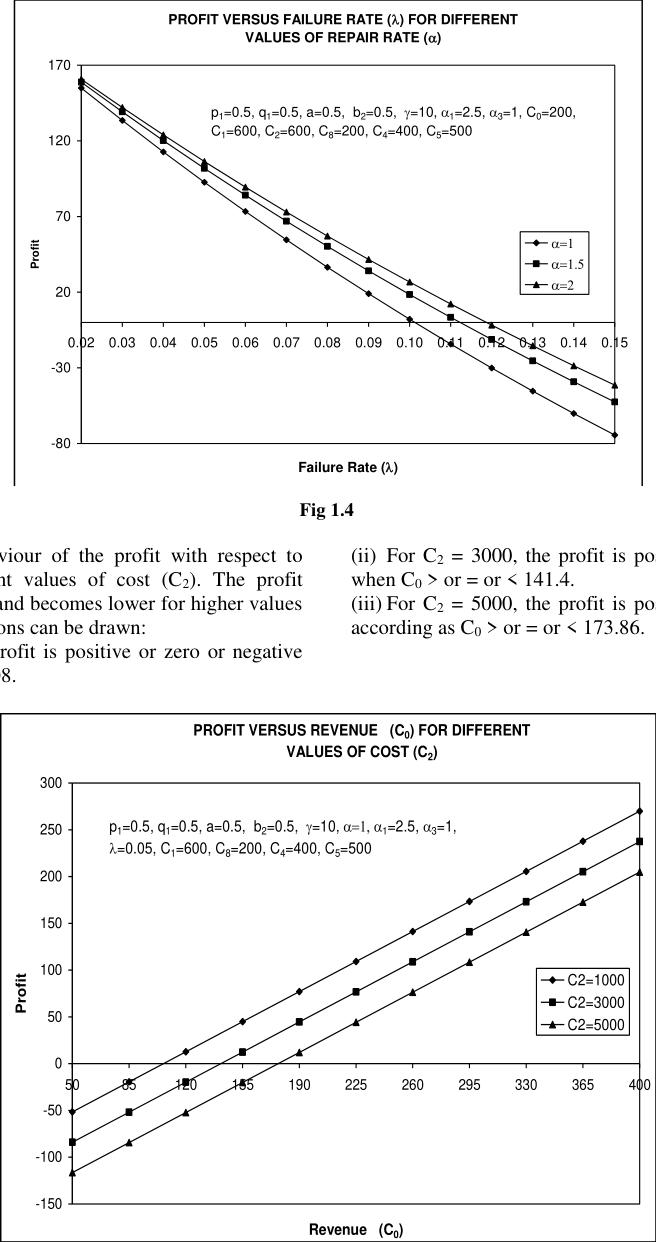 Figure 1
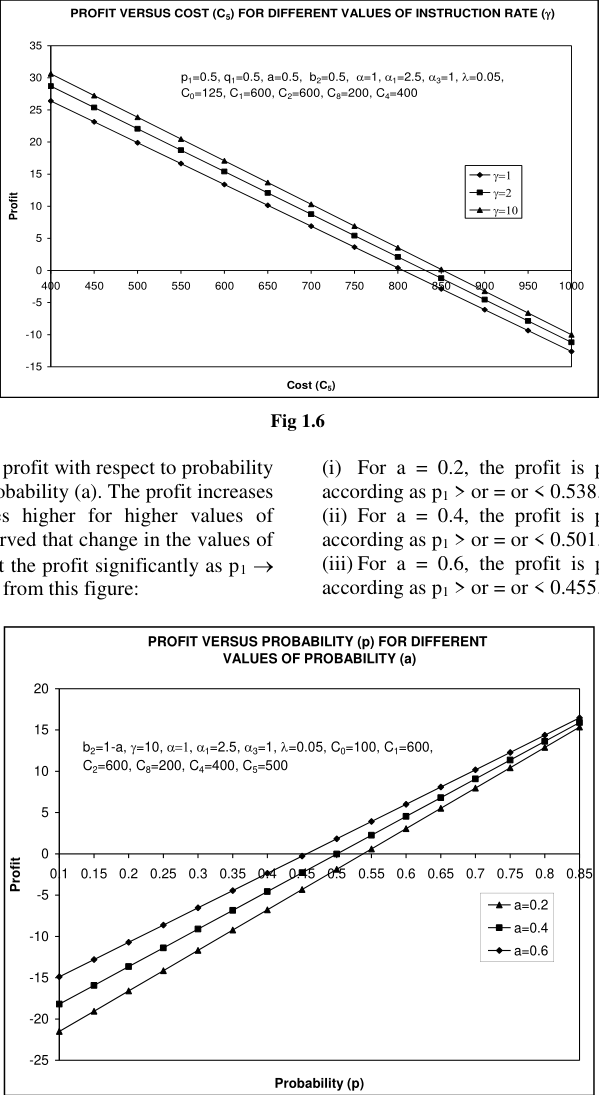 Figure 1
Introduction
Various systems are used under different situations in the industries/companies/ factories/organisations. Considering many types of situations, a large number of reliability models on two-unit standby systems have been discussed by most of the researchers in the field of reliability. The situation of two types of repairman and a repair policy wherein the repair is started by the expert from the more degraded stage caused by the ordinary repairman due to mishandling is undealt so far in the field. The idea of two types of repairman i.e., one ordinary and the other expert have been discussed by various authors including [3][4][5] . But engaging an expert repairman for repair may be costly. Such cost can be reduced by introducing the idea of instruction which are given by the expert to the ordinary repairman before the start of repair by the ordinary repairman. So, the stay and cost of expert repairman can be reduced. The idea of instruction was first introduced by Kumar et al. [6] . Later on, it was discussed by some other authors including [7][8] who studied it together with concepts of accidents, two of repairmen, etc. There may be situations wherein the ordinary repairman is not only able to do some complex repairs but also may adopt incorrect process. In order to nullify the possibility of incorrect process and to reduce the stay of the expert repairman, the idea of introduction time is introduced in the present paper also together with the new aforesaid repair policy. Thus, the present paper investigates two-unit cold standby system with instruction and two of the three types repair policy. On the failure of an operative unit, an expert repairman comes to give instruction to the ordinary repairman for repairing it. After getting instruction, the ordinary repairman repairs the unit by adopting the correct process. However during repair, he may damage the unit due to mishandling or some other causes and in this case repeat repair policy (type-II) is adopted by the expert repairman. Chances are there that even after getting instruction he may not be able to complete the repair successfully and hence resume repair policy is adopted by the expert. If at the time of imparting instruction for a failed unit other unit is operative, it is assumed that instruction time finishes before the failure of the latter. In this model it is assumed that every failed unit first goes under the repair of ordinary repairman who starts repair after getting the instructions from the expert.
The system has been analysed by making use of semiMarkov processes and regenerative point technique. Various measures of system effectiveness have been obtained. Study through graphs is also made for a particular case.
Notations
: constant failure rate of a unit p1 : probability that the ordinary repairman is able to complete the repair q1: probability that the ordinary repairman is unable to complete the repair a: probability that the ordinary repairman does not damage the unit b2: probability that the ordinary repairman damages the unit. g(t), G(t): p.d.f. and c.d.f. of the repair time of the ordinary repairman i(t),I(t): p.d.f. and c.d.f. of time when expert gives instruction to the ordinary repairman g1(t), G1(t): p.d.f. and c.d.f. of repair time of the expert repairman when resume repair policy is adopted g2(t), G2(t): p.d.f. and c.d.f. of repair time of the expert repairman when repeat repair policy (type-I ) is adopted g3(t), G3(t): p.d.f. and c.d.f. of repair time of the expert repairman when repeat repair policy (type-II ) is adopted.
Symbols for the state of the system are o : operative unit cs : cold standby unit Fei : failed unit under instructions of expert repairman Fur : failed unit under repair of ordinary repairman FR : repair of the failed unit by the ordinary repairman is continuing from previous state The mean sojourn time (i) in state i are
The unconditional mean time taken by the system to transit for any state j when it is counted from epoch of entrance into state i is mathematically stated as:
Thus, m01 = 0; m12 = 1 m20 + m23 + m24 + m25 = 2 m20 + m23 + m24 +
Profit Analysis
The expected total profit incurred to the system in steady-state is given by International Journal of Statistics and Applied Mathematics P52 = C0A0 C1B0 C2 e B 0 C4V0 C5 e V 0 C8IT0 where C0 = revenue per unit up time of the system C1 = cost per unit time for which ordinary repairman is busy C2 = cost per unit time for which expert repairman is busy in repairing the unit C4 = cost per visit of the ordinary repairman C5 = cost per visit of the expert repairman C8 = cost per unit time for which expert repairman is busy in giving the instructions to the ordinary repairman
Particular Case
For graphical interpretation, the following particular case is considered.
Using the above equations, we can have the expressions for the MTSF and profit for this particular case. On the basis of the numerical values taken as: p1 = 0.5, q1 = 0.5, a = 0.5, b2 = 0.
Graphical Interpretation
For the graphical interpretation, the mentioned particular case is considered. Fig. 1.2 and 1.3 show the behaviour of MTSF and Availability with respect of failure rate (). It is clear from the graph that MTSF and Availability both get decrease with increase in the values of failure rate and both are higher for higher values of repair rate (). It is observed that the profit decreases with the increase in the values of and is higher for higher values of repair rate (). Following is also observed from the graph: (i) For = 1, the profit is positive or zero or negative according as < or = or > 0.101. Thus, the system is not profitable if 0.101.
(ii) For = 1.5, the profit is positive or zero or negative according as <or = or> 0.112. Thus, the system is not profitable if 0.112. (iii) For = 2, the profit is positive or zero or negative according as < or = or > 0.119. Thus, the system is not profitable if 0.119.
MTSF VERSUS FAILURE RATE () FOR DIFFERENT VALUES OF REPAIR RATE ()
MTSF VERSUS FAILURE RATE () FOR DIFFERENT VALUES OF REPAIR RATE ()
References
8 in the original paper- Gupta Suresh Kumar, Rashmi. Analysis of a Reliability Model with Instruction and Two of the Three Types of Repair Policy. Journal of the Indian Association for Productivity, Quality and Reliability. 2017; 41(2):139153.
- Goyal Rashmi, Gupta Suresh Kumar, Kumar Ashok. Reliability and Economic Analysis of a Two-Unit Cold Standby System with Three Types of Repair Policy and Replacement. Journal of Indian Soc. Stat. Opers. Res. 2005; XXVI:1-4
- Goyal V, Murari K. Cost analysis of a two-unit standby system with two types of repairman Microelectron. Reliab. 1984; 24:849-855.
- Taneja G, Naveen V, Madan DK. Reliability and profit analysis of a system with an ordinary and an expert repairman wherein the latter may not always be available, Pure and Applied Mathematika Science. 2001; LIV(12):11-25.
- Kumar A, Gupta SK, Taneja G. Comparative study of the profit of a two server system including patience time and instruction time. Microelectron. Reliab. 1996; 36(10):1595-1601.
- Kumar A, Gupta SK, Taneja G. Probabilistic analysis of a two-unit cold standby system with instructions at need. Microelectron. Reliab. 1995; 35(5):829-832.
- Siwach BS, Singh RP, Taneja G. Reliability and profit evaluation of a two-unit cold standby system with instructions and accidents, Pure and Applied Mathematika Science. 2001; LIII(1-2):23-31.
- Gupta KC, Taneja AK. Comparative study of two models for a two-unit standby system with instructions and two types of repairman, J. Indian Soc. Stat. Opers. Res. 2002; XXIII(1-4):23-39.