
Research article · 2018 · Full text
International Journal of Veterinary Sciences and Animal HusbandryAntilactogenic Characteristics of Methanol and Ethyl acetate Crude Extract of Aframomum melegueta seeds in Wistar rats
Volume 3(5) · Pages 33–39
Research areasGinger and Zingiberaceae researchNatural Antidiabetic Agents StudiesDrug-Induced Hepatotoxicity and Protection
Abstract
Author-writtenThe serious side effects associated with orthodox drugs used in controlling excessive milk secretion has necessitated the search for natural alternative with little or no side effects. This study was conducted to ascertain the antilactogenic characteristics of methanol and ethyla cetate crude extracts of Aframomum melegueta seeds in female Wistar rats. The extracts were obtained using soxhlet apparatus with the first divided half re-extracted in methanol and the second in ethyla cetate. A total of 48 female Wistar rats were assigned into two groups of 24 rats, for lactating and non-lactating groups. These were assigned into 4 treatment groups of 6 rats each for non-lactating and lactating rats. Treatments I and ii (controls) received control drug (bromocriptine) and placebo (1ml dimethylsulphoxide in 9ml of normal saline) at doses of 0.11mg/kg and 5ml/kg body weight per day respectively. Treatment iii and iv received methanol and ethylacetate extracts at doses of 100mg/kg and 94 mg/kg body weight respectively via an oral intubation. The administration was carried out for a period of 21 days with food and water given ad libitum. The rats were sacrificed and blood collected by cardiac puncture and serum concentrations of prolactin, estrogen and progesterone were analysed. The result obtained revealed that reference control drug caused significant (P<0.05) reduction in serum levels (12.56+0.89; 10.56+0.26; 2.81+0.12 2.41± 0.80; 127. 96±6.06 and 110. 21+ 1.15 ng/ml) of prolactin, estrogen and progesterone in both non- lactating and lactating rats relative to normal control values of (33.23+ 1.82; 19.90+ 3.16; 3.05+ 0.06; 3.17 + 0.09; 323.43+ 0.20 and 320.60+ 0.19 ng/ml). The methanol extract of Aframomum melegueta seeds like the standard control drug produced significant decrease (26.15+0.15; 14.90+3.16; 2.68+0.08; 2.40+ 0.03; 315.72+7.72; and 318.00+ 2.26 ng/ml in serum prolactin, estrogen but no significant changes in progesterone of both non-lactating and lactating wistar rats relative to normal control rats. Ethylacetate extract however produced significant reduction (21.57+1.82; 22.40+ 1.60; 2.45+0.10; 2.17+ 0.06; 323.03+0.25, 323.42+1.68`ng/ml) in serum prolactin levels of non-lactating rats, estrogen of both non- lactating and lactating rats but no significant (P>0.05) alterations in serum levels of prolactin in lactating and progesterone of non-lactating and lactating rats relative to normal control rats. The result of this study indicates that both extracts of Aframomum melegueta exhibited antilactogenic characteristics with methanol extract on the lead.
Summary
Source-checkedPlain-language reading of the full paper, prepared with AI and checked against the text. Each point links to the authors' own words.
Why it matters
- Conventional drugs used to control excessive milk secretion can cause serious side effects, creating a need for natural alternatives. View evidence ↗
- Prolactin, estrogen, and progesterone are key hormones involved in the development of mammary glands and the production of milk. View evidence ↗
- Previous reports have indicated that Aframomum melegueta can lower serum prolactin levels. View evidence ↗
The question
- The study aimed to determine if methanol and ethyl acetate crude extracts of Aframomum melegueta seeds have antilactogenic properties in female Wistar rats. View evidence ↗
What they did
- Treatments included a reference drug (bromocriptine at 0.11mg/kg/day), a placebo control (DMSO), and Aframomum melegueta extracts (methanol at 100mg/kg/day and ethyl acetate at 94mg/kg/day). View evidence ↗
- Serum concentrations of prolactin, estradiol, and progesterone were measured using microwell enzyme immuno-assay techniques. View evidence ↗
What they found
- In non-lactating rats, the reference drug bromocriptine significantly reduced all three hormones compared to the control group. View evidence ↗
- In non-lactating rats, the methanol extract (100mg/kg) significantly reduced prolactin (21.31%) and estrogen (12.13%), but did not significantly affect progesterone. View evidence ↗
- In non-lactating rats, the ethyl acetate extract (94mg/kg) significantly reduced prolactin (35.08%) and estrogen (19.67%), with no significant effect on progesterone. View evidence ↗
- In lactating rats, bromocriptine significantly reduced prolactin (46.93%), estrogen (23.97%), and progesterone (65.63%) compared to controls. View evidence ↗
- In lactating rats, the methanol extract significantly reduced prolactin (25.12%) and estrogen (24.29%) compared to controls. View evidence ↗
- The ethyl acetate extract significantly reduced estrogen in both groups, but did not significantly alter prolactin in lactating rats or progesterone in either group. View evidence ↗
What it means
- The authors conclude that both extracts exhibit antilactogenic characteristics by reducing prolactin and estrogen, with the methanol extract being more effective. View evidence ↗
- The authors note that some hormones involved in lactogenesis were not measured, which may account for some discrepancies in the results. View evidence ↗
Visual summary
3 visualsIllustrations explain the paper; charts are replotted from the paper's own table values.
Experimental Grouping
AI-generated conceptual illustration (female Wistar rats and Aframomum melegueta seeds). It explains the idea and does not show study data.
View source evidence ↗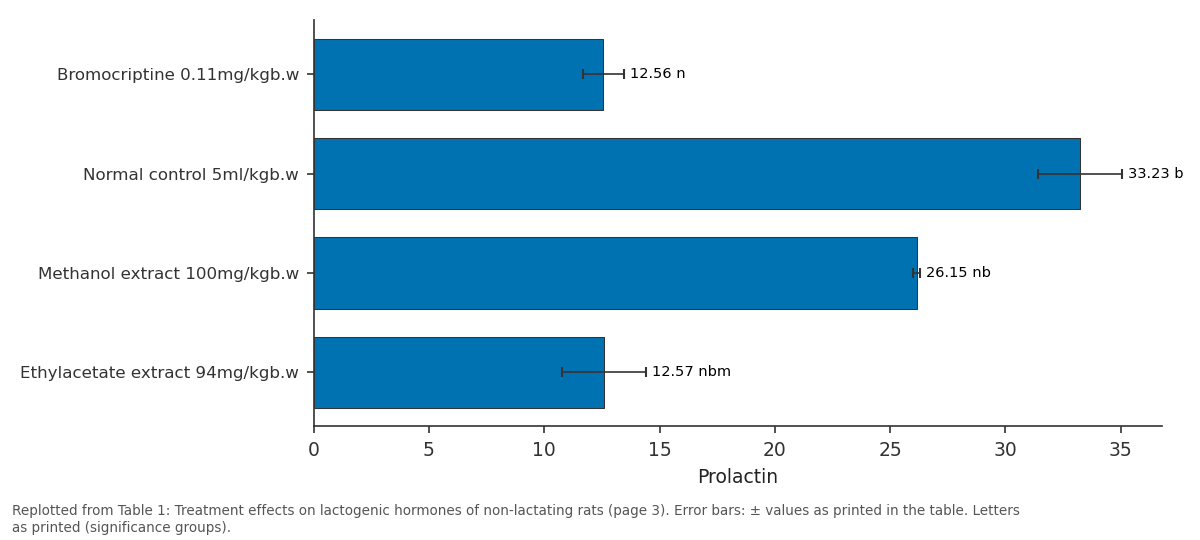
Prolactin: Bromocriptine... vs Normal control 5ml/kgb.w vs Methanol extract... vs Ethylacetate extract...
Replotted from Table 1 (page 3) of the original paper. Every bar is the paper's own table value.
View source evidence ↗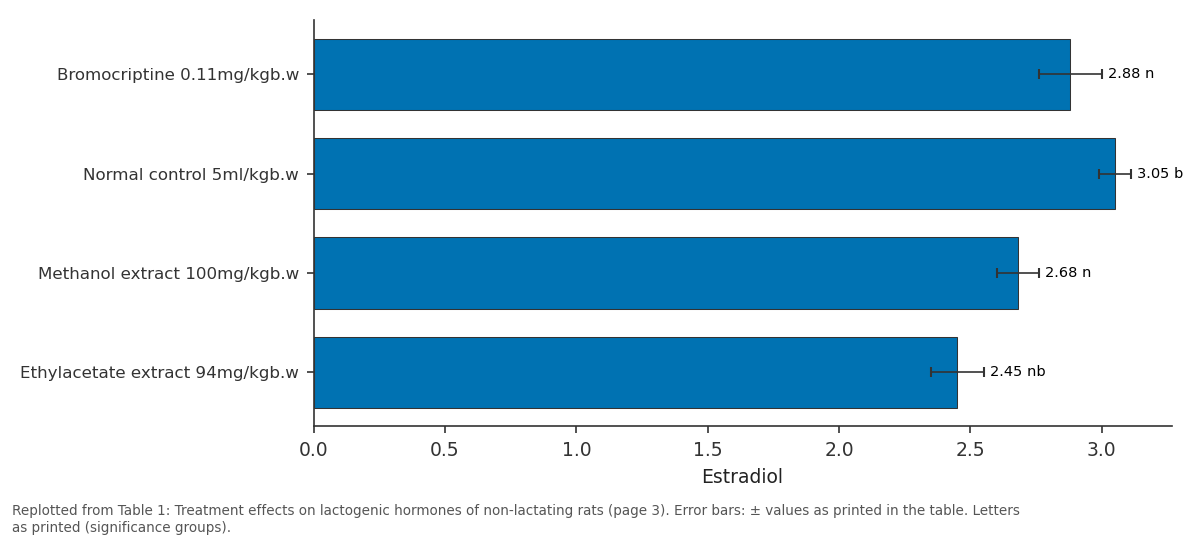
Estradiol: Bromocriptine... vs Normal control 5ml/kgb.w vs Methanol extract... vs Ethylacetate extract...
Replotted from Table 1 (page 3) of the original paper. Every bar is the paper's own table value.
View source evidence ↗Figures & tables
From the original paper Table 1
Introduction
The complex physiologic hormonal involvement in mammary gland development and milk secretion has opened a wider area of research (Wolfang et al. 2010) [44] . The hormones range from corticosteroids, growth hormone, insulin, prolactin, estrogen and progesterone. The selected hormones of interest in this study are the prolactin, estrogen and progesterone (Agarwal et al. 2014) [2] . Prolactin, estrogen and progesterone all play one role or the other in mammary gland development and milk production (Tripathi, 2001) [41] . The inhibitory effect of progesterone on lactogenesis during pregnancy is evident (Lopez-fontana, et al, 2012) [26] . With parturition and expulsion of placenta, progesterone level falls and full milk supply is initiated (Neville 2001) [31] . During lactation, several key hormones are involved in the regulation of mammary gland cell number, secretary activity and consequent milk production potential (Malgwi et al, 2017) [27] . Prolactin is mainly synthesized and secreted by the lactotrophic cells of the pituitary gland (Freeman et al, 2000) [18] . It is the major generation of Lactation competence during pregnancy and it functions both indirectly, through its regulation of ovarian progesterone production, and directly via its effect on mammary epithelial cells (Hector and Lindsay, 2012) [21] . The role of prolactin during mammary gland morphogenesis has been investigated using prolactin receptor knockout mice (Ormandy et al, 1997) [34] . This experiment revealed normal development in the transplanted tissues, suggesting that defect in knockout glands are due to lack of prolactin/prolactin receptor signaling in other tissues. Researchers have found that simply restoring progesterone levels in ovarictomized prolactin mice restored ductal side branching (Vomachka et al. 2000) [43] providing further affirmation that prolactin and progesterone work together to generate lobuloaveolar growth. Estrogen, a membrane soluble ligand is released from the ovary and activates gene expression through intracellular receptors (Bandyopadhyay, 2013) [5] . Estrogen unequivocally stimulates mammary ductal growth in both ovariectomized and intact animals and can be blocked by estrogen receptor antagonist, tamoxifen (Silberstein et al, 1994) [38] . Estrogen acts in concert with insulin growth factor 1(IGFI) to generate the burst of proliferation required for ductal morphogenesis at puberty (Rauan and Kleinberg, 1999) [37] . This study focused attention on serum levels of three of these hormones which play essential role in lactogenesis ie prolactin, estradiol and progesterone. The attendant complications (galactorrhea, hyperprolactinemia, prolactinoma) associated with exclusive breast feeding and the serious side effect (nausa, fatigue, postural hypotension, nasal congestion, exacerbation, psychosis, seizure) associated with orthodox drugs (bromocreptine, pergolide, cabergoline, quinagolide) have necessitated the search for natural alternative with little or no side effect which can be used in alleviating the situation. Aframomum melegueta (Alligator pepper) has been incriminated. Aframomum melegueta methanolic extract has been noted to inhibit 56.7±3.4% of estrogenic activity in a yeast assay when at the concentration of 100µg/ml which was decreased with naringinase pretreatment (EI-Halawany et al, 2011) [13] . Aframomum melegueta lowering effect on serum prolactin has been reported (Ebong et al, 2000) [12] . The use of Aframomum melegueta seed extract in reducing excessive lactation and post partum haemorrhage in Ghana has been reported (Mark, 2004) [29] . Dopaminergic agoinst with D2 receptor activity suppressed prolactin secretion (Clive et al, 2002) [8] . Aframomum melegueta has been noted to in vitro inhibit cytochrome P3A4 enzymes at 10mg/ml concentration (Agbonon et al, 2010) [3] . This may affect the capacity of this enzyme in metabolizing xenobiotics. Progesterone levels decreased significantly when wistar rats were administered with 13.3mg/kg body weight of a saline extract of Alligator pepper (Ingbenebor and Ebomoyi, 2014) [23] .
Materials and Methods Preparation of plant material.
Fresh fruits of Aframomum melegueta (A. melegueta) weighing 3000g were purchased from Apiapum market in Obubra Local Government Council of Cross River State of Nigeria. The fruits were sundried for two weeks to facilitate removal of the seeds from the pods (capsule). The seeds were further sundried to constant weight within four days and stored in an air-tight flask for extraction.
Preparation of Aframomum melegueta seed extract.
The seeds were ground to powdered form by the use of motor powered milling machine at Root Crop Research Institute, Umudike in Abia State. A 1000g weight of Aframomum melegueta seed powder was first extracted with petroleum ether (60-80 o C) to defat the powder. The ether extract was carefully decanted leaving the residue for further extraction in methanol and ethylacetate solvents in two divided doses. The soxhlet apparatus was filled with methanol and 300g of the residue was wrapped in a thimble and placed in a soxhlet extractor fitted to a 500ml round bottom flask seated on a hot plate. The reflux condenser was attached to the extraction tube and power was supplied by switch linking the electric hot plate cable. The methanol vapour passes up the side tube of condenser and runs back on to the residue in the thimble. After siphoning over for 24 times, the experiment was stopped just before the next lot of methanol was at the point of siphoning over. The methanol soluble fraction was evaporated of its methanol content using a rotary evaporator and was preserved at 4 0 C. The same process was carried out to produce ethylacetate extract of Aframomum melegueta seed.
Preparation of stock solution of crude extrat of
Preparation of stock solution of crude extrat of
Aframomum melegueta seeds.
One gram (1g) of methanol extract of Aframomum melegueta seed was dissolved in one (1ml) milliliter of Dimethyl sulfoxide (Dmso) and suspended in 9ml of normal saline (0.9% NaCl). The same 1g of ethylacetate of Aframomum melegueta seed was used for its stock solution preparation. The stock solutions were immediately administered to rats in treatment III and IV of this study respectively.
Animal and animal treatment.
A total of 24 wistar rats each for non-lactating and lactating groups were assigned on the basis of weight (150-200g) into 4 treatments of 6 rats each. The animals were housed in the Department of Biochemistry, University of Calabar under standard laboratory conditions of ambient temperature of 26 o C and adequate ventilation with relative humidity of 50% and a 12 hour day-light cycle. Animal were fed ad libitum during the course of treatment. The administration of Aframomum melegueta seed extract commenced 3 days after parturition and lasted 3 weeks for both non-lactating and lactating rats. Rats in Treatment Group I: received bromocriptine (reference standard drug) at a dose of 0.11mg/kg/day according to manufacturer's instruction. Treatment Group II rats received 100mg/kg/day of dimethyl sulfoxide (1ml in 9ml of normal saline) for normal control treatment. The rats in treatment III and IV received 100mg and 94mg/kg/day of methanol and ethylacetate seed extracts of Aframomum melegueta via oral intubation respectively. The treatment was terminated after a 21 day period of administration of crude extract. The rats were starved of food overnight in preparation for sample collection. The blood sample was aseptically collected via cardiac puncture and transferred into sample labeled bottles. The collected blood was allowed to stand for 2 hours to perfect clotting of blood and centrifuged at 1000rpm and serum removed with Pasteur pipette for assay of prolactin, estradiol and progesterone concentrations.
Estimation of serum prolactin concentration.
This was carried out by microwell enzyme immuno-assay technique using the method of Frantz, (1978) [17] . A total of 53 streptavidin located micro-plate was removed from the ziplock kit being-one for a substrate and two each for reference standard and control and 48 micro-plates for the test samples. The micro-plates were properly labeled and placed in a microplate holder. Twenty five (25 µl) micro-liter of standards, controls and samples were dispensed into each micro-well. A total of 100µl of conjugate reagent was dispensed into each well and thoroughly mixed for 30 seconds. These were incubated at room temperature for 60 minutes and the content of the well discarded by decantation and the micro-plate blotted dry with absorbent paper. A 300VI wash was aspirated and repeated twice making a total of three washes. One hundred (100 µl) micro liter of 3, 3' 5' 5' tetramethyl bendine (TMB) was added into each well and gently mixed for 110 seconds. These were incubated at room temperature in the dark for 15 minutes. A 50 µl of stop solution was gently added to each well and mixed after the blue colour of the well has completely changed to yellow. The absorbance of each well was read at 450nm wave length using spectrophotometer. The average absorbance values were calculated from the duplicate standards, controls and sample and a standard curve was constructed by plotting the average absorbance obtained from each reference standard against its assigned concentration in ng/ml on linear graph paper with the absorbance on the vertical (Y) axis and the concentrations on the horizontal (x) axis. The corresponding concentration of prolactin in the sample was determined from the intersecting point of the curve.
Estimation of serum estrogen (estradiol) concentration.
This was determined by microwell enzyme immunoassay according to the method of March et al, (1979), and progesterone serum concentration according to the method of Radwanska et al, (1978) [35] .
Stastical Analysis
One way analysis of variance was used to test for significance of difference and significant means were separated using least significant difference of Fishers.
Result
The results presented in table I, II, and III depict the outcome of various treatment administered to wistar rats in the course of the investigation. Table I shows the serum levels of selected lactogenic hormones (prolactin, estradiol and progesterone) resulting from the various extract of Aframomum melegueta seed and reference control drug bromocreptine administered in the course of this study to non-lactating wistar rats. Bromocriptine significantly produced generalized reduction in all the hormones tested (10.56±0.89ng/ml prolactin, 2.81±0.12ng/ml estradiol and 12.96±0.06ng/ml progesterone amounting to 7.86 and 60.41% reduction respectively relative to (33.23±1.82ng prolactin, 3.05+0.06ng estradiol and 323.43±0.20ng/ml progesterone) control treatment accordingly. The 100mg/kg body weight extract of Aframomum melegueta seed caused a significant (P<0.05) reduction in serum levels of prolactin 26.15±0.15ng/ml or 21.31%, estrogen 2.68+0.08ng/ml or 12.13% and non-significant reduction in progesterone 315.72±7.72ng/ml or 2.38% relative to (33.23±1.82ng/ml, prolactin, 3.05±0.06ng/ml and 323.43±0.02ng/ml progesterone) relative to normal control treatment. Administration of 94mg/kg body weight of rats revealed significant decrease in (21.57±1/82ng/ml prolactin or 35.08%, 2.45± 0.01gn/ml or 19.67% estrogen and nonsignificant 323.03±1.82ng/ml of prolactin, 3.05±0.06ng/ml estrogen and 323.43±0.02ng/ml progesterone) relative to control experiment in non-lactating rats. When methanolic extract was compared with the standard reference drug bromocriptine, the result showed a significant reduction (12.56±0.89ng/ml or 51.97 of prolactin, 127.96±0.06ng/ml or 60.39% of progesterone but 2.81±0.12ng/ml or 12.81% increase in estrogen) relative to ethylacetate extract (21.57±1.82ng/ml prolactin, 323.03±0.25ng.ml progesterone and 2.45±1.82ng/ml of estrogen for non-lactating rats. When compared within themselves, ethylacetate extract of Aframomum melegueta seed caused a significant marginal decrease in serum levels of (21.57±1.82ng/ml of prolautin of 17.51%, 2.45+0.01ng/ml or 8.58% of estrogen but non-significant increased 323.03±0.25ng/ml of progesterone relative to 26.15±0.15ng/ml, 2.68±0.06ng/ml and 315.72±7.72ng/ml of prolactin, estrogen and progesterone respectively. III below is the serum concentration of lactogenic hormones (prolactin, estrogen and progesterone) in non-lactating and lactating rats. Bromocreptine produced significant but marginal reduction in serum levels of prolactin, estradiol and progesterone of lactating rats relative to non-lactating rats. The normal control treatment revealed a significant reduction in serum levels of prolactin in lactating rats relative to non-lactating rats but no significant changes were observed in serum levels of estradiol and progesterone of lactating rats relative to non-lactating rats. Methanol extract of Aframomum melegueta seed caused a significant reduction in serum levels of prolactin and estradiol but no significant changes in serum levels of progesterone of lactating relative to non-lactating rats. Ethylacetate extract of Aframomum melegueta seed however produced a significant reduction only in serum concentration of estradiol but none in prolactin and progesterone of lactating rats relative to nonlactating rats.
Presented in Table
Presented in Table
Discussion
This study investigated antilactogenic hormones characteristics of methanol and ethylacetate extract of Aframomum melegueta seeds in Wister rats. The hormones of interest in this study are those of prolactin, estrogen and progesterone due to their involvement in imitating and maintenance of lactogenic activity of bromocriptine an ergot alkaloid which is known to lower down serum concentration of prolactin is used as standard or reference control. The result presented in table I revealed that bromocriptine caused a generalized reduction in the three hormones (prolactin, estrogen and progesterone) in this study. Bromocriptine as dopaminergic agonist acts via a specific receptor in the anterior pituitary tonically inhibits prolactin and lactotroph proliferation (Foord et al, 1983; Trouillas et al. 1994; Friedman et al. 1984) [16,42,19] . Bromocriptine produced approximately 62% reduction in serum concentration of prolaction relative to normal control treatment but only 8% marginal reduction in serum estradiol concentration relative to control treatment. This observation may not be unconnected with the fact that estradiol appears to be a potent antidopaminergic agent in vivo (Ferland et al, 1979) [14] . The decreased serum concentration of progesterone in rats administrated with bromocription may not be attributed to decreased luteal phase progesterone concentration following prolactin suppression by bromocriptine as reported by Kauplia et al, 1988 signifying the involvement of other factors in this case. This observation is however in agreement with the report of Bohnet et al 1977; Kauplia et al, 1987 [6,24] ; on over suppression of prolactin and isolated prolactin deficiency in a woman with puerperal alactogenesis. The mechanism by which prolactin participate in the regulation of ovarian functions in man are only partly understood. Progesterone prevents centrally the release of prolactin and casein synthesis in the presence of prolactin and the absence of progesterone at the level of mammary gland receptor (Deis et al, 1989) [11] . As long as both extracts have no significant reduction in serum concentration of progesterone, it may therefore be that the reduced level of prolactin is in part contributed by progesterone. The plausible explanation for the decreased serum level of progesterone can be backed up by the report of Robertson and King, 1974; Ash and Heap, 1975) [36, 4] who reported that a decline in progesterone concentration caused by the regression of copra lutea seems to play an essential role in parturition may extend into lactation in gilts. Suppression of serum prolactin by bromocriptine prevented the onset of lactation completely but has no obvious influence on changes of other hormone (Progesterone, relaxin etc.) concentration and course of parturition (Taverne et al, 1982) [39] . This goes to support the fact that the decreased level of progesterone in this study may not be solely on suppressed prolactin secretion by bromocriptine meaning other factors may have contributed. The significant decrease in serum prolactin caused by methanol extract of Aframomum melegueta (A.m) and ethylacetate extract of the same seed may be associated with presence of alkaloids in their phytochemistry as reported by Okwu 2005 [33] , Okoli et al, 2007 [32] . Like bromocriptine (standard control drug) which is ergot alkaloid, methanol and ethylacetate extract of Aframomum melegueta produced in a similar manner reduction in a serum prolactin which may be attributed to the presence of alkaloid in the phytochemistry of Aframomum melegueta seeds. This finding is at variance with the report of Adefegha and Oboh 2012 [1] who failed to detect presence of alkaloid in their phytochemical screening of Aframomum melegueta. The solvent properties of methanol and ethyl acetate may have contributed to the differences in serum prolactin witnessed in this study. Polar protic property of methanol ought to have advantage in extracting more metabolites of A.M since these metabolites e.g [6]-paradol [6]-gingerol and shogaol contain (OH) bond in their structure when compared with polar aprotic property of ethylacetate. This however is not the case in this experiment as ethyl acetate extract reduce serum prolactin to 35.08% in nonlactating rats when compared with methanol extract that cause 21.3% reduction of the same hormone relative to normal control experiment this is not completely out of expectation especially as crude, extract was used in this research which contained both (OH) and (C-O) bonds. The anti estrogenic property of seed extract of A.M was observed in this study as both extracts caused significant decrease in serum concentration of estradiol with ethylacetate extract taking the lead. This observation is in consonance with the report of EL-Halawany et al. 2011 [13] ; on screening for estrogenic and antiestrogenic activities of plant growing in Egypt and Thailand where A.M is the most antiestrogenic followed by Dalbergia candenatensis, then Dracaena loureiri and Mansonia gagei. There is a good evidence that consumption of plants' secondary metabolites (poly-phenols, isoflavones, flavonoids) exhibits endocrine disrupting substance (EDS) properties (Grain et al. 2008) [20] . Most EDS with adverse effect on reproduction bind either to estrogenic receptors or androgen receptors and inhibit transcriptional mechanism (Wolfgang et al 2010) [44] . Most of them interfere with reproduction as either agonist or antagonist of the steroidal sex hormones which may be estrogen or androgen. For serum progesterone, both extracts produce non-significant (p>0.05) alteration in non-lactating rats relative to normal control rat. This observation runs contrary to the report of Inegbenebor and Ebomoyi 2014 [23] on anti-progesterone effect of Aframomum meleguata on Sprague dawley rats that received 6.7mg/kg and13.3mg/kg body weight significantly decreased serum progesterone only on day 7 of gestation for the rat that received 6.7mg/kg but those administered with 13.3mg/kg body weight of saline crude extract of Alligator pepper decreased serum progesterone on both day7 and 21 th of gestation. The significant (P<0.05) reduction observed in serum prolactin level with lactating rats treated with bromocriptine in table II goes a long way to support the agonistic action of bromocriptine on dopaminergic D2 receptor which is antiprolactinemic (Clive et al, 2002) [8] . The reduction in serum prolactin concentration by methanol extract of Aframomum melegueta seed in lactating rat relative to normal control equally gives credence to that of Okoli et al, 2007 [32] on the presence of alkaloid which is present in A.M that mimicks that of ergot alkaloid in bromocriptine. Okwu 2005 [33] also reported presence of alkaloid in Aframomum melegueta (A.M) both qualitatively and quantitatively. Bromocriptine (standard reference control) has a higher degree of reduction in serum prolactin when compared with methanol and ethylacetate extract. This finding is in consonance with the report of Ebong et al, 2000 [12] on lowering effect of Alligator pepper on serum prolactin in non-lactating wistar rats. There was no significant change in serum prolactin of rats that received ethylacetate extract of A.M relative to control rats. The antiestrogenic activity observed in this study in all the treatment relative to control is in consonance with the report of EL-Halawany et al. 2011 [13] on screening for estrogenic and antiestrogenic activities of plants growing in Egypt and Thailand and Ibekwe et al; 2018 [22] on antilactogenic effect of methanol extract of A.M on wistar rats. For serum progesterone,only the bromocriptine treated rats (0.11mg/kg) produced significant decrease in serum concentrations when compared with the rats that received methanol, ethylacetate extract and even the normal control rats. Both methanol and ethylacetate extracts of Aframomum melegueta produced no significant (p>0.05) changes in serum concentration of progesterone. This observation is not in agreement with the report of Inegbenebor and Ebomoyi 2014 [23] on effect of saline extract of Alligator pepper (Zingiberaceae A.M) on serum progesterone in pregnant Sprague Dawley rats. The table III results shows that bromocriptine is a powerful antilactogenic agent seeing it can reduce serum prolactin even while the pups are suckling. In addition, the serum levels of estradiol and progesterone were equally reduced by bromocriptine in lactating rats' relative to non-lactating rats. This in no doubt has given a strong support to its antilactogenicity. Lactation alone also brought a significant (P<0.05) reduction in serum prolactin as can be seen in table III. Lactogenesis or onset of milk synthesis is a 2-stage process in rats that occur during late pregnancy (Fleet et al, 1975) [15] . Lactogenesis I and II have been reported (Bussmann et al, 1996) [7] . Both stages of lactogenesis are controlled primarily in the rat by ovarian and adrenal steroid with lactogenenic hormones from the placenta (Topper and Freeman, 1984. Some of these hormones have not been assayed in this investigation and may probably be part the discrepancies observed in the current study. There were however no significant changes in serum estradiol and progesterone in normal control rats with respect to nonlactating relative to lactating rats. For the extract treated rats, methanol significantly reduced serum concentrations of prolactin and estradiol in lactating relative to non-lactating rats but no significant changes in serum levels of progesterone. This concurs with the reports of Mark, 2004 [29] on the use of A.M in reducing excessive lactation and postpartum haemorrhage in Ghana. Ethylacetate extract of A.M seed produced no significant reduction in serum levels of prolactin, estradiol and progesterone in lactating rats. Here it may be likely that methanol extract wielded more influence in lactating rats when compared with ethylacetate extract bearing in mind its polarity index.. For the hormones investigated, the three hormones play crucial role in lactogenesis. Prolactin is the major generator of lactation competence during pregnancy and it functions directly via its effect on mammary gland epithelial cells and indirectly through its regulation of ovarian progesterone production, (Ibekwe et al, 2018) [22] . Prolactin in conjunction with progesterone generate lobuloalveolar growth in mammary gland. Estrogen on the other hand stimulate mammary ductal growth which may be blocked by estrogen receptor antagonist tamoxifen (Daniel et al 1997, Silberstein et al 1994) [38] . Progesterone is responsible for extensive side-branching and alveologenesis required to create a lactation competent gland which occur in lactogenesis I. In lactogenesis II, prolactin causes enlargement of mammary gland in pregnancy and increase milk secretion (Melmed and Kleinberg, 2008) [30] . During pregnancy, high circulating concentration of estrogen promote prolactin production (Daryl, 1996) [10] . Progesterone prevents centrally the release of prolactin and casein synthesis is initiated in the presence of prolactin and in the absence of progesterone (Deis et al 1989) [11] . Therefore progesterone withdrawal is the trigger hormone that initiates lactation.
Conclusion
Bromocriptine (standard reference drug) manifested clearly antilactogenicity by its ability to reduce significantly three selected hormones involve in lactogenesis I and II in lactating rats. Methanol crude extract of Aframomum melegueta seeds followed closely by bringing down the serum level of prolactin and estrogen in lactating rats. Its non-significant reduction in serum level of progesterone is perhaps a positive development because progesterone must be withdrawn in lactogenesis II for commencement of full lactation. The presence of progesterone is therefore antilactogenic. Ethylacetate extract of A.M seed at the dosage administered would not significantly influence any of the selected hormone involve in lactogenesis in lactating Wistar rats. While reduction in serum levels of prolactin and estrogen by the crude extract is antilactogenic, both extract at their specific dosage of administration portrayed antilactogenic characteristic with methanol extract taking the lead.
Figures and tables from the paper
References
44 in the original paper- Adefegha SA, Oboh G. Acetylcholinesterase (ACHE) inhibitory activity, antioxidant properties and phenolic composition of two Aframomum species. J Basic Clin Physiol and Pharmacol. 2012; 23(4):156-161
- Agarwal RA, Srivastavav AK, Kumar K. Animal physiology and Biochemistry S. Chand and revised edition company. Ram Nagar, New Delhi, 2014.
- Agbonon A, Eklu-Gadegbeku K, Gbeassor M, Akpagana K, Tam TW, Arnason JT, et al. In vitro inhibitory effect of W.A medicinal and food plants on human cytochrome P450 3A subfamily. J Ethnopharm. 2010; 128(2):390394.
- ASH RW, Heap RB. Estrogen, progesterone and cortisteriod concentrated in peripheral plasma of sows during pregnancy, parturition, lactation and after weaning. Journal of Endocrinology. 1975; 64:141-154.
- Bandyopadhyay SK, Bhattacharyya, Choudhury RR, Basu S. Textbook of Veterinary Gynaecology, Artificial Insemination, Obstetrics and Assisted Reproduction. Kalyani Publishers, New Delhi, 2013.
- Bohnet HG, Muhlenstedt D, Hanker JPF, Schneider HPG. Prolactin oversuppression. Arch Gynak. 1977; 233:173-173.
- Bussmann LE, Bussmann IM, Charreau EH. Role of receptor for epidermal growth factor and insulin like growth factor I and II in the differentiation of rat mammary gland from lactogenesis I to lactogenesis II. Journal of Reproduction and Fertility. 1996; 107:307-314
- Clive P, Michael C, Morley S, Michael W, Brain H. Integrated Pharmacology (2 nd ed.). London: Mosby, 2002, 281-329.
- Daniel CW, Silbertian GB, Strickland P. Direct action of 17-betaestradiol on mouse mammary diets analyzed by sustained release in plant, and steroid. Autoradiography Cancer Research. 1987; 47;6052-6057. [pubmeg]
- Daryl KG. Hormones of the gonads. In M.K.M Robert (Ed), Harper's biochemistry (24 th ed). New York: prentice Hall, 1996, 566-580.
- Deis RP, Gerrizo DG, John GA. Suckling induced prolactin release potentiates mifepristone induce lactogenesis in pregnant rats. Journal of Reproductive Fertility. 1989; 87:147-153.
- Ebong PE, Eyong EU, Lawal BAS. Prolactin lowering effects of Alligator pepper (A. Melegueta) on wister rats.West African Journal of pharmacology. 2000;
- EL-Halawany AM, Chung HM, EL-Dine, Nishihara RS, Estrogenic and antiestrogenic activities of plants growing in Egypt and Thailand. Pharmacognosy Research. 2011; 3(2):107-113.
- Ferland L, Labrie F, Euvard C, Raynaud JP. Antidopaminergic activity of estrogen on prolactin release at the pituitary level in vivio. Molecular and cellular Endocrinology. 1979; 14:199-204.
- Fleet IR, Goode JA, Harmon HM, Luarice MS, Linzell JL, Peaker M. Secretory activity goat mammary glands during pregnancy and lactation. Journal of physiology. 1975; 251:763-773.
- Foord SM, Peters JR, Dieguez C, Scanlon MF, Hall R. Dopamine receptor on intact anterior pituitary cells in culture: Functional association with the inhibition of prolactin and thyrotropin. Endoerinology. 1983; 112:1567-1577.
- Frantz AG. Enzyme immunosorbent assay for prolactin, New England Journal of Medicine. 1978; 298:201-205.
- Freeman ME Bela K, Leran TA, Nagy G. Prolactin structure, function and regulation of secretion. Physiology Review. 2000; 80:1523-1631.
- Friedman E, Adams EF, Hoog A, Gejman PV, Carson E, Larsson C, et al. Normal structure dopamine type 2 receptor gene in prolactin secreting and other pituitary tumors. Journal clinical Endocrinology and metabolism. 1984; 78:568-574.
- Grain DA, Janssen SJ, Edward TM. Female reproductive disorders: The role of endocrine disrupting compounds and developmental timing. Fertility and Sterility. 2008; 90:911-940.
- Hector M, Lindsay H. Mammary gland development. Wiley interdiscip Rev Dev Biol, 2012. Doi:10.1002/Waev.35.
- Ibekwe HA, Akpet SO, Bikom PM. Antilactogenic characteristics of methanol extract of Aframomum melegueta seed in waster rats. IOSR Journal of Pharmacy and Biological sciences. 2018; 13(2):30-36.
- Inegbenebor V, Ebomoyi M. Effect of saline extract of Alligator pepper (Zingiberaceae Aframomum melegueta) on serum progesterone in pregnant Sprague dawley rats. International Journal of Herbs and Pharmacology Research. 2014; 3(3):46-51.
- Kauplia A, Chatelaine P, Kirkinen P, Kivinen S, Ruokonen A. Isolated prolactin deficiency in a woman with puerperal alactogenesis. J Clin Endocrinol Metab. 1987; 64:309-509.
- Kuappila A, Hannu Mertikainen, Ulla Puistola, Matti Reinila, Lars Ronnberg. Hypoprolactinemia and ovarian function. Fertility and Sterility. 1988; 49(3):437-440.
- Lopez-Fontana CM, Masselli ME, Salicioni AM, Caron RW. The inhibitory effect of progesterone on lactogenesis during pregnancy already evidenced by midto-late gestation in rodent. Pubmed, 2012. Doi:1071/RD11160
- Malgwi IS, Tanko Y, Eze ED, Kawu MU, Salami HA, Emmanuel NS, Mohammed A. Lactogenic hormones and histological evaluation in female lactating wistar rats treated with fermented soya bean and vitamin C. 2017;
- March CM, Geobelsmann U, Nakamura RM, Mishell JR. Roles of estradiol and progesterone in eliciting the midcycle luteinizing hormone and follicle stimulating hormone surges. Journal of Clinical Endocrinology& Metabolism. 1979; 49:507-513.
- Mark N. Cupboard love: A dictionary of culinary curiosities. Toronto insomniac, 2004, 77-83.
- Melmed S, Kleinberg D. Anterior pituitary: In H M. Kronebreg; S. Melmed, K.S. Polonsky and P.R. Larsen (Eds). Williams text book of endocrinology. Philadelphia: W. B. Saunders, 2008.
- Neville MC, Mortan J, Unemura S. Lactgenesis: Transition from pregnancy to lactation. Paediatrics Clinician of North America. 2001; 48:45-52.
- Okoli RI, Aigbe O, Obodo O, Mensah JK. Medicinal herbs used in managing some common ailments among Esan people of Edo State, Nigeria. Parkistan Journal of Nutrition. 2007; 6(5): 490-496.
- Okwu DE. Photo chemicals, vitamins and mineral content of two Nigeria medicinal plants. International Journal of Molecular Medicine and Advance Sciences. 2005; 1(4):375-381.
- Ormandy CJ, Camus A, Barra J, Damotte D, Lucas B, Buteau H, et al. Null mutation of prolactin receptor gene produces multiple reproductive defects in the mouse. Gene Dev. 1997; 11:167-178.
- Radwanska E, Frankenberg J, Allen E. Plasma progesterone levels in normal and abnormal early human pregnancy. Fertility and Sterility. 1978; 30:398402.
- Robertson HA, King GJ. Plasma concentrations of progesterone, estrone, estradiol-17β and of estrone sulphate in the Pig at implantation during pregnancy and at parturition. Journal of Reproductive Fertility. 1974; 40:133-141.
- Rauan W, Leinberg K, DL. Insulin -like growth factor I is essential for terminal end and formation and oluctal morphogenesis during mammary development. Endocrinology. 1999; 140:5075-5081.
- Silberstein GB, Van Horn K, Shyamala G, Daniel CW. Essential role of endogenous estrogen in directly stimulating mammary growth demonstrated by implants containing pure antiestrogens. Endocrinology. 1994; 134:84-90. (PubMed).
- Taverne M, Bevers M, Jane MC, Bradshaw SJ, Dieleman AHW, Porter DG. Plasma concentration of prolactin, progesterone, relaxing and estradiol-17β in sows treated with progesterone, bromocreptine or indomethacin during late pregnancy. Journal of Reprod. Fertility. 1982; 65:8596.
- Topper Y, Freeman CS. Multiple hormone interaction in the developmental biology of the mammary gland physiology Review. 1980; 60:1049-1100.
- Tripathi KD. Essential of medical Pharmacology. Jaypee brothers. New Delhi. 2001, 298-325.
- Trouillas J, Chevallier P, Claustrat B, Hooghe Peters E, Dubray C, Rousset B, et al. Inhibitory effect of the dopamine agonist quinagolide and bromocreptine on prolactin secretion and growth of SMtTW pituitary tumors in the rat. Endocrinology. 1994; 134:401410401410.
- Vomachka AJ, Pratt SL, Lockefeer JA, Horseman ND Prolactin gene disruption arrests mammary gland development and retards Tantigen induced tumor growth. Oncogene. 2000; 19:1077-1084.
- Wolfgang W, Hubertus J, Dana Seidlova W. Definition, classification and mechanism of action of endocrine disrupting chemicals. Hormones Mini Review 2010; 9(1):15-20.
Cited by 1
From OpenAlex, OpenCitations and reference lists read by Scinovex
- Lactation suppression effect of aqueous seed extract of Aframomum melengueta on female albino rats ↗
Uche Emmanuel Olunkwa, Kizito Munachiso Iheanacho, Chidi Uzoma Igwe, Linus Ahuwaraeze Nwaogu · International Journal of Biological and Pharmaceutical Sciences Archive · 2024
Background and aims: Alligator pepper, a dietary spice used as food flavor enhancer is a common ingredient in pepper soup, a spicy delight in most parts of West Africa and possesses both medicinal and nutritive properties. Despite the well documented benefits of breastfeeding for mothers and infants, there are a variety of medical situations for which breastfeeding is contraindicated. Therefore,…
❝ 0PDF