
Research article · 2018 · Full text
International Journal of Veterinary Sciences and Animal HusbandryPrevalence and associated risk factors of ectoparasite of sheep and goat in debub bench district of bench maji zone in southwestern Ethiopia
Volume 3(6) · Pages 38–43
Research areasHelminth infection and controlLivestock Management and Performance Improvement
Abstract
Author-writtenEctoparasite in sheep and goats are causing a serious problem in tanning industry and economic growth in Ethiopia. A cross sectional study was conducted in Debub Bench district of Bench Maji zone to determine prevalence and associated risk factors of ectoparasite in sheep and goats from December 2016 to December 2017. A total of 627 small ruminants (559 sheep and 68 Goats) were randomly selected and examined for presence of ectoparasites. The prevalence of ectoparasite in sheep and goats were (78.0%) and (39.7%) respectively. The overall prevalence of ectoparasite was 73.7% (462/627) in the study areas. The infestation of ectoparasite was highest due to tick (47.0%) followed by fleas (46.7%) and mixed infestation (30.5%) with lice (21.5%) being the least in the area. Multivariable logistic regression analysis identified body condition, age groups and origin of sheep and goats as risk factors (P<0.05) for ectoparasite in the study area. However, there were no statistically significant differences observed between species and sex of sheep and goats (P> 0.05). The study showed that ectoparasite is one of the constraints to sheep and goats production in study area. Hence, there is a need to create awareness about impact of parasite on sheep and goats production, and appropriate control methods of ectoparasite should be designed and implemented.
Summary
Source-checkedPlain-language reading of the full paper, prepared with AI and checked against the text. Each point links to the authors' own words.
Why it matters
- Sheep and goats are vital to Ethiopia's livestock system, providing essential income for farmers and contributing 35% of meat and 14% of milk consumption. View evidence ↗
- Ectoparasites cause significant economic loss in the tanning industry, leading to the rejection of 35% of sheep skins and 56% of goat skins. View evidence ↗
- Beyond skin damage, ectoparasites cause blood loss, severe anemia, and act as primary vectors for various bacterial, viral, protozoan, and rickettsial diseases. View evidence ↗
The question
- The study aimed to determine the prevalence of ectoparasites in sheep and goats and identify the associated risk factors in the Debub Bench district of southwestern Ethiopia. View evidence ↗
What they did
- A cross-sectional study was carried out between December 2016 and December 2017 in the Debub Bench district. View evidence ↗
- The researchers randomly selected and examined a total of 627 small ruminants, consisting of 559 sheep and 68 goats. View evidence ↗
- Ectoparasites were identified through clinical examination involving visual inspection and skin palpation across various body regions, including the neck, shoulder, and rump. View evidence ↗
- Logistic regression models were used to analyze the associations between ectoparasite presence and various risk factors. View evidence ↗
What they found
- The overall prevalence of ectoparasite infestation among the studied animals was 73.7% (462 out of 627). View evidence ↗
- Infestation was more common in sheep (78.0%) than in goats (39.7%). View evidence ↗
- Ticks were the most frequent ectoparasite (47.0%), followed closely by fleas (46.7%), mixed infestations (30.5%), and lice (21.5%). View evidence ↗
- Prevalence varied by location, with the highest rate in Zozo (93.5%) and the lowest in Adisalem (56.1%). View evidence ↗
- Animals in poor body condition were approximately 2.4 times more likely to be infested compared to those in good condition. View evidence ↗
- Younger animals had a higher prevalence of infestation (78.6%) compared to adults (69.5%). View evidence ↗
- The animal's species and sex did not show a statistically significant difference in the prevalence of ectoparasites. View evidence ↗
What it means
- The authors recommend implementing appropriate control methods and creating awareness among smallholder farmers to reduce the impact of ectoparasites. View evidence ↗
Visual summary
1 visualsIllustrations explain the paper; they do not show study data.
Distribution of Ectoparasite Types
AI-generated conceptual illustration (sheep and goats). It explains the idea and does not show study data.
View source evidence ↗Figures & tables
From the original paper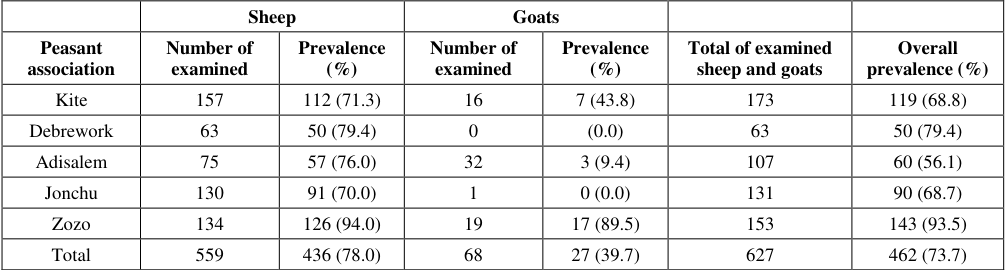 Table 1
 Table 2
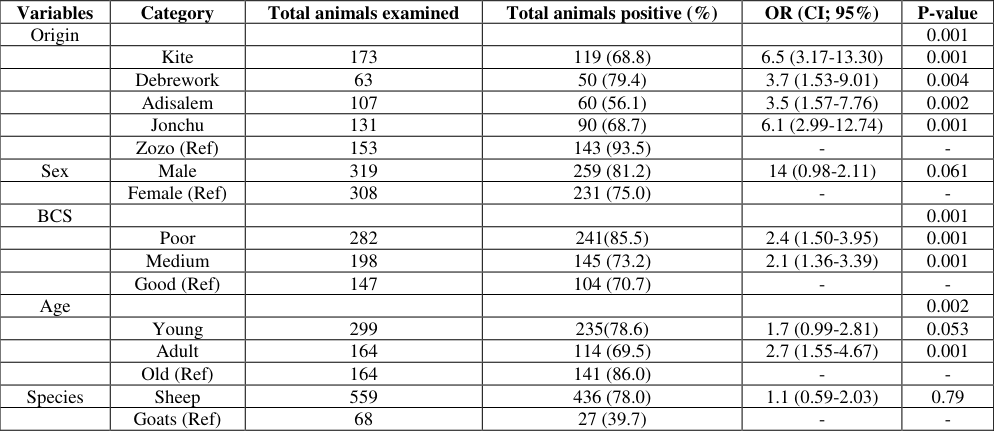 Table 3
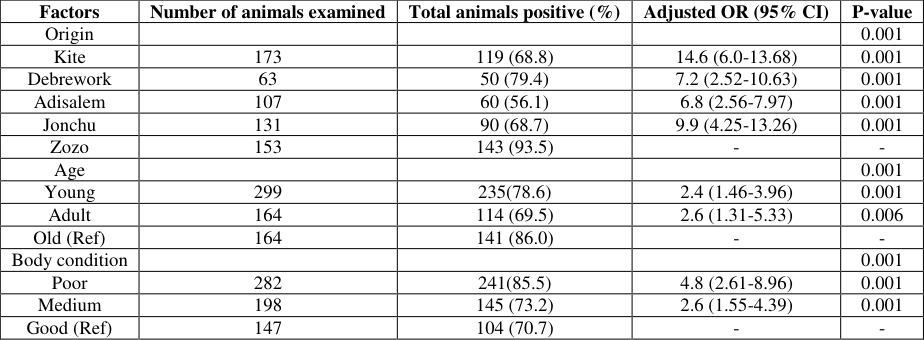 Table 4
Introduction
Ethiopia has huge number of small ruminants with a total sheep and goat population of 30.7 million and 30.2 million, respectively [37] . Sheep and goats represent an important segment of the Ethiopian livestock system. They are important sources of income for the agricultural communities and are among important sources of animal protein which providing 35% of meat and 14% of milk consumption [1] . Skin from goats and sheep are important economic products contributing for the largest share to the total and agricultural export commodities [18] . The contribution of sheep and goats to the national economy particular with regard to foreign currency earnings is through exploration of live animal, meat and skin. Among the export products, skin has the largest share of exports followed by live animal [2] . Because of their high fertility, short gestation interval and adaptation even in harsh environments, sheep and goats are considered as investments and insurance to provide income to purchase food during seasons of crop failure and to meet seasonal purchase such as improved seed, fertilizer and medicine for rural household [38] . However, the current levels of contributions of sheep and goats in Ethiopia, either the macro or micro level is below the expected potential due to a number of factors such as diseases, poor nutrition, poor husbandry practices and lack of government policies for disease prevention and control. Among major constraints hindering the productivity of sheep and goats in the country are diseases; among those ectoparasites are accounts for wide range of health problems that confront the productivity of sheep and goats. Ectoparasites are very common and widely distributed in all agro-ecological zones in Ethiopia [4,3] . Ectoparasites (lice, ked, mange mites and ticks) are cause mortality, decreased production and reproduction of sheep and goat, and also cause serious skin defects that end up with down grading of quality and rejection of skin [7,8] . In Ethiopian tanneries, 35% of sheep and 56% of goat skins have been downgraded and rejected due to defects caused by ectoparasites [7,11] .
The Ethiopian tanning industry has long complained about the poor quality of processed skin. This has created a serious problem for competition in international markets through the export of semi-processed and processed skin [9,13] . The study done for assessment of major factors that cause skin rejection at Modjo export tannery in Ethiopia revealed that ectoparasites play key role in the rejection of skin [13] . All ectoparasites cause intense irritation to the skin, the extent depending on the parasite involved. Infested sheep and goat scratch, rub and bite the affected areas and this end up with skin damage [14] . Ectoparasites of sheep and goats cause blood loss and very heavy infestations result with severe anemia. Moreover, they are the most important vectors of protozoan, bacterial, viral and rickettsial diseases [10,12] . All these contributed towards the extreme reduction of sheep and goat productivity. In Ethiopia there is limited information regarding the prevalence, risk factor and distribution of sheep and goat ectoparasites. Ectoparasites are one of the major hinder sheep and goat production in many parts of Ethiopia. Several studies from different parts of the Ethiopia showed that skin quality deterioration is very evident mainly due ectoparasites such as lice, fleas, keds, mange mites and ticks are the major ectoparasites of sheep and goats in the country [38,5] . Ectoparasites are reported to cause a wide range of health problems such as mechanical tissue damage, irritation, inflammation, hypersensitivity, abscesses, weight loss, lameness, anaemia and in severe cases death of infested animals with the consequent socioeconomic implications [10] . The occurrence and spread of ectoparasite had been shown to correlate with host factors, poor management, climatic factors, feed scarcity and inadequate veterinary services [6] . Ectoparasite is one of the most important sheep and goats problems in Debub Bench district of Bench Maji zone. This district is potential for sheep and goats production but the district is infested with ectoparasite. As a result, the people suffer from low level of skin and productivity that compromise the socio-economic and nutritional status of inhabitants. Hence, knowing the current status of ectoparasite and its associated risk factors is important to reducing economic losses by this parasite. To effectively control ectoparasite problems and realize benefit from sheep and goats resource, it is crucially important to know prevalence and associated risk factors of ectoparasite. Furthermore, science-based interventions could be made available for policy makers and animal health extension personnel. There is no any study conducted previously in this area. Therefore, objective of this study was to determining the prevalence of ectoparasite of sheep and goats, and possible risk factors that play a role in precipitating such problems in Debub Bench district of Bench Maji zone in south western part of Ethiopia.
Materials and Methods
Materials and Methods
Study area and Period
The study was conducted from December 2016 to December 2017 in selected peasant associations of Debub Bench district of Bench Maji zone. The district is bounded by Guraferda district in the west, sheko district in the north, Meinit shasha district in the south, Sheybench district in the east, Semien Bench district in the northeast and Meinit Goldiya district in the southeast. The major area of the district is classified under warm and humid to per humid agro-ecology. Mixed croplivestock farming system is practiced in the district. The district has an altitude that ranges from 980 to 1900 meters above sea level and is subdivided into two ecological zones: midland (42.2%) and lowland (57.8%). The area is characterized by bimodal rainfall pattern with major and minor rainy seasons mostly lasting from June to October and March to May, respectively. The dry season extends from November to February. The average annual rainfall is 1800 mm and the mean annual maximum and minimum temperatures recorded in was 17.2 and 27.5 0 C respectively. Topographically, plain areas and rolling terrain from the surrounding lowland to steep slopes stretching midland topographies are found in the district.
Study Population
Target population comprises were sheep and goats of Debub Bench district and study population were sheep and goats in selected peasant association of the district which was kept under different of production systems. The study was included different age group and local indigenous breed of sheep and goats kept by farmers in the area where mixed crop-livestock production system is practiced.
Study Design
The cross-sectional study was conducted from December 2016 to December 2017 to estimate the prevalence and associated risk factors of ectoparasite in sheep and goats in Debub Bench district of Bench Maji zone in southwestern Ethiopia.
Sampling method and sample size determination
The study district was selected purposively based on history of ectoparasite reports. Simple random sampling technique was used to select the peasant associations and animals from the district. Five peasant associations were sampled from the district based on number of sheep and goats population. Sampling frame of sheep and goats were taken from respective peasant associations. During sampling peasant associations, age, sex, body condition and species of sheep and goats were recorded. Since there was no previous study done in the area, the sample size was determined based on the expected prevalence of 50% and absolute desired precision of 5% at confidence level of 95%. As a result a total of 384 sheep and goats were needed to be sampled according to formula given by [36] . However, the sample size was raised to 627 sheep and goats with the intention to increase the precision of the study.
Field activity and laboratory diagnostic method
After the animal restrained physically, clinical examination for ectoparasites was performed by visual inspection and palpation of skin for parasites and/or lesions on all parts of animal. The neck, shoulder, breast, ribs, back, flank and rump areas of both sides of the body were examined for presence of ticks and lice by parting the hair/wool. From each site five partings of about 10 cm long was examined. Ectoparasites like tick, fleas and lice was collected from the body surface manually and preserved in proper universal bottle labeled with serial numbers while other data was written on special field register format prepared for this particular purpose (peasant associations, species, age, sex and body condition score of animals). The collected ectoparasites were transported to parasitology laboratory. All collected samples was examined for further identification and confirmed in the laboratory as the procedure recommended by [35] and [30] . Identification of the different ectoparasite species and/or genera was undertaken according to [15] .
Data management and analysis
Data obtained from this study was recorded, and stored in Microsoft® Excel for Windows 2010 and transferred to Statistical Package for the Social Sciences (SPSS) version 20.0 (IBM SPSS, 2011). Descriptive statistics used to analyze the data and percentages and tables were used to describe the results. The prevalence was calculated by dividing the proportion of animals found infested by the total number of animals examined for ectoparasites multiplied by 100. Associations between outcome (ectoparasites) and explanatory variables (risk factors) for all units of analysis were investigated by using logistic regression model. The strength of the association between outcome and explanatory variables was assessed using the adjusted odds ratios (OR). The explanatory variables (P≤ 0.25) were further checked for multicollinearity using the variance inflation factor (VIF) and tolerance factor (TF) before multivariable logistic regression analysis. Variance inflation factor values of greater than 3 or tolerance less than 0.1 were considered the cut-off points [33] for the collinearity diagnostics. Variables were also tested for interaction effects using cross-product terms. The backward elimination procedure was used to eliminate the factors that were not significant at P<0.05 in the overall model. Factors that were significant (P≤ 0.05) were retained in the final model and model fit was observed using the Hosmer-Lemeshow test. In the analysis, a covariate was considered confounder and included in the model if its inclusion altered the OR of the estimated risk by more than 20% [34] . For all the analyses, confidence level (CL) is at 95% and P≤ 0.05 were set for significance.
Result
The overall prevalence of ectoparasite in the study areas was 73.7%. The prevalence in each peasant association was determined to be 93.5% in Zozo, 79.4% in Debrework, 68.8% in Kite, 68.7% Jonchu and 56.1% in Adisalem of Debub Bench district. The prevalence of ectoparasite in sheep and goats were 78.0% and 39.7% respectively as indicated in Table 1. Variables with a p-value less than 0.25 in the univariable analysis with no multicollinearity were entered into multivariable logistic regression model. No significant interactions between variables were detected. A Hosmer-Lemeshow goodness-of-fit value (P=0.47), indicated that the model was fit the data. The final multivariable logistic regression model showed that body condition, origin and age of small ruminants (sheep and goats) were independently associated with (P<0.05) ectoparasite in Debub Bench district (Table 4).
| Factors | Number of animals examined | Total animals positive (%) | Adjusted OR (95% CI) | P-value |
|---|---|---|---|---|
| Origin | 0.001 | |||
| Kite | 173 | 119 (68.8) | 14.6 (6.0-13.68) | 0.001 |
| Debrework | 63 | 50 (79.4) | 7.2 (2.52-10.63) | 0.001 |
| Adisalem | 107 | 60 (56.1) | 6.8 (2.56-7.97) | 0.001 |
| Jonchu | 131 | 90 (68.7) | 9.9 (4.25-13.26) | 0.001 |
| Zozo | 153 | 143 (93.5) | - | - |
| Age | 0.001 | |||
| Young | 299 | 235(78.6) | 2.4 (1.46-3.96) | 0.001 |
| Adult | 164 | 114 (69.5) | 2.6 (1.31-5.33) | 0.006 |
| Old (Ref) | 164 | 141 (86.0) | - | - |
| Body condition | 0.001 | |||
| Poor | 282 | 241(85.5) | 4.8 (2.61-8.96) | 0.001 |
| Medium | 198 | 145 (73.2) | 2.6 (1.55-4.39) | 0.001 |
| Good (Ref) | 147 | 104 (70.7) | - | - |
Table text extracted from the original PDF; superscript letters are shown inline. The original table image is below.
View original table image
Discussion
The present study showed that from a total of 627 randomly examined sheep and goats, 462 (73.7%) were infested with ectoparasite. This finding is most probably attributable to several important factors including management problems, favorable environment, malnutrition and poor husbandry systems, poor awareness of farmers and inadequate veterinary services in the study area [16] . Similar level of prevalence was reported by [21] , [32] and [2] , who reported that prevalence of 81.5% in selected districts of Amhara Region, 73.3% in Kombolcha and 71.4% in Bahir dar, Ethiopia, respectively. On the other hand, the prevalence of ectoparasite reported in the current study is lower than the values reported by [18] 99.4% in Wolmera district; [17] 93.1% in pastoral districts of Afar. However, the prevalence of ectoparasite reported in the current study is higher than the values reported by [11] 54.8% in selected districts of Tigray Region; [19] 48.9% in Bahirdar, Northwest Ethiopia and [20] 45.5% in Sekela Northwest Ethiopia. This variation in prevalence of ectoparasite might be due to differences in environmental factors, management system and level of veterinary service in study areas. The major ectoparasites identified were ticks (47.0%), fleas (46.7%), lice (21.5%) and mixed infestation (30.3%) of sheep and goats in the study area. This finding is in line with [11] and [22] , who reported that lice, ticks and fleas are common ectoparasites infested sheep and goats. In addition, other studies have also demonstrated the widespread nature of those ectoparasites in sheep and goats in Ethiopia [31,39] . Tick infestation was the dominant ectoparasites in the current study area in sheep and goats. This may be attributed to the fact that ticks are easier to detect when compared to fleas which jump frequently all over the host body. This finding was also in agreement with reports of [23] and [24] , who have reported that the predominance of ticks in Bahir Dar and East Wollega areas of the country, respectively. The present study shown that origin of sheep and goats was statistically significantly associated with occurrence of ectoparasite in sheep and goats (P<0.05). The highest (93.5%) and lowest (56.1%) prevalence of ectoparasite was showed in sheep and goats origin from Zozo and Adisalem peasant associations. This might be related to difference in management practice, agro climate and season of study since there is strong seasonal cycle in ectoparasite management and health care of sheep and goats in the study areas [8] . This result is in line with finding of [8] and [4] , who reported that statistically significant association between prevalence of ectoparasite and origin of sheep and goats. There is statistically significant variation has been observed in prevalence of ectoparasite between different age groups; adult and young age group were almost three (OR=2.6) and two times (OR=2.4) respectively more likely to acquire ectoparasite infestation compared to their older counterparts. This might be due to younger sheep and goats could be attributed to their poor grooming behavior. Moreover, acquired immunity added to the relative thicker skin of older animals may also contribute to greater resistance against ectoparasites in older age category. This finding is consistent with report of [2] , [26] , and [31] , who reported that age is one of the important risk factors influencing ectoparasites in sheep and goats. This study indicated that sheep and goats with poor body condition are almost five times more likely to be infested by ectoparasites (OR= 4.8) than good body condition. This may be due to sheep and goats under good body condition have well developed immune status that can respond to any foreign protein better than those of sheep and goats with poor body condition [30] . This finding is consistent with some previous studies in Ethiopia [11,28,29] , who stated that prevalence of ectoparasite was statistically significantly associated with body condition in sheep and goats. Higher prevalence of ectoparasite was found in sheep (78.0%) than goats (39.7%). However, there was no statistically significant variation was observed in prevalence of ectoparasite between sheep and goats. The prevalence of ectoparasite was also no statistical significant difference (P>0.05) between sex. This might be because of an equal chance of exposure sheep and goats to the ectoparasite and even distribution of the parasite in the district. This result is in line with study done by [17] in selected pastoral districts of Afar, Northeastern Ethiopia.
Conclusion and Recommendations
Ectoparasite is the most important constraint for sheep and goats production and productivity in study area. Tick was the most abundant ectoparasites in the study area followed by fleas and lice in sheep and goats. Hence, this has great impact on the country economy through downgrading of skin for the leather industry as well as the loss of condition and carcass quality. Another problem is the possible transmission of many diseases. Body condition, age groups and origin of sheep and goats were statistically significance difference with prevalence of ectoparasites in the study area. However, species and sex were not showed statistically significance difference. To reduce the impact of ectoparasites in sheep and goats appropriate control methods of ectoparasites should be designed and implemented in the study area. Moreover, awareness creation about the importance and prevention of ectoparasites among smallholder sheep and goats producing farmers is recommended.
Figures and tables from the paper
| — | Sheep (n=559) | — | Goats (n=68) | — | — |
|---|---|---|---|---|---|
| Type of ectoparasite | No of infested | Prevalence (%) | No of infested | Prevalence (%) | Overall prevalence (%) |
| Tick | 257 | (46.0) | 38 | (55.9) | 295 (47.0) |
| Lice | 131 | (23.4) | 4 | (5.9) | 135 (21.5) |
| Fleas | 261 | (46.7) | 32 | (47.1) | 293 (46.7) |
| Mixed | 171 | (30.6) | 20 | (29.4) | 191 (30.5) |
Table text extracted from the original PDF; superscript letters are shown inline. The original table image is below.
View original table image
| Variables | Category | Total animals examined | Total animals positive (%) | OR (CI; 95%) | P-value |
|---|---|---|---|---|---|
| Origin | 0.001 | ||||
| Kite | 173 | 119 (68.8) | 6.5 (3.17-13.30) | 0.001 | |
| Debrework | 63 | 50 (79.4) | 3.7 (1.53-9.01) | 0.004 | |
| Adisalem | 107 | 60 (56.1) | 3.5 (1.57-7.76) | 0.002 | |
| Jonchu | 131 | 90 (68.7) | 6.1 (2.99-12.74) | 0.001 | |
| Zozo (Ref) | 153 | 143 (93.5) | - | - | |
| Sex | Male | 319 | 259 (81.2) | 14 (0.98-2.11) | 0.061 |
| Female (Ref) | 308 | 231 (75.0) | - | - | |
| BCS | 0.001 | ||||
| Poor | 282 | 241(85.5) | 2.4 (1.50-3.95) | 0.001 | |
| Medium | 198 | 145 (73.2) | 2.1 (1.36-3.39) | 0.001 | |
| Good (Ref) | 147 | 104 (70.7) | - | - | |
| Age | 0.002 | ||||
| Young | 299 | 235(78.6) | 1.7 (0.99-2.81) | 0.053 | |
| Adult | 164 | 114 (69.5) | 2.7 (1.55-4.67) | 0.001 | |
| Old (Ref) | 164 | 141 (86.0) | - | - | |
| Species | Sheep | 559 | 436 (78.0) | 1.1 (0.59-2.03) | 0.79 |
| Goats (Ref) | 68 | 27 (39.7) | - | - |
Table text extracted from the original PDF; superscript letters are shown inline. The original table image is below.
View original table image
References
38 in the original paper- MOA (Ministry of Agriculture) Annual Report on Livestock Production, MOA, Addis Ababa, Ethiopia, 2010.
- Amuamuta A, Kassahun A, Fentahun T. Occurrence of Small Ruminant Ectoparasites in and Around Bahir Dar, Northwest Ethiopia Advances in Biological Research. 2012; 6(5):170-176.
- Yacob HT. Ectoparasitism: Threat to Ethiopian Small Ruminant Population and Tanning Industry. J Vet. Med. Anim. Health. 2014; 6(1):25-33.
- Kumsa B, Beyecha K, Geloye M. Ectoparasites of sheep in three agro-ecological zones in central Oromia, Ethiopia. J Vet. Res. 2012; 79(1):442-447.
- Tadesse H. Pre-slaughter Defects of Hides/Skin and Intervention Options in East Africa, Harnessing the Leather Industry to Benefit the Poor. In: Regional Workshop Proceedings, April 18 -20, Addis Ababa, Ethiopia, 2005, 19-30.
- Ayele S, Assegid W, Jabbar MA, Ahmed MM, Belachew H. Livestock Marketing in Ethiopia. A Review of Structure, Performance and Development Initiatives. Socioeconomic and Policy Research Working Paper, ILRI, Nairobi, Kenya, 2003, 35-52.
- Yebegashet M, Hailu Y, Ashenafi H. Ectoparasites of small ruminants in three selected agro-ecological sites of Tigray Region, Ethiopia. Trop. Anim. Health Prod. 2010; 42:1219-1224.
- Amare S, Asfaw Y, Hailu Y. Ectoparasites of Sheep and Goats in North-West Amhara Regional State, Ethiopia, Ethiop. Vet. J. 2013; 17(1):55-67.
- MoARD (Ministry of Agriculture and Rural Development) The effect of Hide and skin quality on Domestic and export markets and evaluation of the campaign against Ectoparasites of sheep and goats in Amhara, Tigray and Afar Regions, official report to Regions and other sectors, Addis Ababa, Ethiopia, 2008.
- Radostits OM, Gay C, Hinchcliff KW, Constable PD. A textbook of the diseases of cattle, sheep, goats, pigs and horses, 10th edition, Saunders, Edinburgh, London, 2007, 1585-1612.
- Rahmeto A, Makelesh T, Bekele M, Desie S. Prevalence of Small Ruminant Ectoparasites and Associated Risk Factors in Selected Districts of Tigray Region, Ethiopia, Global Veterinaria, 2011; 7(5):433-437.
- Rhabari S, Nabian S, Bahonar AR. Some observations on sheep sarcoptic mange in Tehran province, Iraq, Tropical animal health production. 2009; 41:397-401.
- Berhanu W, Negussie H, Alemu S, Mazengia H. Assessment on major factors that cause skin rejection at Modjo export tannery, Ethiopia. Tropical Animal Health and Production. 2011; 43(5):989-93.
- USAID. USAID (FAO), success story, Ethiopians learning to fight ectoparasites, 2008.
- Wall R, Shearer D. Veterinary ectoparasite; Biology, pathology and control. 2 ed. UK. Black Welsceince, 2001, 23-54.
- Bedada H, Gizaw F, Fekadu G, Negash W. Identification of Major Ectoparasites Infesting Sheep in Aba Jima District, Oromia Region, Ethiopia. Int. J. Curr. Res. Biol. Med. 2017; 2(11):42-29.
- Zeru F, Bedada H, Gebru M, Seid A, Gebregergious A. Epidemiology of Major Small Ruminant Ectoparasites and Effectiveness of the Control Approaches Employed in Selected Pastoral Districts of Afar, Northeastern Ethiopia. Journal of Biology, Agriculture and Healthcare. 2015; 5(14):63-72.
- Jemere B, Martha T, Rahmeto A. External Parasite Infestations in Small Ruminants in Wolmera District of Oromiya Region, Central Ethiopia. Journal of Animal and Veterinary Advances. 2011; 10:518-523.
- Tesfaye D, Assefa M, Demissie T, Taye M. Ectoparasites of small ruminants presented at Bahir Dar Veterinary Clinic, Northwest Ethiopia. African Journal of Agricultural Research. 2012; 7(33):4669-4674.
- Seyoum Z, Tadesse T, Addisu A. Prevalence in Small Ruminants in and around Sekela, Amhara Regional State, Northwest Ethiopia. Hindawi Publishing Corporation Journal of Veterinary Medicine, 2015, 6.
- Chanie M, Negash T, Sirak A. Ectoparasites are the major causes of various types of skin lesionos in small ruminants in Ethiopia, Tropical Animal Health and Production. 2010; 42:1103-1109.
- Misgie A, Baye D, Belete A, Ge G. Prevalence of ectoparasites among small ruminants in and around Bahir Dar town, Ethiopia. World Journal of Pharmaceutical and Medical Research. 2016; 2(3):24-32.
- Dawit T, Mulugeta A, Tilaye D, Mengistie T. Ectoparasites of small ruminants presented at Bahirdar Veterinary Clinic, Northwest Ethiopia. African Agricultural Journal Research. 2012; 7(33):4669-4674.
- Mersha C, Solomon, Basaznew B. Prevalence of bovine demodicosis in Gondar Zuria District, Amhara Region, Northwest Ethiopia. Global Veterinarian. 2013; 11(1):3035.
- Yacob H, Yalow A, Dinka A. Ectoparasite prevalence in sheep and goat in and around Wolaitasodo, Southern Ethiopia. Revue de Medicine Veterinaire. 2008; 159:450454.
- Fentahun T, Woldemariam F, Chanie M, Berhan M. Prevalence of Ectoparasites on small ruminants in and around Gondar town. American-Eurasian Journal of Science Research. 2012; 7(3):106-111.
- Mulugeta Y, Yacob TH, Ashenafi H. Ectoparasites of small ruminants in three selected agro-ecological sites of Tigray Region, Ethiopia Tropical Animal Health and Production. 2010; 42:1219-1224.
- Teshome D, Derso S. Prevalence of major skin diseases in ruminants and its associated risk factors at university of Gondar Veterinary Clinic, North West Ethiopia. J Vet. Sci. Technol, 2015, SS13-002.
- Taylor MA, Coop RL, Wall RL. Vet Parasitol, 3rd edn. Blackwell, Oxford, 2007, 586-593.
- Sertse T, Wossene A. A study on ectoparasites of sheep and goats in eastern part Amhara region, northeast Ethiopia. Small Rumin Res. 2007; 69(1-3):62-67.
- Tadesse A, Fentaw E, Mekbib B, Abebe R, Mekuria S, Zewdu E. Study on the prevalence of ectoparasite infestation of ruminants in and around Kombolcha and damage to fresh goat pelts and wet blue (pickled) skin at Kombolch Tannary, Northeaster Ethiopia. Ethiop. Vet. J. 2011; 15:87-101.
- Apeanti WO. Contributing factors to pre-service mathematics teachers' e-readiness for ICT integration. International Journal of Research in Education and Science. 2016; 2(1):223-238.
- Dohoo I, Martin W, Stryhn H. Veterinary epidemiologic research, 2nd ed. AVC, Charlottetown, Prince Edward Island, 2009, 239-249.
- Urquhart G, Armour J, Duncan JL, Dunn AM, Jennings FW. Veterinary Parasitology, 2nd edition. Singapore; Longmann, 2007.
- Thrusfield M. Veterinary Epidemiology, 3rd Edn., Blackwell Publishing, England, 2005, 345-543.
- CSA. Livestock and Livestock Characteristics, Agricultural sample Survey. Addis Ababa, Ethiopia. Statistical Bulletin. 2017; 2(583):9-13.
- Tefera S. Investigation on ectoparasites of small ruminants in selected sites of Amhara regional state and their impact on the tannin Industry, MSc thesis, Addis Ababa University, Ethiopia, 2004.
- Woldemeskel M, Ashenafi H. Study on skin diseases in sheep from northern Ethiopia. Dtsch Tierarztl Wochenschr. 2000; 110:20-22.