
Research article · 2018 · Full text
International Journal of Veterinary Sciences and Animal HusbandryEavaluation of haemato-biochemical effects of dorsolumbar epidural xylazine-lignocaine anaesthesia in Cattle
Volume 3(5) · Pages 28–32
Research areasVeterinary Pharmacology and AnesthesiaCancer, Stress, Anesthesia, and Immune ResponsePharmacological Effects and Assays
Abstract
Author-writtenThe study was conducted on 14 cattle to evaluate effects of xylazine-lignocaine dorsolumbar epidural anaesthesia on haemato-biochemical parameters. Animals divided in two groups A and B. Cattle in group A, received mixed anesthetic consisting of xylazine hydrochloride @ 0.025 mg/kg and lignocaine hydrochloride @ 0.1 mg/kg whereas, in group B, received mixed anesthetic consisting of xylazine hydrochloride @ 0.025 mg/kg and lignocaine hydrochloride @ 0.2 mg/kg by dorsolumbar epidural anaesthesia. The haematological parameters like Hb, PCV, TEC, TLC and lymphocyte count decreased significantly except neutrophil in both the groups during anaesthesia. Eosinophil count and monocyte count altered non-significantly during anaesthesia in both group A and group B. Biochemical parameters like ALT, AST, BUN and serum creatinine increased significantly during anaesthesia in both the groups. The study illustrated that alterations in the haemato-biochemical parameters were transient during anaesthesia and values were returned to base level 24 h after anaesthesia.
Summary
Source-checkedPlain-language reading of the full paper, prepared with AI and checked against the text. Each point links to the authors' own words.
Why it matters
- Local anesthesia, such as epidural nerve blocks, is preferred for cattle abdominal surgeries to avoid the side effects associated with general anesthesia and recumbency. View evidence ↗
- Xylazine, an alpha-2-adrenergic agonist, is used to enhance the depth and duration of anesthesia, and its combination with lignocaine is considered more effective than using either drug alone. View evidence ↗
- Anesthetic drugs can cause temporary changes in renal blood flow and liver cell membrane permeability, leading to altered biochemical enzyme levels in the blood. View evidence ↗
The question
- The study aimed to evaluate the hematological and biochemical responses in cattle receiving dorsolumbar epidural anesthesia using a combination of xylazine hydrochloride and lignocaine hydrochloride. View evidence ↗
What they did
- The study included 14 cattle undergoing laparotomy at T.V.C.C., COVAS, Parbhani, divided into two groups (A and B) of seven animals each. View evidence ↗
- Group A received xylazine hydrochloride (0.025 mg/kg) and lignocaine hydrochloride (0.1 mg/kg), while Group B received xylazine hydrochloride (0.025 mg/kg) and a higher dose of lignocaine hydrochloride (0.2 mg/kg). View evidence ↗
- Biochemical parameters (ALT, AST, BUN, and serum creatinine) were measured at three time points: before anesthesia, during anesthesia, and 24 hours after anesthesia. View evidence ↗
What they found
- Hemoglobin, packed cell volume, total erythrocyte count, and total leukocyte count decreased significantly (P<0.05) during anesthesia in both groups, returning to baseline after 24 hours. View evidence ↗
- During anesthesia, both groups showed a significant increase (P<0.05) in neutrophil count and a significant decrease (P<0.05) in lymphocyte count. View evidence ↗
- Changes in eosinophil and monocyte counts during anesthesia were not statistically significant in either group. View evidence ↗
- Levels of AST, ALT, BUN, and serum creatinine increased significantly (P<0.05) during anesthesia and returned to baseline values 24 hours later. View evidence ↗
- In Group A, ALT increased from 17.21 ± 4.75 IU/L (baseline) to 23.81 ± 5.13 IU/L during anesthesia; in Group B, it increased from 30.59 ± 6.32 IU/L to 36.57 ± 6.72 IU/L. View evidence ↗
- Serum creatinine increased significantly during anesthesia, rising from 1.05 ± 0.14 mg/dL to 1.53 ± 0.12 mg/dL in Group A and from 1.35 ± 0.29 mg/dL to 1.80 ± 0.29 mg/dL in Group B. View evidence ↗
What it means
- The authors conclude that the hematological and biochemical changes were transient and similar across groups, returning to baseline within 24 hours, indicating that the xylazine-lignocaine combination is safe for epidural anesthesia in cattle. View evidence ↗
Visual summary
1 visualsIllustrations explain the paper; they do not show study data.
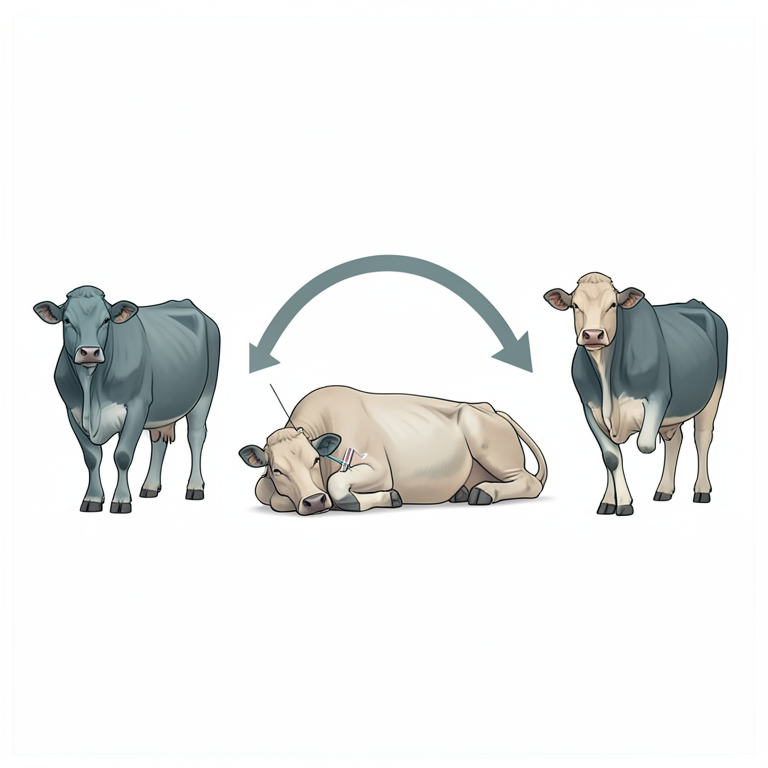
Transient Effect Cycle
AI-generated conceptual illustration (adult cattle). It explains the idea and does not show study data.
View source evidence ↗Figures & tables
From the original paper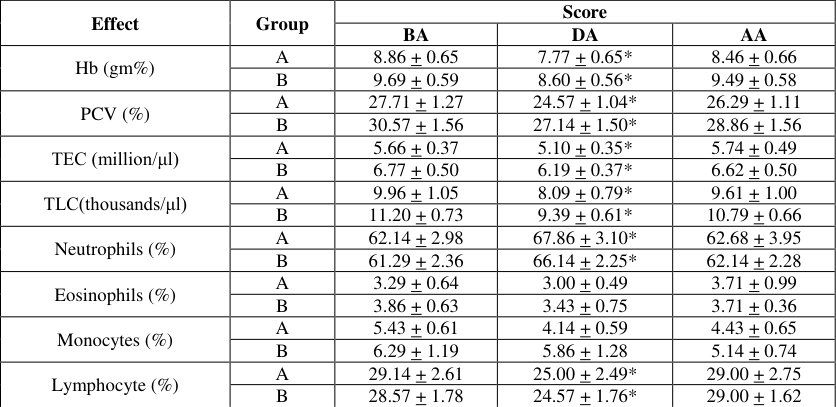 Table 1
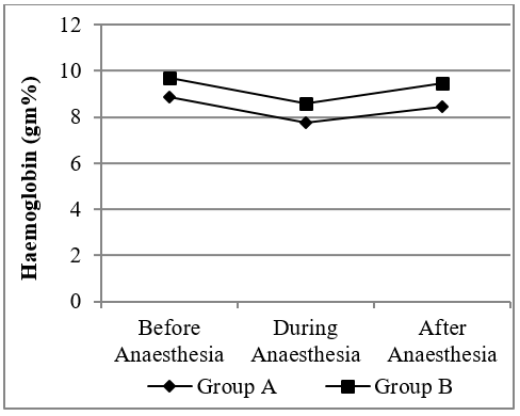 Figure 1
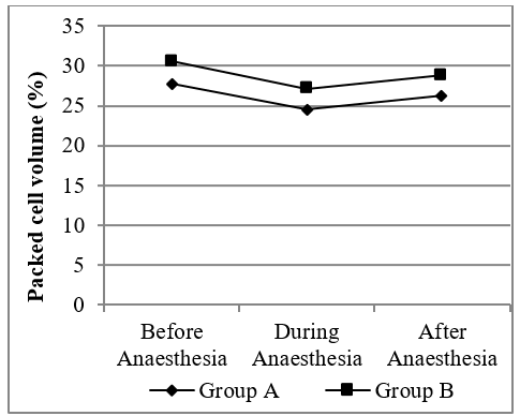 Figure 2
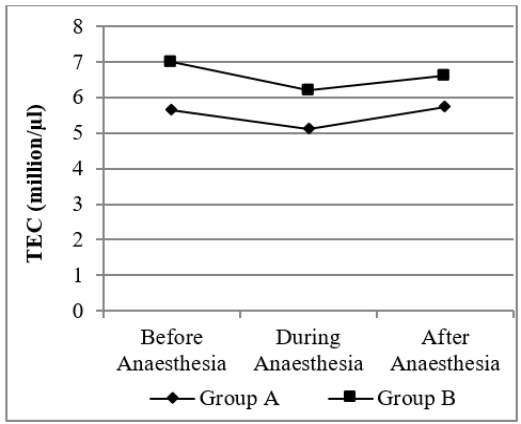 Figure 3
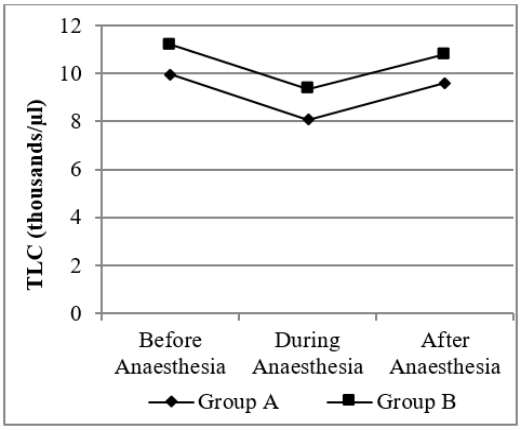 Figure 4
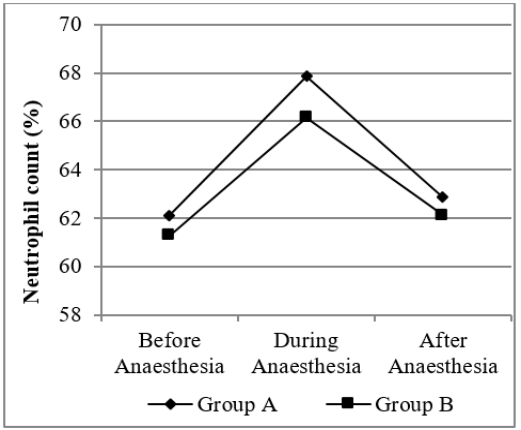 Figure 5
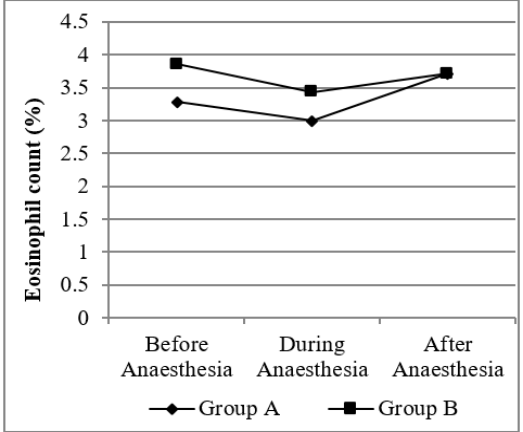 Figure 6
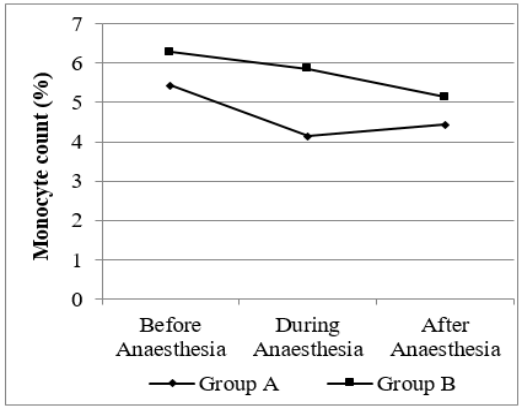 Figure 7
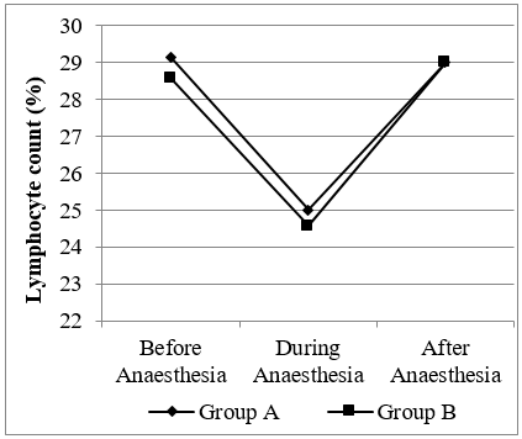 Figure 8
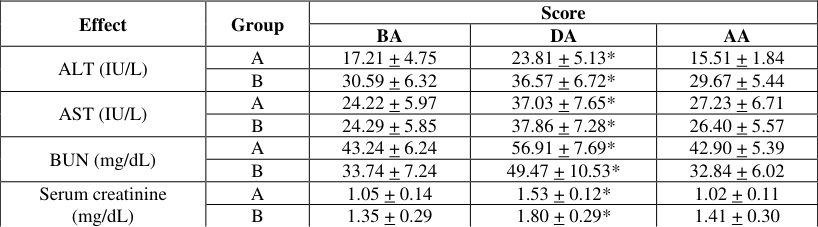 Table 2
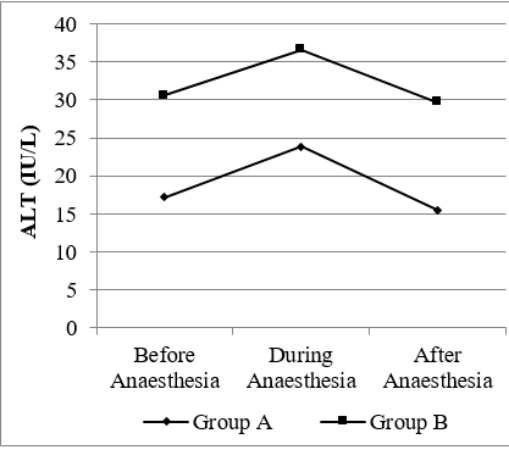 Figure 9
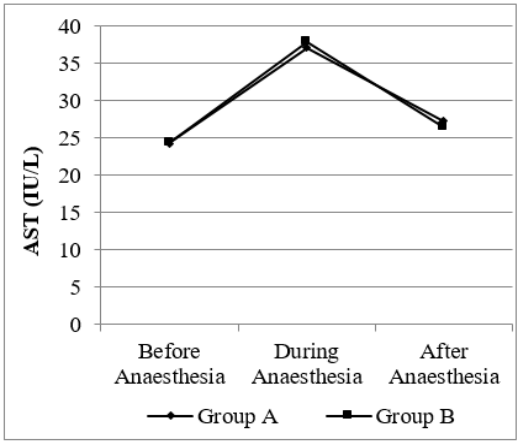 Figure 10
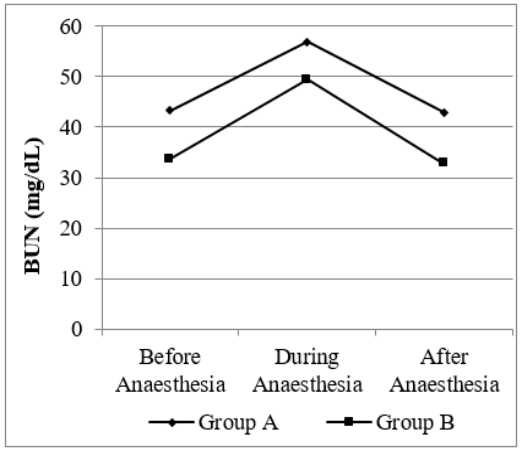 Figure 11
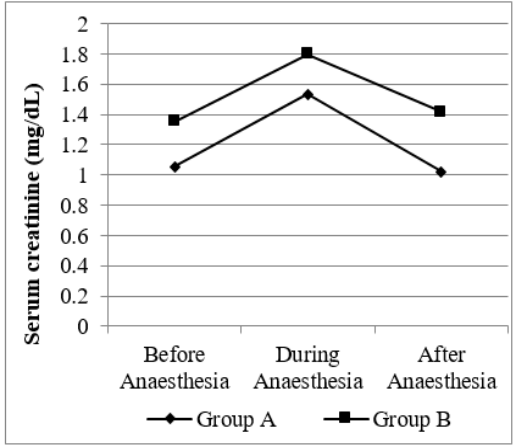 Figure 12
Introduction
The local anaesthesia like paravertebral or epidural nerve block is preferred for most abdominal surgeries in cattle because of side effects from general anaesthesia and recumbency. Dorsolumbar epidural anaesthesia is produced by administration of local anaesthetic viz. lignocaine HCl more commonly. Recently alpha-2-adrenergic agonists viz. xylazine HCl is used to increase depth and duration of anaesthesia. Combination of xylazine and lignocaine is found to be better than xylazine and lignocaine alone (Molaei et al., 2010) [6] . Dorsolumbar epidural anaesthesia is recently used technique for laparotomy in cattle, buffalo, camel, horse and donkey. Anaesthetic drug have temporary effects on renal blood flow and causes alteration in cell membrane permeability in liver which results in change in levels of biochemical enzymes in blood. Shifting of fluid from extravascular compartment to intravascular compartment to maintain cardiac output during the anaesthesia causes alteration in haematological values (Singh et al., 2005) [9] . Alpha-2-adrenergic agonists administered epidurally produce direct effect on sensory transmission and mediate analgesia (Lemke, 2007) [5] . Local anaesthetic agents reversibly block action potential along nerve axon by interference with voltage negative gated sodium channel (Skarda and Tranquilli, 2007) [10] . The present work was conducted to study haemato-biochemical response of dorsolumbar epidural anaesthesia produced by combination of Xylazine hydrochloride and Lignocaine hydrochloride in cattle.
Materials and methods
Total 14 clinical cases of cattle presented at T.V.C.C., COVAS, Parbhani for laparotomy were included for this study. The animals were divided irrespective of age, sex, productive and reproductive status into two groups viz. Group A and Group B, each comprising of seven animals. Animals included in present research have age 3.5 years to 11 years and body weight 200 kg to 400 kg.
Each animal was restrained in trevis in standing position and the skin above the first interlumbar (L1-L2) space was prepared aseptically. The first lumbar intervertebral space was located 1.5 to 2.0 cm caudal to imaginary line drown across cranial border of transverse process of second lumbar vertebra. Skin weal was prepared by using 1 ml lignocaine hydrochloride at site of epidural anaesthesia. An 18 gauge spinal needle with stylet was inserted vertically through skin weal. Needle was advanced until abrupt reduction to needle passage was noted. This was indicated piercing of interarcuate ligament and entry of needle tip in epidural space of vertebral canal. Stylet was removed from needle to confirm position of needle tip in epidural space. The entrance into the epidural space was identified by hanging drop technique. After confirming that there was no blood or CSF present in the aspirate, drug was administered at speed of 0.5 ml/second and needle was removed immediately. Blood samples were collected to estimate various haematobiochemical parameters. Blood samples were collected before, immediately after onset of anaesthesia and 24 hour after completion of surgery. The haematological parameters such as haemoglobin (Hb), packed cell volume (PCV), total erythrocyte count (TEC), total leukocyte count (TLC) and differential leukocyte count (DLC) were determined. The biochemical parameters such as alanine transaminase (ALT), aspartate transaminase (AST), blood urea nitrogen (BUN) and serum creatinine were estimated before anaesthesia, during anaesthesia and 24 hour after anaesthesia in each animal.
Results
Haemoglobin, packed cell volume, total erythrocyte count and total leukocyte count levels was decreased significantly (P<0.05) during anaesthesia and returned to base value 24 hours after anaesthesia in both the groups A and group B. In both group A and group B, neutrophil count was increased significantly (P<0.05) whereas significant (P<0.05) decrease observed in lymphocyte count during anaesthesia. Nonsignificant fluctuations in eosinophil and monocyte count were observed during anaesthesia in both the groups. The mean + S.E. values of haematological parameters have been represented in table 1 and Fig. 12345678. Aspartate transaminase, alanine transaminase, blood urea nitrogen and serum cretinine levels were increased significantly (P<0.05) during anaesthesia and levels of all these parameters returned to base value 24 hours after anaesthesia in both groups A and B. The mean + S.E. values of biochemical parameters have been represented in table 2 and Fig. 9-12.
| Effect | Group | Score | — | — |
|---|---|---|---|---|
| BA | DA | AA | ||
| ALT (IU/L) | A | 17.21 + 4.75 | 23.81 + 5.13* | 15.51 + 1.84 |
| B | 30.59 + 6.32 | 36.57 + 6.72* | 29.67 + 5.44 | |
| AST (IU/L) | A | 24.22 + 5.97 | 37.03 + 7.65* | 27.23 + 6.71 |
| B | 24.29 + 5.85 | 37.86 + 7.28* | 26.40 + 5.57 | |
| BUN (mg/dL) | A | 43.24 + 6.24 | 56.91 + 7.69* | 42.90 + 5.39 |
| B | 33.74 + 7.24 | 49.47 + 10.53* | 32.84 + 6.02 | |
| Serum creatinine (mg/dL) | A | 1.05 + 0.14 | 1.53 + 0.12* | 1.02 + 0.11 |
| B | 1.35 + 0.29 | 1.80 + 0.29* | 1.41 + 0.30 |
Table text extracted from the original PDF; superscript letters are shown inline. The original table image is below.
View original table image
| Effect | Group | Score | — | — |
|---|---|---|---|---|
| BA | DA | AA | ||
| Hb (gm%) | A | 8.86 + 0.65 | 7.77 + 0.65* | 8.46 + 0.66 |
| B | 9.69 + 0.59 | 8.60 + 0.56* | 9.49 + 0.58 | |
| PCV (%) | A | 27.71 + 1.27 | 24.57 + 1.04* | 26.29 + 1.11 |
| B | 30.57 + 1.56 | 27.14 + 1.50* | 28.86 + 1.56 | |
| TEC (million/μl) | A | 5.66 + 0.37 | 5.10 + 0.35* | 5.74 + 0.49 |
| B | 6.77 + 0.50 | 6.19 + 0.37* | 6.62 + 0.50 | |
| TLC(thousands/μl) | A | 9.96 + 1.05 | 8.09 + 0.79* | 9.61 + 1.00 |
| B | 11.20 + 0.73 | 9.39 + 0.61* | 10.79 + 0.66 | |
| Neutrophils (%) | A | 62.14 + 2.98 | 67.86 + 3.10* | 62.68 + 3.95 |
| B | 61.29 + 2.36 | 66.14 + 2.25* | 62.14 + 2.28 | |
| Eosinophils (%) | A | 3.29 + 0.64 | 3.00 + 0.49 | 3.71 + 0.99 |
| B | 3.86 + 0.63 | 3.43 + 0.75 | 3.71 + 0.36 | |
| Monocytes (%) | A | 5.43 + 0.61 | 4.14 + 0.59 | 4.43 + 0.65 |
| B | 6.29 + 1.19 | 5.86 + 1.28 | 5.14 + 0.74 | |
| Lymphocyte (%) | A | 29.14 + 2.61 | 25.00 + 2.49* | 29.00 + 2.75 |
| B | 28.57 + 1.78 | 24.57 + 1.76* | 29.00 + 1.62 |
Table text extracted from the original PDF; superscript letters are shown inline. The original table image is below.
View original table image
Discussion
Pooling of the circulating blood cells in the spleen or other reservoirs secondary to decreased sympathetic activity could be the reason for the decrease in Haemoglobin, packed cell volume, total erythrocyte count, total leukocyte count and lymphocyte count during anaesthesia. The decrease in these haematological values during the period of anaesthesia or sedation might also be due to shifting of fluid from extravascular compartment to intravascular compartment in order to maintain the normal cardiac output in the animals (Kinjavdekar et al., 2000, Singh et al., 2005, Moulvi et al., 2011a and Pandey et al., 2017) [2,9,7,8] . Neutrophilia possibly could be due to adrenocortical stimulation and subsequent effect of glucocorticoids on circulating neutrophils (Grubb et al., 2002, Singh et al., 2005 and Moulvi et al., 2011) [1,9,7] . Some alteration might be take place in cell membrane permeability, which may permit this enzyme to leak from the cells with intact membranes (Singh et al., 2005) [9] . The increase in Aspartate transaminase level might be due to the hypoxia produced due to respiratory centre depression as a result of systemic absorption of xylazine. Alpha-2 agonists including xylazine are potent CNS depression agents (Pandey et al., 2017) [8] . An increase in blood urea nitrogen and creatinine levels might be attributed to the temporary inhibitory effect of drug on the renal blood flow [2,9,7,8] . Increased hepatic urea production from amino acid degradation could account for the observed increase in blood urea nitrogen has been reported earlier researcher (Singh et al., 2005) [9] . The fluctuations in creatinine values may be attributed to a temporary inhibitory effect of the drug on renal blood flow, which in turn might have caused a rise in creatinine (Kinjavdekar et al., 2000, Singh et al. 2005 and Moulvi et al., 2011) [2,9,7] . The observations of various haemato-biochemical parameters recorded in this study suggested that the alterations in these parameters recorded at various time intervals following epidural injection of xylazine and lignocaine combination were not of great magnitude. The changes were transient and more or less same in animals of all the groups and returned to base levels within 24 hour after anaesthesia. Thus, xylazine and lignocaine combination can be safely used for epidural anaesthesia in cattle.
Figures and tables from the paper
References
10 in the original paper- Grubb TL, Riebold TW, Crisman RO, Lamb LD. Comparison of lidocaine, xylazine, and lidocainexylazine for caudal epidural analgesia in cattle. Veterinary Anaesthesia and Analgesia. 2002; 29:64-68.
- Kinjavdekar P, Singh GR, Amarpal, Aithal HP. Pawde AM. Physiologic and biochemical effects of subarachnoidally administered xylazine and medetomidine in goats. Small Ruminant Research. 2000; 38:217-228.
- Lee I, Yamagishi N, Oboshi K, Ayukawa Y, Sasaki N, Yamada H. Comparison of xylazine, lidocaine and the two drugs combined for modified dorsolumbar epidural anaesthesia in cattle. (Abst, Vet Rec.). 2004; 155(25):797-9.
- Lee L. Local Anesthesia & Analgesia. Veterinary Health Sciences 2006, 1-18.
- Lemke KA. Lumb and Jones' Veterinary Anaesthesia and Analgesia. Edn. 4, Blackwell, Lowa, 2007, 216.
- Molaei MM, Azari O, Sakhaee1 E, Naderi Z, Mehdizadeh S. Comparison of lidocaine, xylazine, and a combination of lidocaine and xylazine for caudal epidural analgesia in dromedary camels. IJVS. 2010; 5(1, 2):5162.
- Moulvi BA, Parrah JD, Kalim MO, Athar H, Dedmari FH. Haemato-biochemical response to lignocaine alone or in combination with xylazine for epidural analgesia in cow calves. Journal of Advanced Veterinary Research 1. 2011, 17-20.
- Pandey PK, Tiwari SK, Kashyap DK, Dewangan G, Giri DK. Haemato-biochemical response to lumbar epidural anaesthesia using xylazine, ketamine alone and its combination in buffalo calves. Buffalo bulletin. 2017; 36(1):57-62.
- Singh P, Pratap K, Amarpal, Kinjavdekar P, Aithal HP, Singh GR. Effects of xylazine, lignocaine and their combination for lumbar epidural analgesia in water buffalo calves (Bubalus bubalis). J I. Afr. Vet. Ass. 2005; 76(3):151-158.
- Skarda RT, Tranquilli WJ, rimm Lumb, Jones. Veterinary Anaesthesia and Analgesia. Edn. 4, Blackwell, Lowa, 2007, 395-396.
Cited by 1
From OpenAlex, OpenCitations and reference lists read by Scinovex
- Potentiating the Epidural Analgesic Effect of Lidocaine in Uda Sheep with Xylazine and Medetomidine ↗
Shittu Shamsudeen, Sherifat Banke Idris, Adamu Abdul Abubakar, Mayaki Abubakar · Journal of Applied Veterinary Sciences/Journal of Applied Veterinary Sciences · 2024
This study was undertaken to compare the analgesic effects of lidocaine, xylazine, and medetomidine alone and their combinations with lidocaine in Uda sheep. The sheep (n = 6) were assigned to five different epidural treatment groups using a cross-over design with a wash-out period of one week between the treatment groups. The group (A) received lidocaine at 2.86 mg/kg, the…
❝ 0PDF