
Research article · 2017 · Full text
International Journal of Veterinary Sciences and Animal HusbandryEffect of toxic levels of Leucaena leucocephala on semen quality of goats in Myanmar
Volume 2(6) · Pages 09–12
Research areasPlant Toxicity and Pharmacological PropertiesSperm and Testicular Function
Abstract
Author-writtenThe aim of this study was to investigate the effects of toxic levels of Leucaena leucocephala (L. leucocephala) on semen quality in Myanmar goats. The study was done on nine male goats, and randomly divided into three groups. Group A was kept as control. Group B and C were given 40% and 60% L. leucocephala of total diet respectively for two months. All leucaena treated goats exhibited clinical signs such as alopecia, weight loss, dullness, appetite loss and salivation. There were significant difference on semen volume, live spermatozoa and percentage of motile spermatozoa among three groups. The concentration of spermatozoa was significantly lower in the Group C when compared to Group A (p
Summary
Source-checkedPlain-language reading of the full paper, prepared with AI and checked against the text. Each point links to the authors' own words.
Why it matters
- Goats are a vital socio-economic resource for poor farmers in rural areas. View evidence ↗
- Leucaena serves as a critical protein source for ruminants across Southeast Asia. View evidence ↗
- Despite its nutritional value, Leucaena leucocephala contains a toxic non-protein free amino acid. View evidence ↗
The question
- The study aimed to determine how feeding Leucaena affects the reproductive performance and semen quality of goats in Myanmar. View evidence ↗
What they did
- The experiment used nine male goats (bucks) randomly assigned to three different groups. View evidence ↗
- The groups consisted of a control (Group A), a group fed 40% Leucaena (Group B), and a group fed 60% Leucaena (Group C) for two months. View evidence ↗
- All diets were standardized to be isonitrogenous with 18% crude protein. View evidence ↗
- Semen collection was performed using the electro ejaculator (EEJ) method. View evidence ↗
What they found
- There was no significant difference in semen volume across the groups, with all averaging approximately 1 ml (p>0.05). View evidence ↗
- Sperm concentration was significantly lower in the 60% Leucaena group (1950 ± 158 million/ml) compared to the control group (2320 ± 170 million/ml) (p<0.05). View evidence ↗
- The percentage of live spermatozoa did not differ significantly between the 0%, 40%, and 60% groups (p>0.05). View evidence ↗
- No significant differences in sperm motility were found among the three groups (p>0.05). View evidence ↗
What it means
- The authors concluded that feeding 40% and 60% Leucaena did not adversely affect semen quality, with the exception of sperm concentration. View evidence ↗
- The authors state that the eight-week experimental period may have been too short to observe full adverse effects on semen quality, suggesting a need for longer-term studies. View evidence ↗
Visual summary
1 visualsIllustrations explain the paper; they do not show study data.
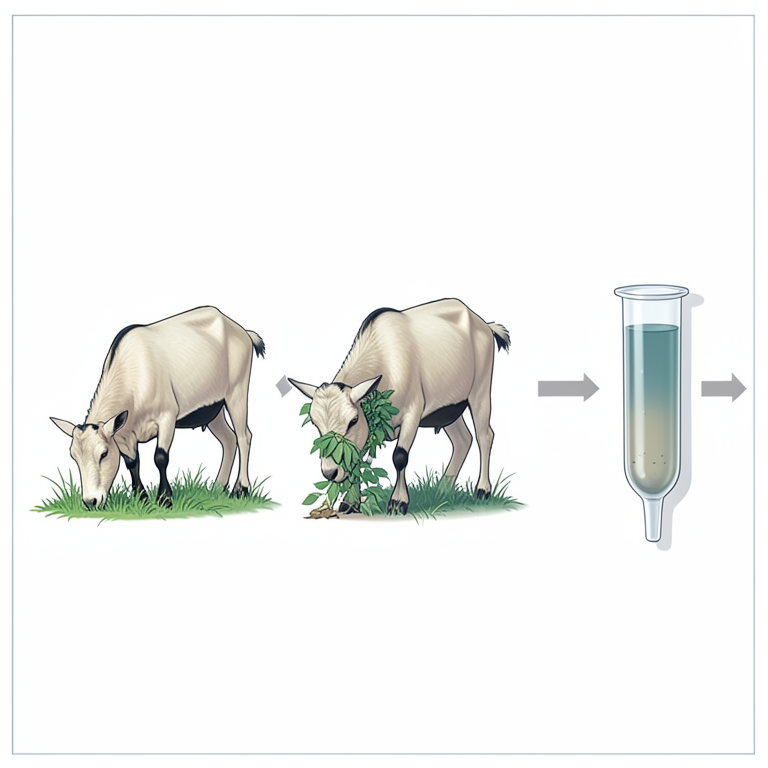
Experimental Grouping
AI-generated conceptual illustration (goat bucks). It explains the idea and does not show study data.
View source evidence ↗Figures & tables
From the original paper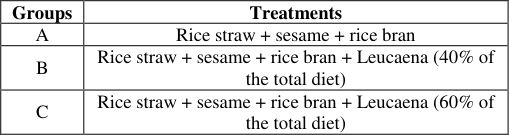 Table 1
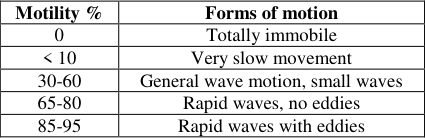 Table 2
 Table 3
Introduction
Goats play an important socio-economic role and most of the resource for poor farmers in the rural areas (Anaeto et al., 2009) [2] and form an integral part of the cultural life and system of Africa life (Ajala, 2004) [3] . To increase small stock productivity, improved goat nutrition appears to be a more critical factor. Leucaena is a vitally important source of protein for ruminants throughout south-east Asia (Shelton and Brewbaker, 1994) [28] . Although L. leucocephala has many positive nutritional benefits, it possesses the toxic non-protein free amino acid (Hegarty et al. 1964) [17,18] . Typical signs of L. leucocephala toxicity are alopecia, anorexia, reduced weight gain and weight loss, excessive salivation, esophegal lesions, enlarged thyroid and low circulating concentrations of thyroid hormones (Jones,1979) [23]. Chronic or acute toxicosis can occur and death rapid and removal of L. leucocephala supplementation is the best way for recovery (Blunt and Jones, 1997; Jones, Blunt and Nurnberg, 1978; Jones and Hegarty, 1984) [7,22,24] . Foetal abortions (Holmes 1980) [19] , low bull fertility (Holmes 1981) [20] and death (Prasad and Paliwal, 1989; Dalzell et al., 2012) [27,11] were reported by feeding leucaena. The aim of this study was to find out the effects of leucaena feeding on reproductive performance especially on the semen quality of goats in Myanmar.
Materials and methods
Materials and methods
Experimental design
Nine bucks were randomly divided into three groups and penned in well-ventilated sheds with free access of feed and fresh water (ad libitum). The animals were treated for internal parasites prior to the experiment. Before the experiment, the animals were fed rice straw, sesame and rice bran for four weeks to make sure the animals are free from mimosine toxicity. Experimental bucks were fed three percent of their body weight daily. Diets fed to the goups A, B and C were described (Table 2). All treatment diets were adjusted to be isonitrogenous containing 18% crude protein. Leucaena leaves were air-dried at room temperature (about 37 0 C). The feeding trial (treatment) lasted for 8 weeks.
| Motility % | Forms of motion |
|---|---|
| 0 | Totally immobile |
| < 10 | Very slow movement |
| 30-60 | General wave motion, small waves |
| 65-80 | Rapid waves, no eddies |
| 85-95 | Rapid waves with eddies |
Table text extracted from the original PDF; superscript letters are shown inline. The original table image is below.
View original table image
Semen collection by electro ejaculator (EEJ) method
Semen was collected from the bucks by EEJ method. To collect the semen, goat was restrained under lateral recumbency. Before running the EEJ, 1ml of normal saline was used to clean the prepuce by irrigation. And then 3 ml of normal saline was infused into the anus by disposable syringe for better contact. Aseptically prepared probe was used to prevent the infection. Lubricants were used to insert the probe easily into the rectum. More than half of the length of probe was inserted. The nerves of reproductive tract of the bucks were stimulated by pressing the probe ventrally along the anus.
Semen colour
Gross appearance in colour was assessed and noted clear, thin milky (watery white), thick milky (milky white), creamy or thick creamy white (Cameron, 1977) [8] .
Semen volume
The volume was measured by using graduated test tube. The measuring was done immediately after ejaculation (Chemineau et al., 1991) [9] .
Sperm concentration
A haemocytometer was used to count concentration. Apparatus using for assessment were microscope, haemocytometer, cover slip, red cell pipette and diluting fluid. Diluting fluid was prepared by dissolving 50 ml of 40% commercial formaldehyde with 450 ml of normal saline. To assure accuracy of the measurements of these diluted suspensions, the same pipette and tip were used for dilution. This dilution created a range of sperm concentrations, each of which was measured for light absorbance and counted by use of haemocytometer for sperm concentration. Rapid waves with eddies (Chemineau et al., 1991,) [9]
Motility of spermatozoa
Motility of spermatozoa
Percentage of live spermatozoa
The percentage of live spermatozoa was determined from a smear stained by using Eosin and Nigrosin. Eosin was taken up by the already dead spermatozoa, thus staining pink. Nigrosin was used as the background stain in blue colour. The Nigrosin-Eosin stain is made up of 0.25 g of aqueous eosin, 1.25 g of aqueous nigrosin, 0.75 g of Tri-sodium citrate and 25 ml of double-distilled water (from Bearden and Fuquay, 1980) [6] . The stain was kept at room temperature.
Statistical analysis
The data were analysed using the SAS software system (Version 9, SAS). The comparison between treatments means were worked out by Duncan's Multiple Range Test (DMRT) at p<0.05.
Observing clinical signs
As the experimental animals were fed three times daily, body condition and presence of any abnormal signs were assessed while feeding.
Results
Results
Animal health
Clinical signs of buck due to toxic effect of L. leucocephala were found. Alopecia, dullness or salivation was visually assessed. The bucks from groups B and C showed loss of body weight, alopecia, dullness and salivation.
Semen colour
Semen colour collected from bucks fed on different levels of L. leucocephala during the experiment was presented. Most of the semen sample were watery white and milky white in colour.
There was no significant difference for semen volume among three groups. Volume of semen collected from bucks fed on different levels of L. leucocephala were (0% level, 1 ± 0.06; 40% level, 1 ± 0.03; and 60% level, 1 ± 0.04, p>0.05) as shown in Table 3.
| Item | Diet | — | — | — |
|---|---|---|---|---|
| L. leucocephala 0% | L. leucocephala 40% | L. leucocephala 60%. | p value | |
| Volume (ml) Motility (%) | 1 ± 0.06a 7 | 1 ± 0.03a | 1 ± 0.04a | NS |
| 3 ± 0.04a | 81 ± 0.03a | 76 ± 0.04a | NS | |
| Concentration (millions per ml). | 2320 ± 170a | 2200 ± 250ab | 1950 ± 158b | <0.05 |
| Live sperm percent (%) | 76 ± 0.02a | 74 ± 0.03a | 70 ± 0.02a | NS |
Table text extracted from the original PDF; superscript letters are shown inline. The original table image is below.
View original table image
The concentration of spermatozoa of bucks fed on different levels of L. leucocephala were (0% level, 2320 ± 170, 40% level, 2200 ± 250 and 60% level, 1950 ± 158). The concentration of spermatozoa were not significant different between 0% and 40% leucaena-fed group (Table 3). The concentration of spermatozoa fed on 0% level of L. leucocephala was significantly higher than 60% level of L. leucocephala (p<0.05).
Percentage of live spermatozoa
Percentage of live spermatozoa in 0%, 40% and 60% level of L. leucocephala were 76 ± 0.02, 74 ± 0.02 and 70 ± 0.03, respectively (p>0.05). There were no significant differences in percentage of live spermatozoa among 0%, 40% and 60% leucaena-fed groups as shown in Table 3.
Percentage of motile spermatozoa fed on different levels of L. leucocephala was (0% level, 73 ± 0.04; 40% level, 81% ± 0.03; 60% level, 76 ± 0.04; p>0.05). Percentages of motile spermatozoa are presented in Table 3. There were no significant differences in percentage of motile spermatozoa among three groups.
Discussion
L. leucocephala showed unfavourable effect on health of local bucks during the experiment. The earliest and most prominent signs were alopecia, loss of appetite and body weight loss. Aung Aung (2007) [4] reported that toxic signs were observed in local sheep one week after feeding 40% leucaena. The toxic effect of mimosine such as weight loss, alopecia and emaciation in bucks, rats and ruminants were observed by Harith et al. (1979) [13] and Halliday et al. (2013) [14] . Colour of semen ranged from white to creamy white in visual option (Chemineau et al., 1991) [9] . In this experiment, most of the semen colour were white and milky white. Wildeus (1996) [30] described the volume of semen per ejaculate as between 1 and 1.5 ml and recommended 1-1.6 ml as wider range. Average volume of semen recorded in this experiment ranged from 1.0 to 1.4 ml per ejaculate. No significant difference was recorded. Chemineau et al. (1991) [9] reported that 65 -80% was the stage of rapid waves without eddies. In this experiment, the percentage of motile spermatozoa were 73 ± 0.04 in Group A, 81 ± 0.03 in Group B and 76 ± 0.04 in Group C. Therefore, there was no significant difference among all groups. For the percentage of live spermatozoa, Chemineau et al. (1991) [9] stated that the ratio did not contain more than 20-30% of dead spermatozoa by staining method. In this study, 76 ± 0.02, 74 ± 0.02 and 70 ± 0.03 were group A, B and C respectively. Therefore, there were no significant difference among all groups on the percentage of live sperm cell (p>0.05). Feeding of L. leucocephala at the level of 20% to rabbit bucks and male rat for 10 weeks decreased in percentage of live sperm cell (Herbert et al., 2005) [16] . However, no significant differences in the effect of L. leucocephala on semen characteristic for 60 days were observed by Akingbade et al. (2002) [1] . Therefore, the longer experimental period (more than eight weeks) should be needed to confirm the toxic effect of L. leucocephala on motility, percentage of motile spermatozoa and percentage of live spermatozoa. The concentration of spermatozoa ranged from 1600 to 6000 million per ml (Ax et al., 2000) [5] . The concentration of spermatozoa (millions per ml) in Group A, B and C ranged in this study were (2320 ± 170), (2200 ± 250) and (1950 ± 158) respectively. There were no significant differences in spermatozoa concentration between Group A and B. However, the concentration was significantly lower in Group C than in group A (P<0.05). No adverse effect on the reproductive performances of bucks in Philippines fed on 75% of leucaena in the ration was reported by Girdhar (1991) [13] . These might be due to feeding adaptation of mimosine for long time ago get in phillipines (Franciso, 1988) [12] . Akingbade et al. (2002) [1] also reported that Leucaena species can be safely fed to South African Nguni goats without adverse effect on semen quality and reproductive performance of bucks since they have received the bacteria Synergistes jonesii once. The supplementation of L. leucocephala up to 50% can fed for four weeks to Myanmar local bucks without deleterious effect on semen quality (Thet Su Myat 2010) [29] . However, poor semen quality occured when feeding level of 50% leucaena in Murrah male goats in research of Lohan et al. (1987) [25]. They presented that this might be due to the mimosine toxicity, seasonal effect and breed of experimental animal. In this research, the feeding of toxic level of L. leucocephala did not effect on the semen quality (volume, motility and live sperm per cent) of local bucks in Myanmar. Herbert et al. (2005) [16] found that depressed spermatozoa production and semen output in the animal receiving the 20% leucaena leaves meal of total diet for the rabbits and bucks. They reported that this might be due to the mimosine toxicity. In this study, the finding indicated that feeding of L. Leucocephala containing 40% and 60% of total diet did not cause adverse effect on semen quality (exception sperm concentration) of bucks during the experimental period. The time required to produce a single fertile spermatozoon is 49 days, with little variation (Machado et al, 2011) [26] . The process can be divided into three stages: thirteen one day are necessary for development of the spermatozoan from the first division of the germ cells until it reaches the centre of the seminiferous tubule. In the second stage, three and a half days are required to pass through the tubules, out of the testis and into the epididymis. Fourteen days are needed for the journey through the epididymis in the third stage. It is suggested that no changes on semen quality parameter such as volume, percentage of motile sperm and percentage of live spermatozoa of bucks fed on L. Leucocephala for eight weeks might be due to the storage of spermatozoa lasted about 49 days before this experiment was done. It is suggested that experimental duration was not long enough to produce adverse effect of L. Leucocephala on semen quality of Myanmar local bucks. Therefore, long term study on feeding of toxic levels of leucaena might give many explanations for semen quality.
Conclusion
Feeding leucaena leaves to the experimental goats of this study produced not significant differences in semen colour, semen volume, sperm motility and live sperm percentage of buck semen. A significant reduction in sperm concentration of bucks fed 60% leucaena was observed when compared to that of 0% group.
Figures and tables from the paper
| Groups | Treatments |
|---|---|
| A | Rice straw + sesame + rice bran |
| B | Rice straw + sesame + rice bran + Leucaena (40% of the total diet) |
| C | Rice straw + sesame + rice bran + Leucaena (60% of the total diet) |
Table text extracted from the original PDF; superscript letters are shown inline. The original table image is below.
View original table image
References
30 in the original paper- goats Ngunigoats. Journal of agriculture science. 2002; 139:205-211.
- Anaeto M, Tayo GO, Chioma GO, Ajao AO, Peters TA. Health and nutrition practices among smallholder sheep and goat farmers in Ogun State Nigeria. Livestock Research for Rural Development, 2009; 21:11.
- Ajala K. Household decision-making in the production of small ruminants in Giwa Local Government area of Kaduna State of Nigeria. In: Proceedings of the 29 th Annual Conference of the Nigerian Society of Animal Production, Usman Danfodio University, Sokoto, Nigeria, 2004, 399-402.
- Aung A, Lwin Naing Oo, Moe Thida Htun, Mar Mar Kyi, Tin Ngwe. Development of L. leucocephala mimosine-degrading bacteria in the rumen of sheep in Myanmar. Tropical Grasslands -Forrajes Tropicales. 2007; 1:48-49.
- Ax RL, Dally M, Didion BA, Lenz RW, Love CC, Varner DD et al. Semen Evaluation. In: Reproduction in Farm Animals, 7 th ed. (Eds. B. Hafez and E. S. E. Hafez). 2000; 25:365.
- Bearden HJ. Fuquay: Applied Animal Reproduction. Reston Publishing Co., Reston, Virginia (USA). 1980; 337.
- Blunt CE, Jones RJ. Steer live weight gains in relation to the proportion of time on Leucaena leucocephala pastures. Trop. Grasslands. 1977; 11:159-164.
- Cameron RDA. Semen collection and ejaculation in the rams: The effect of method of stimulation on response to electro ejaculation. Aust. Vet. J. 1977; 53:380.
- Chemineau P, Cagnie Y, Guerin Y, Orgeur P, Vallet JC. Training manual on artificial insemination in sheep and goats. FAO. Animal production and Health Paper. Food and Agricultural Organization of the United Nations. 1991; 83:211-222.
- Crawford G et al. The effect of leucaena leaf supplementation to maize residues on village goat performance Am. J Primatol. 2015; 77:33-41.
- Dalzell SA, Burnett DJ, Dowsett JE, Forbes VE, Shelton HM. Prevalence of mimosine and DHP toxicity in cattle grazing Leucaena leucocephala pastures in Queensland, Aust. Anim. Prod. Sci. 2012; 52:365-372.
- Franciso Moog A. Philipines 102-Pasture/Forage Resources Profiles111 Country. (Girdhar N, D Lall and N N Pathak (1981): Effect of feeding Leucaena leucocephala as the sole ration on nutrient utilization, body weight in goats, Agric. Sci. J. 1988; 116:303-307.
- Girdhar N, Lall D, Pathak NN. Effect of feeding Leucaena leucocephala as the sole ration on nutrient utilization and body weight in goats. Agri. Sci. J. 1991; 116:303-307.
- Harith EA, Ter Meulen U, Struck S, Schulke E. A review on the nutritive value and toxic aspects of Leucaena leucocephala toxicity in cattle grazing irrigated Leucaena pasture. Trop. Grassl. 1979; 25:268-274.
- Halliday M, Padmanabha J, McSweeney CS, Kerven G, Shelton HM. Leucaena toxicity: a new perspective on the most widely used forage tree legume. Tropical Grasslands -Forrajes Tropicales. 2013; 1:1-11.
- Herbert Udo, Michael Ozoje O, David Adejumo O. Effect of Leucaena and Gliricidia leaf meals on the seminal characteristics, testis weights and seminiferous tubule diameters of rabbits. Animal Research, EDP Sciences, 2005; 54:173-178.
- Hegarty MP, Court RD, Schinckel PG. Reaction of sheep to the consumption of Leucaena glauca Benth and to its toxic principle mimosine. Aust. Vet. J Agri. Res. 1964; 15:153-167.
- Hegarty MP, Court RD. Thorne PM The determination of mimosine and 3, 4-dihydroxypyridine in biological material. Aust. Vet. Agri. J. Res. 1964; 15:168-179.
- Holmes JHG. Toxicity of Leucaena leucocephala. II. Reduced fertility of heifers grazing Leucaena leucocephala. Papua New Guinea Agri. J. 1980; 31:47-50.
- Holmes JHG. Toxicity of Leucaena leucocephala for steers in the wet tropics. Tropical Animal Health and Production. 1981; 13:94-100.
- Jones RJ, Blunt CG, Holmes JHG. Enlarged thyroid glands in cattle grazing Leucaena pastures. Trop Grasslands J. 1976; 10:113-116.
- Jones RJ, Blunt CG, Nurnberg BI. Toxicity of Leucaena leucocephala effect of iodine and mineral supplements on penned steers fed a sole diet of Leucaena. Aust. Vet. J. 1978; 54:387-392.
- Jones RJ. The value of Leucaena leucocephala as a feed for ruminants in the tropics. World Anim Review J. 1979; 31:13-23.
- Jones RJ, Hegarty MP. The effect of different proportions of Leucaena leucocephala in the diet of cattle on growth, feed-intake, thyroid-function and urinary-excretion of 3hydroxy-4(1h)-pyridone. Austral. J Agr. Res. 1984; 35:317-325.
- Lohan IS et al. Anim. Nutri. J. Cited by Nsahlai and Bonsi M LK. Reproductive indices of Merino rams fed sun-cured Leucaena leucocephala forages. 1987; 44:235.
- Machoda JAAN, Oliveria LS, Conde junior AM et al. Daily sperm production and testicular morphometry in goats according to external scrotal comformation. Anim. Reprod. Sci. 2011; 127:73-77.
- Prasad J, Paliwal OP. Pathological changes in experimentally induced Leucaena toxicity in lambs. Indian Vet. J. 1989; 66:711-714.
- Shelton HM, Brewbaker JL. Leucaena leucocephala - the most widely used forage tree legume. In: Gutteridge. http://fao.org.com, 1994.
- Thet Su Myat. Effects of dietary level of Leucaena leucocephala on semen quality of local bucks in Myanmar. 2010, 23-25.
- Wildeus S. Technique to improve reproductive efficiency in goat and sheep. Proc, Symp. Hlth. Dis. Small ruminants Arner. Assoc. Small Ruminants Pract., Ithaca, NY. 1993, 133-144.
Cited by 4
From OpenAlex, OpenCitations and reference lists read by Scinovex
- The Use of Plants Extracts during Cryopreservation of Livestock Epididymal Semen ↗
Masindi Lottus Mphaphathi, Maleke Dimpho Sebopela, Mahlatsana Ramaesela Ledwaba, Mamonene Angelinah Thema, Rantloko Rolly Maapola, N. C. Negota et al. · Agricultural sciences. · 2024
The plants’ extracts have recently emerged as a cheap and natural source of additives to preserve and enhance sperm functions during the cryopreservation process. Extracts from plants are reported to be the main sources of natural antioxidants with lower cytotoxicity as compared to therapeutic antioxidants. The numerous and valuable plant properties, such as antioxidants, antimicrobial, antiviral, anti-inflammatory, and antiparasitic, have…
❝ 3PDF - Growth rate, scrotal circumference, sperm characteristics, and sexual behavior of mixed-breed goat bucks fed three leguminous trees ↗
Cecilia Carmela Zapata-Campos, Jaime Salinas-Chavira, Javier Morán‐Martínez, Angeles De Santiago-Miramontes, Francisco Gerardo Véliz-Deras, José E. García et al. · Spanish Journal of Agricultural Research · 2021
Aim of study: To investigate the effect of feeding foliage of leguminous trees on growth rate, semen characteristics, and sexual behavior of bucks. Area of study: Northeastern Mexico (23°44' N, 99°8' W). Material and methods: Twenty-two young goat bucks were randomly allocated to one of four treatment groups: 33% alfalfa hay (dry matter basis), 33%; Acacia farnesiana; Leucaena leucocephala; or…
❝ 3PDF - The effects and toxicological mechanisms of leucaena toxicity on ruminant reproduction: a review ↗
Fahrul Irawan, Michael J. Halliday, Roger Stephen Hegarty, Frances C. Cowley · Toxicon · 2025
❝ 2 - Poisoning in Goats ↗
Kamlesh A. Sadariya, Shailesh K. Bhavsar, Tamanna H. Solanki · 2023
Small ruminants typically access many toxic compounds that can be detrimental to animal health and production. Goats, as ruminants, are known to be subject to poisoning by many kinds of toxicants. Poisoning in goats is seldom recorded and most poisoning accidents in food-producing animals occur in cattle, followed by sheep and goats. Due to variations among these species, the susceptibility,…
❝ 1