
Research article · 2018 · Full text
International Journal of Veterinary Sciences and Animal HusbandryEffect of prepartum vitamin E and selenium supplementation along with cloprostenol or methylergometrine maleate during puerperal period on post-partum reproductive and productive performance of cross bred dairy cattle
Volume 3(1) · Pages 45–48
Research areasSelenium in Biological SystemsSunflower and Safflower CultivationReproductive Physiology in Livestock
Abstract
Author-writtenThe present study was designed to evaluate the effect of vitamin E and selenium injected pre partum along with PGF2α or Methylergometrine maleate administered after calving on postpartum reproductive and productive performance in cross bred dairy cows. A total of 40 pregnant animals in their last trimester were selected and divided into 4 Groups with 10 animals in each group. Animals in Group I, II and III were given two injections of vitamin E and selenium (Inj. Repronol, cadila pharmaceutical ltd.) 7 days apart (Ist injection given at 30-60 days before the expected date of calving), while animals in Group IV were kept as control. Animals in Group I and II were also administered with 2 ml PGF2α (inj. Pragma, 500µg, I/M, Intas Pharmaceuticals ltd.) and 5 ml Methylergometrine maleate (Inj. Nexbolic, 5mg, I/M, Intas Pharmaceuticals ltd) respectively, immediately after calving. However, animals in group III and IV were given 10 ml NSS I/M just after parturition. The time required for expulsion of placenta, uterine involution, occurrence of Ist post-partum heat, conception rate were recorded. The placental expulsion period and uterine involution period was significant higher in Group IV as compare to Group I, II and III animals. Conception rate was observed higher in Group II (80%) animals followed by 70%, 50% and 40% in Group I, III and IV respectively and there was a non-significant increase in colostrum production, lactational yield, lactational length and mean calf birth weight in pre partum vitamin E-Se supplemented animals as compare to non-supplemented animals.
Summary
Source-checkedPlain-language reading of the full paper, prepared with AI and checked against the text. Each point links to the authors' own words.
Why it matters
- The post-partum period is critical for dairy cows because immune suppression can lead to diseases that cause economic losses through reduced reproductive rates and lower milk production. View evidence ↗
- Vitamin E and selenium act as cellular antioxidants that work together to prevent the oxidative breakdown of tissue membranes. View evidence ↗
- Methylergometrine is used as a smooth muscle constrictor to enhance uterine contractions and treat conditions like retained placenta after calving. View evidence ↗
The question
- The study aimed to investigate how combining prepartum Vitamin E-Selenium with either PGF2α or Methylergometrine maleate affects the reproductive and productive performance of crossbred dairy cows. View evidence ↗
What they did
- Groups I, II, and III received two intramuscular injections of Vitamin E (50 mg α-tocopheryl acetate) and selenium (1.5 mg) per ml, given 7 days apart starting 30-60 days before calving; Group IV served as the control. View evidence ↗
- Immediately after calving, Group I received PGF2α (500µg) and Group II received Methylergometrine maleate (5mg), while Groups III and IV received normal saline (NSS). View evidence ↗
What they found
- The time for fetal membrane expulsion was significantly shorter in Groups I (4.76±0.39 hrs) and II (4.55±0.41 hrs) compared to Group III (6.23±0.55 hrs) and Group IV (8.93±0.72 hrs). View evidence ↗
- Uterine involution occurred significantly faster in Groups I (39.92±1.44 days) and II (37.81±1.37 days) than in Group III (48.40±2.68 days) and Group IV (65.40±2.34 days). View evidence ↗
- The first postpartum heat occurred significantly earlier in Groups I (50.30±2.10 days) and II (49.66±1.96 days) compared to Group III (52.90±2.23 days) and Group IV (70.11±2.49 days). View evidence ↗
- The overall conception rate was highest in Group II (80.00%), followed by Group I (70.00%), Group III (50.00%), and Group IV (40.00%). View evidence ↗
- Lactational yield tended to be higher in the Vitamin E-Se supplemented groups (Groups I: 3490±252.60 kg, II: 3550±191.71 kg, III: 3472±292.30 kg) compared to the control Group IV (3032±214.76 kg), though this was non-significant. View evidence ↗
- The average birth weight of calves was non-significantly higher in supplemented animals (Groups I-III: 24.33 to 25.50 kg) compared to the control group (23.33±1.09 kg). View evidence ↗
What it means
- The authors conclude that administering PGF2α or Methylergometrine maleate after calving in cows previously supplemented with prepartum Vitamin E-Se improves both reproductive and productive performance. View evidence ↗
Visual summary
3 visualsIllustrations explain the paper; charts are replotted from the paper's own table values.
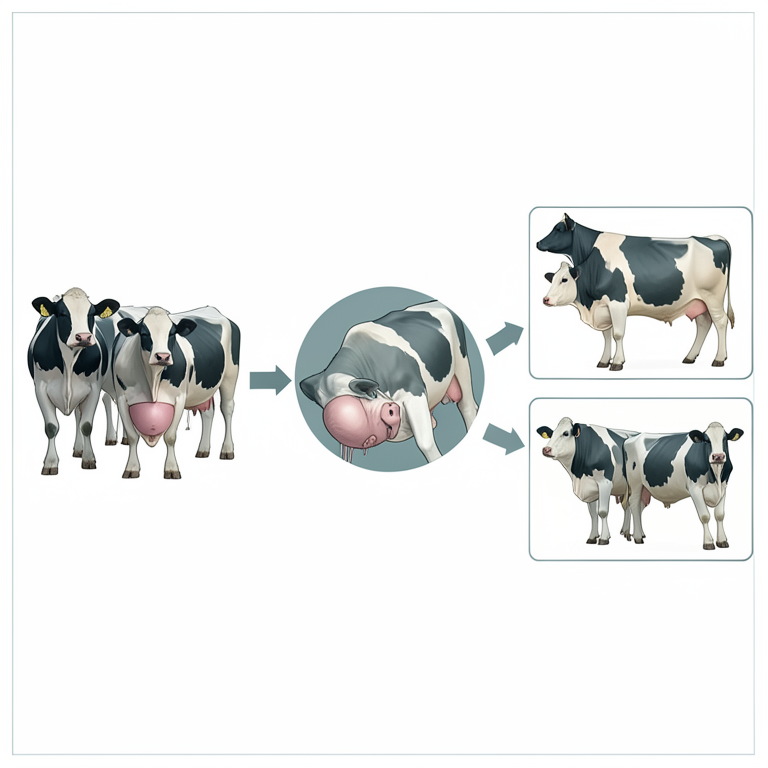
Treatment Group Flowchart
AI-generated conceptual illustration (crossbred dairy cattle). It explains the idea and does not show study data.
View source evidence ↗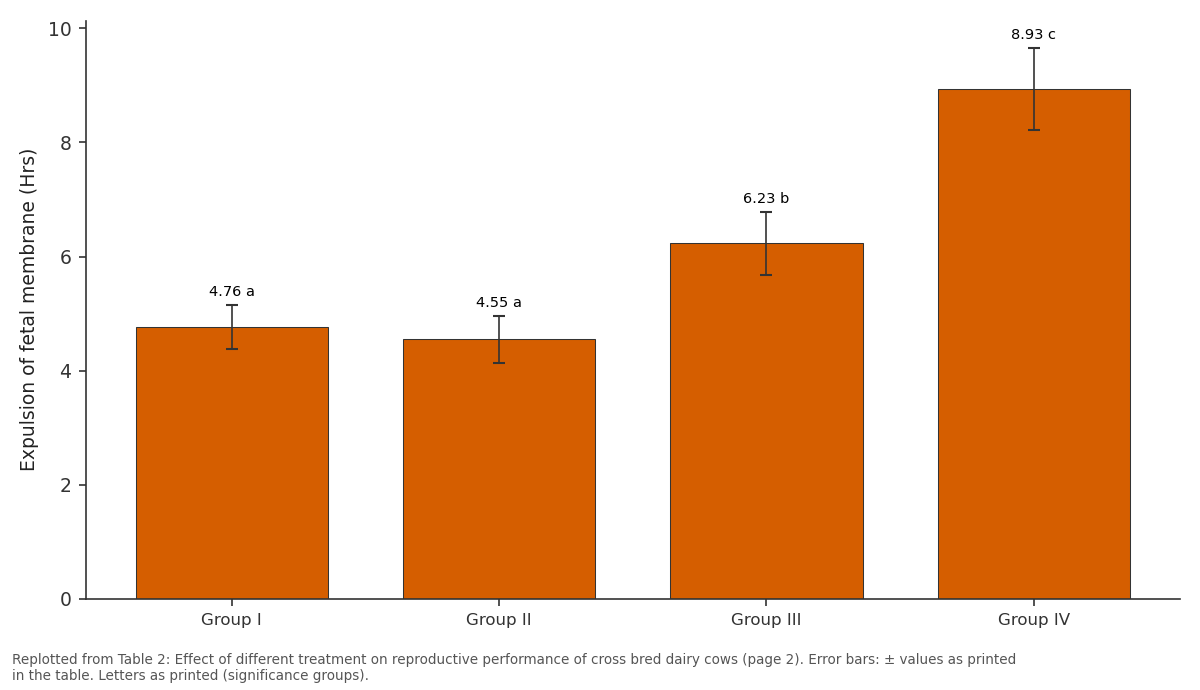
Expulsion of fetal membrane (Hrs): Group I vs Group II vs Group III vs Group IV
Replotted from Table 2 (page 2) of the original paper. Every bar is the paper's own table value.
View source evidence ↗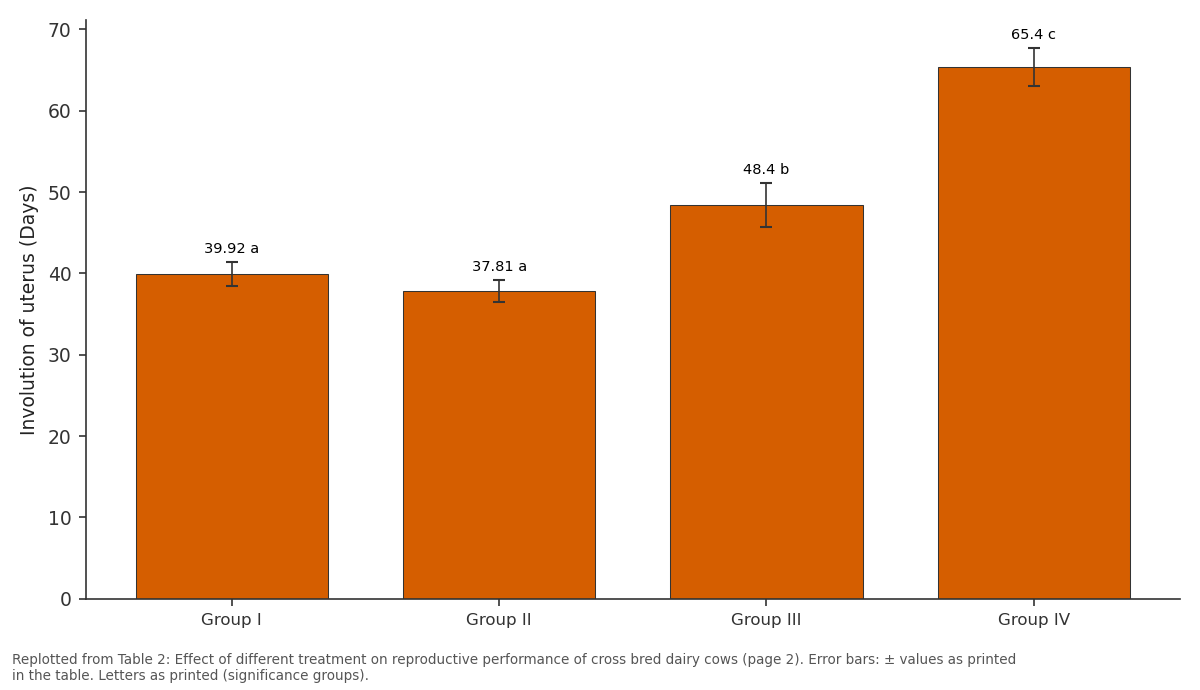
Involution of uterus (Days): Group I vs Group II vs Group III vs Group IV
Replotted from Table 2 (page 2) of the original paper. Every bar is the paper's own table value.
View source evidence ↗Figures & tables
From the original paper Table 1
 Table 2
 Table 3
 Table 4
Introduction
The post-partum period of dairy cow determines productive and reproductive responses during lactation and is therefore, a pivotal time in the production cycle of the cow. During this period, immune suppression commonly occurs and cows suffers to a number of diseases which dramatically affects reproductive efficacy of animals causing considerable economic loss to dairy industry due to slower uterine involution, reduce reproductive rate, prolonged inter conception period and calving interval, high cost of medication, drop in milk production, reduced calf-crop and early depreciation of potentially useful animals (Resum et al. 2017) [18] However, Successful attempts have been made to improve the reproductive as well as productive performance of cows and buffaloes by providing them with vitamin E-selenium during late gestation (Qureshi et al. 2010; Resum et al. 2016) [15,17] . Which as a cellular antioxidant, interacts with selenium containing glutathione peroxidase (GPx) to prevent the oxidative breakdown of tissue membranes. The role of vitamin E and Se supplementation in maintenance of health and fertility in dairy cows has been widely investigated and responses have been manifested as increases in fertilization and pregnancy rates, reduction on the number of days open, decrease in the incidence of ovarian cyst, and retained placenta (Harrison et al. 1984; Graham, 1991) [6,4] . Methylergometrine is a smooth muscle constrictor that now a days has been widely used for enhancement of uterine contraction after parturition, treatment of postpartum retained placenta, metritis and uterine involution after manual correction of prolapsed uterus (Patel et al. 2014) [13] Alagar et al. (2016) [1] reported that administration of Methylergometrine maleate immediate during post-partum period effectively hastened the uterine involution rate in HF cross bred cow. PGF 2α is an excellent reproductive management tool for dairy cows. Administration of PGF 2α during fresh period has been shown to have favourable effect on fertility including a shortened time to first service, increase estrus detection efficiency, improved uterine health and improved first service conception rate. Patel et al. 2016 [12] reported that use of the PGF 2α immediately after parturition in cows induced earlier postpartum estrus suggesting its strong luteolytic effect and early resumption of ovarian activity. Keeping in view all above facts, the present study was conducted to investigate the combined effect of Vitamin-E-Selenium and PGF 2α or Methylergometrine maleate on reproductive and productive parameters of cross bred dairy cows.
Material and Methods
Material and Methods
Experimental location
The present study was conducted at the Military Dairy Farm Jammu (J&K) during the period between October 2014 to January 2017
Selection of the Animals
Forty crossbred cows in their last trimester of pregnancy (30-60 days pre partum), aged between 4-8 years, with parity 2 to 5 were randomly selected and assigned to four experimental groups with 10 animals in each group. The details of treatment schedule has been depicted in Table 1. Animals in group I, II and III were given two injections of vitamin E and selenium (Inj. Repronol, containing 50 mg α-tocopheryl acetate and 1.5 mg selenium per ml, (Cadila Pharmaceuticals ltd) @ 1ml/50 kg body weight I/M. First injection was given at 30 to 60 days before the expected days of calving followed by a second injection 7 days later, while animals in group IV were kept as control. Animals in group I and II were also administered PGF 2α (Inj. Pragma, 500µg, I/M, Intas pharmaceuticals Ltd.) and Methylergometrine maleate (Inj. Nexbolic, 5mg, I/M, Intas Pharmaceuticals ltd) respectively, immediately after calving. However, animals in group III and IV were given 10 ml NSS I/M just after parturition.
Managemental Practices
The experimental cows were maintained under general management practice as followed for rest of the herd. They were fed ration consisting of concentrates (groundnut cakes, mustard cake, maize grain and wheat bran), roughages (either berseem and maize or oat fodder), mineral mixture and salt. Fresh tap water was available ad libitum. All the experimental cows were observed closely before, during and after parturition. Cows were made to parturate in individual pen and time required for expulsion of fetal membrane was recorded. Within two hours after parturition, colostrum was removed by hand milking and total colostrum quantity was measured for three consecutive days. The cows were per rectally explored twice a week after one week postpartum to assess the uterine involution period. Estrus was detected by parading bull followed by visual observation of estrus sign twice in a day and later confirmed by genitalia examination per rectum. The cows found in true estrus were artificially inseminated using frozen thawed semen of acceptable quality, 10 to 12 hours after the onset of estrus. Pregnancy diagnosis was done by rectal examination after 60 days post service. Lactation length, lactation yield and birth weight of calves born to the control and treated cows were also recorded.
Statistical Analysis
For evaluating the effect of different treatment protocol on postpartum reproductive and productive performance of cross bred dairy cows, data analysis was done by using one way ANOVA (using SPSS-16.0 Inc).
Results
The results of the present study are summarized in
Discussion
Findings of the present study are in agreement with that of Resum et al. (2016) [17] who reported significant shorter expulsion period and uterine involution period in animals supplemented pre partum with vitamin E-Selenium as compared to control animals. However, group I & II shows significant (P<0.05) shorter placental expulsion, uterine involution and first post-partum estrus period as compared to group III animals. These findings are in agreement with Patel et al. (2016) [12] who reported beneficial effects of PGF 2α or Methylergometrine administration after calving in cross bred cows.
Supplementing vitamin E-Selenium prepartum significantly increased neutrophil chemotaxis (Politis et al. 1996) [14] which possess greater phagocytic activity at calving thus boosting immunity of animal which might be a factor for quicker recognition of fetal membrane by animal immune system (Resum et al. 2016) [17] . Administration of Methylergometrine maleate just after parturition greatly reduces incidence of placental retention and enhance uterine involution (Patel et al. 2014) [13] . Alagar et al. (2016) [1] reported faster uterine involution in cows treated with methylergometrine post calving indicating the role of uterotonic drugs in reducing the size of uterus after calving. Better conception rate in this group might be due to early shedding of fetal membrane and early uterine involution which has a positive impact on reproductive performance of dairy cattle. Inadequate production of endogenous prostaglandin has been associated with delay in uterine involution postpartum (Kindahl et al. 1984; Madej et al. 1984) [8,11] . Administration of PGF 2α in early postpartum period has been shown to accelerate uterine involution and early return to fertile ovarian cyclicity (Lindell and Kindahl, 1983) [10] . Similar results regarding uterine involution following PGF2α administration in early postpartum were also reported earlier in cattle (Raut et al. 2016) [16] . Jayakumar and Balakrishnan (2012) [7] reported shorter uterine involution period and high conception rates in animals treated postpartum with PGF 2α . Patel et al. (2016) [12] reported that injecting PGF 2α after calving has direct effect on bovine ovary causing luteolysis of pregnancy CL and thus accelerate postpartum ovarian activity. However, Young (1989) [20] reported improved conception rate with PGF 2α injected at early postpartum period was not the consequences of luteolysis rather the result of myometrial contraction which accelerated uterine involution (Garcia-villar et al. 1987; Gustafsson, 1984) [2,5] . Productive performance data shows supplementation of Vitamin E-Se tend to increase colostrums production, lactation yield and lactation length. Similar findings were reported by Resum et al. (2016) [17] who reported nonsignificant increase in colostrum production, lactational yield and lactational length in pre partum vitamin E-Se supplemented animals as compare to non-supplemented animals. Glutathione peroxidise is a selenium containing enzyme that in combination with vitamin E catalyses the reduction of hydro peroxidase and a range of lipid hydro peroxidase to protect biological membrane from oxidative stress which might be a reason for increase milk yield in supplemented animals (Resum et al. 2016) [17] . Vitamin E is a lipid soluble antioxidant that increases the efficacy of neutrophils by preserving them from intra cellular killing of ingested bacteria (Herd and Stowe, 1991) [4] , Which helps in decreasing the incidence of mastitis in supplemented animals leading to increase milk production (Resum et al. 2016) [17] . Lacetera et al. (1996) [9] reported 10% increase in milk production in animals supplemented with vitamin E. Birth weight of calves born to animals supplemented pre partum with vitamin E and selenium was non-significant higher as compare to calves born to un-supplemented animals. Similar findings were reported by Godfrey and Barker (2000) [3] and Resum et al. (2016) [17] who reported better growth performance of calves of vitamin E-Se supplemented animals which might be due to sparing effect of selenium on fetal body mass (Godfrey and Barker, 2000) [3] . Pre partum Supplemention of vitamin E and selenium shown to enhance the secretion of immune proteins, immunoglobulin in colostrum by 80% and ameliorate growth and immune status and growth performance of the calves. (Resum et al. 2016) [17]
Conclusion
Administration of PGF 2α or Methylergometrine maleate after calving in pre partum vitamin E-Se supplemented animals have shown positive effect in improving the post-partum reproductive as well as productive parameters in cross bred dairy cattle in the present study.
Figures and tables from the paper
| S. No | Parameters | Group I | Group II | Group III | Group IV |
|---|---|---|---|---|---|
| 1 | Expulsion of fetal membrane (Hrs) | 4.76±0.39a | 4.55±0.41a | 6.23±0.55b | 8.93±0.72c |
| 2 | Involution of uterus (Days) | 39.92±1.44a | 37.81±1.37a | 48.40±2.68b | 65.40±2.34c |
| 3 | First post-partum heat ( Days) | 50.30±2.10a | 49.66±1.96a | 52.90±2.23b | 70.11±2.49c |
Table text extracted from the original PDF; superscript letters are shown inline. The original table image is below.
View original table image
| S. No | Parameters | Group I | Group II | Group III | Group IV |
|---|---|---|---|---|---|
| 1 | 1st service conception rate | 4/10(40.00%) | 6/10(60.00%) | 4/10(40.00%) | 1/10(10.00%) |
| 2 | 2nd service conception rate | 1/6(16.66%) | 1/4(25.00%) | 0/6(0.00%) | 2/9(22.22%) |
| 3 | 3rd service conception rate | 2/4(50.00%) | 1/3(33.33%) | 1/6(16.66%) | 1/7(14.28%) |
| 4 | Over all | 7/10(70.00%) | 8/10(80.00%) | 5/10(50.00%) | 4/10(40.00%) |
Table text extracted from the original PDF; superscript letters are shown inline. The original table image is below.
View original table image
| S. No | Parameters | Group I | Group II | Group III | Group IV |
|---|---|---|---|---|---|
| 1 | Colostrum (Lt.) 1st three days | 6.28±0.42a | 6.30±0.39a | 6.11±0.31a | 5.93±0.50a |
| 2 | Avg. Birth wt. Of calves (kgs) | 24.33±1.14a | 25.50±1.42a | 24.60±1.36a | 23.33±1.09a |
| 3 | Lactational yield (Kgs) | 3490±252.60a | 3550±191.71a | 3472±292.30a | 3032±214.76a |
| 4 | Lactational length (Days) | 290±10.11a | 292±12.67a | 288±9.72a | 271.50±12.23a |
Table text extracted from the original PDF; superscript letters are shown inline. The original table image is below.
View original table image
References
20 in the original paper- Alagar S, Selvaraju M, Ezakialnapolean R, Doraisamy K. Effect Of Methylergometrine Maleate on uterine involution in postpartum cows. J Cell Tissue Research. 2016; 16(3):5817-5819.
- Garcia-Villar R, Marnet PG, Laurentie MP, Toutain PL. Fenprostalene in cattle: Evaluation of oxytocic effects in ovariectomized cows and abortion potential in a 100-day pregnant cow. Theriogenology. 1987; 28:467-480.
- Godfrey KM, Barker DJ. Fetal nutrition and adult disease. Am J Clin Nutr. 2000; 17(5):1344-1352.
- Graham TW. Trace element deficiencies in cattle. Vet Clin North. A. Food Anim. Pract. 1991; 7:153-215.
- Gustafsson B. Therapeutic strategies involving antimicrobial treatment of the uterus in large animals. J Am Vet Med Assoc. 1984; 185:1194-1198.
- Harrison JH, Hancock DD, Conrad HR, Vitamin E. and selenium for reproduction of the dairy cow. J Dairy Sci. 1984; 67:123-132.
- Jayakumar C, Balakrishnan PP. Fertility management of early postpartum cows with prostaglandin F2. J Vet Anim. Sci. 2012; 43:62-63.
- Kindahl H, Frederickson G, Madej A, Edqvist LE. Role of prostaglandinsin uterine involution. Proceedings of the Xth Int. Cong. Anim Reprod and AI: Urbana-Champaign, 1984, 9-24.
- Lacetera N, Bernabucci U, Ronchi B, Nardone A. Effect of selenium and vitamin e administration during a late International Journal of Veterinary Sciences and Animal Husbandry stage of pregnancy on colostrum and milk production in dairy cows and on passive immunity and growth of their offspring. Am J Vet Res. 1996; 57(12):1776-1780.
- Lindell JO, Kindahl H. Exogenous Prostaglandin F2α promotes uterine involution in the cow. Acta Vet Scand. 1983; 24:269-274.
- Madej A, Kindahl H, Woyno W, Edqvist LE, Stupnicki R. Blood levels of 15-keto-13, 14-dihydroprostaglandin F(2alpha) during the postpartum period in primiparous cows. Theriogenology. 1984; 21:279-287.
- Patel RV, Khasatiya CT, Parmar SC, Chaudhary JK, Gelani RN. Effect of hormonal and herbal therapy at calving on postpartum estrus and fertility response and serum hormonal profile in crossbred cows. Indian J Dairy Sci. 2016; 69(6):705-708.
- Patel RV, Khasatiya CT, Chaudhary JH, Parmar SC, Chaudhary JK. Therapeutic efficacy of methylergometrine maleate during puerperal period in cows. Intas Polivet. 2014; 15(2):373-375.
- Politis I, Hidiroglou N, White JH, Gilmore JA, William SN, Scherf H et al. Effect of vitamin E on mammary and blood leukocyte functions, with emphysis on chemotaxis, in periparturient dairy cows. Am J Vet Res. 1996; 57:468-471.
- Qureshi ZI, Siddiq M, Lodhi LA, Muhammad G, Jamil H. Effect of vitamin E-selenium administration during late gestation on productive and reproductive performance in dairy buffaloes and on growth performance of their calves. Pakistan Vet J, 2010; 30(2):83-86.
- Raut MR, Ingawale MV, Deshmukh SG, Hajare SW, Ingole RS. Impact of cloprostenol sodium treatment during early postpartum period on fertility in dairy cattle. Indian J Anim Repro, 2016, 37(1).
- Resum NS, Kour P, Singh H. Influence of Prepartum Injection of Vitamin E and Se on Postpartum Reproductive and Lactation Performance of Dairy Cattle. JAR. 2016; 6(2):177-179.
- Resum NS, Kour P, Singh H. Incidence of periparturient complications and calving pattern in cross bred dairy cows of Jammu region. Int J vet Sci and anim Husb. 2017; 2(1):1-3.
- Sattar A, Mirza RH, Hussain MSI, Effect of prepartum treatment of vitamin-e selenium on postpartum reproductive and productive performance of exotic cows and their calves under subtropical conditions. Pakistan Vet. J, 2006, 27(3):105-108.
- Young IM. Responses to dinoprost in the bovine early post-partum period. The Vet Rec. 1989; 124:511-512.
Cited by 2
From OpenAlex, OpenCitations and reference lists read by Scinovex
- Effect of Pre-insemination Intrauterine Antibiotics on Conception Rate in Crossbred Cows ↗
V.J. Revathy · Theriogenology Insight - An International Journal of Reproduction in all Animals · 2020
Uterine involution is the process of resumption of pregnant uterus to non pregnant state along with restoration of ovarian function which occurs during puerperium/post-partum period.Estrogen and progesterone hormones are responsible for changes in shape and size of uterus during pregnancy whereas, release of fetus, reduced oxytocin and increased PGF 2α help uterus to resume normal state.Fast involution of uterus is…
❝ 0PDF - Features of Uterine Involution in Dairy Animals: A Review ↗
Kailash Thakur · Theriogenology Insight - An International Journal of Reproduction in all Animals · 2020
Study was conducted to evaluate how heat stress affects follicular size, reproductive hormones, oestrus expression in different seasons.Twelve (n=12) zebu cows were utilized over a year.Ambient temperature, relative humidity was collected and THI value determined, rectal temperatures were also collected.Cows were synchronized for oestrus.Ultrasonic follicular studies were carried out until ovulation.Blood was collected to assayserum concentration of progesterone, oestradiol and…
❝ 0PDF