
Research article · 2017 · Full text
International Journal of Veterinary Sciences and Animal HusbandryAvailability of browse plants to goats fed with Napier grass: Voluntary feed intake and effects on body weight
Volume 2(6) · Pages 13–19
Research areasRuminant Nutrition and Digestive PhysiologyRabbits: Nutrition, Reproduction, Health
Abstract
Author-writtenPlants with varying level of tannins were offered to goats 4-6 months old fed with napier grass (Pennisetum purpureum) and palm kernel cake (PKC)-based pellet. Voluntary feed intake (VFI) of offered plants on the 3rd week of feeding was highest for Artocarpus heterophyllus and Leucaena leucocephala (48 and 36 g/kg0.75 body weight (BW)). Sapium baccatum, Brachiaria decumbens, Micaniamicrantha and Musa sp. had VFI of 34, 33, 33 and 31 g/kg0.75 BW respectively whereas VFI for Cyprus kyllinga, Melastoma malabathricum and Dillenia suffruticosa were amongst the lowest (24, 22 and 20 g/kg0.75 BW respectively). Animals offered with L. leucocephala and A. heterophyllus had increased BW gain(8.8 and 7.9 kg respectively; p
Summary
Source-checkedPlain-language reading of the full paper, prepared with AI and checked against the text. Each point links to the authors' own words.
Why it matters
- In tropical regions, goats naturally prefer browse leaves because they typically contain higher crude protein and lower fiber than other forages. View evidence ↗
- Plants containing tannins may offer benefits such as protecting dietary protein from rumen degradation, preventing bloat, and suppressing intestinal parasites. View evidence ↗
- Evaluating animals fed phenolic compounds is necessary because long-term consumption can alter the rumen's microbial environment. View evidence ↗
The question
- The study aimed to evaluate the intake of various plants over time, quantify crude protein and fiber intake, and determine how these plants affected growth performance in goats. View evidence ↗
What they did
- The experiment used 40 male Jermasia cross Katjang goats, aged 4-6 months, with an average initial weight of 11.6 ± 0.19 kg. View evidence ↗
- Goats received Napier grass (2% BW) in the morning; in the evening, they were given either a second Napier grass ration (control) or a tested browse plant (2% BW) plus 200g of palm kernel cake concentrate. View evidence ↗
- The study included a 10-day adaptation period followed by a 12-week growth monitoring period. View evidence ↗
What they found
- By the third week, the highest voluntary feed intake was observed for Artocarpus heterophyllus (48 g/kg0.75 BW) and Leucaena leucocephala (36 g/kg0.75 BW). View evidence ↗
- The lowest voluntary feed intakes were recorded for Cyprus kyllinga (24 g/kg0.75 BW), Melastoma malabathricum (22 g/kg0.75 BW), and Dillenia suffruticosa (20 g/kg0.75 BW). View evidence ↗
- Goats fed L. leucocephala (8.8 kg) and A. heterophyllus (7.9 kg) showed significantly higher body weight gain than those fed only Napier grass (6.9 kg). View evidence ↗
- Body weight gain was significantly lower in goats fed M. malabathricum (5.6 kg) and D. suffruticosa (5.8 kg) compared to the Napier grass control (6.9 kg). View evidence ↗
- Condensed tannins were found in several plants, with A. heterophyllus having the most (7.4 mg/gDM), while hydrolysable tannins were most concentrated in M. malabathricum (187 mg/gDM) and D. suffruticosa (143 mg/gDM). View evidence ↗
- During the final stage of the trial, A. heterophyllus improved the feed conversion ratio (1.2 gCP/gLWG) and average daily gain compared to control goats. View evidence ↗
What it means
- The authors suggest that tannin-containing browse plants can be used to manage intake and growth, but should be limited to 3-7 weeks to prevent negative cumulative effects on weight gain. View evidence ↗
- The study notes that while some plants were unsuitable as single supplements for over 6 weeks, they might still be appropriate if consumed periodically as part of a mixed ration. View evidence ↗
Visual summary
2 visualsIllustrations explain the paper; charts are replotted from the paper's own table values.
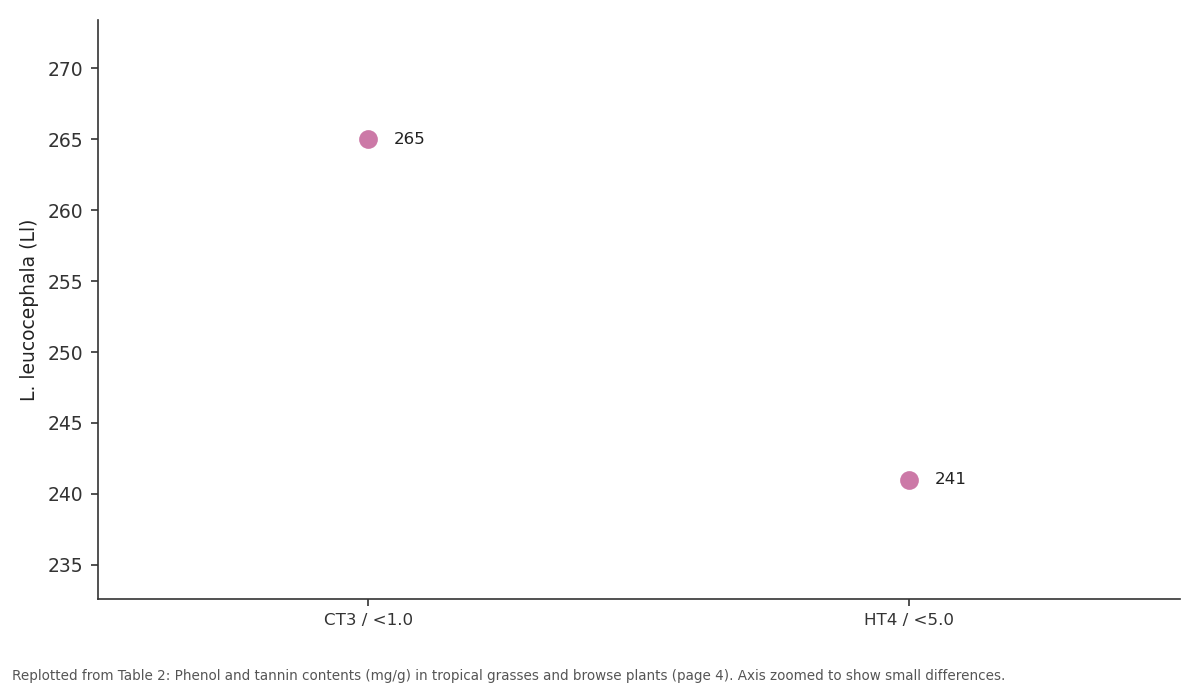
L. leucocephala (Ll): CT3 / <1.0 vs HT4 / <5.0
Replotted from Table 2 (page 4) of the original paper. Every bar is the paper's own table value.
View source evidence ↗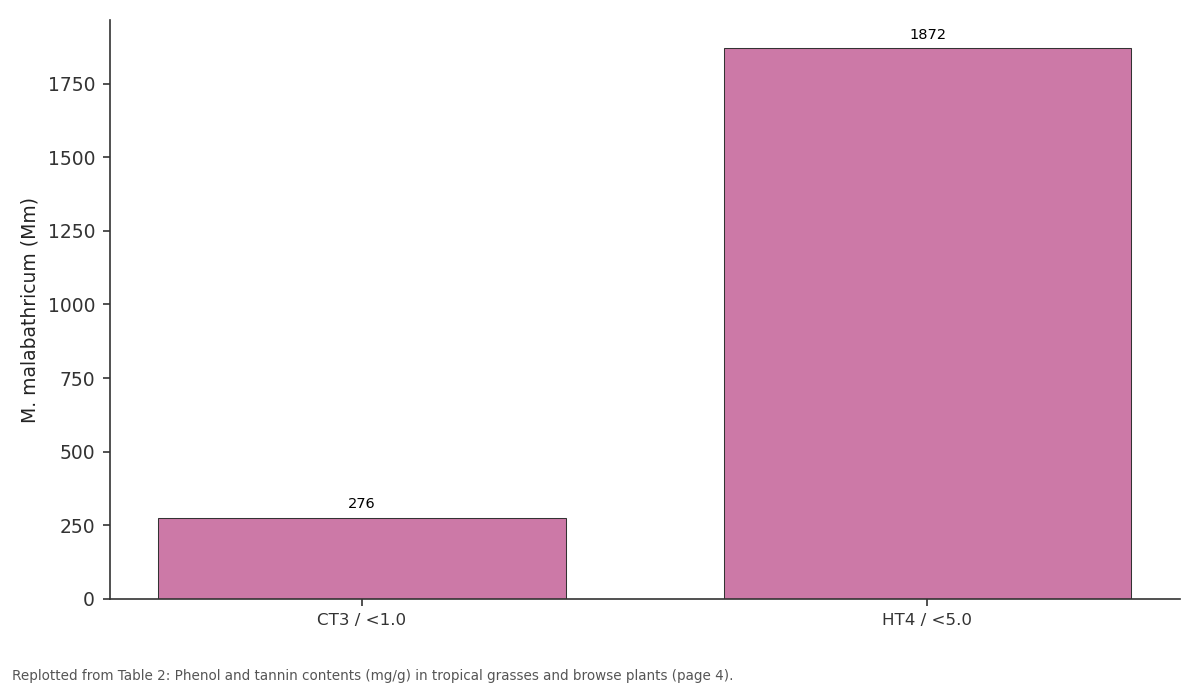
M. malabathricum (Mm): CT3 / <1.0 vs HT4 / <5.0
Replotted from Table 2 (page 4) of the original paper. Every bar is the paper's own table value.
View source evidence ↗Figures & tables
From the original paper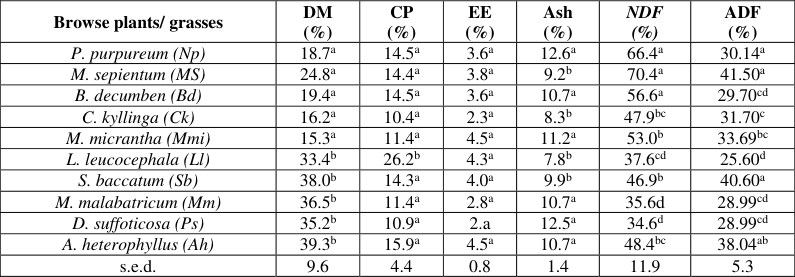 Table 1
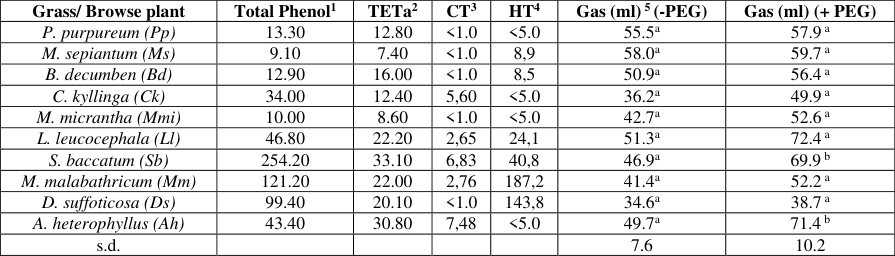 Table 2
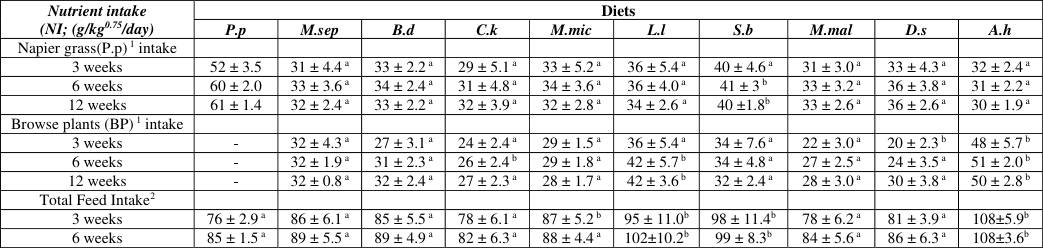 Table 3
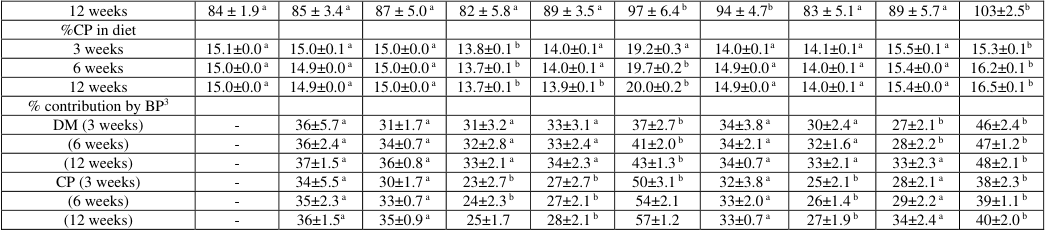 Table 4
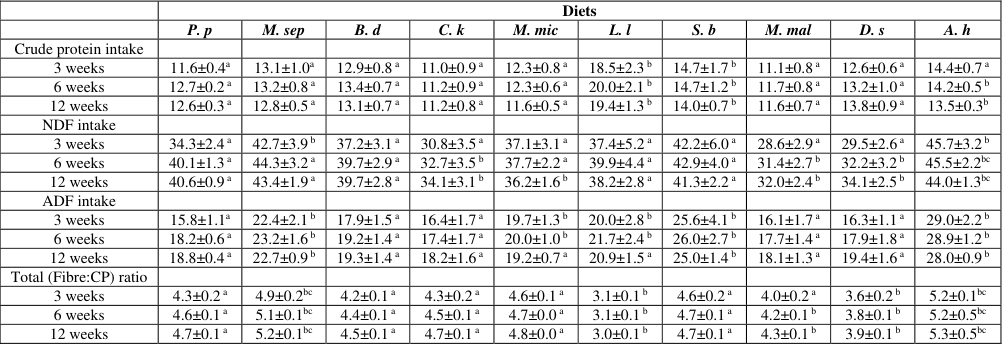 Table 4
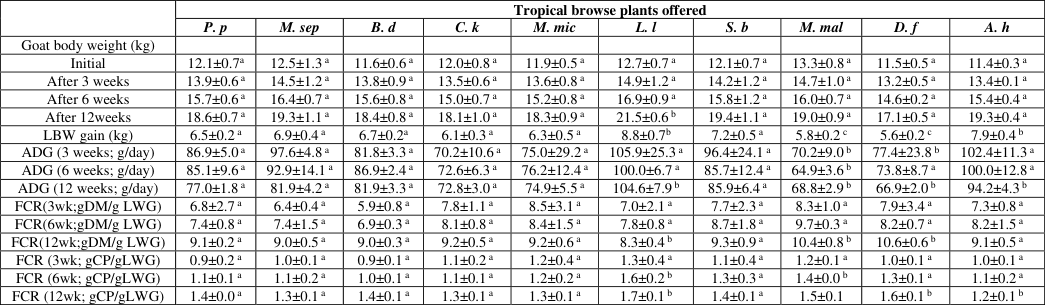 Table 5
Introduction
Given choice goats in the tropics will consume forage with less fibre and higher crude protein (CP) content such as leaves of browse. The selection criteria of browsing goats to select certain plants species or plant parts are many and may not be restricted to the contents of crude protein or fibre (Hadjigeorgiou et al., 2003) [13] , presence of tannin (Kumar and Vaithiyanathan, 1990) [20] or fibre digestibility (Hadjigeorgiou et al.,2003, Alonso-Diaz, 2008) [13,4] . Plants containing secondary factors may positively affect microbial degradation of fibre, ammonia nitrogen formation and bypass protein (Mueller-Harvey, 2006) [30] . The optimum level of feeding on tannin containing plants varies between plants with values ranging from 0.7-3.5% considered to be safe (Sharma et al, 2008) [39] whereas consumption at a level of over 6% are not advisable as this may affect feed utilization (Min et al, 1999). Rumen microbes require sufficient N to enable the synthesis of microbial proteins necessary for the growth of these microbes and efficient digestion of fibers (Madsen et al, 1997; Shem et al, 2003) [23,40] . Sufficient N provision under moderate to high in developing countries may be met through diet rich in CP (commercial concentrate) or traditional methods (e.g. homemade concentrate based on G. sepium, maize bran and cotton seed cake (Kabi et al, 2005) [17] . There is currently an increased interest in the utilisation of plants with secondary compounds especially in view of the fact that consumption of tanniniferous plants can help protect against extensive rumen degradation of feed CP and increasing amino acid absorption (Waghorn et al., 1987) [44] , control antimicrobial (Lentz et al, 1998), prevent bloat in ruminants (Tanner et al., 1995) [42] and suppress nematodes (Alen et al, 2000) and other intestinal parasites (Min and Hart, 2003) [27] . It is important to evaluate the performance of animals fed plants with varying level of phenolic compounds because long term consumption of plants with these secondary compounds can affect the rumen microbial flora and fauna (Odenyo et al, 2003; Mlambo et al, 2007) [34,28] such that the degradation of fibre (Molina, et al, 1999) [29] , microbial growth and energy availability in the form of short chain fatty acids are also altered. Thus the objectives of the current experiments were: (1) to evaluate the intake of plants with different nutritional properties over extended period of time by goats already obtaining sufficient amount of N, 2) to quantitate the intake of CP and fiber during the feeding trial and 3) to determine the benefits of offering these plants in relation to growth performance.
Materials and Methods
Materials and Methods
Experimental plants
Plants used in this study were obtained within the University of Malaya campus, Kuala Lumpur (altitude m, rainfall 650 -247 mm). Cyperuskyllinga was harvested by cutting the whole plant at 5 cm above the ground whereas Pennisetum purpureum and Brachiariadecumbens were harvested at 5 and 2 weeks respectively after previous cutting. Artocarpus heterophyllus, Leucaena leucocephala, Sapiumbaccatum, Melastoma malabathricum and Dilleniasuffruticosa were offered in the form of twigs (max diameter 0.5 cm) and leaves. Musa sp. was offered in the form of whole leaves whereas Micaniamicrantha (mile-a-minute weed) was offered in the form of stems, petioles and leaves.
Animals, diets and treatments
Male 4-6 months old Jermasia cross Katjang goats, with initial body weights between 11.0 and 13.0 (11.6 ± 0.19 kg; n=40), were allocated according to body weight in groups of four. Animals were weighed on a weekly basis before morning feeding. The goats were penned (1.5m x 2.0m) individually on wooden slated floors. Napier grass was harvested daily and offered in the morning (0800 -0900 hr) to the animals at 2% of body weight (BW). Tested pants were also harvested daily in the morning and left to wilt under the shed and these were offered at 2% of BW together with 200g palm kernel cake (PKC) based concentrate (18% CP)in the evening (1500-1600 hr).Control animals received a second Napier grass ration in the evening. The goats had free access to fresh clean water and mineral block throughout the trial period. The treatment period consisted of 10 days for adaptation followed by 12 weeks of growth period. Representative samples of plants consumed were collected thrice weekly, oven (50 ºC) dried, pooled and subsequently ground to pass through 1.0mm screen for further analysis. Refusals of supplement and napier grass were separately weighed each morning before feeding and samples were taken during digestibility period for analysis. Plant samples were analysed for contents of dry matter (DM), organic matter (OM) and nitrogen (N) (AOAC, 1990) [1] . Sodium sulphite was used for the analysis of neutral detergent fibre (NDF) (Van Soest and Robertson, 1985) and values were corrected for their ash content.
Chemical analysis
Neutral (NDF) and acid (ADF) detergent fibre analysis were carried out as described by Van Soest et al, (1991) [43] . The weight of plant samples and sintered glass crucibles for fibre analysis were determined correct to four decimal places (in gram; Sartorius Analytic). The plant samples were dried (100 ºC, 24hr) to remove residual water content. Nitrogen (N) content in samples was determined by Macro-N analysis (Foss Electric (UK) Ltd.) and N values obtained in %DM was multiplied by 6.25 to yield % crude protein (CP).
Extractable phenolic compounds
Analysis of phenolic compound in the plants was carried out in four replicates as described by Khazaal et al, (1993) [19] . Total extractable condensed tannins (CT; as catechin equivalent), were determined using the vanillin assay (Jones et al, 1976) and in unit absorbance at 550nm (Total phenol) using the proanthocyanidins assay (Porter et al, 1986) [36] . Total extractable tannin (TETa; in tannic acid equivalent) was calculated by the difference between total extractable phenolics (Julkunen-Tiito, 1985) [16] and amount of phenolic compounds remain after absorption onto polyvinylpolypyrrolidone (PPVP) (Makkar and Singh, 1992) [24] . Hydrolysable tannin was analysed using rhodanine reagent (Inoue and Hagerman, 1988) [14] .
Calculation and statistical analysis
Browse plants nutrient and secondary compound contents, nutrient intake and growth performance were analyzed by analysis of variance using the SPSS (1999) package. Significant differences between means (p<0.05) were tested using the Duncan multiple range test (DMRT).
Results and Discussion
Results and Discussion
Nutrient and anti-nutrient characteristics of browse plants.
CP was highest in L. leucocephala (26.2%) whereas other plants ranged 10-16% (Table 1). The CP contents of the plants used in the present studies (10-26%) were higher than 8%, the minimum level required for maintenance of animals (Norton, 1998) [33] . The CP attributed to each plant may also vary since there is variation in CP contents within plant when shoots leaves and twigs were compared (Ben Salem et al, 2005) [9] . The NDF content which ranged 34-57% in most plants indicate low fibre content compared to 66 and 70% in P. purpureumand Musa sp. respectively. Except for P. purpureum, the ADF fraction for all plants were more than 50% of the NDF which is indicative of high levels of hemicellulose. The CT determined ranged between <1.0 -7.5 mg/gDM. The relatively low CT determined in the present studies could be explained by the use of only one CT compound (catechin) as reference for CT whilst the use of extracted CT from the plants (Waghorn, 2008) [45] under study would be more appropriate. Nevertheless appreciable increase in gas production in the presence of PEG (M. malabathricum, S. baccatumand C. kyllinga p<0.05; L. leucocephala and A. heterophyllus; p>0.05) indicate the presence of biologically active CT in these plants (Makkar, 2003b) [26] . Two plant species (M. malabathricum and D. suffruticosa) contained the highest amount of hydrolysable tannins (187.2 and 143.8 g/kg DM respectively) but these are comparable to those reported in oak, acacia species and other browse plants (up to 200 gHT /kgDM; Reed, 1995) [37] . The differences in the contents of total tannins/condensed tannins in the plants arecomparable to other reports (Rodriguez et al, 2008) [38] , which highlight the variation in potential feed quality used in the present studies. It is interesting to note that M. Micrantha, considered as one of the most invasive plants in the world (Zhang et al, 2002) has comparable NDF and ADF values as B. decumbens. Its low DM content however may restrict intake.
| Browse plants/ grasses | DM (%) | CP (%) | EE (%) | Ash (%) | NDF (%) | ADF (%) |
|---|---|---|---|---|---|---|
| P. purpureum (Np) | 18.7a | 14.5a | 3.6a | 12.6a | 66.4a | 30.14a |
| M. sepientum (MS) | 24.8a | 14.4a | 3.8a | 9.2b | 70.4a | 41.50a |
| B. decumben (Bd) | 19.4a | 14.5a | 3.6a | 10.7a | 56.6a | 29.70cd |
| C. kyllinga (Ck) | 16.2a | 10.4a | 2.3a | 8.3b | 47.9bc | 31.70c |
| M. micrantha (Mmi) | 15.3a | 11.4a | 4.5a | 11.2a | 53.0b | 33.69bc |
| L. leucocephala (Ll) | 33.4b | 26.2b | 4.3a | 7.8b | 37.6cd | 25.60d |
| S. baccatum (Sb) | 38.0b | 14.3a | 4.0a | 9.9b | 46.9b | 40.60a |
| M. malabatricum (Mm) | 36.5b | 11.4a | 2.8a | 10.7a | 35.6d | 28.99cd |
| D. suffoticosa (Ps) | 35.2b | 10.9a | 2.a | 12.5a | 34.6d | 28.99cd |
| A. heterophyllus (Ah) | 39.3b | 15.9a | 4.5a | 10.7a | 48.4bc | 38.04ab |
| s.e.d. | 9.6 | 4.4 | 0.8 | 1.4 | 11.9 | 5.3 |
Table text extracted from the original PDF; superscript letters are shown inline. The original table image is below.
View original table image
Feed and Nutrient Intake
Napier (P. purpureum) and signal (B. decumbens) grasses, despite categorically classed as poorer C4 grass than temperate C3 grasses (Lewandowskia et al. 2003) [22] can be used successfully to feed small ruminants (Archimede et al, 2000, Axtmayer, et al. 1940) [6,7] . The intake of B. decumbens was thus used in the present study to compare with the intake of other offered plants in the evening. Napier grass intake by goats offered browse plants ranged 30-41 g/kg 0.75 BW as compared to napier grass consumed by B. decumbens-offered goats (33-34 g/kg 0.75 BW). The browse plants were consumed between 20 and 40 g/kg 0.75 BW/day with the intake of C. kyllinga, M. Malabathricum and D. suffruticosa being lower (24-27, 22-28 and 20-30 g/kg 0.75 BW/day respectively, P>0.05) compared to the intake of B. decumbens (27-32 g/kg 0.75 BW/day). D. suffruticosa (20±2.3 g/kg 0.75 BW/day) was consumed less than B. decumbens (27±3.1 g/kg 0.75 BW/day; p<0.05) in week 3 (Stage 1) but the amount eaten increased gradually to 24 ± 3.5 g/kg 0.75 BW/day (week 6, Stage 2) and 30 ± 2.4 g/kg 0.75 BW/day by the end of the feeding study (Week 12, Stage 3). Regardless of reduced intake for certain browse plants compared to B. decumbens intake, total dry matter intake (TDMI) of treated goats in Stage 1 (78 -108 g/kg 0.75 BW/day) were on average higher than TDMI of control group (76±2.9 g/kg 0.75 BW/day) with significant (p<0.05) effects seen in M. micrantha-, L. lecocephala-, S. baccatum-and A. heterophyllus-offered groups. Intake of CP was higher in goats which consumed S. baccatum (14.0-14.9g/kg 0.75 BW; P>0.05), L.leucocephala (19-20g/kg 0.75 BW; P<0.05) and A. heterophyllus (15.3-16.4g/kg 0.75 BW; P<0.05) compared to control group (P. purpureum, 11.6-12.7 g/kg 0.75 BW) at all three experimental stages. The consumption of C. kyllinga, M. micranthaand M. malabathricum resulted in lower (p>0.05) CP intake than Napier grass-fed goats. The intake of NDF and ADF in M. sepiantum and A. heterophyllus-offered goats were higher (P<0.05) than those in control group. M. micrantha-offered goats had reduced NDF intake only in the 3 rd stage whereas C. kyllinga-, M. malabathricum-and D. suffruticosa-offered goats had significantly reduced NDF intake by stage 2. ADF intake was increased in L. leucocephala (p<0.05, stage 1) and in S. baccatum (p<0.05, all 3 stages) offered goats whereas NDF intake was not affected. The ratio of fibre: CP in the diet consumed by control goats range between 4.3 to 4.7 (Table 4). This ratio was reduced for L. leucocephala-, D. suffruticosa-and M. malabathricum-fed goats (3.0-3.1, 3.6-3.9 and 4-4.3 respectively; P<0.05) but was increased for M. sepiantum-(4.9-5.2; P>0.05) and A. heterophyllus-(5.2-5.3; P<0.05) fed goats. The presence or absence of phenolic compounds in the plants used in the present studies did not influence VFI in a uniform manner (Table 2). The calculated amount of CT in the plants (0.15 -0.46% DMI) was low compared to other reports (Jones et al, 1976)and thus may not be contributing to the formation of ruminalun degradable protein and subsequent potentially higher amino acid flow to the small intestine. Tannin contents in browse plants of less than 1% of total DM intake are considered not likely to have substantive adverse effects on ruminants (Getachew et al., 2002) [12] . Two plants with relatively high HT had VFI that remained unchanged (M. malabathricum) or even increased with time (D. suffruticosa) suggesting the animals have adapted to eating these plants. Goats are excellent in selecting feed that are highly digestible, which is usually not dependent on the tannin levels in the plants (Alonso-Diaz, 2009) [5] . The increased consumption of such feed high in tannin may lead to slow degradation of DM and CP in the rumen (Kaitho et al., 1998) [18] and subsequent reduction in intake in the next feeding session. Such cyclic pattern observed in goats consuming its tannin rich meal have been described by Silanikove et al, (1997) [41] . Most plants in the present studies showed tendency of higher TDMI in certain week (e.g. week 6) than in others (e.g. weeks 3 and 12). It is apparent that for several browse plants species, other feed nutritive values (e.g water content, digestibility and palatability) may have determining effects on the voluntary intake apart from the tannins contents (Fahey and Jung 1989) [11] .
| — | Diets | — | — | — | — | — | — | — | — | — |
|---|---|---|---|---|---|---|---|---|---|---|
| P. p | M. sep | B. d | C. k | M. mic | L. l | S. b | M. mal | D. s | A. h | |
| Crude protein intake | ||||||||||
| 3 weeks | 11.6±0.4a | 13.1±1.0a | 12.9±0.8 a | 11.0±0.9 a | 12.3±0.8 a | 18.5±2.3 b | 14.7±1.7 b | 11.1±0.8 a | 12.6±0.6 a | 14.4±0.7 a |
| 6 weeks | 12.7±0.2 a | 13.2±0.8 a | 13.4±0.7 a | 11.2±0.9 a | 12.3±0.6 a | 20.0±2.1 b | 14.7±1.2 b | 11.7±0.8 a | 13.2±1.0 a | 14.2±0.5 b |
| 12 weeks | 12.6±0.3 a | 12.8±0.5 a | 13.1±0.7 a | 11.2±0.8 a | 11.6±0.5 a | 19.4±1.3 b | 14.0±0.7 b | 11.6±0.7 a | 13.8±0.9 a | 13.5±0.3b |
| NDF intake | ||||||||||
| 3 weeks | 34.3±2.4 a | 42.7±3.9 b | 37.2±3.1 a | 30.8±3.5 a | 37.1±3.1 a | 37.4±5.2 a | 42.2±6.0 a | 28.6±2.9 a | 29.5±2.6 a | 45.7±3.2 b |
| 6 weeks | 40.1±1.3 a | 44.3±3.2 a | 39.7±2.9 a | 32.7±3.5 b | 37.7±2.2 a | 39.9±4.4 a | 42.9±4.0 a | 31.4±2.7 b | 32.2±3.2 b | 45.5±2.2bc |
| 12 weeks | 40.6±0.9 a | 43.4±1.9 a | 39.7±2.8 a | 34.1±3.1 b | 36.2±1.6 b | 38.2±2.8 a | 41.3±2.2 a | 32.0±2.4 b | 34.1±2.5 b | 44.0±1.3bc |
| ADF intake | ||||||||||
| 3 weeks | 15.8±1.1a | 22.4±2.1 b | 17.9±1.5 a | 16.4±1.7 a | 19.7±1.3 b | 20.0±2.8 b | 25.6±4.1 b | 16.1±1.7 a | 16.3±1.1 a | 29.0±2.2 b |
| 6 weeks | 18.2±0.6 a | 23.2±1.6 b | 19.2±1.4 a | 17.4±1.7 a | 20.0±1.0 b | 21.7±2.4 b | 26.0±2.7 b | 17.7±1.4 a | 17.9±1.8 a | 28.9±1.2 b |
| 12 weeks | 18.8±0.4 a | 22.7±0.9 b | 19.3±1.4 a | 18.2±1.6 a | 19.2±0.7 a | 20.9±1.5 a | 25.0±1.4 b | 18.1±1.3 a | 19.4±1.6 a | 28.0±0.9 b |
| Total (Fibre:CP) ratio | ||||||||||
| 3 weeks | 4.3±0.2 a | 4.9±0.2bc | 4.2±0.1 a | 4.3±0.2 a | 4.6±0.1 a | 3.1±0.1 b | 4.6±0.2 a | 4.0±0.2 a | 3.6±0.2 b | 5.2±0.1bc |
| 6 weeks | 4.6±0.1 a | 5.1±0.1bc | 4.4±0.1 a | 4.5±0.1 a | 4.7±0.0 a | 3.1±0.1 b | 4.7±0.1 a | 4.2±0.1 b | 3.8±0.1 b | 5.2±0.5bc |
| 12 weeks | 4.7±0.1 a | 5.2±0.1bc | 4.5±0.1 a | 4.7±0.1 a | 4.8±0.0 a | 3.0±0.1 b | 4.7±0.1 a | 4.3±0.1 b | 3.9±0.1 b | 5.3±0.5bc |
Table text extracted from the original PDF; superscript letters are shown inline. The original table image is below.
View original table image
| 12 weeks | 84 ± 1.9 a | 85 ± 3.4 a | 87 ± 5.0 a | 82 ± 5.8 a | 89 ± 3.5 a | 97 ± 6.4 b | 94 ± 4.7b | 83 ± 5.1 a | 89 ± 5.7 a | 103±2.5b |
|---|---|---|---|---|---|---|---|---|---|---|
| %CP in diet | ||||||||||
| 3 weeks | 15.1±0.0 a | 15.0±0.1 a | 15.0±0.0 a | 13.8±0.1 b | 14.0±0.1a | 19.2±0.3 a | 14.0±0.1a | 14.1±0.1a | 15.5±0.1 a | 15.3±0.1b |
| 6 weeks | 15.0±0.0 a | 14.9±0.0 a | 15.0±0.0 a | 13.7±0.1 b | 14.0±0.1 a | 19.7±0.2 b | 14.9±0.0 a | 14.0±0.1 a | 15.4±0.0 a | 16.2±0.1 b |
| 12 weeks | 15.0±0.0 a | 14.9±0.0 a | 15.0±0.0 a | 13.7±0.1 b | 13.9±0.1 b | 20.0±0.2 b | 14.9±0.0 a | 14.0±0.1 a | 15.4±0.0 a | 16.5±0.1 b |
| % contribution by BP3 | ||||||||||
| DM (3 weeks) | - | 36±5.7 a | 31±1.7 a | 31±3.2 a | 33±3.1 a | 37±2.7 b | 34±3.8 a | 30±2.4 a | 27±2.1 b | 46±2.4 b |
| (6 weeks) | - | 36±2.4 a | 34±0.7 a | 32±2.8 a | 33±2.4 a | 41±2.0 b | 34±2.1 a | 32±1.6 a | 28±2.2 b | 47±1.2 b |
| (12 weeks) | - | 37±1.5 a | 36±0.8 a | 33±2.1 a | 34±2.3 a | 43±1.3 b | 34±0.7 a | 33±2.1 a | 33±2.3 a | 48±2.1 b |
| CP (3 weeks) | - | 34±5.5 a | 30±1.7 a | 23±2.7 b | 27±2.7 b | 50±3.1 b | 32±3.8 a | 25±2.1 b | 28±2.1 a | 38±2.3 b |
| (6 weeks) | - | 35±2.3 a | 33±0.7 a | 24±2.3 b | 27±2.1 b | 54±2.1 | 33±2.0 a | 26±1.4 b | 29±2.2 a | 39±1.1 b |
| (12 weeks) | - | 36±1.5a | 35±0.9 a | 25±1.7 | 28±2.1 b | 57±1.2 | 33±0.7 a | 27±1.9 b | 34±2.4 a | 40±2.0 b |
Table text extracted from the original PDF; superscript letters are shown inline. The original table image is below.
View original table image
| Grass/ Browse plant | Total Phenol1 | TETa2 | CT3 | HT4 | Gas (ml) 5 (-PEG) | Gas (ml) (+ PEG) |
|---|---|---|---|---|---|---|
| P. purpureum (Pp) | 13.30 | 12.80 | <1.0 | <5.0 | 55.5a | 57.9 a |
| M. sepiantum (Ms) | 9.10 | 7.40 | <1.0 | 8,9 | 58.0a | 59.7 a |
| B. decumben (Bd) | 12.90 | 16.00 | <1.0 | 8,5 | 50.9a | 56.4 a |
| C. kyllinga (Ck) | 34.00 | 12.40 | 5,60 | <5.0 | 36.2a | 49.9 a |
| M. micrantha (Mmi) | 10.00 | 8.60 | <1.0 | <5.0 | 42.7a | 52.6 a |
| L. leucocephala (Ll) | 46.80 | 22.20 | 2,65 | 24,1 | 51.3a | 72.4 a |
| S. baccatum (Sb) | 254.20 | 33.10 | 6,83 | 40,8 | 46.9a | 69.9 b |
| M. malabathricum (Mm) | 121.20 | 22.00 | 2,76 | 187,2 | 41.4a | 52.2 a |
| D. suffoticosa (Ds) | 99.40 | 20.10 | <1.0 | 143,8 | 34.6a | 38.7 a |
| A. heterophyllus (Ah) | 43.40 | 30.80 | 7,48 | <5.0 | 49.7a | 71.4 b |
| s.d. | 7.6 | 10.2 |
Table text extracted from the original PDF; superscript letters are shown inline. The original table image is below.
View original table image
Growth performance and feed conversion ratio
The LBW gain on the 12 th week of study increased for L. leucocephala-, A. heterophyllus-and S. baccatum-fed goats (8.8±0.67, 7.9±0.36 (P<0.05) and 7.2±0.54 kg (p>0.05) respectively) compared to control animals (6.5±0.15kg). Goats fed with the two plants rich in HT, D. suffruticosa and M. malabathricum, had lowest LBW gain (5.6±0.17 and 5.8±0.24kg respectively, p<0.05). This could be explained by the adaptation to these two plants (either unchanged (M. malabathricum) or increased (D. suffruticosa) VFI with time) resulting inpossible adverse negative effects to the breakdown products of HT (e.g. gallic acid) on body protein metabolism (Murdiatiet al, 1991). A. heterophyllus showed increased ADG (94.0-102.4 gDM/gLWG) and also improved FCR (1.2 gCP/gLWG; P<0.05) during the 3 rd stage of eating compared to control goats. When compared to control goats, L. luecocephala-offered goats, which had similar feeding performance as A. heterophyllus-offered goats, had improved ADG (100-105 gDM/gLWG; P<0.05 for all three feeding stages) and FCR for DM (8.3gDM/gLWG; P<0.05 stage 3 of feeding) but not FCR for CP (1.6-1.7gCP/gLWG; P<0.05 stages 2 and 3 of feeding). On the other hand goats consuming C. kyllinga, M. micrantha, M. malabathricum or D. suffruticosa showed reduced (p<0.05) ADG throughout the experiment. There was no increase in BW, ADG and FCR in M. sepiantum-offered goat at stage 1 (one) of feeding, despite higher intakes of CP (p>0.05) and NDF (p<0.05). The plants/foliages which are widely used as feed supplements in the tropics potentially contain a wide array of secondary compounds and the present studies showed that these need to be properly evaluated. L. leucocepahala, a commonly used legume in the tropics (Adejumo and Ademosum, 1991) appeared to be uneconomical in the present studies when consumed over long period of time. High dietary protein intake by the consumption of this plant (CP= 26.2%; FCR=1.7 kgCP/kgLWG) for 12 weeks was not used to support live body weight gain (LWG) as efficient as A. heterophyllus (CP=15.9%, FCR= 1.2kgCP/ kgLWG). Goats in the present studies can be regarded have adapted to the tanniniferous plants after 3 months feeding on these plants (Pell et al., 2000) [35] . The poor performance of C. kyllinga-, M. micrantha-, M. malabathricum-and D. suffruticosa-fed goats as evidenced from the lower ADG (Table 5) cannot be explained by tannin contents alone. Reduced total nutrient intake may be partially responsible since CP and NDF intakes (Table 4) from these plants were generally lower than napier grass-fed goats with profound reduced fibre: CP ratio for M. malabathricum-and D. suffruticosa-fed goats, particularly in week 6 and 12 (p<0.05). In practice, the use of browse plants tremendously improved the quality of diets for ruminants in the tropics if they can provide both fermentable carbohydrates and N, especially when readily nutrient availability are suppressed during the dry season (Leng, 1997; Fondevila et al., 2002) [21,10] . In addition these plants can be beneficial to animal production because the secondary plant compounds may provide protection to dietary protein against extensive rumen microbial digestion (Makkar, 2003a) [25] . Despite this potential benefit,plants containing considerably small amount of tannins, either in the form of CT or HT, may have negative consequences to animal growth performance when consumed over long period of time (longer than 6 weeks). Such concern is demonstrated in the present studies if the plants (C. kyllinga, and M. malabathricum with CP 10.4 and 11.4% respectively) can-not contribute as much CP as L. leucocephala and A. heterophyllus (CP 26.2 and 15.9% respectively). One of the main concerns of allowing goats to browse in the evening under extensive management (e.g. Baba et al 1998) [8] as routinely practiced in the tropics is the risk of consuming plants that may be deleterious to growth performance. This could happen particularly if the purpose of free browsing in the evening is to allow consumption of additional greens as supplements to that offered in the shed. The fact that several plants in the present studies (e.g. D. suffruticosa, M. malabathricum, C. kyllinga) may not be suitable to be consumed at high levels or as single supplement for more than 6 weeks does not mean that they are not suitable to be consumed as periodically browsed (i.e. part of a mixed ration with other plants). In this regard, it is very important for the farmers to be given adequate information on the feed resources and nutrient potential of plants that are available in abundance around the shed. 7.6 10.2 Analysis of phenolic compound was carried out in four replicates and the coefficient of variation is less than 5% Total extractable phenolics (Julkunen-Tiito, 1985) Total extractable proanthocyanidins (absorbance @ 550 nm/g DM); 2 TETa: in tannic acid equivalent. (Total phenol -phenolic compounds [after PPVP absorption; Makkar et al, 1992]. 3 CT: condensed tannin (Catechin equivalent; mg/g DM; using vanillin assay Broadhurst and Jones, 1978) 4 HT: hydrolysable tannin (gallic acid equivalent; mg/g DM) 5 Gas produced from Hohenheim gas test (Baba et al, 2002) in the absence (-PEG) or presence (+PEG) of polyethylene glycol (PEG) ab Means in a row with different superscripts differ (P< 0.05).
| — | Tropical browse plants offered | — | — | — | — | — | — | — | — | — |
|---|---|---|---|---|---|---|---|---|---|---|
| P. p | M. sep | B. d | C. k | M. mic | L. l | S. b | M. mal | D. f | A. h | |
| Goat body weight (kg) | ||||||||||
| Initial | 12.1±0.7a | 12.5±1.3 a | 11.6±0.6 a | 12.0±0.8 a | 11.9±0.5 a | 12.7±0.7 a | 12.1±0.7 a | 13.3±0.8 a | 11.5±0.5 a | 11.4±0.3 a |
| After 3 weeks | 13.9±0.6 a | 14.5±1.2 a | 13.8±0.9 a | 13.5±0.6 a | 13.6±0.8 a | 14.9±1.2 a | 14.2±1.2 a | 14.7±1.0 a | 13.2±0.5 a | 13.4±0.1 a |
| After 6 weeks | 15.7±0.6 a | 16.4±0.7 a | 15.6±0.8 a | 15.0±0.7 a | 15.2±0.8 a | 16.9±0.9 a | 15.8±1.2 a | 16.0±0.7 a | 14.6±0.2 a | 15.4±0.4 a |
| After 12weeks | 18.6±0.7 a | 19.3±1.1 a | 18.4±0.8 a | 18.1±1.0 a | 18.3±0.9 a | 21.5±0.6 b | 19.4±1.1 a | 19.0±0.9 a | 17.1±0.5 a | 19.3±0.4 a |
| LBW gain (kg) | 6.5±0.2 a | 6.9±0.4 a | 6.7±0.2a | 6.1±0.3 a | 6.3±0.5 a | 8.8±0.7b | 7.2±0.5 a | 5.8±0.2 c | 5.6±0.2 c | 7.9±0.4 b |
| ADG (3 weeks; g/day) | 86.9±5.0 a | 97.6±4.8 a | 81.8±3.3 a | 70.2±10.6 a | 75.0±29.2 a | 105.9±25.3 a | 96.4±24.1 a | 70.2±9.0 b | 77.4±23.8 b | 102.4±11.3 a |
| ADG (6 weeks; g/day) | 85.1±9.6 a | 92.9±14.1 a | 86.9±2.4 a | 72.6±6.3 a | 76.2±12.4 a | 100.0±6.7 a | 85.7±12.4 a | 64.9±3.6 b | 73.8±8.7 a | 100.0±12.8 a |
| ADG (12 weeks; g/day) | 77.0±1.8 a | 81.9±4.2 a | 81.9±3.3 a | 72.8±3.0 a | 74.9±5.5 a | 104.6±7.9 b | 85.9±6.4 a | 68.8±2.9 b | 66.9±2.0 b | 94.2±4.3 b |
| FCR(3wk;gDM/g LWG) | 6.8±2.7 a | 6.4±0.4 a | 5.9±0.8 a | 7.8±1.1 a | 8.5±3.1 a | 7.0±2.1 a | 7.7±2.3 a | 8.3±1.0 a | 7.9±3.4 a | 7.3±0.8 a |
| FCR(6wk;gDM/g LWG) | 7.4±0.8 a | 7.4±1.5 a | 6.9±0.3 a | 8.1±0.8 a | 8.4±1.5 a | 7.8±0.8 a | 8.7±1.8 a | 9.7±0.3 a | 8.2±0.7 a | 8.2±1.5 a |
| FCR(12wk;gDM/g LWG) | 9.1±0.2 a | 9.0±0.5 a | 9.0±0.3 a | 9.2±0.5 a | 9.2±0.6 a | 8.3±0.4 b | 9.3±0.9 a | 10.4±0.8 b | 10.6±0.6 b | 9.1±0.5 a |
| FCR (3wk; gCP/gLWG) | 0.9±0.2 a | 1.0±0.1 a | 0.9±0.1 a | 1.1±0.2 a | 1.2±0.4 a | 1.3±0.4 a | 1.1±0.4 a | 1.2±0.1 a | 1.0±0.1 a | 1.0±0.1 a |
| FCR (6wk; gCP/gLWG) | 1.1±0.1 a | 1.1±0.2 a | 1.0±0.1 a | 1.1±0.1 a | 1.2±0.2 a | 1.6±0.2 b | 1.3±0.3 a | 1.4±0.0 b | 1.3±0.1 a | 1.1±0.2 a |
| FCR (12wk; gCP/gLWG) | 1.4±0.0 a | 1.3±0.1 a | 1.4±0.1 a | 1.3±0.1 a | 1.3±0.1 a | 1.7±0.1 b | 1.4±0.1 a | 1.5±0.1 | 1.6±0.1 b | 1.2±0.1 b |
Table text extracted from the original PDF; superscript letters are shown inline. The original table image is below.
View original table image
Conclusions
The feeding values of nine tropical browse were evaluated by determining levels of nutrients and secondary compounds, as well as feed intake and growth performance of goats. The eating values of these plants in relation of body weight gain cannot be evaluated based on fibre: CP intake, tannin composition, or even on biological tannin assay. M. malabathricumand, D. suffruticosa which contain high HT content are not suitable for long term feedings. Plants with high CP, high CT and high VFI can be safely consumed over long period of time without a negative effect on body weight gain provided the total daily CP intake is higher than 15%.
Acknowledgements
This material is based on work supported by Malaysian Government Grant (IRPA 01-02-03-0155) to Meriksa Sembiring. Special thanks to Professor Mukerjee for permits for con ducting research in Farm University of Malaya.
Figures and tables from the paper
| Nutrient intake (NI; (g/kg0.75/day) | Diets | — | — | — | — | — | — | — | — | — |
|---|---|---|---|---|---|---|---|---|---|---|
| P.p | M.sep | B.d | C.k | M.mic | L.l | S.b | M.mal | D.s | A.h | |
| Napier grass(P.p) 1 intake | ||||||||||
| 3 weeks | 52 ± 3.5 | 31 ± 4.4 a | 33 ± 2.2 a | 29 ± 5.1 a | 33 ± 5.2 a | 36 ± 5.4 a | 40 ± 4.6 a | 31 ± 3.0 a | 33 ± 4.3 a | 32 ± 2.4 a |
| 6 weeks | 60 ± 2.0 | 33 ± 3.6 a | 34 ± 2.4 a | 31 ± 4.8 a | 34 ± 3.6 a | 36 ± 4.0 a | 41 ± 3 b | 33 ± 3.2 a | 36 ± 3.8 a | 31 ± 2.2 a |
| 12 weeks | 61 ± 1.4 | 32 ± 2.4 a | 33 ± 2.2 a | 32 ± 3.9 a | 32 ± 2.8 a | 34 ± 2.6 a | 40 ±1.8b | 33 ± 2.6 a | 36 ± 2.6 a | 30 ± 1.9 a |
| Browse plants (BP) 1 intake | ||||||||||
| 3 weeks | - | 32 ± 4.3 a | 27 ± 3.1 a | 24 ± 2.4 a | 29 ± 1.5 a | 36 ± 5.4 a | 34 ± 7.6 a | 22 ± 3.0 a | 20 ± 2.3 b | 48 ± 5.7 b |
| 6 weeks | - | 32 ± 1.9 a | 31 ± 2.3 a | 26 ± 2.4 b | 29 ± 1.8 a | 42 ± 5.7 b | 34 ± 4.8 a | 27 ± 2.5 a | 24 ± 3.5 a | 51 ± 2.0 b |
| 12 weeks | - | 32 ± 0.8 a | 32 ± 2.4 a | 27 ± 2.3 a | 28 ± 1.7 a | 42 ± 3.6 b | 32 ± 2.4 a | 28 ± 3.0 a | 30 ± 3.8 a | 50 ± 2.8 b |
| Total Feed Intake2 | ||||||||||
| 3 weeks | 76 ± 2.9 a | 86 ± 6.1 a | 85 ± 5.5 a | 78 ± 6.1 a | 87 ± 5.2 b | 95 ± 11.0b | 98 ± 11.4b | 78 ± 6.2 a | 81 ± 3.9 a | 108±5.9b |
| 6 weeks | 85 ± 1.5 a | 89 ± 5.5 a | 89 ± 4.9 a | 82 ± 6.3 a | 88 ± 4.4 a | 102±10.2b | 99 ± 8.3b | 84 ± 5.6 a | 86 ± 6.3 a | 108±3.6b |
Table text extracted from the original PDF; superscript letters are shown inline. The original table image is below.
View original table image
References
44 in the original paper- AOAC. Official Methods of Analysis, 15th Edition. Association Official Analytical Chemists, Arlington, 1990.
- Adejumo JO, Ademosum AA. Utilization of Lucaena as supplement for growing dwarf sheep and goats in the humid zone of west Africa. Small Rumin. Res., 1991; 5:75-82.
- Alen Y, Nakajima SA, Nitoda T, Baba N, Kanzaki H, Kawazu K. Antinematodal activity of some tropical rainforest plants against the pinewood nematode, Bursphenalenchusxylophilus. Naturforsch. 2000; 55:295299.
- Alonso-Díaz MA, Torres-Acosta JFJ, Sandoval-Castro CA, Hoste H, Aguilar-Caballero AJ, Capetillo-Leal CM. Is goats' preference of forage trees affected by their tannin or fibre content when offered in cafeteria experiments? Anim. Feed Sci. Technol. 2008; 141:36-48.
- Alonso-Díaza MA, Torres-Acostaa JFJ, SandovalCastroa CA, Hostec H, Aguilar-Caballeroa AJ, CapetilloLeal CM. Sheep preference for different tanniniferous tree fodders and its relationship with in vitro gas production and digestibility. Anim. Feed Sci. Technol. 2009; 151:75-85
- Archimède H, Boval M, Alexandre G, Xandé A, Aumont G, Poncet C. Effect of regrowth age on intake and digestion of Digitaria decumbens consumed by Blackbelly sheep, Anim. Feed Sci. Technol. 2000; 87:153162.
- Axmayer JH, Rivera HG, Cook DH. Chemical Analyses of grasses. J. Agric. Univ. P. Rico. 1940; 24(1):3
- Baba ASH, Azillah A, Mukherjee TK, Abdullah RB. Growth and reproductive performance of small ruminants under integrated livestock-oil palm production system. Asian Australasian J. Animal Science. 1998; 11(5):573579.
- Ben Salem H, Saghrouni L, Nefzaoui A. Attempts to deactivate tannins in fodder shrubs with physical and chemical treatments. Anim. Feed Sci. Technol. 2005; 122:109-121.
- Fondevila M, Nogueira-Filho JCM, Barrios-Urdaneta A. In vitro microbial fermentation and protein utilisation of tropical forage legumes grown during the dry season, Anim. Feed Sci. Technol. 2002; 95:1-14.
- Fahey Jr GJ, Jung HG. Phenolic compounds in forages and fibrous feedstuffs In P.R. Cheeke (ed). Toxicants of plan origin. Phenolic. CRC Press in Florida, 1989; IV:123-190.
- Getachew G, Makkar HPS, Becker K. Tropical browses: contents of phenolic compounds, in vitro gas production and stoichiometric relationship between short chain fatty acid and in vitro gas production. J Agric. Sci. 2002; 39:341-352.
- Hadjigeorgiou IE, Gordon IJ, Milne JA. Comparative preference by sheep and goats for Gramineae forages varyng in chemical composition, Small Ruminant Res. 2003; 49:147-156.
- Inoue KH, Hagerman AE. Determination of gallotannin with rhodanine. Anal. Biochem. 1988; 169:363-369.
- Jones WT, Broadhurst RB, Lyttleton JW. The condensed tannins of pasture legume species. Phytochemistry. 1976; 15(9):1407-1409
- Julkunen-Tiito R. Phenolics constituents in the leaves of Northern willows: methods for the analysis of certain phenolics. J Agric. Food Chem. 1985; 33:213-217.
- Kabi F, Bareeba FB, Havrevoll Ø, Mpofu IDT. Evaluation of protein degradation characteristics and metabolisable protein of elephant grass (Pennisetum purpureum) and locally available protein supplements Livest. Prod. Sci. 2005; 95:143-153
- Kaitho RJ, Umunna NN, Nsahlai IV, Tamminga S, van Bruchem J. Nitrogen in browse species: Ruminal degradability and post-ruminal digestibility measured by mobile nylon bag and in vitro techniques. J Sci. Food Agric. 1998; 76:488-498.
- Khazaal K, Dentinho MT, Ribeiro JM, Orskov ER. A comparison of gas production during incubation with rumen contents in vitro and nylon bag degradability as predictor of the apparent digestibility in vivo and the voluntary intake of hays. Anim. Prod. 1993; 57:105.
- Kumar A, Vaithiyanathan S. Occurrence, significance and effects on animal production of tannins in tree leaves. Anim. Feed Sci. Technol. 1990; 30:21-38
- Leng RA. Tree Legumes in Ruminants Nutrition. FAO, Rome, 1997.
- Lewandowskia I, Jonathan MO, Scurlockb, Lindvallc E, Christoud M. The development and current status of perennial rhizomatousgrasses as energy crops in the US and Europe. Biomass and Bioenergy. 2003; 25:335-361.
- Madsen J, Hvelplund T, Weisbjerg MR. Appropriate methods for the evaluation of tropical feeds for ruminants Anim. Feed Sci. Technol. 1997; 69:53-66
- Makkar HPS, Singh B. Detannification of oak (Quercusincana) leaves: treatments and their optimization Anim. Feed Sci. Technol. 1992; 36:113-127
- Min BR, Hart SP. Tannins for suppression of internal parasites, J Anim Sci. 2003; 81:E102-E109.
- Mlambo V, Sikosana JLN, Mould FL, Smith T, Owen E, Mueller-Harvey I. The effectiveness of adapted rumen fluid versus PEG to ferment tannin-containing substrates in vitro. Anim. Feed Sci. Technol. 2007; 136:128-136.
- Molina DO, Pell AN, Hogue DE. Effects of inoculations with tannin-tolerant bacteria on fibre and nitrogen digestibility of lambs fed a high-condensed tannin diet. Anim. Feed Sci. Technol. 1999; 81:69-80.
- Mueller-Harvey I. Unravelling the conundrum of tannins in animal nutrition and health. J. Sci. Food Agric. 2006; 86:2010-2037.
- Murdiati TB, McSweeney CS, Lowry JB. Complexing of toxic hydrolysable tannins of yellow-wood (Terminalia oblongata) and harendong (Clidemiahirta) with reactive substances: an approach to preventing toxicity. J Appl Toxicol. 1991; 11(5):333-8.
- Ndlovu LR, Hove L. Intake, digestion and rumen parameters of grats fed mature veld hay ground with deep litter poultry manure and supplemented with graded levels of poorly managed hay livestock research for rural Development. 1995; 6(3).
- Norton BW. The nutritive value of tree legumes. In: Gutteridge, R.C., Shelton, H.M. (Eds.), Forage Trees Legumes in Tropical Agriculture. Tropical Grassland Society of Australia Inc., St. Lucia, Queensland, 1998.
- Odenyo AA, Osuji PO, Reed JD, Smith AH, Mackie RI, McSweeney CS et al. Acacia angustissima: its antinutrients constituents, toxicity and possible mechanisms to alleviate the toxicity-a short review. Agroforest. Syst. 2003; 59:141-147.
- Pell AN, Woolston TK, Nelson KE, Schofield P. Tannins: biological activity and bacterial tolerance. In: Brooker, J.D. (Ed.), Tannins in Livestock and Human Nutrition. ACIAR, Adelaide, Australia. 2000, 121-126.
- Porter LJ, Hrstich LN, Chan BG. The conversion of procyanidins and prodelphinidins to cyanidins and delphinidin. Phytochemistry. 1986; 25:223-230.
- Reed JD. Nutritional toxicology of tannins and related polyphenols in forage legumes. J. Anim. Sci. 1995; 73:1516-1528.
- Rodríguez R, Fondevilaa M, Castrilloa C. In vitro ruminal fermentation of Pennisetum purpureum CT-115 supplemented with four tropical browse legume species. Animal Feed Science and Technology. 2008; 151:65-74.
- Sharma RK, Singh B, Sahoo A. Exploring feeding value of oak (Quercusincana) leaves: Nutrient intake and utilization in calves Livest. Sci. 2008; 118:157-165
- Shem MN, Mtengeti EJ, Luaga M, Ichinohe T, Fujihara T. Feeding value of wild Napier grass (Pennisetummacrourum) for cattle supplemented with protein and/or energy rich supplements Animal Feed Science and Technology. 2003; 10:15-24
- Silanikove N, Giboa N, Nitsan Z, Perevolotsky A. Effect of foliage-tannins on feeding activity in goats. In: Lindberg, J.E., Gonda, H.J. Ledin, I. (Eds) Recent Advances in Small Ruminant Nutrition. CIHEAM/FAO Pub., Zaragoza, Spain, 1997, 43-46.
- Tanner Gj, Moate PJ, Davis LH, Laby RH, Li Y, Larkin PJ et al. Proanthocyanidins (condensed tannin) destabilise plant protein foams in a dose dependent manner, Aust. J Agric. Res. 1995; 48:1101-1109.
- Van Soest PJ, Robertson JB, Lewis BA. Methods for dietary fiber, neutral detergent fiber and non-starch polysaccharides in relation to animal nutrition. J Dairy Sci. 1991; 74:3583-3597
- Waghorn MJ, Ulyatt AJ, Fisher T. The effect of condensed tannins on the site of digestion of amino acids and other nutrients in sheep fed on Lotus corniculatus, Br. J Nutr. 1987; 57:115-126.
- Waghorn G. Beneficial and detrimental effects of dietary condensed tannins for sustainable sheep and goat production-Progress and challenges. Animal Feed Science and Technology. 2008; 147:116-139
- Zhang LH, Ye WH, Cao HL, Feng HL. Mikaniamicrantha H. B. K. in China-an overview, Weed Research (Oxford) 2004; 44:42-49.
Cited by 1
From OpenAlex, OpenCitations and reference lists read by Scinovex
- Pastoralists’ knowledge of napier cultivation: Implication for social and environmental security in Nigeria ↗
S. A. Aderinoye-Abdulwahab, Tawakalitu Abiola Dolapo, Sola Emmanuel Komolafe, Fadlullah Olayiwola Issa, Emmanuel Bamidele Tologbonse · Social Sciences & Humanities Open · 2024
Conflicts involving farming communities and itinerant pastoralists have resulted in social unrest while the cultivation of Napier grass can ensure feed, social and environmental security. Literature of the knowledge level of pastoralists in cultivating Napier grass is scarce, hence this study seeks to ascertain if pastoralists can cultivate Napier grass to raise cattle and determine the potential influence of cultivation…
❝ 2PDF