
Research article · 2017 · Full text
International Journal of Veterinary Sciences and Animal HusbandryCarcass characteristics and serum chemistry of finisher pigs fed enzyme supplemented palm kernel cake based ration in partial replacement for maize
Volume 2(2) · Pages 01–04
Research areasFood and Agricultural SciencesRabbits: Nutrition, Reproduction, Health
Abstract
Author-writtenCarcass characteristics and pork quality from finished pigs fed enzyme supplemented palm kernel cake- based diets as replacement for maize was evaluated. Thirty finisher pigs with average initial weight of between 21.5kg - 23.17kg were assigned to five dietary treatments in a Completely Randomized Design which lasted for twelve weeks. The first dietary treatment (T1), which was the control, contained 0%PKC and without enzyme supplementation. The second treatment (T2) contained 40%PKC + enzyme. The third treatment (T3) contained 40%PKC but without enzyme. The fourth treatment (T4) contained 60%PKC + enzyme while the fifth treatment (T5) contained 60%PKC but without enzyme. There were significant (P<0.05) differences in weight gain, average daily feed intake and feed conversion ratio. There were significant (P<0.05) differences between the mean carcass characteristics of the experimental animals as a result of their different diets containing different levels of PKC (with or without enzyme supplementation) inclusion. There were also significant (P<0.05) differences between the dressed weight percentages of the loin, the kidney and the heart. The dressed weight was higher (P<0.05) for treatment 3 than other treatments while the loin was higher (P<0.05) for treatments 3 and 2. There were also significant (P<0.05) differences in the mean of the kidney and the heart. The results of the serum chemistry showed that there were no significant (P>0.05) differences between the Serum levels of total protein, cholesterol and the Urea of the experimental animals. However, there were Significant (P<0.05) differences between the mean values of albumin and glucose. In conclusion, PKC inclusion of up to 60% did not have any deleterious effect on the serological and carcass characteristics as well as the general performance of finisher pigs. This study therefore provides useful information for farmers, nutritionists, researchers, research institutions and other stakeholders.
Summary
Source-checkedPlain-language reading of the full paper, prepared with AI and checked against the text. Each point links to the authors' own words.
Why it matters
- Using agricultural by-products like palm kernel cake (PKC) to replace maize in livestock diets can reduce feed costs and lower competition between humans and animals for food crops. View evidence ↗
- PKC is a viable alternative but is high in fiber (150g/kg DM) and contains anti-nutritive factors that can hinder nutrient absorption in monogastric animals. View evidence ↗
- Adding enzymes to diets is thought to assist the digestive function of the gastrointestinal tract in monogastric animals, improving nutrient absorption. View evidence ↗
The question
- The study aimed to evaluate the effect of enzyme-supplemented palm kernel cake (PKC) diets, used as a replacement for maize, on the carcass characteristics and pork quality of finisher pigs. View evidence ↗
What they did
- Five dietary treatments were tested: a control (0% PKC, no enzyme), 40% PKC with enzyme, 40% PKC without enzyme, 60% PKC with enzyme, and 60% PKC without enzyme. View evidence ↗
- The enzyme used was Hemicell(R), administered at a rate of 600g/ton in the supplemented diets. View evidence ↗
- The study lasted for twelve weeks, during which pigs had ad libitum access to water and their assigned diets. View evidence ↗
- Serum chemistry was measured using specific techniques: Biuret for total protein, colorimetric for albumin, globulin, and urea, and enzymatic colorimetric for glucose and cholesterol. View evidence ↗
What they found
- Average total weight gain was highest in Treatment 3 (13.83kg) and lowest in the control Treatment 1 (11.00kg). View evidence ↗
- Treatment 3 resulted in a significantly higher dressed weight than other groups, and both Treatments 2 and 3 showed significantly higher loin percentages. View evidence ↗
- The control group (Treatment 1) had the highest mean percentages for both kidney and heart, while the lowest kidney percentage was in Treatment 5 and the lowest heart percentage was in Treatment 2. View evidence ↗
- Experimental diets did not significantly affect serum levels of total protein, cholesterol, or urea. View evidence ↗
- Treatment 2 showed the highest albumin and glucose levels, while Treatment 1 had the lowest albumin and Treatment 4 had the lowest glucose. View evidence ↗
What it means
- The authors concluded that including up to 60% PKC in the diet does not negatively impact the general performance, serological profiles, or carcass characteristics of finisher pigs. View evidence ↗
- Because no mortality occurred during the study, the authors recommend PKC as a suitable energy diluent for finisher pig rations. View evidence ↗
Visual summary
3 visualsIllustrations explain the paper; charts are replotted from the paper's own table values.
Dietary Treatment Groups
AI-generated conceptual illustration (finisher pigs). It explains the idea and does not show study data.
View source evidence ↗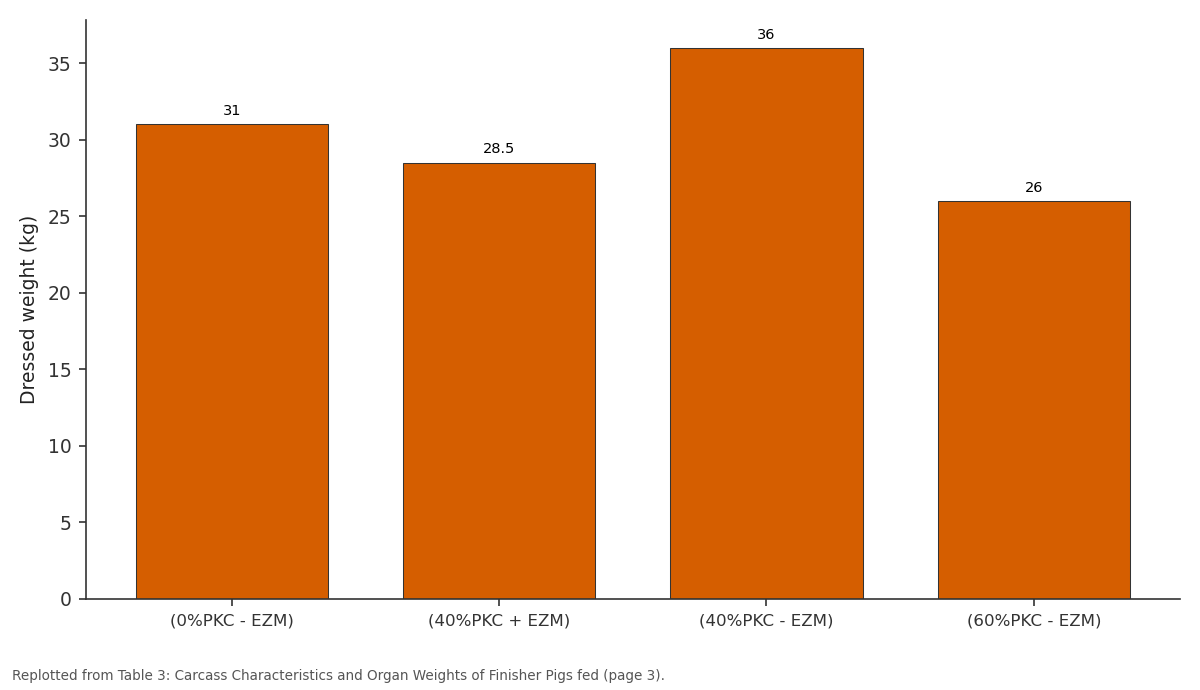
Dressed weight (kg): (0%PKC - EZM) vs (40%PKC + EZM) vs (40%PKC - EZM) vs (60%PKC - EZM)
Replotted from Table 3 (page 3) of the original paper. Every bar is the paper's own table value.
View source evidence ↗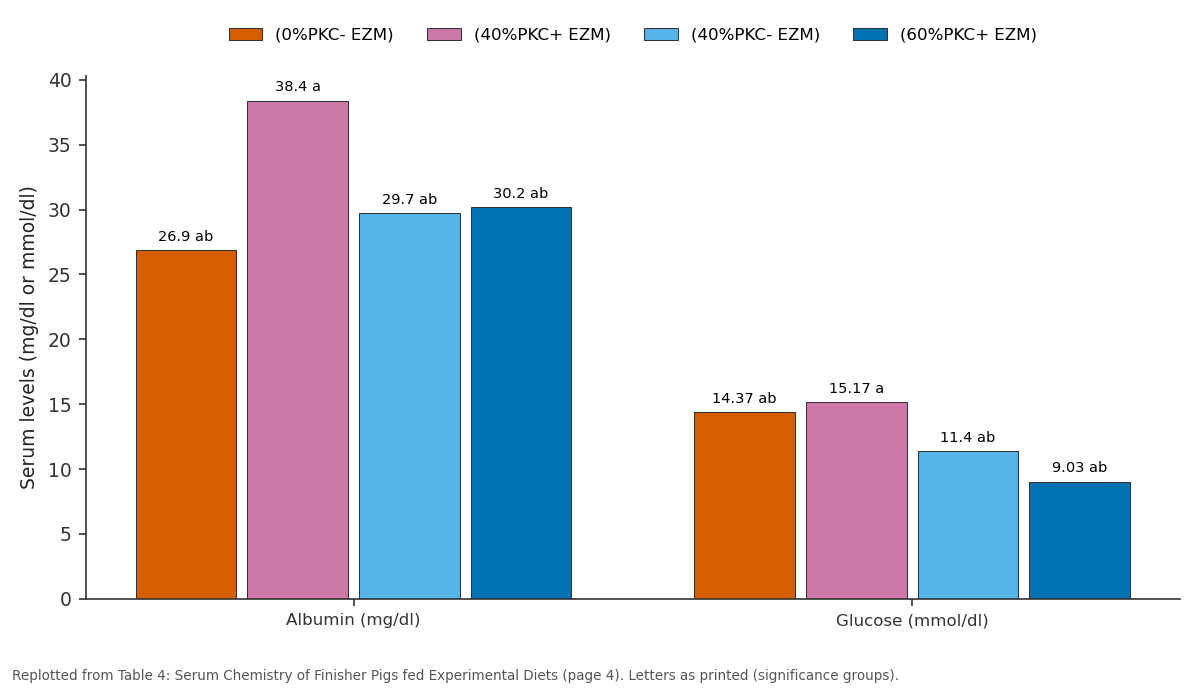
(0%PKC- EZM) and (40%PKC+ EZM) and more: Albumin (mg/dl) vs Glucose (mmol/dl)
Replotted from Table 4 (page 4) of the original paper. Every bar is the paper's own table value.
View source evidence ↗Figures & tables
From the original paper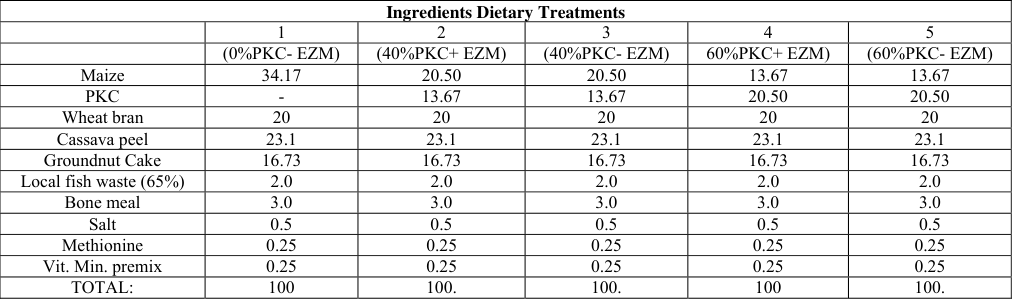 Table 1
 Table 2
 Table 3
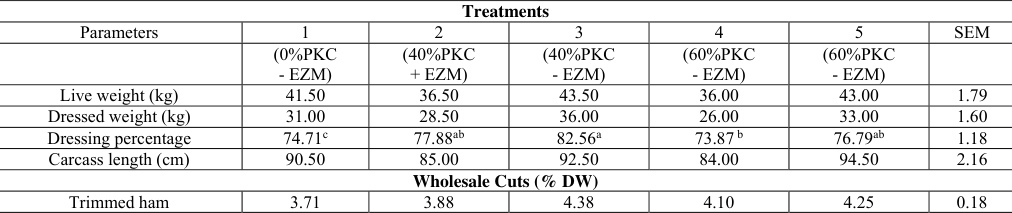 Table 3
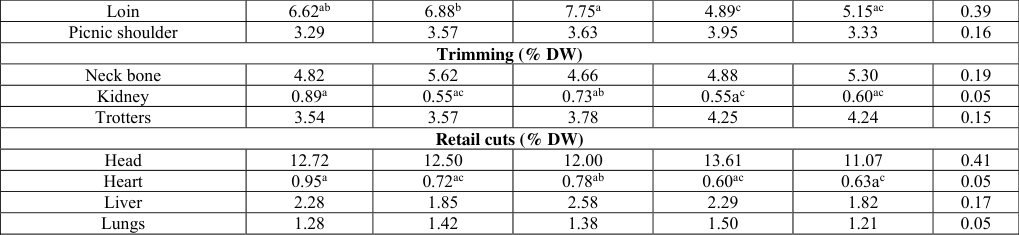 Table 4
 Table 4
Introduction
The use of unconventional feedstuffs especially in monogastric animal feeding continue to attract positive interest among researchers, livestock farmers, animal feed manufactures and other stakeholders in the agricultural and agro-allied industries. According to Iyayi et al (2005) [11, 12] agro-industrial by-products (AIBs) have in recent years become important feed components in poultry diets in Nigeria mainly due to the increased competition for the conventional ingredients by humans and the food industries. Those of high fibre contents are being used either as fillers or as energy diluents. Feed costs and animal competition with humans for feed items suggest strongly that alternative energy sources such as crop residues or agricultural by-products like palm kernel cake (PKC) be used partially or totally to replace maize in livestock diets thereby reducing cost, enabling cheaper meat production and making available major crops for human consumption (Fomunyam, 1981) [7] . About 33% of people in sub-Saharan Africa are undernourished compared to about 6% in North Africa and 15% in Asia (FAO, 2002) [6] , while more than 60% of the undernourished are in Eastern Africa. Nigeria's prevalence rate is low but its large population means that the country accounts for 22% of the food insecure in West and Central Africa (IAC, 2004) [10] . This situation is getting worse and it is disheartening to note that most people in the developing countries continues to suffer from nutritional disorders as a result of inability to harness and utilize the available resources at their disposal for the production of much needed animal protein.
The search for least cost formulation has led Animal Nutritionists to investigate the nutritional potential of nonconventional ingredients used for compounding animal rations, and to see the percentage of combination of such ingredient that could give satisfactory performance (Oruseibio, 1985) [16] . One of such ingredients, which do not serve as direct food for human, is Palm Kernel Cake (PKC). It is not expensive and is readily available. However, it is high in fibre (150g/kg DM) (McDonald et al., 1995) [15] , it is not palatable and contains anti-nutritive factors which interfere with digestion and absorption of nutrients when fed especially to monogastrics. The mechanism by which enzymes improve the nutritive value of cereals was discussed by. Their assumption was that enzymes that are added to the diet complete the digestive function of the gastrointestinal tract in monogastric animals, thereby improving the digestion and absorption of nutrients. It has been reported that enzyme supplementation does improve the utilization of fibre feedstuffs. According to Iyayi et al., (2005) [11,12] there was a significantly higher feed intake in both starter and finisher birds fed enzyme supplemented BDG and PKM diets than those on basal diets with significantly (p< 0.5) higher weight gain of birds on the BDG and PKM supplemented diets than those on the basal diet only at the starter phase. In a study of the effects of PKM on productive performance and carcass characteristics of pigs, Jegede.et al. (1994) [13] reported that final weight of pigs decreased linearly as the level of dietary PKM is increased while daily feed intake was not significantly affected by dietary treatments. According to Sundu et al., (2005) [17] , there is economic incentive to investigate the use of palm kernel meal in broiler diets in four regions of the world (Asia, Pacific, South America and Africa) due to its cost effectiveness compared to conventional feedstuffs. There has been a dramatic increase in global production of PKM with annual growth of 15% over the last two decades (FAO, 2002) [6] . The rising cost of conventional feedstuffs, which are regularly imported into palm kernel meal producing countries, has triggered much pressure on local poultry industries to maximize the use of locally available feedstuffs (Hutagalung, 1980) [9] .
Materials and Methods
Thirty finisher pigs of the large white x Duroc crossbreed whose average initial live weight ranges from 21.5kg -23.17kg were randomly assigned to five dietary treatments. Each treatment was replicated thrice in a Completely Randomized Design. The first dietary treatment (T1), which was the control, contained 0%PKC and without enzyme supplementation. The second treatment (T2) contained 40%PKC + enzyme. The third treatment (T3) contained 40%PKC but without enzyme. The fourth treatment (T4) contained 60%PKC + enzyme while the fifth treatment (T5) contained 60%PKC but without enzyme. The diets and water were provided add-dlibitum to the experimental animals for the twelve weeks period of the study. These dietary treatments were compounded with Hemicell (R) enzyme added at 600g/ton to some of the treatment diet while the rest did not have Hemicell (R) enzyme according to the design. Standard swine management procedures were strictly applied. Feed intake for each replicate was recorded on daily basis while each experimental animal was weighed on weekly basis and weight gained computed on daily basis. Feed Conversion Ratio (FCR) was calculated as feed intake divided by weight gain. Feed cost/kg of body weight gain was determined by multiplying the cost per kg of feed by the corresponding feed conversion ratio. At the end of the feeding experiments, two pigs from each group were slaughtered for carcass evaluation. Prior to slaughter, the pigs were fasted for about 16 hours with only drinking water provided. They were stunned with a metal rod in order to subject them a state of unconsciousness, which allowed easy slaughtering, and complete bleeding Some of the characteristics that were evaluated include: colour of the meat, fat deposition, lean meat, meat texture and palatability. On the other hand, the Serological parameters were determined as follows; Total Serum Protein by the Buiret technique, Albumin and Globulin by the Colorimetric technique, Urea content by the Berthelot (colorimetric) method, while Glucose and Cholesterol were analyzed through the enzymatic colorimetric method. Data for all parameters measured were processed and analyzed using SPSS (Statistical Procedures for Social Sciences) computer package. Significantly different means were separated using Duncans Multiple Range Test (Duncan, 1955) [4] , in the same package.
Results and Discussion
The results show significant (P<0.05) differences in weight gain, average daily feed intake and feed conversion ratio. The average final live weight ranged from 35.00 kg to 38.50 kg with the highest (P<0.05) value obtained in Pigs fed dietary Treatment 3. The values for the average total weight gain ranged from 11.00kg in Pigs fed dietary treatment 1 to 13.83kg in finisher Pigs fed dietary Treatment 3 (Table 2). The finisher pigs fed diet 1 which is the control diet without PKC had lower weight gain than those on diets 2 (40%PKC + enzyme), 3 (40%PKC without enzyme), 4 (60%PKC + enzyme) and 5 (60%PKC without enzyme). This is an indication that finisher pigs can perform better and tolerate up to 60%PKC inclusion in their diet with or without enzyme supplementation. Although there were no significant (P>0.05) differences between the mean carcass characteristics of the experimental animals, there were significant (P<0.05) differences between the dressed weight percentage, the loin, the kidney and the heart. The dressed weight was higher (P<0.05) for treatment 3 than other treatments while the loin measured as a percentage of dressed weight was higher (P<0.05) for treatments 3 and 2. There were also significant (P<0.05) differences in the mean of kidney and the heart (all measured as percentage of dressed weight) with the mean percentage of the kidney higher (P<0.05) for treatment 1 and lowest for treatment 5, while the mean percentage of the heart was higher (P<0.05) in treatment 1 and lowest in treatment 2 (Table 3). The results of the serum chemistry are presented in Table 4. The Serum levels of total protein, cholesterol and the Urea of the experimental animals were not affected by the experimental diets as there were no significant (P>0.05) differences between the means of the three parameters. However, there were Significant (P<0.05) differences between the mean values of albumin and glucose. The albumin level was highest (P<0.05) for finisher pigs in treatment 2 and lowest (P>0.05) for those in treatment 1. Treatment 2 also had a high (P<0.05) glucose level when compared with the control diet while treatment 4 had the lowest glucose level. Moreover, since there was no mortality as a result of the use of this test ingredient (PKC) during the twelve-week study period, it is therefore suitable energy diluents in formulating finisher pig's ration.
| Treatments | — | — | — | — | — | — |
|---|---|---|---|---|---|---|
| Parameters | 1 | 2 | 3 | 4 | 5 | SEM |
| (0%PKC- EZM) | (40%PKC+ EZM) | (40%PKC- EZM) | (60%PKC+ EZM) | (60%PKC -EZM) | ||
| Total Protein (g/dl) | 46.17 | 57.10 | 47.60 | 52.67 | 54.17 | 1.63 |
| Albumin (mg/dl) | 26.90ab | 38.40a | 29.70ab | 30.20ab | 30.77ab | 1.32 |
| Glucose (mmol/dl) | 14.37ab | 15.17a | 11.40ab | 9.03 ab | 6.27 b | 1.31 |
| Cholesterol (mmol/dl) | 2 83 | 3.37 | 3.00 | 2.83 | 2.87 | 0.18 |
| Urea (mmol/dl) | 6.57 | 6.60 | 5.90 | 6.20 | 7.03 | 0.21 |
Table text extracted from the original PDF; superscript letters are shown inline. The original table image is below.
View original table image
| Loin | 6.62ab | 6.88b | 7.75a | 4.89c | 5.15ac | 0.39 |
|---|---|---|---|---|---|---|
| Picnic shoulder | 3.29 | 3.57 | 3.63 | 3.95 | 3.33 | 0.16 |
| Trimming (% DW) | ||||||
| Neck bone | 4.82 | 5.62 | 4.66 | 4.88 | 5.30 | 0.19 |
| Kidney | 0.89a | 0.55ac | 0.73ab | 0.55ac | 0.60ac | 0.05 |
| Trotters | 3.54 | 3.57 | 3.78 | 4.25 | 4.24 | 0.15 |
| Retail cuts (% DW) | ||||||
| Head | 12.72 | 12.50 | 12.00 | 13.61 | 11.07 | 0.41 |
| Heart | 0.95a | 0.72ac | 0.78ab | 0.60ac | 0.63ac | 0.05 |
| Liver | 2.28 | 1.85 | 2.58 | 2.29 | 1.82 | 0.17 |
| Lungs | 1.28 | 1.42 | 1.38 | 1.50 | 1.21 | 0.05 |
Table text extracted from the original PDF; superscript letters are shown inline. The original table image is below.
View original table image
| Treatments | — | — | — | — | — | — |
|---|---|---|---|---|---|---|
| Parameters | 1 | 2 | 3 | 4 | 5 | SEM |
| (0%PKC - EZM) | (40%PKC + EZM) | (40%PKC - EZM) | (60%PKC - EZM) | (60%PKC - EZM) | ||
| Live weight (kg) | 41.50 | 36.50 | 43.50 | 36.00 | 43.00 | 1.79 |
| Dressed weight (kg) | 31.00 | 28.50 | 36.00 | 26.00 | 33.00 | 1.60 |
| Dressing percentage | 74.71c | 77.88ab | 82.56a | 73.87 b | 76.79ab | 1.18 |
| Carcass length (cm) | 90.50 | 85.00 | 92.50 | 84.00 | 94.50 | 2.16 |
| Wholesale Cuts (% DW) | ||||||
| Trimmed ham | 3.71 | 3.88 | 4.38 | 4.10 | 4.25 | 0.18 |
Table text extracted from the original PDF; superscript letters are shown inline. The original table image is below.
View original table image
| Treatments | — | — | — | — | — | — |
|---|---|---|---|---|---|---|
| Parameters | 1 | 2 | 3 | 4 | 5 | SEM |
| 0%PKC- EZM) | (40%PKC+ EZM) | (40%PKC- EZM) | (60%PKC+ EZM) | (60%PKC- EZM) | ||
| Average Initial live weight (kg) | 24.00 | 23.33 | 24.67 | 24.83 | 23.33 | 0.37 |
| Average final live weight (kg) | 35.00 | 33.83 | 38.50 | 37.83 | 36.67 | 0.71 |
| Average total weight gain (kg) | 1100ab | 12.50 | 13.83 | 13.00b | 13.33c | 0.50 |
| Average daily feed intake (kg) | 1.10a | 1.07 | 1.06b | 1.07ab | 1.09ab | 0.05 |
| Average daily weight gain (kg) | 0.13 | 0.14 | 0.16 | 0.15 | 0.16 | 0.05 |
| Feed : gain | 8.24 | 7.43 | 6.61 | 7.03 | 6.96 | 0.26 |
Table text extracted from the original PDF; superscript letters are shown inline. The original table image is below.
View original table image
| Calculated Composition | — | — | — | — | — |
|---|---|---|---|---|---|
| Crude Protein % | 16.75 | 18.10 | 18.10 | 18.78 | 18.78 |
| Crude fibre % | 6.02 | 7.15 | 7.15 | 7.73 | 7.73 |
| Metabolizable Energy (kcal/kg) | 3,478.57 | 3,361.43 | 3,361.43 | 3,403.02 | 3,403.02 |
Table text extracted from the original PDF; superscript letters are shown inline. The original table image is below.
View original table image
Enzyme supplementation of the test ingredient (PKC) in the second and third experiments of this research became necessary as a result of findings by many researchers (Akpodiete et al, 2006, Choct, 2006 [1] , Ezieshi and Olomu, 2004, Lenehan, et al., (2003) [14] , Chen et al., (1997) [2] and David et al., (1997) among others), which confirmed the presence of B mannan in palm kernel cake. According to Lenehan et al (2003), a variety of non-starch polysaccharides (NSP) are present in the cell wall structure of many feedstuffs, and they have been shown to diminish growth performance and inhibit nutrient absorption in swine. In the same vein, Iyayi and Davies (2005) [11] stated that the inclusion of high levels of some of the Agro Industrial Byproducts or the use of high fibre containing ones in poultry diets is limited due to their effect on reduced performance in birds. Chen et al (1997) [2] reported that growth rate of broilers, ducks and geese were significantly increased by 10%, 12-18% and 10-21% respectively by adding enzymes to cereal-based diets, while Lenehan et al (2003) [14] also reported that studies by Oklahoma State University have suggested that B-mannanase may improve growth performance in weanling and grow-finish pigs, but has minimal effect on nutrient digestibility. In view of the above findings, Hemicell R was used to supplement the test ingredient (PKC) in two of the five dietary treatments used in this study. Hemicell is a patented fermentation product of Bacillus lentus. The active ingredient in the fermentation product is B-mannase (Lenehan et al, 2003) [14] . In conclusion, PKC inclusion of up to 60% did not have any deleterious effect on the haematological, serological, carcass and organ characteristics as well as the general performance of the finisher pigs. Finally, this study reveals the potentials of pig production towards meeting human protein requirement, job creation, Rural development, poverty alleviation and overall economic development among others as well as providing another basis for further research on the utilization of PKC for sustainable pig production.
Competing interests
I hereby declare that there is no conflicting interest.
Acknowledgement
I hereby wish to acknowledge the management and staff of the teaching and research farm unit of the department of Animal Science, Delta State University, Anwai Campus. Asaba. Nigeria, where the research was carried out. The contributions of Prof. O.J. Akpodiete and Dr. L. Bratte are highly appreciated.
Figures and tables from the paper
| Ingredients Dietary Treatments | — | — | — | — | — |
|---|---|---|---|---|---|
| 1 | 2 | 3 | 4 | 5 | |
| (0%PKC- EZM) | (40%PKC+ EZM) | (40%PKC- EZM) | 60%PKC+ EZM) | (60%PKC- EZM) | |
| Maize | 34.17 | 20.50 | 20.50 | 13.67 | 13.67 |
| PKC | - | 13.67 | 13.67 | 20.50 | 20.50 |
| Wheat bran | 20 | 20 | 20 | 20 | 20 |
| Cassava peel | 23.1 | 23.1 | 23.1 | 23.1 | 23.1 |
| Groundnut Cake | 16.73 | 16.73 | 16.73 | 16.73 | 16.73 |
| Local fish waste (65%) | 2.0 | 2.0 | 2.0 | 2.0 | 2.0 |
| Bone meal | 3.0 | 3.0 | 3.0 | 3.0 | 3.0 |
| Salt | 0.5 | 0.5 | 0.5 | 0.5 | 0.5 |
| Methionine | 0.25 | 0.25 | 0.25 | 0.25 | 0.25 |
| Vit. Min. premix | 0.25 | 0.25 | 0.25 | 0.25 | 0.25 |
| TOTAL: | 100 | 100. | 100. | 100 | 100. |
Table text extracted from the original PDF; superscript letters are shown inline. The original table image is below.
View original table image
References
17 in the original paper- Akpodiete OJ, Eruvbetine D, Gagiyavwe EE. Effects of enzyme Supplementation on palm kernel cake based diets on broiler chicken Performance. Nigerian Poultry Science Journal, 2006, 39-46.
- Chen J, Lu T, Z Han Z. Poultry production in China and the potential for using enzyme preparations. In: Enzymes in Poultry and swine nutrition. IDRC publication. 1997; 154.
- Choct M. Enzymes for the feed industry. Past, present and future. World's Poultry Science Journal, 2006; 6(2):5-15.
- David MJ, Samad N, Rasool S. Proceedings of 19 th MSAP. Annual conference, 1997. Johor Baru. Duncan DB. Biometrics. 1955; 11:142,137-138.
- Ezieshi EV, Olomu JM. Comparative performance of broiler chickens fed varying levels of Palm Kernel Cake and maize offal Pak J. Nutr. 2004; 3:254-257.
- FAO Reducing poverty and hunger. Paper presented for the International Conference on Financing for Development, Monterrey, Mexico. 2002.
- Fomunyam, RT. Potentials and Constraints in the Utilization of Agro-industrial by-product in Cameroon. Presented at the FAO/ILCA Workshop on Utilization of Agro-industrial By-products and Crop Residues in Animal Feeding, Dakar, Senegal. 1981 21-25.
- Frencesh M, Perez vendrell AM, Esteve Garcia E, Brufau J. Effect of cultivan, pelleting and enzyme addition on nutritive value of barley in poultry diets British poultry science, 1994; 35(2):259-272.
- Hutagalung RI. Availability of feedstuffs for farm animals. Proceedings First Asia-Australasia Animal science Congress, abstract No. 1980; 40:15.
- IAC Realizing the promise and potential of African Agriculture. Inter Academy Council June 2004.
- Iyayi EA, Davies BI. Effects of enzyme supplementation of Palm Kernel Meal and Brewers Dried Grain on the performance of broilers. Int.Joun. of Poultry sci. 2005; 4 (2):76-80.
- Iyayi EA, Ogunsola O, Ijaya E, Effects of three sources of fibre and period of feeding on the performance, carcass measre, organs relative weight and meat quality in broilers. Int. J. Poult Sci. 2005; 4:695-700.
- Jegede JC, Tegbe TSB, Aduku AO, Olorunju SAS. The effect of feeding Palm Kernel Meal on performance carcass characteristics of pigs. Nig. J. Anim. Prod. 1994; 21:88-95.
- Lenehan NA, Tukach MD, Goodband RD, Nelssen JL, Dritz SS, Gresbeck CN, et al. Lawrence KR Young M. Evaluation of Hemicell ® on growth performance of late nursery pigs. 2003.
- McDonald P, Edwards RA. Greehalgn JFD. Animal Nutrition, 5 th Edition, Longman, London. 1995.
- Oruseibio SM. Comparative nutritive value of soybean meal, sunflower meal and bone meal for egg production. PhD thesis, South Dakota State University Booking SD 1985.
- Sundu B, Kumar A, Dingle J. Response of birds fed increasing levels of palm kernel meal supplemented with enzymes. Australian Poultry Science Symposium. 2005: 17:227-228.