
Research article · 2017 · Full text
International Journal of Veterinary Sciences and Animal HusbandryPerformance of indigenous sheep in the agro-pastoral farming system of Tanzania: A case of Mpwapwa district, Tanzania
Volume 2(2) · Pages 05–10
Research areasRangeland Management and Livestock EcologyAgriculture and Rural Development ResearchLivestock Farming and Management
Abstract
Author-writtenThis study presents growth and reproductive performance of Gogo sheep in Tanzania. Growth and reproductive data were collected for three years and analysed using General Linear Models. Gogo sheep are aseasonal with two peak lambing trend. Lambs born in dry season had higher birth and one month of age weights than those born in wet season (2.32 vs 2.32 kg; 5.86 vs 4.57 kg) respectively. BCS was highest (3.43) for yearlings in wet season and lowest (1.98) for one year of age in dry season. Sex and birth type had an influence on growth by males having higher birth weight (2.40 kg) than females (2.13 kg). Furthermore males were superior to females at age of one month (5.53 vs 4.90 kg) and two months (8.85 vs 8.23) respectively. Age at first lambing and lambing interval were 448 and 320 days respectively. Gogo sheep could be improved through feeding and management.
Summary
Source-checkedPlain-language reading of the full paper, prepared with AI and checked against the text. Each point links to the authors' own words.
Why it matters
- Sheep are vital for the socio-economic well-being of people in tropical developing countries, providing nutrition and income. View evidence ↗
- Sheep help utilize natural grasslands where crops cannot grow, complementing other livestock in feed resource use. View evidence ↗
- Productivity of indigenous sheep has not been improved largely because there is little information on their production traits across different environments. View evidence ↗
The question
- The study aimed to assess the performance of traditional sheep and herding systems in Central Tanzania to identify opportunities and constraints for smallholder agro-pastoralists. View evidence ↗
What they did
- The research was a 36-month monitoring study conducted in two villages, Kisokwe and Iyoma, in the Mpwapwa district. View evidence ↗
- The study included 120 households, with 60 flocks selected from each of the two villages. View evidence ↗
- Researchers measured reproductive performance, births, deaths, conception, periodic body weights, and body condition score (BCS) changes. View evidence ↗
- Data analysis was performed using General Linear Models (GLM) via the SAS 2008 software. View evidence ↗
What they found
- Gogo sheep are aseasonal breeders, meaning they are capable of lambing throughout the entire year. View evidence ↗
- The average age at first lambing for Gogo ewes was 448.62±5.23 days, with a range from 345 to 711 days. View evidence ↗
- The mean lambing interval was 320±2.7 days, ranging from 245 to 410 days. View evidence ↗
- The fertility rate of the Gogo sheep in this study was 79%. View evidence ↗
- Body condition score (BCS) reached its lowest point (1.98) at one month of age during the dry season and its highest (3.43) at one year of age during the wet season. View evidence ↗
- Lambs born in the dry season had a significantly higher birth weight (2.78±0.13 kg) compared to those born in the wet season (2.32±0.15 kg). View evidence ↗
- At one month of age, lambs born in the dry season remained significantly heavier (5.86±0.12 kg) than those born in the wet season (4.57±0.24 kg). View evidence ↗
- Single lambs were significantly heavier than twins at birth (2.54 vs 1.99 kg) and at one month of age (5.28 vs 5.15 kg). View evidence ↗
What it means
- The authors recommend that Gogo sheep productivity can be significantly improved through better management and adequate feeding. View evidence ↗
- The study did not extend beyond the fourth parity, which the authors state is necessary to determine the optimal age for culling ewes. View evidence ↗
Visual summary
2 visualsIllustrations explain the paper; charts are replotted from the paper's own table values.
Seasonal Weight Comparison
AI-generated conceptual illustration (indigenous Tanzanian sheep lambs). It explains the idea and does not show study data.
View source evidence ↗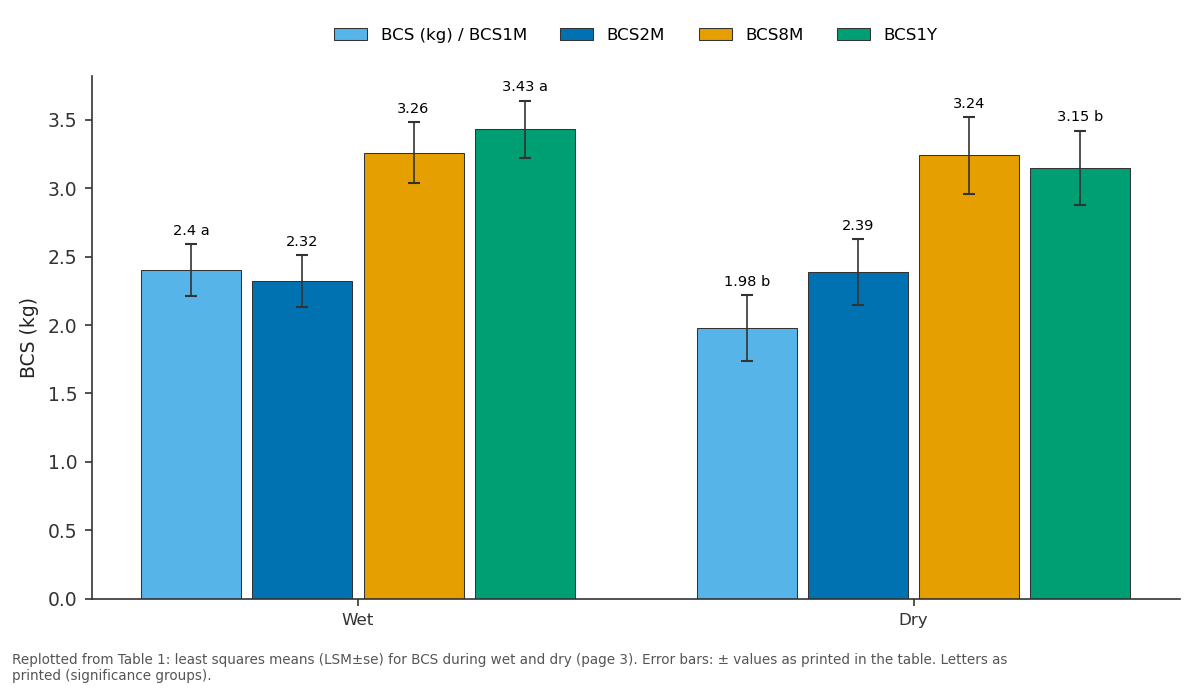
BCS (kg) / BCS1M and BCS2M and more: Wet vs Dry
Replotted from Table 1 (page 3) of the original paper. Every bar is the paper's own table value.
View source evidence ↗Figures & tables
From the original paper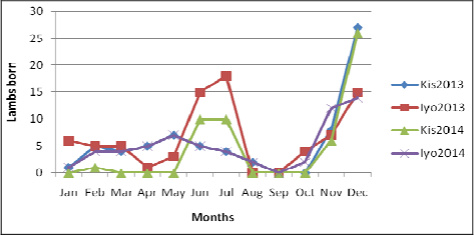 Figure 1
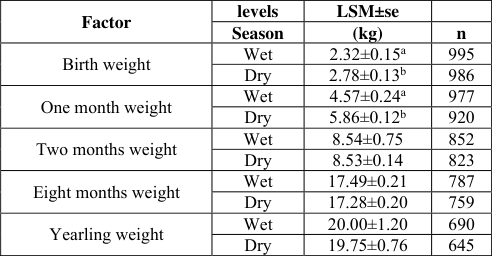 Table 2
 Table 1
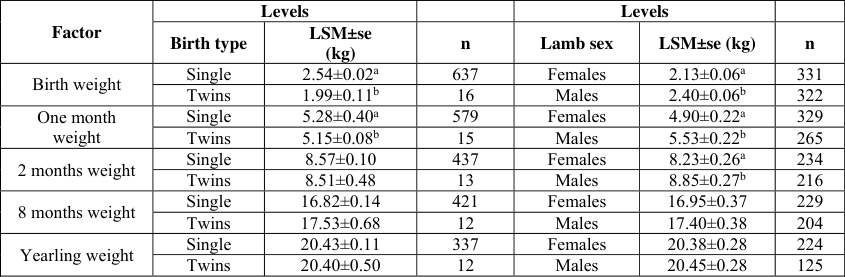 Table 3
Introduction
The importance of sheep to the socio-economic well-being of people in developing countries in the tropics in terms of nutrition, income and intangible benefits cannot be over accentuated. Sheep play a complementary role to other livestock in the utilisation of available feed resources and provide one of the practical means of using vast areas of natural grassland where crop production is impractical (Getachew et al., 2010) [13] . Therefore, improvement programmes are necessary to increase and sustain the productivity of sheep in these areas. However, development of genetic improvement programmes for sheep will only be successful when accompanied by a good understanding of the different farming systems. However, most agro-pastoralists who own these animals are still not performing better due to the fact that they succumb to inadequate environmental conditions which are enhanced by the low socioeconomic status prevailing in these communities (IIED, 2010) [15] . The lack of improvement programmes to increase the productivity of such indigenous livestock is due to the scarce information on their production traits in different environments. Few workers (Sendalo et al., 2010; Das, 2010) [26,7] have conducted studies on Tanzanian sheep but they concentrated more on on-station production and reproduction performance of Blackhead Persian and Red Masai at Malya and West Kilimanjaro. Stephen et al. (2000) [29] conducted a characterization study to understand the genetic diversity status of sheep in Tanzania of which it was indicated that the Northern zone (Arusha and Kilimanjaro regions) and Lake Zone (Mwanza and Shinyanga regions) are closely related by virtue of having highest level of shared DNA fingerprints, while those from Central zone (Dodoma and Singida regions) were significantly not closely related by virtue of having low level of shared fingerprints with those from Northern and lake zones' sheep. These studies have attempted to study phenotypic and genotypic characteristics of both local and improved sheep but did not dwell on the performance of traditional sheep in terms of production and reproduction, which leads to the prevailing inadequate information on the onfarm performance in Tanzania. The gap in such information necessitated conducting a monitoring study to gather data on their performance in terms of production, reproduction and on what could be the real cause of their current underperformance. This study was aimed at assessing the performance of traditional sheep and herding systems in order to identify constraints and opportunities associated with the smallholder agro-pastoralists in the Central zone of Tanzania.
Materials and methods
The study was conducted at latitude 6 o 21' South and longitude 36 o 29' East. The area is to a large extent characterised by unimodal type of rainfall. Two villages (Kisokwe and Iyoma) 5 km apart in Mpwapwa district were involved in a 36 months monitoring study. Selection of villages was based on their accessibility and presence of large population of Gogo sheep. Whereas households were selected basing on presence of at least 5 Gogo sheep in their flocks. A total of 120 households each with one flock (60 in each village) were selected. Management of sheep followed that of farmers' practice which in this case was a traditional management system. Sheep in this study were identified using ear-tags, de-wormed and vaccinated against notifiable diseases namely Anthrax, Black quarter and Pestdes Petits Ruminants (PPR). There were regular visits to the flocks for taking all important records. Data collected were on births, deaths, conception, periodical body weights, body condition score (BSC) changes and reproductive performance. BCS was assessed using 5 scale as per Nsoso et al. (2003) [22] . BCS and periodical weights were taken concurrently at the lamb age of one month (BCS1M), two months (BCS2M), eight months (BCS8M) and one year (BCS1Y). Fixed effects were fitted to the following model: Yijklmn=µ+Si+Xj+Pk+Tm+Un+eijklmn Where Yijklmn = performance of sheep on a particular trait. µ = Overall mean Si = Fixed effect of the i th site (ith site: 1=Kisokwe, 2=Iyoma) Xj = Fixed effect of the j th sex of lamb (jth sex: 1=male lamb, 2=female lamb) Pk = Fixed effect of the k th parity of dam (kth parity: 1=1st parity, 2=2nd parity, 3=3rd parity) Tm = Fixed effect of the m th birth type (mth birth type: 1=single lamb, 2=twin lambs) Un = Fixed effect of the n th season of birth (nth season: 1=wet season, 2=dry season) eijklmn = Random residual error. Data were analysed using General Linear Models (GLM) procedures of Statistical Analysis System (SAS, 2008) [25] . BCS data were analyzed by determining the association of body condition score on live body weight at the age of one month, two months, eight months and one year respectively using the mixed models procedure in SAS. Data on births and conception were collected and used in calculating birth and fertility rates. Fertility was calculated by determining the proportion of ewes exposed to rams that lambed in the 12 month period per total number of ewes exposed to rams in the corresponding 12 month period * 100.
Results and discussion
Results and discussion
Lambing trends of sheep flocks at the on-farm sites
The lambing trend for years 2013 and 2014 is shown in Figure 1. Tanzania Gogo sheep have shown to be aseasonal breeders as it has been shown by the monitored ewes. They lambed all year round for the entire study period. However they had two peak lambing periods one being during June to July period and the other one during December to January season. This means that most ewes were mated in January to February and again during July to August. This episode could be due to the long-term adaptation of the Gogo sheep to these specific environments such that their performance have matched with production conditions as reported elsewhere in the tropics (Gbangboche et al., 2006) [12] . This observation is in agreement with that reported by Kosgey et al. (2006) [17] who indicated that most sheep in the Sub-Saharan Africa (SSA) are aseasonal breeders, and some are highly fecund. However, overall productivity per ewe is largely determined by natural production conditions, but even under unfavourable conditions the tropical Gogo sheep have shown to be more productive on the basis of their feasible body weight than large stocks. In most tropical regions, the annual reproductive cycles in sheep is more likely regulated by annual rainfall and food availability (Vazquez-Armijo et al., 2011) [31] . This study has noted that the period between January and February is the period which the study sites experiences good rains and availability of nutritious pastures. Nonetheless the period between July and August is a well-known period for having inadequate pastures. The continuous lambing with a two peak lambing seasons trend in Mpwapwa alienates the seasonal reproduction which is experienced in most temperate breeds due to photoperiod modulator (Vazquez-Armijo et al., 2011) [31] . However other factors like social and sexual interactions were observed to regulate the reproductive functions as those flocks which had active rams were noted to have higher conception rates. It suffices to mention that reproductive performance in the tropics is affected more by nutritional factors which have an effect on those hormones related to sexual metabolism such as insulin, growth hormone, thyroxin (T4) and steroidal hormones (Hefnawy et al.,2010) [14] . In this study it was noted that a period between parturition and weaning accounted a significant loss which has been also reported by Hefnawy et al. (2010) [14] . It is therefore important at this particular time to feed pregnant ewes, but also lambs and lactating ewes according to their requirements to avoid embryo and foetal losses but also post-lambing mortalities.
Reproductive performance of Gogo sheep flocks
The age at first lambing (AFL) of Gogo ewes ranged between 345 and 711 days with a mean of 448.62±5.23 days. The indices were almost in agreement with those reported by Rekik et al. (2015) [23] who reported AFL ranging from 381 to 480 days for Menzi sheep; and 335.5 to 685.47 days obtained for Peul type of sheep in Burkina Faso and Senegal (Dettmers et al., 1976) [9] . In this study conception rate (CR) was 89.3% with about 3 lambings in two years. This level was within range of 77.5 to 90% reported by Dettmers et al. (1976) [9] for indigenous sheep in Burkina Faso, Côte d'Ivoire and Nigeria. Lambing interval (LI) ranged between 245 and 410 days (mean 320±2.7) days. This was within range (213.5 and 373) days that reported by Wilson et al. (1989) [34] . Highest values were observed for Landim sheep in Mozambique and lowest for WAD sheep Côte d'Ivoire (Wilson and Traore, 1988) [33] .
Comparable range (210 to 300) days was from Menzi, Adilo, Arsi-bale and Bonga sheep of Ethiopia (Kosgey et al., 2006) [17] . The LI of Gogo ewes seem not to be influenced by weaning. This is due to the fact that most of the heavily pregnant ewes were noted still suckling their lambs. This observation was in agreement with observation by Mukasa-Mugerwa et al. (2002) [19] who found 65 percent of the ewes conceived within 90 days after lambing. This character could be advantageous as it could reduce the generation interval and enhance production. Fertility rate (FR) in this study was 79%, which is within range that reported by Dettmers et al.,(1976) [9] who reported FR varying from 77.5 to 160 per cent with WAD ewes in Côte d'Ivoire. This is an indication of the environment functions like feeding to have an effect on the trait. The litter size (LS) in this study was 1.05 as calculated on an annual basis, while twinning rate was 3.41%. This record is lower than that reported by Wilson and Traore (1988) [31] who reported a twinning rate of 4.2% for Sahel type ewes and 55% for WAD ewes in humid zones of Nigeria. Nonetheless semi-arid native sheep seem to show low multiple births as indicated by 4.2 and 4.5% twinning rates (Wilson and Traore, 1988) [31] . They (Wilson and Traore, 1988) [31] concluded that ewes in most semi-arid zones have low prolificacy and can be generally considered as single pregnancy bearers. This study suggests that knowledge of embryo-uterine and environment-ovarian interactions in Gogo sheep could be an important aspect as it can assist in management of early pregnancy, foetal, and new-born losses.
BCS in relation to on-farm growth performance of lambs
The on-farm performance of sheep using BCS system is presented in Table (2011) [27] who recorded a correlation between BCS and body weight of 0.81, 0.73 and 0.74 at breeding, lambing and weaning periods respectively. It has been stated that BCS in sheep is an important, easy and accurate method of estimating the condition and nutritional status of sheep (Jodie, 2010) [16] . This gives a clear picture of the sheep in terms of energy stock of pregnant and lactating ewes, but is also useful in monitoring growth status of weaners (Casey and Stevens, 2012) [6] .
Effect of season of lambing on weights at different ages
Effect of season on weights at different ages is presented in Table 2. Lambs born in the dry season had significantly (P<0.05) higher birth weight than those born in the wet season (2.78±0.13 vs 2.32±0.15) kg respectively. Furthermore lambs born during the dry season were significantly heavier than those born in wet season at their one month of age (i.e. 5.86±0.12 vs 4.57±0.24) kg respectively. Wet season was the period between December and April and peak dry season was that between August and November. The findings could be associated with the fact that lambs born during the wet season was the outcome of the July to September mating, the period which usually experiences very small supply of feeds which merely allows the sheep only to survive. Lambs born in early dry season are those which resulted from the November to January mating. However those lambs born during the peak of dry season are those which emanated from February to March mating, a period which experiences enough and nutritious pastures. Means with different superscript within a factor are significantly different at P<0.05
| Factor | levels | LSM±se | — |
|---|---|---|---|
| Season | (kg) | n | |
| Birth weight | Wet | 2.32±0.15a | 995 |
| Dry | 2.78±0.13b | 986 | |
| One month weight | Wet | 4.57±0.24a | 977 |
| Dry | 5.86±0.12b | 920 | |
| Two months weight | Wet | 8.54±0.75 | 852 |
| Dry | 8.53±0.14 | 823 | |
| Eight months weight | Wet | 17.49±0.21 | 787 |
| Dry | 17.28±0.20 | 759 | |
| Yearling weight | Wet | 20.00±1.20 | 690 |
| Dry | 19.75±0.76 | 645 |
Table text extracted from the original PDF; superscript letters are shown inline. The original table image is below.
View original table image
It has been notified that nutritional status of ewes two months prior to lambing is more crucial in influencing birth weights of lambs (Jodie, 2010) [16] . The observation concurred with the findings by Dobson et al. (2012) [10] who indicated that poor body condition due to underfeeding is normally associated with reduced fertility, embryo losses and poorly developed foetuses which is normally reflected by low birth weights and growth rates. Rosa and Bryant (2001) [24] , and Nowak (1996) [21] indicated that seasons have an influence on sheep and different environmental factors like rainfall which can cause sheep to respond by developing a number of strategies like changing eating habits. The stage from birth to one month of age of a lamb is a pre-weaning period which is mostly influenced by maternal effect of the ewe whose level of milk production influences the growth of the lamb (Corner et al., 2010) [7] . The period between two months and one year of age is mostly accounted by the genetic make of the Gogo sheep by virtue of being tolerant to harsh environment but also by the compensatory growth phenomenon (Buncha et al., 2014) [4] . Although there are many factors such as breed, sex and diseases, which contributes to variation in growth performance, the plane of nutrition plays the major role. It has been reported by Mtenga et al. (2008) [18] that under-nutrition always interrupts the normal relationship between chronological and physiological ages in such a way that when an animal is subjected to low• plane of nutrition, its physiological ageing proceeds at a slower or retarded rate of growth. However, when such retarded animal is later given nutritious and substantial amounts of feed, that particular animal tend to grow at a rate appropriate to their physiological age. In this study growth rate from birth to one year of age was 46.58 g per day.
Effect of birth type and lamb sex on weights at various ages
Table 3 shows the least squares means (LSM±se) for fixed effects of birth type and lamb sex on weights at different ages. There was a highly significant influence (P<0.001) of lamb sex and birth type on birth weight. The latter could be due to management aspects where most of young male lambs are mixed within flocks and therefore most of the male lambs in their puberty stage spend more time trying to mate than feeding (Carson et al., 2005) [5] . So it is important to improve the management by separating lambs according to sex category. The results are in agreement to those recorded by Berhanu and Haile (2009) [2] who studied factors affecting growth performance of sheep under village management. They reported a sex effect in which males were heavier than females at birth (2.53 vs 2.41) kg, two months (10.9 vs 10.2) kg, eight months (22.8 vs 21.3) kg and in yearling weight (28.3 vs 25.7) kg. It is also is in agreement to that reported by Gardner et al. (2007) [11] who reported factors affecting birth weight in Welsh Mountain and Mule ewes. They reported birth weight for male and female lambs of 4.92±0.01 and 4.57±0.01 kg respectively. Males were, on average, 363±25g heavier than female lambs, which was maintained irrespective of male/male, female/female and male/female sample pairings. In this study singles vs twins were significantly different at birth (2.54 vs 1.99) kg respectively, and at one month (5.28 vs 5.15) kg respectively. This is in agreement with the trend reported by Berhanu and Haile (2009) [2] who recorded singles vs twins weight at birth, two months, eight months and yearling of 2.62 vs 2.3 kg, 11.4 vs 9.94 kg, 23.0 vs 21.1 kg and 27.6 vs 26.3 kg respectively. Berhanu and Haile (2009) [2] noted that the effect of litter size was consistently significant (p<0.05) for all periodical weights except for weight at 8 and 12 months. The effects of sex and birth type have also been common to temperate breeds. For example Bhuiyan and Curran (1992) [3] reported effect of environmental factors on body weight at various ages in the Romney Marsh sheep. In their study they reported that male lambs weighed higher (5.23 kg) in comparison to females which weighed 4.88 kg at one month of age. It was noted that birth type had an effect and this was indicated by singles having a mean monthly weight of 6.20 kg, twins 5.17 kg and triplets 3.79 kg. However for Asian breeds Babar et al (2004) [1] reported a significant effect of birth type and sex on Lohi sheep in Pakistan. Singles were superior in birth weight to twins (3.94±0.02 vs 3.24±0.03) kg and male were significantly heavier than females (3.69±0.02 vs 3.48±0.02) kg. Trail and Sacker (1966) [30] reported production records of lambs from East African Blackheaded ewes where males expressed their superiority by male singles excelling female singles (4.95±0.11 vs 4.71±0.09) kg and male twins excelling female twins (4.61±0.40 vs 3.94±0.22) kg. The importance of lamb body weight has been described by several workers like Gardner et al. (2007) [11] and Berhanu and Haile (2009) [2] . In their studies they noted that normally lambs with lighter body weight than required are prone to pre-weaning mortality. Gardner et al. (2007) [11] indicated that on average lambs that subsequently died within 3 days of birth were those with 619±55g lighter than expected (P<0.001). Of these lambs, the proportion of death increased with increasing litter size (i.e. singles 3.6%, twins 5.2%, triplets 9.8% and quadruplets 20.8%). It is therefore important to intensify management on lighter lambs from multiple birth types.
| Factor | Levels | — | — | Levels | — | — |
|---|---|---|---|---|---|---|
| Birth type | LSM±se (kg) | n | Lamb sex | LSM±se (kg) | n | |
| Birth weight | Single | 2.54±0.02a | 637 | Females | 2.13±0.06a | 331 |
| Twins | 1.99±0.11b | 16 | Males | 2.40±0.06b | 322 | |
| One month weight | Single | 5.28±0.40a | 579 | Females | 4.90±0.22a | 329 |
| Twins | 5.15±0.08b | 15 | Males | 5.53±0.22b | 265 | |
| 2 months weight | Single | 8.57±0.10 | 437 | Females | 8.23±0.26a | 234 |
| Twins | 8.51±0.48 | 13 | Males | 8.85±0.27b | 216 | |
| 8 months weight | Single | 16.82±0.14 | 421 | Females | 16.95±0.37 | 229 |
| Twins | 17.53±0.68 | 12 | Males | 17.40±0.38 | 204 | |
| Yearling weight | Single | 20.43±0.11 | 337 | Females | 20.38±0.28 | 224 |
| Twins | 20.40±0.50 | 12 | Males | 20.45±0.28 | 125 |
Table text extracted from the original PDF; superscript letters are shown inline. The original table image is below.
View original table image
Effect of parity
The effect of parity in this study did not depict any significant effect (p>0.05) on growth performance. The lambs born in this study were those from first to third parities. The nonsignificant effect of parity could be due to the fact that most significant effects of parity in ewes have been expressed in parities above three where lambs from parity four to six have been reported to start showing significance and superiority over the first to third parities (Nawaz and Khalil, 1998) [20] . For example Solomon et al (1996) [28] noted a significant increase at fourth parity and a significant drop in weights at seventh parity with Horro ewes. The results are in agreement with other workers (Wilson and Murayi, 1988); Nawaz and Khalil, 1998) [32,20] for the African long tailed sheep in Rwanda, Lohi ewes and their crosses. In order to ascertain the best age for culling Gogo ewes, the study should have extended beyond parity four.
Conclusion
This study was conducted to gather information on the performance of Gogo sheep in the traditional systems of central Tanzania. Results have shown that Gogo sheep are aseasonal breeders and have the potential of reproducing all year around. Most production and reproduction indices are within range of most sheep in semi-arid areas of Sub Saharan Africa. The present study has revealed that environmental factors like feeding and other husbandry practices are the only cause of underperformance of the economically important traits like growth and fertility. Production and reproduction of Gogo sheep could be improved significantly if the environment is favourable with adequate feeding and management.
Acknowledgement
Authors acknowledge the financial and material support from the United Republic of Tanzania and TALIRI.
Figures and tables from the paper
| Season | BCS (kg) | — | — | — |
|---|---|---|---|---|
| BCS1M | BCS2M | BCS8M | BCS1Y | |
| Wet | 2.40±0.19a | 2.32±0.19 | 3.26±0.22 | 3.43±0.21a |
| Dry | 1.98±0.24b | 2.39±0.24 | 3.24±0.28 | 3.15±0.27b |
Table text extracted from the original PDF; superscript letters are shown inline. The original table image is below.
View original table image
References
35 in the original paper- Babar, M.E., Ahmad, Z. Nadeem, A. and Yaqoob, M. Environmental factors affecting birth weight in Lohi sheep. Pakistan Veterinary Journal. 2004; (1):24.
- Berhanu B. Haile A. Factors affecting growth performance of sheep under village management conditions in the south western part of Ethiopia. Journal of Livestock Research for Rural Development. 2009;
- September, 2016
- Bhuiyan HF. Curran MK. Effect of environmental factors on body weight at different ages in the Romney Marsh sheep Australian. Journal of Animal science. 1992; 5(3):469-473.
- Buncha TD, Evans RC, Wanga S, Bennand CP, Whittier DR. Taylor BJ, et al. Feed efficiency, growth rates, carcass evaluation, cholesterol level and sensory evaluation of lambs of various hair and wool sheep and their crosses. Bulletin of Small Ruminant Research. 2014; 52:239-245.
- Carson AF, Dawson L, Irwin D. Breeding and feeding system for the hill sheep sector. In: Profit for your labour. Sheep conference organized by the British Society of Animal. Science, Irish Grassland Association and Ulster Grassland Association, Greenmount Campus, Antrim. 2005, 48-62.
- Casey M. Stevens D. The nutrition of ewe pre-mating to parturition: Understanding the importance of the body condition score and any interaction with vaginal prolapse. 2012,farmingsheep.co.nz/wp-content/10/BCS-andBearings-Review-Final-July2012.pdf. 8 July, 2016.
- Corner RA, Kenyon PR, Stafford KJ, West DM, Morris ST, Oliver MH, Et al. The effects of pasture availability for twin-and triple-bearing ewes in and late pregnancy on ewe and lamb behaviour 12 to 24 h after birth. Animal Journal. 2010; 4:108-115.
- Das S. Small ruminants Research and development. 2010, www.agtr.ilri.cgiar.org/index. Php 27 December, 2014.
- Dettmers A, Igoche CA. Akinkuolie K. The West African Dwarf Sheep: Reproductive performance and growth. Nigerian Journal of Animal Production. 1976; 3(1):139147.http://www.fao.org/wairdocs/ILRI/x5460E/x5460e02 .htm.10 July, 2016.
- Dobson H, Fergani C, Routly JE, Smith RF. Effects of stress on reproduction in ewes. Journal of Animal Reproduction Science. 2012; 130:135-140.
- Gardner DS, Buttery PJ, Daniel Z, Symonds ME. Factors affecting birth weight in sheep: maternal environment. Journal of reproduction. 2007; 133(1):297-307. http://www.ncbi.nlm.nih.gov/entez/eutils/elink.fcg. 11
- Gbangboche AB, Adamou-Ndiaye A, Youssao KI, Farnir F, Detilleux J, Abiola FA, et al. Leroy PL. Non-genetic factors affecting the reproduction performance, lamb growth and productivity indices of Djallonke sheep. Journal of small ruminants research. 2006; 64(1-2):133142. http://dx.doi.org/10.1016/j.smallrumres.2005.04.006 21 June, 2016.
- Getachew T, Haile A, Tibbo M, Sharma AK, Sölkner J. Wurzinger M. Herd management and breeding practices of sheep owners in a mixed crop-livestock and a pastoral System of Ethiopia. African Journal of Agricultural Research. 2010; 5(8):685-691.
- Hefnawy AE, Youssef S. Shousha S. Some immunohormonal changes in experimentally pregnant toxemic goats. Veterinary Medicine International. 2010, article ID 768438. IIED (2010) Pastoralist fact sheet. International Institute for Environment and Development Report. 2010. http://www.celep.info/wpcontent/uploads/PASTORALISM 17 March, 2013.
- Jodie Pennington. Body Condition Scoring of Sheep and Goats. In: University of Missouri extension publications. 2010, November 2010 issue. http://www.extension.missouri.edu/main/DisplayCategor y. 5 August, 2015.
- Kosgey IS, Baker RL, Udo HMJ. Van Arendonk JAM Successes and failures of small ruminant breeding programmes in the tropics: a review. Journal of Small Ruminants Research. 2006, 61: 13-28. https://www.researchgate.net/publication/40122559 18 August, 2016.
- Mtenga LA, Masae EE, Owen E, Muhikambele VRM, Kifaro GC. Studies on Compensatory Growth in Black Head Persian (BHP) Lambs. Tanzania Journal of Agriculture Science. 2008; 8(1):79-86.
- Mukasa-Mugerwa E, Anindo D, Sovani S, Lahlou-Kassi A, Tembely S, Rege, J.et al.Reproductive performance and productivity of Menz and Horro sheep lambing in the wet and dry seasons in the highlands of Ethiopia. Journal of Small Ruminant Research. 2002; 5:261-271.
- Nawaz M. Khalil AM. Comparison of Lohi and crossbred ewes: productive and reproductive traits. Small ruminant Research. 1998; 27:223-229.
- Nowak R. Neonatal survival: contributions from behavioural studies in sheep. Journal of Applied Animal Behaviour Science. 1996; 49:61-72.
- Nsoso SJ, Aganga AA, Moganetsi BP, Tshwenyane SO. Body weight, body condition score and heart girth in indigenous Tswana goats during the dry and wet seasons in south East Botswana. Journal of Livestock Research for Rural Development 2003, 15(4) http://lrrd.cipav.org.co/lrrd15/4/nsos154.htm 19 April, 2016.
- Rekik M, Haile A, Mekuriaw Z, Abiebie A, Rischkowsky B, Salem IB, et al. Review of reproductive performances of sheep breeds in Ethiopia: Documenting existing knowledge and identifying priority research needs. International Centre for Agricultural Research in Dry Areas (ICARDA) working paper. 2015. http://www.cgspace.cgiar.org/handle/10568/67325
- Rosa HJD, Bryant MJ. Seasonality of reproduction in sheep: A review. Journal of Small Ruminant Research. 2001; 48(2003):155-171.
- http://www.elsevier.com/locate/smallrumres 10 February, 2016. SAS Institute Inc. SAS/STAT ® 9.2 User's Guide.
- Cary, NC: SAS Institute Inc. Copyright © 2008, NC, USA. All rights
- Sendalo DSC, Das SM, Mtenga LA. Growth and reproduction performance of Blackhead Persian sheep in Tanzania, In: FAO Corporate document repository. 2010. http://www.fao.org/wairdocs/ilri/x5472b/x5472b1h.htm 15 July, 2015.
- Sezenler T, Özder M, Yıldırır M, Ceyhan A, Yüksel M. A. The relationship between body weight and body condition score of some indigenous sheep breeds in Turkey. Journal of animal and plant sciences. 2011; 21(3):443-447.
- Solomon A, Twaithes CG. mekonen G. Relationship of ewe productivity with body weight and age of Horro ewes. Proceedings of 4 th conference of ESAP held in Adis Ababa on. 1996, 75-85.
- Stephen J, Kifaro CG, Wollny CBA. Gwakisa PS, Molecular Genetic variation among five local sheep ecotypes in Tanzania. 2000, https://ilri.org/InfoServ/Webpub/fulldocs/AnGenResCD/ docs. 5 October, 2013
- Trail JCM, Sacker GD. Lamb mortality in a flock of East African Blackheaded sheep. 1966; 66(1):97-100. https://www.doi.org/10.1017/S0021859600060330. 28 March, 2016
- Vazquez-Armijo JF, Rojo R, Salem AZM, López JL, Tinoco A, González N et al. Trace elements in sheep and goats reproduction: A review. Tropical and Subtropical 31. Agroecosystems. 2011; 14(2011):1-13.
- Wilson RT, Murayi TH. Production characteristics of African long Tailed sheep in Rwanda. Small Ruminant Research Journal. 1988; 1:317.
- Wilson RT, Traore A, Livestock production in Central Mali: Reproductive performance and reproductive wastage in ruminants in the agro-pastoral system. Theriogenology. 1988; 29(4):931-944.
- Wilson RT, Murayi TH, Rocha A. Indigenous African small ruminant strains with potentially high reproductive performance. Small Ruminant Research. 1989; 2:107117. http://www.agtr.ilri.cgiar.org/documents/Library/docs/Re productiveLosses/x5460e02.htm. 27 August, 2016.
Cited by 1
From OpenAlex, OpenCitations and reference lists read by Scinovex
- African sheep review: productivity and reproductive attributes indication ↗
Tsegay Lijalem Mesele, Gebreegziabher Zereu Hadgu · Journal of Applied Animal Research · 2024
Sheep have role in securing food in Africa. This review focused on productivity and reproductive African sheep: age at first lambing, lambing interval, litter size, birth weight, weaning weight and pre-weaning mortality of lamb were emphasized. The metadata for the review was collected through systematic approach. The reviewed finding showed that Wollo (6.1 months), Begait (11.34) and Afar (12.08) sheep…
❝ 4PDF