
Research article · 2017 · Full text
International Journal of Veterinary Sciences and Animal HusbandryAnthelmintics and emergence of anthelmintic resistant nematodes in sheep: need of an integrated nematode management
Volume 2(1) · Pages 13–19
Research areasHelminth infection and control
Abstract
Author-writtenSheep are an important component of livestock in terms of the various direct and indirect benefits human beings derive from them. However, various species of gastrointestinal nematodes (GIN) parasitize sheep and affect their productivity worldwide. The principal mode of control of GIN is based on chemical anthelmintics (CA) because it is simple, cheap and offers both therapeutic and prophylactic cover against GIN. But, due to the emergence of anthelmintic resistant nematodes (ARN) against CA, the problem has become complicated. ARN have been recognised as an important threat to the productivity and welfare of sheep and numerous studies have been conducted worldwide in this direction. However, anthelmintic resistance (AR) has not been systematically investigated in Indian region and barring a few reports, there seems to be no authentic work on the prevalence of AR in sheep and/or other livestock sector. Plant anthelmintics (PA) are a promising alternative for GIN control and are a viable option for timely minimising and delaying the onset and development of AR in sheep. Therefore, an integration of various aspects of AR, search for alternative control like PA and emergence of new GIN diseases due to climate change poses a new question to formulate a comprehensive policy for integrated nematode management for efficient rearing and welfare of sheep. This paper is a critical overview in this direction to understand the problem and will serve as a template for consideration of AR at the academic, research, husbandry, industrial and at policy making level.
Summary
Source-checkedPlain-language reading of the full paper, prepared with AI and checked against the text. Each point links to the authors' own words.
Why it matters
- Sheep provide significant direct and indirect economic benefits to humans globally, making them a vital part of livestock. View evidence ↗
- Gastrointestinal nematodes (GIN) cause significant disease and economic losses in sheep farming, especially in developing nations, because infective stages are constantly present on pastures. View evidence ↗
- Chemical anthelmintics (CA) are the primary method for controlling GIN because they are inexpensive, simple to use, and provide both treatment and prevention. View evidence ↗
The question
- The author aims to explore how to integrate anthelmintic resistance (AR) data, alternative plant-based controls (PA), and climate change impacts into a comprehensive policy for integrated nematode management (INM). View evidence ↗
What they did
- The study is designed as a critical overview to provide a template for addressing anthelmintic resistance across academic, industrial, and policy-making sectors. View evidence ↗
- The review is structured to cover the history and prevalence of AR, the reliability of plant anthelmintics, methods to minimize AR development, and the concept of integrated nematode management. View evidence ↗
What they found
- In South Africa, some GIN species, specifically Haemonchus spp., have shown resistance to all currently available groups of anthelmintics. View evidence ↗
- Reports from Malaysia indicate a total failure of chemotherapy across all three broad-spectrum anthelmintic groups, as well as narrow-spectrum salicylanilide drugs. View evidence ↗
- Anthelmintic resistance has not been systematically investigated in the Indian region, with very few authentic surveys available to estimate its prevalence in sheep or other livestock. View evidence ↗
- Plant extracts can effectively control GIN in sheep either through direct toxicity (causing paralysis and death) or indirectly by irritating the gut to reduce worm fecundity and promote expulsion. View evidence ↗
- The author proposes a synergistic 'CAPA approach,' combining plant products with synthetic drugs to treat nematodes that have developed resistance to multiple drugs. View evidence ↗
- Maintaining a population of parasites in 'refugia' (those not exposed to treatment) helps dilute resistant genes and slows the development of anthelmintic resistance. View evidence ↗
- Selecting sheep breeds that are naturally more resistant to GIN infections can reduce reliance on chemical drugs and slow the natural selection for resistance. View evidence ↗
What it means
- The author concludes that integrated nematode management (INM), combining chemical and plant treatments, selective treatment (FAMACHA, PARASOL), genetic selection, vaccines, and pasture management, should be further evaluated across all agro-climatic regions. View evidence ↗
- The welfare of the sheep industry depends on educating farmers and securing support for INM from policymakers, the pharmaceutical industry, and the scientific community. View evidence ↗
Figures & tables
From the original paper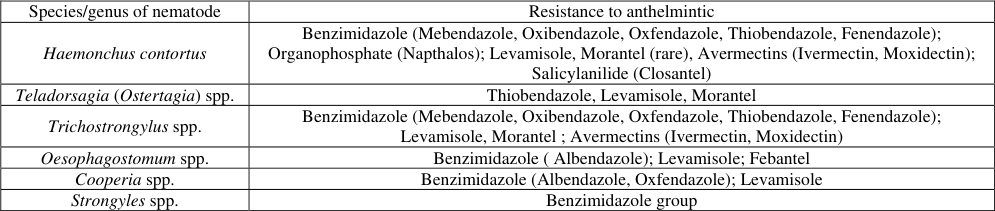 Table 1
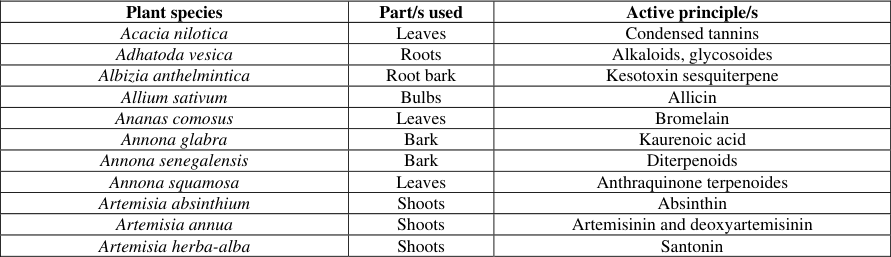 Table 2
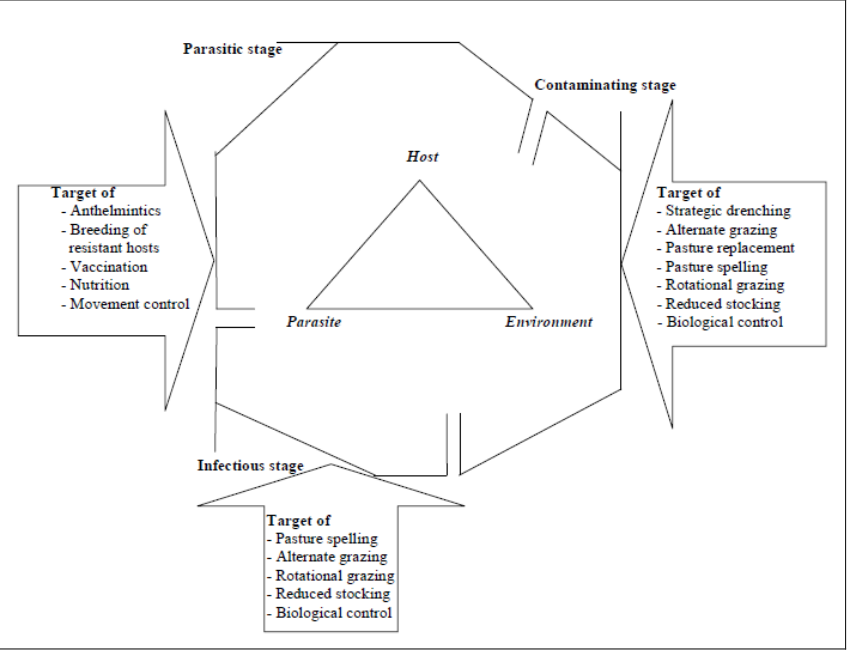 Figure 1
Introduction
Sheep are an important component of livestock in terms of the various direct and indirect economic benefits human beings derive from them worldwide. However, various species of gastrointestinal nematodes (GIN) parasitize sheep due to the continuous availability of their infective stages on the pastures and result in considerable pathogenesis and economic losses in sheep farming particularly in the developing countries [1][2] . The problem is further complicated due to the emergence of anthelmintic resistant nematodes (ARN) against the chemical anthelmintics (CA) [3] . The option of plant anthelmintics (PA) which has provided an important and viable alternative to control and treat GIN infection is still in infancy and unrepresented. The environmental change in terms of global climate warming has further aggravated the situation due to the emergence and re-emergence of old and new GIN diseases in sheep [4] , because of its potential to impact upon their free-living stages [5] . As a consequence the effective management of GIN diseases has become an alarming problem in sheep industry [6][7] . Anthelmintic resistance (AR) is defined as a decrease in the efficacy of an anthelmintic against a population of parasites that is generally susceptible to that drug [8] . According to Sangster [9] , the development of AR in general is a very simple phenomenon and whatever the better way is used to control worms with drugs the more likely resistance develops. This is because drug treatment leads to the survival of resistant worms, which, if allowed to reproduce, contribute resistance genes to the next generation. If the resistance genes have become fixed in the parasite genome (lack of genetic reversion) then AR becomes a prolonged phenomenon and the susceptibility of parasites to the drugs to resume takes a long time [3] . Less progress and lack of awareness to farmers to understand GIN infections and development of AR has been witnessed particularly in the developing countries.
The problem of AR in GIN of sheep is worldwide and well documented reports of AR have been made from South Africa, Australia, New Zealand, Malaysia, Spain, France, Denmark, UK, Brazil, and the United States [8] . According to these studies, the level and type of AR in the parasites on the different farms appeared to be associated with the type and frequency of CA used and the rate at which resistance to additional anthelmintics is being reported in India is alarming. AR has not been systematically investigated in this part of the world (Indian region) and there seems to be no authentic survey work to estimate the prevalence of AR in sheep and/or other livestock sector barring a few studies [10][11][12][13] . The sheep suffer from a huge disease burden and economic loss due to GIN infections and are an important constraint to their productivity due to considerable mortality and morbidity [14][15] . The epidemiology of these infections in sheep populations vary according to aspects of host-parasite biology, geographic location, agro-climatic conditions and husbandry practices [16] . Most infections are mixed infections and usually involve Haemonchus, Teladorsagia and Trichostrongylus species of these nematodes [17] . The climate warming has been suggested to augment the risk of these infectious disease outbreaks by extending the seasonal window for parasite growth and by increasing the rate of transmission [17][18] . Therefore, an integration of various aspects like epidemiology and climate change, AR, modifications of CA, selection and breeding of naturally resistant breeds, search for alternative controls and PA to formulate a comprehensive policy for INM for efficient rearing and welfare of sheep in presence of GIN infections. There are so many issues of debate surrounding the AR which has assumed much of importance both at the farmer and industrial level. However, as far as the control of GIN is concerned, the principal approaches that are being researched are genetic selection, optimised nutrition and the development of vaccines [6] . This paper is a general overview to provide some breakthrough to the problem and will serve as a platform for consideration of AR at the academic, research, husbandry, industrial and at policy making level at least in this part of the world. The review paper is completed under the following subtitles: 1. Historical aspects and prevalence of anthelmintic resistance in sheep 2. Alternative option of plant anthelmintics: are they reliable 3. Ways to minimise the development of AR and concept of integrated nematode management 4. Conclusions
We have tried to address the various issues of CA and a search for viable/sustainable alternative and synergism of CA-PA so as to find the solution for an effective utilisation of integrated nematode management (INM) programme while struggling with the issue of AR and control of GIN in sheep.
Historical aspects and prevalence of anthelmintic resistance in sheep
Historically, the existence of AR came to light in the mid of 1950's as a result of failure of phenothiazine to control haemonchosis in sheep [19] and the evolution of AR in sheep worms has been very dramatic as compared to other livestock [8, 20] and this phenomenon has now changed to a state of industry crisis (pharmaceutical sector) and has not merely remained a parasitological curiosity. AR has been reviewed frequently in recent past and there have been some excellent research and review papers on AR in sheep from different parts of the world [3; 8-9; 20-23] . Reduced susceptibility and development of AR towards CA has been reported in all classes of helminthes to varying degrees (Table 1). Furthermore, resistance is observed in some species of GIN particularly Haemonchus spp. against all currently available groups of anthelmintics in sheep [23] . This has been reported in South Africa [24-25]. It is generally postulated that AR is more alarming in the humid tropics / subtropics, where conditions are more-or-less continuously wet throughout the entire year [20] . Most recently total chemotherapeutic failure to all the three broad-spectrum anthelmintic groups (also to the narrow spectrum, salicylanilide drugs) has been reported in Malaysia [26] . Nevertheless it seems questionable if the scientific and the pastoralist community is well prepared to competently address this situation or it may force the farmers to stop or abandon the sheep farming on their premises, the latter has already started happening in certain regions of the world [3] .
So we may certainly ask few questions to ourselves: If AR is currently a problem, has been it a problem in the past? Will it be counterbalanced or it will be a problem in the future? Will it or it have shown a shifting pattern from one region/country to other? Will we be able to discover new/alternative anthelmintics effective against resistant populations of nematodes? Will we be able to breed genetically resistant host varieties to GIN infection? Or is genetic reversion going to change the scenario of its own under the ambit of natural selection?
But in the due course of time, even if new drugs and chemicals are developed against ARN, these will inevitably also be counterbalanced by the problem of AR. Considerable research activities toward the identification of new anthelmintic classes has meanwhile led to a few new promising candidates, including the cyclo-octadepsipeptides [27][28] . However, the fact remains that AR is one of the measure causes of chemotherapeutic failure in nematode infections whatsoever the chemotherapeutic approach is. Many reasons that have been declared as the risk factors for the development of AR in sheep are frequent and untimely drug usage, under dosage, improper administration of the drug and flow of animals from region/country to country which results in dissemination and introduction of resistant parasites in new areas. However, the rate of emergence of AR varies geographically in accordance with the prevailing climate, parasite species, their epidemiology, husbandry practices and treatment strategies [22] . Therefore, it is of utmost importance to find suitable ways to use the available anthelmintics in an integrated and balanced way-the concept of CA-PA and INM which is discussed in the next sections of the paper.
Alternative option of plant anthelmintics: are they reliable
The different methods that are presently used to control nematodoses in sheep are chemical, immunological, managemental and biological [29][30] . However, the principal mode for control of GIN is based on the commercial CA.
Various categories of anthelmintics decrease the level of infection and reduce the egg output of these parasites, however, they do not lower the level of larval exposure to host in the pastures and feeding areas, whereas grazing and pasture management effectively minimises or lowers the risk of exposure to various infective stages in the soil and grass [29,31] . The broad spectrum anthelmintics (the benzimidazole/probenzimidazoles group, the tetrahydropyrimidines/ imidazothiazoles group (levamisole/pyrantel-morantel), the macrocyclic lactones (i.e. pour-on formulations of eprinomectin and in some countries also moxidectin) or avermectins/milbemycins group (ivermectin) which remove parasites in different stages of development within the host species are the cornerstone of their control. The narrow spectrum compounds have activity against fewer species of parasites and/or lack high levels of efficacy against all stages of the parasites. Examples of these anthelmintics include naphthalophos, salicylanilides and substituted phenols (closantel, oxyclozanide and nitroxynil), and triclabendazol [32] . There is a great concern over the perceivable drug residues in animal products, the increasing prevalence of ARN and high cost of CA [33][34] . This has led to the realisation that, unless the pharmaceutical industry can provide an endless supply of new molecules, intensive chemoprophylaxis, in the way that it is currently practiced, is not a sustainable option for the control of nematodoses and there is a need for the evaluation of other alternative control methods and strategies in sheep [35] . All these factors have spurred the quest to develop sustainable, effective and safe alternatives to conventional anthelmintics -the concept of PA. Natural compounds and products -the cornerstone of PA are a promising alternative in this direction. Plant extracts and products have in several cases shown good anthelmintic effects against GIN of sheep. This could be either due to direct toxic effects (paralysis and ultimately death of worms) on the worms or it can be indirect due to changes in the gut environment (gastrointestinal irritation) that favour low fecundity and worm expulsion [36] . The scientific validation of anthelmintic activity of plant based extracts and products has mainly been confirmed through in vitro studies using adult motility assay (AMA), larval migration inhibition (LMI), larval development assay (LDA) larval mortality test (LMT), egg hatch assay (EHA) to determine the effect of plant extracts against adults, larvae and eggs of GIN [37][38][39] . The main advantages of using in vitro assays to test the PA are the low costs and rapid turnover which allows large scale screening of plants. In vivo studies (faecal egg count reduction test-FECRT) are more relevant and reliable than in vitro studies, although costs of large scale screening of plant extracts / plant products is probably more. The investigation of natural products and chemical compounds from plants is fundamentally important for the development of new PA drugs. In a number of studies, the active molecules showing anthelmintic properties against a wide variety of nematode parasites of sheep have been purified and characterized from plant extracts (Table 2). These compounds can work as anthelmintics, directly (affecting larval establishment, larval motility, mortality, decreasing faecal egg output, impairing worm development, and decreasing egg hatchability from faeces) or indirectly (balancing antioxidant blood levels, improving the nutritional status, and boosting the immune system of parasitized animals fed these plant materials). Although plants are being investigated and referred to as alternative therapies for failing synthetic anthelmintics, it unlikely that these plants will ever replace pharmaceutical drugs currently in use. However, they have the potential to decrease the use of these drugs or make them more effective, if used in combination. The ideal approach will be to use these plants and plant products in combined therapy with synthetic drugs to treat multi-drug resistant nematodes-the idea of synergism (CAPA approach).
| Plant species | Part/s used | Active principle/s |
|---|---|---|
| Acacia nilotica | Leaves | Condensed tannins |
| Adhatoda vesica | Roots | Alkaloids, glycosoides |
| Albizia anthelmintica | Root bark | Kesotoxin sesquiterpene |
| Allium sativum | Bulbs | Allicin |
| Ananas comosus | Leaves | Bromelain |
| Annona glabra | Bark | Kaurenoic acid |
| Annona senegalensis | Bark | Diterpenoids |
| Annona squamosa | Leaves | Anthraquinone terpenoides |
| Artemisia absinthium | Shoots | Absinthin |
| Artemisia annua | Shoots | Artemisinin and deoxyartemisinin |
| Artemisia herba-alba | Shoots | Santonin |
Table text extracted from the original PDF; superscript letters are shown inline. The original table image is below.
View original table image
Ways to minimise the development of AR and concept of integrated nematode management
The problem of AR has been recognised globally as one of the greatest threats to grazing livestock production after the successful research findings at the regional and international level. The eradication and/or control of GIN infections can be achieved by a combination of methods like alternate anthelmintics, avoiding unnecessary anthelmintic treatments, avoiding under dosage treatments, overnight housing, supplementary feeding, dry season supplementation, biological control (mainly with fungi), pasture and grazing management (slashing and burning of pasture), pasture replacement, alternate grazing with cattle, vaccination, breeding of naturally resistant hosts, etc (Fig. 1), and last but not least the awareness and involvement of farmers in these activities.
There is an evidence of genetic variation to resistance and susceptibility to GIN infection both between and within sheep breeds and selection for GIN resistance has been effective in certain regions of the world [40] . Therefore, selecting sheep breeds with enhanced resistance to GIN infections will prove as an efficient control strategy and will also reduce the dependence on CA thereby reducing the natural selection for AR and achieving sustainable GIN control management. As it is beyond the scope of this review to provide or lay down a concrete and/or to discuss on a single alternative to AR, a list of important methods and measures as mentioned above with potential to contribute to solve the problem of AR should be acknowledged. Current worm-control strategies are usually based on treatment regimes in which all animals of a herd are dosed at repeated times during the year [3] . Although in the past this has provided the basis for dramatic productivity increases, at the same time it has lead to serious AR problems in many areas of the world [23] . Therefore, novel approaches for GIN control recommend the targeted selective treatment of only the most heavily infected individuals thereby reducing both the treatment cost and the AR selection pressure [41] . For example, an effective anthelmintic treatment strategy for haemonchosis that has now been developed is the FAMACHA © procedure but has been used in a few countries only till date [42][43][44][45] . This system is based on assessment of anemic status of parasitized animals and treating only anemic animals that are succumbing to the effects of haemonchosis. Untreated animals deposit eggs of anthelmintic-susceptible worms on pasture resulting in maintenance of a reservoir of susceptible larvae in refugia. Refugia is the proportion of parasites that are not exposed to a specified parasite control measure, thus escaping selection for resistance [46] . The worms in refugia provide a pool of genes that are sensitive to anthelmintics, which dilute the frequency of resistant alleles in the population and reduce the chances carrying resistant alleles from mating with other resistant worms [42] . Similarly in an another approach, an international research project commonly designated as "PARASOL (Parasite Solutions)" was launched to investigate the potential for the sustainable control of GIN in ruminants based upon the use of targeted selective treatments in which only those animals at greatest risk of disease and/or implicated in its transmission are treated so as to minimise the rate of development of AR by maintaining an untreated parasite population (refugia) [46] . Therefore, a selection approach for treatment should be such so as to target that selective portion of flock and then there are chances of successful control of parasites in the entire group with minimal chances of development of AR. The natural compounds derived from plants are more stable as these are mostly plant secondary metabolites synthesized over a long period of time. Furthermore, the natural compounds also provide greater structural diversity than synthetic ones and, therefore, are a source of low molecular weight structures active against a wide range of target agents and this diversity can preclude the occurrence of resistance [47] . The novel PA with new mechanism of action is more efficacious because the resistant populations of GIN against CA are not able to manifest the resistance potential towards the newly introduced drugs [39] . However, simultaneously PA will generate new selection pressure/s for the parasitic organisms to develop AR within a parasite population, because resistance develops in the target parasites against any chemical group/s whether of synthetic or organic nature-NATURAL SELECTION. Therefore, we cannot break the selection process of resistance but we can delay the selection process by providing new, alternate and novel anthelmintic products/drugs with reliable and standardized doses in replacement to conventional drugs [48] , and an emphasis should surely be on the management [49] . Although it will take time and much of the patience and expertise to standardize the PA and address the recent emergent trends in CA, the use of plant based products as anthelmintics at least offers a cheap, reliable and a readily available alternative to highly expensive resistant anthelmintics. Strategies are to be developed to slow down the evolution of AR and the aim should be to sustain the livestock in its presence. Adoption of INM in the same as way as IPM (integrated pest management) will be quite useful for the successful control of many GIN parasites.
Acknowledgement
AcknowledgementThe supervisors of my PhD thesis made useful and critical comments on the earlier draft of this manuscript.
References
49 in the original paper- Mali RG, Mehta AA. A review on anthelmintic plants. Natural Product Rad. 2008; 7:466-475.
- Roeber F, Jex AR, Gasser RB. Impact of gastrointestinal parasitic nematodes of sheep, and the role of advanced molecular tools for exploring epidemiology and drug resistance -an Australian perspective. Parasites & Vectors. 2013; 6:153.
- Von Samson-Himmelstjerna, William Blackhall W. Will technology provide solutions for drug resistance in veterinary helminths? Veterinary Parasitology. 2005; 132:223-239.
- Van Dijk J, David GP, Baird G, Morgan ER. Back to the future: Developing hypotheses on the effects of climate change on ovine parasitic gastroenteritis from historical data. Veterinary Parasitology. 2008; 158:73-84.
- Kenyon F, Greer AW, Coles GC, Cringoli G, Papadopoulos E, Cabaret J et al. The role of targeted selective treatments in the development of refugia-based approaches to the control of gastrointestinal nematodes of small ruminants. Veterinary Parasitology. 2009; 164:311.
- Jackson F, Miller J. Alternative approaches to controlQuo vadit? Veterinary Parasitology. 2006; 139:371-384
- Besier B. New anthelmintics for livestock: the dime is right. Trends in Parasitology. 2007; 23:21-24.
- Fleming A, Craig T, Kaplan RM, Miller JE, Navarre C, Rings M. Anthelmintic Resistance of Gastrointestinal International Journal of Veterinary Sciences and Animal Husbandry Parasites in Small Ruminants Sherrill. Journal of Veterinary Internal Medicine. 2006; 20:435-444.
- Sangster NC. Anthelmintic resistance: past, present, and future. International Journal of Parasitology. 1999; 29:115-124.
- Yadav CL, Kumar R. Prevalence of fenbendazole resistance in ovine nematodes in north-west India. Tropical Animal Health and Production. 1994; 26:230234.
- Singh S, Yadav CL. A survey of anthelmintic resistance by nematodes on three sheep and two goat farms in Hisar (India). Veterinary Research Communications 1997; 21:447-451
- Uppal RP, Yadav CL, Godara P, Rana ZS. Multiple anthelmintic resistance in a field strain of Haemonchus contortus in goats. Veterinary Research Communications. 1992; 16:195-198.
- Laha R, Hemaprasanth PC, Harbola PC. Anthelmintic Resistance in Pashmina (Cashmere) Producing Goats in India. Veterinary Research Communications. 1999; 23:187-189.
- Tariq KA, Chishti MZ, Ahmad F, Shawl AS. Epidemiology of gastrointestinal nematodes of sheep managed under traditional husbandry system in Kashmir valley. Veterinary Parasitology. 2008; 158:38-143.
- Roeber F, Jex AR, Gasser RB. Impact of gastrointestinal parasitic nematodes of sheep, and the role of advanced molecular tools for exploring epidemiology and drug resistance -an Australian perspective. Parasites and Vectors. 2013; 06:153.
- Blackie S. A Review of the Epidemiology of Gastrointestinal Nematode Infections in Sheep and Goats in Ghana. Journal of Agricultural Science. 2014; 6:109118.
- O'Connor LJ, Walkden-Brown SW, Kahn LP. Ecology of the free-living stages of major trichostrongylid parasites of sheep. Veterinary Parasitology. 2006; 142:115.
- Pickles RS, Thornton D, Feldman R, Marques A, Murray DL. Predicting shifts in parasite distribution with climate change: a multitrophic level approach. Global Change Biology. 2013; 19:2645-54.
- Drudge JH, Szanto J, Wyant ZN, Elam G. Field studies on parasite control in sheep: comparison of thiabendazole, ruelene, and phenothiazine. Animal Journal of Veterinary Research. 1964; 25:1512-1518.
- Waller PJ. Sustainable helminth control of ruminants in developing countries. Veterinary Parasitology. 1997; 71:195-207.
- Jackson F, Coop RL. The development of anthelmintics resistance in sheep nematodes. Parasitology. 2000; 120:95-107.
- Afaq M. Anthelmintics resistance & parasite control practices against gastrointestinal nematodes of sheep. PhD Thesis, faculty of veterinary science, university of agriculture, Faisalabad, Pakistan, 2003, 1-3.
- Kaplan RM. Drug resistance in nematodes of veterinary importance: a status report. Trends in Parasitology. 2004; 20:477-481.
- van Wyk JA, Stenson MO, Van der Merwe JS, Vorster RJ, Viljoen PG. Anthelmintic resistance in South Africa: surveys indicate an extremely serious situation in sheep and goat farming. Onderpest Journal of Veterinary Research. 1999; 66:273-284.
- Yue C, Coles G, Blake N. Multi resistant nematodes on a Devon farm. Veterinary Record. 2003; 153:604.
- Chandrawathani P, Waller PJ, Adnan M, Höglund J. Evolution of high level, multiple anthelmintic resistance on a sheep farm in Malaysia. Tropical Animal Health and Production. 2003; 35:17-25.
- Harder A, von Samson-Himmelstjerna G. Cyclooctadepsipeptides-new class of anthelmintically active compounds. Parasitology Research. 2002; 88:481488
- Lee BH, Clothier MF, Dutton FE et al. Marcfortine and paraherquamide class of anthelmintics: discovery of PNU-141962. Current Topics in Medicinal Chemistry. 2002; 2:779-793
- Waller PJ. Global perspectives on nematode parasite control in ruminant livestock: the need to adopt alternatives to chemotherapy, with emphasis on biological control. Animal Health Research and Review. 2003; 4:35-43
- Tariq KA. A review of the epidemiology and control of gastrointestinal nematode infections of small ruminants. Proceedings of the National Academy of Sciences, India Section B: Biological Science. 2015; 85:693-703
- Barger IA. The role of epidemiological knowledge and grazing management for helminth control in small ruminants. International Journal of Parasitology. 1999; 29:41-47.
- Githiori JB, Athanasiadou S, Thamsborg SM. Use of plants in novel approaches in control of gastrointestinal helminthes in livestock with emphasis on small ruminants. Veterinary Parasitology. 2006; 139:308-320
- Jabbar A, Iqbal Z, Kerboeuf D, Muhammad G, Khan MN, Afaq M. Anthelmintic resistance: the state of play revisited. Life Science. 2006; 79:2413-2431
- Maciel MV, Morais SM, Bevilaqua CML, Camurc¸ aVasconcelos ALF, Costa CTC, Castro CMS. Ovicidal and larvicidal activity of Melia azedarach extracts on Haemonchus contortus. Veterinary Parasitology. 2006; 140:98-104
- Hoste H, Torres-Acosta JF. Non chemical control of helminths in ruminants: adapting solutions for changing worms in a changing world. Veterinary Parasitology. 2011; 180:144-154
- Jackson F, Miller J. Alternative approaches to controlQuo vadit? Veterinary Parasitology. 2006; 139:371-384.
- Coles GC, Bauer C, Borgsteede FHM, Geerts S, Klei TR, Taylor MA et al. World Association for the Advancement of Veterinary Parasitology (WAAVP). Methods for the detection of anthelmintic resistance in nematodes of veterinary importance. Veterinary Parasitology. 1992; 44:35-44.
- Iqbal Z, Lateef M, Ashraf M, Jabbar A. Anthelmintic activity of Artemisia brevijolia in sheep. Journal of Ethnopharmacology. 2004; 93:265-268.
- Tariq KA, Chishti MZ, Ahmad F, Shawl AS. Anthelmintic activity of extracts of Artemisia absinthium against ovine nematodes. Veterinary Parasitology. 2009; 160:83-88.
- Good B, Hanrahan JP, Crowley BA, Mulcahy G. Texel sheep are more resistant to natural nematode challenge than Suffolk sheep based on faecal egg count and nematode burden. Veterinary Parasitology. 2006; 136:317-327.
- Van Wyk JA, Coles GC, Krecek RC. Can we slow the development of anthelmintic resistance? An electronic debate. Trends in Parasitology. 2002; 18:336-337.
- Van Wyk JA, Bath GF. The FAMACHA system for managing haemonchosis in sheep and goats by clinically identifying individual animals for treatment. Veterinary Research. 2002; 33:509-529.
- Burke JM, Miller JE. Dietary copper sulfate for control of gastrointestinal nematodes in goats. Veterinary Parasitology. 2008; 154:289-293.
- Riley DG, Van Wyk JA. Genetic parameters for FAMACHA score and related traits for host resistance/resilience and production at differing severities of worm challenge in a Merino flock in South Africa. Veterinary Parasitology. 2009; 164: 44-52.
- Reynecke P, Van Wyk JA, Gummow B, Dorny P, Boomke J. Application of ROC curve analysis to FAMACHA© evaluation of haemonchosis on two sheep farms in South Africa. Veterinary Parasitology. 2011; 177:224-230.
- Van Wyk JA. Refugia--overlooked as perhaps the most potent factor concerning the development of anthelmintic resistance. Onderpest Journal of Veterinary Research. 2001; 68:55-67.
- Mishra KP, Ganju L, Sairam M, Banerjee PK, Sawhney RC. A review of high throughput technology for the screening of natural products. Biomedicine and Pharmacotherapia. 2008; 62:94-98.
- Waller PJ, Thamsborg SM. Nematode control in green ruminant production systems. Trends in Parasitology. 2004; 20:493-497.
- Barger I. Control by management. Veterinary Parasitology. 1997; 72:493-506.
Cited by 5
From OpenAlex, OpenCitations and reference lists read by Scinovex
- Green Veterinary Pharmacology Applied to Parasite Control: Evaluation of Punica granatum, Artemisia campestris, Salix caprea Aqueous Macerates against Gastrointestinal Nematodes of Sheep ↗
Fabio Castagna, Cristian Piras, Ernesto Palma, Vincenzo Musolino, Carmine Lupia, Antonio Bosco et al. · Veterinary Sciences · 2021
Resistance to anthelmintic drugs in gastrointestinal nematodes (GIN) of sheep is of high concern for livestock production worldwide. In Calabria (southern Italy), many plants have been used in ethnoveterinary medicine for parasite control in small ruminants. Here, we present an in vivo evaluation of anthelmintic efficacy of three plant extracts. The first was based on bark and leaves of Salix…
❝ 42PDF - Anthelmintic and antioxidant potential of banana bracts (Musa paradisiaca) extract in ruminants ↗
Monica Tiemi Aline Kakimori, Rafael Rostirolla Debiage, Flávio Marcel Ferreira Gonçalves, Regildo Márcio Gonçalves da Silva, Eidi Yoshihara, Erika Cosendey Toledo de Mello Peixoto · Acta Veterinaria Brasilica · 2019
Pharmacological resistance to synthetic anthelmintic drugs is an important barrier to the control of animal parasites. Thus, this study aimed to evaluate the anthelmintic action of the hydroalcoholic extract of banana bracts (HEB) at 10%. Concentration. Hatch test and larval migration inhibition test (LMI) were performed. Additionally, the total content of polyphenols, condensed tannins, and flavonoids was determined, along with…
❝ 8PDF - Efficacy of Tithonia diversifolia (Hemsl) A. Gray on the inhibition of larval development of Haemonchus contortus ↗
Eduardo Robson Duarte, Pedro Paulo Dias David, Katchuce Brito Amarante Oliveria, Marcelo Dourado de Lima, Fernando dos Santos Magaço, Franciellen Morais-Costa · Acta Veterinaria Brasilica · 2020
Sheep farming is an important economic activity from a commercial and subsistence perspective. However, helminth infections present a large sanitary problem for the production, especially haemonchosis caused by strains resistant to traditional anthelmintics. Here, we evaluated the effects of the stem and leaf of Tithonia diversifolia on the inhibition of Haemonchus contortus larval development. We performed a quantitative fecal culture…
❝ 2PDF - The phytotherapy properties of winter savory (Satureja montana L.) essential oil against gastrointestinal nematodes of sheep ↗
Filip Štrbac, Slobodan Krnjajić, Radomir Ratajac, Laura Rinaldi, Vincenzo Musella, Fabio Castagna et al. · Research Square · 2024
❝ 1PDF - Anthelmintic activity of Annona crassiflora leaves against Haemonchus contortus: part 2: efficacy in vivo and blood parameters ↗
Marco Antonio Martins Caldeira, Franciellen Morais-Costa, Kaike Magno Macêdo, Valdo Soares Martins Júnior, Dheison Emanuel Augusto Pereira, Ana Cláudia Maia Soares et al. · Medicina Veterinária (UFRPE) · 2019
In this study we evaluated the oral toxicity of leaf extracts of Annona crassiflora of for mice and the blood and parasitological parameters of lambs experimentally infected with Haemonchus contortus and treated with leaves of this plant. The highest dose of AE (aqueous extract) administered to mice (203.0 mg/kg bw) was well tolerated, suggesting low toxicity. At necropsy, macroscopic examination…
❝ 1PDF