
Research article · 2016 · Full text
International Journal of Veterinary Sciences and Animal HusbandryThe antibacterial activity of acacia, multifloral and oak honeydew honeys
Volume 1(2) · Pages 07–10
Research areasBee Products Chemical AnalysisInsect and Pesticide ResearchInsect and Arachnid Ecology and Behavior
Abstract
Author-writtenIn the study were presented data for comparison of antibacterial activities between long time stored acacia (Robinia pseudoacacia L.), multifloral and oak (Quercus spp.) honeydew honeys towards Staphylococcus aureus (ATCC 9144). The results showed that the antibacterial activity of oak honeydew and multifloral honeys was much higher in comparison with acacia honeys with the lowest antibacterial activity. In the oak honeydew honey samples there was remaining long time stored antibacterial activity towards Staphylococcus aureus (ATCC 9144).
Summary
Source-checkedPlain-language reading of the full paper, prepared with AI and checked against the text. Each point links to the authors' own words.
Why it matters
- Honey possesses antibacterial properties, partly due to the osmotic effect of its primary sugar components. View evidence ↗
- Antibacterial agents in honey are categorized as peroxide-based (heat- and light-sensitive) and non-peroxide-based (stable during long-term storage). View evidence ↗
- There is a rising incidence of antibiotic resistance in Staphylococcus species, which are commonly found in wounds. View evidence ↗
The question
- The study aimed to compare the antibacterial activity of long-term stored Bulgarian acacia, multifloral, and oak honeydew honeys against Staphylococcus aureus (ATCC 9144). View evidence ↗
What they did
- The researchers analyzed 10 samples each of acacia, multifloral, and oak honeydew honeys, all produced in 2006 in Bulgaria. View evidence ↗
- Antibacterial activity was determined using an adapted agar well diffusion method to measure zones of inhibition. View evidence ↗
- To isolate non-peroxide activity, a 2 mg/ml bovine liver catalase solution was added to the samples to neutralize hydrogen peroxide. View evidence ↗
- Antibacterial activity was quantified as an equivalent phenol concentration (% w/v) based on a standard graph of phenol concentrations and the square of the inhibition zone diameters. View evidence ↗
What they found
- Without catalase, oak honeydew (37.90 ± 0.99 mm) and multifloral honeys (37.50 ± 3.27 mm) showed significantly higher inhibition zones than acacia honey (29.45 ± 1.01 mm). View evidence ↗
- For most samples, the addition of catalase completely eliminated the antibacterial activity against S. aureus. View evidence ↗
- Three oak honeydew samples retained antibacterial activity after catalase treatment, with a mean inhibition zone of 12 ± 1 mm, equivalent to a 3% phenol standard. View evidence ↗
What it means
- The authors conclude that certain honeydew honeys from various geographical origins may possess long-term stable antibacterial activity. View evidence ↗
- Further research is needed to determine the specific levels of glucose oxidase and catalase in both the honeys and the Staphylococcus strains to validate the authors' hypotheses. View evidence ↗
Visual summary
1 visualsIllustrations explain the paper; they do not show study data.
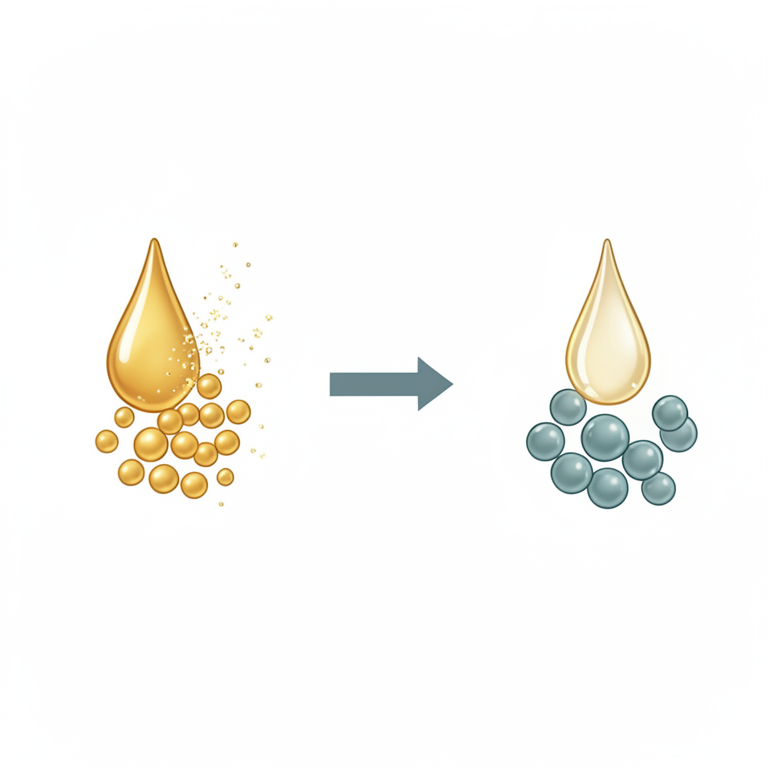
Peroxide vs Non-Peroxide Activity Mechanism
AI-generated conceptual illustration (Staphylococcus aureus bacteria and honey droplets). It explains the idea and does not show study data.
View source evidence ↗Figures & tables
From the original paper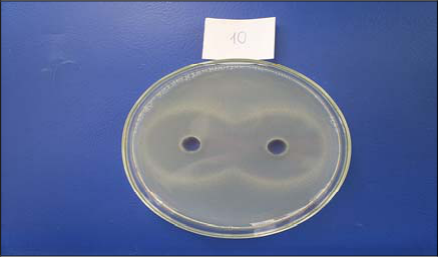 Figure 1
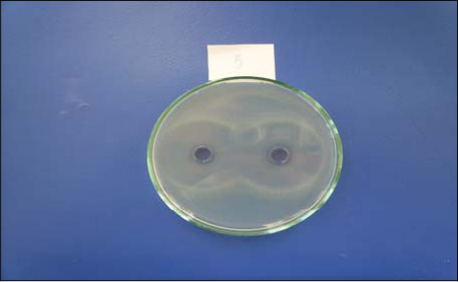 Figure 2
Introduction
The antibacterial action of honey was reported for the first time in 1892 (Van Ketel, 1892) [1]. The different aspects of the antibacterial properties of honey have been recently extensively reviewed. The main honey substances are sugars, which by their osmotic effect exert an antibacterial action (Molan, 1992) [2] . There are two sorts of antibacterial agents or so called "inhibines". One of them is heat-and light-sensitive and has its origin in the H202, produced by honey glucose oxidase (White et al., 1963) [3] . Some workers believe that hydrogen peroxide is the main antibacterial agent (Dustmann, 1979 [4] ; White et al., 1963 [5] ). Other authors find that the non-peroxide activity is the more important one (Radwan et al., 1984) [6] . The non-peroxide antibacterial activity is insensitive to heat and light and remains intact after storage of honey for longer periods (Bogdanov, 1984) [7] . It was found that the dandelion, honeydew and rape honeys had a relatively higher non-peroxide antibacterial activity. These results indicate that a part of the antibacterial activity might have a plant origin, but the major part of the antibacterial activity of honeydew honey has a bee origin. It can thus be concluded that the honey acids exert the main antibacterial action, while honey pH could additionally act as an antibacterial factor (Bogdanov, 1997) [8] . Honey has been applied for medicinal purposes since ancient times. Its antibacterial effects have been established during the past few decades. Still, modern medical practitioners hesitate to apply honey for local treatment of wounds. This may be explained by the expected messiness of such local application. Moreover, secondary infectious disease may be caused by contamination of honey with microorganisms. Hence, if honey is to be applied for medicinal purposes, it has to meet certain criteria (Ahmed et al., 2003) [9] . In this moment all over the world in medicine is used disc-diffusion method for evaluation of sensitivity of microorganisms to antibiotics. On the other hand it is observe increasing of cases of antibiotic resistance from usually found in wounds microorganisms from Staphylococcus spp. Thus, the aim of the study was to compare antibacterial activity of long time stored Bulgarian's acacia (Robinia pseudoacacia), multifloral and oak (Quercus spp.) honeydew bee honeys to referent strain of Staphylococcus aureus (ATCC 9144).
Materials and Methods
It was analyzed Bulgarian's acacia (n=10) and multifloral (n=10) honeys, collected near the towns Stara Zagora, and oak honeydew samples harvested near towns Madzharovo (Strandzha mountain), (n=10), all produced in 2006.
With data from apiarists the samples were from bee families not treated with sugars or antibiotics. Additional analyses from samples were made with methods of the European Honey Commission and collected data were in compliance with regulations for honeydew honeys in Europe with conductivity more than 0.8 mS.cm -1 . (Bogdanov et al., 1997 [10] ; Oddo et al., 2004 [11] ). To determinate antibacterial activity of samples it was used the closes to usually used from determination of antibiotic sensitivity of honey disc-diffusion method, agar well diffusion method, adapted from the punch plate assay for inhibitory substances, described by Molan (Molan, 1992) [2] , with some differences, used for blossom and oak honeydew honeys. The antibacterial activity was evaluated by measuring the zones around the wells and expressed in phenol concentration possessing equivalent activity.
Inoculum Preparation
A freeze-dried culture of referent strain of Staphylococcus aureus (ATCC 9144), was reconstituted in Trypticase Soy (TS) broth (Merck 1.18419) and incubated at 37 ˚C for 18 hours. A loopful of the broth culture was subcultured onto nutrient agar plates (Merck 1.05450.0500) incubated for 24 hours at 37˚C. Working cultures were obtained by placing one bead from the preserver ampoule stock into 10 ml of TS broth and incubating for 18 hours at 37 ˚C. A further working culture was prepared by inoculating a 200 µl volume of the prepared culture from the previous day, into another 10 ml TS broth. This was incubated for approximately 5 hours at 37 ºC. This culture was then adjusted to an absorbance of 0.5 measured at 540 nm using sterile TS broth as a blank and a diluent and a cuvette with a 1 cm pathway. A volume of 100 µl of the culture adjusted to 0.5 absorbance was used to seed 150 ml nutrient agar to make the assay plates.
Plate preparation
To prepare the assay plates 150 ml nutrient agar (23 g/l) was sterilised then held at 50 ˚C for 30 minutes before seeding with 100 µl of Staph. aureus (ATCC 9144) culture adjusted to 0.5 absorbance as above. The agar was swirled to mix thoroughly and poured into plates for microbiology which had been placed on a level surface. As soon as the agar was set the plates were placed upside-down at 4 ˚C overnight before using the next day. The agar must be removed from the autoclave as soon as possible then allowed to cool. One weeks supply can be autoclaved at one time then each day requirements steamed in a saucepan of boiling water for 30 minutes then cooled in a 50 ˚C water bath for 30 minutes before seeding the agar and pouring the plates. It is essential that the agar is not left at high temperatures for a long time as this change the consistency of the agar.
Catalase solution
The antibacterial activity of honeydew honeys was investigated after added solution of Catalase, Bovine Liver (CALBIOCHEM, 5MU, activity: 12523.0 U/mg, Cat No 219001), 2 mg/ml in distilled water was prepared fresh each day to sample solution to reduce possible peroxide activity.
Sample preparation
A primary honey solution was prepared by adding 10 g of well mixed honey to 10 ml of distilled water in universals and placed at 37 ˚C for 30 minutes to aid mixing. To prepare secondary solutions, 1 ml of the primary honey solution was added to 1 ml of distilled water in a bijou for total activity testing and 1 ml of the primary honey solution was added to 1 ml of catalase solution for non peroxide activity testing. The density of honey, which is 1.35g/ml, is allowed for in the final calculation.
Sample and Standard Application
Each sample was tested in quadruplicate by adding 100 µl to each of 4 wells with the same allocated number on the assay plate.
Plate incubation
After application of samples and standards the plates were incubated on individual racks not stacked on top of one another, for 18 hours at 37 ºC.
Zone measurement
The plates were placed back over the black quasi-Latin square to measure the diameter of the zones of inhibition with digital calipers using the points of the prongs used to measure inside diameters of tubes.
Preparation of phenol standards
Standards of 2%, 3%, 4%, 5%, 6%, and 7%, were prepared from a 10% w/v solution by Phenol BDH A.R. (merck CgaA, Germany, Cat No 1.00206.0250). These solutions were kept at 4 ˚C for one month before making fresh standards and brought to room temperature in the dark before use. Each standard was placed in two wells to test in duplicate.
Calculation of antibacterial activity of honey
The mean diameter of the clear zone around each phenol standard was calculated and squared. A standard graph was plotted of % phenol against the square of the mean diameter of the clear zone. To allow for the dilution and density of honey this figure was multiplied by a factor of 4.69 and the activity was then expressed as the equivalent phenol concentration (% w/v). The factor of 4.69 is based on a mean honey density of 1.35g/ml.
Results
Results from our experiments, shows that in all cases for all tested honeys without adding of catalase to sample solutions we found high zones with total inhibition (antibacterial activity) towards Staph. aureus (ATCC 9144), (Figure 1). In all cases before adding of catalase solution we found similar zones of antibacterial activity to referent strain of Staphylococcus aureus (ATCC 9144). The lowest value (29.45 1.01 mm) of inhibition was found from acacia honeys and the highest value from investigated oak honeydew (37.90 0.99 mm) and multifloral (37.50 3.27 mm), honeys (Table 1).
Тable 1: Antibacterial activity (zones of inhibition) for acacia, multifloral and oak honeydew honeys, mm. Mean values (X); standard deviations (±SD); n.f. -not found antibacterial activity; a -In most cases (acacia -blossom; acacia -honeydew; blossom -honeydew) -statistically significant differences between antibacterial activities (p < 0.0001). b -Comparison between antibacterial activity of oak honeydew and multifloral honeys -not found significant differences.
Types of honey and number of samples
In all cases after adding of catalase solution by used agar well diffusion method we not found antibacterial activity to used strain of Staphylococcus aureus (ATCC 9144). But, in three from oak honeydew samples possesses zone of long time stored antibacterial activity against tested resistant bacterial strain, after adding of catalase solution (2 mg/ml), equivalent to 3% phenol standard (Table 1 and Figure 2).
Discussion
Our results from antibacterial activity of honeys were similar to these of Portuguese scientists which point that all natural honeys possessed peroxide antibacterial activity (activity destroyed by catalase), (Henriques et al., 2005) [12] . In most cases after adding of catalase solution by used agar well diffusion method we not found antibacterial activity to Staphylococcus aureus, but three from oak honeydew honeys have the long time stored antibacterial activity (Table 1 and Figure 2). With compliance with results from other authors we could point that the antibacterial activity of blossom honeys was mainly from honey glucose peroxidase system (Molan, 1992 [2] , Bogdanov, 1997 [8] ). The greater the difference in the molar concentration of glucosooxidase and catalase in honeys then the greater will be the potential to generate hydrogen peroxide and the greater will be the amount of catalase required to add to that sample for an antibacterial assay of "non-peroxide" activity. We could point, that in the moment we know that all Staphylococcus spp. have enzyme catalase. But we don't know the quantity of this enzyme in different strains of this microorganism. We subscribe to opinion of other scientist's (Weston, 2000) [13] , that it is conceivable that absence of catalase in different honeys might be the ``unique factor'' which differentiates ``active'' from "inactive'' honeys. We make the hypothesis that the quantity or absence of glucosooxidase and catalase in some of oak honeydew honeys after long time storage and different quantity of catalase in Staphylococcus spp. could be in responsibility with sensitivity of this microorganism to this type of bee honey. To prove these hypotheses it is need additional surveys from content of catalase in different Staphylococcus spp. and also content of glucosooxidase and catalase in oak honeydew honeys after long time storage.
Conclusion
In this study were presented from the first time data for comparisons between antibacterial activities from long time stored acacia, multifloral and oak honeydew honeys. It was found that some honeydew honeys from different geographical origin could be with long time stored antibacterial activity potential.
Acknowledgement
AcknowledgementAuthor is thankful to Professor Peter Molan from Waikato University's honey research unit for necessary methodology information for antibacterial activity testing of bee honey. Due acknowledgement is also extended to the bee keepers for providing bee honey samples.
References
13 in the original paper- Van Ketel BA. Festnummer der Berichten van den Niederlandsche Maatschappij, Bevordering der Pharmacie, 1892, 67-96.
- Molan P. The antimicrobial activity of honey, Bee world, 1992; 73:5-28, 59-76.
- White JW, Subers MH, Schepartz AI. The identification of inhibine, the antibacterial factor in honey, as hydrogen peroxide and its origin in honey glucose-oxidase system. Biochimica Biophysica Acta. 1963; 73:57-70.
- Dustmann JH. Antibacterial effect of honey. Apiacta. 1979; 14:7-11.
- White JW, Subers MH, Schepartz AI. The identification of inhibine, the antibacterial factor in honey, as hydrogen peroxide and its origin in honey glucose-oxidase system. Biochimica Biophysica Acta. 1963; 73:57-70.
- Radwan SS, El-Essawy AA, Sarhan MM. Experimental evidence for the occurrence in honey of specific substances active against micro-organisms. Zentralblatt für Mikrobiologie. 1984; 139:249-255.
- Bogdanov S. Characterisation of antibacterial substances in honey. Lebensmittel-Wissenschaft und -Technologie. 1984; 17:74-76.
- Bogdanov S. Nature and origin of the antibacterial substances in honey. Lebensmittelwissenschaft und Technologie. 1997; 30:748-753.
- Ahmed AKJ, Hoekstra MJ, Hage JJ, Karim RB. Honeymedicated dressing: Transformation of an ancient remedy into modern therapy, Ann. Plast. Surg. 2003; 50:143-147.
- Bogdanov S, Martin P, Lüllman C. Harmonized methods of the European Honey Commission, Apidologie. 1997, 1(59). Extra, Elsevier/INRA/DIB/AGIB.
- Oddo LP, Piana L, Bogdanov S, Bentabol A, Gotsiou P, Kerkvliet J. et al. Botanical species giving unifloral honey in Europe, Apidologie. 2004; 35:S82-S93. INRA/DIB-AGIB/EDP Sciences.
- Henriques A, Burton NF, Cooper RA. Antibacterial activity of selected Portuguese honeys, Journal of Apicultural Research. 2005; 44:119-123.
- Weston RJ. The contribution of catalase and other natural products to the antibacterial activity of honey: a review, Food Chemistry. 2000; 71:235-239.
Cited by 1
From OpenAlex, OpenCitations and reference lists read by Scinovex
- Antibacterial Activity of Honey Samples from Ukraine ↗
Giovanni Cilia, Filippo Fratini, Matilde Marchi, Simona Sagona, Barbara Turchi, Леонора Олександрівна Адамчук et al. · Veterinary Sciences · 2020
The employment of natural substances such as beehive products with a preventive and therapeutic purpose has been a widespread custom since ancient times. In this investigation, the antibacterial activity of 41 honey samples from different Ukraine regions has been evaluated. For each honey, melissopalynological and physico-chemical analysis were performed in order to determine botanical origin, pH, glucose and fructose contents…
❝ 34PDF